FUT Hair Transplant NYC:
Follicular Unit Transplantation in New York
Follicular Unit Transplantation (FUT) is a surgical restoration method that removes a narrow strip of scalp from the donor area, dissects it into individual follicular units, and transplants those grafts into thinning or balding regions. It remains one of the most efficient techniques for achieving high-density, natural-looking coverage in a single session.
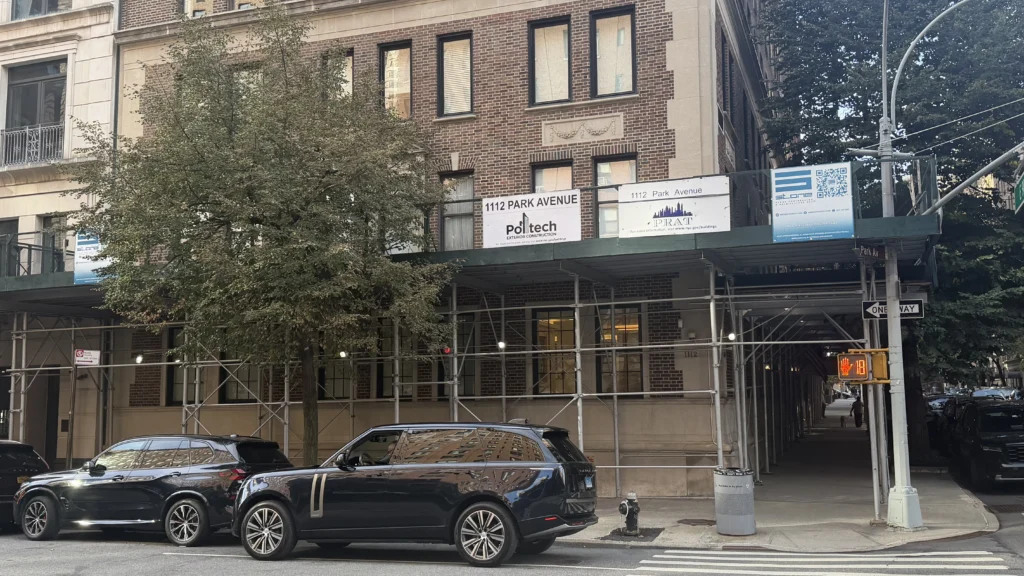
If you are considering FUT in New York City, Dr. Joel Kopelman and Dr. Ross Kopelman see patients at our office at 1112 Park Avenue on the Upper East Side. Consultations take place in person at that office or by video call. The surgeons recommend FUT, FUE, or a combination based on donor density, pattern of loss, and hairstyle.
FUT Hair Transplant
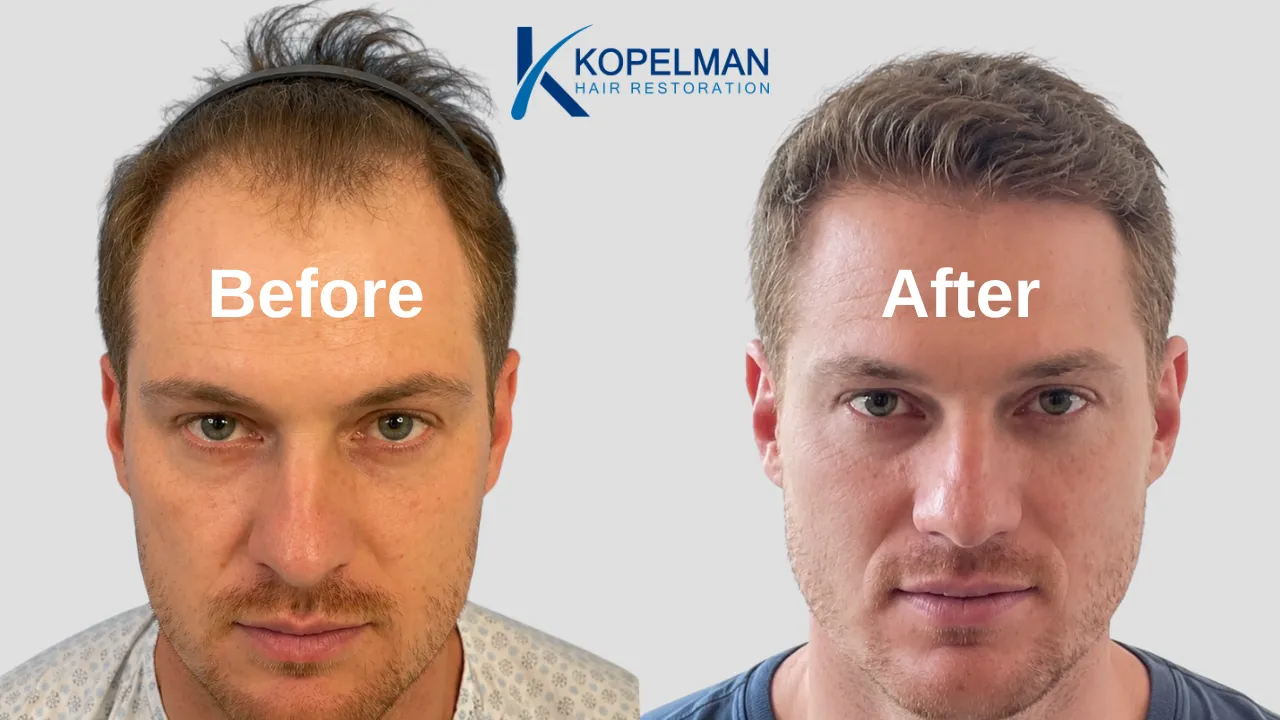
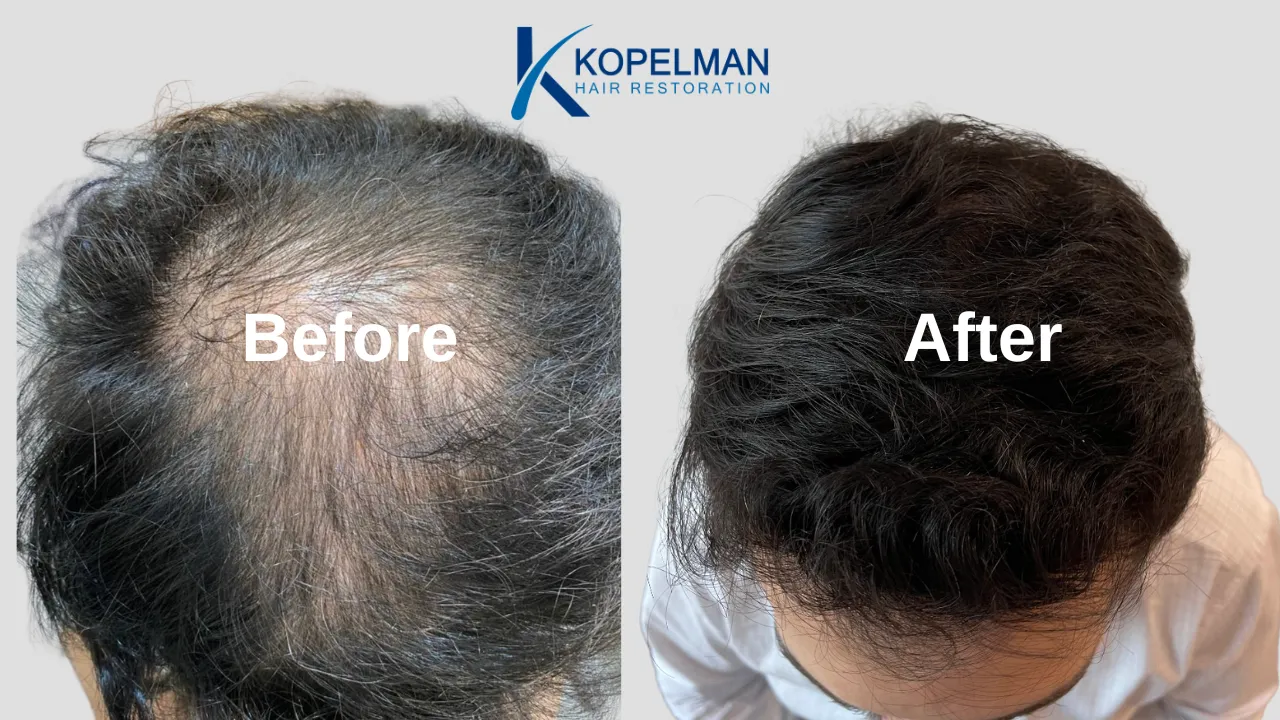
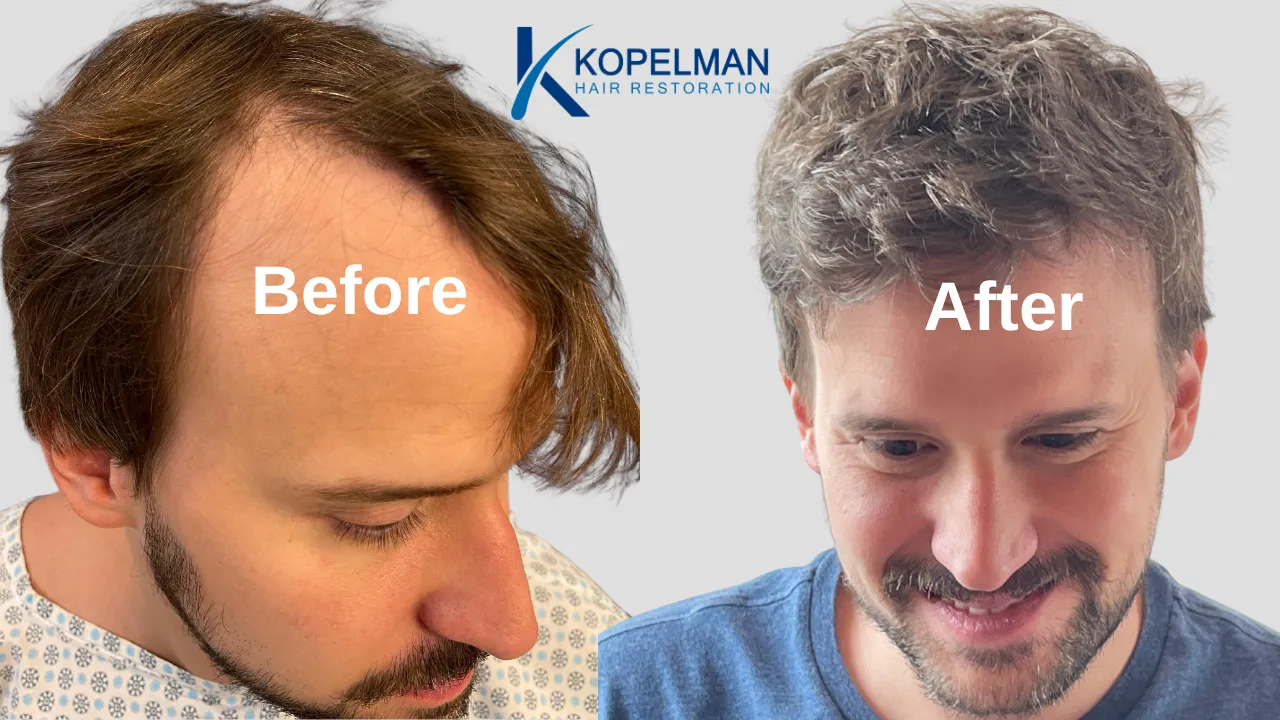
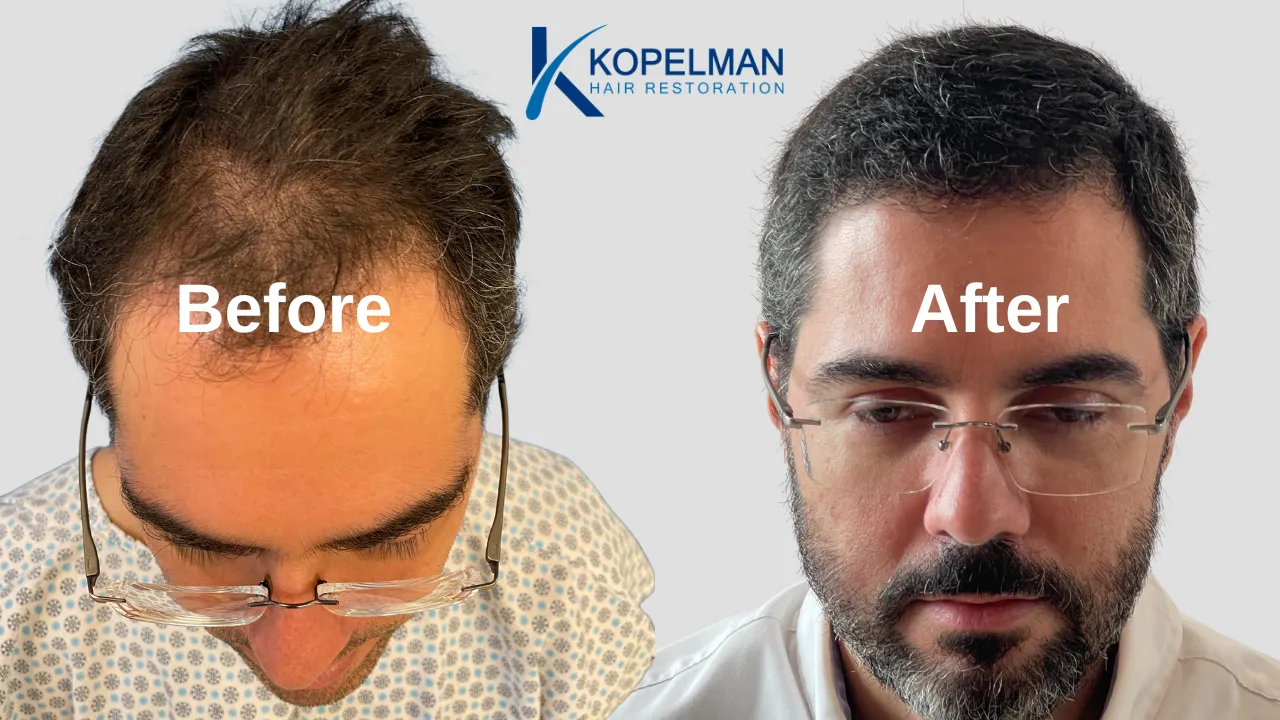
Before and After Photos
Who Is a Good Candidate for FUT in NYC?
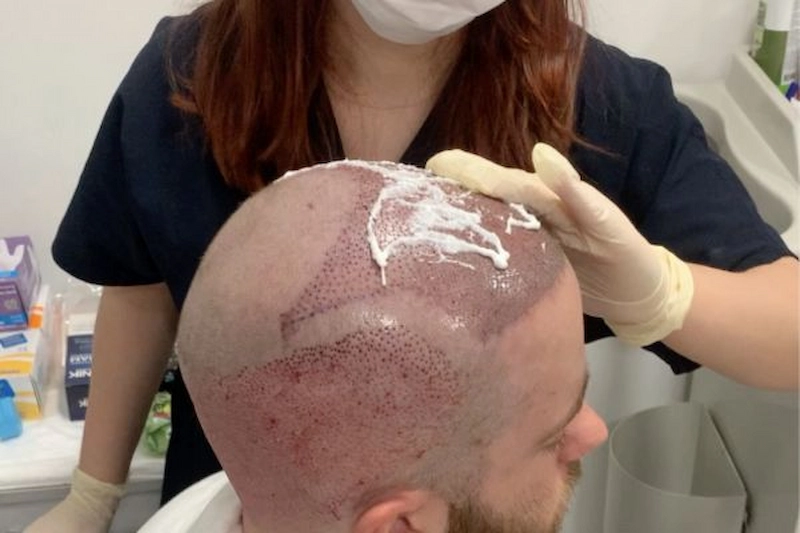
FUT hair surgery in NYC involves removing a thin strip of tissue from the back of the head, where follicles are genetically resistant to pattern baldness. A team of technicians then dissects the strip under magnification into individual follicular units, each containing one to four hairs. Those units are placed into tiny recipient sites in the thinning zone, following the natural angle and direction of growth.
This approach is known for yielding a large number of grafts per session, making it well suited for patients with significant thinning or advanced loss patterns. A single procedure can deliver 2,000 to 3,000+ grafts, covering extensive areas in fewer visits than other methods.
While the technique does produce a linear scar along the donor site, the closure technique and your hair length both affect how visible it is. For patients who keep their style at moderate length, the scar is typically concealed by surrounding growth.
FUT preserves the follicular unit in its natural grouping during dissection, so grafts are placed as the one-to-four-hair units they grow in.
FUE vs. FUT How the Two Methods Compare
| Factor | FUT (Strip Method) | FUE (Extraction Method) |
|---|---|---|
| Harvesting Method | A narrow strip of tissue is removed and dissected into individual grafts | Individual follicular units are extracted one by one from the donor area |
| Grafts Per Session | Typically 2,000 to 3,000+; higher yield in a single visit | Typically 1,500 to 2,500; may require multiple sessions for large areas |
| Scarring | Fine linear scar at the donor site, usually hidden by surrounding growth | Tiny dot scars scattered across the donor zone, less visible with short styles |
| Donor Shaving | Only a narrow band is trimmed; no full shave needed | Donor area is typically shaved short for extraction accuracy |
| Recovery Time | 10 to 14 days; sutures or staples removed around day 10 | 7 to 10 days; no sutures needed |
| Ideal For | Patients with advanced thinning who need maximum coverage and prefer longer styles | Patients with mild to moderate loss who prefer shorter styles and minimal scarring |
Video: Benefits of an FUT Hair Transplant | Complete Guide
In this video from our channel, Dr. Joel Kopelman and Dr. Ross Kopelman walk through the benefits of FUT and who it suits.
In many cases, surgeons recommend combining FUT and FUE across sessions to maximize the total number of available grafts over a patient’s lifetime. Drs. Kopelman can help determine which approach, or combination, aligns with your goals during a consultation.
Your FUT Surgeons in NYC.
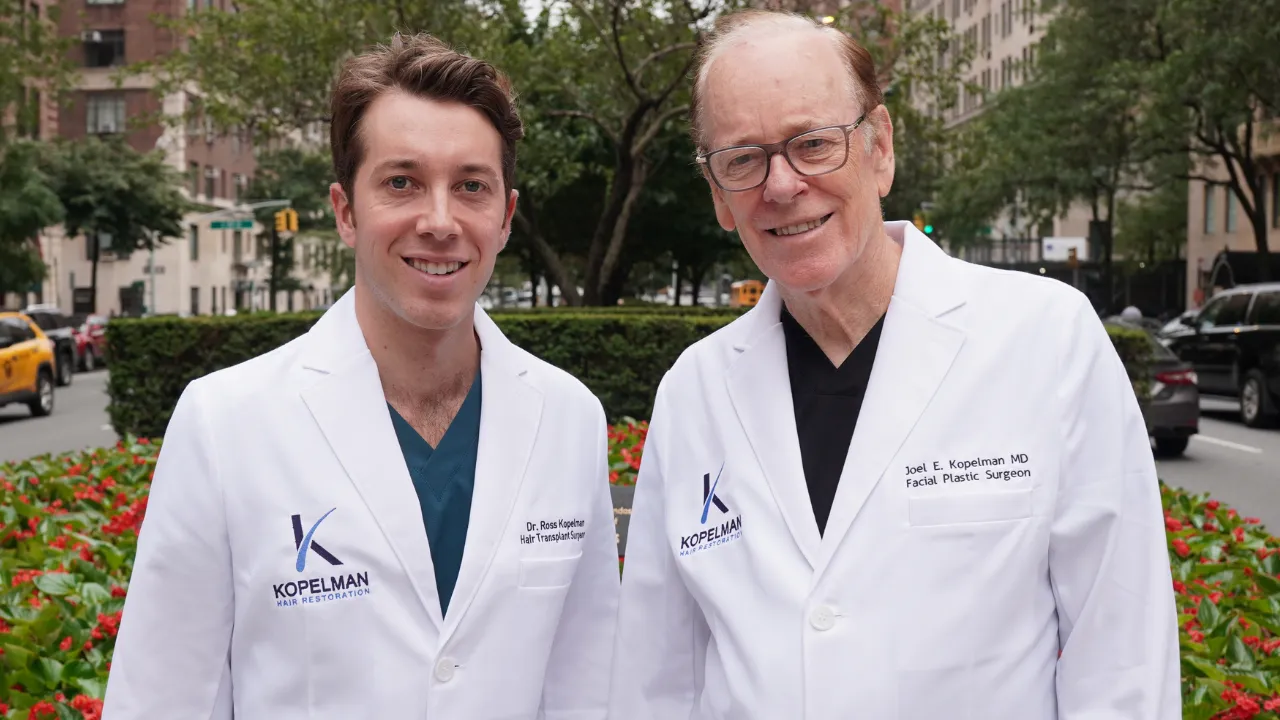
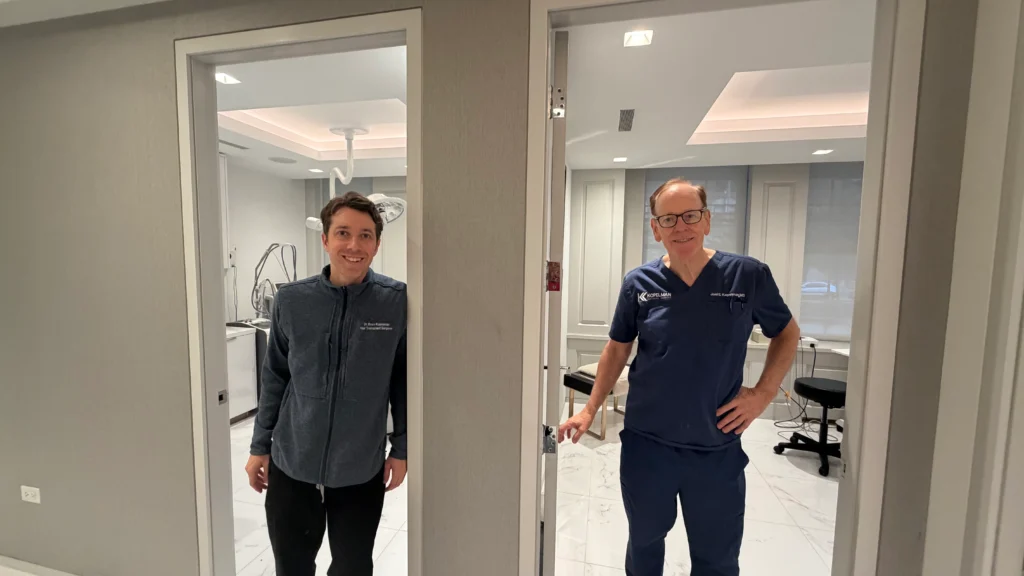
Dr. Joel Kopelman and Dr. Ross Kopelman are the surgeons at Kopelman Hair Restoration. Dr. Joel Kopelman is a facial plastic surgeon and co-founder of the practice, with more than four decades of surgical experience. Dr. Ross Kopelman is a hair transplant surgeon and the practice’s medical director, and he focuses exclusively on follicular grafting.
Between them, the two surgeons have performed more than 1,000 hair transplants. Treatment plans are built around donor density, pattern of loss, and long-term donor management, so that options stay open for future sessions.
Am I a Candidate for FUT in Manhattan?
FUT is most often chosen when a patient needs a high number of grafts in one session, wants broad coverage in fewer procedures, and prefers not to shave the whole donor area.
Before scheduling a procedure with Drs. Kopelman, it helps to understand what makes someone a strong candidate for FUT:
- Both Men and Women: FUT can effectively address male and female pattern baldness.
- Significant Thinning or Baldness: Ideal for individuals who need a high volume of grafts to cover larger areas.
- Flexible Styling Preferences: Best suited for those who do not wear their style cropped very short, since the procedure leaves a fine linear scar at the donor site.
- Adequate Donor Density: Requires healthy follicle density along the back and sides of the scalp for strip extraction.
- Stabilized Loss Patterns: Often preferred by patients whose thinning has plateaued, allowing for more predictable long-term planning.
- Previous Transplant Patients: Those who have had prior restoration work may benefit from FUT to maximize remaining donor supply.
- Non-Smokers or Willing to Quit: Smoking can impair healing and reduce graft survival, so candidates should be prepared to stop before and after surgery.
Candidacy is confirmed at the consultation, where donor density, the extent of current loss, and your long-term thinning pattern are evaluated. In some cases, medical therapy is recommended before surgery or instead of it.
FUT Consultation at Our Park Avenue Office.
Private Consultation
Consultations take place at 1112 Park Avenue, #1A, or by video call for patients outside the New York area. At the visit, the surgeon reviews your medical history and photos, examines your scalp to evaluate donor density, recommends a graft count and technique, and prescribes medical therapy if appropriate. You leave with a written plan and a graft estimate.
The consultation fee is $350. It covers a year of care with as many visits as needed, in person or by video, and it does not apply toward the cost of surgery.
Review of Medical History and General Health
A thorough review of your medical background is a critical step. Discussion focuses on family thinning patterns, genetic factors, and personal conditions such as thyroid or iron deficiencies that can influence follicle health.
Tailored Recommendations for Your Restoration
Based on your consultation, a personalized surgical plan is developed around your specific loss pattern and density goals, drawing on the same FUT hair transplant principles used across our practice. Each case is distinct, and the strategy can range from straightforward to complex depending on the extent of thinning.
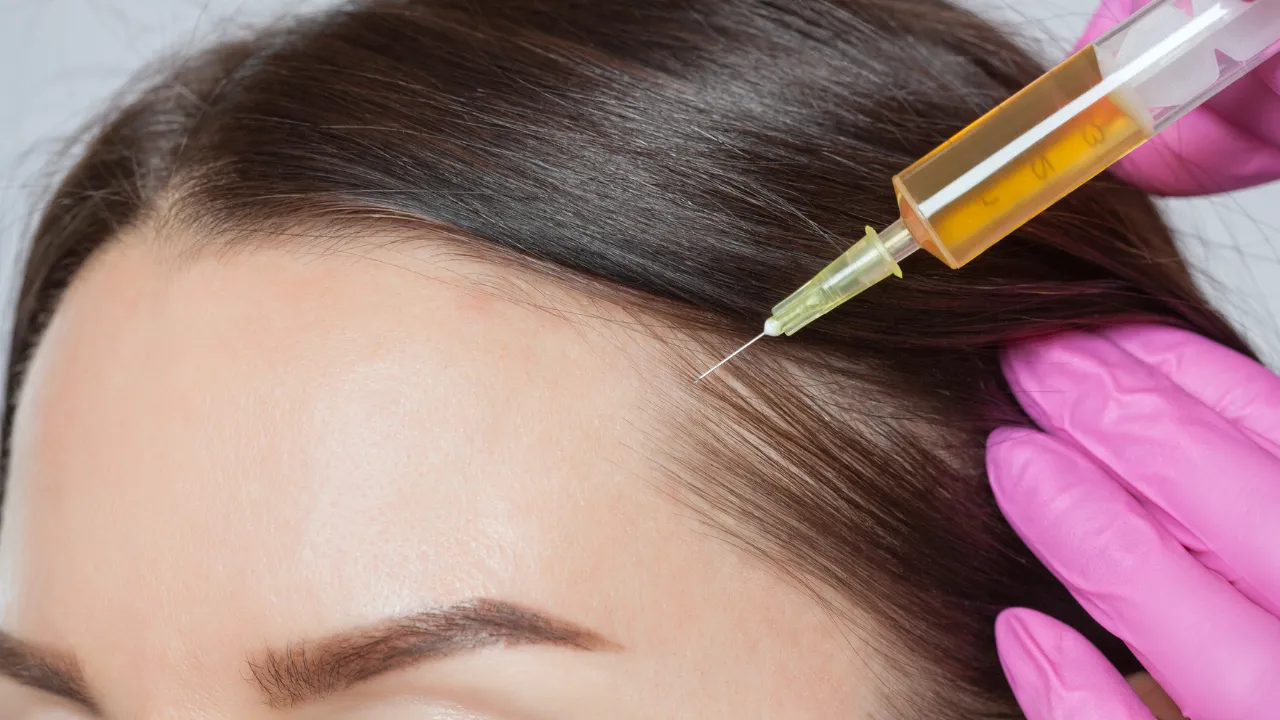
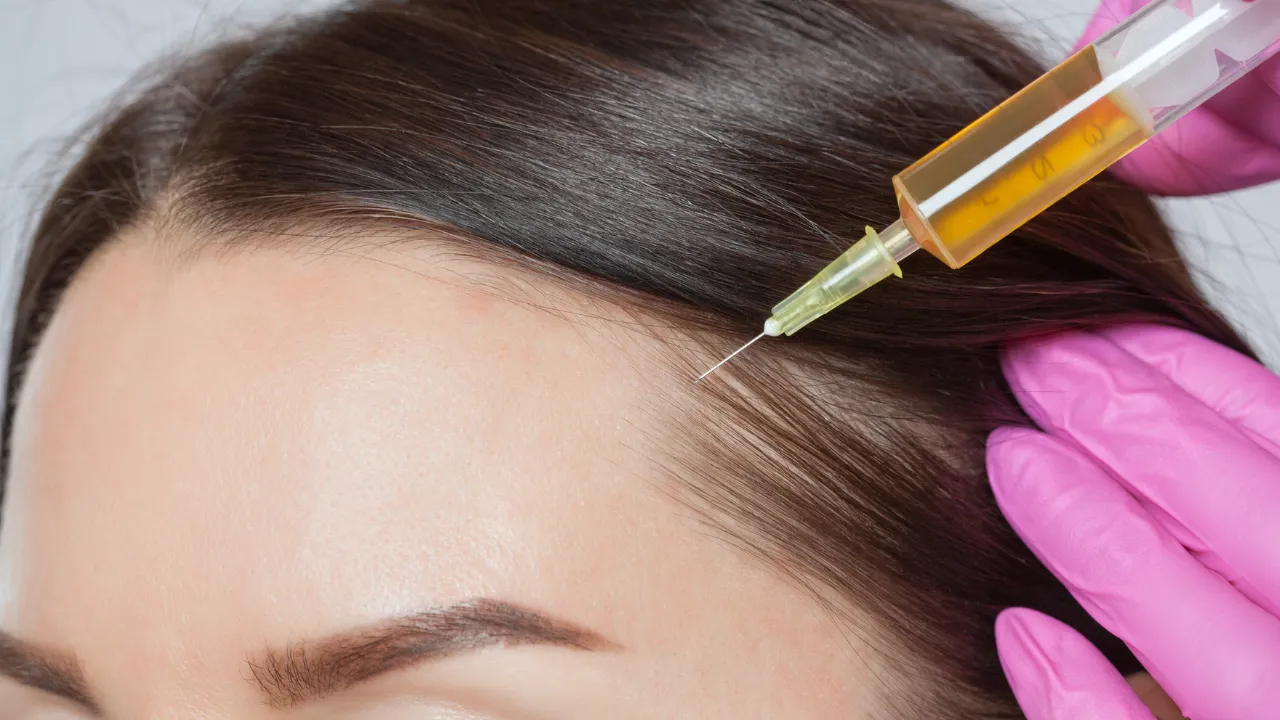
Complementary treatments such as PRP (Platelet-Rich Plasma) therapy or scalp treatments may also be recommended to support the restoration process. After finalizing the approach, photographs of your scalp are captured to assist in procedural planning.
FUT Recovery
Process
STEP 01
Immediate Post-Procedure Care
STEP 02
First Few Days
STEP 03
First Week
Most patients are back in the office in person within about five days. Patients who feel comfortable can work remotely the day after surgery, although a few days off is encouraged. Light lifting is appropriate one week after surgery, while aggressive exercise such as running or heavy lifting should wait three weeks. Gentle washing may begin after a few days, following your surgeon’s specific instructions.
STEP 04
Two to Three Weeks
STEP 05
One to Three Months
Long-Term Results
Request a
Consultation
Call our New York office at (212) 470-4076 or complete the form. Virtual consultations are also available for patients to make it convenient to access Dr. Kopelman.
You will leave feeling confident about how to best address your hair restoration journey.
NEW YORK CITY
Schedule a Consultation
What Our
Patients Are Saying
Posted on Google
 barret abramow
 I recently had a FUE hair transplant with Dr. Kopelman in New York City, and I couldn’t be more pleased with the results. I had 2,800 grafts focused on restoring my hairline, which had become more recessed than I was comfortable with. The change has been subtle yet transformative — my hairline looks completely natural, and it frames my face in a way that feels more like me. It’s not overly dramatic, just exactly what I hoped for. What really stood out about working with Dr. Kopelman and his team was their expertise and attention to detail. From the initial consultation, it was clear they understood how to approach my specific situation to achieve the best outcome. The procedure itself went smoothly, and the aftercare instructions were thorough and easy to follow. I felt confident every step of the way because of how knowledgeable and professional they were. Finding their practice in NYC was a relief — it’s not easy to trust just anyone with something as personal as your hairline. I’m really glad I chose them because they delivered excellent results without any of the typical hype. If you’re considering a hair transplant, this is definitely the team to go to.Posted on Google
 Beth ZimmermanI am very happy with my experience with Dr. Kopelman. They are an amazing team. I had been looking for physician who could address my hair loss that had been bothering me for years. I am now doing mesotherapy treatments and I am so happy that my hair loss has reverted over the past 4 months. I really appreciated that a hair transplant was not forced upon me but is instead a last resort. I really appreciate the honesty. Thank you!Posted on Google
 Yoel OhayonI can’t say enough great things about my experience with Dr. Kopelman and the entire team at Kopelman Hair Restoration! I had my hair transplant last year, and the results are simply fantastic. I am fully recovered and thrilled with the transformation—my hair looks natural, and I feel like myself again. Every step of the process was handled with such expertise and care. Dr. Kopelman took the time to explain everything thoroughly, and his team was kind, professional, and supportive from start to finish. I’m beyond grateful for their exceptional work and highly recommend Kopelman Hair Restoration to anyone considering a hair restoration procedure.Posted on Google
 RickDr. Kopelman is extremely knowledgeable and was willing to talk through my concerns and needs to develop an optimal treatment plan. He helped me evaluate a variety of options and decide on a protocol I was comfortable with. I am happy I found him!Posted on Google
 David CohenMy experience with Dr. Kopelman has been nothing short of incredible. From the moment I stepped into his office, I could tell I was in the hands of a true expert. I came to him for both an eyebrow hair transplant and an FUE hair transplant, and I am very happy with the results. My eyebrows look so natural, and the precision and artistry he brought to my FUE procedure completely transformed my hairline. What really stood out was how comfortable and confident he made me feel throughout the process—he explained everything in detail and answered all my questions with such patience and care. I actually discovered him on YouTube, where his videos about hair loss and transplants are so informative, and I’m so glad I did. I’ve never felt more confident in my appearance, and it’s all thanks to Dr. Kopelman’s expertise and attention to detail. If you’re looking for the best hair surgeon in NYC, he’s the one to trust.Posted on Google
 Yedidyah Leo SamuelsDr. Ross is incredible! So much knowledge and expertise in the field. Best hair surgeon in New York City!!Posted on Google
 Juan FraustroI paid for a consultation with one Dr. Kopelman and I actually got both Dr’s Kopelmam. They spent over an hour with me carefully studying my scalp, explaining my options, and providing the necessary prescriptions. I cannot recommend this practice or these doctors more highly.Posted on Google
 Odellya SohnisRoss is a top hair transplant surgeon in NYC. He was so kind when I came in. I wanted to understand why my hair was thinning after using a shampoo a dermatologist had sent my way to stop my bad dandruff problem. He was so patient through my 10 million questions, I felt he really cared about what I need instead of feeding into a consumerist magic pill. He also was able to find that I could be balding and give me tips and a prescription and I felt like he saved me from tripping over a ledge I didn't see. Thank you so much!Posted on Google
 K SalalahI've been to many hair specialists, and I can confidently say that Dr. Kopelman and his team stand out for their incredible care and attention. The hair industry is unfortunately filled with people who are simply looking to make a sale, and think little about your longterm goals or happiness. I'm fortunate to have found Dr. Kopelman, who is incredibly attentive, knowledgable, puts my goals and comfort first, and is willing to think outside the box. Six stars!Posted on Google
 Andres DelgadoI had a consultation with Dr. Joel Kopelman. It was worth my time and money. The doctor answered all my questions and provided valuable insights.
What Happens on FUT Surgery Day
A typical hair transplant surgery day at our office begins around 7:00 to 7:30 AM and usually ends between 4:00 and 6:00 PM. The first 30 to 45 minutes are used for planning: the surgeon designs the hairline, confirms which areas will be treated, and takes preoperative photographs.
Once the design is complete, the patient moves to the operating room, where vital signs are monitored throughout. Depending on the surgical plan, patients may receive Valium, IV Tylenol, IV steroids, and IV antibiotics to stay relaxed and comfortable. The surgeon personally creates the recipient sites, which determine the location, direction, angle, and distribution of the transplanted hair.
Preparation for FUT
On the day of your Follicular Unit Transplantation, specific steps are taken to prepare for a successful surgery. Unlike FUE, FUT requires only partial trimming along the back of the scalp. A narrow band in the donor area is trimmed to facilitate strip removal. This preparation is essential for effective donor access and the overall success of the procedure.
Local Anesthesia and Strip Removal
Local anesthesia is administered to numb the donor area, so you remain comfortable while awake. The surgery begins with the careful removal of a scalp strip from the numbed zone. Precision during this step minimizes discomfort and optimizes follicular unit yield. After the strip is removed and the incision is sutured, a break is taken before the next phase.
Creating Recipient Sites and Transplantation
Following the break, the surgeon creates the recipient sites on the scalp areas experiencing thinning. The harvested follicular units are then expertly placed into these sites, with each graft positioned to follow the natural angle of growth for an authentic, fuller appearance.
FAQ's
Follicular Unit Transplantation
What Makes FUT Different from FUE?
Is the Linear Scar from FUT Noticeable?
Visibility depends on several factors, including surgical technique, your natural texture, and styling preferences. The closure technique and your hair length both affect how visible the scar is. Patients with moderate-length styles typically find the scar is well concealed by surrounding growth. If scarring is a concern, discuss it during your consultation to understand how it may apply to your case.
How Long Does FUT Surgery Take?
The transplanted follicles are permanent because they come from a zone that is resistant to pattern baldness. The hair around them can continue to thin with age, which is why ongoing medical therapy is often recommended alongside surgery.
Can FUT and FUE Be Combined in a Single Treatment Plan?
What Should I Expect in Terms of Density from FUT?
Are FUT Results Permanent?
How Painful Is FUT?
Do you offer virtual consultations for FUT?
Yes. Virtual consultations are available for patients outside the New York area, and in-person consultations take place at our office at 1112 Park Avenue, #1A.
How much does FUT cost?
FUT is priced between $25,000 and $40,000 for most cases, with Giga sessions of 5,000 or more grafts ranging from $40,000 to $50,000, depending on graft count, donor quality, and the area being restored. The surgeon confirms the figure at your consultation, and the consultation fee is $350.
Ready to take the first step?
FUT Cost and Graft Estimates
FUT at Kopelman Hair Restoration is priced between $25,000 and $40,000 for most cases. Giga sessions, which start at 5,000 grafts, range from $40,000 to $50,000. The final figure depends on the number of grafts, donor quality, and the size of the area being restored, and it is confirmed at your consultation once the surgeon has assessed your donor area.
| Graft Count | Typical Use Case | Estimated Cost | Sessions Needed |
|---|---|---|---|
| 2,000 grafts | Moderate frontal thinning or early crown restoration | $25,000 to $40,000 | 1 |
| 3,000 grafts | Advanced thinning across the hairline and midscalp | $25,000 to $35,000 | 1 |
| 5,000+ grafts (Giga) | Extensive restoration covering multiple zones or combined FUT + FUE plan | $40,000 to $50,000 | 1 to 2 |
Final pricing depends on your unique anatomy and goals, which the surgical team will discuss during your consultation.
For current pricing details, visit the clinic’s pricing page: Hair Loss Clinic Prices.
Schedule a FUT Hair Transplant Consultation in NYC
To schedule a private consultation with Kopelman Hair Restoration, please call our New York office at (212) 470-4076 or request an appointment online. Virtual consultations are available for out-of-town patients.
Address: 1112 Park Ave #1A, New York, NY 10128