PRP Before and After | What to Expect from Platelet-Rich Plasma Therapy
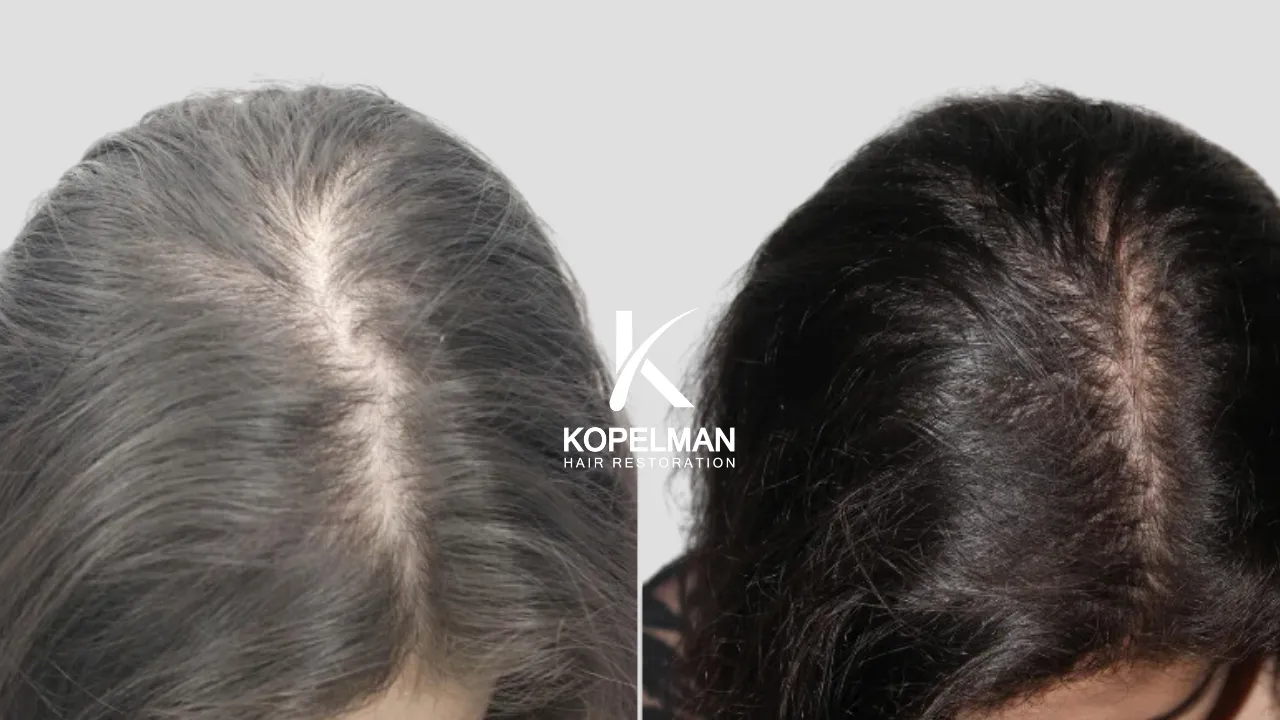
PRP before-and-after photos show what platelet-rich plasma realistically delivers: gradual gains in density and scalp coverage over three to six months, not overnight regrowth. At Kopelman Hair, Dr. Kopelman builds each plan around the patient’s loss pattern, follicle activity, and medical history.
This page brings together real patient results, a month-by-month timeline, and the clinical evidence behind those outcomes. It is a proven non-surgical option for both men and women dealing with noticeable thinning. For a full breakdown of how the treatment works, see our guide on PRP for hair loss.
Real Results: PRP Hair Before and After Overview
What PRP Does for Thinning Follicles
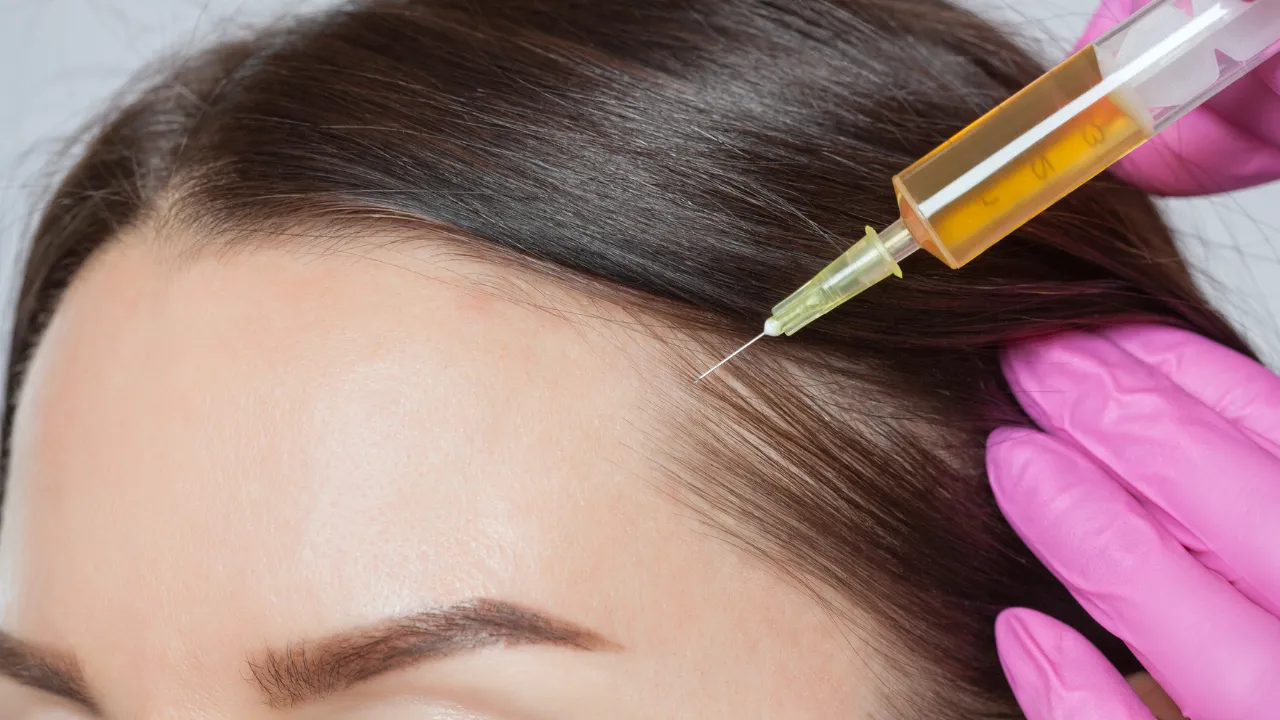
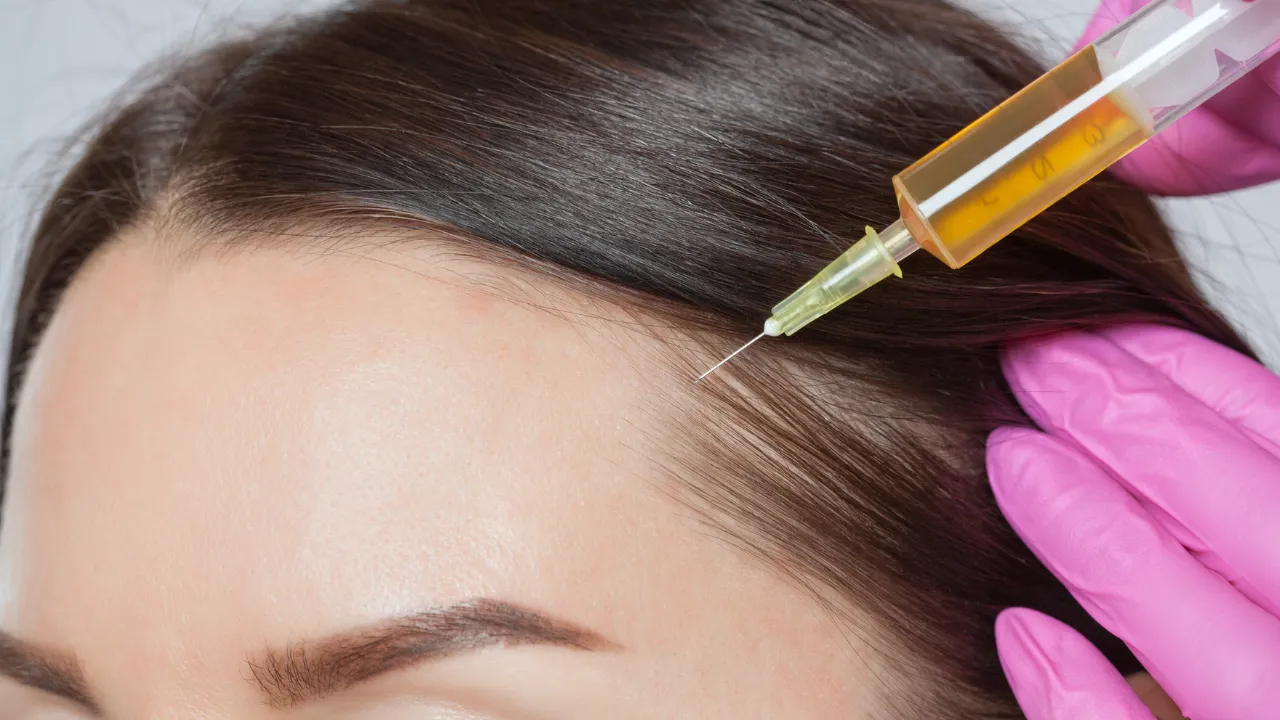
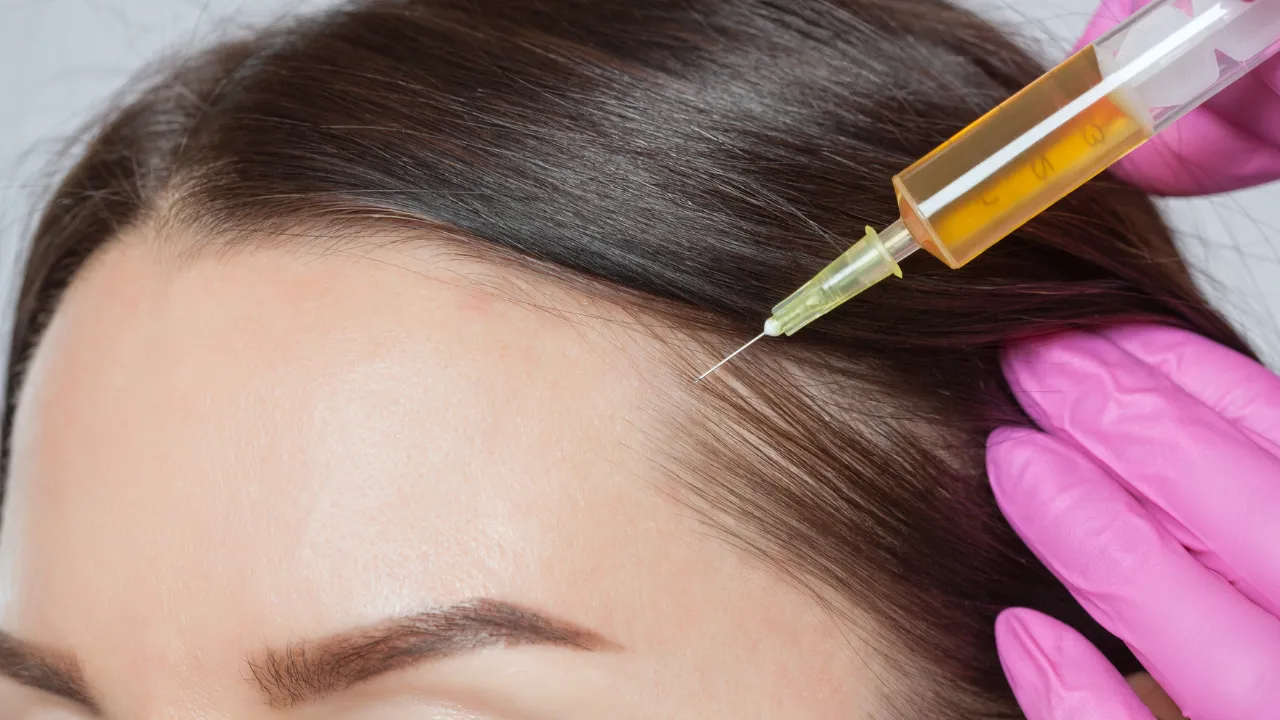
PRP therapy uses your body’s own platelets to stimulate dormant follicles. When injected into thinning zones, these platelets release growth factors that improve blood flow and reactivate weakened roots.
Over time, strands become thicker, fuller, and healthier. This process is known as the PRP procedure, beginning with a simple blood draw from the patient.
Visual Progress: What the Before and After Shows
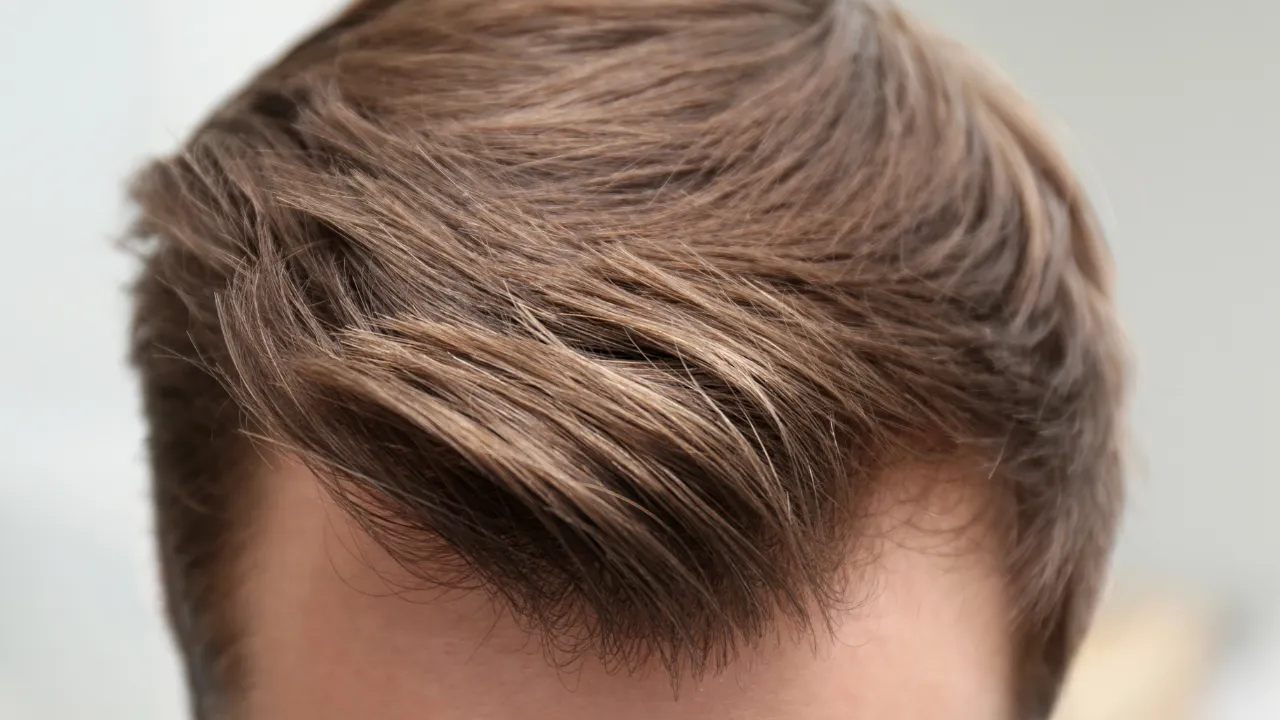
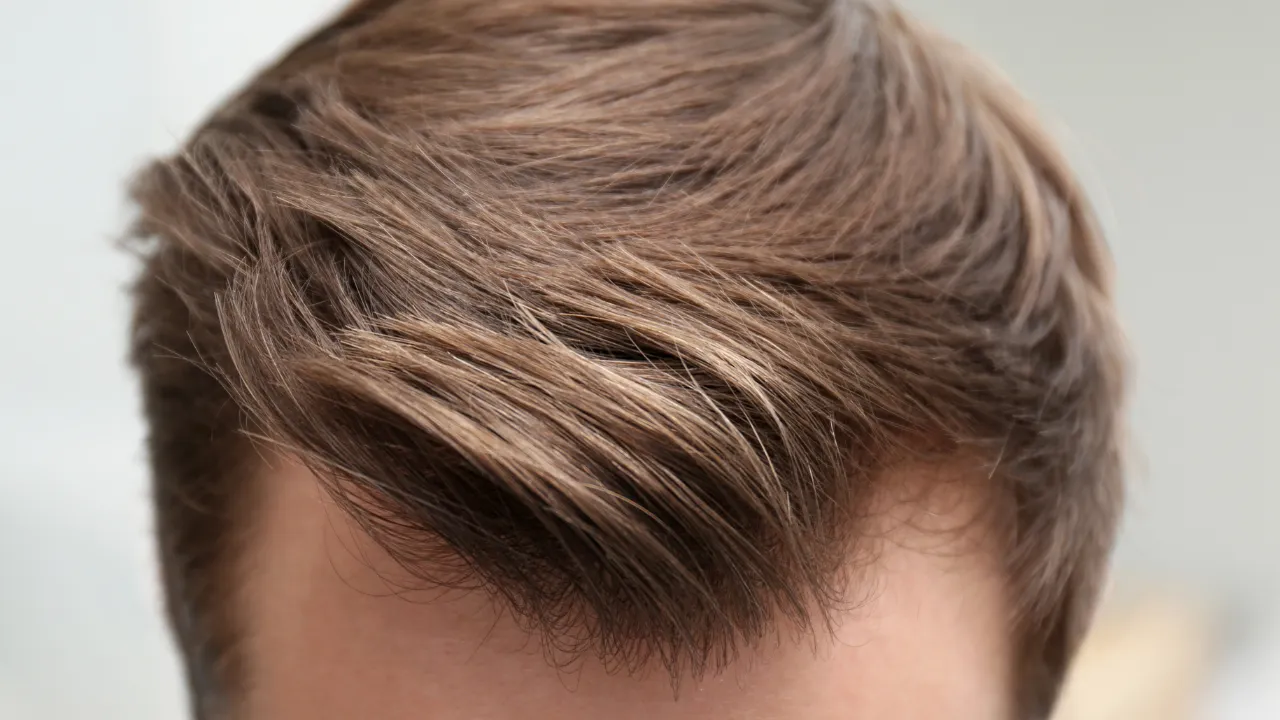
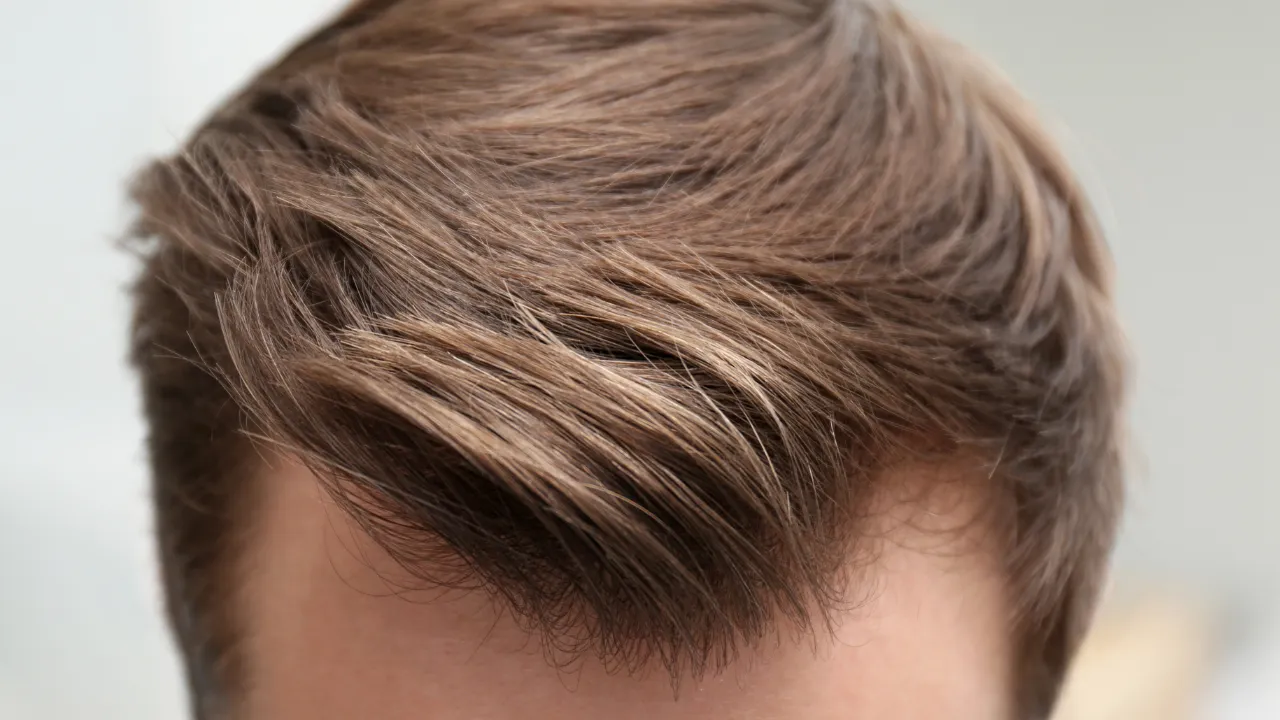
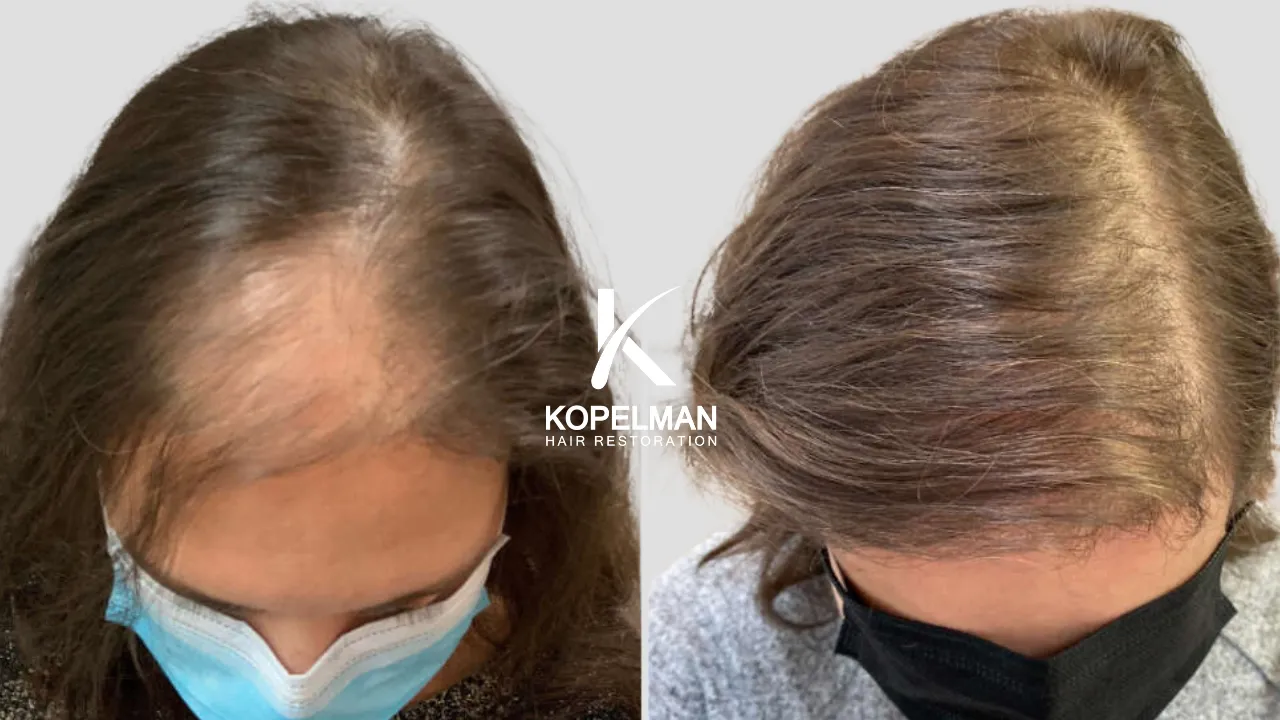
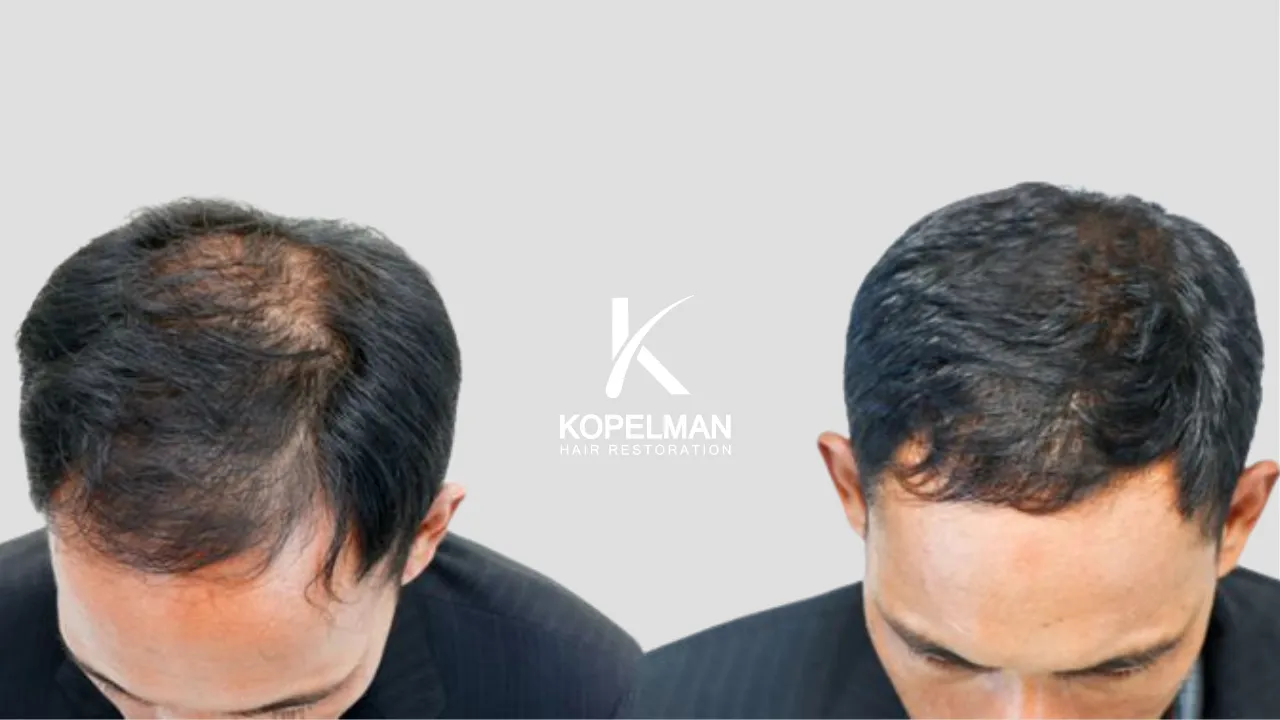
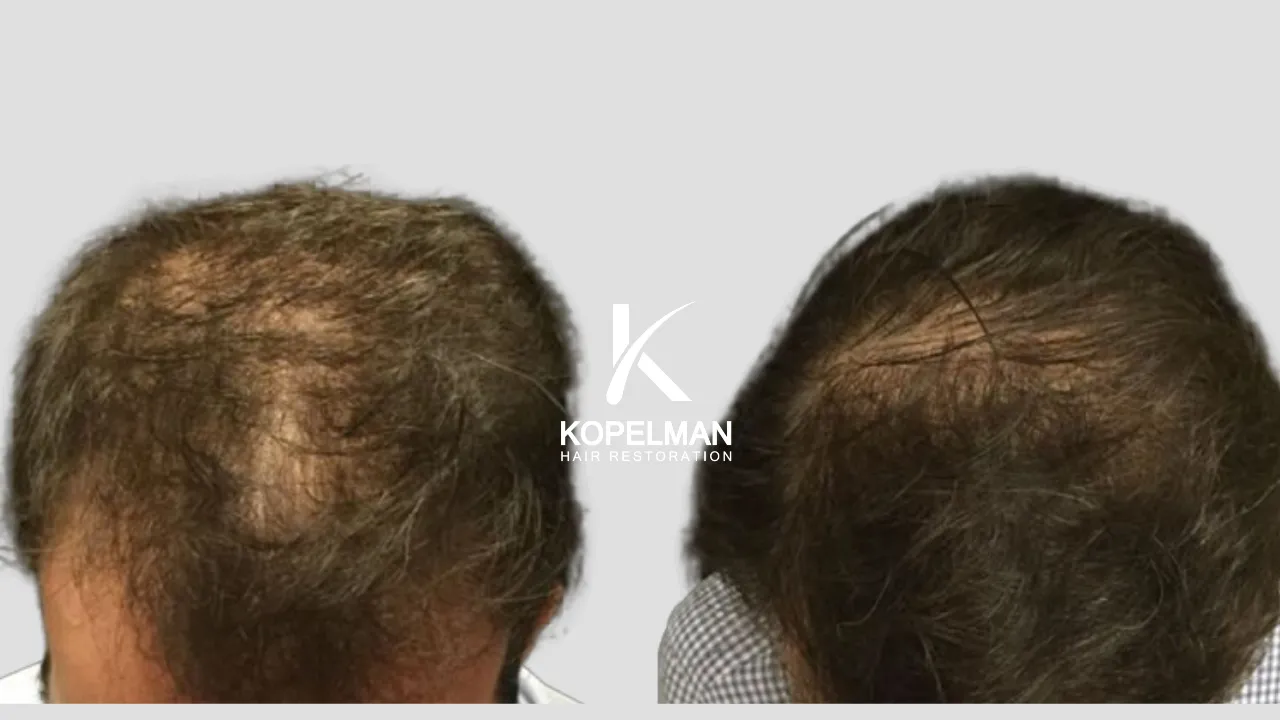
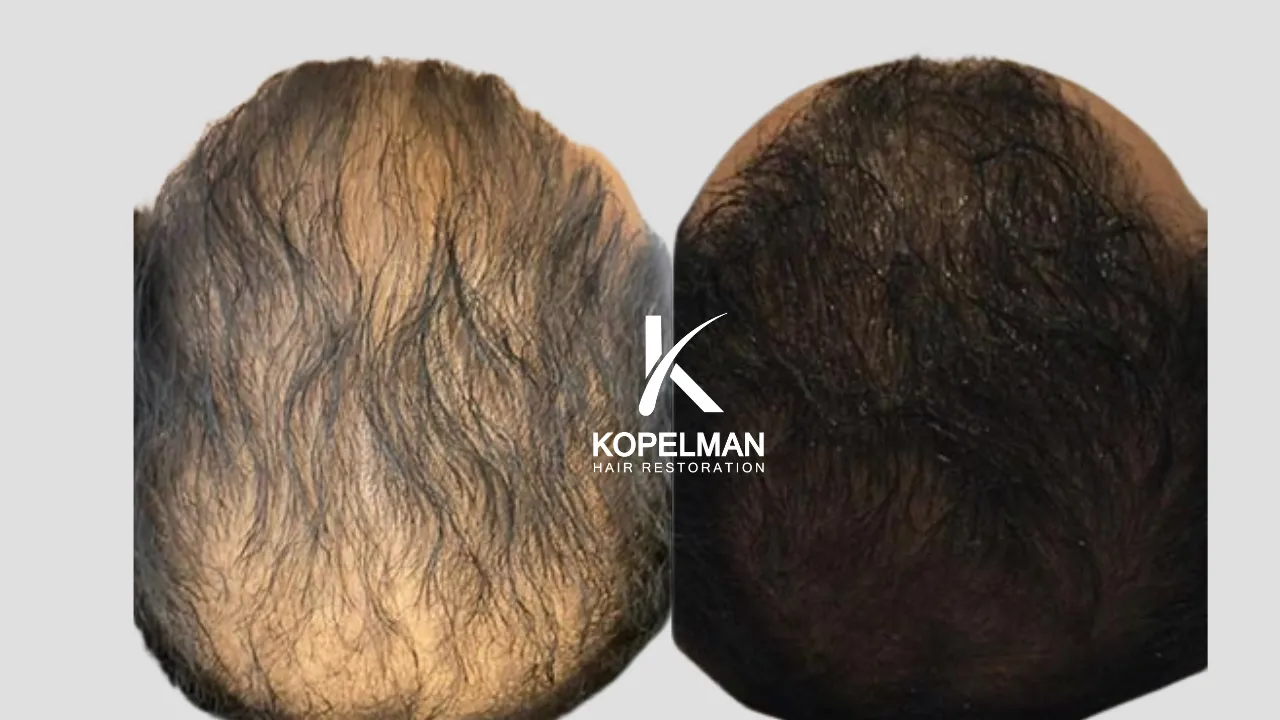
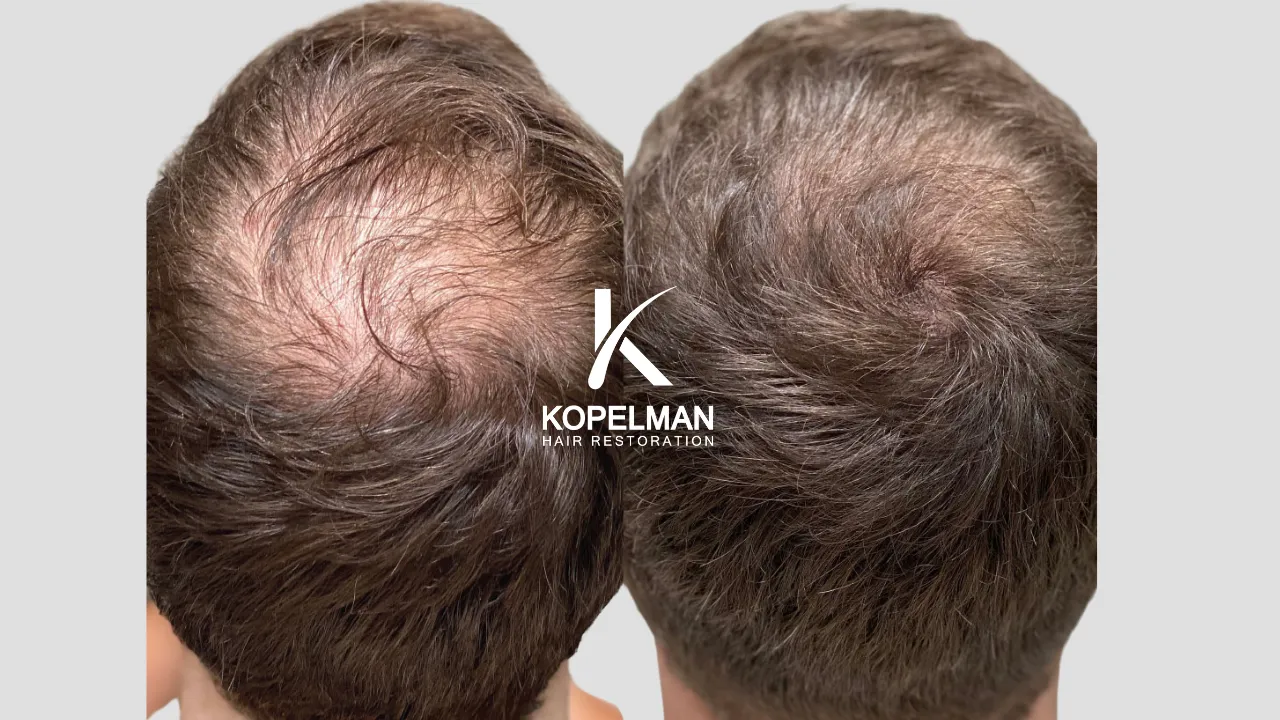
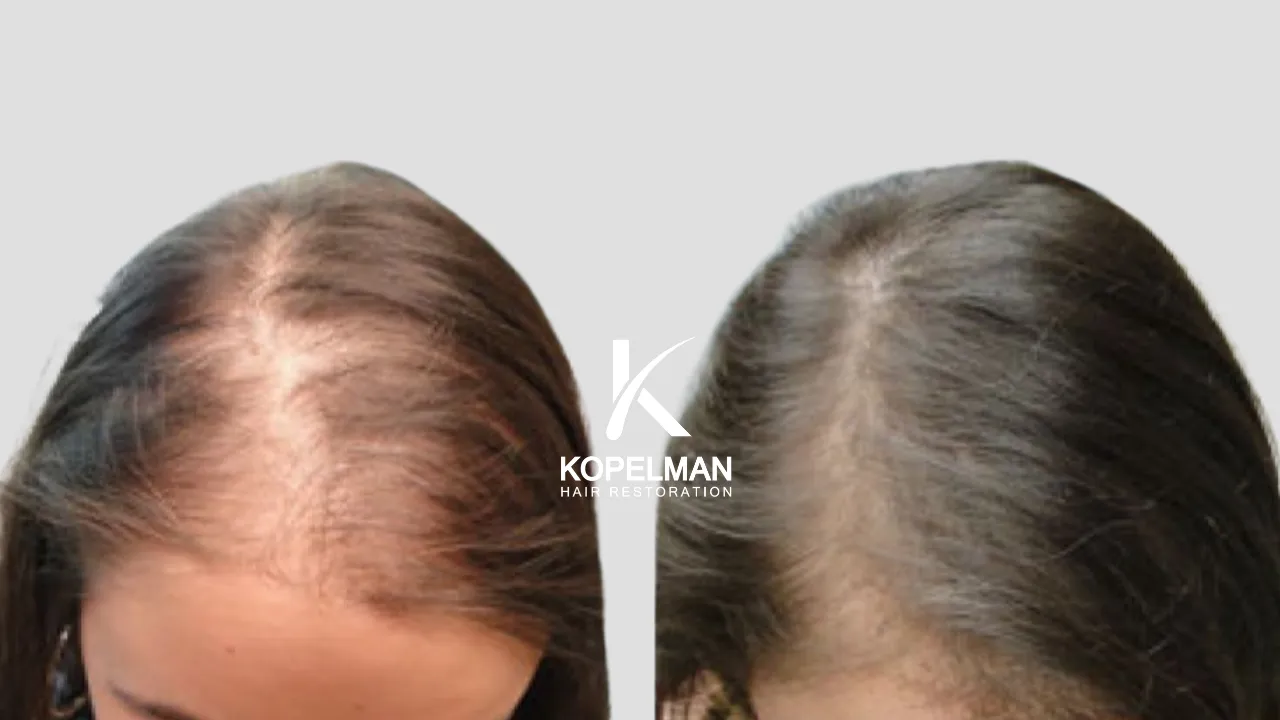
Many patients review PRP hair restoration before-and-after photos to understand realistic density improvements and how treatment evolves over several months. Comparison images typically show:
- More density in thinning areas
- Regrowth along the frontal edge
- Thicker shafts and better scalp coverage
While outcomes vary, many patients notice a clear visual difference by month three.
How Soon You Can Expect Changes
PRP is not a cosmetic claim without evidence behind it. Multiple randomized controlled trials and meta-analyses have measured density before and after treatment, and the pattern across them is consistent: measurable improvement in most patients, with meaningful variation between individuals.
What the Research Says About PRP Before and After Results
PRP is not a cosmetic claim without evidence behind it. Multiple randomized controlled trials and meta-analyses have measured density before and after treatment, and the pattern across them is consistent: measurable improvement in most patients, with meaningful variation between individuals.
A 2020 systematic review and meta-analysis of randomized controlled trials evaluated PRP against non-surgical alternatives and assessed effects on both density and shaft thickness PubMed. A separate meta-analysis pooling ten trials reported significantly higher density in PRP groups compared with controls, though shaft diameter differences were not statistically significant PMC.
Results are not universal. One double-blind, placebo-controlled pilot study in women found no statistically significant difference in count or mass index versus saline PubMed. This is why candidacy screening matters more than marketing photos.
Key Variations by Treatment Area
Wondering whether hair PRP or hair mesotherapy is better for your goals? Both treatments can effectively stimulate growth, but their approach and results differ.
PRP Hairline Before and After
Frontal restoration requires precision. Patients with receding edges often see stronger, denser regrowth along the temples and front scalp. Dr. Kopelman customizes each session to rebuild a natural shape that suits your face.
PRP for Hair Loss Before and After in Thinning Areas
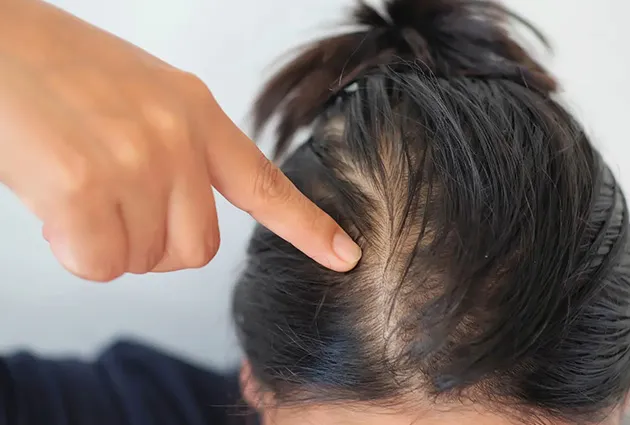
PRP hair loss before and after photos show improved density and better coverage for diffuse thinning, especially at the crown or top of the scalp. Patients in early-stage decline respond best, including those seeking PRP hair restoration in West Palm Beach at Kopelman Hair’s Palm Beach office.
Gender Differences in PRP Results
Women with female pattern loss often see strong progress, a finding supported by randomized, placebo-controlled trial data in this group (PubMed).
Men may use it to boost density or combine it with other options such as transplants or steroid injections for greater effect. Patients with textured hair can also explore our dedicated page on African American PRP hair restoration for tailored guidance.
What Influences Your PRP Treatment Results
Growth Cycle and Scalp Health
Healthy follicles and good circulation increase the chance of success. PRP cannot generate growth where follicles no longer exist, but it can rescue weakened ones. For people with alopecia areata, it may support regrowth by calming inflammation and stimulating dormant roots.
Lifestyle and Post-Treatment Care
What you do after treatment matters. Smoking, stress, and poor nutrition can hinder outcomes. To improve results, avoid alcohol, rest properly, and follow your care plan. Here’s a useful read on Foods to Avoid After PRP.
Number of Sessions and Medical Expertise
More sessions usually bring better results. At Kopelman Hair, plans are tailored to your condition. Dr. Kopelman combines experience with advanced tools to target your goals.
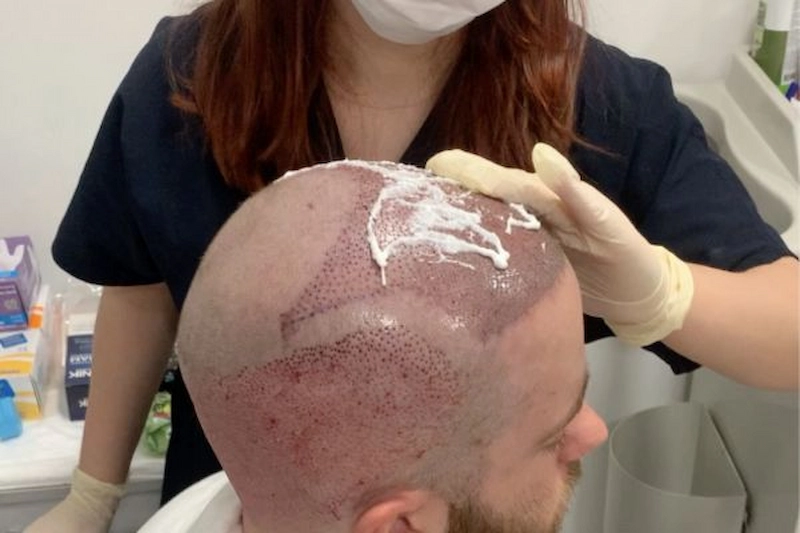
Whether you are looking for an alternative to transplant surgery or combining both treatment options, expert guidance matters. Those based in the tri-state area can book through Kopelman Hair’s PRP hair treatment in NJ page.
Sample Timelines: What to Expect at 1, 3, and 6 Months
- 1 Month: Reduced shedding, early signs of thickening
- 3 Months: Visible regrowth, stronger strands along the treated zones
- 6 Months: Noticeable improvement in hairline and density across the scalp
If you’re curious how long the benefits last, read about how long do PRP injections last.
PRP Success Stories from Kopelman Hair
A Look at Real Patient Transformations
At Kopelman Hair, patients have regained confidence through visible, measurable improvement.
Case photos show clear gains in both male and female clients. The difference in hairline definition and volume after just a few sessions speaks for itself.
You can also check our detailed outcomes for alopecia injections before and after to see how PRP tackles patchy or spot-related hair loss.
How Dr. Kopelman Personalizes Your Plan
No two scalps are the same. Dr. Kopelman evaluates your type of thinning, scalp condition, and medical history to build a tailored strategy.
He adjusts the platelet concentration and session frequency to match your goals using formulas best suited for your needs.
Is PRP Right for You?
PRP works best for patients with early to moderate thinning who still have active follicles.
It’s safe, non-surgical, and backed by clinical studies. Platelet-rich plasma therapy can slow progression, promote new growth, and boost the effectiveness of other treatments. Patients weighing their options can also review the full range of non-surgical hair restoration approaches available at Kopelman Hair.
Frequently Asked Questions About PRP
Yes. A single session can reduce shedding and initiate early regrowth. However, one session is typically a starting point. Most patients see meaningful, visible improvement after completing 3 to 4 sessions spaced about a month apart.
Most treatment plans include 3 to 4 initial sessions, with maintenance every 6 to 12 months to preserve density gains. The exact number depends on the severity of thinning and your individual response to therapy.
Platelet-rich plasma therapy is most effective for androgenetic alopecia (pattern thinning) in both men and women, and for alopecia areata. It is less effective for scarring alopecia or when follicles have been permanently lost. A consultation can help determine whether you are a good candidate.
Most patients report mild discomfort during the injection phase, comparable to light pinching. A topical numbing agent is typically applied beforehand to minimize sensation. There is no significant downtime after the procedure.
Related Resources for Better Outcomes
Before deciding, explore these helpful pages:
- Learn about the prp hair treatment in NYC
- Compare real-world alopecia injections before and after
- Understand how long PRP injections last
- Follow the Foods to Avoid After PRP
- Review the PRP hair treatment success rate
- Get a breakdown of PRP hair treatment cost
- Find location-specific details on PRP for hair loss in Boca Raton
- You can also learn about finding PRP hair treatment near you in our detailed guide.
Ready to see your own before-and-after results? Book a consultation at Kopelman Hair. South Florida patients can also visit our PRP hair treatment in Miami location and start their journey toward a fuller, healthier head of hair today.