Hair Graft Estimator: Hair Transplant Graft Calculator
Our hair transplant cost calculator gives you a fast, personalized estimate of how many grafts you may need and what your procedure could cost, before you ever book a consultation. Enter your level of thinning and your goals in the calculator above, and you’ll see an approximate graft range and price band in under a minute.
As a quick orientation: in the US, follicular unit grafting generally runs about $4 to $8 per graft. Most plans land somewhere between roughly $2,000 for small refinements and $20,000 or more for full restoration. The sections below break down exactly how that figure is reached and what moves it up or down.
Get an estimate of how much your hair transplant will cost
Our hair transplant cost calculator helps you understand how graft count directly shapes total pricing and treatment planning. Because the number of grafts is the main driver of cost, knowing your estimated range early makes budgeting far easier.
Unsure how many grafts you’ll need? Dr. Kopelman’s Hair Graft Estimator provides a quick, individualized projection based on your thinning pattern and goals. With 35+ years of restoration experience, Dr. Kopelman designed this tool to help you understand your donor supply and plan for natural, long-term results.


Thinking about a hair transplant but unsure how many grafts you’ll need? Dr. Kopelman’s Hair Graft Estimator provides a quick, personalized estimate based on your hair loss and goals. With 35+ years of experience in hair transplant surgery, Dr. Kopelman designed this tool to help you understand your donor hair needs and achieve natural, long-term results.
How Many Grafts Do You Need?
Determining the right graft count is the key to natural-looking, lasting results. Let’s look at what shapes your estimate.
Factors Affecting Graft Estimates
Several variables determine how many grafts a plan calls for:
- Extent of thinning: More advanced loss requires more grafts for full coverage.
- Density goals: A fuller look needs more follicles to build thickness.
- Donor availability: The quality and quantity of donor follicles affect how much can be safely harvested.
- Hair type and texture: Coarse or curly strands cover more scalp per graft, whereas fine, straight strands often require more grafts.
Dr. Kopelman points out that texture carries as much weight as raw graft count. Coarse or wavy strands shade the scalp more efficiently, so a curly-haired patient may reach the same visual fullness with noticeably fewer grafts than someone with fine, straight strands.
How to Calculate Grafts for Thinning Areas
Here’s a simple way to approximate the grafts you’ll need:
- Assess the affected zone: Identify the regions needing restoration, such as the hairline, crown, or temples.
- Measure the area: Clinicians measure the surface in square centimeters.
- Set your target density: Natural results generally call for about 35 to 40 grafts per cm² along the hairline, and closer to 20 to 25 grafts per cm² at the crown, where lower density still reads as full.
- Apply the formula: Multiply the surface area by your target density.
For example, covering 50 cm² at 35 grafts per cm² works out to roughly 1,750 grafts. Dr. Kopelman’s calculator runs this math for you to produce a precise starting estimate.
1 Graft = How Many Hairs?
Each graft contains 1 to 4 hair follicles:
- Single-follicle grafts build soft, natural-looking hairlines.
- Multi-follicle grafts (2 to 4 hairs) add density across larger zones.
The follicles per graft depend on factors like texture and donor quality, which help set realistic expectations for your outcome.
Graft Estimates for Female Pattern Thinning
Women often experience diffuse thinning rather than distinct bald spots, which makes estimating more nuanced:
- Diffuse thinning: Calls for strategic placement to achieve even, natural coverage.
- Donor limitations: Women may have less stable donor zones, so harvesting needs careful planning.
- Custom solutions: Dr. Kopelman tailors each plan for seamless, natural results.
The estimator helps women understand how many grafts it takes to restore volume and confidence.
What Our Patients are Saying
Posted on Google
 barret abramow
 I recently had a FUE hair transplant with Dr. Kopelman in New York City, and I couldn’t be more pleased with the results. I had 2,800 grafts focused on restoring my hairline, which had become more recessed than I was comfortable with. The change has been subtle yet transformative — my hairline looks completely natural, and it frames my face in a way that feels more like me. It’s not overly dramatic, just exactly what I hoped for. What really stood out about working with Dr. Kopelman and his team was their expertise and attention to detail. From the initial consultation, it was clear they understood how to approach my specific situation to achieve the best outcome. The procedure itself went smoothly, and the aftercare instructions were thorough and easy to follow. I felt confident every step of the way because of how knowledgeable and professional they were. Finding their practice in NYC was a relief — it’s not easy to trust just anyone with something as personal as your hairline. I’m really glad I chose them because they delivered excellent results without any of the typical hype. If you’re considering a hair transplant, this is definitely the team to go to.Posted on Google
 Beth ZimmermanI am very happy with my experience with Dr. Kopelman. They are an amazing team. I had been looking for physician who could address my hair loss that had been bothering me for years. I am now doing mesotherapy treatments and I am so happy that my hair loss has reverted over the past 4 months. I really appreciated that a hair transplant was not forced upon me but is instead a last resort. I really appreciate the honesty. Thank you!Posted on Google
 Yoel OhayonI can’t say enough great things about my experience with Dr. Kopelman and the entire team at Kopelman Hair Restoration! I had my hair transplant last year, and the results are simply fantastic. I am fully recovered and thrilled with the transformation—my hair looks natural, and I feel like myself again. Every step of the process was handled with such expertise and care. Dr. Kopelman took the time to explain everything thoroughly, and his team was kind, professional, and supportive from start to finish. I’m beyond grateful for their exceptional work and highly recommend Kopelman Hair Restoration to anyone considering a hair restoration procedure.Posted on Google
 RickDr. Kopelman is extremely knowledgeable and was willing to talk through my concerns and needs to develop an optimal treatment plan. He helped me evaluate a variety of options and decide on a protocol I was comfortable with. I am happy I found him!Posted on Google
 David CohenMy experience with Dr. Kopelman has been nothing short of incredible. From the moment I stepped into his office, I could tell I was in the hands of a true expert. I came to him for both an eyebrow hair transplant and an FUE hair transplant, and I am very happy with the results. My eyebrows look so natural, and the precision and artistry he brought to my FUE procedure completely transformed my hairline. What really stood out was how comfortable and confident he made me feel throughout the process—he explained everything in detail and answered all my questions with such patience and care. I actually discovered him on YouTube, where his videos about hair loss and transplants are so informative, and I’m so glad I did. I’ve never felt more confident in my appearance, and it’s all thanks to Dr. Kopelman’s expertise and attention to detail. If you’re looking for the best hair surgeon in NYC, he’s the one to trust.Posted on Google
 Yedidyah Leo SamuelsDr. Ross is incredible! So much knowledge and expertise in the field. Best hair surgeon in New York City!!Posted on Google
 Juan FraustroI paid for a consultation with one Dr. Kopelman and I actually got both Dr’s Kopelmam. They spent over an hour with me carefully studying my scalp, explaining my options, and providing the necessary prescriptions. I cannot recommend this practice or these doctors more highly.Posted on Google
 Odellya SohnisRoss is a top hair transplant surgeon in NYC. He was so kind when I came in. I wanted to understand why my hair was thinning after using a shampoo a dermatologist had sent my way to stop my bad dandruff problem. He was so patient through my 10 million questions, I felt he really cared about what I need instead of feeding into a consumerist magic pill. He also was able to find that I could be balding and give me tips and a prescription and I felt like he saved me from tripping over a ledge I didn't see. Thank you so much!Posted on Google
 K SalalahI've been to many hair specialists, and I can confidently say that Dr. Kopelman and his team stand out for their incredible care and attention. The hair industry is unfortunately filled with people who are simply looking to make a sale, and think little about your longterm goals or happiness. I'm fortunate to have found Dr. Kopelman, who is incredibly attentive, knowledgable, puts my goals and comfort first, and is willing to think outside the box. Six stars!Posted on Google
 Andres DelgadoI had a consultation with Dr. Joel Kopelman. It was worth my time and money. The doctor answered all my questions and provided valuable insights.
How Much Coverage Will You Get?
Knowing what coverage to expect helps you set realistic goals. The graft count directly shapes how full and natural your results look. The table below maps common treatment zones to the graft ranges most patients fall within, and the sections that follow explain the nuances.
| Treatment Area | Typical Extent of Thinning | Approximate Graft Range |
|---|---|---|
| Hairline and temples | Minor recession or framing | 500 – 1,500 |
| Frontal third | Early to moderate thinning | 1,200 – 2,200 |
| Front and mid-scalp | Moderate loss across zones | 2,000 – 3,500 |
| Crown (vertex) | Localized crown thinning | 1,500 – 2,500 |
| Front, mid-scalp and crown | Extensive, advanced loss | 3,500 – 5,000+ |
These are general guides; your exact figure depends on texture, donor density, and goals.
How Much Area Do 3,000 to 5,000 Grafts Cover?
The reach of 3,000 to 5,000 grafts depends on your texture, target density, and how advanced the thinning is:
- 3,000 grafts: Cover the front hairline and mid-scalp with moderate density. Well-suited to early or mid-stage loss.
- 4,000 grafts: Extend coverage to the crown for a fuller look in more advanced cases.
- 5,000 grafts: Address extensive loss across the hairline, mid-scalp, and crown with solid density, though not always at maximum thickness.
Texture matters here, too. Curly or coarse strands provide better coverage with fewer grafts, while fine strands may require more grafts for a similar effect.

Maximum Grafts in One Session
There’s a ceiling on how much can be safely placed in a single sitting:
- 3,500 to 4,500 grafts is the typical maximum, depending on donor quality and scalp health.
- Exceeding that can strain the scalp, slow healing, and risk overharvesting the donor zone.
Because the donor area is a finite resource, Dr. Kopelman plans each case around your long-term supply rather than the maximum of a single session.
He will assess your scalp’s capacity and, for extensive loss, may recommend staging the work across multiple sessions.
Planning Multiple Sessions for Extensive Hair Loss
For significant thinning, more than one session may be needed to reach the coverage and density you want:
- Improved density: The first session establishes coverage, while follow-ups refine thickness and the hairline.
- Donor recovery: Spacing procedures lets the donor zone heal, lowering the risk of scarring or thinning.
- Flexible adjustments: Staged sessions let you fine-tune goals based on early results.
Dr. Kopelman builds a personalized plan that protects your scalp and existing follicles while delivering natural, durable results.
Hair Transplant Costs: What to Expect
Pricing varies with the number of grafts, the technique used, and the clinic’s location. Understanding these drivers helps you budget realistically and judge where you’re getting genuine value. Here’s what shapes the total.
Hair Transplant Cost Graft Calculator
A Hair Transplant Cost Graft Calculator estimates pricing from the number of grafts you need. By entering your level of thinning and desired density, you get a clearer picture of the likely investment.
Keep in mind these tools produce general estimates. Final pricing also depends on:
- The technique used (FUE or DHI).
- The surgeon’s experience.
- Added services such as post-op care or PRP therapy.
Dr. Kopelman’s consultations turn that ballpark estimate into precise, transparent pricing tailored to your case.
How Graft Quantity Impacts Cost
Graft count is the single biggest cost factor. Most clinics charge per graft, though some use tiered pricing, in which the per-graft rate drops as the total increases.
Here’s how volume typically affects price:
- 500 to 1,200 grafts: Best for minor refinements or hairline work. Lower total, higher per-graft rate.
- 2,000 to 3,500 grafts: Suited to larger zones like the front and mid-scalp.
- 4,000 to 5,000+ grafts: Cover extensive loss. Higher total, but a lower per-graft price.
Talking through your goals with Dr. Kopelman ensures you pay only for what you actually need.
Cost Breakdown: 500, 1,200, and 5,000 Grafts
Here’s an approximate cost breakdown, though prices vary by clinic and location:
- 500 Grafts: $2,000 – $4,000 Perfect for minor hairline corrections or small thinning areas.
- 1,200 Grafts: $4,500 – $7,000 Ideal for moderate thinning at the temples or crown.
- 5,000 Grafts: $12,000 – $20,000+
Covers extensive hair loss, including the front, mid-scalp, and crown.
While cost matters, the experience of your surgeon and the quality of care are crucial.
Dr. Kopelman’s expertise ensures natural, lasting results, giving you the best value for your investment.
Hair Graft Cost in the USA vs. Abroad
Many consider traveling abroad for cheaper hair transplants, and often research the hair transplant cost in Mexico before deciding, but it’s important to weigh the pros and cons.
United States:
- Higher costs due to advanced medical standards and experienced surgeons.
- Average cost: $4 to $8 per graft.
- Benefits: Better patient protections, easier follow-up care, and access to top specialists like Dr. Kopelman.
Abroad (e.g., Turkey, Mexico):
- Lower costs, ranging from $1 to $3 per graft.
- Trade-offs: inconsistent standards, possible language barriers, and limited post-op support.
Cheaper upfront pricing can carry real risk. Prioritizing safety, expertise, and durable results tends to protect your investment, and a trusted specialist like Dr. Kopelman helps ensure the outcome holds up.
Choosing the Right Restoration Method
Selecting the right technique is central to natural, lasting results. The two most advanced approaches are FUE (Follicular Unit Extraction) and DHI (Direct Hair Implantation). Both deliver excellent outcomes, but the best fit depends on your texture, the extent of your loss, and your goals. Here’s how they compare, and how your donor area factors in.
FUE vs. DHI: Which Method is Best?
Both FUE and DHI are minimally invasive and produce natural-looking results, but they differ in their techniques and applications.
FUE (Follicular Unit Extraction):
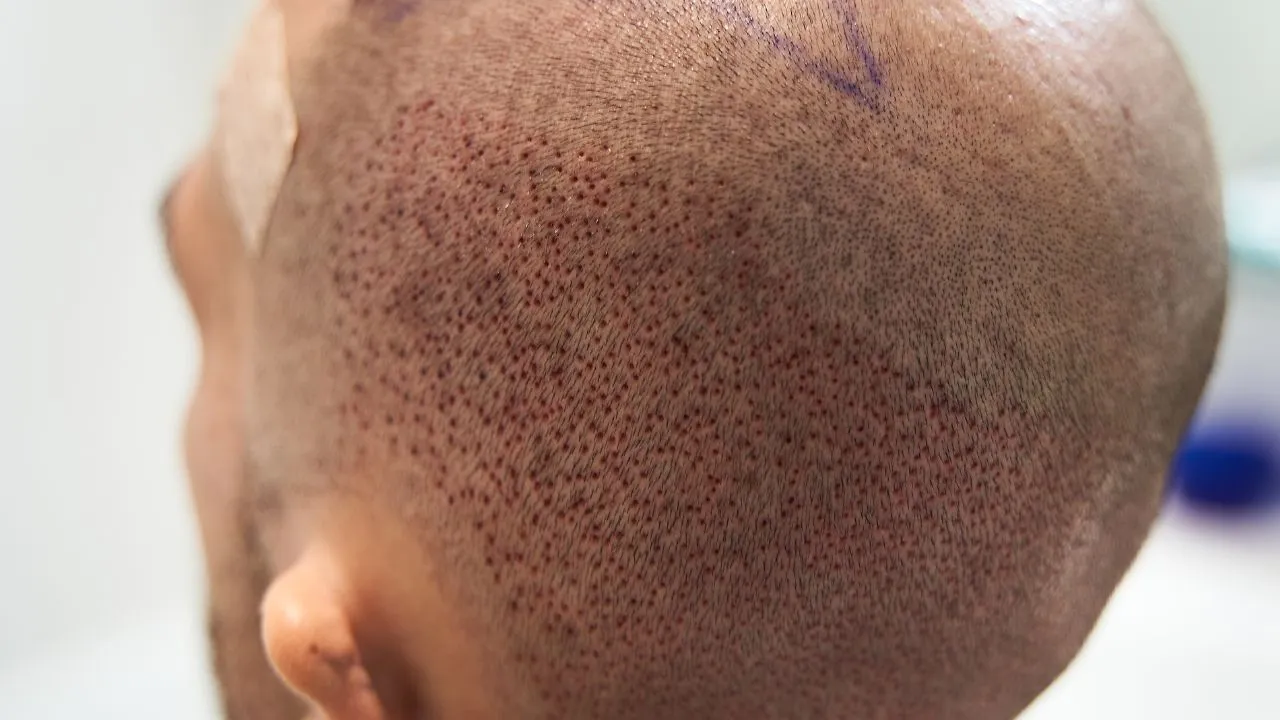
Individual follicles are harvested from the donor zone with a micro-punch tool and placed into thinning areas. This leaves tiny, barely visible marks and heals quickly.
Best for:
- Larger zones of loss
- Patients who prefer short styles
- Minimal scarring and faster recovery
DHI (Direct Hair Implantation):
A more advanced form of FUE, DHI uses a Choi implanter pen to extract and immediately place each follicle. This gives precise control over angle, depth, and direction, producing dense, natural outcomes.
Best for:
- Detailed, natural-looking hairlines
- Patients seeking higher density
- Minimal graft handling, which lowers damage risk
Which is Best?
The right choice depends on your needs. For precision and density, DHI is ideal. For covering larger zones with less downtime, FUE is often preferred. Dr. Kopelman specializes in both and recommends the best fit for your texture and goals.
Donor Area Density and Graft Availability
Your donor zone, usually the back and sides of the scalp, determines how many grafts can be safely harvested and placed. Its density and quality directly shape your final result.
- High donor density: Thick, healthy follicles supply more grafts, allowing better coverage in thinning areas.
- Low donor density: Sparse zones require careful planning to avoid overharvesting, which could leave visible thinning.
- Hair characteristics: Coarse or curly strands cover more efficiently, while fine, straight strands may need more to match.
During your consultation, Dr. Kopelman evaluates your donor zone and develops a plan to maximize results while protecting your existing follicles.
Free Tools to Estimate Your Hair Graft Needs
If you’re researching restoration, you’ve probably found free graft calculators online. These offer a quick way to gauge how many grafts your pattern might call for.
But how accurate are they, and do they work for everyone, including women with thinning? Let’s take a closer look.
Are Free Graft Calculators Accurate?
Free graft calculators give a quick projection based on your loss and target coverage. How reliable are they?
Pros:
- Quick and easy to use
- Provide a general estimate
- Set expectations before a professional evaluation
Cons:
- Generic output that overlooks texture and donor quality
- Limited accuracy compared to a clinical assessment
For precise results, consult Dr. Kopelman, who tailors graft counts and treatment plans to your specific case.
Using a Graft Calculator for Female Pattern Thinning air Loss
Women lose hair differently than men, often through diffuse thinning rather than defined balding. That makes estimating more complex, and free calculators frequently miss the mark.
- Diffuse thinning: Unlike male pattern loss, women’s thinning needs strategic placement for even results.
- Donor variability: Women often have less stable donor zones, so planning must guard against overharvesting.
Free tools can offer a rough idea, but they don’t account for these factors. A consultation with Dr. Kopelman ensures a customized approach for natural, satisfying results.
Why Choose Kopelman Hair for Your Restoration?
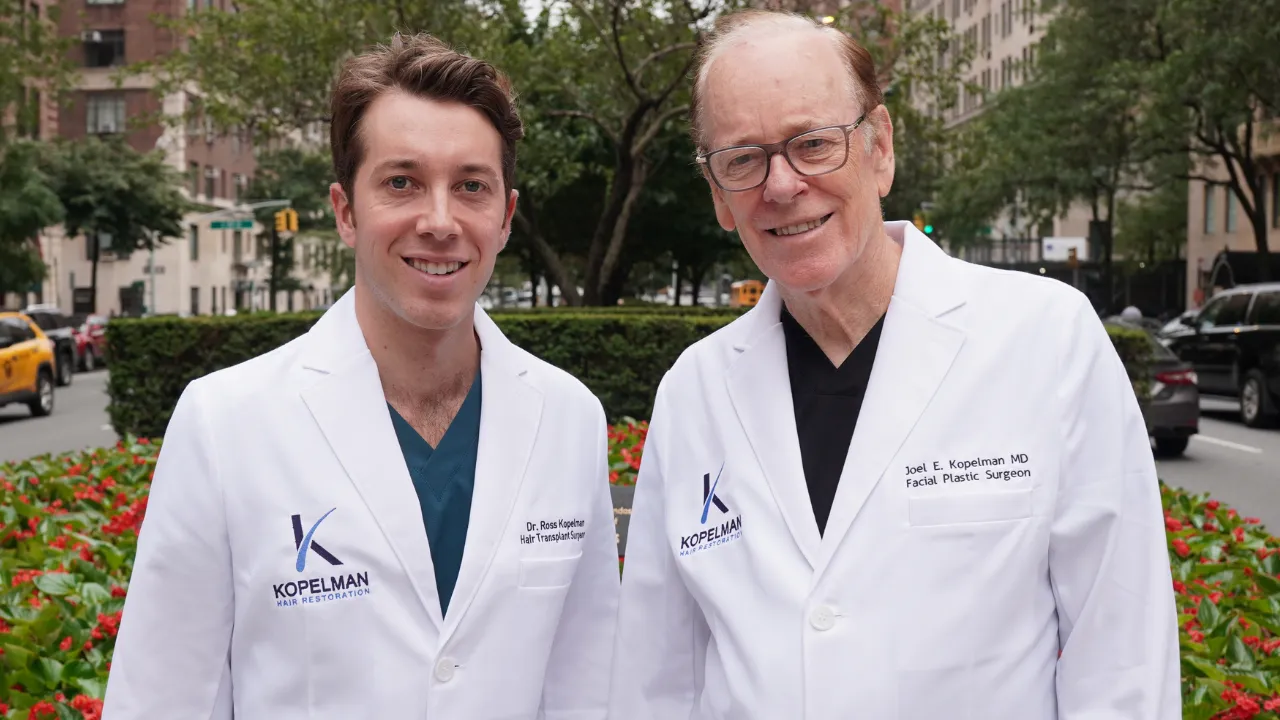
Choosing the right clinic is crucial. At Kopelman Hair, you’re cared for by a team with over 35 years of experience in hair restoration. Led by a father-son partnership, Dr. Kopelman pairs advanced technique with a compassionate approach to deliver natural, lasting results.
Why Choose Kopelman Hair?
- Personalized treatments: Every plan is built around your texture, loss pattern, and goals, with no one-size-fits-all formulas.
- Trusted expertise: Dr. Kopelman’s command of FUE and DHI ensures precise, natural placement.
- Advanced techniques: We use the latest technology to minimize scarring, increase density, and accelerate recovery.
- Long-term results: Our focus extends beyond restoring follicles to sustaining your confidence over time.
With Kopelman Hair, you’re investing in expert care and durable results tailored to you.