Hairline Lowering Surgery | Forehead Reduction
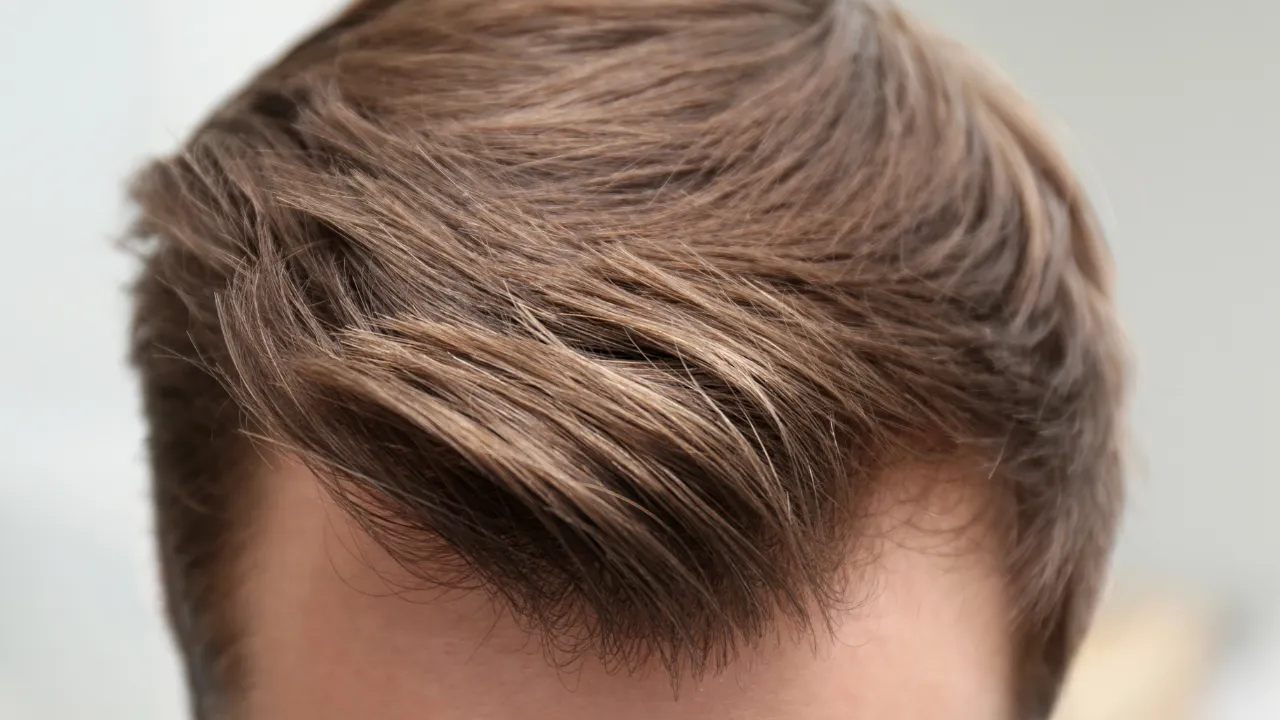
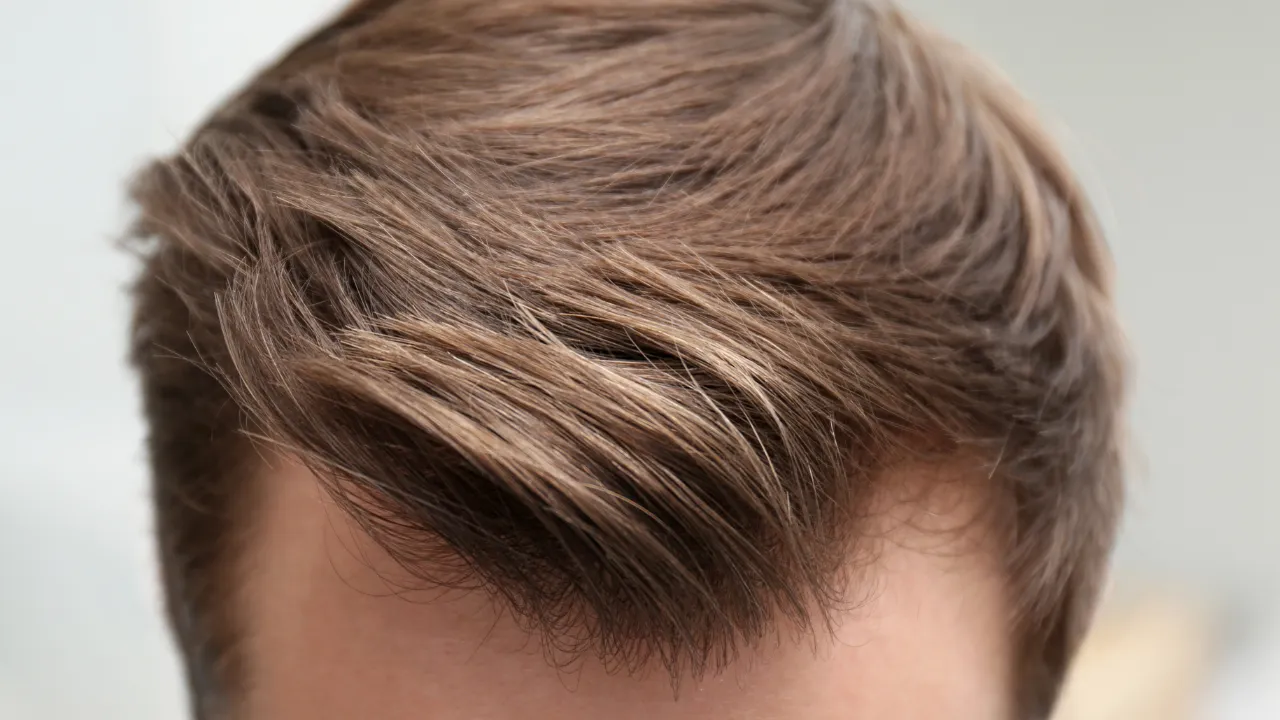
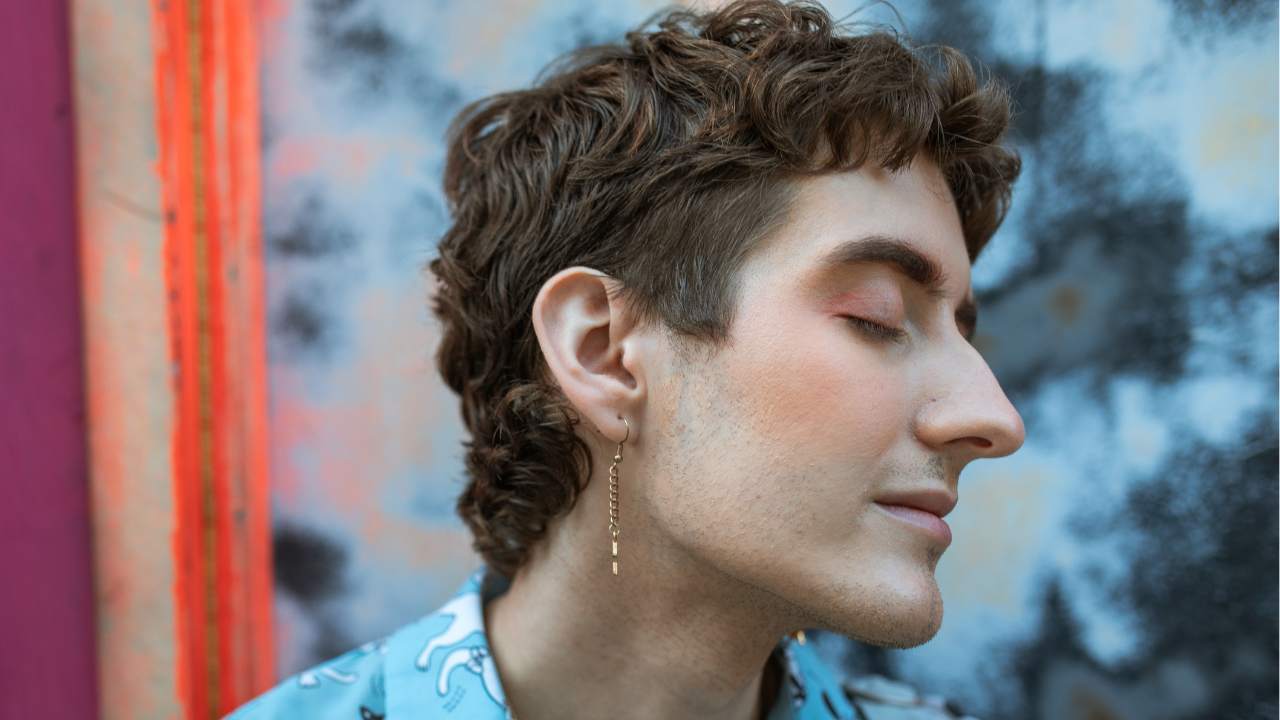
Hairline lowering surgery is a procedure that permanently reduces the height of the forehead by advancing the hairline forward. For patients who feel their forehead is disproportionately large, or whose hairline has always sat higher than they would like, this one-time surgical correction can create a noticeably more balanced facial profile.
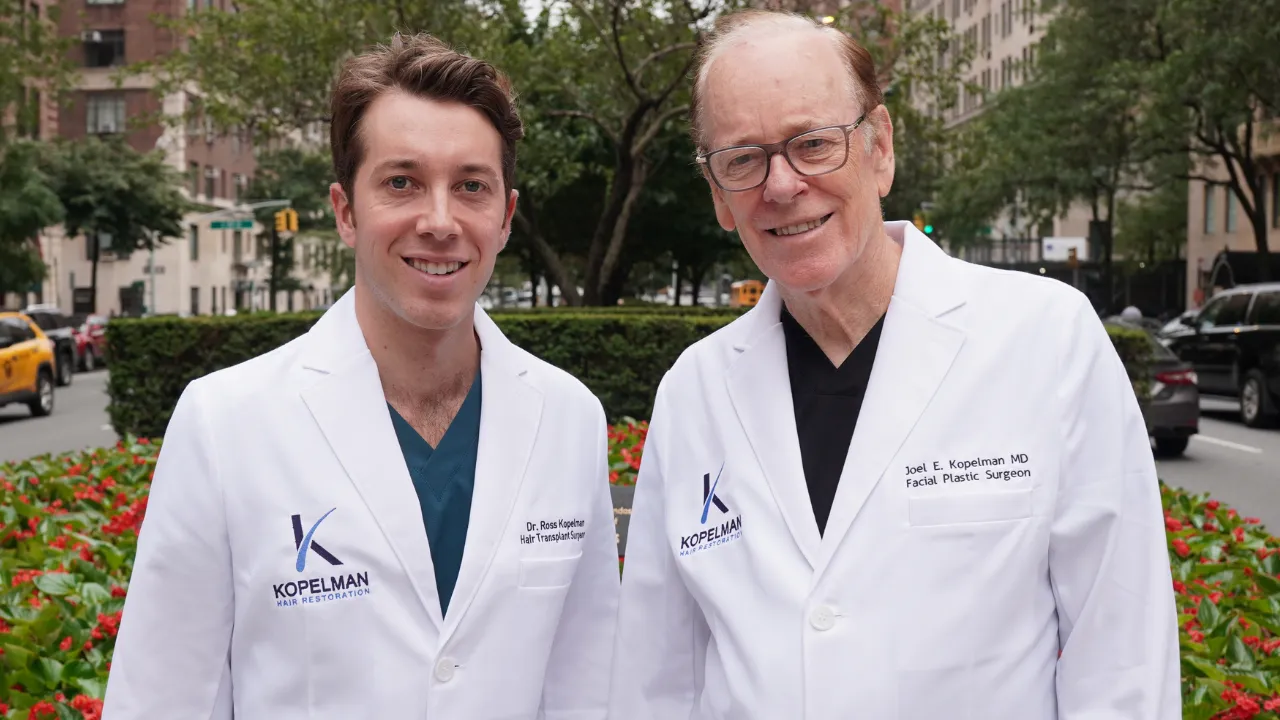
Dr. Kopelman, a [board-certified surgeon with X years of experience in hair restoration and facial plastic surgery], performs forehead reduction at Kopelman Hair Restoration offices in New York, New Jersey, and South Florida. Patients travel from across the United States for his expertise in both surgical hairline advancement and FUE hair transplantation, which allows him to recommend the right approach for each individual case.
How Forehead Reduction Differs from a Brow Lift
These two procedures address different concerns and are frequently confused. A forehead reduction moves the hairline downward, reducing the forehead’s vertical height. A brow lift raises the eyebrows and may or may not reduce forehead size, depending on the technique used.
A standard hairline advancement does not change brow position. If a patient wants both a lower hairline and elevated brows, the two procedures can be performed together through the same incision. The combined effect is a significantly shorter-looking forehead from both directions.
Patients who are unsure which procedure they need should discuss both options during their consultation. In some cases, a brow lift alone achieves the desired improvement without any change to the hairline.
Forehead Lowering Surgery: Procedure
During the procedure, the surgeon makes a carefully placed incision along the natural hairline. The hair-bearing scalp is then separated from the underlying tissue, advanced forward, and secured in its new position. The excess forehead skin is trimmed, and the incision is closed in multiple layers to minimize scarring.
In most cases, the hairline can be lowered by approximately 1.5 to 2.5 cm in a single session, depending on the patient’s scalp laxity. The goal is typically to bring the forehead into the 5.5 to 6.5 cm range measured from the brow line to the dense part of the hairline, though the ideal measurement varies by anatomy and personal preference.
Patients should focus on visual improvement rather than fixating on exact numbers. The position of the ruler, the location of the baby hairs relative to the dense hairline, and the natural trichophytic closure all affect how measurements translate into visible results.
FUE Hair Transplant vs. Surgical Hairline Advancement
Understanding the difference between these two approaches is essential for choosing the right one. Both can lower the apparent hairline, but they work through entirely different mechanisms and suit different patient profiles
In a surgical hairline advancement, the entire scalp is moved forward, and the excess forehead skin is removed in one session. This produces an immediate, full-density result because existing hair is repositioned rather than individually transplanted, unlike a standard hair transplant.
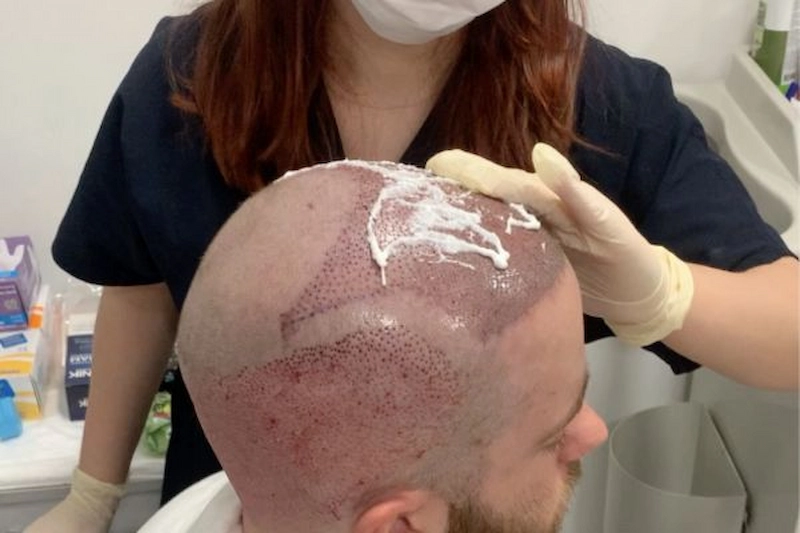
In an FUE hair transplant, individual follicles are extracted from the donor area (typically the back of the head) and placed one by one into the forehead skin to create the appearance of a lower hairline. FUE does not require a linear incision along the hairline, but it usually takes two sessions spaced 9 to 12 months apart to achieve adequate density. The full result takes roughly two years to mature because transplanted hair grows slowly.
Pros and Cons of Hairline Lowering
Pros
- Improved Facial Proportions: Improved Facial Proportions: Reducing forehead height creates a more balanced profile. Patients consistently report improved facial harmony and a more proportionate appearance after the procedure.
- Permanent Results: Unlike non-surgical treatments, this procedure offers a lasting correction. The scalp is secured in its new position and does not stretch back to its original height over time.
- Boost in Confidence: Many patients describe the results as life-changing, particularly those who have been self-conscious about their forehead since childhood.
- Immediate Density: Unlike hair transplants, which can take months to mature, surgical advancement preserves your existing hair density, delivering a natural-looking result from day one.
Crons
- Scarring: A scar along the hairline is unavoidable, though proper surgical technique and post-operative care minimize its visibility. Patients with thin hair or darker skin tones may find the scar harder to conceal initially.
- Recovery Time: Swelling and bruising require approximately one to two weeks before most patients feel fully comfortable in social settings.
- Cost: The procedure is considered cosmetic and is generally not covered by insurance.
- Potential Complications: While generally safe when performed by a qualified surgeon, risks include infection, temporary numbness, hairline irregularities, or, in rare cases, hair loss near the incision site.
- Not Easily Reversible: This is a permanent structural change that requires careful consideration and thorough consultation beforehand.
Preparing for Your Procedure
Patients receive specific preoperative instructions covering medications to avoid (particularly blood thinners and anti-inflammatory drugs that increase bleeding risk), any lab work or medical clearances needed based on age and health history, and dietary guidelines for the day of surgery.
Scalp stretching exercises in the weeks leading up to surgery can improve scalp mobility and may allow for greater advancement during the procedure. These involve gently grasping the scalp above the forehead, pulling it forward, holding for several seconds, and repeating several times daily. Dr. Kopelman’s team demonstrates the proper technique during the consultation.
Recovery and What to Expect
After surgery, a light dressing is applied and typically removed the following morning. Most patients experience mild soreness, tightness, and some swelling in the forehead area for the first few days. Bruising around the forehead or eyes is possible but usually minimal.
Pain is generally well managed with prescribed medication, and most patients describe the discomfort as mild rather than severe. Normal daily activities can typically resume within a week, though strenuous exercise should be avoided for at least two weeks.
Sutures are removed at a follow-up appointment 7 to 10 days after surgery. The incision will appear pink or slightly dark initially and can be concealed with hair styling, a headband, or makeup once it has healed sufficiently, usually within 10 to 14 days.
Over the following months, the scar continues to fade, and hair begins to grow through the incision line, further concealing it. Final results are typically visible within 3 to 6 months as all swelling resolves and the scar matures. Treatments such as laser therapy can further improve the appearance of scars if needed.
Numbness in the scalp behind the incision is expected and temporary. Sensation gradually returns over several weeks to months as the nerves regenerate.
Who Is a Good Candidate?
STEP 01
Hairline Lowering for Women
Women are generally the strongest candidates for this procedure because the female hairline tends to remain stable over time, even if some overall thinning occurs, which is also why hair transplants for women often follow a different evaluation process than male procedures. Women who have always had a naturally high forehead, rather than one caused by progressive hair loss, typically see the most dramatic and lasting results.
The procedure can be combined with a brow lift through the same incision for patients who also want to address brow position, saving both cost and recovery time compared to two separate surgeries.
STEP 02
Hairline Lowering for Men
Male candidates need careful evaluation because most men experience some degree of hairline recession over their lifetime. Even 1 to 2 mm of recession after surgery can expose the incision line on the forehead, creating a visible mark that may be difficult to conceal.
For this reason, hairline lowering in men is typically recommended only for those with a stable hairline, no family history of significant hair loss, good scalp laxity, and realistic expectations about long-term hair growth patterns. Men who are actively losing hair are generally better served by an FUE hair transplant or medical treatment to stabilize the loss before considering any surgical intervention.
STEP 03
Candidacy by Skin Tone and Hair Type
Patients of all skin tones and ethnicities can be candidates for forehead reduction. Dr. Kopelman treats Caucasian, African American, Asian, Hispanic, and multi-racial patients. However, outcomes do vary depending on hair density and skin color.
Patients with fair skin and dense hair along the frontal hairline tend to see the least visible scarring. Those with darker skin tones should know that scars may heal lighter than the surrounding skin, making them more noticeable if hair density along the hairline is thin.
Patients with a combination of darker skin, thin hair, and a very high hairline (more than approximately 9 cm above the brows) may not be ideal candidates. Dr. Kopelman evaluates each patient individually to set realistic expectations based on their unique anatomy.
Who Is Not a Candidate?
- Active scalp disease or scarring alopecia
- Poorly controlled diabetes or bleeding disorders
- Heart or lung conditions that increase surgical risk
- A history of coronal brow lift surgery, which removes hair-bearing scalp and can compromise blood supply for a subsequent advancement
- Active smoking, which impairs wound healing and increases scar visibility
Single-Stage vs. Multi-Stage Procedure
Most patients are good candidates for a one-stage procedure, in which the hairline is advanced, and the excess skin is removed in a single operation. This is the most common approach and typically takes between 1.5 and 3 hours.
For patients who need more than 2.5 cm of advancement or have limited scalp laxity, a two-stage approach with a tissue expander may be recommended. In the first stage, a balloon-like device is placed beneath the hair-bearing scalp. Over the course of 6 to 8 weeks, it is gradually filled to stretch the tissue. In the second stage, the expander is removed, and the hairline is advanced to a greater degree than a single session allows.
It is worth noting that tissue expansion stretches the scalp over a larger area, which can temporarily thin the hair density in the expanded zone. A one-stage advancement preserves existing density because the scalp is repositioned rather than stretched. Dr. Kopelman discusses which approach best fits your anatomy and goals during your consultation.
Anesthesia and Surgical Setting
Incision and Closure
What Our
Patients Are Saying
Posted on Google
 barret abramow
 I recently had a FUE hair transplant with Dr. Kopelman in New York City, and I couldn’t be more pleased with the results. I had 2,800 grafts focused on restoring my hairline, which had become more recessed than I was comfortable with. The change has been subtle yet transformative — my hairline looks completely natural, and it frames my face in a way that feels more like me. It’s not overly dramatic, just exactly what I hoped for. What really stood out about working with Dr. Kopelman and his team was their expertise and attention to detail. From the initial consultation, it was clear they understood how to approach my specific situation to achieve the best outcome. The procedure itself went smoothly, and the aftercare instructions were thorough and easy to follow. I felt confident every step of the way because of how knowledgeable and professional they were. Finding their practice in NYC was a relief — it’s not easy to trust just anyone with something as personal as your hairline. I’m really glad I chose them because they delivered excellent results without any of the typical hype. If you’re considering a hair transplant, this is definitely the team to go to.Posted on Google
 Beth ZimmermanI am very happy with my experience with Dr. Kopelman. They are an amazing team. I had been looking for physician who could address my hair loss that had been bothering me for years. I am now doing mesotherapy treatments and I am so happy that my hair loss has reverted over the past 4 months. I really appreciated that a hair transplant was not forced upon me but is instead a last resort. I really appreciate the honesty. Thank you!Posted on Google
 Yoel OhayonI can’t say enough great things about my experience with Dr. Kopelman and the entire team at Kopelman Hair Restoration! I had my hair transplant last year, and the results are simply fantastic. I am fully recovered and thrilled with the transformation—my hair looks natural, and I feel like myself again. Every step of the process was handled with such expertise and care. Dr. Kopelman took the time to explain everything thoroughly, and his team was kind, professional, and supportive from start to finish. I’m beyond grateful for their exceptional work and highly recommend Kopelman Hair Restoration to anyone considering a hair restoration procedure.Posted on Google
 RickDr. Kopelman is extremely knowledgeable and was willing to talk through my concerns and needs to develop an optimal treatment plan. He helped me evaluate a variety of options and decide on a protocol I was comfortable with. I am happy I found him!Posted on Google
 David CohenMy experience with Dr. Kopelman has been nothing short of incredible. From the moment I stepped into his office, I could tell I was in the hands of a true expert. I came to him for both an eyebrow hair transplant and an FUE hair transplant, and I am very happy with the results. My eyebrows look so natural, and the precision and artistry he brought to my FUE procedure completely transformed my hairline. What really stood out was how comfortable and confident he made me feel throughout the process—he explained everything in detail and answered all my questions with such patience and care. I actually discovered him on YouTube, where his videos about hair loss and transplants are so informative, and I’m so glad I did. I’ve never felt more confident in my appearance, and it’s all thanks to Dr. Kopelman’s expertise and attention to detail. If you’re looking for the best hair surgeon in NYC, he’s the one to trust.Posted on Google
 Yedidyah Leo SamuelsDr. Ross is incredible! So much knowledge and expertise in the field. Best hair surgeon in New York City!!Posted on Google
 Juan FraustroI paid for a consultation with one Dr. Kopelman and I actually got both Dr’s Kopelmam. They spent over an hour with me carefully studying my scalp, explaining my options, and providing the necessary prescriptions. I cannot recommend this practice or these doctors more highly.Posted on Google
 Odellya SohnisRoss is a top hair transplant surgeon in NYC. He was so kind when I came in. I wanted to understand why my hair was thinning after using a shampoo a dermatologist had sent my way to stop my bad dandruff problem. He was so patient through my 10 million questions, I felt he really cared about what I need instead of feeding into a consumerist magic pill. He also was able to find that I could be balding and give me tips and a prescription and I felt like he saved me from tripping over a ledge I didn't see. Thank you so much!Posted on Google
 K SalalahI've been to many hair specialists, and I can confidently say that Dr. Kopelman and his team stand out for their incredible care and attention. The hair industry is unfortunately filled with people who are simply looking to make a sale, and think little about your longterm goals or happiness. I'm fortunate to have found Dr. Kopelman, who is incredibly attentive, knowledgable, puts my goals and comfort first, and is willing to think outside the box. Six stars!Posted on Google
 Andres DelgadoI had a consultation with Dr. Joel Kopelman. It was worth my time and money. The doctor answered all my questions and provided valuable insights.
How Much Does
Forehead Reduction Cost?
Costs vary based on the complexity of the case, whether additional procedures (such as a brow lift) are combined, anesthesia and facility fees, and the number of surgical stages required.
At Kopelman Hair Restoration, pricing typically ranges from $15,000 to $20,000. Cases that combine hairline advancement with a brow lift or other procedures generally fall toward the higher end of that range. Because this is a cosmetic procedure, health insurance does not cover the cost.
A detailed cost estimate is provided after your consultation, once Dr. Kopelman has assessed your anatomy, discussed your goals, and determined whether a single-stage or multi-stage approach is appropriate.
FAQ's
Forehead Reduction
How is this different from a brow lift?
The procedure is performed under local anesthesia, so discomfort during surgery is minimal. Most patients report only mild soreness afterward, manageable with over-the-counter medication.
Can I have this procedure more than once?
What is the difference between hairline lowering and scalp reduction?
How long after surgery can I travel home?
Pricing ranges between $30,000 and $50,000 depending on graft count, technique, and case complexity. A full pricing breakdown by procedure type will be discussed with you during your consultation with Dr. Kopelman.
Will my brows be raised or my face look stretched?
For most patients, FUE is the preferred method. It leaves no linear scar, allows for short hairstyles afterward, and recovery is faster. FUT still remains a great option for patients who have dense thick hair. In many cases we now do combo cases with FUT and FUE performed on the same day.
Ready to take the first step?
Forehead Reduction as Part of
Facial Feminization Surgery (FFS)
For transgender women and non-binary patients undergoing facial feminization, forehead reduction can be a meaningful component of the overall transgender hair transplant treatment plan. FFS forehead procedures may include hairline advancement, brow bone contouring, or both, depending on the patient’s facial structure and aesthetic goals.
Strenuous exercise should be avoided for at least a week, since increased blood flow to the scalp can worsen swelling. Regular follow-up appointments throughout the first year allow Dr. Kopelman to track growth and address questions as they arise.
Why Choose Dr. Kopelman for
Forehead Reduction
Choosing the best forehead reduction surgeon means finding someone with specialized training in both the surgical and transplant sides of hairline work. Dr. Kopelman is [board-certified in X] with [fellowship training / X years of focused experience] in hair restoration and facial surgery. This dual specialization means every patient is evaluated from both a surgical advancement and a transplant perspective, so the recommendation is always the approach most likely to produce a natural, lasting result.
Dr. Kopelman’s practice also offers scar repair for patients who have had unsatisfactory results from previous procedures elsewhere. Whether a prior surgery left a visible scar, produced an unnatural hairline, or did not achieve enough advancement, revision work is a regular part of the practice.
Kopelman Hair Restoration serves patients from across the United States, with offices in New York, New Jersey, Palm Beach, and Boca Raton. Many out-of-state patients complete their initial evaluation by video consultation before traveling for their procedure.
Schedule a Consultation
Address: 1112 Park Ave #1A, New York, NY 10128