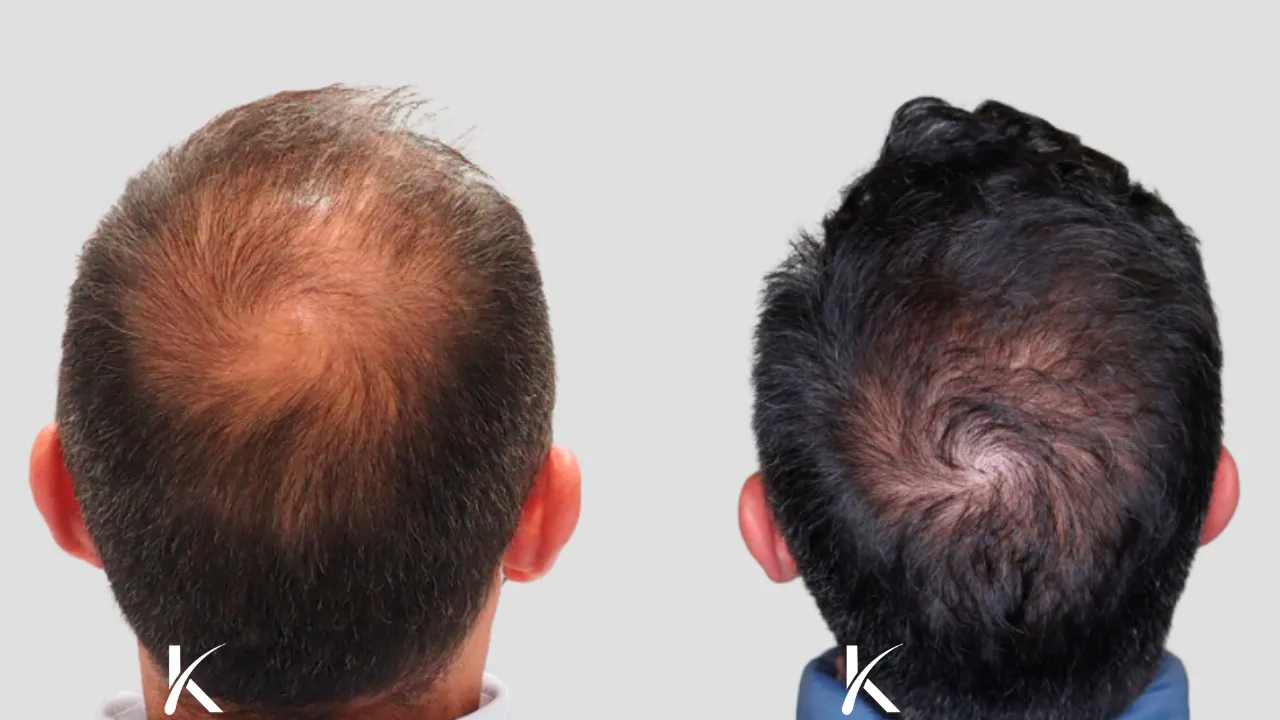
Hair Transplant Before and After:
Real Results and Timeline
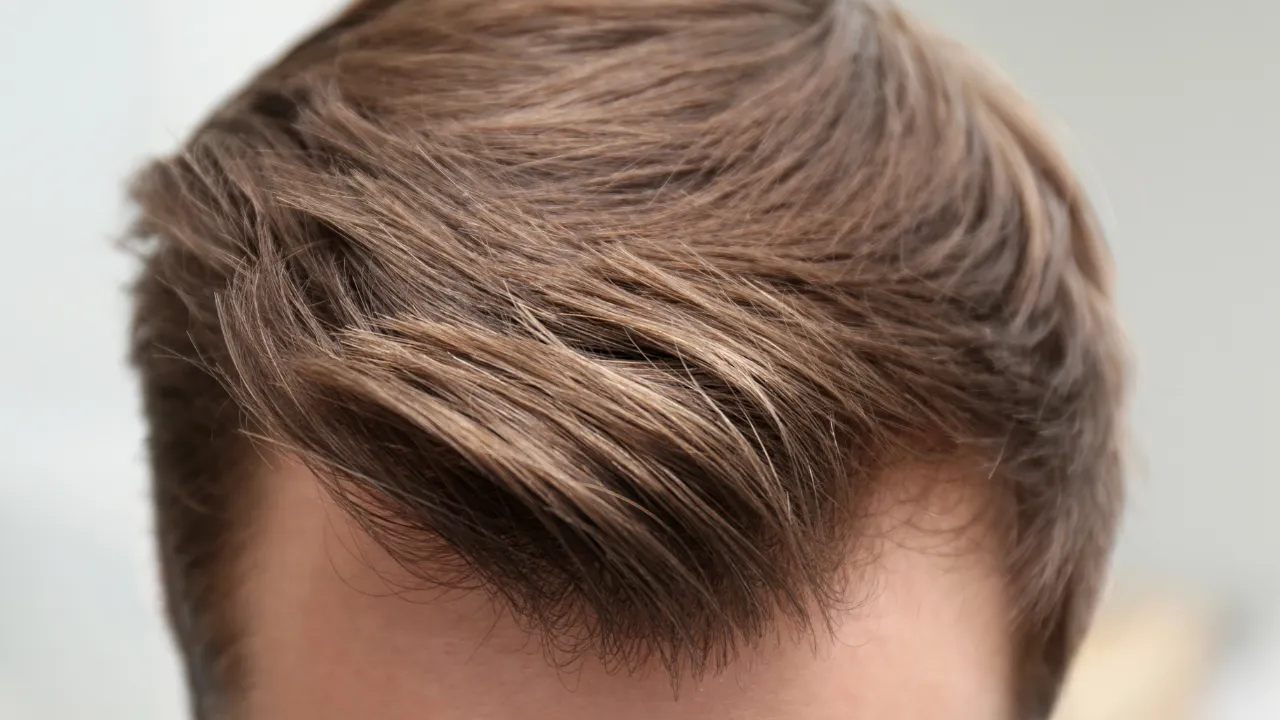
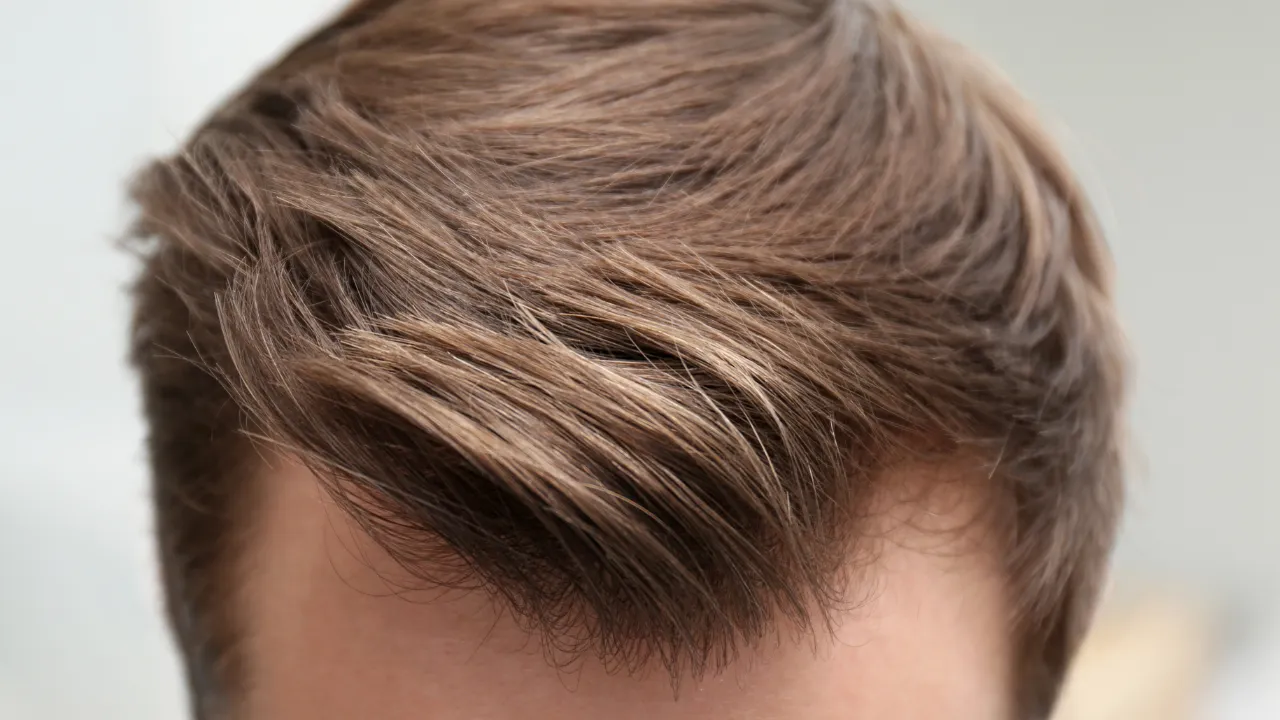
A hair transplant before-and-after comparison documents how a patient’s scalp changes across the months that follow surgery, from the day of the procedure through the point when transplanted follicles have fully matured.
This guide, created by Dr. Ross Kopelman, explains what these comparisons record, how the visible difference varies by procedure type and graft count, and why the interval between the first photo and the last one shapes what any set of hair transplant pictures can tell you.
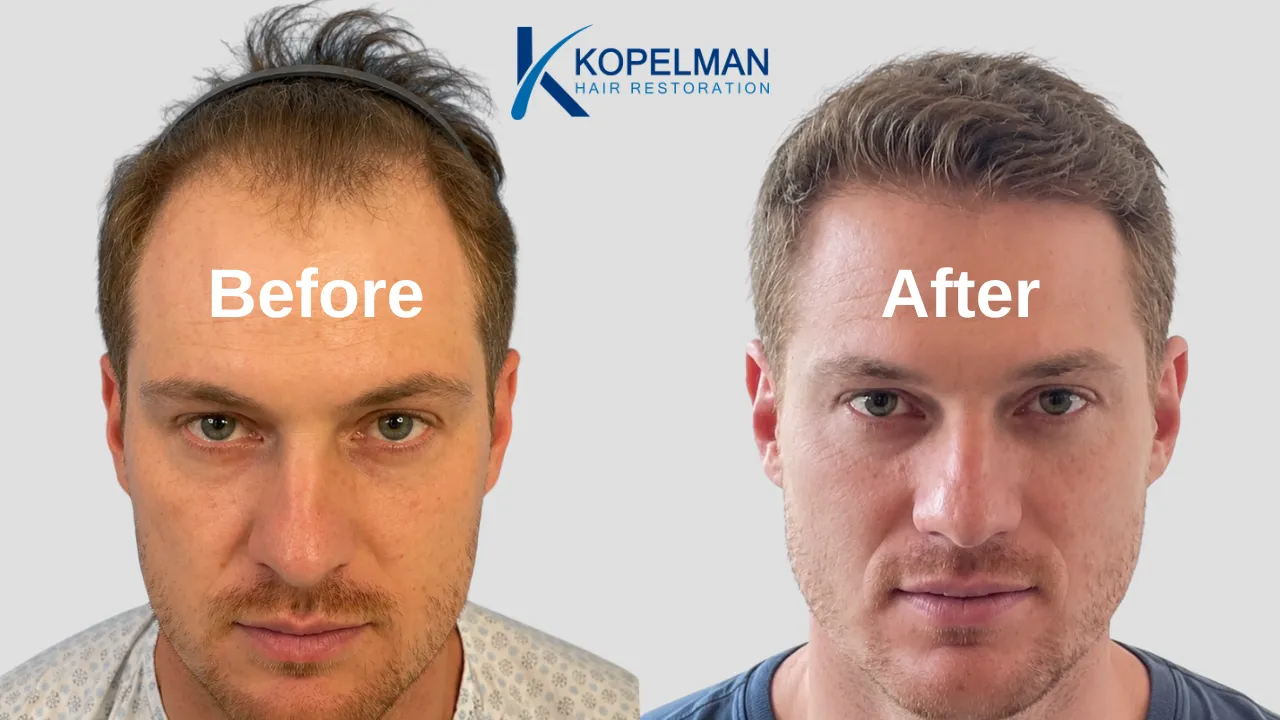
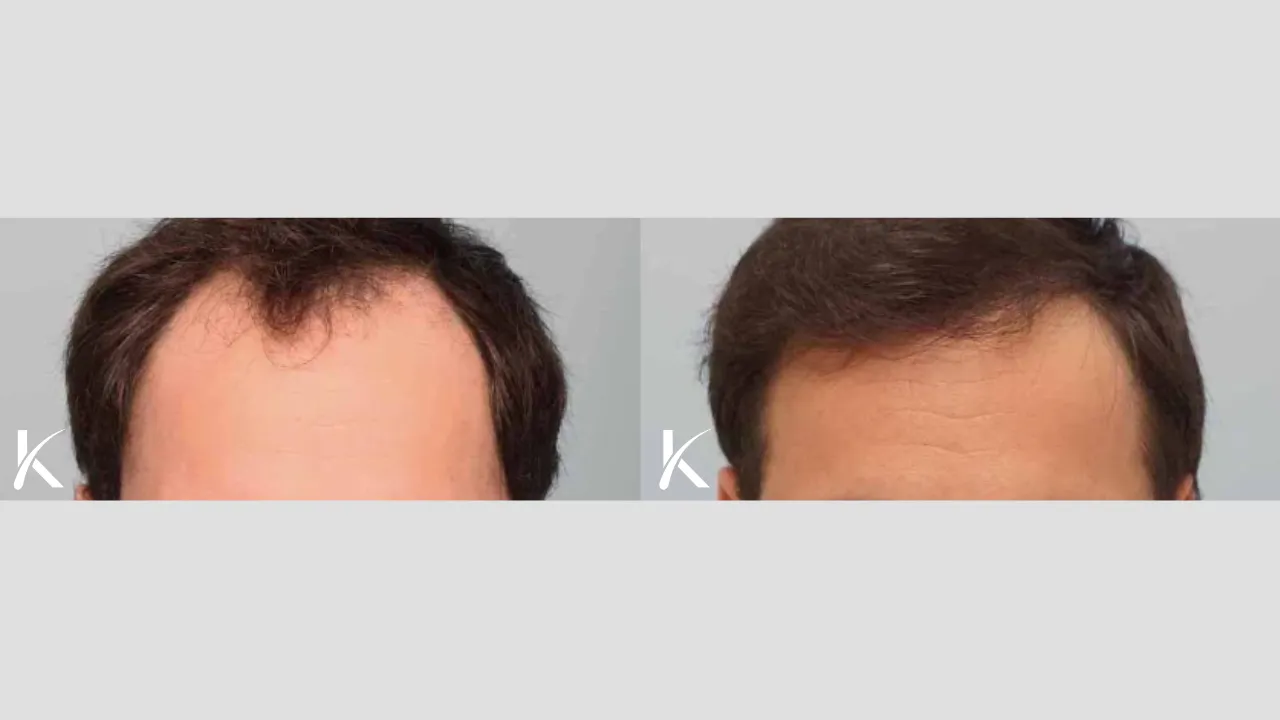
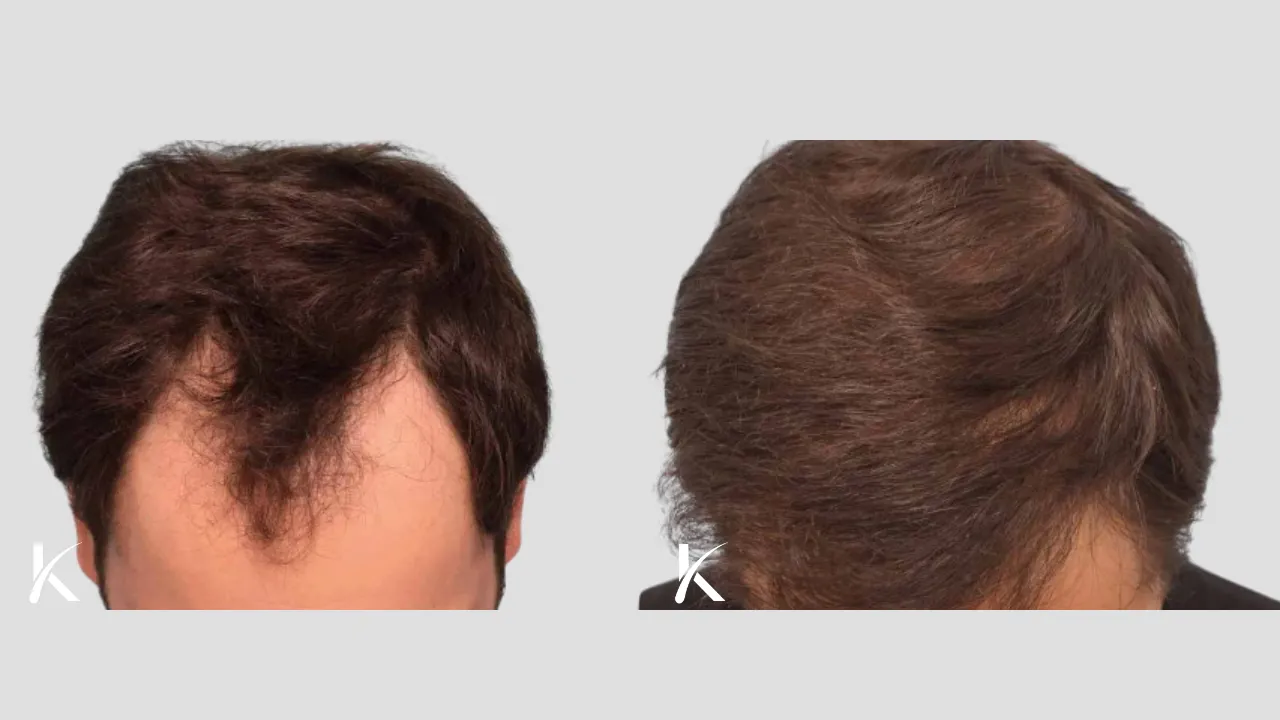
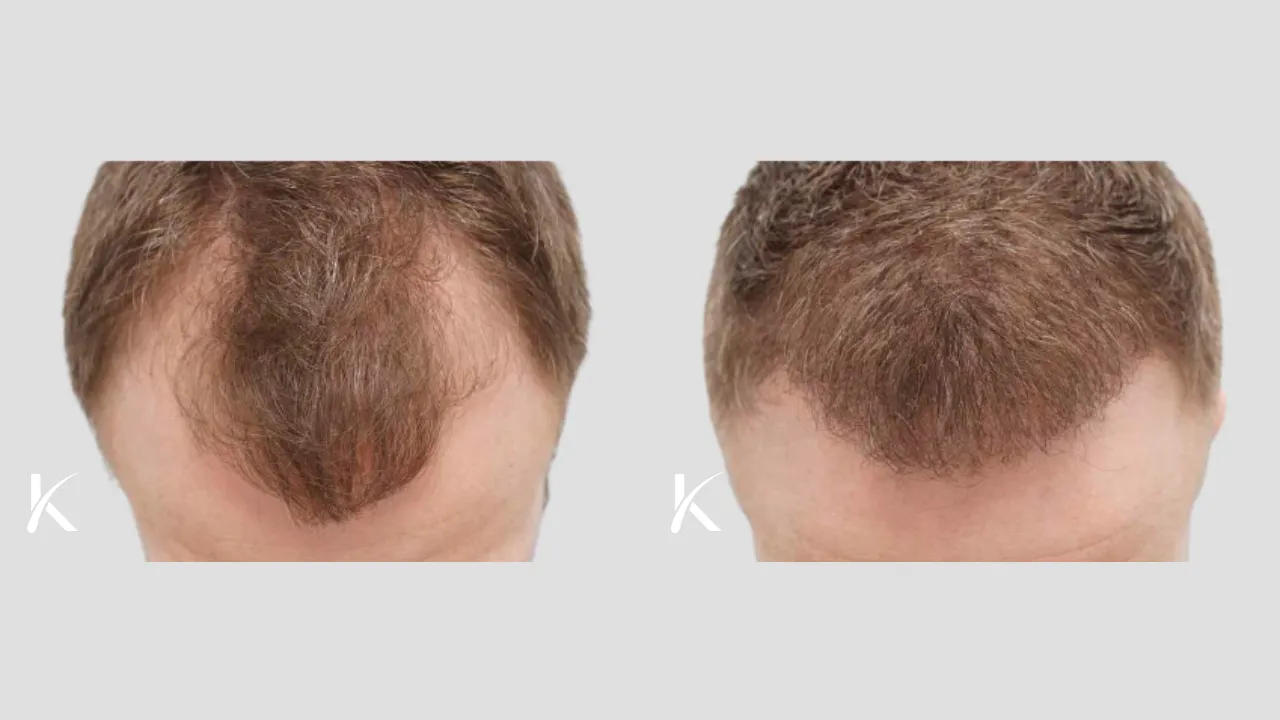
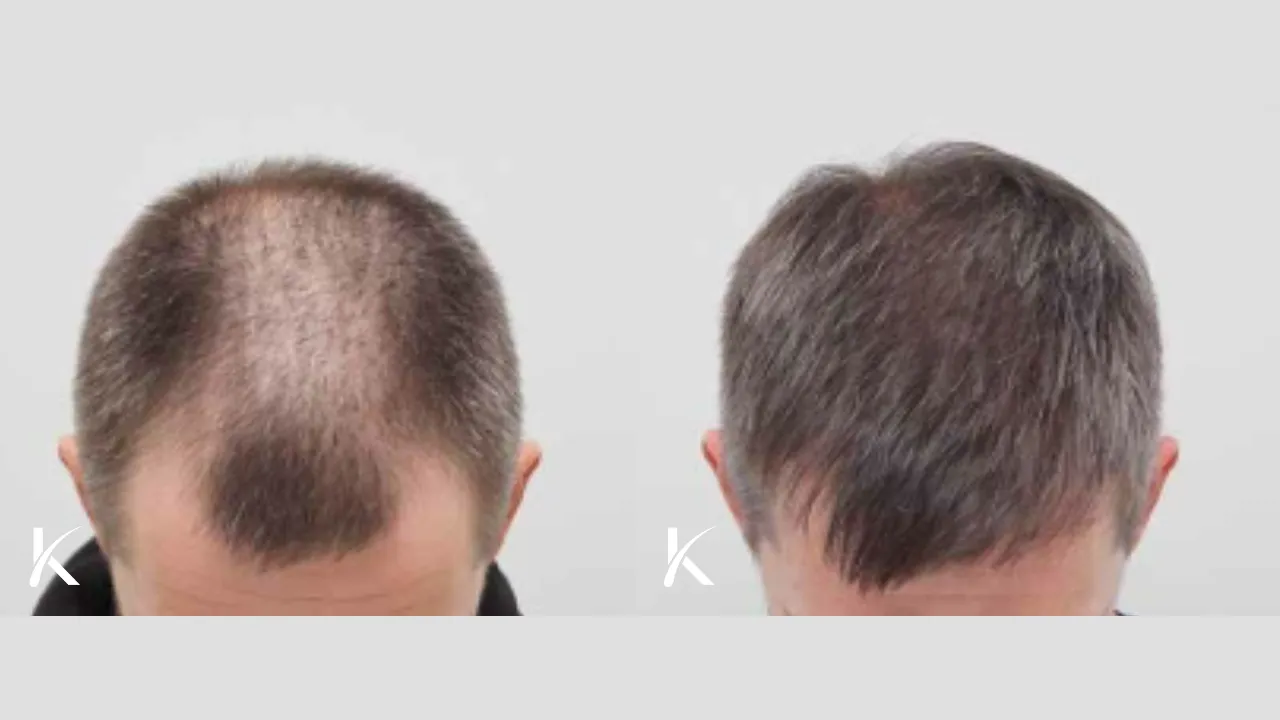
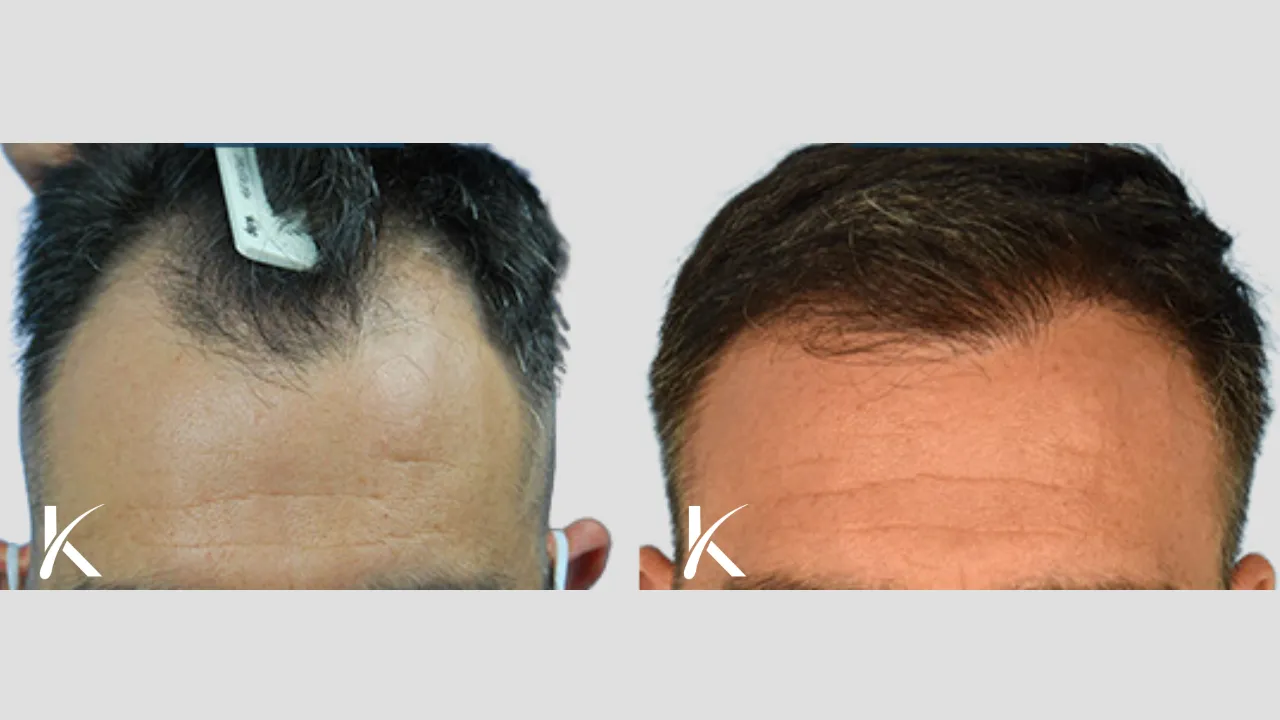
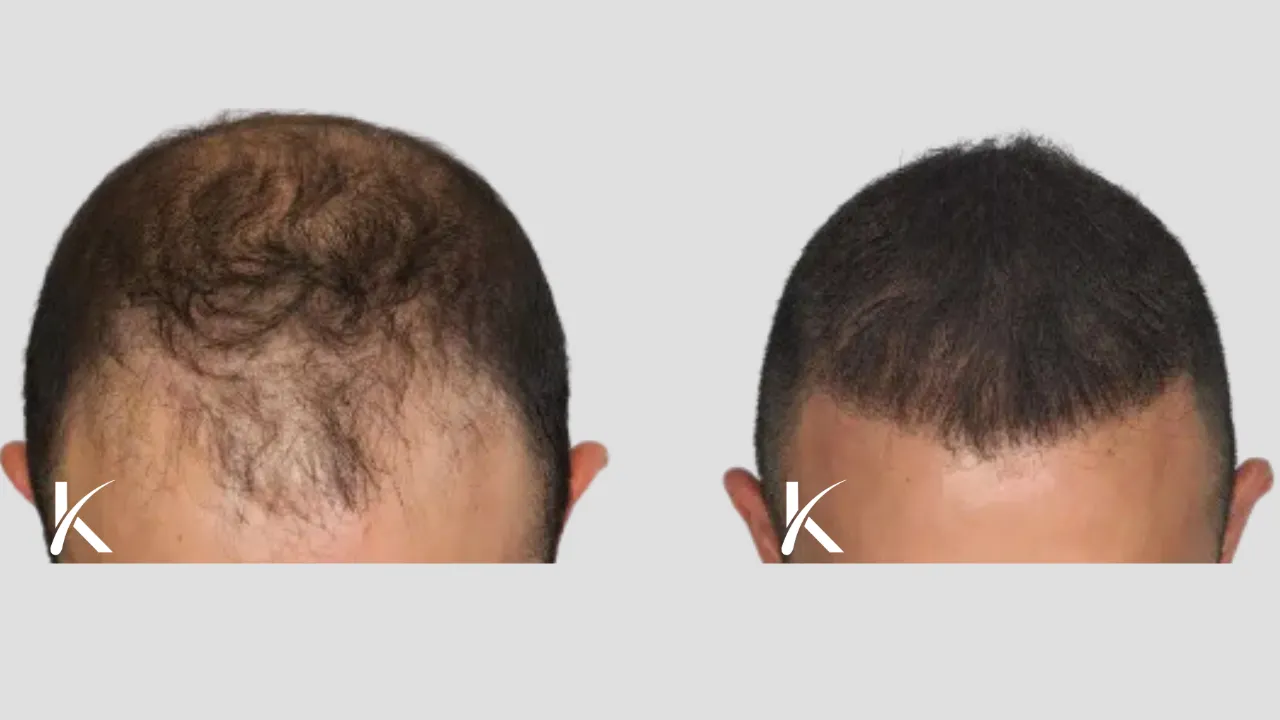
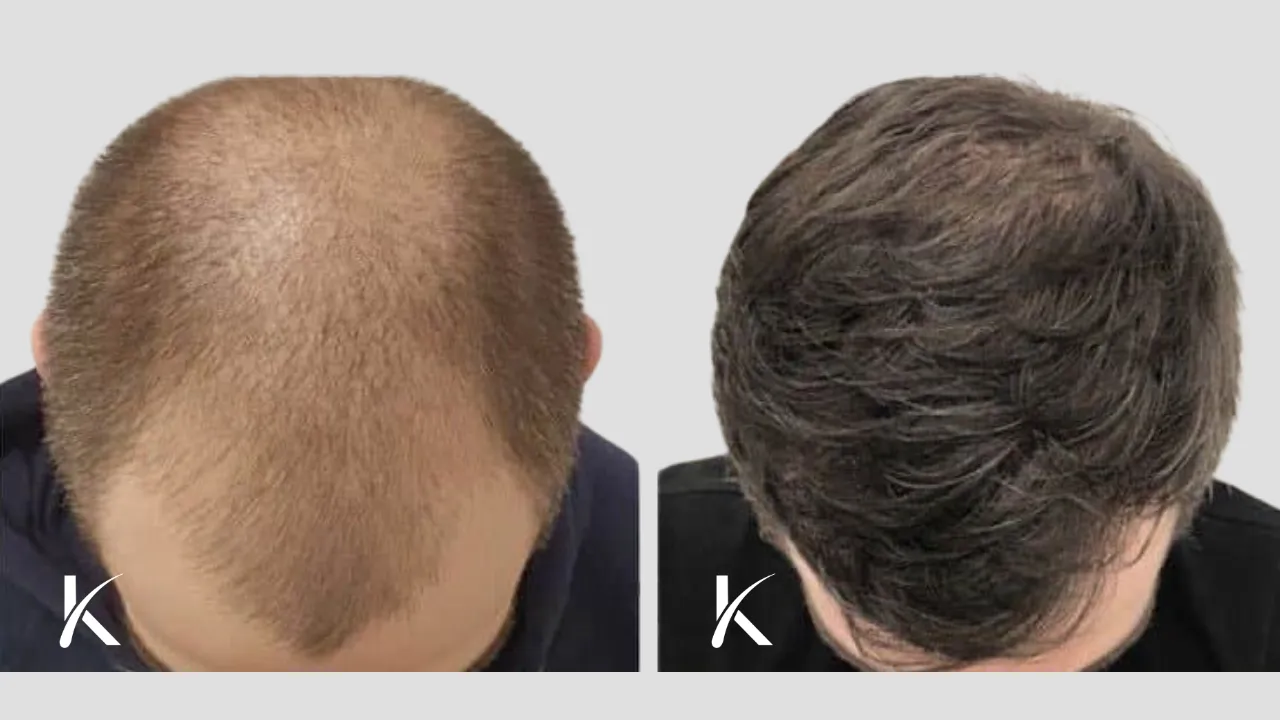
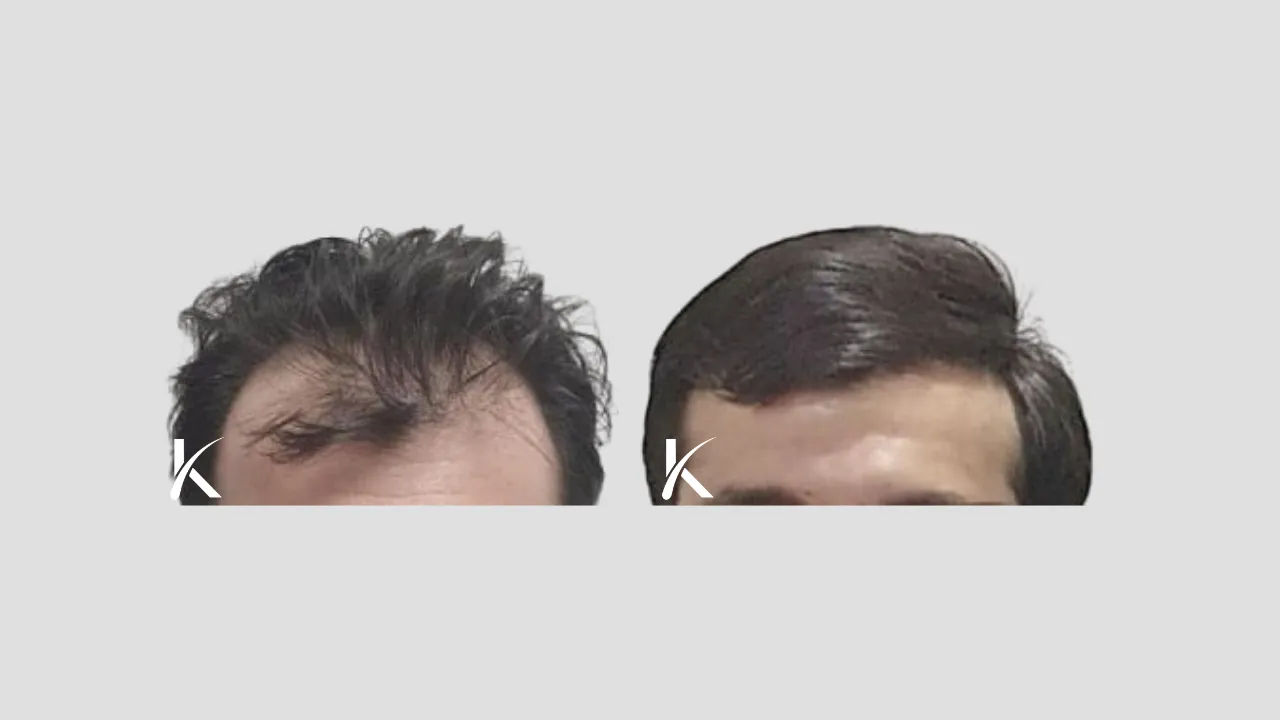
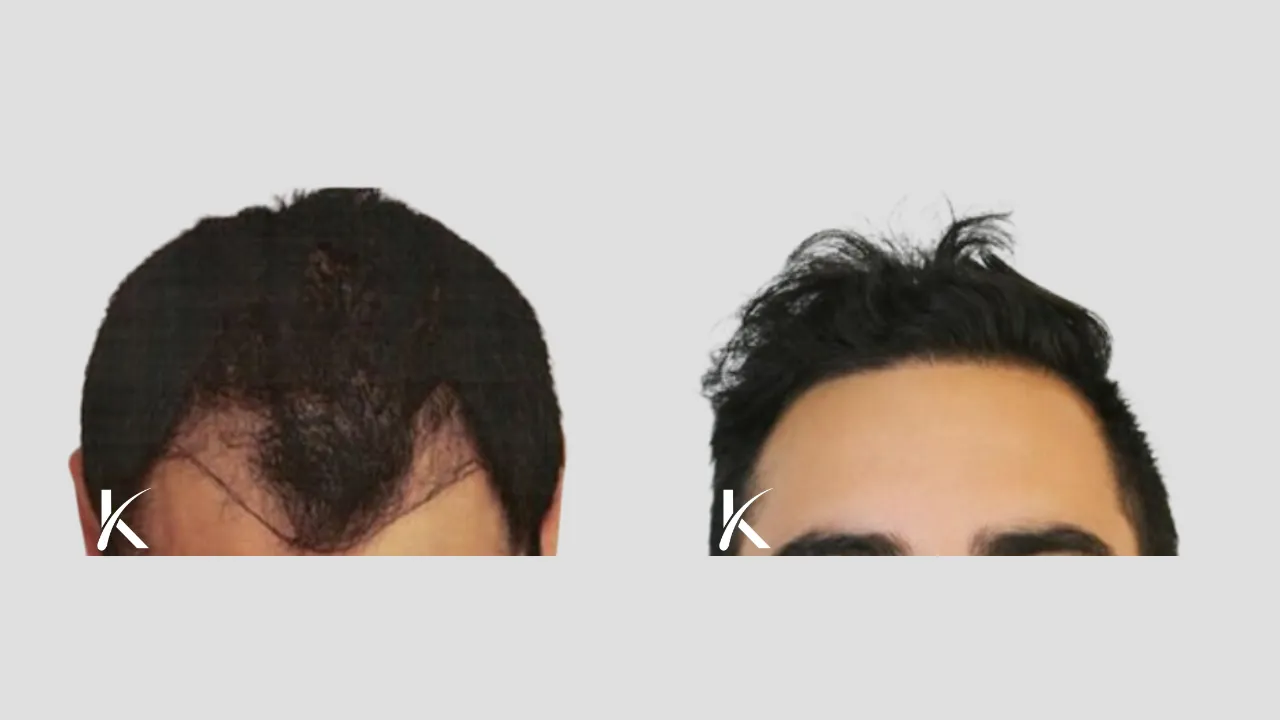
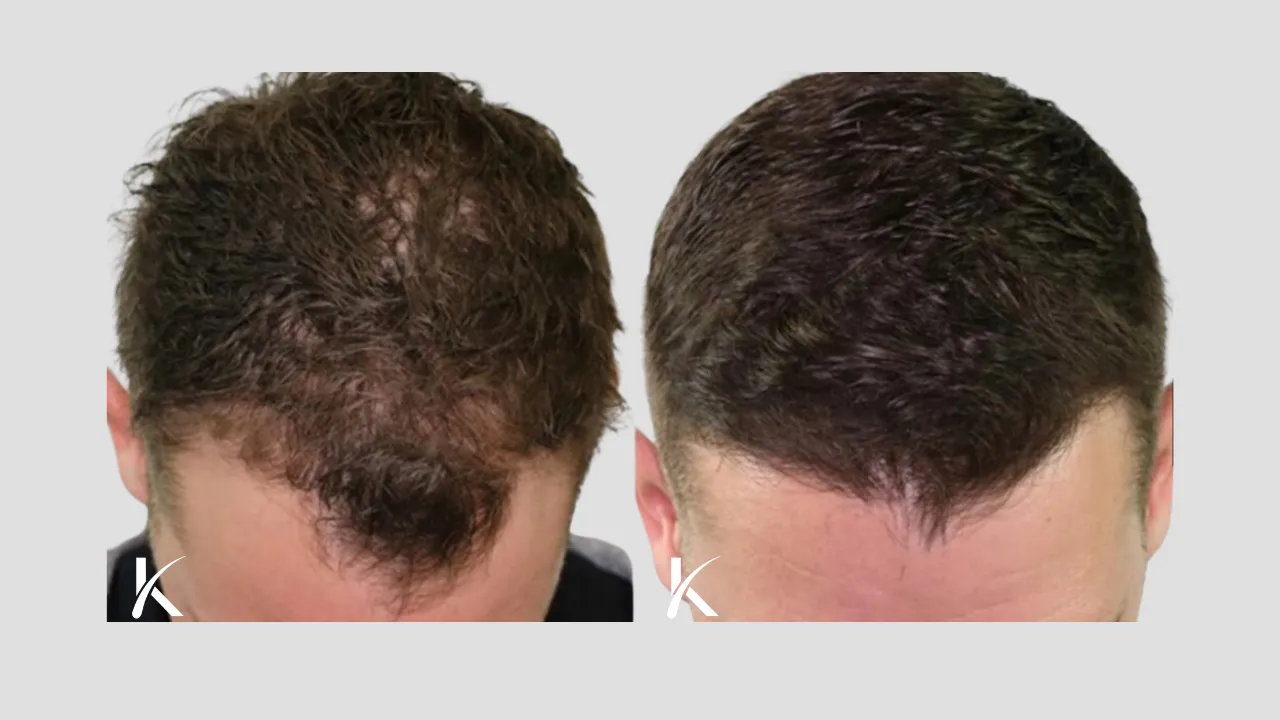
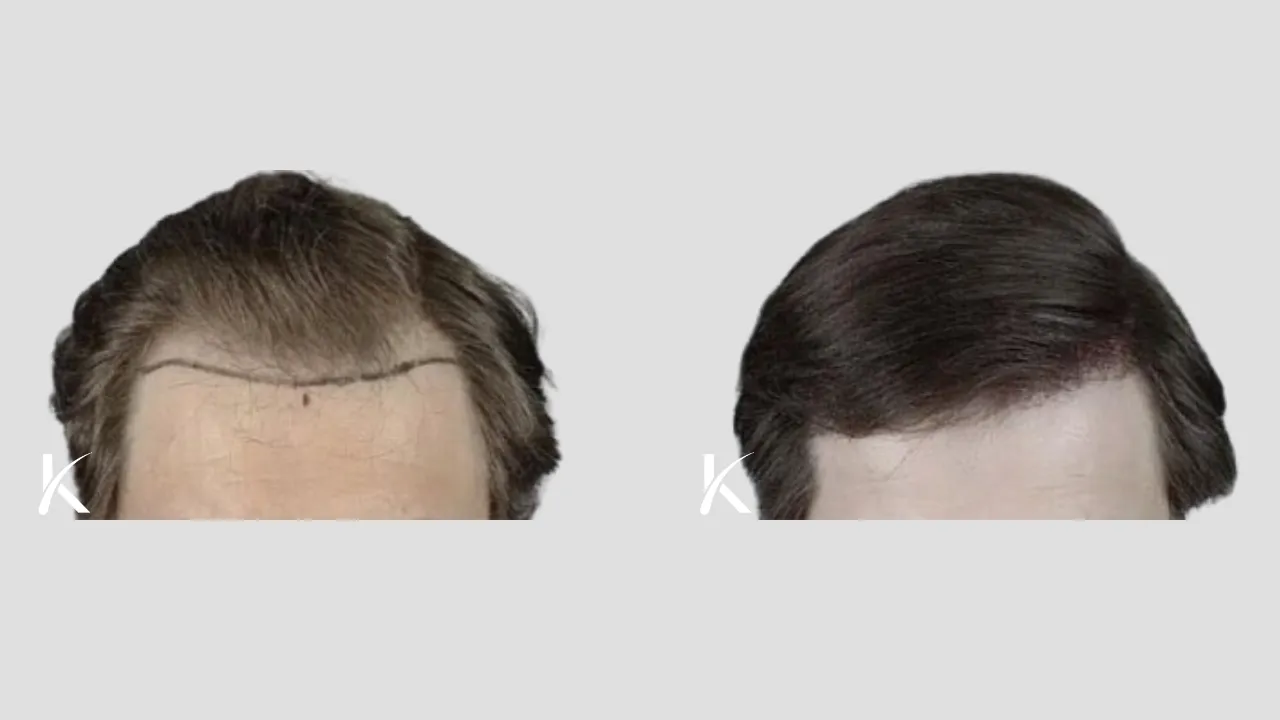
Grafts: 3000
Gender: Male
Age: 35
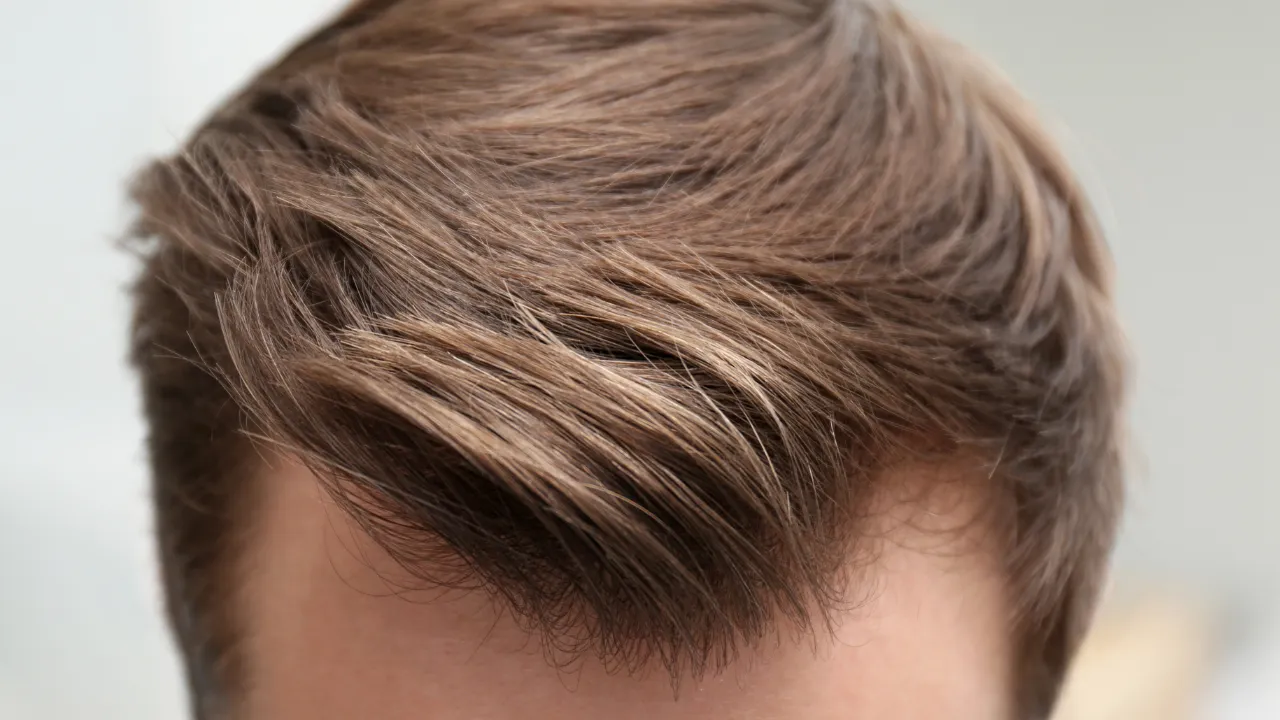
Procedure Description: Aimed to fill in thinning areas. Photos taken before and nine months after 3,000 grafts.
Hair Transplant Before and After Results
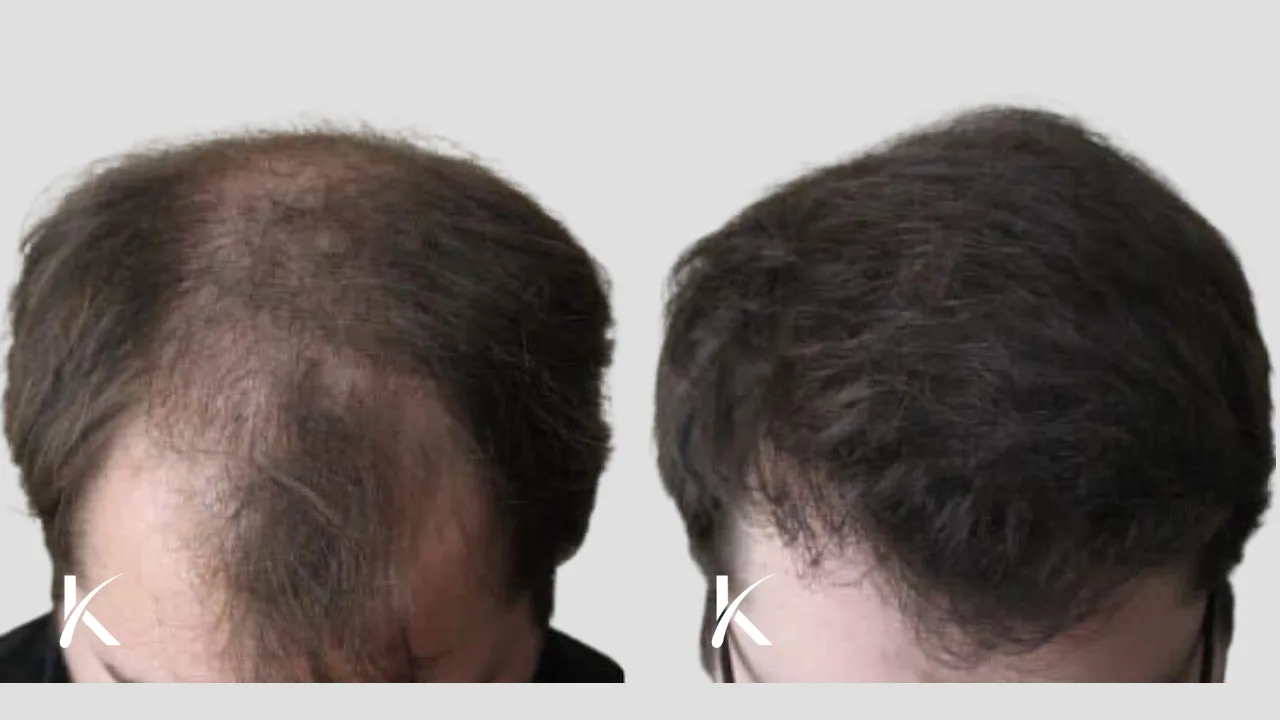
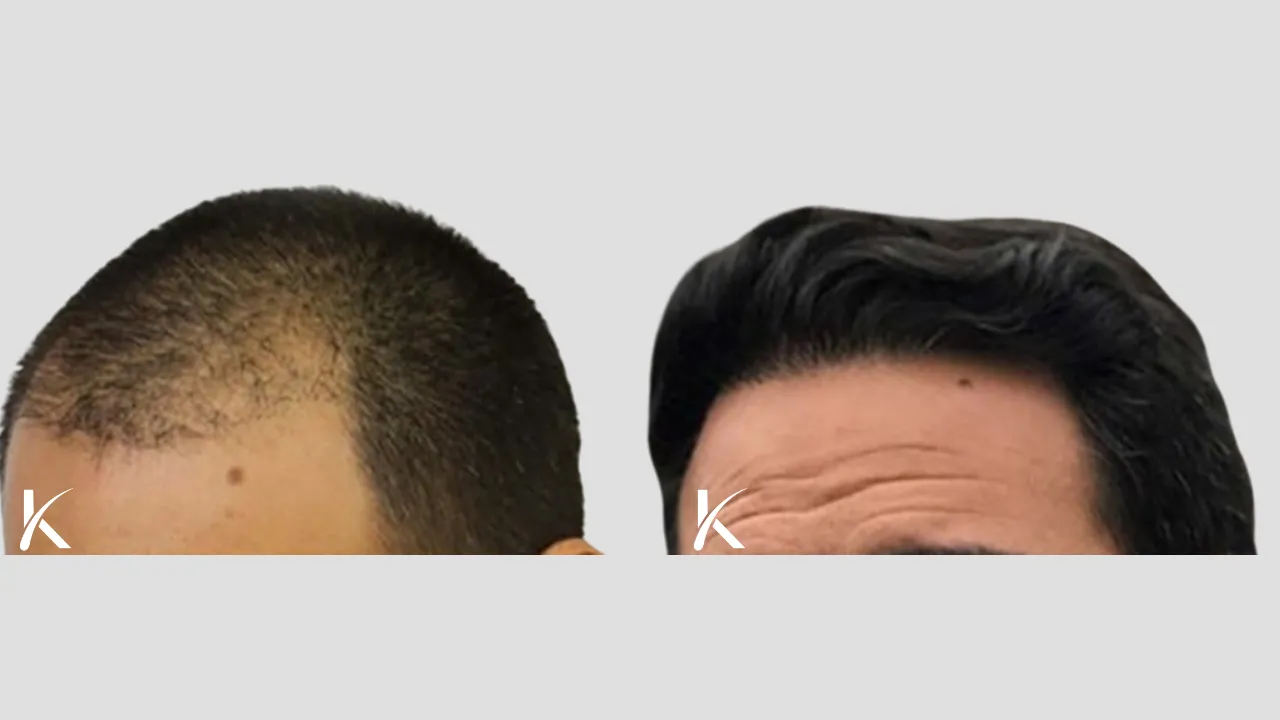
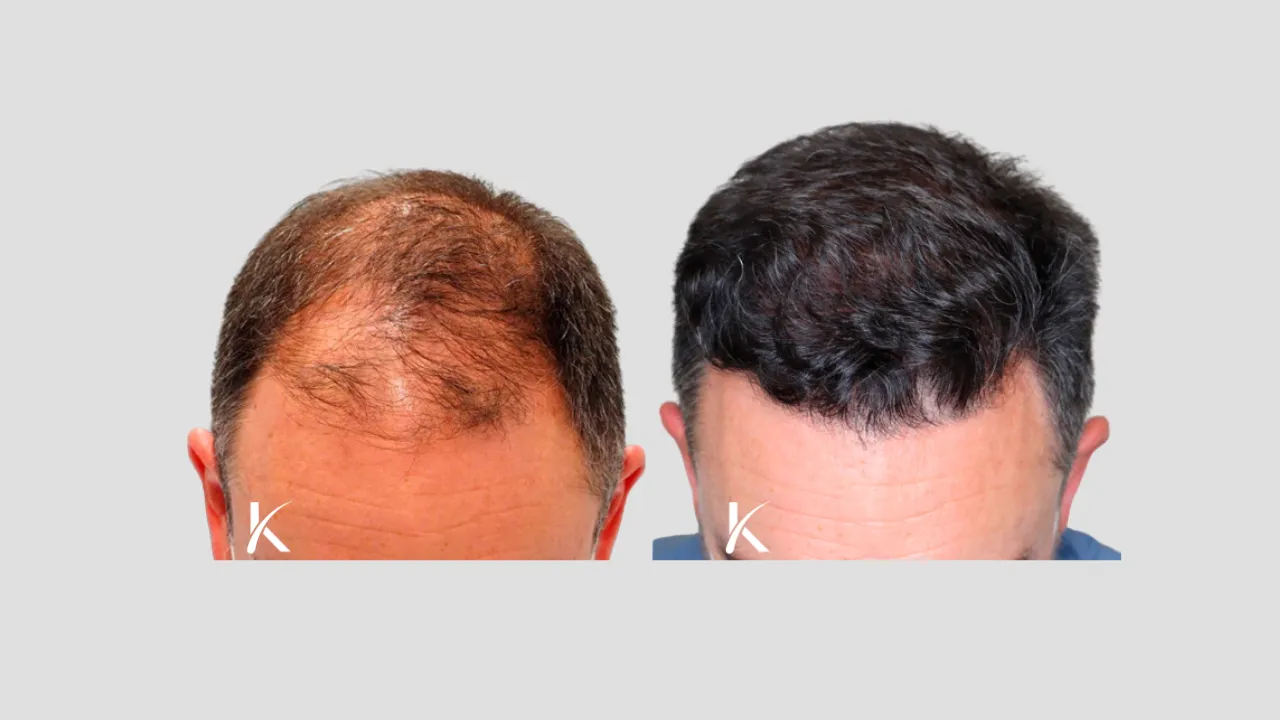
A before and after set places a pre-surgery image next to a later image of the same area, usually the hairline, mid-scalp, or crown, sometimes described with the older term hair replacement before and after. Because most surgical hair loss cases involve male pattern baldness, men’s hair transplant before-and-after comparisons are the most common type patients review and the baseline for a typical hair transplant procedure.
Results take time. Transplanted follicles enter a dormant phase after surgery and regrow over many months, so hair transplant surgery results are never immediate, and any honest gallery notes the interval between photos. The quality of hair implant results depends on donor area supply, placement density, and how new growth blends with existing hair, which is why natural-looking results come from surgical planning rather than graft count alone.
Male pattern hair loss follows predictable stages, typically starting at the temples and hairline and progressing toward the crown. At Kopelman Hair, we design each hairline based on the patient’s facial proportions, age, and existing hair pattern rather than applying a fixed template.
Hair texture also shapes that design, as our African American hair transplant results show with curly and coiled hair. When reviewing these comparisons, check whether the new hairline suits the patient’s age, since an aggressively low line rarely looks natural over time.
They restore a receding front, fill a thinning area behind it, or address a bald spot at the crown, drawing from a donor region at the back and sides of the scalp. In most male cases, the goal is a proportionate hairline and improved hair density that suits the patient’s age and facial structure, not a uniformly dense result across every zone.
FUE Hair Transplant Before and After
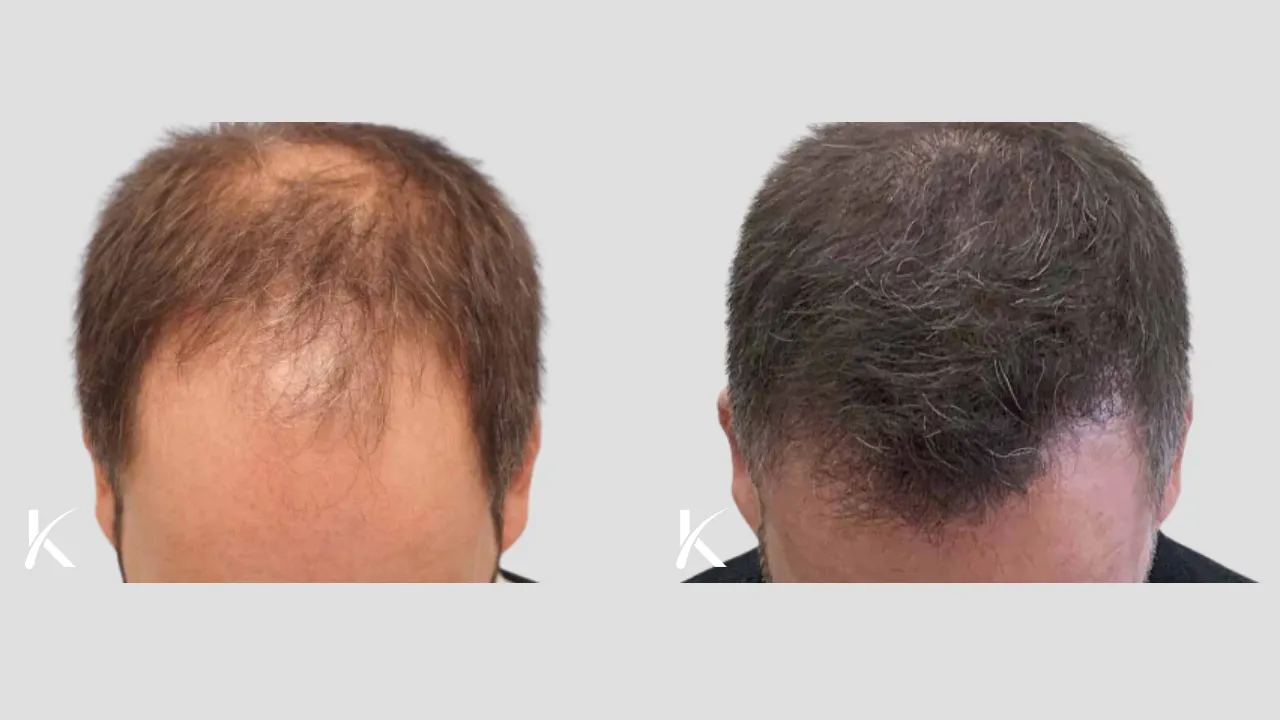
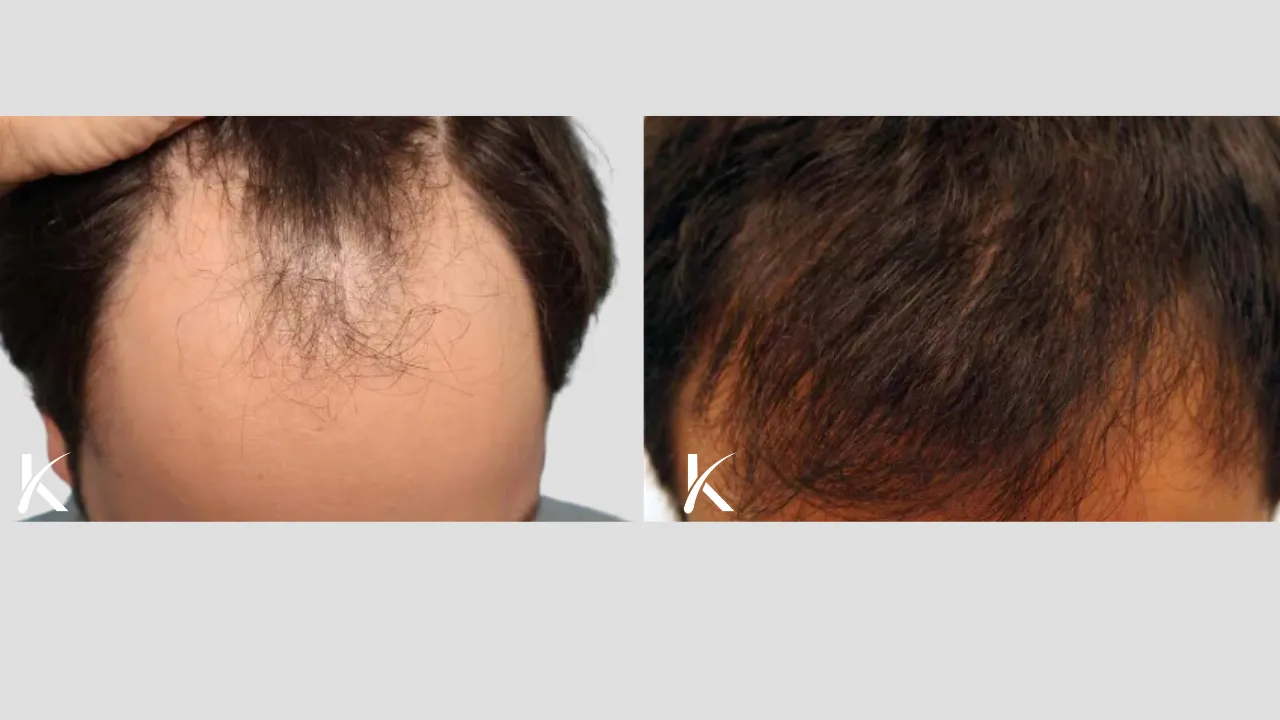
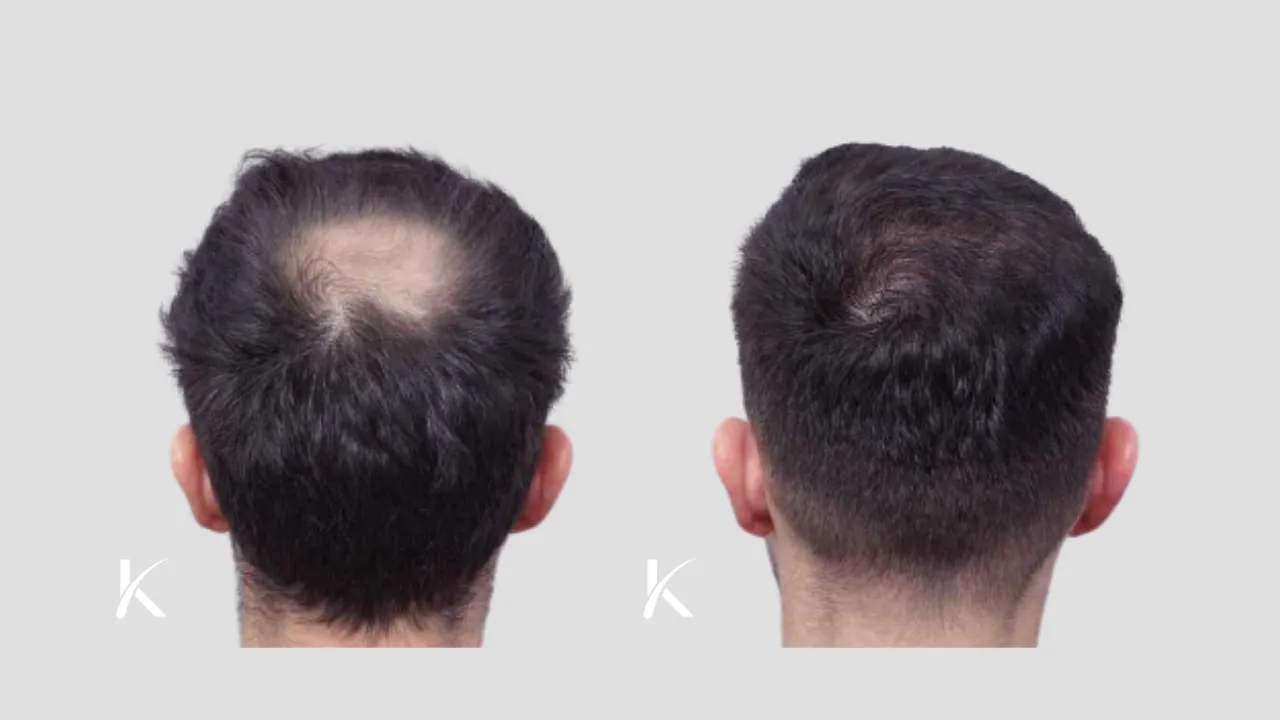
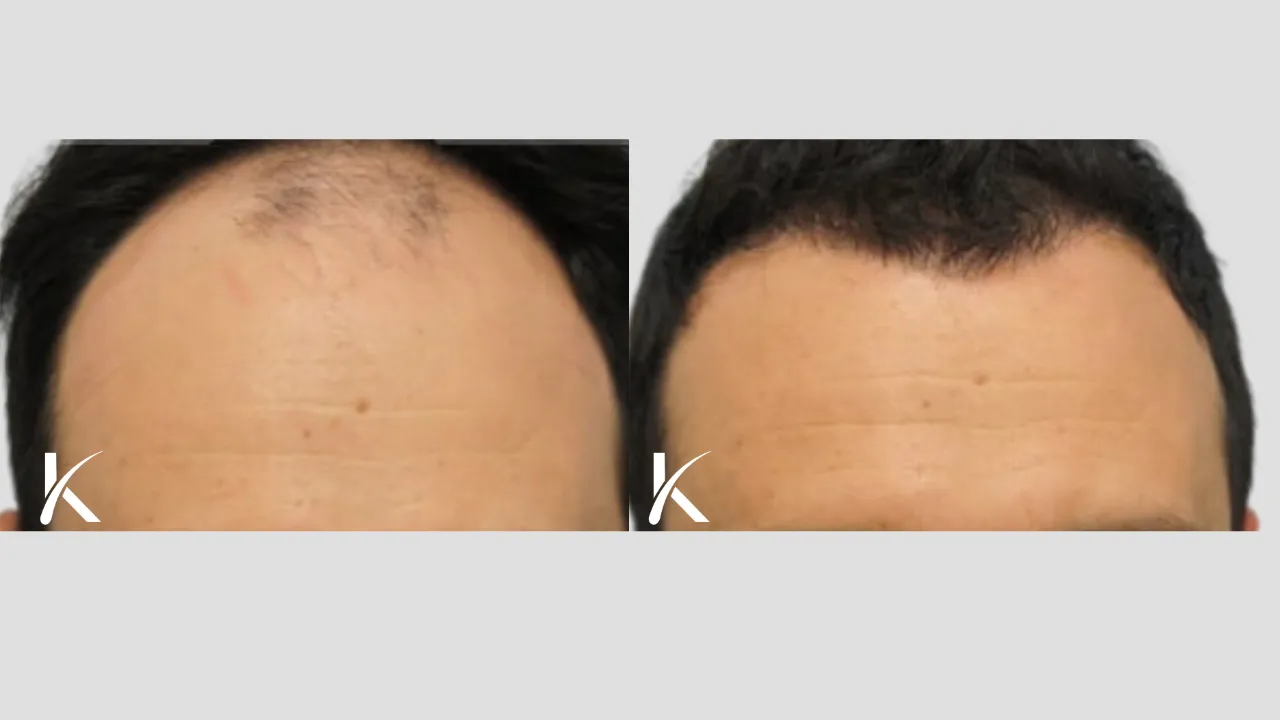
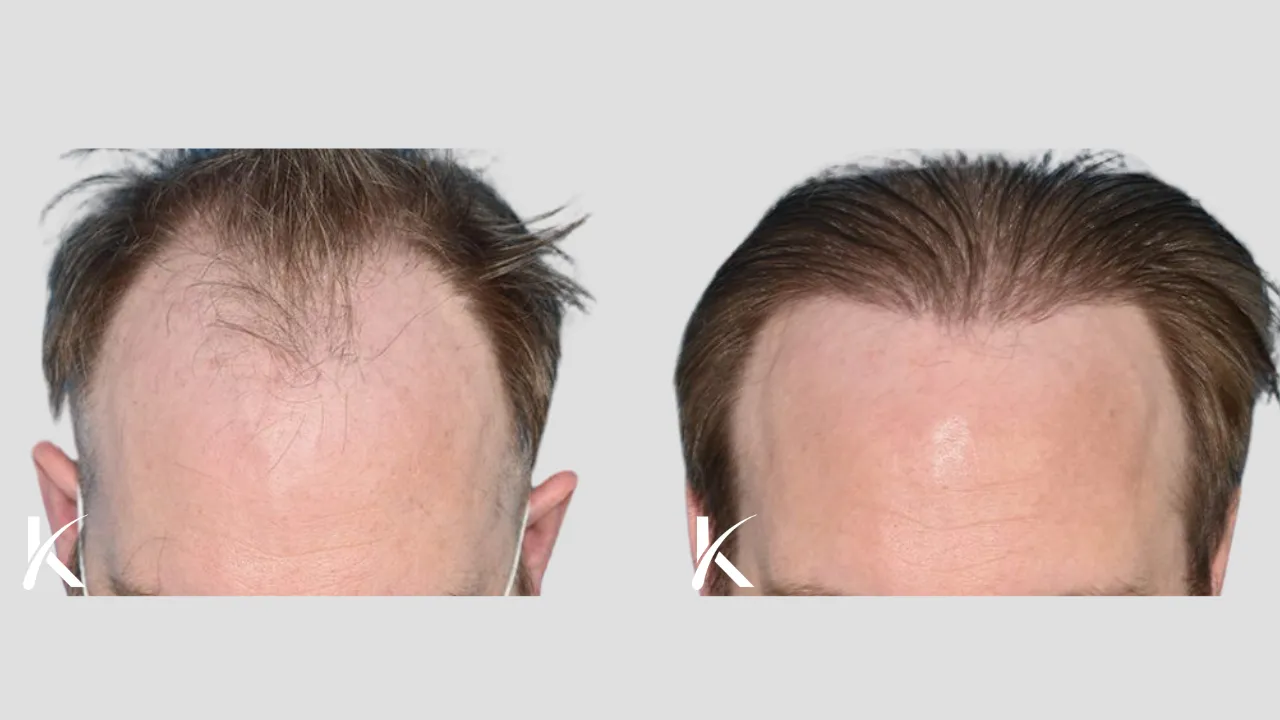
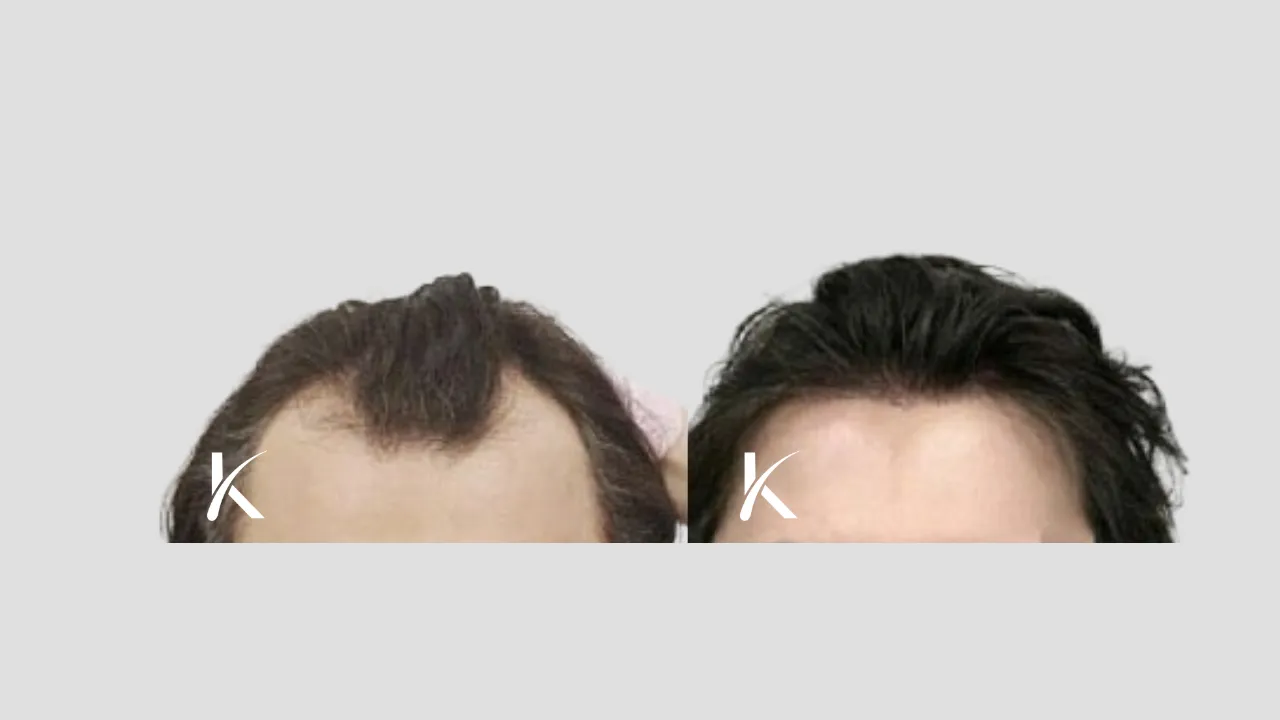
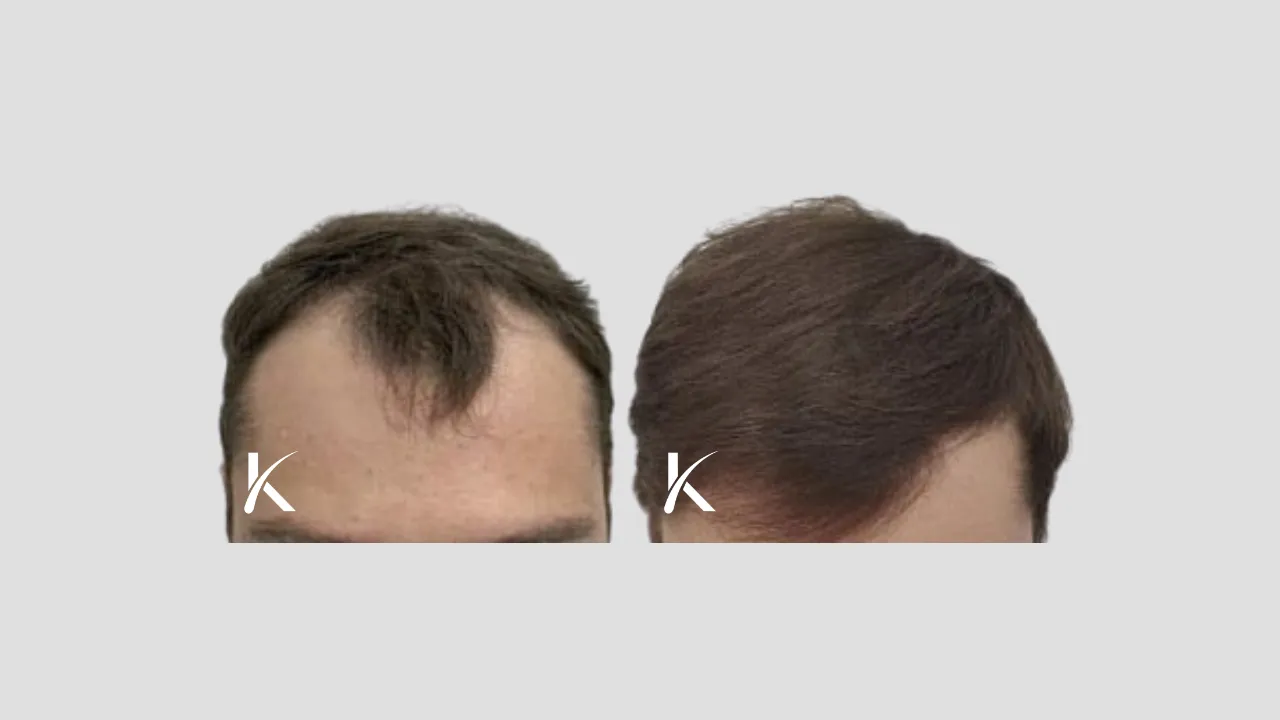
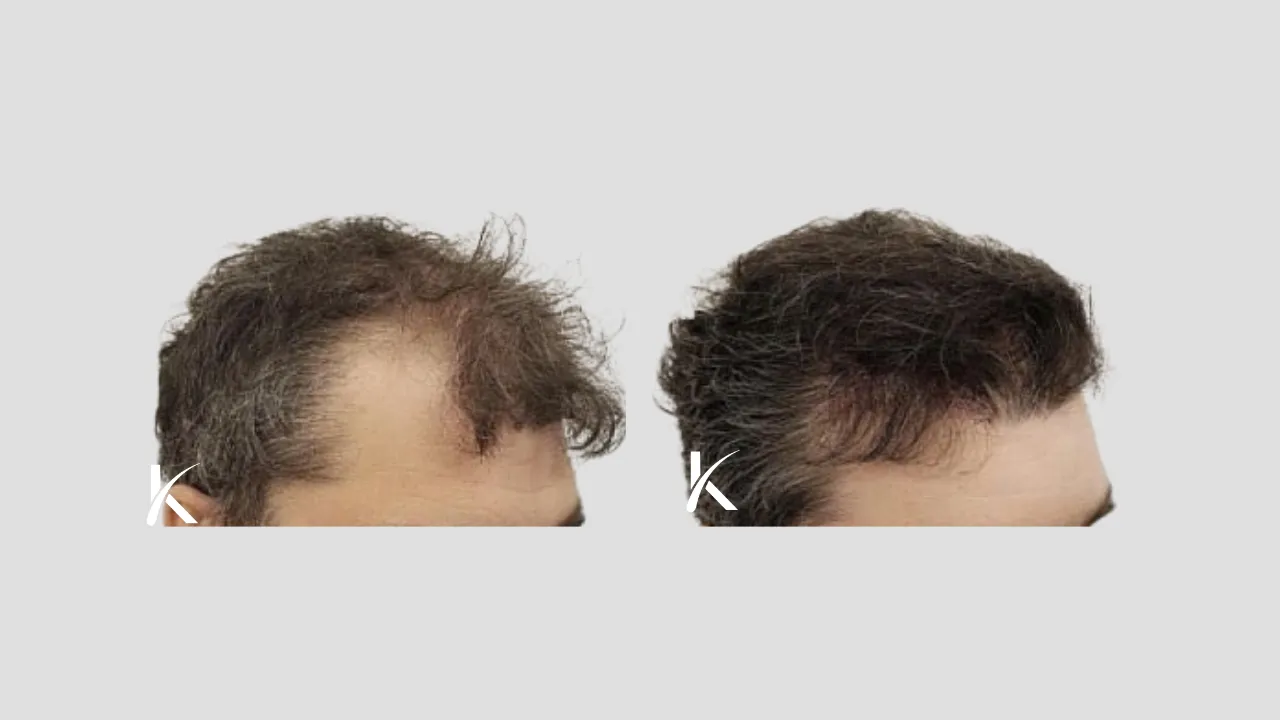
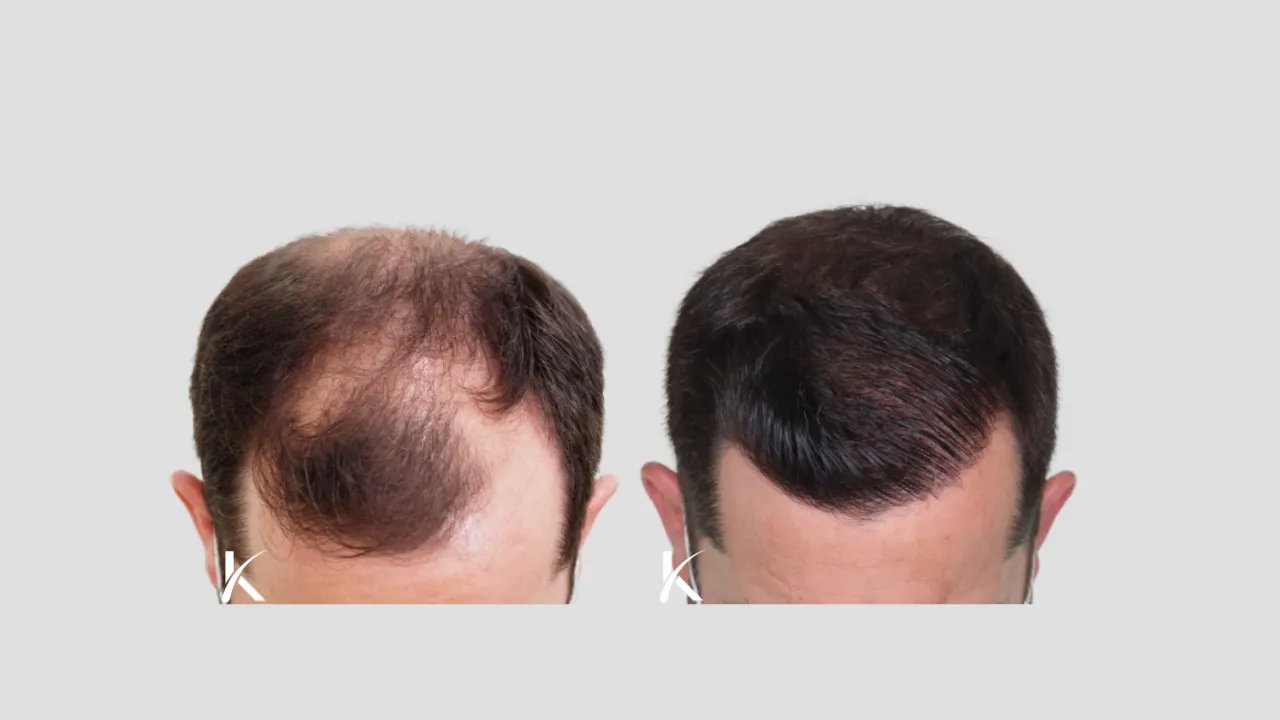
Procedure: Hair Transplant
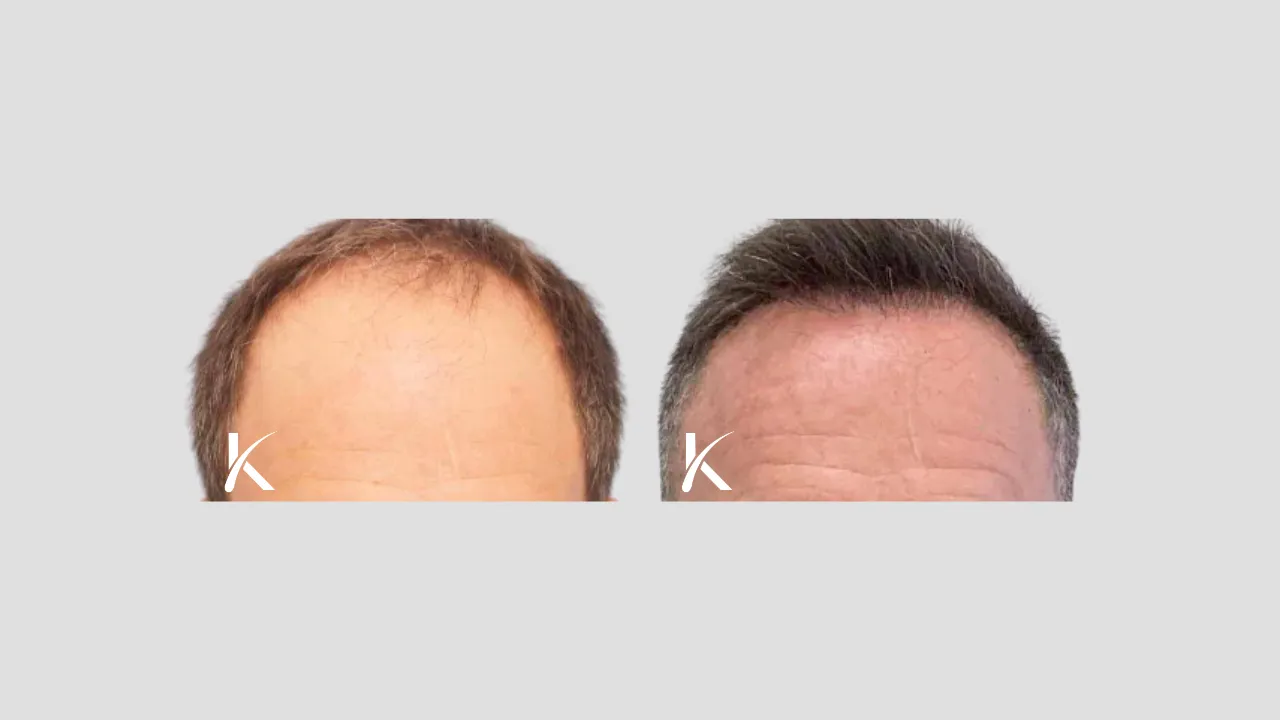
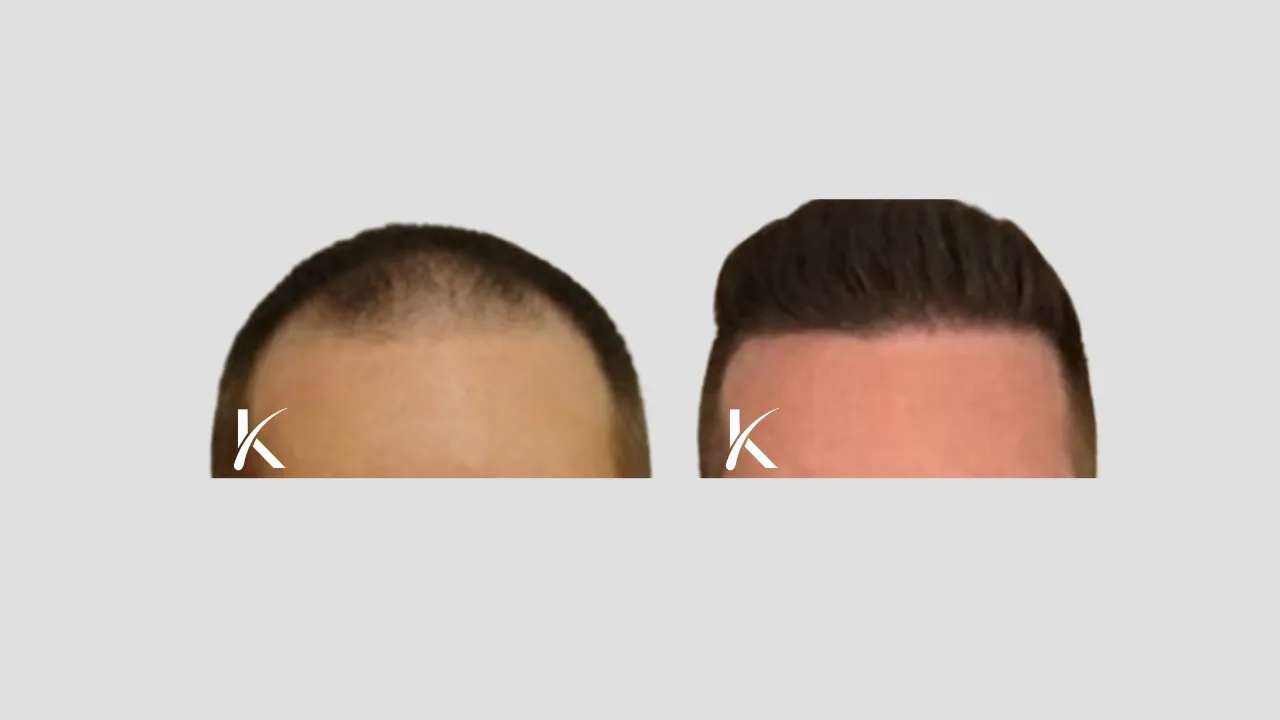
Grafts: 3500
Gender: Male
Age: 45
Procedure Description: Patient restored scalp hair density with 3,500 grafts. Photos taken one year apart.
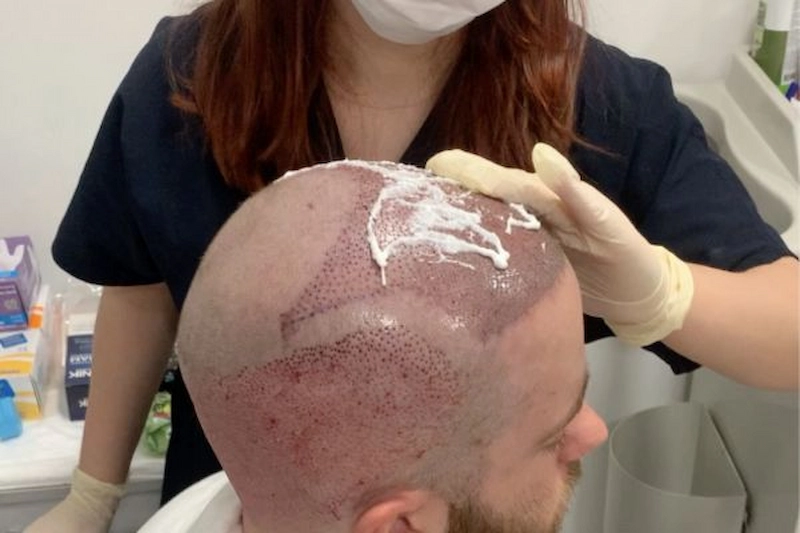
Follicular unit extraction is the method behind most modern galleries, so these images are what many patients study first. In the FUE procedure, Dr. Ross Kopelman removes individual follicular units one at a time from the donor area and places them into the thinning or bald area, which avoids the linear scars associated with older strip techniques.
Because follicular unit extraction FUE leaves only small dot-shaped healing points, fue hair transplant results tend to look consistent from multiple angles once growth completes. A dedicated set of FUE hair transplant before-and-after examples shows how follicular unit extraction before-and-after comparisons change over the recovery period.
What to Expect After Your Transplant
Weeks 1 to 3
Months 2 to 4
Months 6 to 9
Months 12 to 18
The single most misread part of any comparison is time. Transplanted hair sheds within the first few weeks, enters a resting phase, and begins regrowing at roughly three to four months, with continued thickening well past that point. Understanding this sequence is the difference between reading a gallery accurately and expecting a change that has not happened yet.
This is why hair transplant progress pics only make sense with a date attached. A photo at month four and a photo at month fourteen show the same patient at very different stages of the same recovery.How to Judge Real Before and After Results
FUT Hair Transplant Before and After
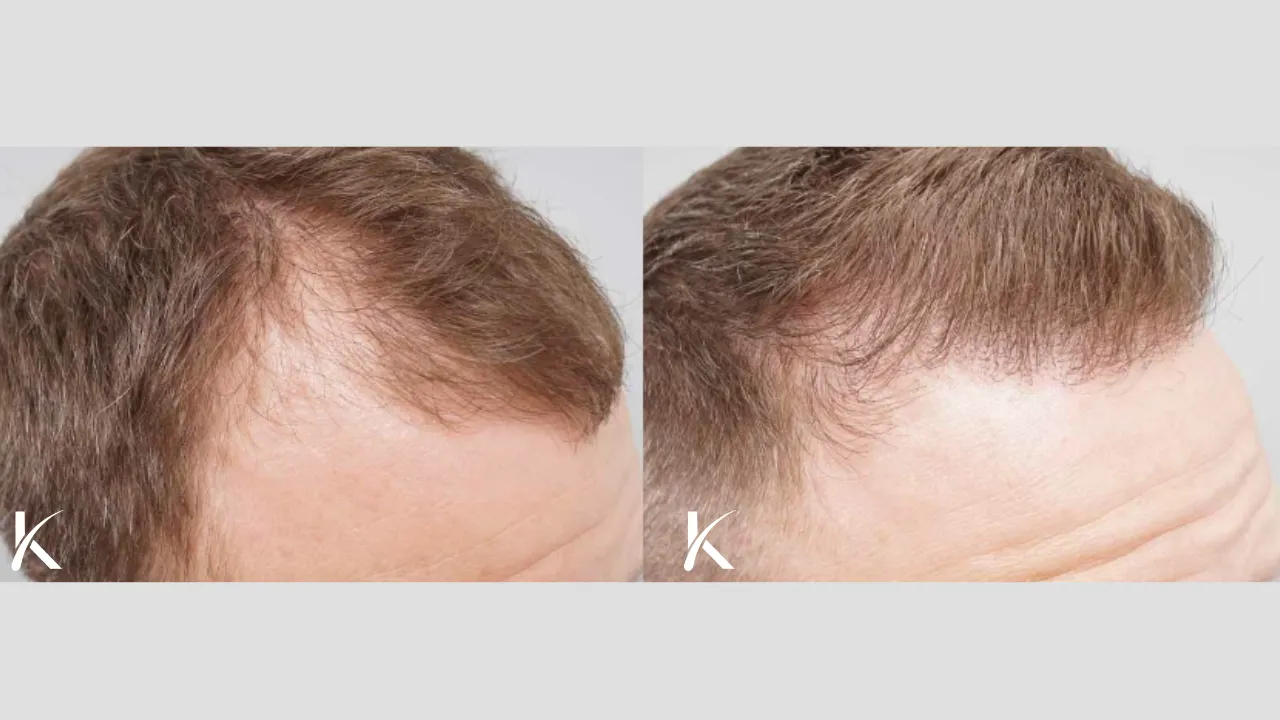
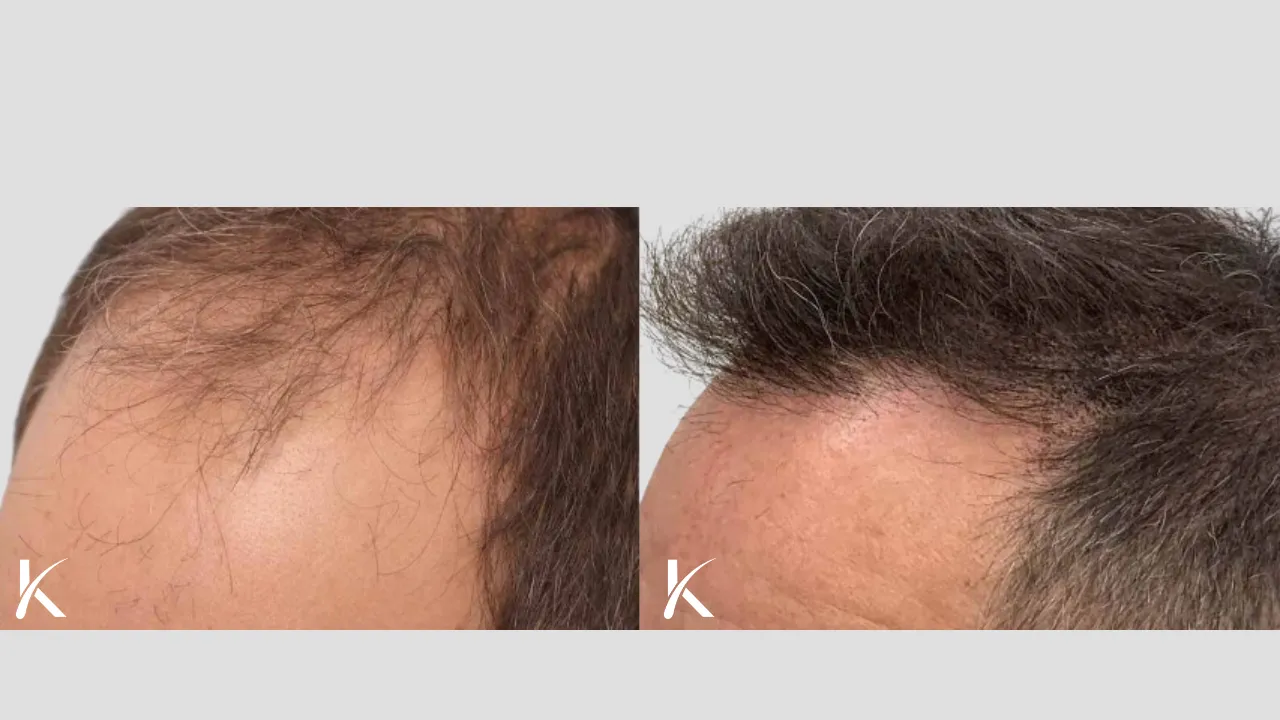
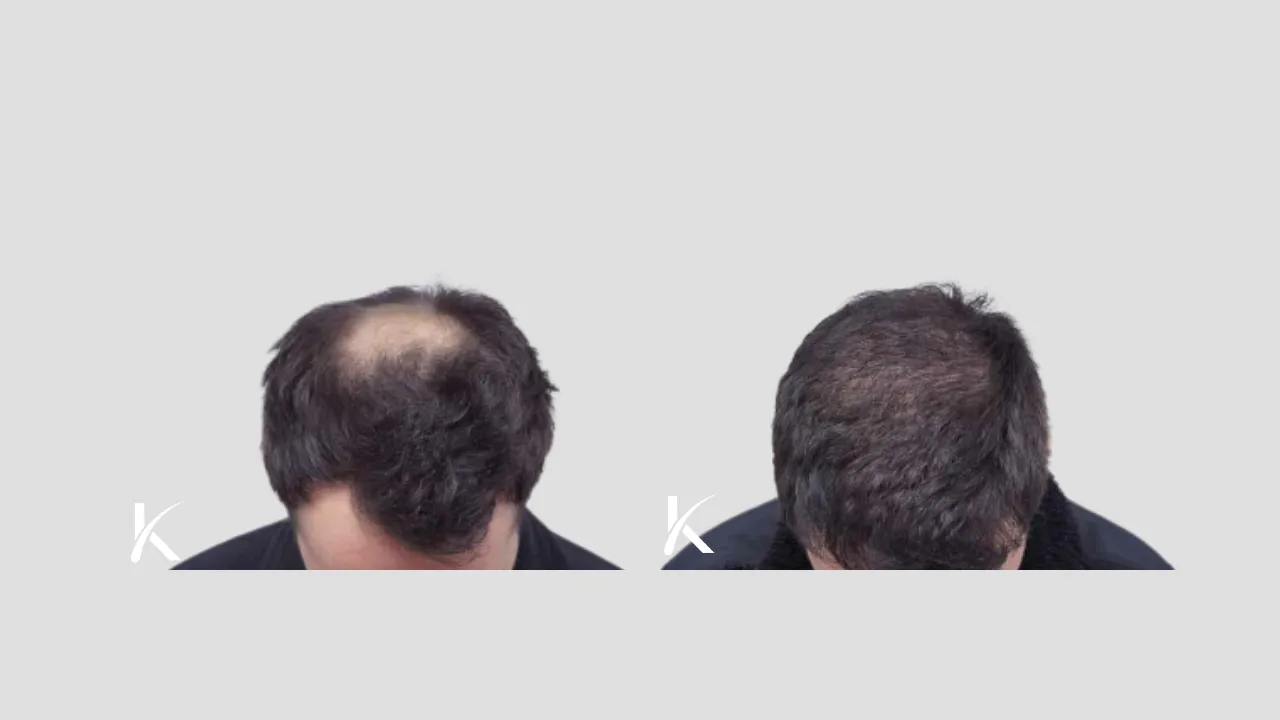
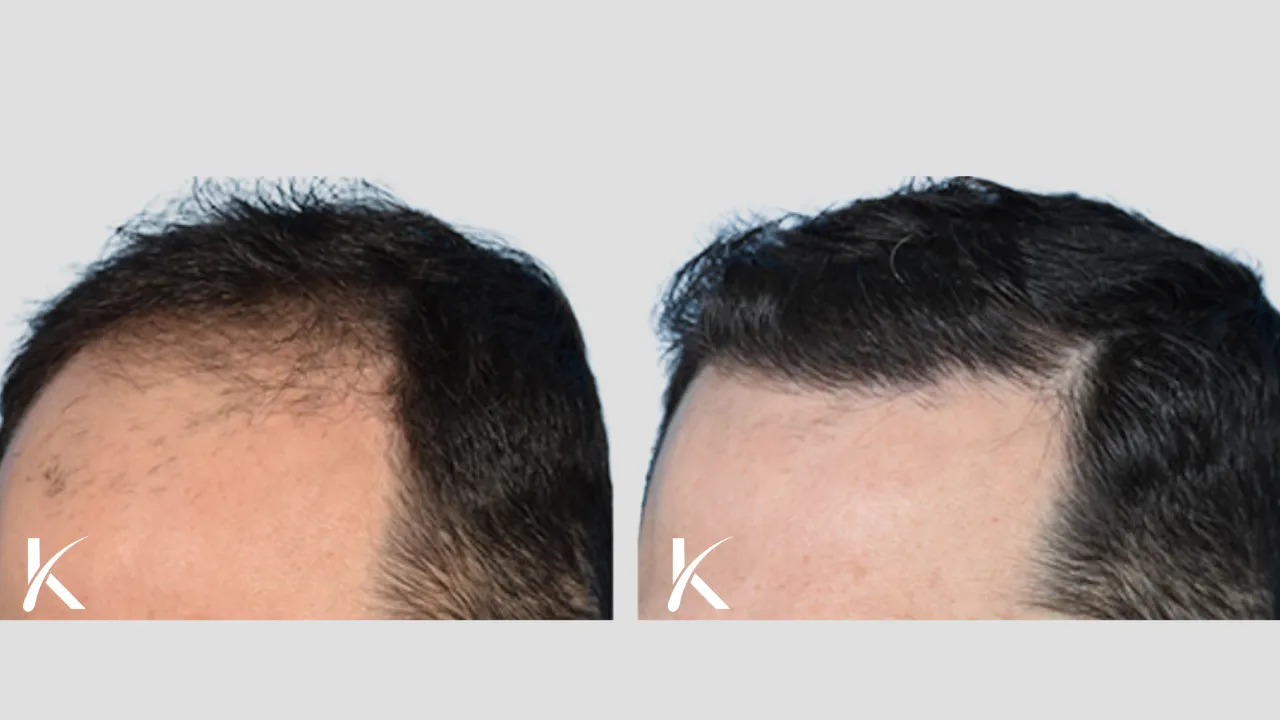
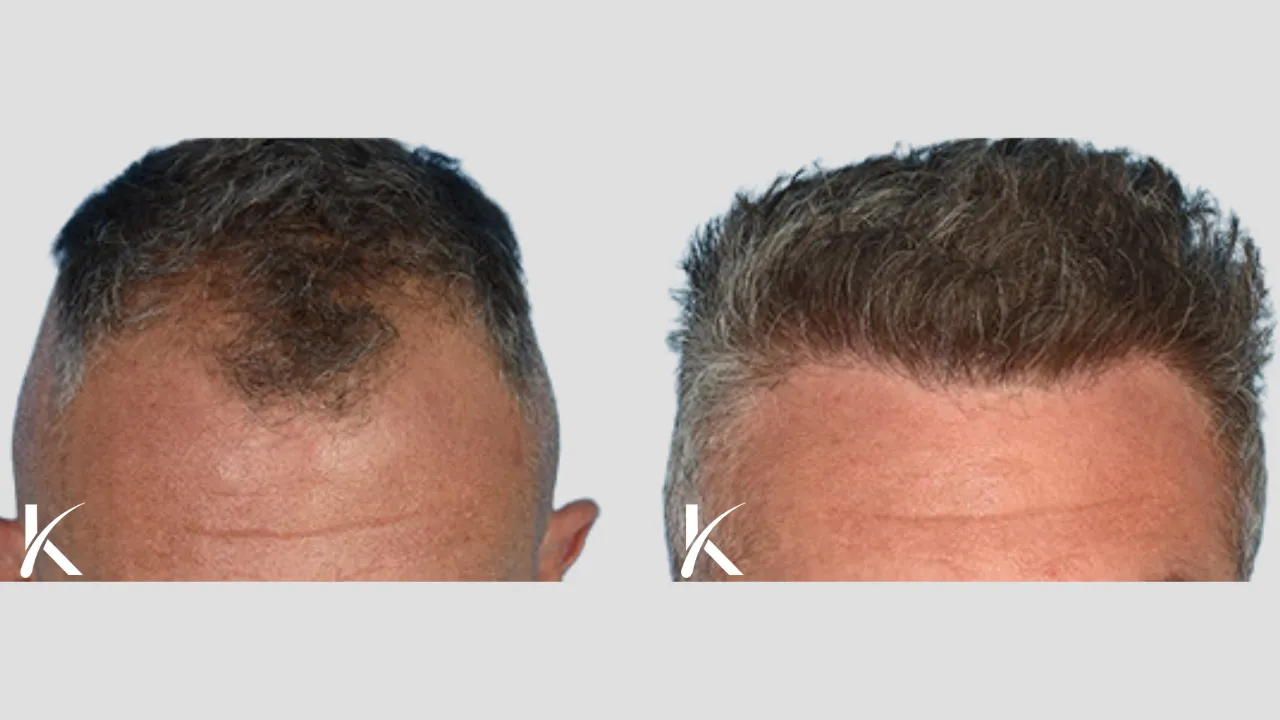
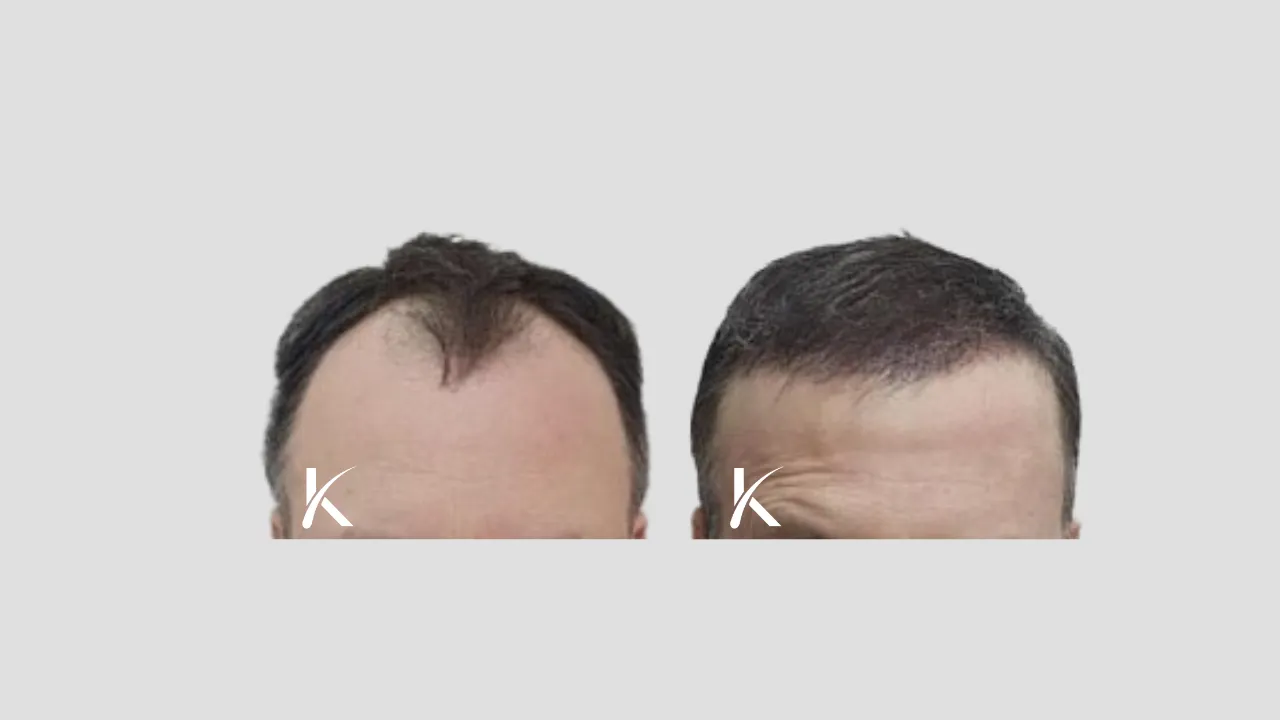
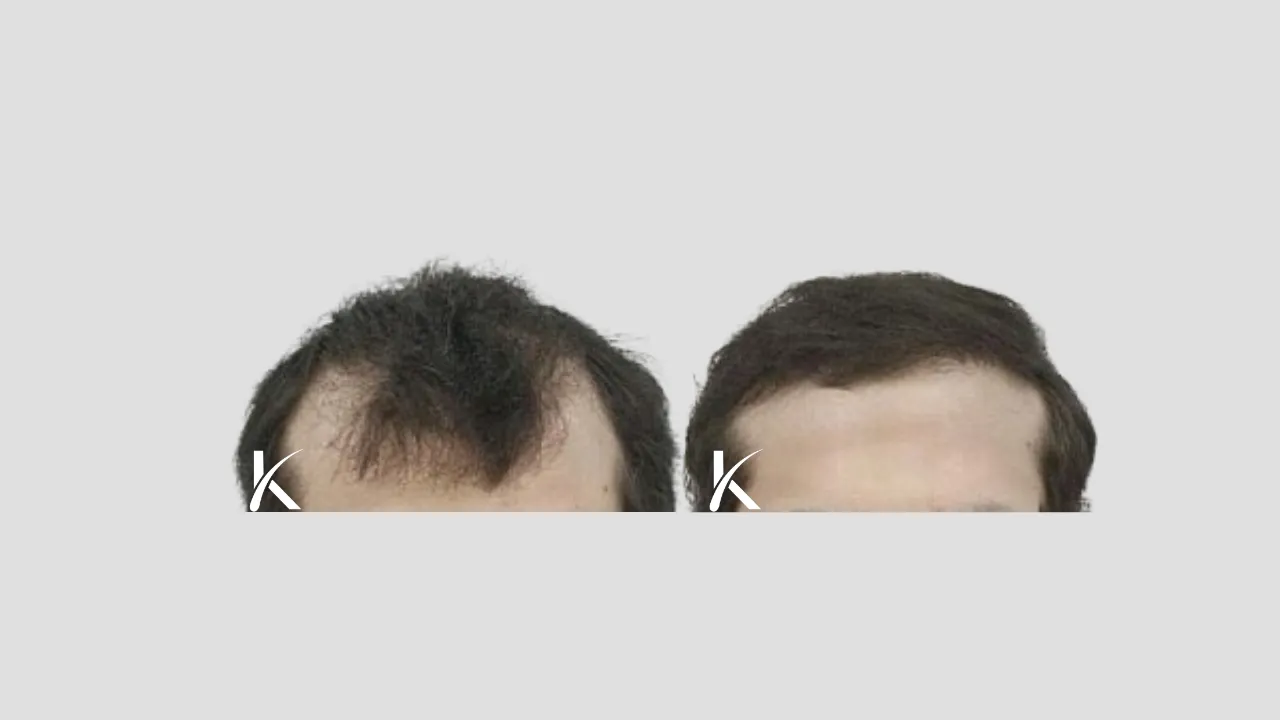
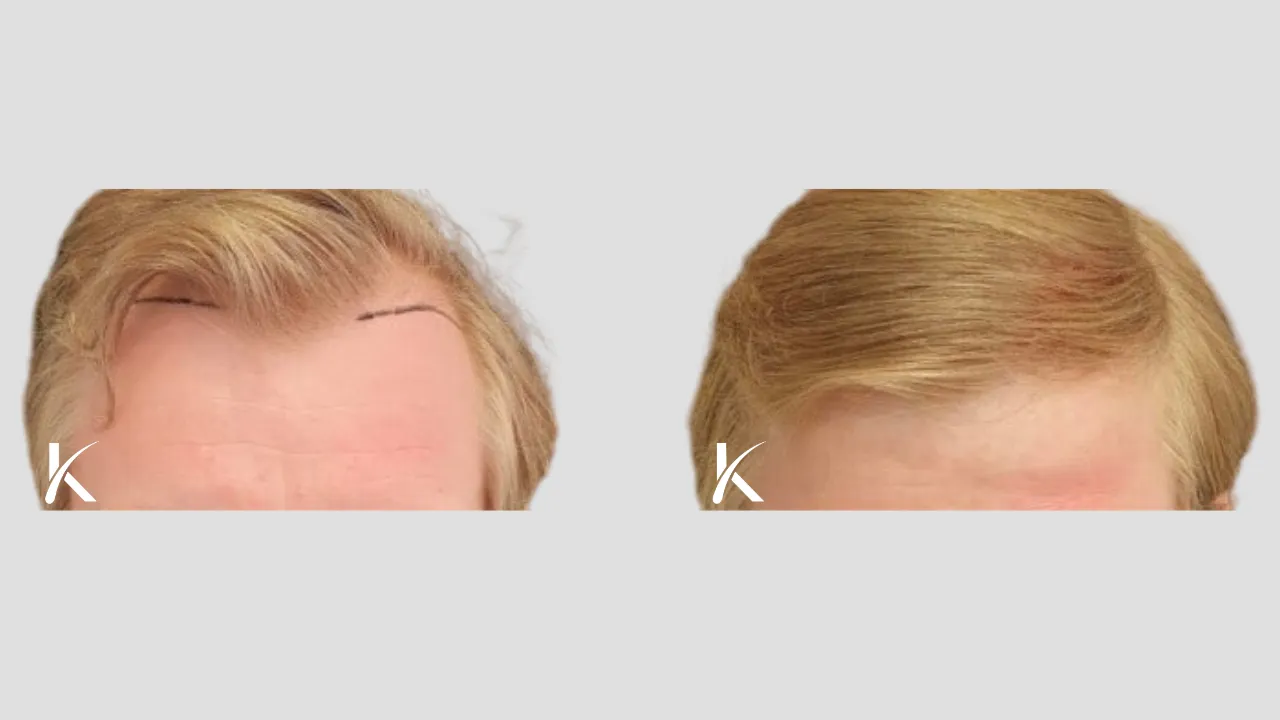
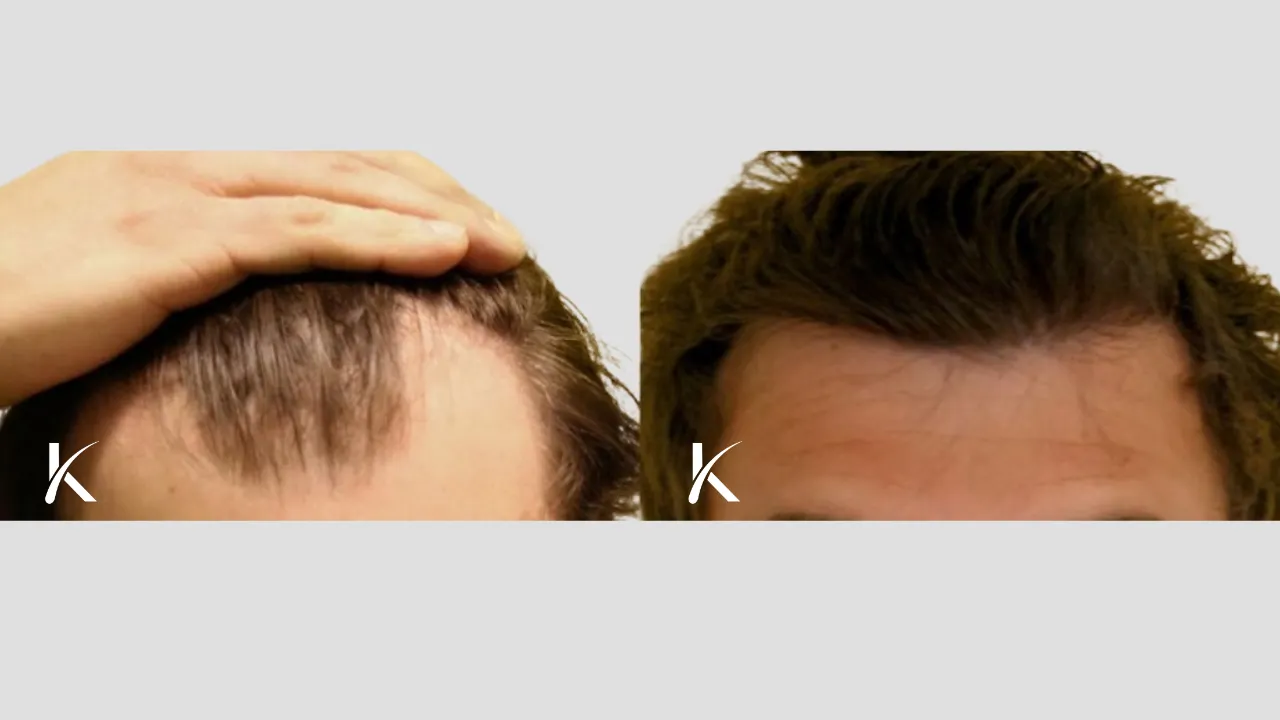
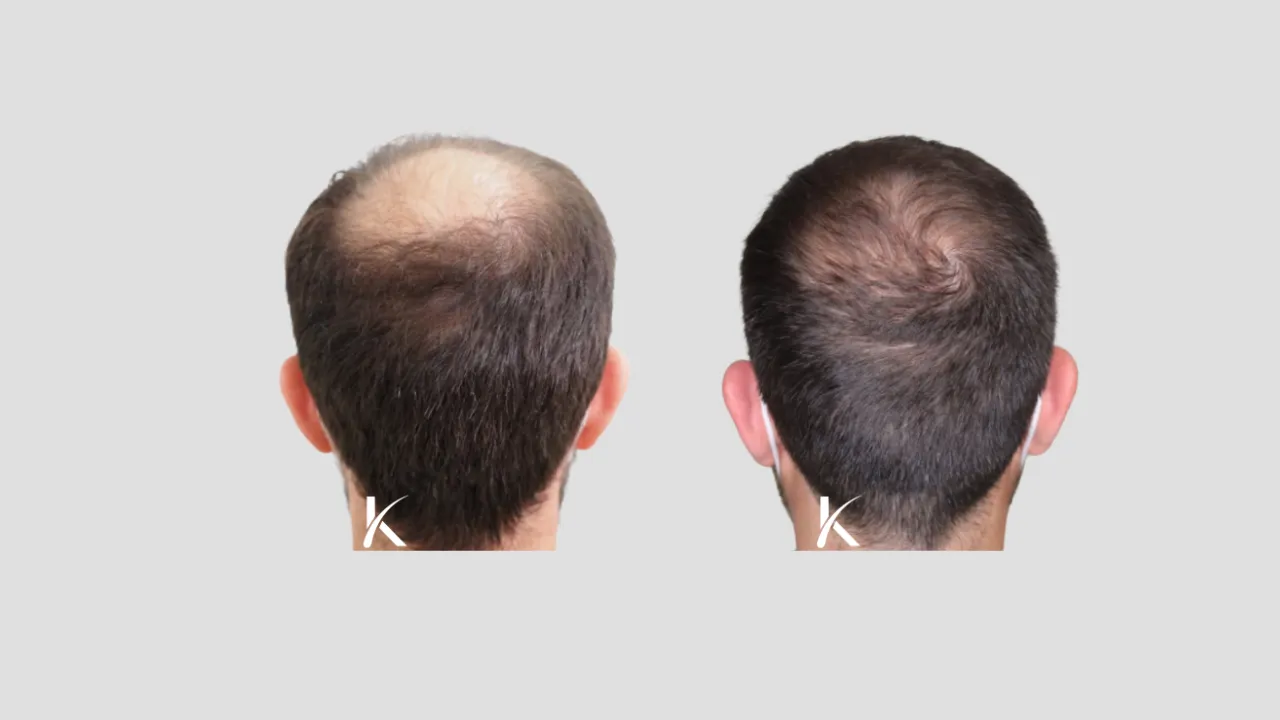
Grafts: 2100
Gender: Male
Age: 41
Procedure Description: Desired a thicker, more defined hairline. After nine months with 2,100 grafts.
In FUT, the surgeon removes a strip of scalp from the donor area, closes the incision, and separates the strip into individual grafts for placement in the thinning or bald area. Because the donor site heals as a fine line rather than scattered points, comparisons of this method typically note the linear scars along the back of the scalp, which are usually hidden by surrounding hair once healed.
FUT before-and-after results can look similar to FUE outcomes at the treated site, so the main visible difference between the two methods shows up in the donor area rather than the hairline or crown. A dedicated set of FUT hair transplant before-and-after examples shows how the strip method’s results compare across different graft counts.
Hairline Transplant Before and After
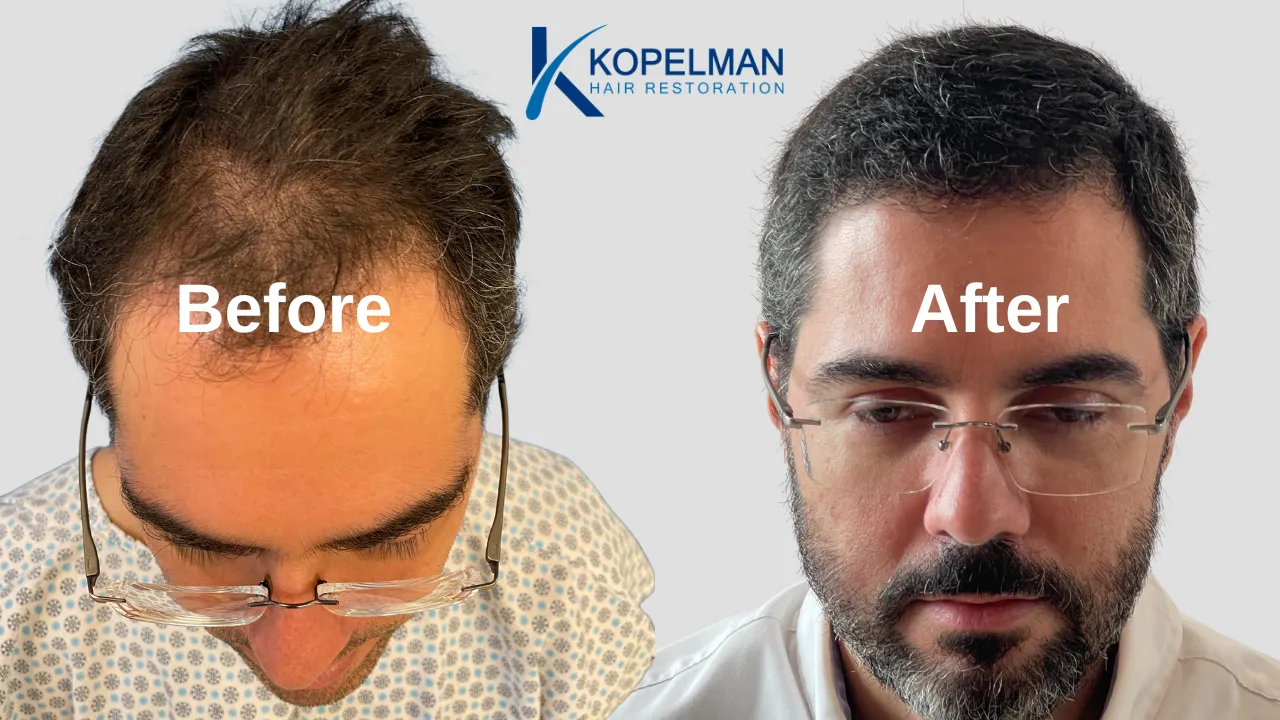
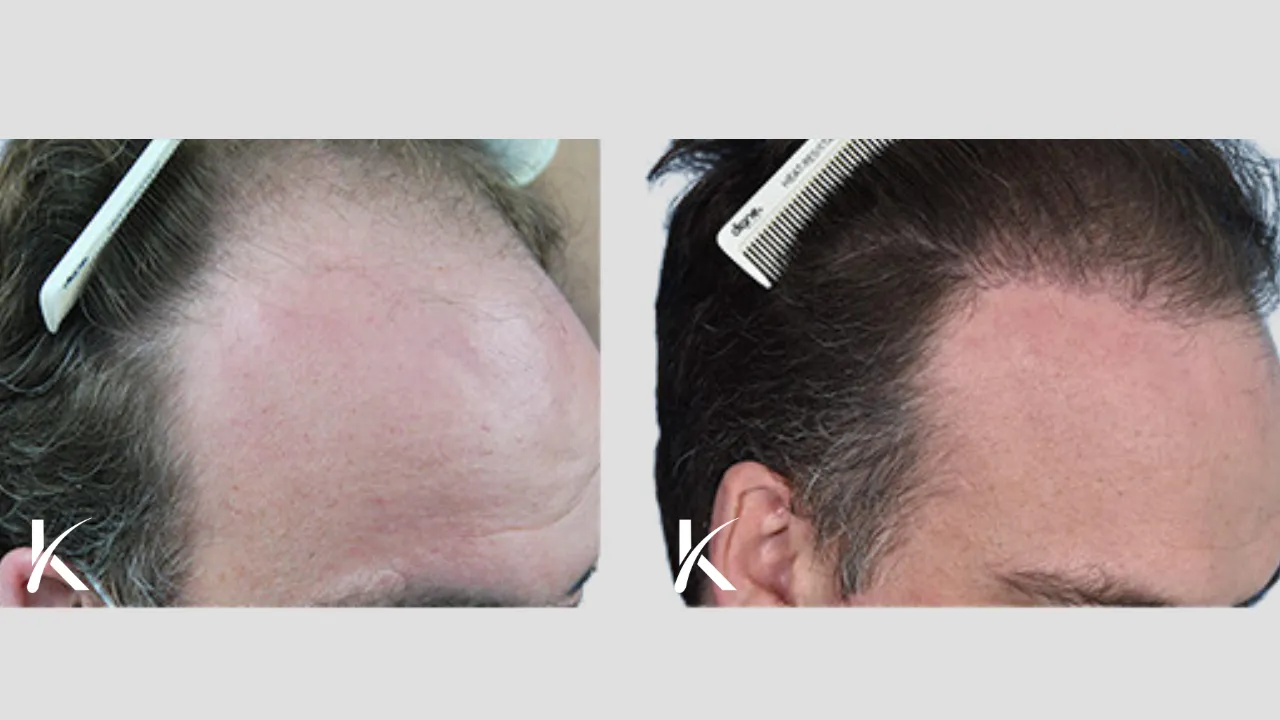
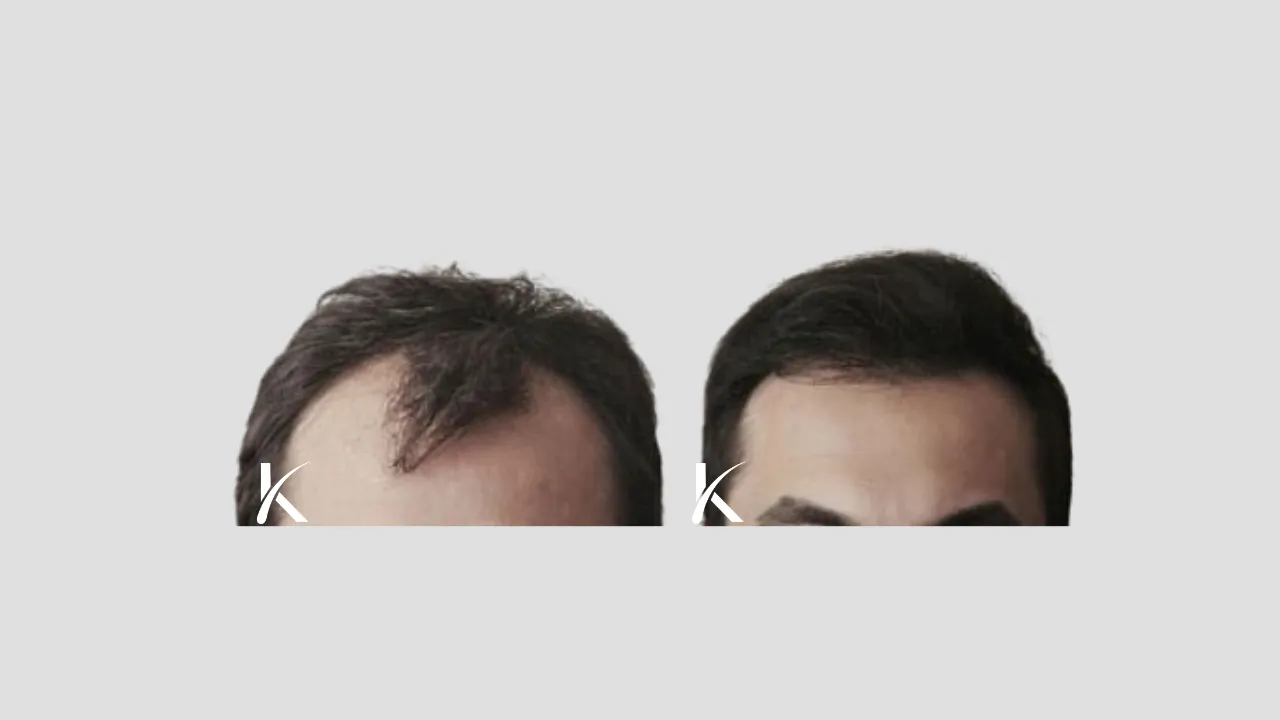
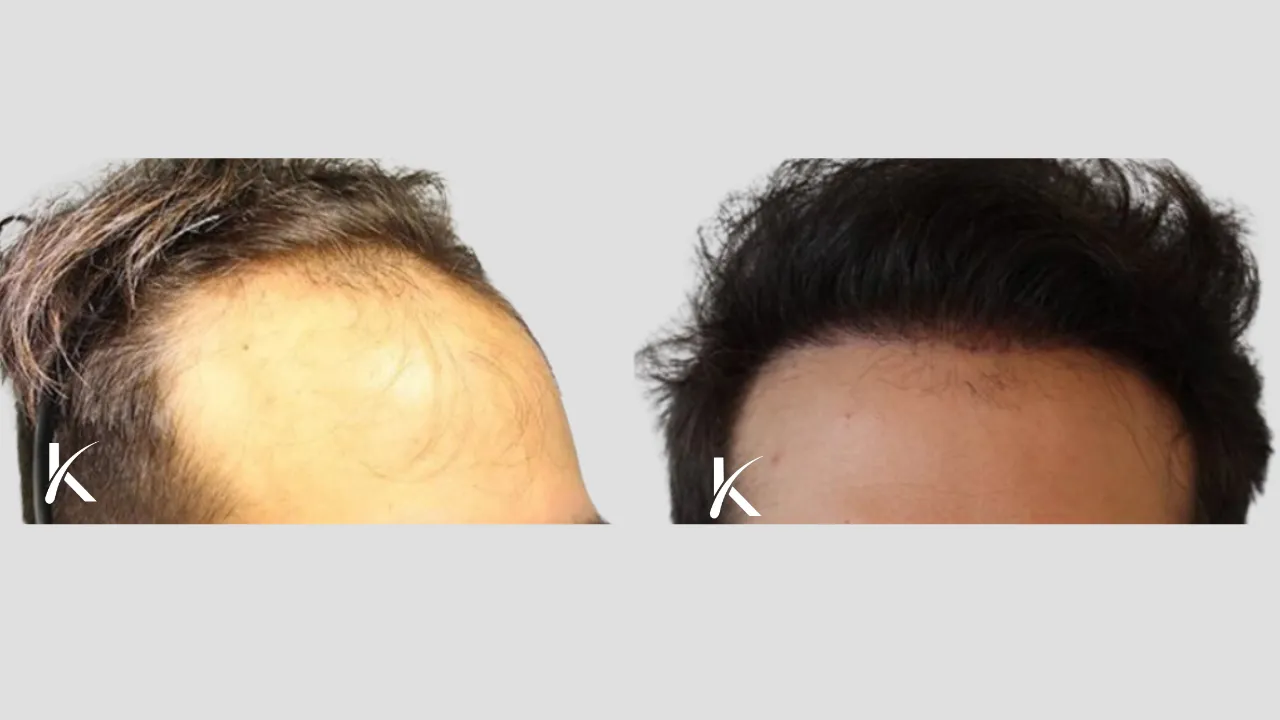
The hairline frames the face, so hairline transplant before and after images draw close attention to shape, symmetry, and how natural the leading edge appears. A front hairline transplant restores density at the forehead and rebuilds a defined edge using single-hair grafts at the very front for a soft, natural transition.
At Kopelman Hair, we design each hairline based on the patient’s facial proportions, age, and existing hair pattern rather than applying a fixed template. When reviewing these comparisons, look at whether the new hairline suits the patient’s age, since an aggressively low line rarely reads as natural hair over time.
Ready to Start Your Journey?
Call our New York office at (212) 470-4076 or request a consultation online. Virtual consultations are available for patients across the US and internationally. You leave with a written plan, a graft estimate, and a scheduled procedure date.
Before and After Results by Graft Count
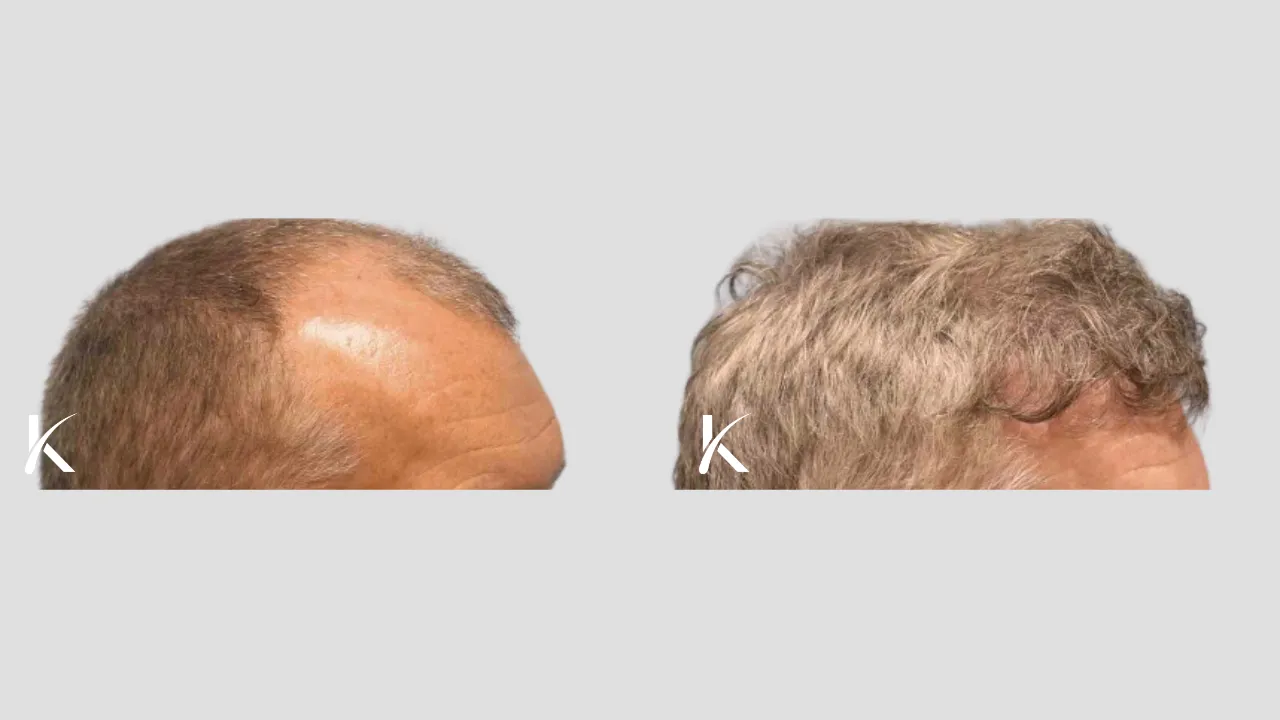
1,000 Grafts
Smaller sessions suit targeted work, such as restoring temple corners or refining a hairline with limited recession. A 1000 hair grafts before and after comparison usually shows a focused change rather than full-scalp coverage, which is appropriate for early-stage loss. You can review a detailed breakdown of what a hair transplant 1000 grafts session addresses and where this size fits.
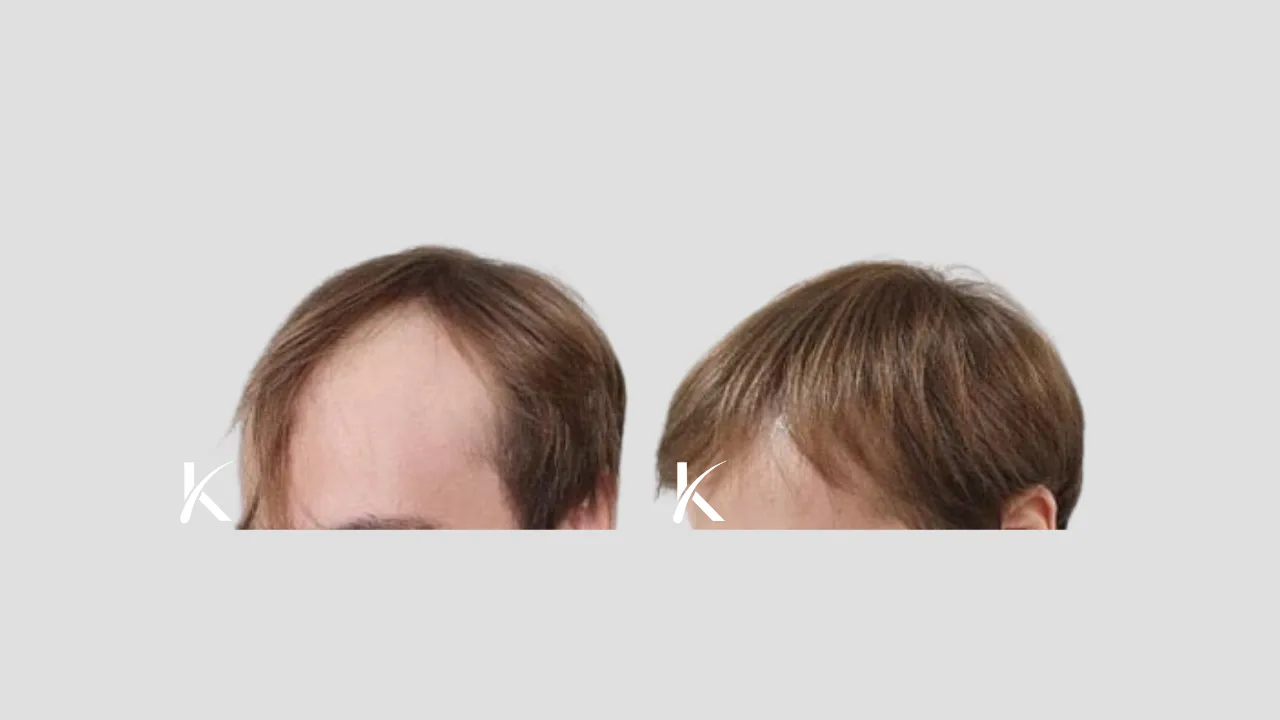
1500 Grafts
A mid-range session covers more ground than a hairline refinement while still concentrating on the frontal third of the scalp. A hair transplant before-and-after 1500 grafts comparison often pairs hairline restoration with modest density behind it. This range works for patients whose thinning has moved past the hairline but has not yet reached advanced crown loss.
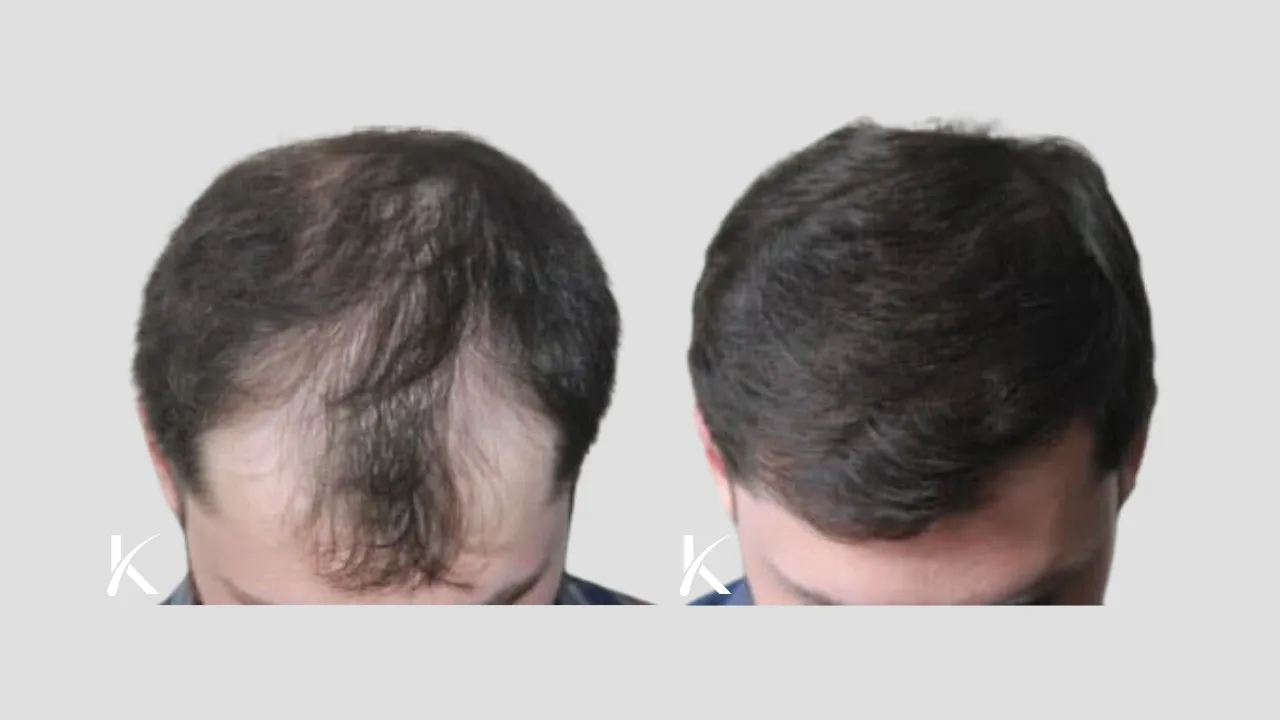
2000 Grafts
Larger sessions address broader coverage across the front and mid-scalp. A 2000 hair grafts before and after comparison typically shows a more noticeable shift in overall density, and a hair transplant before and after 2000 grafts set is common because this count balances coverage with donor supply for many patients. The visible change depends on the contrast between the starting thinning area and the treated result.
2500 Grafts
Higher graft counts suit more extensive loss or patients who want density across multiple zones in one session. A 2500 grafts before-and-after comparison generally covers the hairline, mid-scalp, and part of the crown, subject to how much healthy donor hair is available. Donor supply is finite, so the surgeon plans graft distribution against long-term loss rather than filling every area at once.
Crown Transplant Before and After
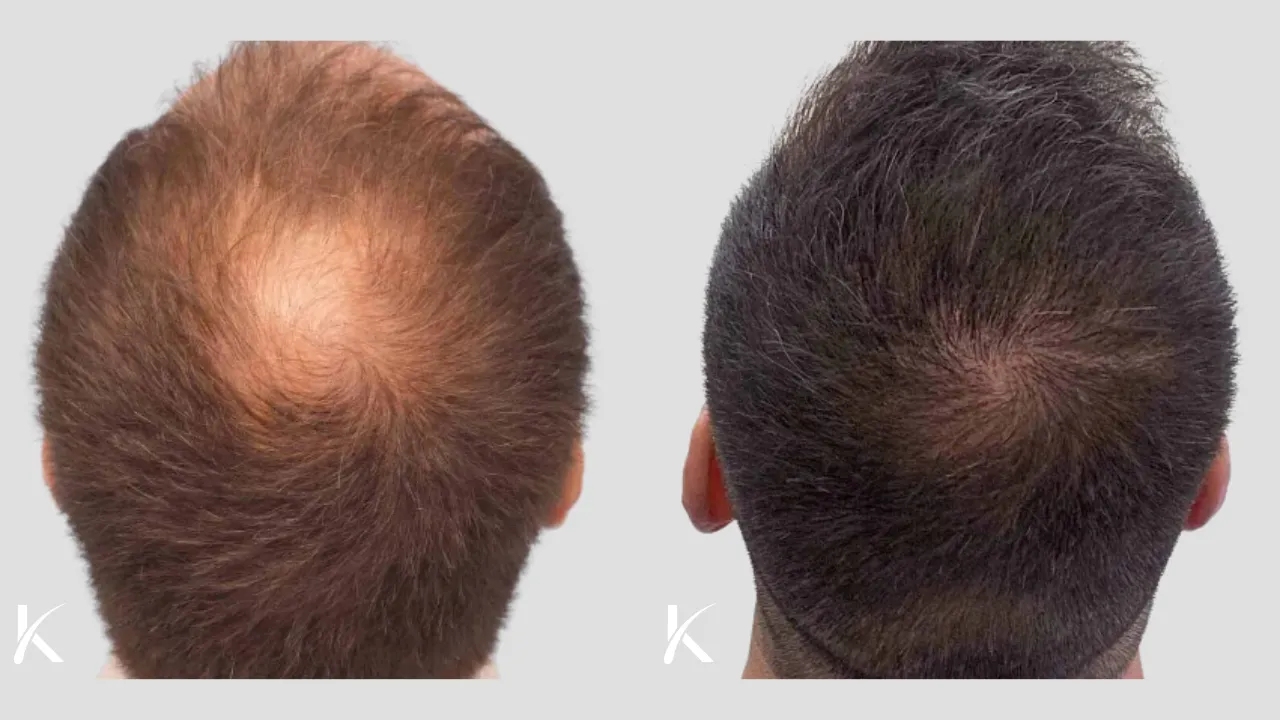
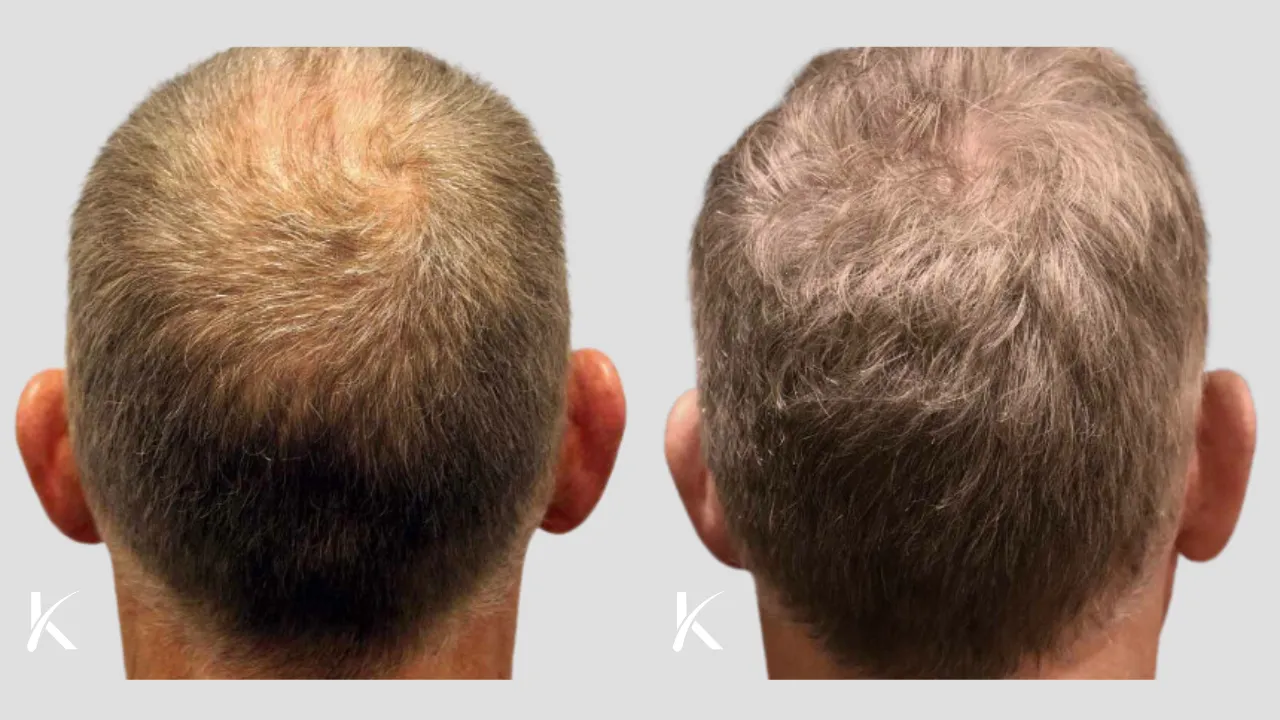
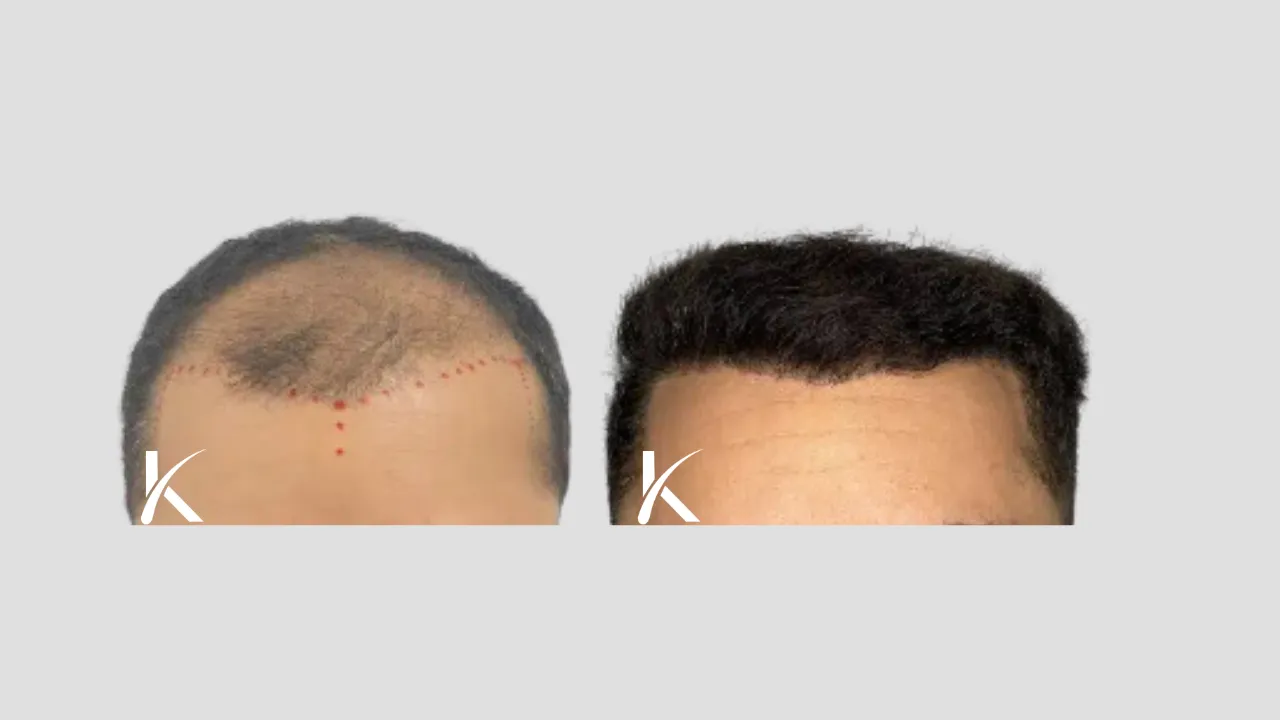
The crown grows in a spiral pattern, which makes it one of the more technically demanding zones to restore. A hair transplant on crown before-and-after comparison shows how the surgeon rebuilds coverage over a bald spot while matching the natural whorl direction.
Crown work often needs a higher graft count to reach visible density because the spiral disperses light and can make the same number of transplant follicles look thinner than it would on the hairline.
How to Judge Real Before and After Results
Use these checks when reviewing any hair restoration before and after set:
| Consistent angle and lighting. | Real hair transplant results hold up across front, top, and side views, not just one flattering frame. |
| A stated timeline. | A comparison without a date leaves out the information that makes it meaningful. |
| Realistic scope | Improved density is a reasonable goal; a full head of hair on a severely limited donor supply is not, and honest galleries reflect that. |
| Whole-scalp context. | The best hair transplant results account for future loss, not just the area treated on the day. |
Meet the
Kopelman Team
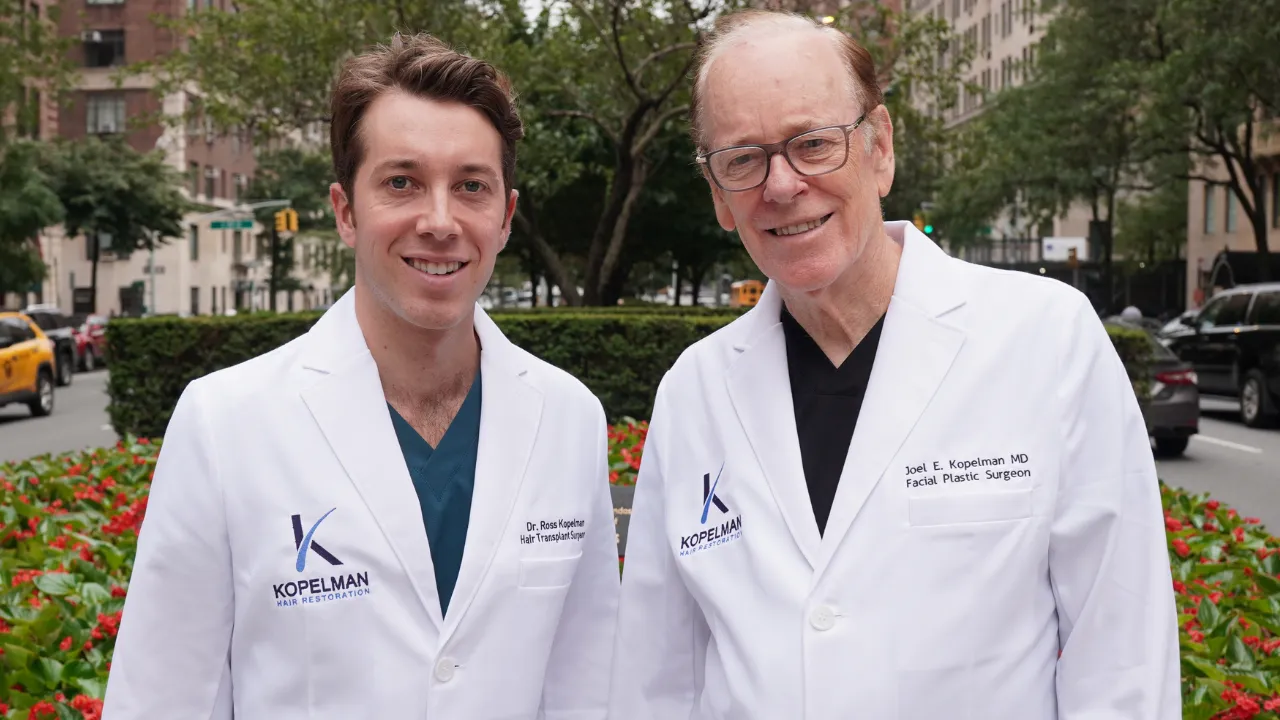
Dr. Ross Kopelman
Hair Transplant Surgeon · Medical Director
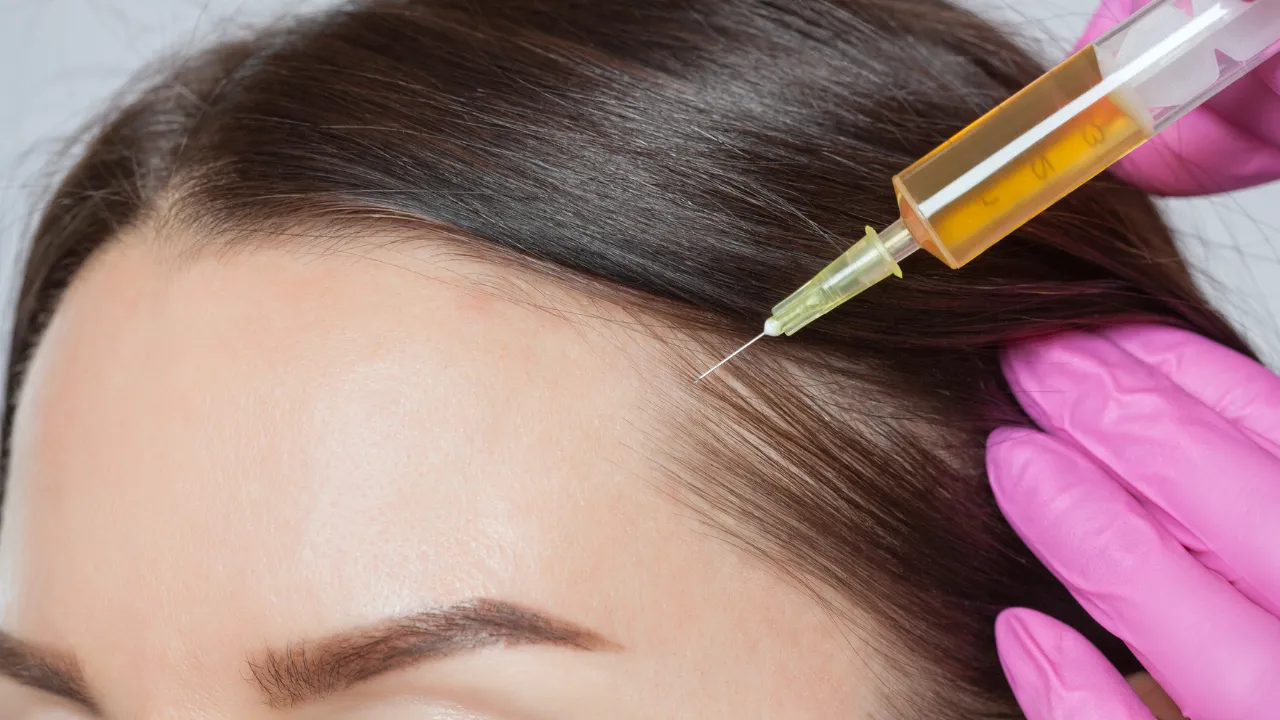
Dr. Ross Kopelman focuses exclusively on follicular grafting, with subspecialty training in FUE, FUT, eyebrow procedures, scar repair, and non-surgical therapies including PRP and mesotherapy. He combines advanced surgical techniques with evidence-based medical treatments to create individualized, long-term hair restoration plans for both men and women.
CO-FOUNDER
Dr. Joel Kopelman
Hair Transplant Surgeon · Facial Plastic Surgeon
Dr. Joel Kopelman is a top-rated Facial Plastic Surgeon and Co-Founder of Kopelman Hair Restoration. With over four decades of surgical experience, his foundation in plastic surgery provides a rare perspective on aesthetic balance and natural outcomes.
Before and After by Procedure Type
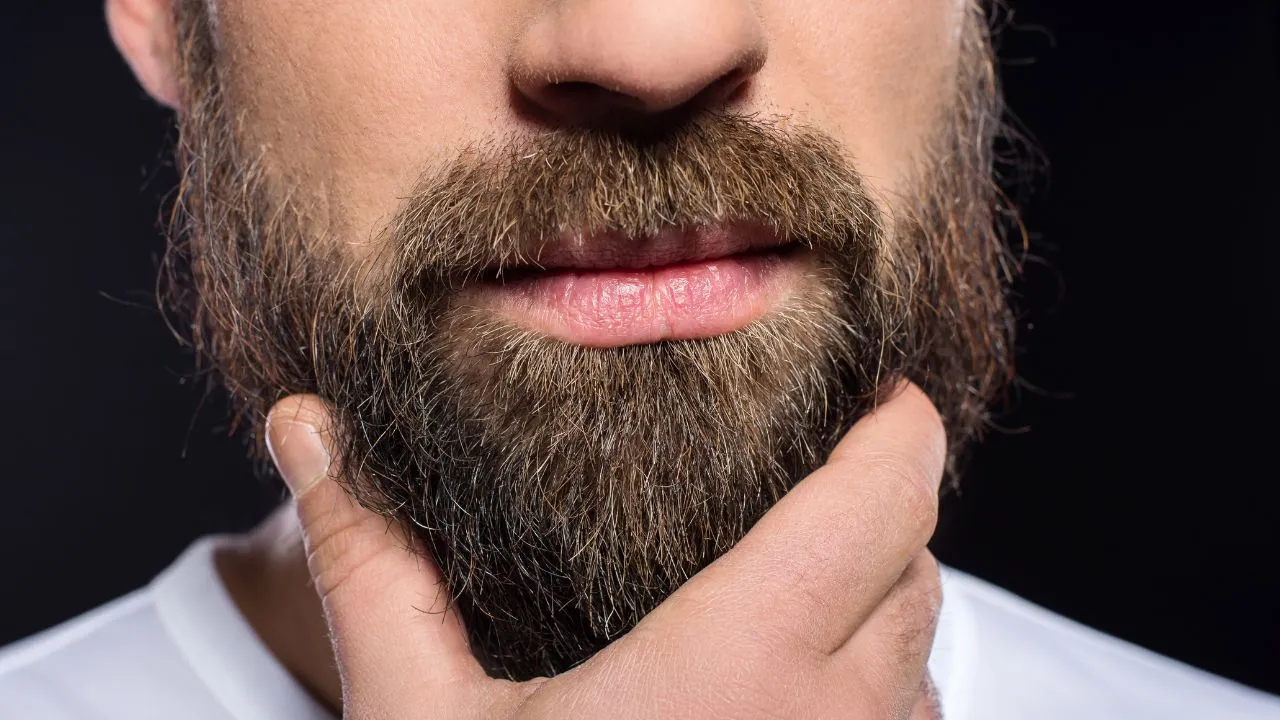
Transplantation restores more than the scalp, and comparing results by procedure type shows how the same surgical principle applies to different areas.Each type has its own timeline and its own markers of a natural result. The sections below group the main categories patients research.
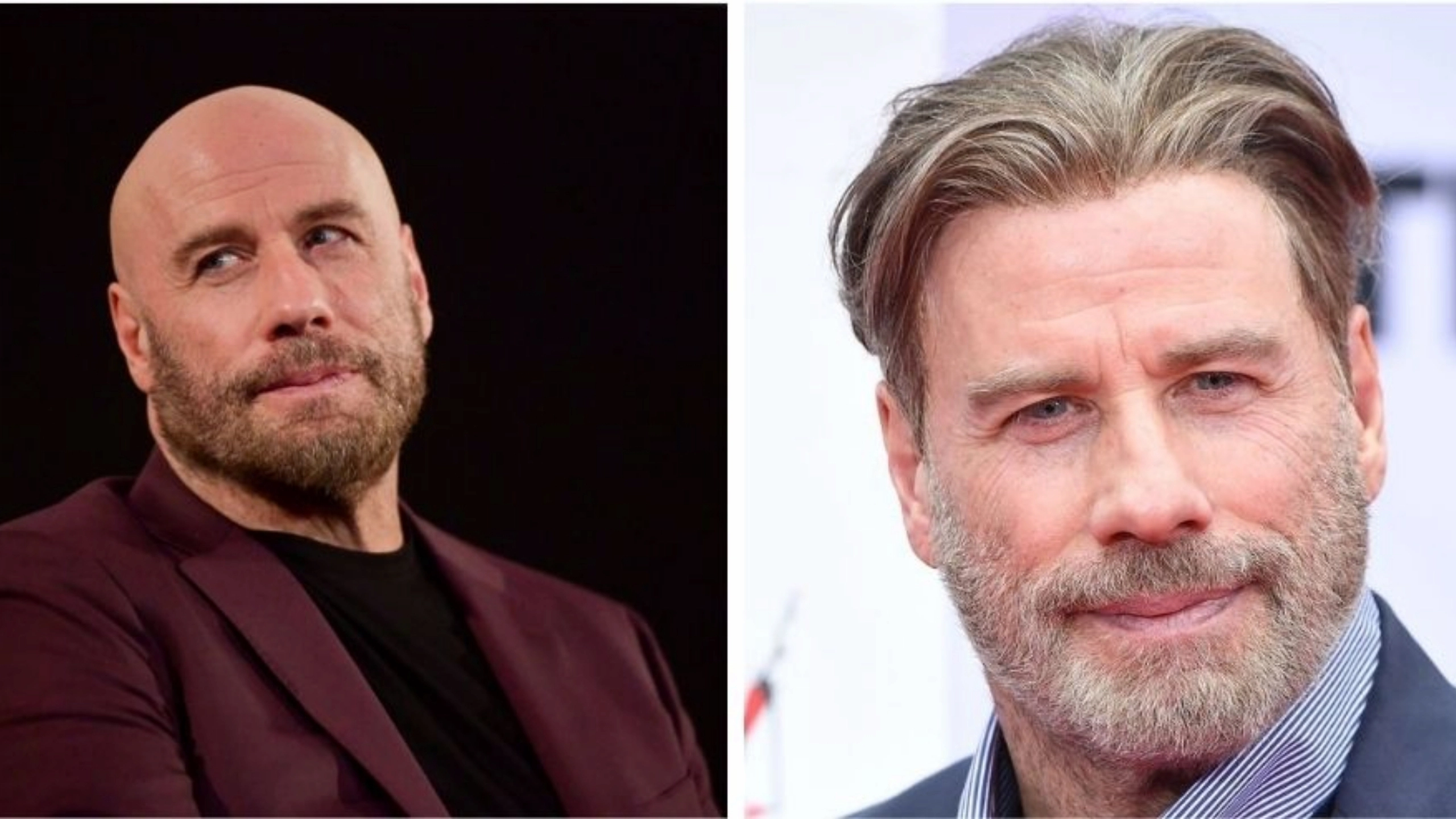
Public figures who discuss their procedures give many patients their first reference point for what surgery can and cannot do. The celebrity hair transplant before and after page reviews widely discussed cases, and the female celebrities with hair transplants page focuses on documented female examples. These comparisons carry the same limitation as any other: without a known timeline and consistent photography, a single side-by-side tells an incomplete story.
Body Transplant
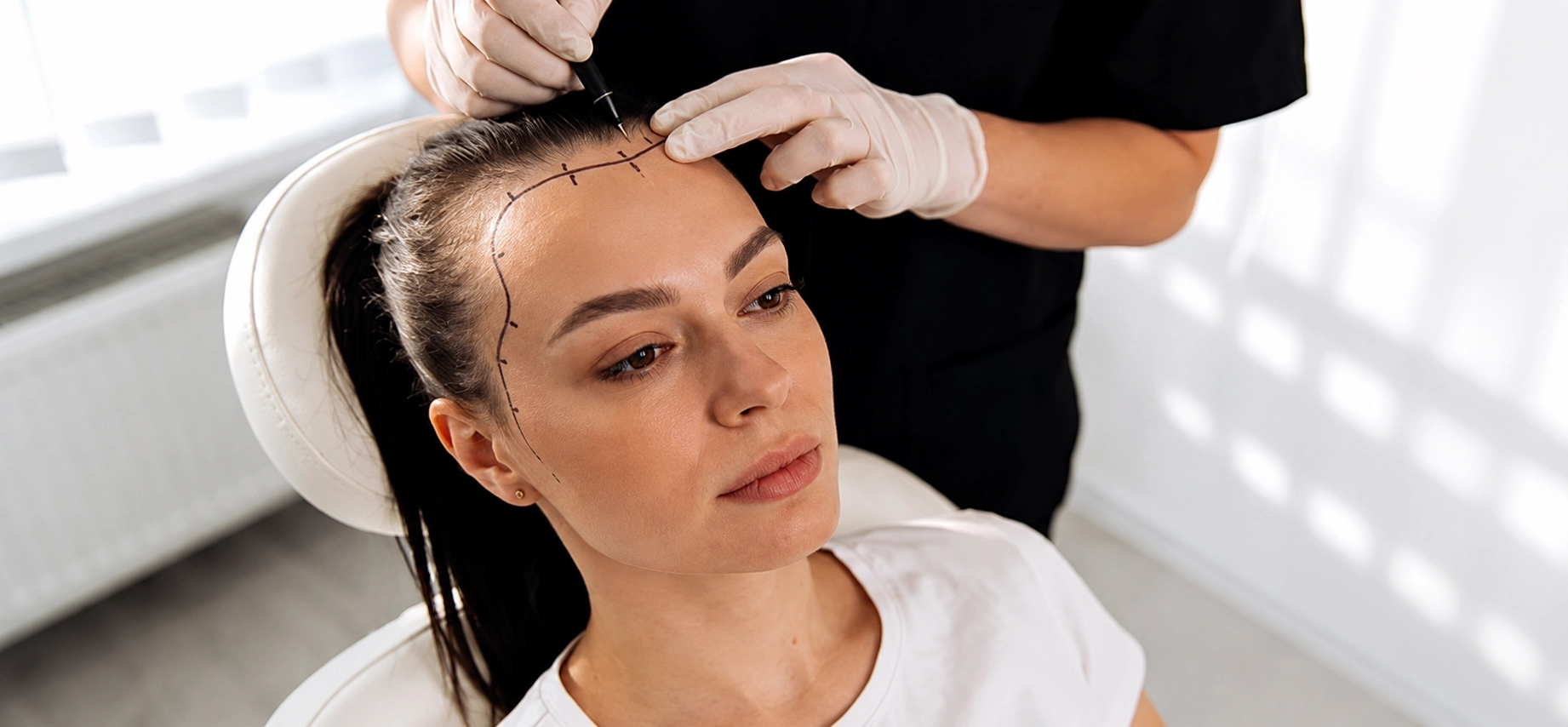
Female hair loss usually presents as diffuse thinning rather than a receding hairline, which changes how a candidate is assessed and how a result is judged. A female hair transplant before and after comparison reflects added density across a broad thinning area rather than a rebuilt frontal edge. Not every woman with hair loss is a surgical candidate, since stable donor hair is a requirement.
What Our
Patients Are Saying
Posted on Google
 barret abramow
 I recently had a FUE hair transplant with Dr. Kopelman in New York City, and I couldn’t be more pleased with the results. I had 2,800 grafts focused on restoring my hairline, which had become more recessed than I was comfortable with. The change has been subtle yet transformative — my hairline looks completely natural, and it frames my face in a way that feels more like me. It’s not overly dramatic, just exactly what I hoped for. What really stood out about working with Dr. Kopelman and his team was their expertise and attention to detail. From the initial consultation, it was clear they understood how to approach my specific situation to achieve the best outcome. The procedure itself went smoothly, and the aftercare instructions were thorough and easy to follow. I felt confident every step of the way because of how knowledgeable and professional they were. Finding their practice in NYC was a relief — it’s not easy to trust just anyone with something as personal as your hairline. I’m really glad I chose them because they delivered excellent results without any of the typical hype. If you’re considering a hair transplant, this is definitely the team to go to.Posted on Google
 Beth ZimmermanI am very happy with my experience with Dr. Kopelman. They are an amazing team. I had been looking for physician who could address my hair loss that had been bothering me for years. I am now doing mesotherapy treatments and I am so happy that my hair loss has reverted over the past 4 months. I really appreciated that a hair transplant was not forced upon me but is instead a last resort. I really appreciate the honesty. Thank you!Posted on Google
 Yoel OhayonI can’t say enough great things about my experience with Dr. Kopelman and the entire team at Kopelman Hair Restoration! I had my hair transplant last year, and the results are simply fantastic. I am fully recovered and thrilled with the transformation—my hair looks natural, and I feel like myself again. Every step of the process was handled with such expertise and care. Dr. Kopelman took the time to explain everything thoroughly, and his team was kind, professional, and supportive from start to finish. I’m beyond grateful for their exceptional work and highly recommend Kopelman Hair Restoration to anyone considering a hair restoration procedure.Posted on Google
 RickDr. Kopelman is extremely knowledgeable and was willing to talk through my concerns and needs to develop an optimal treatment plan. He helped me evaluate a variety of options and decide on a protocol I was comfortable with. I am happy I found him!Posted on Google
 David CohenMy experience with Dr. Kopelman has been nothing short of incredible. From the moment I stepped into his office, I could tell I was in the hands of a true expert. I came to him for both an eyebrow hair transplant and an FUE hair transplant, and I am very happy with the results. My eyebrows look so natural, and the precision and artistry he brought to my FUE procedure completely transformed my hairline. What really stood out was how comfortable and confident he made me feel throughout the process—he explained everything in detail and answered all my questions with such patience and care. I actually discovered him on YouTube, where his videos about hair loss and transplants are so informative, and I’m so glad I did. I’ve never felt more confident in my appearance, and it’s all thanks to Dr. Kopelman’s expertise and attention to detail. If you’re looking for the best hair surgeon in NYC, he’s the one to trust.Posted on Google
 Yedidyah Leo SamuelsDr. Ross is incredible! So much knowledge and expertise in the field. Best hair surgeon in New York City!!Posted on Google
 Juan FraustroI paid for a consultation with one Dr. Kopelman and I actually got both Dr’s Kopelmam. They spent over an hour with me carefully studying my scalp, explaining my options, and providing the necessary prescriptions. I cannot recommend this practice or these doctors more highly.Posted on Google
 Odellya SohnisRoss is a top hair transplant surgeon in NYC. He was so kind when I came in. I wanted to understand why my hair was thinning after using a shampoo a dermatologist had sent my way to stop my bad dandruff problem. He was so patient through my 10 million questions, I felt he really cared about what I need instead of feeding into a consumerist magic pill. He also was able to find that I could be balding and give me tips and a prescription and I felt like he saved me from tripping over a ledge I didn't see. Thank you so much!Posted on Google
 K SalalahI've been to many hair specialists, and I can confidently say that Dr. Kopelman and his team stand out for their incredible care and attention. The hair industry is unfortunately filled with people who are simply looking to make a sale, and think little about your longterm goals or happiness. I'm fortunate to have found Dr. Kopelman, who is incredibly attentive, knowledgable, puts my goals and comfort first, and is willing to think outside the box. Six stars!Posted on Google
 Andres DelgadoI had a consultation with Dr. Joel Kopelman. It was worth my time and money. The doctor answered all my questions and provided valuable insights.
Request a
Consultation
Call our New York office at (212) 470-4076 or complete the form. Virtual consultations are also available for patients to make it convenient to access Dr. Kopelman.
You will leave feeling confident about how to best address your hair restoration journey.