Hair Transplant Doctors in USA
Best Hair Transplant Clinic in the USA
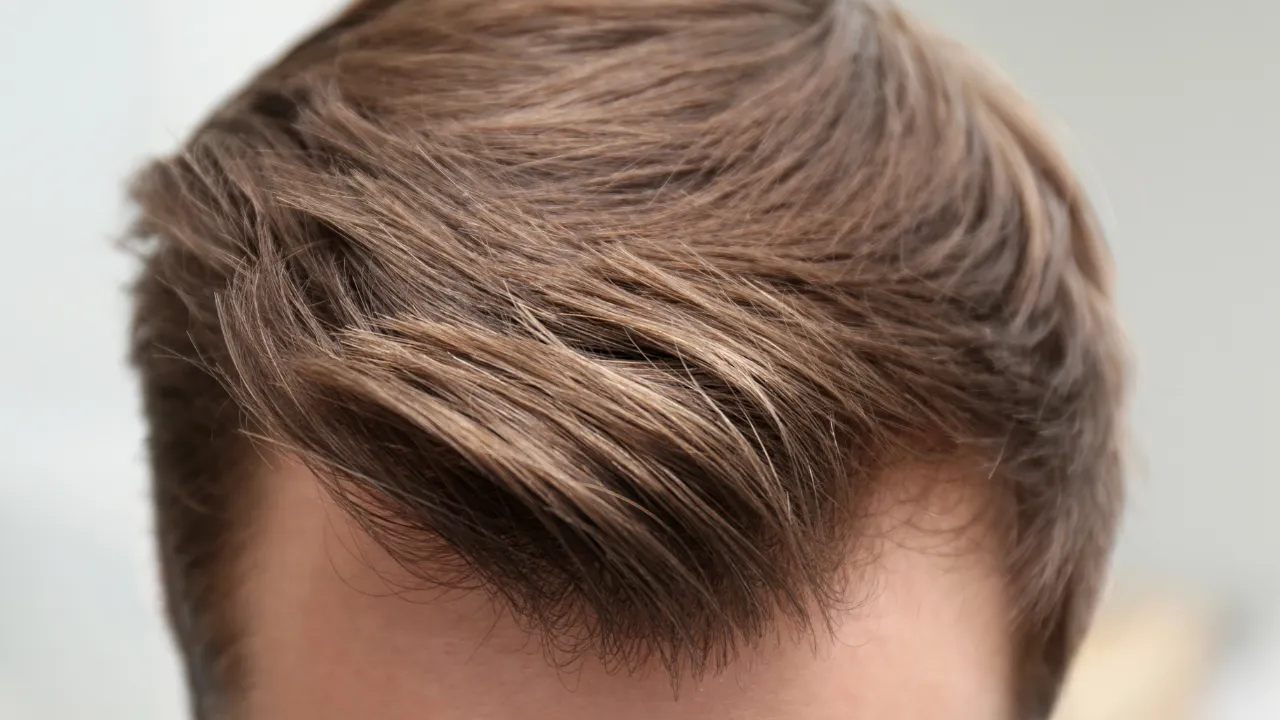
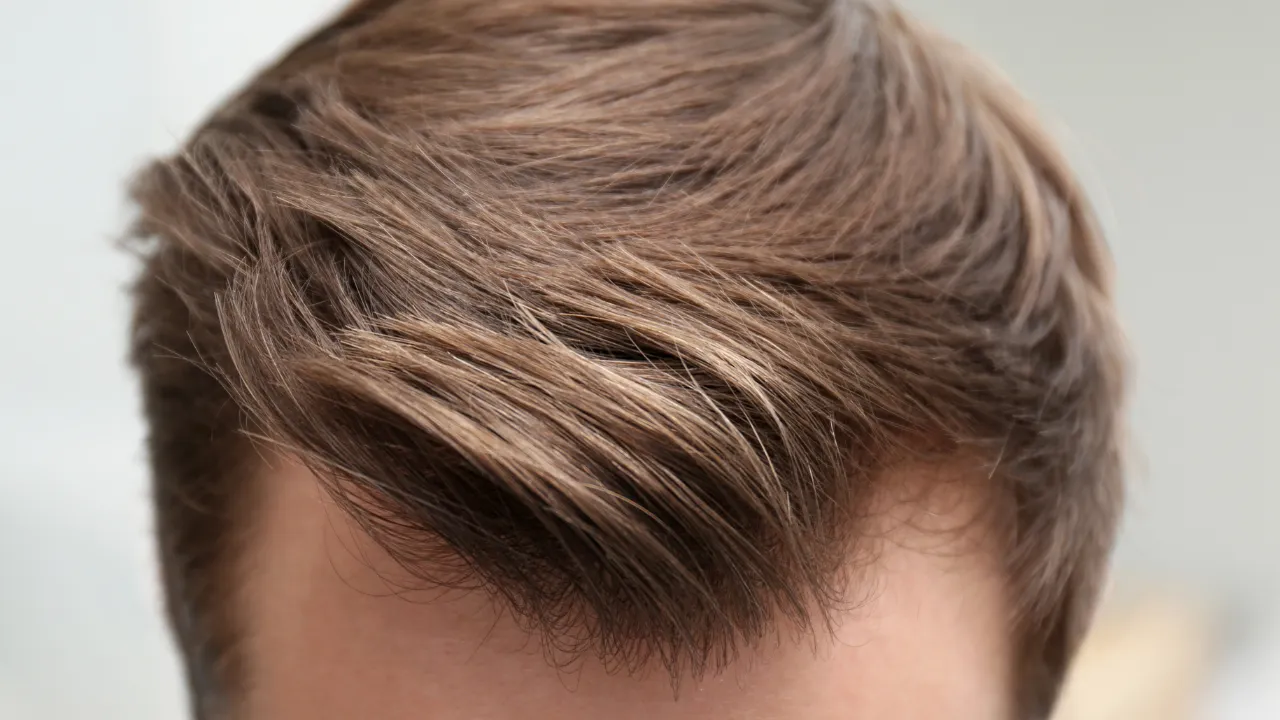
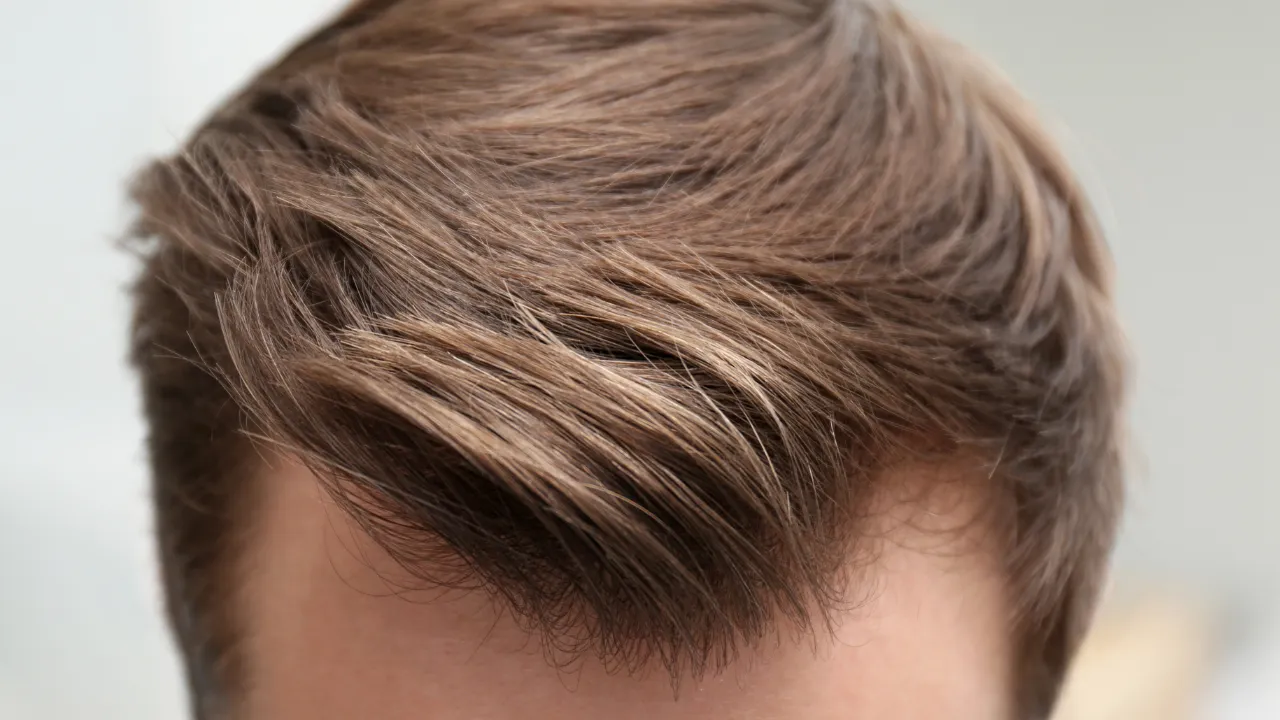
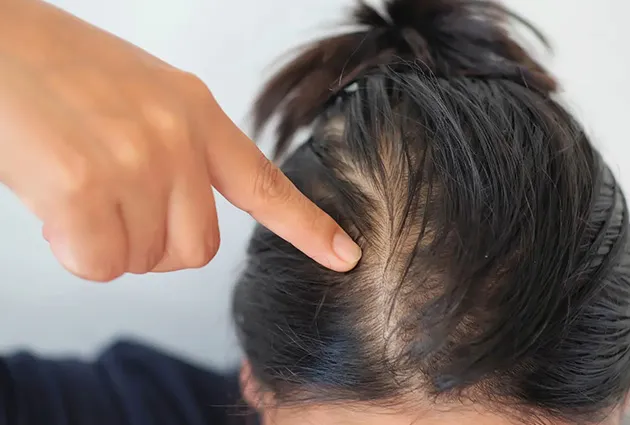
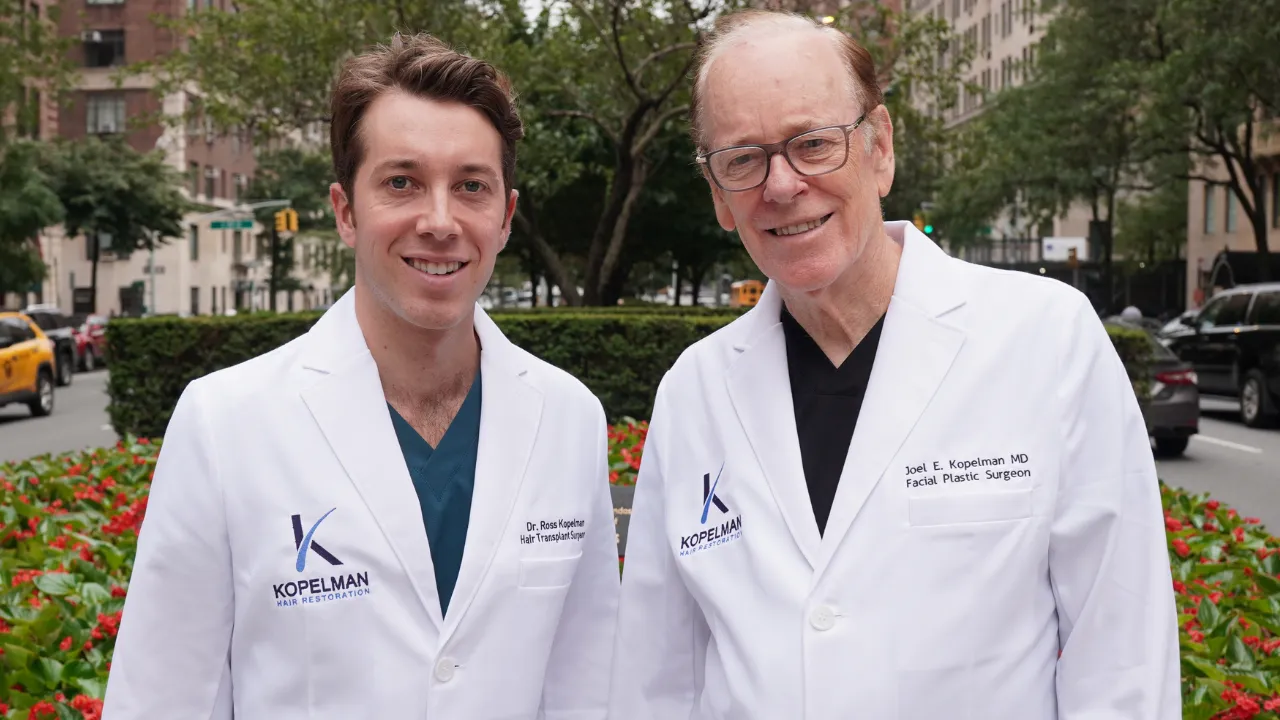
For patients researching the best hair surgery in the world, Dr. Ross Kopelman and Dr. Joel Kopelman perform hair transplants for men and women with hair thinning, balding, and receding hairlines. Together, both surgeons have completed hundreds of hair transplant procedures.
You can choose between FUE and FUT during your consultation. The full procedure walkthrough, recovery timeline, pricing for hair transplants, and medication options are all below.
What Makes a Hair Transplant Clinic the “Best” in the USA?
- Surgeon-performed procedures the physician plans and performs the surgery
- Specialized credentials board certification and dedicated training in follicular grafting (FUE, FUT) rather than hair transplants as an occasional add-on. We only perform hair transplants at our practice.
- Proven, independent results verifiable before-and-after galleries and reviews across independent platforms, not just testimonials hosted on the clinic’s own site.
- Natural artistry hairline design that accounts for angle, direction, density transitions, and how the result ages over decades.
- Honest candidacy assessment a clinic that will tell you when you are not a good candidate, and plans donor supply for the long term.
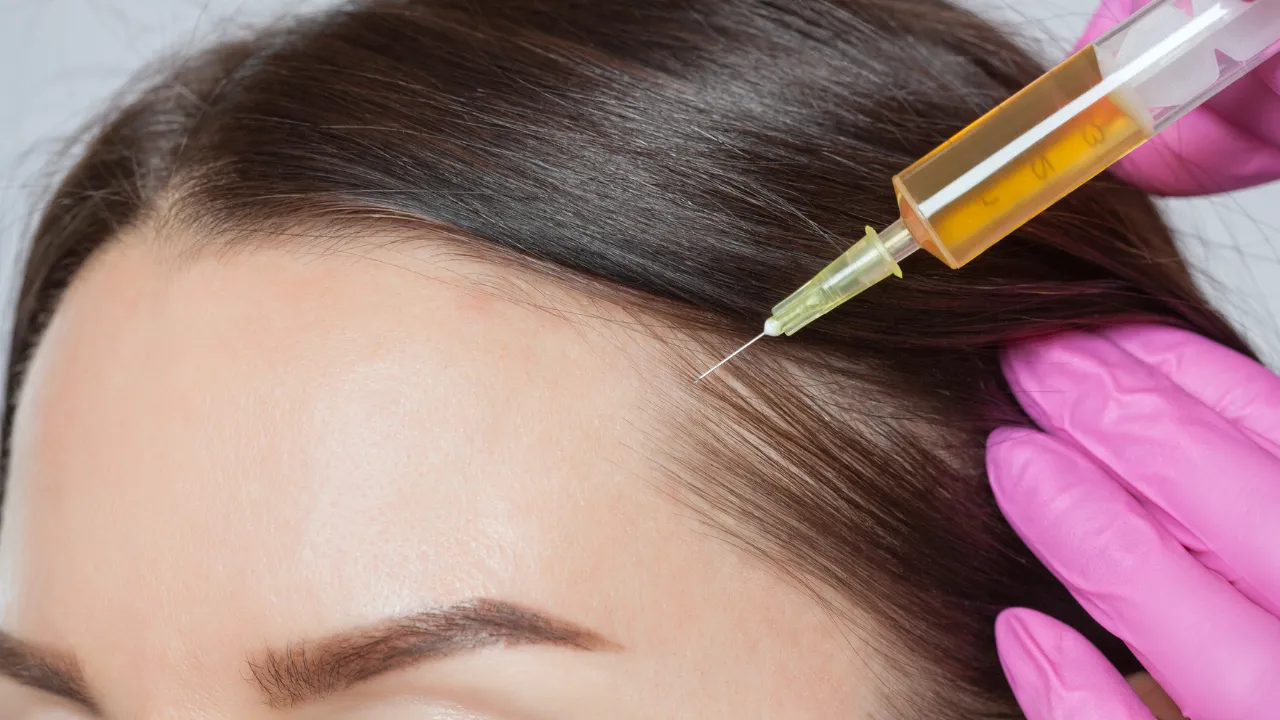
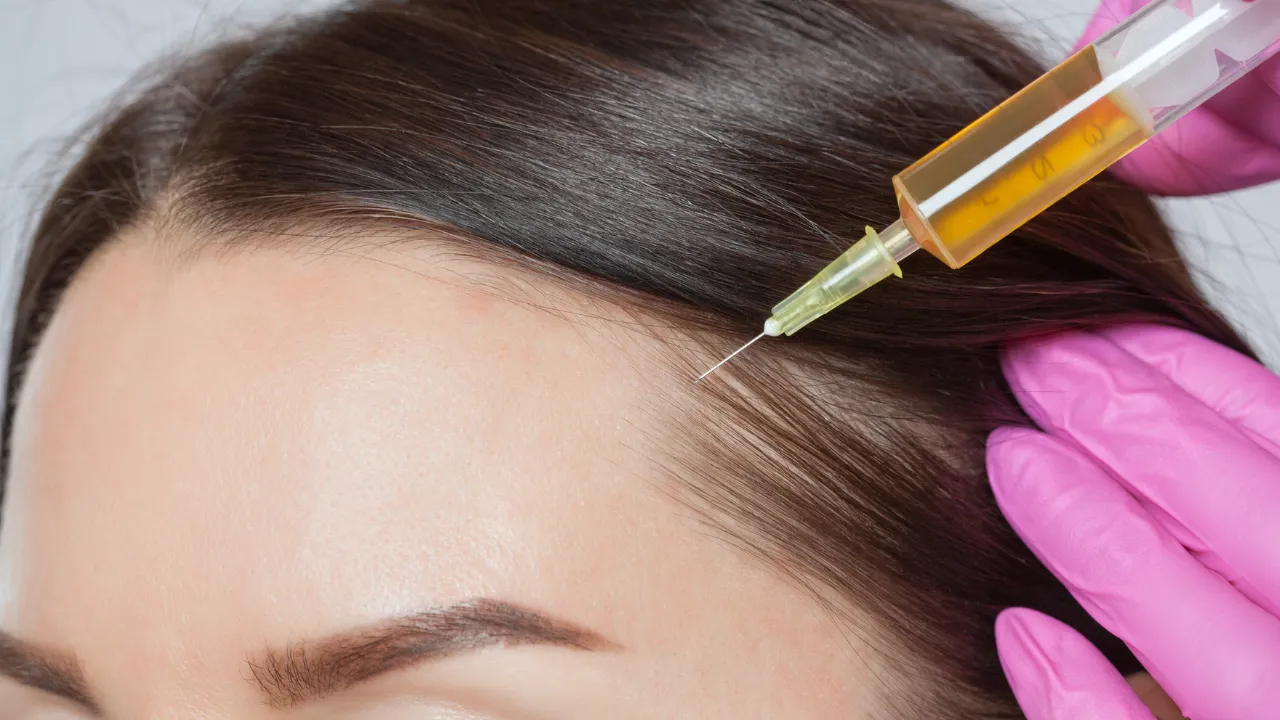
- A complete range of options surgical and non-surgical options (PRP, mesotherapy, medical therapy) so the plan fits the patient, not the other way around.
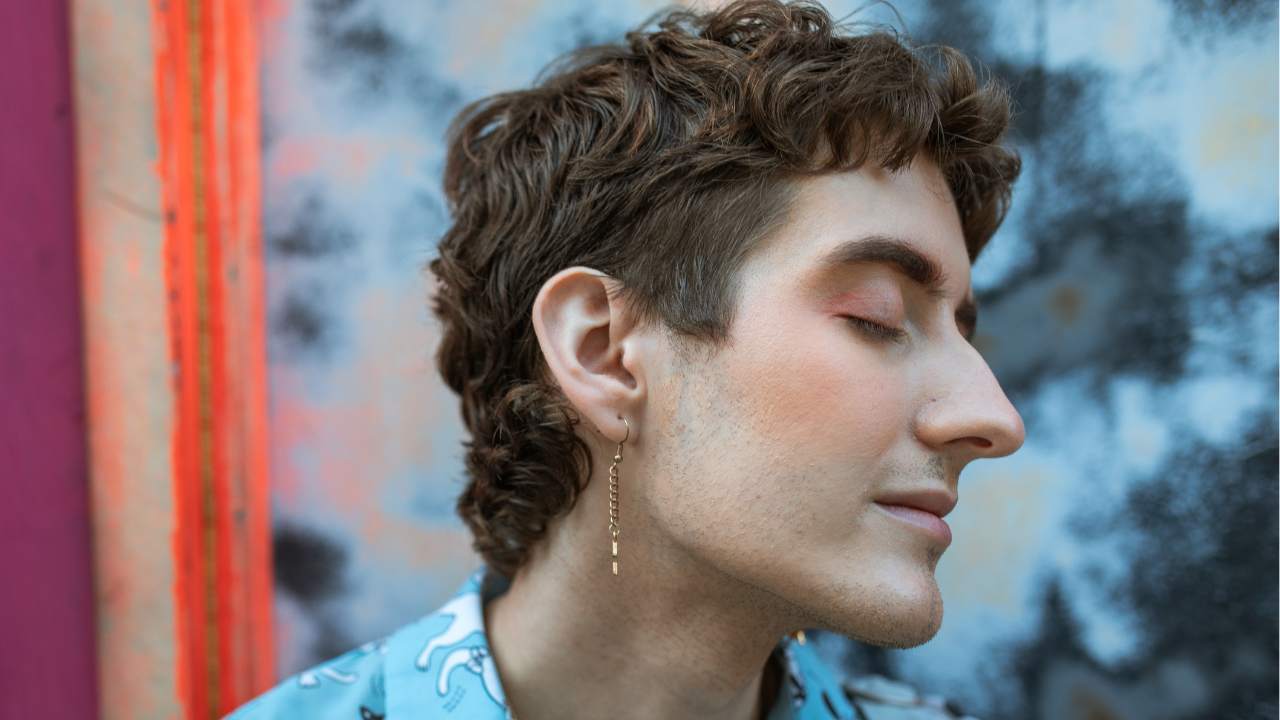
Hairline restoration · 12 months
Start Your Hair Transplant Research
How a
Hair
Transplant Works
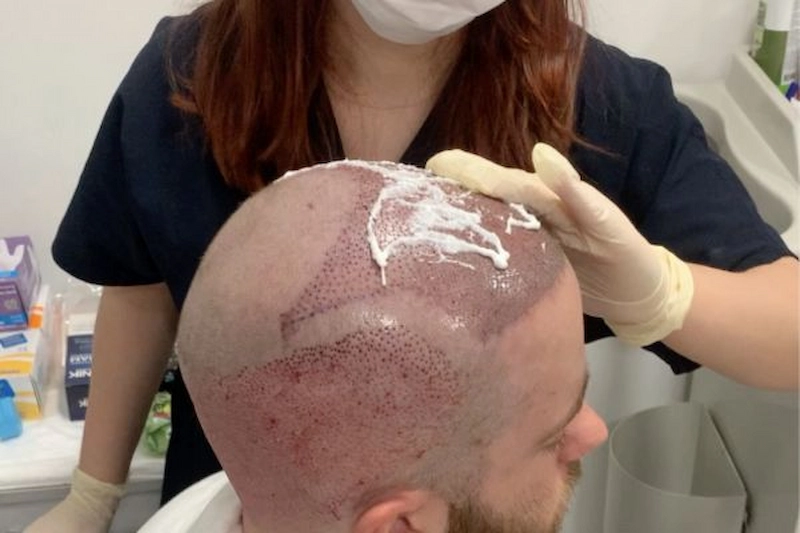
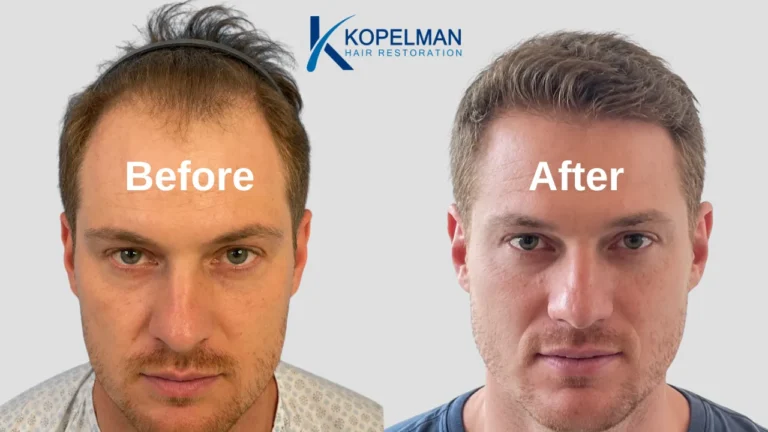
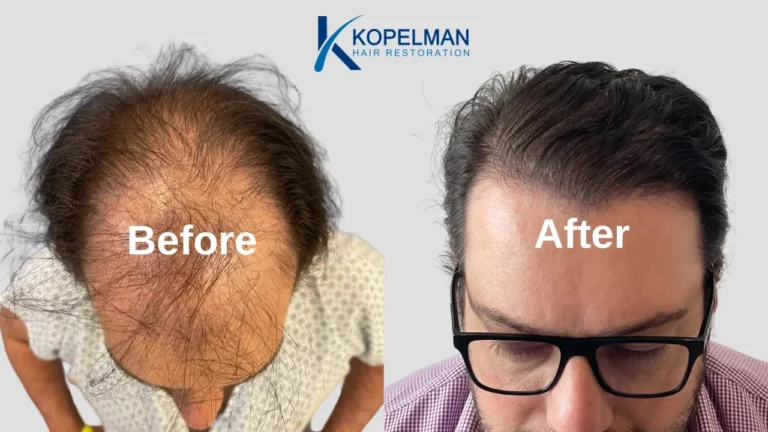
A hair transplant relocates healthy follicles from a donor area, usually the back and sides of the scalp, where hair is genetically resistant to thinning into areas of loss. Because those follicles keep their original resistance, transplanted hair is permanent and grows, is washed, and is styled like the rest of your hair. Results typically fill in over 9–14 months as the grafts mature.
| Factor | FUE (Follicular Unit Extraction) | FUT (Follicular Unit Transplantation) |
|---|---|---|
| How grafts are taken | Individual follicles removed one by one | A thin donor strip removed, then divided into grafts |
| Scarring | Tiny dot scars, easily hidden in short hair. Sometimes never visible. | A single fine linear scar covered by surrounding hair. Will be very challenging for us to find 1 year after surgery |
| Recovery | Generally quicker, minimal visible signs | Slightly longer at the donor site |
| Best suited for | Short hairstyles, smaller-to-moderate sessions, large cases, no-shave options, 1500-5000 grafts | Longer hair styles, 1500+ grafts |
| Donor consideration | Preserves flexibility for future sessions | Efficient use of a strong linear donor area |
Kopelman offers both techniques, plus a discreet no-shave FUE option for patients who want minimal visible change during early recovery.
Your Hair Surgeons
Meet the
Kopelman Team
Dr. Ross Kopelman
Hair Transplant Surgeon · Medical Director
CO-FOUNDER
Dr. Joel Kopelman
Hair Transplant Surgeon · Facial Plastic Surgeon
Dr. Joel Kopelman is a top-rated Facial Plastic Surgeon and Co-Founder of Kopelman Hair Restoration. With over four decades of surgical experience, his foundation in plastic surgery provides a rare perspective on aesthetic balance and natural outcomes. Named among the Top Ten Plastic Surgeons in New York City.
Estimate How Many Hair Grafts You Need
Kopelman Hair
Locations
We see patients from across the United States and around the world. Each office performs the same hair transplantation procedures with the same surgical team.
📍 Best Hair Implants in USA
Hair Transplant in New York City
Patients can explore doctor-led surgical hair restoration in one of the country’s most competitive medical markets. Learn more about hair transplant in NYC.
Address
New York, NY 10128
Hours
Services available:
Hair Transplant in New Jersey
New Jersey patients can review local hair transplant options with a team focused on natural planning, donor area management, and long-term hair restoration. Explore hair transplant in New Jersey.
Hair Restoration in Florida
Florida patients can access hair restoration care across several key areas. Explore location-specific pages for Hair Transplant in Palm Beach, Boca Raton, Miami, and Fort Lauderdale FL.
Read Hair Transplant Reviews
Patient feedback can help you understand the consultation process, surgical experience, recovery, and long-term satisfaction. Read real hair transplant reviews from patients who chose Kopelman Hair Restoration for surgical and medical hair restoration.
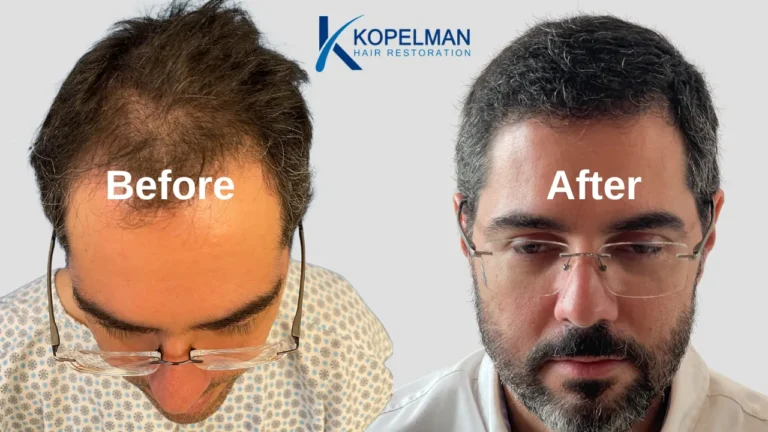
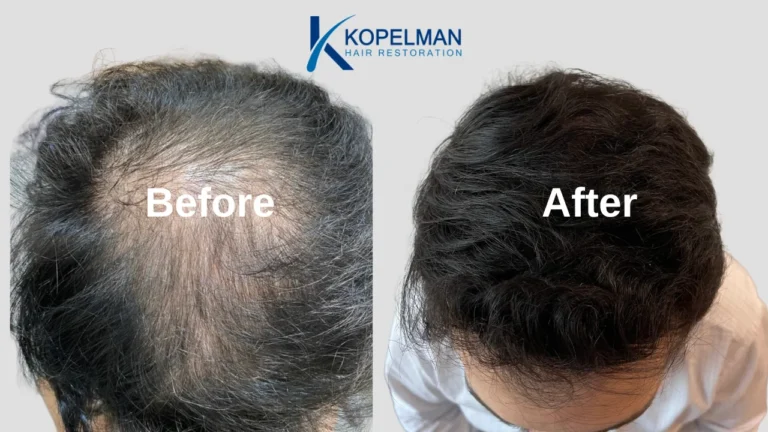
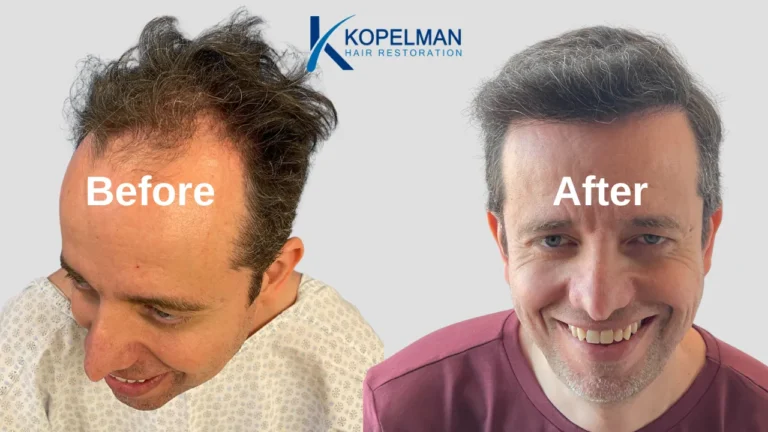
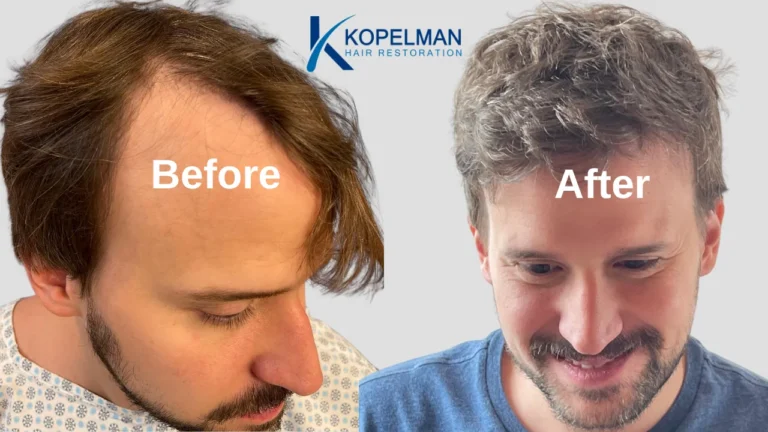
Hair Transplant
Results
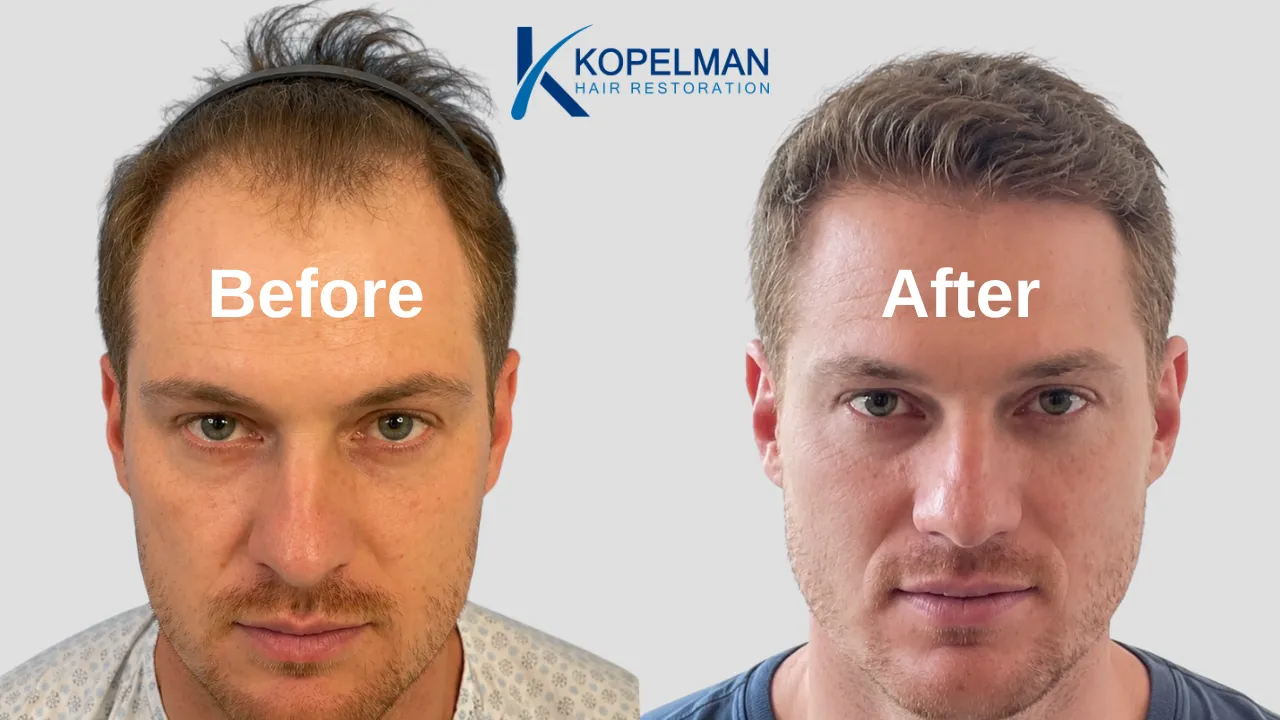
Hairline restoration · 12 months
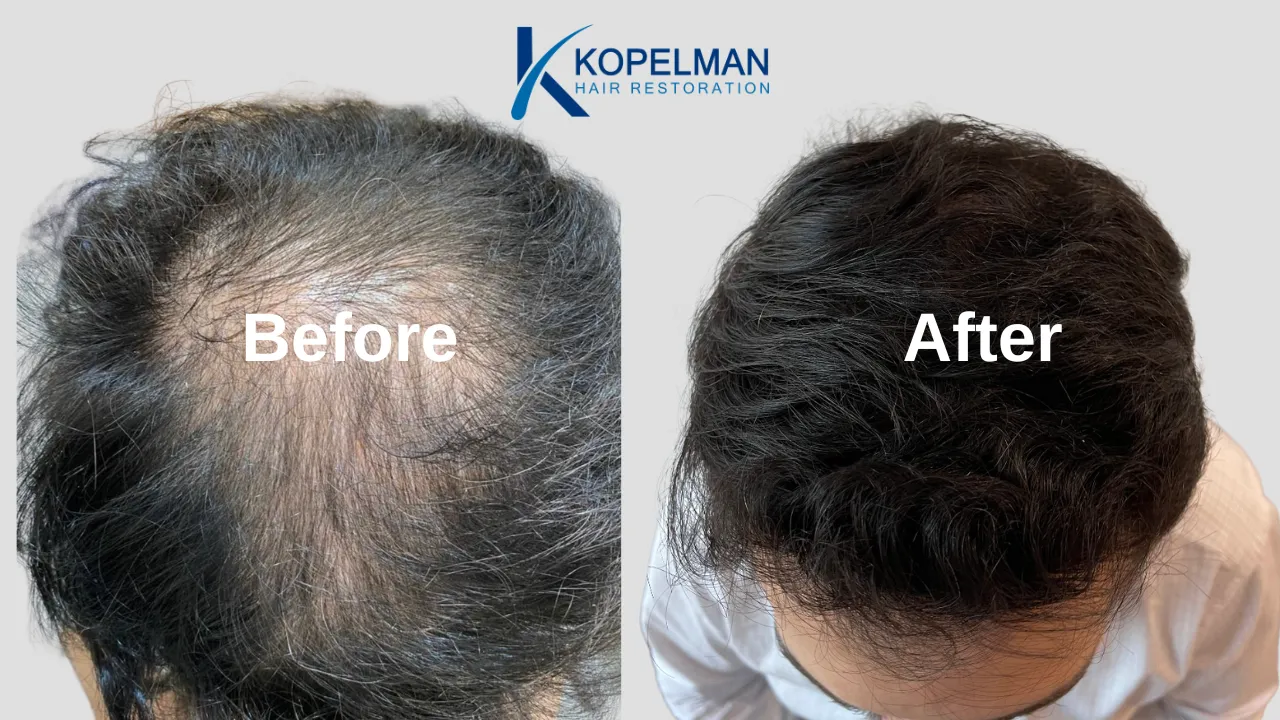
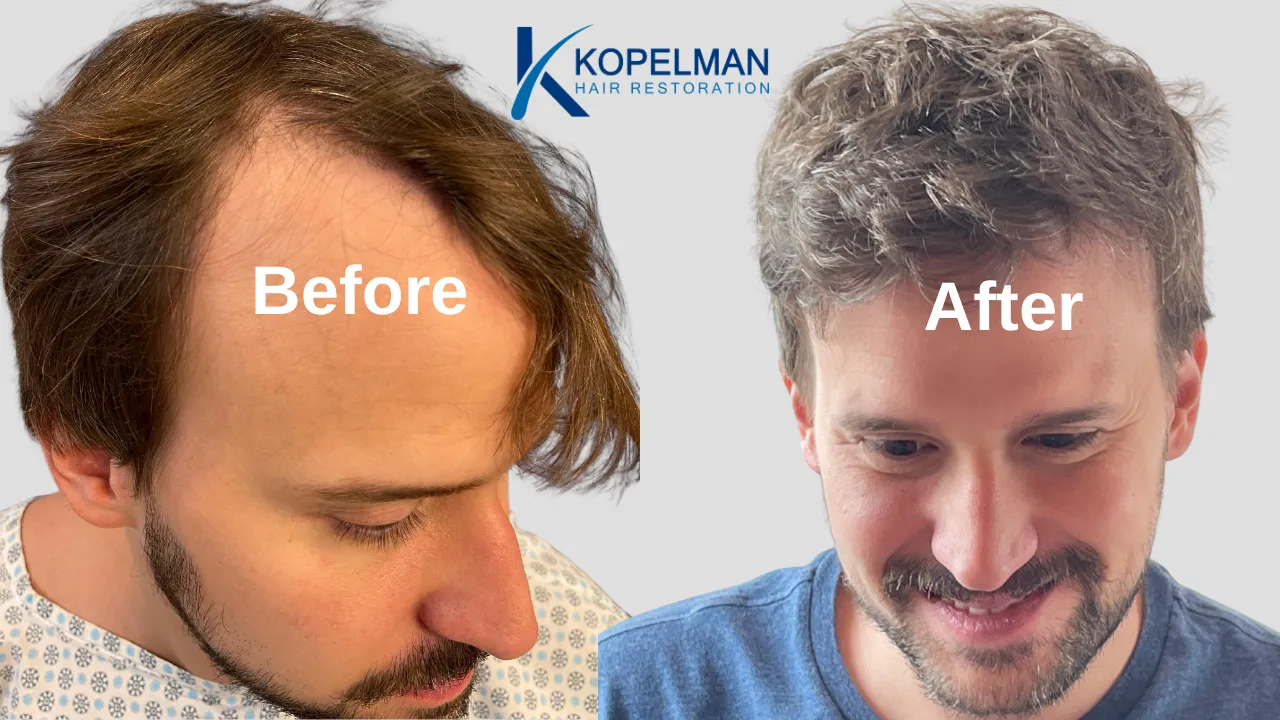
FUE Hair Trasnplant
Hairline restoration
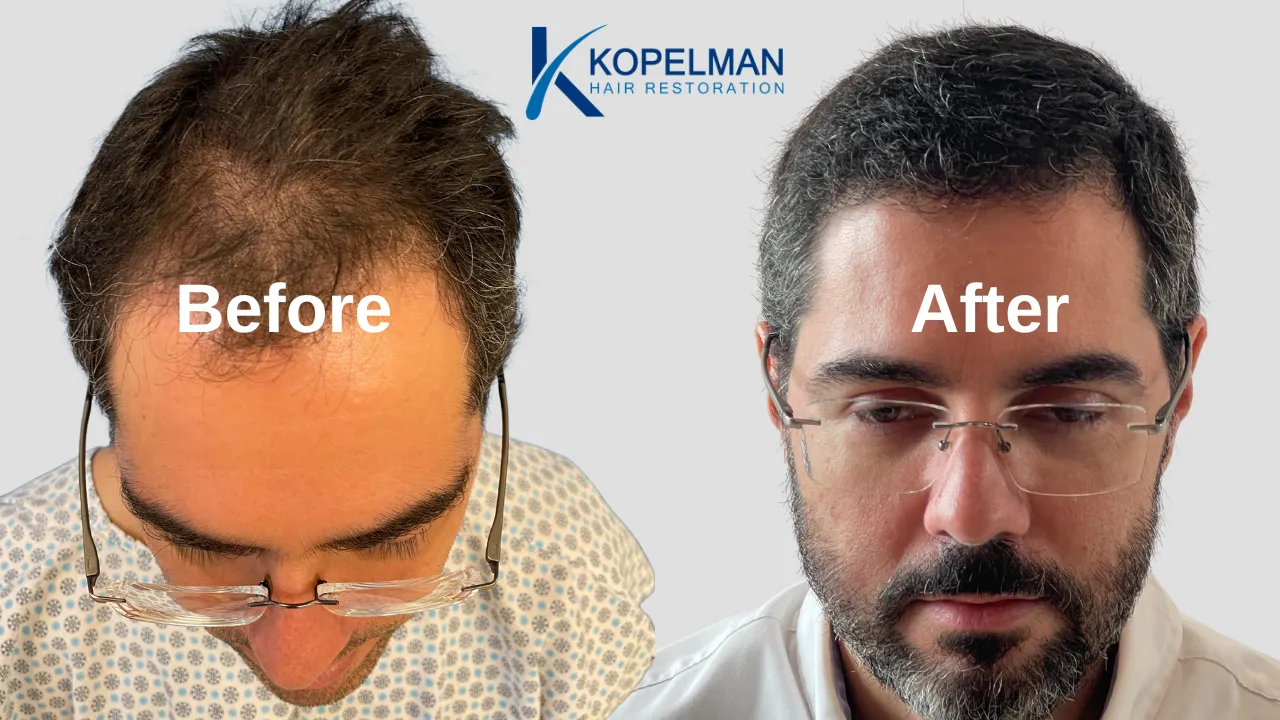
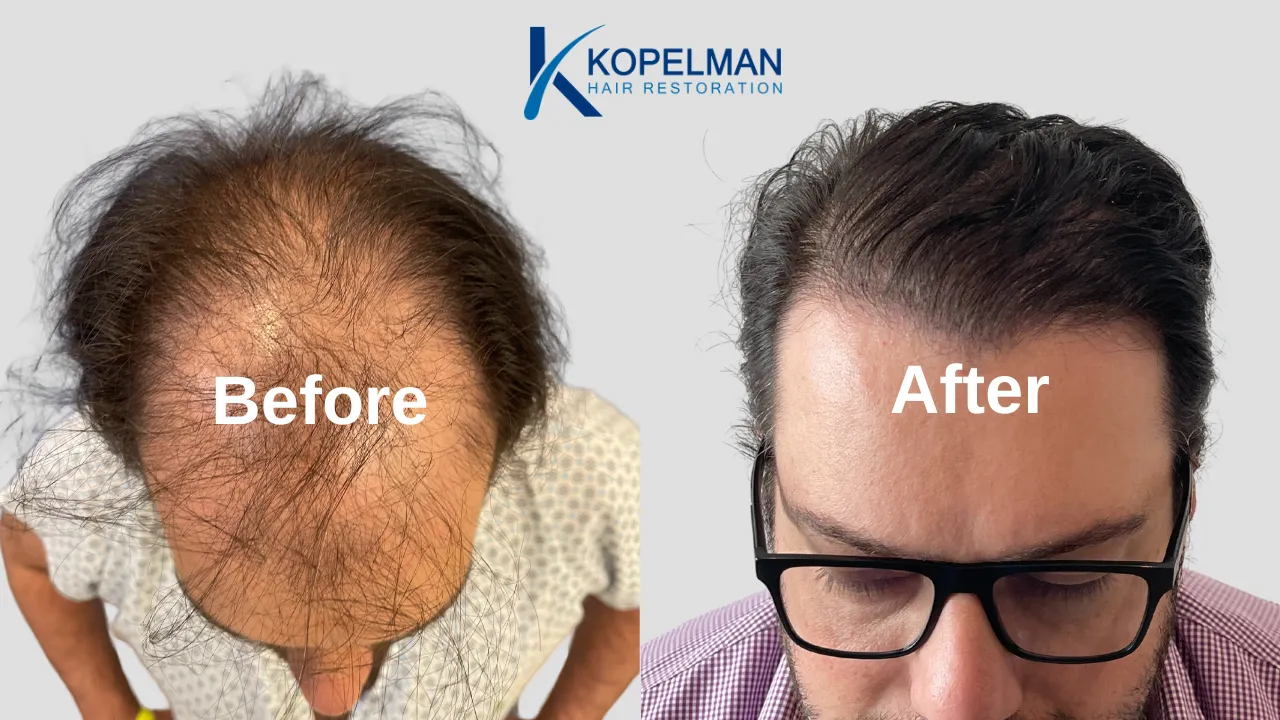
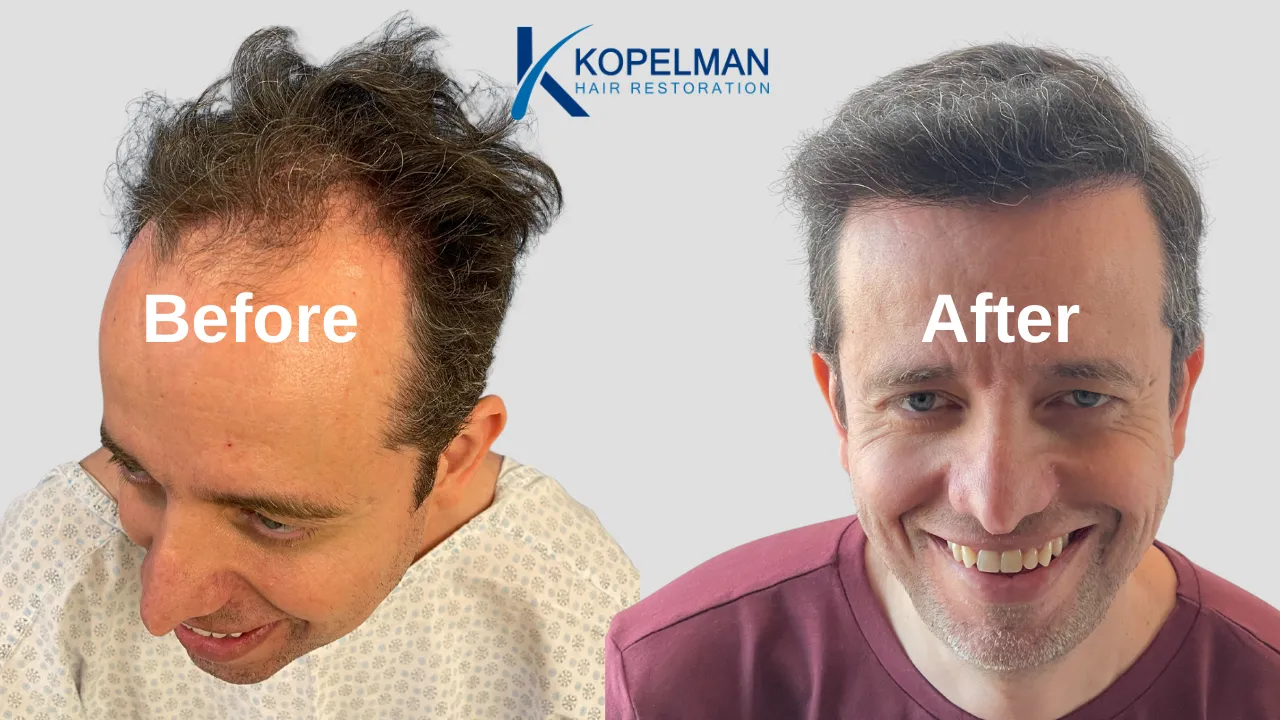
FUE Hair Restoration
Full hairline restoration
What Our
Patients Are Saying
Posted on Google
 barret abramow
 I recently had a FUE hair transplant with Dr. Kopelman in New York City, and I couldn’t be more pleased with the results. I had 2,800 grafts focused on restoring my hairline, which had become more recessed than I was comfortable with. The change has been subtle yet transformative — my hairline looks completely natural, and it frames my face in a way that feels more like me. It’s not overly dramatic, just exactly what I hoped for. What really stood out about working with Dr. Kopelman and his team was their expertise and attention to detail. From the initial consultation, it was clear they understood how to approach my specific situation to achieve the best outcome. The procedure itself went smoothly, and the aftercare instructions were thorough and easy to follow. I felt confident every step of the way because of how knowledgeable and professional they were. Finding their practice in NYC was a relief — it’s not easy to trust just anyone with something as personal as your hairline. I’m really glad I chose them because they delivered excellent results without any of the typical hype. If you’re considering a hair transplant, this is definitely the team to go to.Posted on Google
 Beth ZimmermanI am very happy with my experience with Dr. Kopelman. They are an amazing team. I had been looking for physician who could address my hair loss that had been bothering me for years. I am now doing mesotherapy treatments and I am so happy that my hair loss has reverted over the past 4 months. I really appreciated that a hair transplant was not forced upon me but is instead a last resort. I really appreciate the honesty. Thank you!Posted on Google
 Yoel OhayonI can’t say enough great things about my experience with Dr. Kopelman and the entire team at Kopelman Hair Restoration! I had my hair transplant last year, and the results are simply fantastic. I am fully recovered and thrilled with the transformation—my hair looks natural, and I feel like myself again. Every step of the process was handled with such expertise and care. Dr. Kopelman took the time to explain everything thoroughly, and his team was kind, professional, and supportive from start to finish. I’m beyond grateful for their exceptional work and highly recommend Kopelman Hair Restoration to anyone considering a hair restoration procedure.Posted on Google
 RickDr. Kopelman is extremely knowledgeable and was willing to talk through my concerns and needs to develop an optimal treatment plan. He helped me evaluate a variety of options and decide on a protocol I was comfortable with. I am happy I found him!Posted on Google
 David CohenMy experience with Dr. Kopelman has been nothing short of incredible. From the moment I stepped into his office, I could tell I was in the hands of a true expert. I came to him for both an eyebrow hair transplant and an FUE hair transplant, and I am very happy with the results. My eyebrows look so natural, and the precision and artistry he brought to my FUE procedure completely transformed my hairline. What really stood out was how comfortable and confident he made me feel throughout the process—he explained everything in detail and answered all my questions with such patience and care. I actually discovered him on YouTube, where his videos about hair loss and transplants are so informative, and I’m so glad I did. I’ve never felt more confident in my appearance, and it’s all thanks to Dr. Kopelman’s expertise and attention to detail. If you’re looking for the best hair surgeon in NYC, he’s the one to trust.Posted on Google
 Yedidyah Leo SamuelsDr. Ross is incredible! So much knowledge and expertise in the field. Best hair surgeon in New York City!!Posted on Google
 Juan FraustroI paid for a consultation with one Dr. Kopelman and I actually got both Dr’s Kopelmam. They spent over an hour with me carefully studying my scalp, explaining my options, and providing the necessary prescriptions. I cannot recommend this practice or these doctors more highly.Posted on Google
 Odellya SohnisRoss is a top hair transplant surgeon in NYC. He was so kind when I came in. I wanted to understand why my hair was thinning after using a shampoo a dermatologist had sent my way to stop my bad dandruff problem. He was so patient through my 10 million questions, I felt he really cared about what I need instead of feeding into a consumerist magic pill. He also was able to find that I could be balding and give me tips and a prescription and I felt like he saved me from tripping over a ledge I didn't see. Thank you so much!Posted on Google
 K SalalahI've been to many hair specialists, and I can confidently say that Dr. Kopelman and his team stand out for their incredible care and attention. The hair industry is unfortunately filled with people who are simply looking to make a sale, and think little about your longterm goals or happiness. I'm fortunate to have found Dr. Kopelman, who is incredibly attentive, knowledgable, puts my goals and comfort first, and is willing to think outside the box. Six stars!Posted on Google
 Andres DelgadoI had a consultation with Dr. Joel Kopelman. It was worth my time and money. The doctor answered all my questions and provided valuable insights.
Discover Our No-Shave FUE Technique
Patients who want a more discreet hair transplant experience may consider no-shave FUE, a technique designed to minimize visible changes during the early recovery period while still following the core principles of follicular unit extraction.
Specialized Hair Transplant Procedures
Some patients need a more personalized approach because of hair texture, gender goals, forehead height, facial balance, or body hair restoration needs. These cases require careful planning, graft placement, and realistic expectations.
African American Hair Transplant
Afro-textured hair requires careful graft handling, curl pattern awareness, and precise angle placement. Learn more about African American hair transplant planning for patients with curly, coiled, or textured hair.
Transgender Hair Transplant
Gender-affirming hair restoration may involve hairline reshaping, density planning, beard restoration, or facial framing. Explore transgender hair transplant options for patients seeking a hair restoration plan aligned with their identity and goals.
Forehead Reduction
Chest and Body Hair Transplant
Celebrity Hair Transplants and Realistic Expectations
Medical Hair Loss Support
Non-Surgical Treatment Before or After Surgery
Non-surgical options may support patients with early thinning, ongoing hair loss, or post-transplant maintenance goals. Patients can learn more about mesotherapy for hair loss and how medical treatment may fit into a broader hair restoration plan.
PRP and Medical Hair Restoration Options
PRP may support hair quality and scalp health in selected patients, especially when used as part of a broader medical plan. Review PRP for hair cost to understand pricing factors, treatment planning, and what may affect total cost.