NEW YORK CITY · PARK AVENUE

FUE Hair Transplant NYC:
Follicular Unit Extraction in New York

A FUE hair transplant in NYC is a minimally invasive procedure that moves individual follicular units from a dense donor zone, usually the back or sides of the scalp, into thinning or bald areas. It leaves no linear scar; most patients return to normal routines within a few days, and results are permanent.

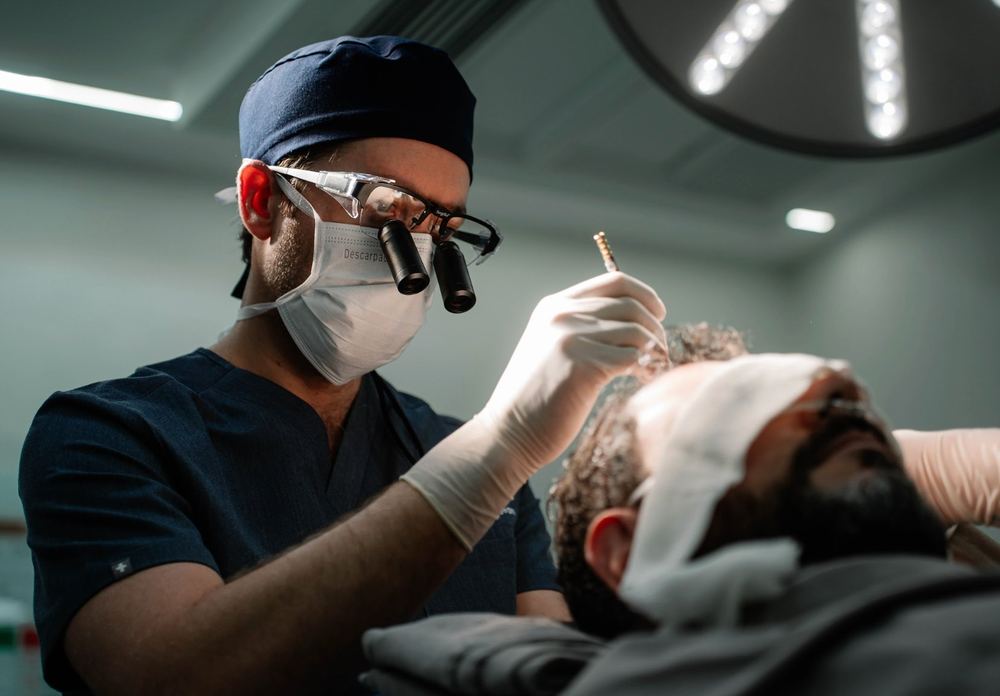
At Kopelman Hair, follicular unit extraction is performed under local anesthesia in a single session for most patients. Whether you are dealing with early thinning, a receding hairline, or more advanced loss, the goal is the same: dense, natural coverage that looks like it was always yours.

CALL FOR A CONSULTATION
Park Avenue, New York, NY

What is a FUE Hair Transplant?

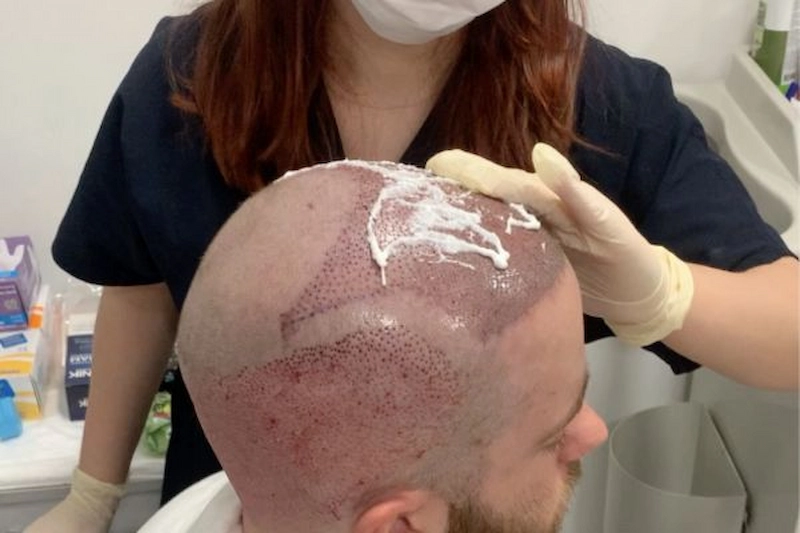
Follicular Unit Extraction is a modern grafting technique that harvests follicles one at a time using a micro-punch, then places each into the recipient area at a matched angle and depth. This is what produces precision and a natural-looking result.

Unlike the older Follicular Unit Transplantation (FUT) method, FUE leaves minimal scarring and has a quicker recovery time, making it a preferred option for many men and women. The absence of a linear scar allows for more hairstyle flexibility after the procedure.

A follicular unit is a naturally occurring cluster of one to four hairs. Because the surgeon extracts these clusters individually rather than removing a strip of scalp, the donor zone heals as a set of tiny dot scars that are difficult to detect once hair grows back.

FUE vs. Other Restoration Options in New York

Healing after follicular unit extraction is predictable, and knowing the sequence in advance removes most of the anxiety. The shedding phase around week three surprises patients who were not warned about it, so it is worth understanding before your procedure date.

Comparing surgical restoration techniques
Factor FUE (Follicular Unit Extraction) FUT (Strip Method) DHI (Direct Implantation)
How grafts are harvested Follicles removed individually with a micro punch A strip of scalp is removed, then dissected into units Follicles removed individually, then implanted with a Choi pen
Donor scarring Tiny dot scars, no linear scar One linear scar across the back of the scalp Tiny dot scars, no linear scar
Best for short hairstyles Yes Less suitable, scar may show Yes
Grafts per session High, though large cases may be staged Highest volume in a single session Typically smaller, precision-focused sessions
Procedure length 4 to 8 hours depending on graft count Often shorter than FUE for the same graft count Longer, since placement is done graft by graft
Recovery Most return to routine within days Longer, sutures require care Similar to FUE
Relative cost Higher than FUT Often the most cost-efficient per graft Typically the highest
Premium grafting in New York: our techniques support high survival rates and natural density. Each follicle is handled delicately to protect it between extraction and placement.
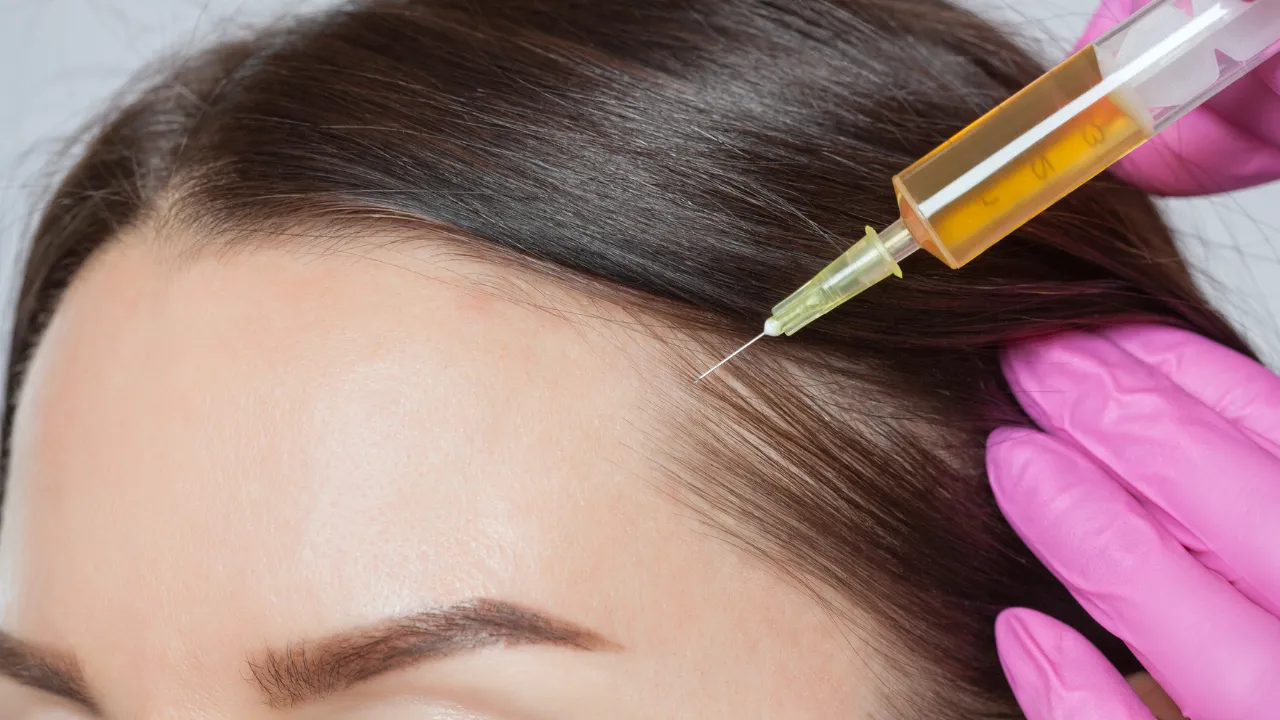
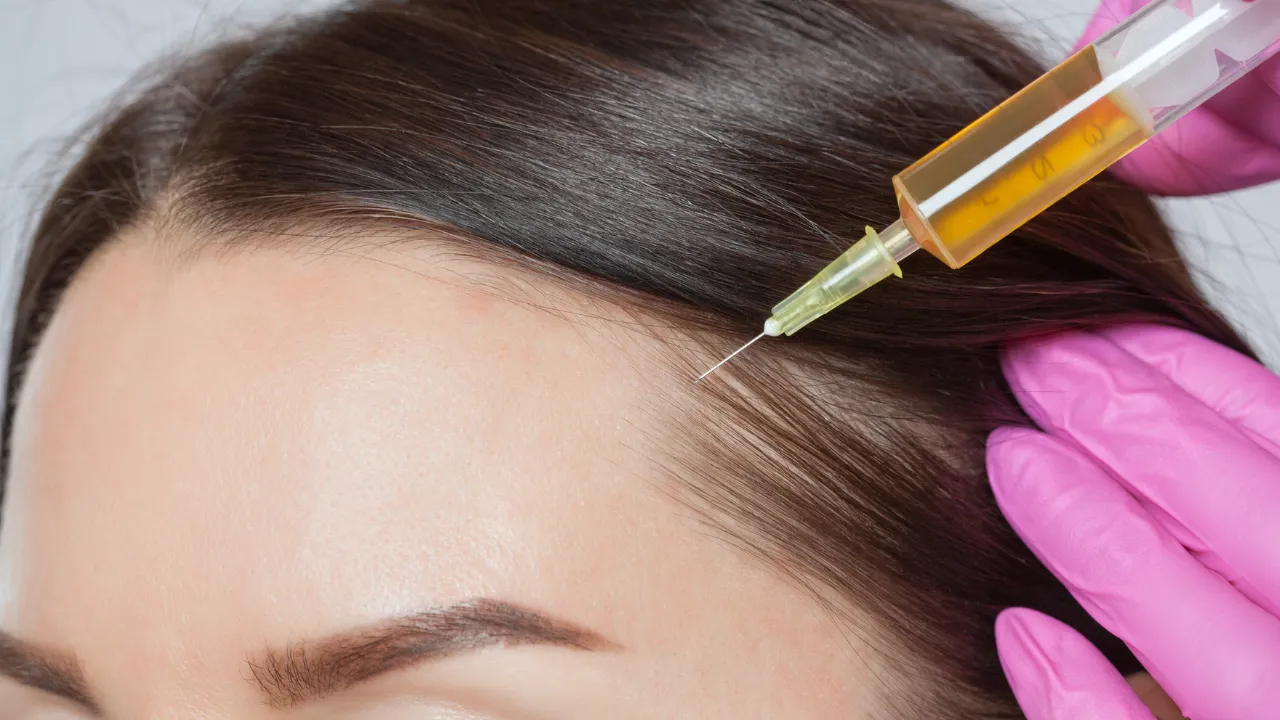
Non-Surgical Options: We also offer non-surgical hair loss treatments, including PRP therapy and medications such as Minoxidil and Finasteride, to complement your procedure. These options can support the longevity and success of your results.

The Follicular Unit Extraction Procedure What to Expect

Consultation and Assessment

We begin with a comprehensive evaluation to understand your goals and assess your scalp condition, including donor density and hair-loss pattern.

Donor Area Preparation

Follicles are harvested from the donor zone with careful spacing so the area retains its natural appearance and no visible thinning occurs.

Implantation

Each graft is placed into the recipient site at an angle and density that match your existing growth pattern, which is what makes the result undetectable.

Recovery and Aftercare

Most patients return to normal activities within a few days. You receive detailed aftercare instructions covering washing, sleeping position, and activity limits.

Benefits of Follicular Unit Extraction

Am I a Candidate for Follicular Unit Extraction in NYC?

Candidacy depends less on age or gender than on three things: a stable pattern of loss, a healthy donor supply, and realistic expectations about coverage. During your consultation, we evaluate the scalp and discuss which approach fits your goals.

Strong candidates typically share the following:

  • A diagnosed, stable pattern of loss, often supported by medical therapy first
  • Sufficient donor density at the back and sides of the scalp
  • General good health and no active scalp inflammation or scarring condition
  • A preference for short hairstyles, since no linear scar is created
  • Prior FUT patients who want to camouflage an existing strip scar
  • Non-smokers, or those willing to stop for a period, since smoking slows healing
  • Realistic expectations about the coverage a given donor supply can produce

Women with diffuse thinning can be candidates as well, though the evaluation differs from that for male pattern loss and often begins with medical therapy. 

Younger patients with an unstable, still-progressing pattern are usually advised to stabilize first, because future loss around a new hairline can look unnatural.

Understanding Hair Loss Causes and Classifications

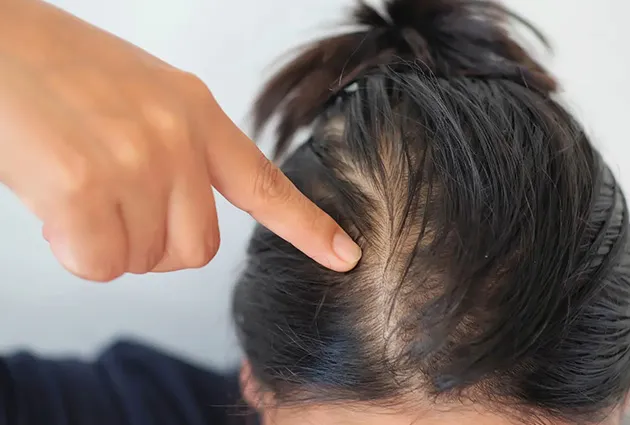
The most prevalent cause of loss is androgenetic alopecia, a hereditary condition that affects both men and women but shows up differently in each. In men, it often begins with a receding hairline and thinning at the temples, a pattern known as frontal and temporal recession.
Aside from genetics, loss can result from several other causes, including:

STEP 01

Medications

Certain prescriptions, such as chemotherapy drugs, can lead to temporary or permanent shedding.

STEP 02

Hormonal Changes

Pregnancy, menopause, and thyroid conditions can disrupt the normal growth cycle.

STEP 03

Autoimmune Disorders

Conditions like alopecia areata cause the immune system to attack the follicles.

STEP 04

Injury

Scarring from trauma or burns may prevent regrowth in the affected area.

STEP 05

Stress

Significant physical or emotional stress can trigger shedding, a condition known as telogen effluvium.
STEP 06

Certain Hairstyles

Tight braids or ponytails can cause traction alopecia over time.
At Kopelman Hair, the priority is identifying the underlying cause before recommending surgery. A transplant placed on top of an untreated, active condition will not hold up, which is why diagnosis comes first.

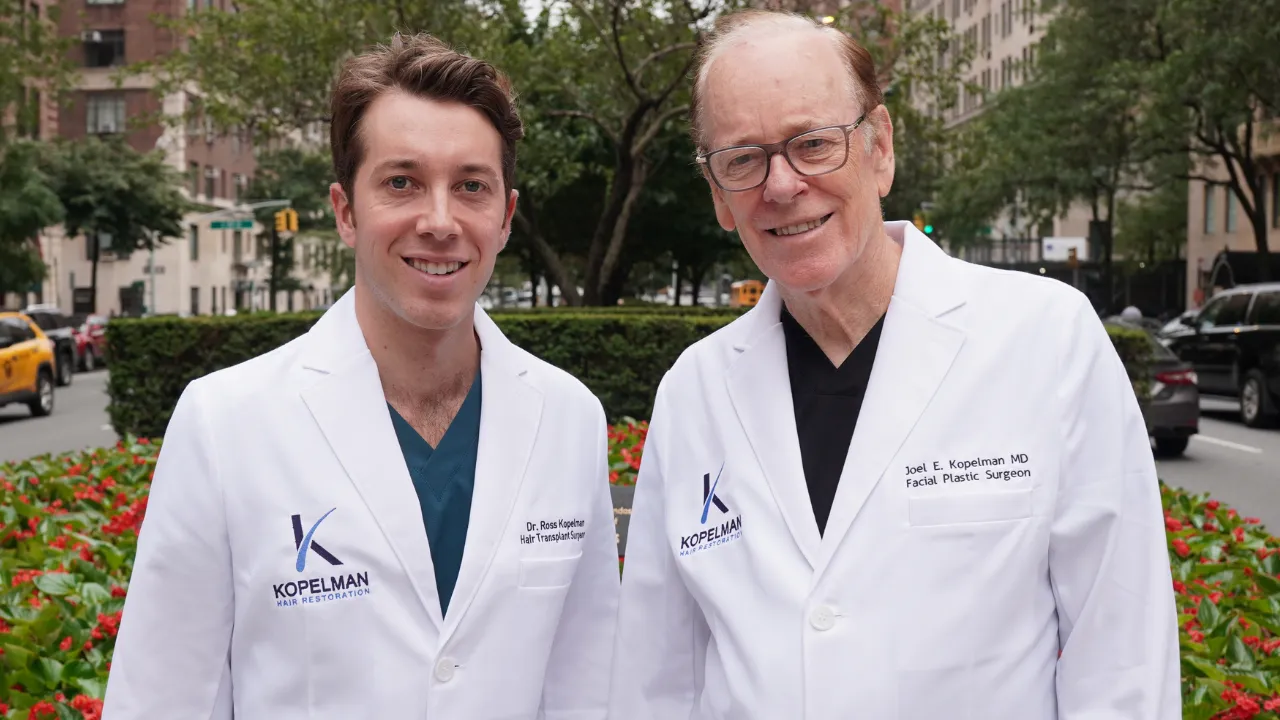
Meet Dr. Ross Kopelman

Crown thinning is one of the most common patterns we treat at our NYC clinic. The crown sits at the back of the scalp and tends to lose density gradually, often before the hairline shows obvious recession.

Restoring this zone requires careful graft distribution because the crown spirals in a whorl pattern, which means each follicle has to be placed at the exact angle of its neighbors.

FUE Hair Transplant
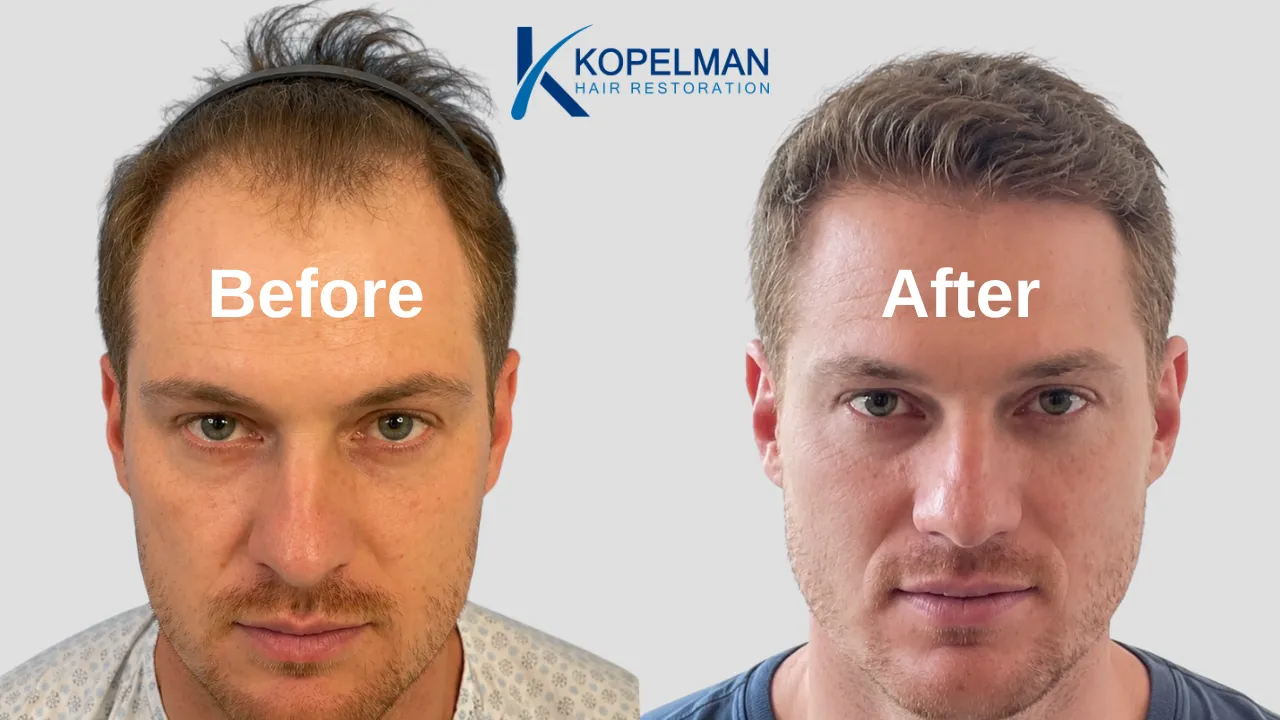
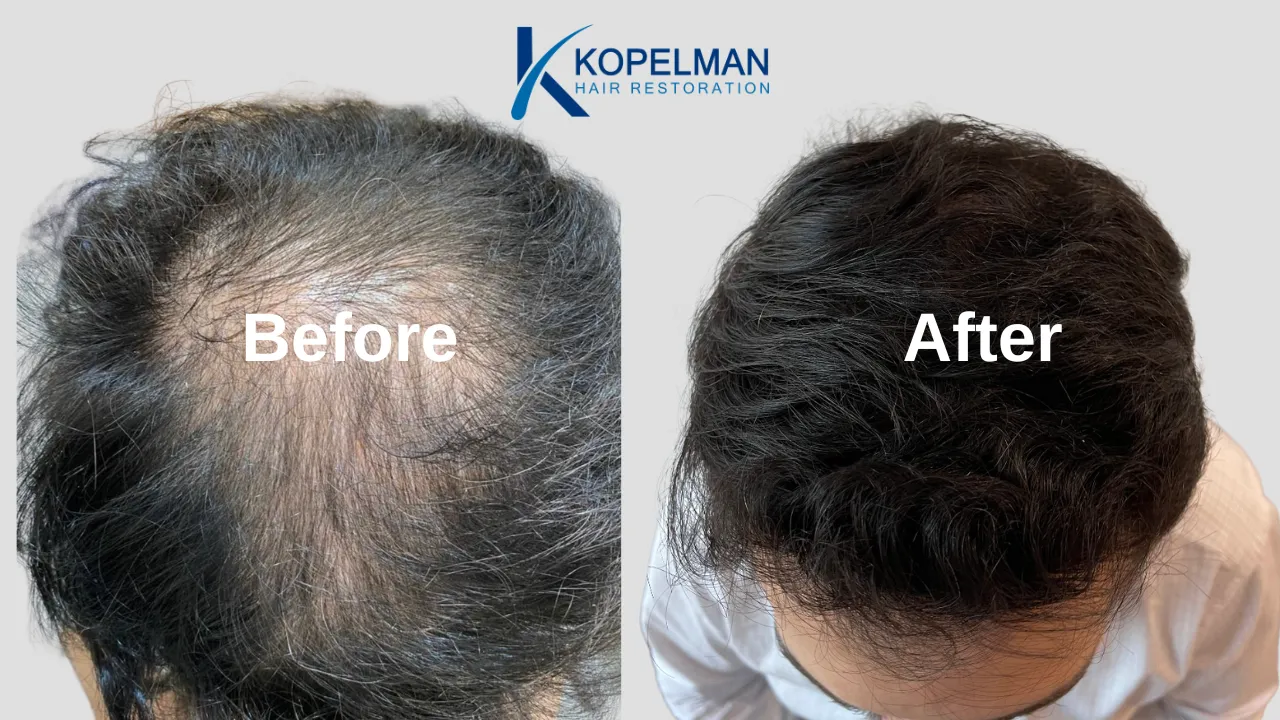
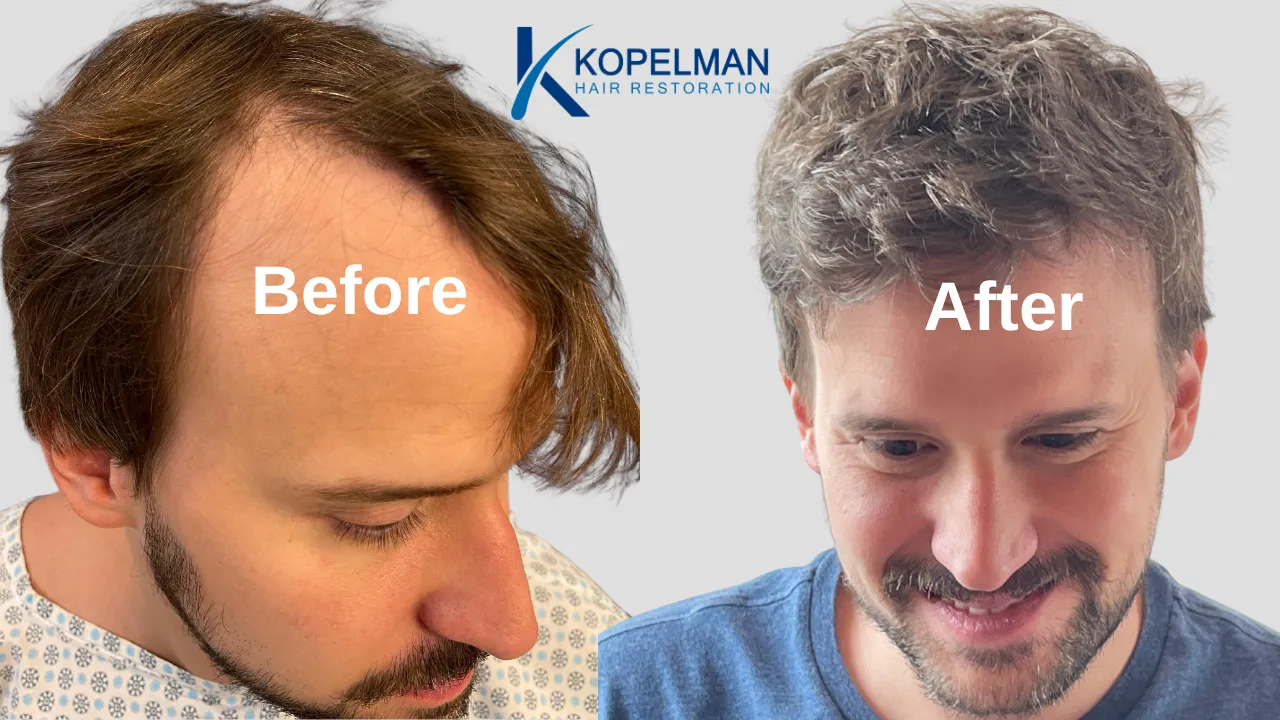
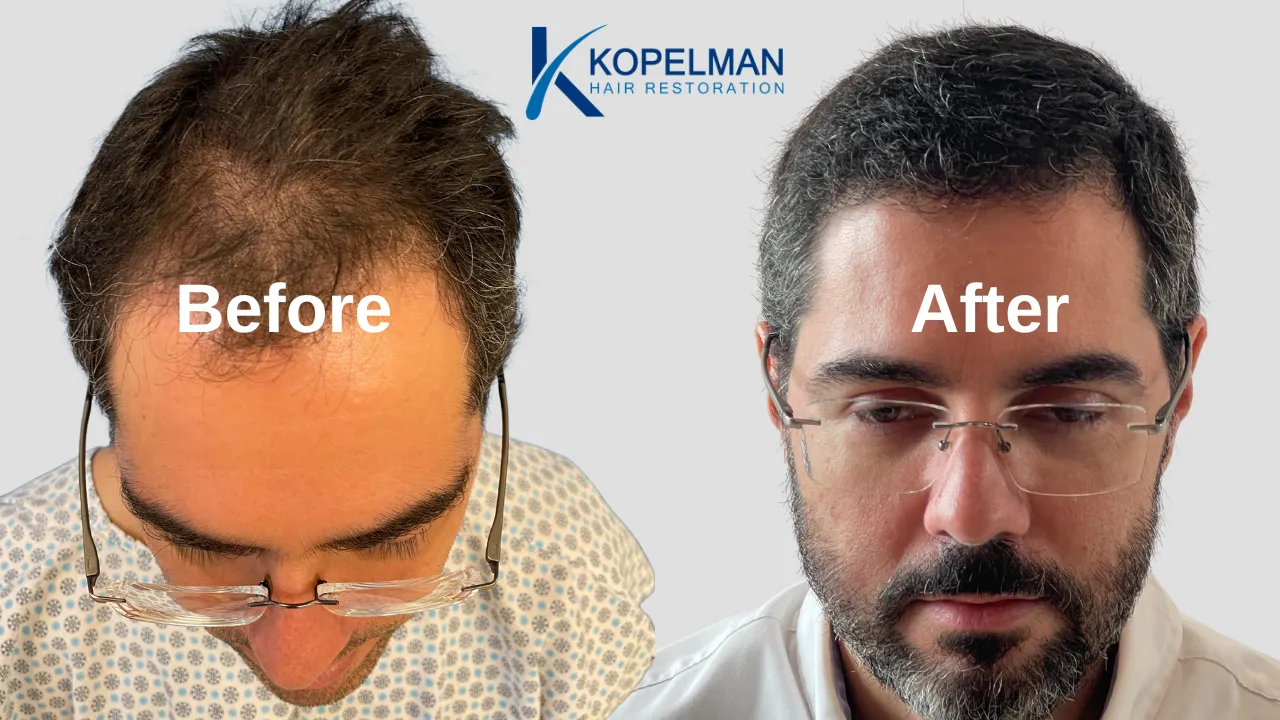
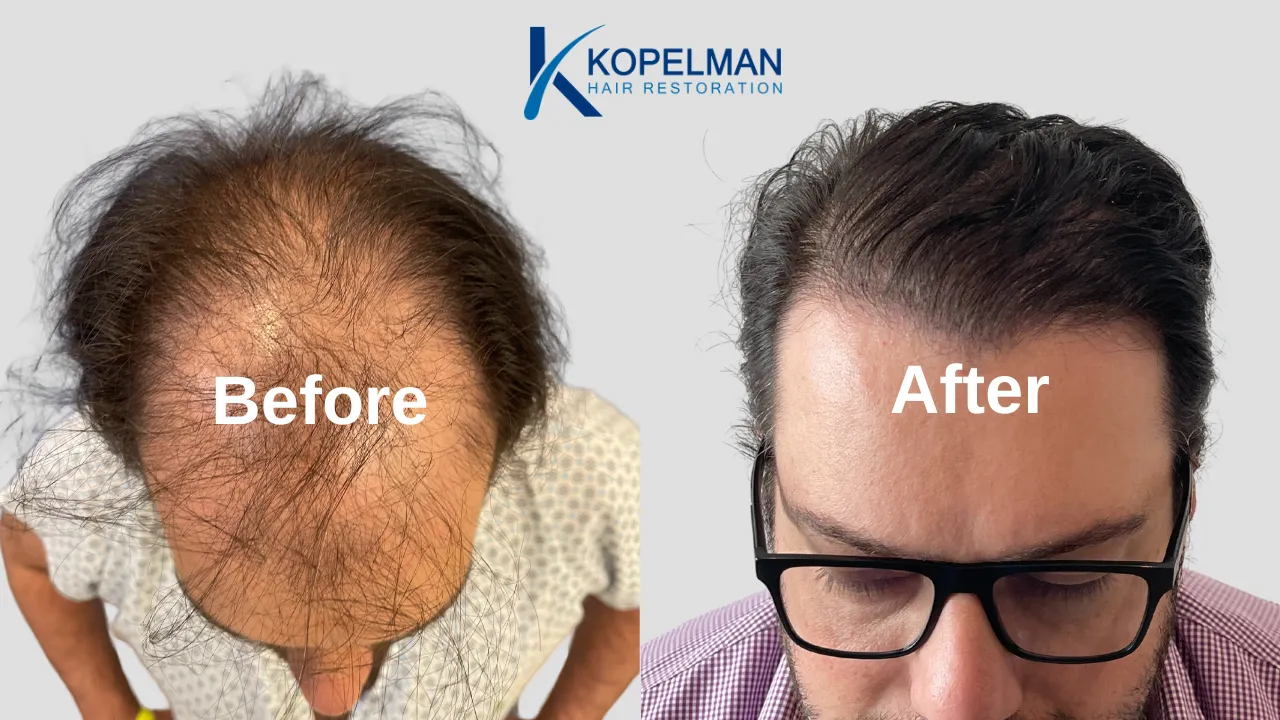
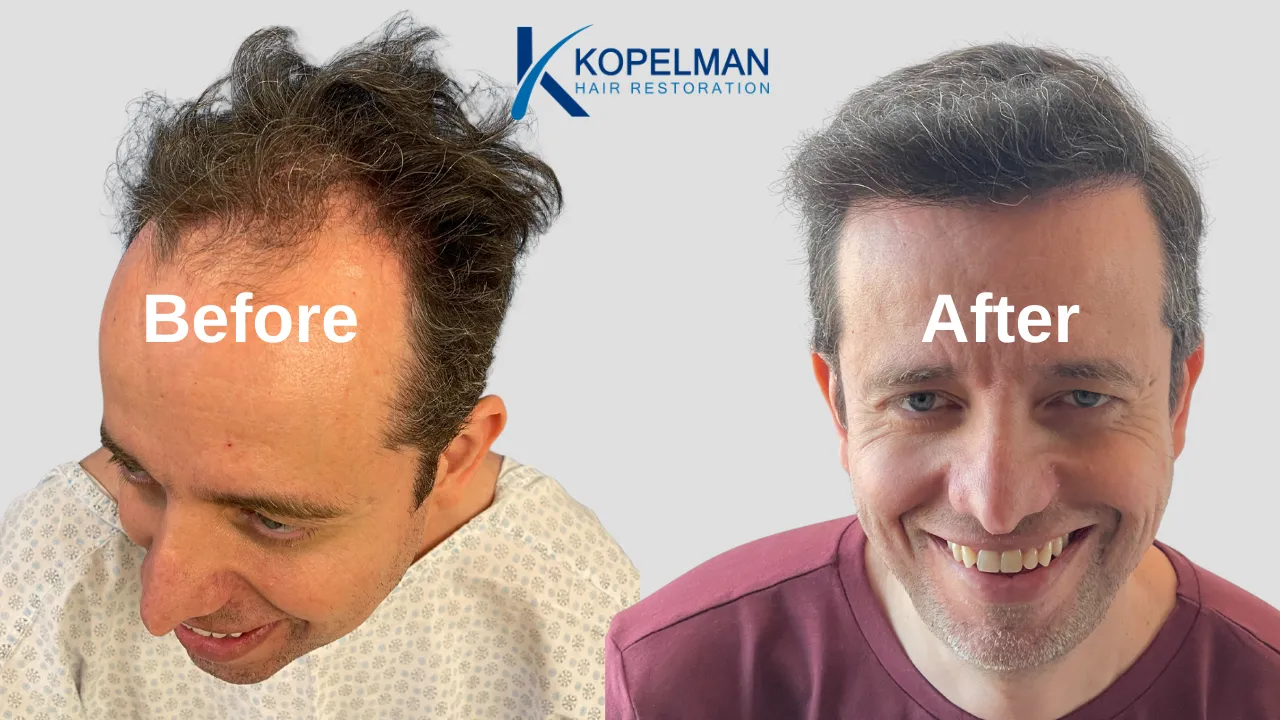
Before and After Photos

Grafts: 3000
Aimed to fill in thinning areas.
Grafts: 3200
Sought a more youthful hairline.
Grafts: 3500
Patient restored scalp density.
Grafts: 2100
Desired defined thicker hairline.

Why Choose Kopelman Hair for FUE in NYC?

Located in Manhattan, Kopelman Hair has become a trusted name in NYC restoration. Our commitment to precision, personalized planning, and current techniques has earned the practice a reputation as one of the top clinics in the city.

Whether you are looking for the best hair implants in NYC or comprehensive hair transplant services in New York, Kopelman Hair is your go-to destination.

Surgeon-Led Care:

Dr. Kopelman performs the procedure personally rather than delegating key steps to technicians, which is one of the clearest predictors of a good outcome.

Personalized Treatment Plans

Every plan is based on a comprehensive assessment of your loss pattern, donor supply, and long-term expectations, rather than a standard graft package.

Advanced Instrumentation

We use magnified visualization and refined micro punches to protect graft quality from extraction through placement.

Minimally Invasive Approach

We use magnified visualization and refined micro punches to protect graft quality from extraction through placement.

FUE Recovery Timeline

Healing after follicular unit extraction is predictable, and knowing the sequence in advance removes most of the anxiety. The shedding phase around week three surprises patients who were not warned about it, so it is worth understanding before your procedure date.
What to expect week by week
Stage What happens What to do
Days 1 to 2 Scalp feels tender; mild swelling is common Sleep with the head elevated; take prescribed medication as directed
Days 3 to 7 Swelling resolves; scabbing forms at recipient sites Begin gentle washing as instructed; most patients return to work
Weeks 2 to 4 Transplanted grafts shed; this is expected, not a failure Resume normal grooming; avoid picking at any remaining crusts
Months 1 to 3 Follicles rest before re-entering active growth Continue any prescribed medical therapy without gaps
Months 3 to 6 New growth appears, initially fine and thin Attend follow-up visits to monitor density
Months 6 to 12+ Growth thickens and matures into final density Final assessment; discuss maintenance therapy
Strenuous exercise should be avoided for at least a week, since increased blood flow to the scalp can worsen swelling. Regular follow-up appointments throughout the first year allow Dr. Kopelman to track growth and address questions as they arise.
COMMON QUESTIONS

FAQ's
Follicular Unit Extraction

The procedure is performed under local anesthesia, so discomfort during surgery is minimal. Most patients report only mild soreness afterward, manageable with over-the-counter medication.

Hair transplants are considered cosmetic and fall outside standard insurance coverage.

The transplanted follicles are permanent because they come from a zone that is resistant to pattern baldness. The hair around them can continue to thin with age, which is why ongoing medical therapy is often recommended alongside surgery.

Pricing ranges between $30,000 and $50,000 depending on graft count, technique, and case complexity. A full pricing breakdown by procedure type will be discussed with you during your consultation with Dr. Kopelman.

For most patients, FUE is the preferred method. It leaves no linear scar, allows for short hairstyles afterward, and recovery is faster. FUT still remains a great option for patients who have dense thick hair. In many cases we now do combo cases with FUT and FUE performed on the same day.

Cost depends on graft count, technique, and case complexity. A 5,000-graft case in the United States typically ranges from $20,000 to $25,000. Insurance does not cover restoration surgery, as it is considered cosmetic.

Most patients feel comfortable going out by day 6 or 7, when a baseball cap covers the donor zone naturally. By day 10, the grafts are secure and any remaining scabs wash away with gentle cleansing.

Crown density cases generally require 1,500 to 3,000 grafts, depending on the size of the thinning area and how much density you want to add.

A procedure performed by a hair surgeon carries a low complication rate, but like any surgery, risks exist. These can include temporary swelling or numbness, minor infection, poor graft survival in a small percentage of follicles, and with FUT, a fine linear scar in the donor zone. Dr. Kopelman reviews your individual risk profile during the consultation and walks you through what to expect during recovery.

Ready to take the first step?

Book a Consultation

Park Avenue, New York City
or anywhere via video call

Latest Press

Dr. Joel Kopelman and Dr. Ross Kopelman are well-known, experienced facial plastic and restoration surgeons with a combined 40+ years of expertise. Dr. Joel Kopelman brings decades of experience delivering natural, transformative results, while Dr. Ross Kopelman complements this expertise with advanced techniques, including FUE, FUT, and non-invasive treatments such as PRP therapy and mesotherapy. Together, they offer comprehensive, personalized care.

Schedule a FUE Hair Transplant Consultation in NYC

Ready to take the next step toward restoring your density and confidence? Contact Kopelman Hair to schedule your personalized consultation for follicular unit extraction in New York. Our surgeons will guide you through every step of the process.

Address: 1112 Park Ave #1A, New York, NY 10128