
Female Celebrities Who Have Had Hair Transplants: Confirmed Cases
Only a handful of women have confirmed their own procedure, and each case addressed something specific.
| Celebrity | What she confirmed | What it addressed | Source |
|---|---|---|---|
| Lisa Maffia | Hairline transplant (2021) | Hairline loss she linked to pigtails and extensions | Wimpole Clinic |
| Marlo Hampton | Transplant to her edges (September 2021) | Edges thinned by braids and ponytails | Bravo |
| Ella Morgan | FUT transplant, about 2,000 grafts | A softer, more feminine hairline | Wimpole Clinic |
| Chrissy Teigen | Eyebrow transplant (2021) and hairline lowering (2025) | Thin eyebrows; a thin front hairline after pregnancies | InStyle |
Lisa Maffia
The British singer and presenter revealed in 2021 that she had grafts placed along her hairline, and she blamed years of pigtails and extensions for the loss at her edges (Wimpole Clinic). That pattern matches traction alopecia, which the American Academy of Dermatology says can become permanent the longer it goes untreated (AAD).
When follicles have stopped producing strands, a transplant is one way to restore density, provided enough healthy donor hair is available.
Marlo Hampton
The Real Housewives of Atlanta cast member filmed her transplant in September 2021 and said braids and ponytails had left her edges thin (Bravo). She later showed before and after photos on the show and described heavy swelling and bruising right after surgery.
Tight braids, ponytails and extensions can cause traction alopecia in anyone who wears them for long periods, and our African American hair transplant page explains how curl pattern affects planning.
Ella Morgan
Married at First Sight UK’s Ella Morgan shared that she had an FUT transplant of about 2,000 grafts to soften and feminize her hairline (Wimpole Clinic). FUT removes a narrow strip of scalp from the back of the head, which leaves a linear scar that longer hair can usually cover (AAD).
Chrissy Teigen: Eyebrow Transplant and Hairline Lowering
Teigen confirmed an eyebrow transplant in 2021. In May 2025 she said she had a hairline lowering procedure after losing hair at the front following her pregnancies (InStyle).
That operation moves the hairline forward surgically, so it is separate from a transplant.
Female Celebrities with Hair Loss Who Have Not Confirmed a Transplant
These women have spoken about thinning or damage, but none has publicly confirmed a transplant.
Keira Knightley’s Hair Thinning Experience
Keira Knightley told InStyle UK that years of dyeing her hair for film roles made it fall out, and that she wore wigs for about five years afterward (Today). She also said her hair became much thicker after she had a baby.
Because she has not confirmed a procedure, any claim about a Keira Knightley transplant is speculation.

Naomi Campbell
Naomi Campbell has said extensions cost her much of her hair and that it grew back (Belgravia Centre). Clinicians commenting on photos have called it traction alopecia, but she has not confirmed a diagnosis or a transplant. She is sometimes described online as an FFA case, which she has not publicly said she has.
Jennifer Aniston’s Hair Journey
Jennifer Aniston told InStyle that she cut her hair because extensions had thinned her natural hair (Christian Post). She has not confirmed a transplant.

Oprah Winfrey’s Hair Loss Story
Oprah Winfrey has described losing her hair in her early twenties after a chemical perm at a salon, a story she has told for years (Daily Beast). We found no public statement from her confirming a transplant.

Kristin Davis and Tyra Banks
Kristin Davis told WWD that her hair became very fine after Sex and the City ended (Refinery29). Tyra Banks said the stress of writing her novel caused her to develop a little alopecia (Essence). Neither has confirmed a transplant.
Before & After: Celebrity Hair Transplant Results
Many celebrity hair transplants produce subtle rather than dramatic changes: a denser frontal edge, a softer hairline shape or a camouflaged scar. Some women choose non-surgical care instead, while others choose FUE for long-term growth.
Judge any before and after photo by its follow-up date, because a transplant can look thinner at three months than at twelve. For real patient results rather than celebrity photos, see our before and after photo gallery, which collects female hair transplant before and after cases.
Why Do Female Celebrities Experience Hair Loss?
Causes of Female Hair Thinning
Hair loss in women can result from hormonal changes, stress, genetics and conditions such as alopecia. Unlike men, whose loss often follows a receding hairline, women more often have diffuse thinning or a widening part. Some female celebrities with a receding hairline show frontal patterns linked to traction or frontal fibrosing alopecia.
Frequent heat styling and chemical treatments weaken the strand, while tight hairstyles and extensions can damage follicles over time. For a detailed look at causes and treatments, visit our dedicated page.
Psychological Impact of Hair Loss in the Spotlight
For female celebrities, hair is tied to career longevity and self-confidence. Public scrutiny in film and fashion adds pressure to keep a youthful look, and among celebrities with thin hair, Kristin Davis and Keira Knightley have both described the experience openly.
For some women, restoring facial balance also includes an eyebrow transplant in NYC, especially when thin brows affect expression on and off camera.
Frontal Fibrosing Alopecia & Celebrity Hair Loss
A common cause of hairline recession in women is frontal fibrosing alopecia (FFA), a scarring alopecia in which inflammation damages follicles and causes permanent loss, often with eyebrow thinning (AAD). Few celebrities with frontal fibrosing alopecia have confirmed the diagnosis, and some commonly cited names are misattributed.
Jada Pinkett Smith revealed in 2018 that she has alopecia areata, an autoimmune condition, not FFA (AP via WBTV). Learn how celebrities with alopecia manage their condition and the treatments they have chosen.

What Causes Frontal Fibrosing Alopecia?
Much about FFA is still unclear. Dermatologists think it may be autoimmune, and research points to a mix of genes, hormones and inflammation inside the body. Risk is higher after menopause, with a close relative who has FFA, or with rosacea, thyroid disease or type 2 diabetes (AAD).
Because follicles scar over, early diagnosis matters. For related patterns, see our guide to scarring alopecia.
Frontal Fibrosing Alopecia Treatment
Treatment aims to stop progression, since scarred follicles cannot regrow strands. Dermatologists often combine medicines such as finasteride or dutasteride, steroid injections and hydroxychloroquine, and minoxidil alone is unlikely to stop FFA (AAD).
A transplant is generally considered only once the disease has been stable, because scarring and inflammatory forms of alopecia can rule surgery out (Dermatology Times). If you suspect FFA, see a board-certified dermatologist first.
Are Hair Transplants Effective for Women?
A hair transplant for women works best when the loss is localized, the diagnosis is clear and there is enough healthy donor hair, the two requirements the AAD lists for candidacy (AAD). Diffuse thinning across the whole scalp can make surgery less straightforward, so a surgeon may recommend medication first.
FUE vs. FUT: Which Works Best?
FUE (Follicular Unit Extraction) takes individual follicles from the donor area, so it avoids a linear scar, but it still leaves tiny dot-like marks and usually requires trimming or shaving the donor patch (Dermatology Times). FUT (Follicular Unit Transplantation) removes a narrow strip of scalp and leaves a linear scar that longer hair can usually cover.
The right choice depends on hairstyle, donor supply, graft count and scarring concerns. Dr. Kopelman specializes in FUE hair transplants and will recommend a method after examining the donor area and hairline. We also offer FUT.
Hairline Transplants for Women
A hairline transplant for women rebuilds or reshapes the front edge, most often to treat traction alopecia, fill thin temples or soften a high, angular hairline. Feminine hairlines are usually rounder and softer than male ones, so planning should also allow for future thinning.
Grafting can lower a hairline modestly; larger changes generally call for hairline lowering surgery, which is how Chrissy Teigen changed hers. Grafts can also camouflage a stable scar left by earlier forehead or scalp surgery (PubMed Central).
Hair Plugs for Women: Do They Still Exist?
Hair plugs were large, round grafts used in the 1970s and 1980s, and they often grew in with an obvious, doll-like look. Surgeons now move follicles a few at a time, which is why current results look natural (AAD). The International Society of Hair Restoration Surgery describes the same shift away from plug-type transplants (ISHRS).
People still say hair plugs or hair implants for any procedure, but modern FUE and FUT move a patient’s own follicles. A woman who had plugs years ago can ask a specialist whether they can be revised.
How Long Do Female Hair Transplants Last?
A female hair transplant is generally permanent, because the donor follicles resist pattern thinning. Native strands can keep thinning, so surgeons often recommend medication to protect the result (AAD), along with post-surgery care.
Female Celebrities Who Use Minoxidil
Celebrities rarely name the products they use, so claims about stars and minoxidil are usually speculation. What is documented is how it works for women: the FDA has approved a 2% solution used twice daily and a 5% foam used once daily for female pattern hair loss (Drugs.com).
Minoxidil, a topical treatment for hair loss, works best in early thinning, needs ongoing use and does not cure the condition.
What Are the Costs of Female Hair Transplants?
The cost of a female hair transplant depends on the clinic’s reputation, the surgeon’s expertise, the number of grafts and the chosen technique. Women typically need fewer grafts than men, because their loss patterns differ. The frontal female hair transplant cost is usually lower still, since treating only the hairline takes fewer grafts than a full-scalp procedure.
Cost depends mainly on the number of grafts, so a hairline-only procedure usually costs less than a full-scalp one. For current figures by case size, see our female hair transplant cost guide.
How Much Do 5000 Hair Grafts Cost?
A typical female hair transplant rarely requires 5000 grafts, as most women experience diffuse thinning rather than complete bald patches. Female patients typically need 1500 to 3000 grafts to restore volume and density.
Patients who need more, such as those with extensive traction alopecia or stabilized FFA, pay significantly more.
For the most accurate estimate, it is essential to schedule a consultation with a qualified hair restoration specialist, who can assess the extent of loss and recommend the appropriate number of grafts.
Factors That Affect Pricing
- Technique used: FUE often costs more than FUT because it is more labor-intensive.
- Clinic reputation: high-profile clinics charge more for expertise and advanced technology.
- Extent of loss: the larger the area, the more grafts are required, which raises the cost.
Celebrity vs. Non-Celebrity Hair Transplant Costs
Celebrity procedures may cost more because of personalized scheduling and privacy measures, while other patients can reach comparable results at a lower cost.
Normalizing Female Hair Transplants in the Media
Kristin Davis, Tyra Banks and Keira Knightley have all spoken openly about thinning, which helps reduce the stigma around female hair loss.

How Celebrity Hair Transplants Inspire Others
Once seen as a taboo topic, hair restoration is now an accepted option for women as well as men. Confirmed cases such as Lisa Maffia and Marlo Hampton also show a realistic range of experiences, including swelling and months of waiting for results.
What Are the Risks & Recovery Time for Hair Transplants?
Common Side Effects & Healing Process
While FUE hair transplants are minimally invasive, some temporary side effects include:
- Redness and swelling in the treated area.
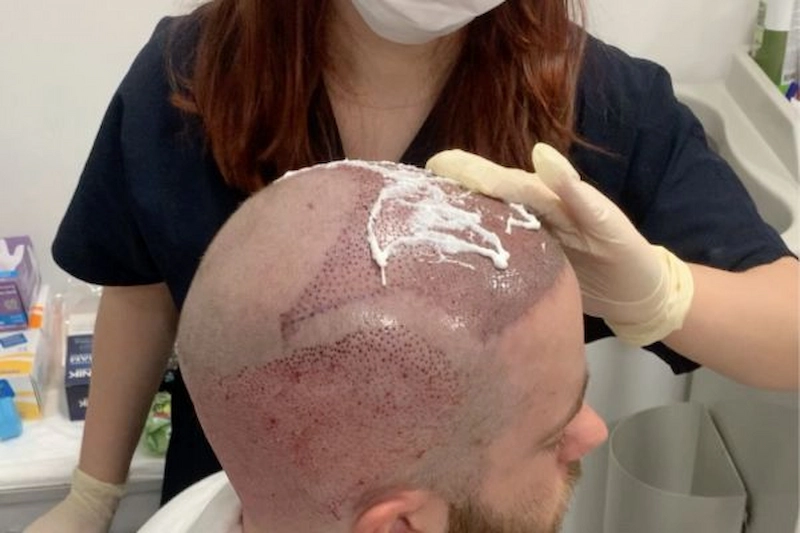
- Shedding of the transplanted strands between two and eight weeks after surgery, before regrowth begins.
- Mild discomfort that usually settles within a few days.
By the third month the area can look thinner than before surgery, which is normal. Most patients see results between six and nine months, and some need 12 (AAD).
Tips for a Smooth Recovery
To support healthy regrowth, patients should:
- Avoid direct sun exposure on the treated area for the first several weeks, or as the surgeon instructs.
- Follow all post-procedure care instructions from the clinic.
- Ask whether a medication such as minoxidil is right for them, since thinning can continue after surgery.
Expert Insights on Female Hair Transplants
Latest Advancements in Hair Restoration
Dr. Kopelman and his team use advanced approaches to hair restoration for women, including:
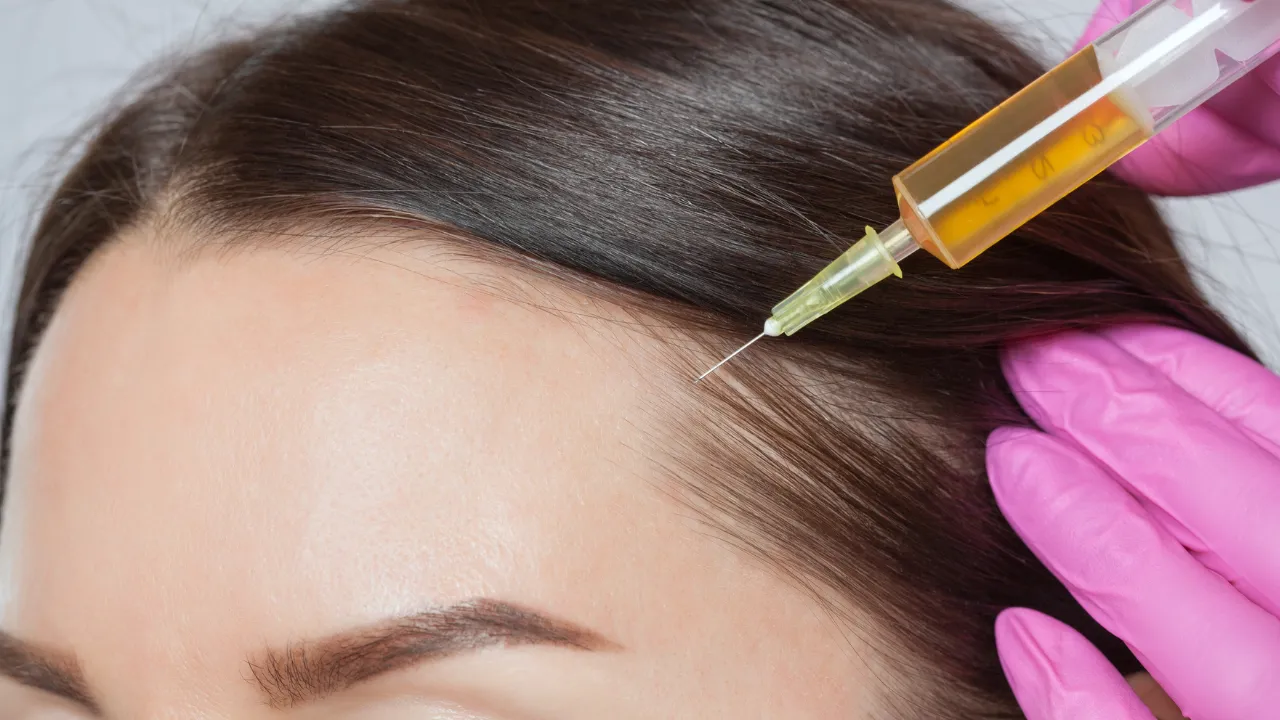
- Regenerative therapies, used alongside surgery where appropriate.
- Customized treatment plans tailored to each patient’s needs.
Selecting an experienced surgeon is vital to avoid unsatisfactory results. Learn how Dr. Kopelman addresses bad hair transplants for patients who are unhappy with a previous procedure.
Frequently Asked Questions About Female Celebrity Hair Transplants
Which female celebrities had a hair transplant?
Lisa Maffia, Marlo Hampton and Ella Morgan have publicly confirmed one, and Chrissy Teigen confirmed an eyebrow transplant. Many other stars have discussed thinning without confirming surgery, as covered above.
Are there celebrities with frontal fibrosing alopecia?
Few have confirmed the diagnosis publicly. Naomi Campbell and Jada Pinkett Smith are often linked to FFA online, but Campbell has attributed her loss to extensions and Pinkett Smith has said she has alopecia areata.
How old is Jennifer Aniston and has she had hair loss issues?
Jennifer Aniston was born on February 11, 1969. She has said extensions thinned her natural hair, and she has not confirmed any hair transplant procedure.
Did Keira Knightley get a hair transplant?
There has been speculation about a Keira Knightley hair transplant, but she has not confirmed one. She has said dye damage led her to wear wigs, but she has not confirmed any procedure.
Are there examples of female celebrity hair transplant before and after results?
Yes. Lisa Maffia, Marlo Hampton and Ella Morgan have each discussed or shown their results publicly, and the changes described are a denser or reshaped hairline. Check the follow-up date on any photo, since results change over the first year.
Where can I find female celebrity hair loss before and after comparisons?
The celebrity’s own social media posts and interviews are the most reliable sources. Treat third-party comparison posts with caution, because they often credit surgery for changes caused by styling or extensions.
Do female celebrities with long hair get transplants too?
Women with long hair can have a transplant and keep their length. FUT leaves a strip scar and FUE usually requires trimming the donor patch, so ask the surgeon which approach suits your hairstyle.
Is female celebrity hair loss a common issue?
Yes. Genetics, hormones, stress and styling damage affect women too, and several stars have discussed it, including Keira Knightley, Kristin Davis and Tyra Banks. Options range from wigs and topical medication to surgery.
Can I see celebrity hair transplants pictures online?
Yes, many websites feature celebrity hair transplants pictures. Pictures show a result but not the technique, graft count or timing, so treat them as examples rather than predictions.
How long does a hair transplant take to heal?
Most patients return to normal activity within about a week to 10 days, though the surgeon’s instructions take priority. Results take longer; see the timeline above
Can women get hair transplants for receding hairlines?
Yes, when the loss is stable and the area can still grow strands, as in many cases of traction alopecia. Receding hairlines caused by active scarring conditions such as FFA need dermatologist treatment first.
Are hair transplants permanent?
Transplanted strands are generally permanent, but native hair can keep thinning, so some patients continue medication.
Final Thoughts
Female celebrities with hair transplants, though few in number, have helped break the stigma around hair restoration. Confirmed cases such as Lisa Maffia, Marlo Hampton and Ella Morgan show that women use transplants mainly to rebuild edges, reshape hairlines and treat traction-related loss.
At Kopelman Hair, Dr. Kopelman provides transplant care tailored to each patient’s needs. If you are considering a female hair transplant, schedule a consultation to explore your options.