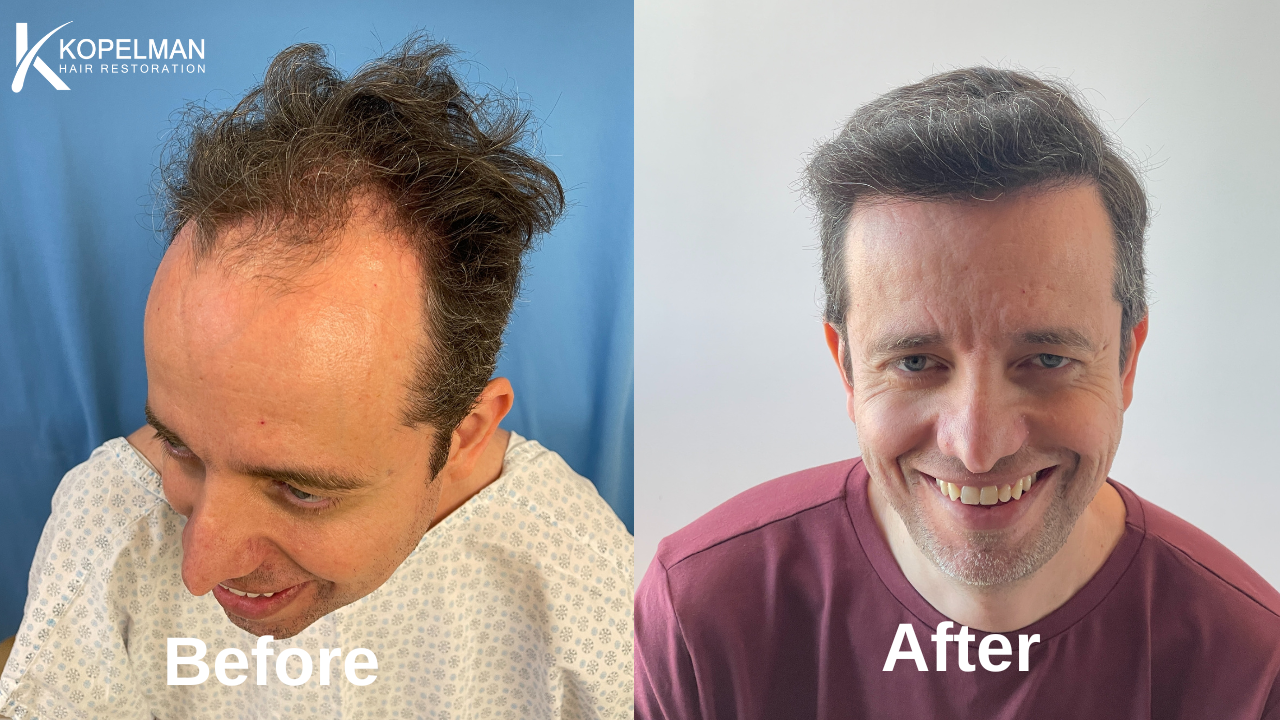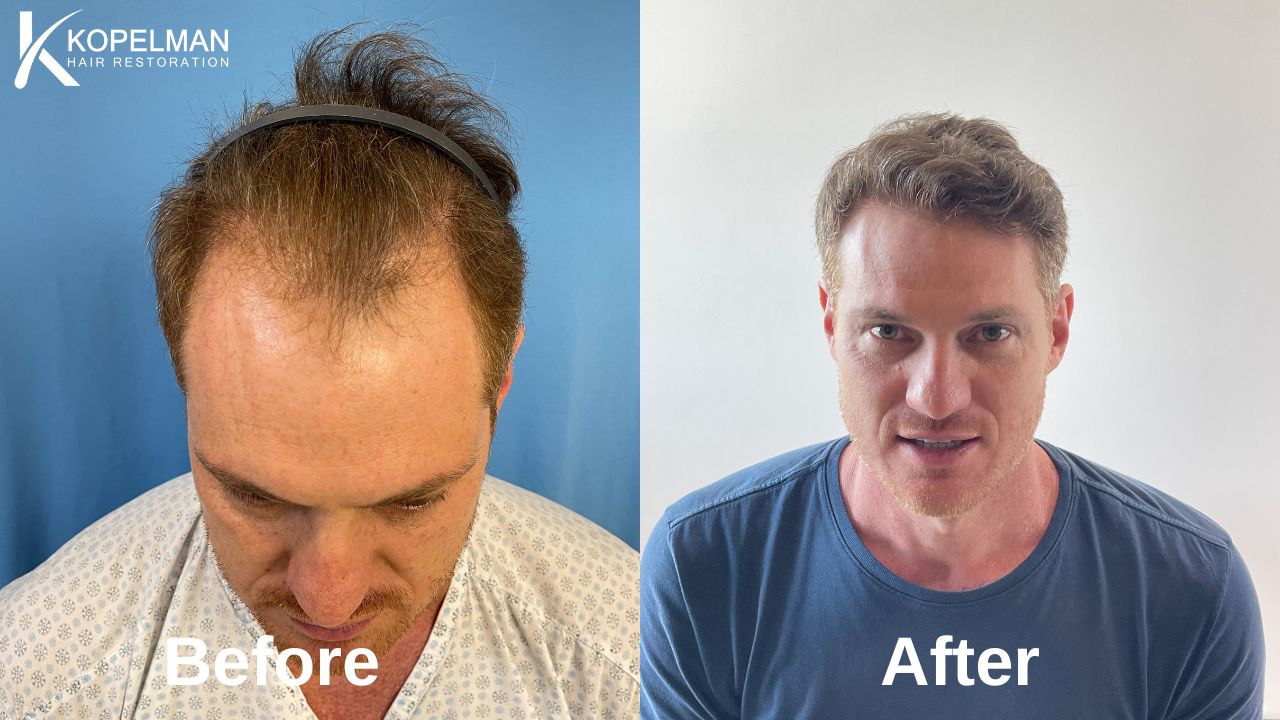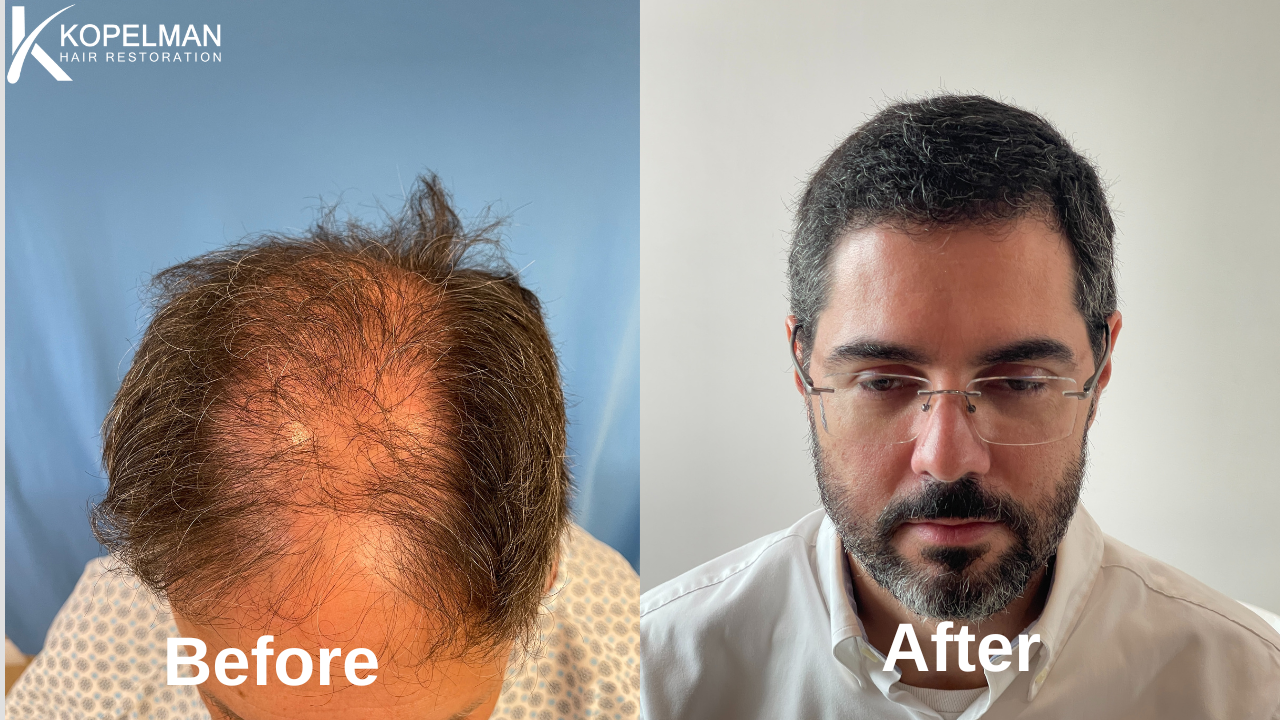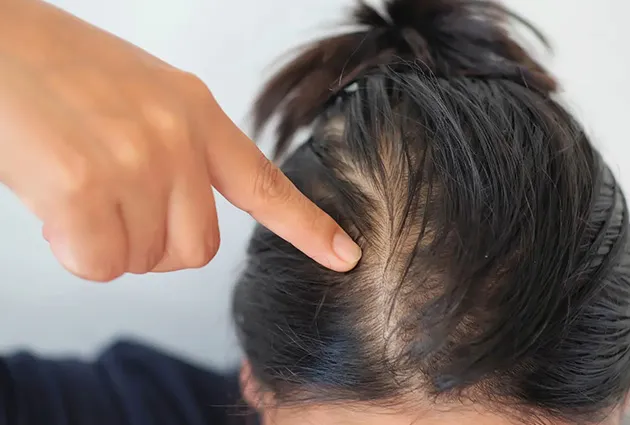

At Kopelman Hair Restoration, one of the most common concerns patients bring up is how to stop progressive thinning before it becomes harder to treat. DHT blockers are often part of that conversation because dihydrotestosterone can gradually shrink sensitive hair follicles, leading to weaker growth, more shedding, and visible loss over time.
For many people with androgenetic alopecia, early treatment focused on reducing DHT can help preserve existing hair and support stronger regrowth.
Key Takeaways
- DHT blockers work by inhibiting the enzyme 5-alpha reductase, which converts testosterone into dihydrotestosterone; this reduces the hormone’s ability to shrink hair follicles and cause pattern hair loss in genetically predisposed individuals.
- Not everyone with elevated DHT levels experiences hair loss, because the deciding factor is follicle sensitivity, not DHT levels alone, which explains why loss follows a predictable pattern and runs in families.
- Prescription options such as finasteride (for men) and spironolactone (for women) are the most clinically supported treatments, while natural alternatives like saw palmetto offer more modest and inconsistent results.
- Most patients need three to six months of consistent use before shedding stabilizes, with visible density improvements typically taking six to twelve months; stopping treatment early is one of the most common reasons patients see no results.
- DHT blockers are only effective while follicles are still active; areas that have been fully bald for several years are unlikely to respond, and a hair transplant is typically the more appropriate option in those cases.
What Are DHT Blockers and How Do They Work?
To understand what blocks DHT at the follicle level, it helps to know how this hormone is produced. Testosterone supports many functions in your body, including muscle mass and bone density. However, an enzyme called 5-alpha reductase converts a portion of your testosterone into dihydrotestosterone.
DHT is significantly more potent than testosterone and plays a direct role in male pattern baldness. This conversion process is entirely natural, but when too much DHT builds up around hair follicles, it binds to androgen receptors and gradually miniaturizes the follicle. The hair produced becomes thinner, weaker, and eventually stops growing altogether. That is why many experts recommend DHT-blocking treatments to preserve healthy strands before the damage becomes irreversible.
Not everyone with normal or even elevated DHT levels experiences hair loss. The key factor is genetic sensitivity. Some people have hair follicles, particularly at the hairline and crown, that are far more reactive to DHT than others. This explains why hair loss runs in families and why the hair at the sides and back of the head, which is typically more resistant to DHT, is often unaffected.
Do DHT Blockers Work?
Evidence from clinical trials and decades of real-world use suggests that many people see measurable benefits when they use DHT blockers consistently. Interfering with the conversion of testosterone into DHT can help slow thinning, reduce shedding, and in some cases promote visible regrowth.
However, results vary. Some people experience a noticeable improvement in hair regrowth, while others see reduced shedding. It often depends on the type of DHT-reducing treatment, your genetic makeup, and your daily habits.
What Does Blocking DHT Do?
Blocking DHT prevents the excess of this hormone from attaching to hair follicles. When you reduce DHT, you may notice less overall shedding and potential for hair regrowth. You also lessen the chances of further damage to existing follicles. This approach can be an important part of your routine if you’re serious about combatting male pattern baldness or androgenetic alopecia.
While some people experience positive changes after a few months, others need longer to see results. Combining DHT-blocking treatment with stress management and a healthy lifestyle often yields the best outcome.
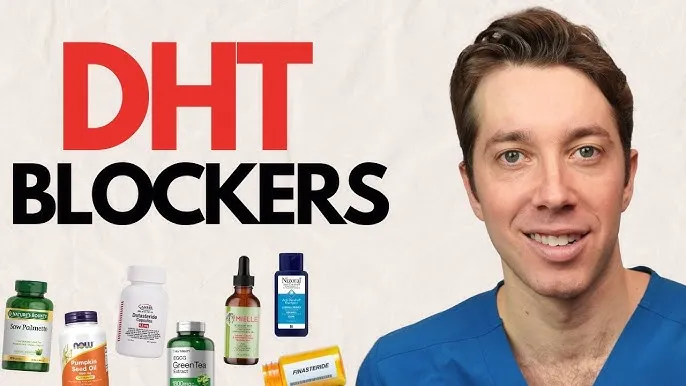
Feel free to learn all about DHT blockers through our comprehensive video:
DHT Blockers and Testosterone
We sometimes worry that blocking DHT might affect our broader hormone levels. After all, DHT emerges from testosterone. Yet most Dihydrotestosterone blocker limit the conversion of testosterone into DHT without drastically lowering total testosterone. By slowing the action of 5-alpha reductase, you reduce DHT’s impact on hair follicles while preserving many benefits of testosterone, such as supporting muscle mass.
Do DHT Blockers Lower Testosterone?
A common question is: do Dihydrotestosterone blocker lower testosterone? In most cases, they do not reduce overall testosterone significantly. They simply limit how much testosterone changes into DHT.
Some individuals even experience stable or slightly increased levels of free testosterone because it’s no longer being converted. That said, we recommend staying informed and speaking with a medical professional if you have concerns about your hormonal balance.
What Medication Can Suppress DHT When on TRT?
If you’re using testosterone replacement therapy (TRT) to improve hormone levels, you might wonder, what medication can suppress DHT when on TRT? When your body absorbs extra testosterone, it can create more dihydrotestosterone (DHT) through the 5-alpha reductase enzyme. This increase in DHT may speed up hair loss if you’re prone to male pattern hair loss.
Common prescriptions for controlling DHT on TRT include finasteride and dutasteride. These medications work by blocking 5-alpha reductase, which lowers DHT levels and can reduce hair thinning. While this approach often helps preserve hair, some people experience side effects, such as sexual dysfunction or mood changes.
Because these drugs affect hormone balance, it’s essential to talk with a healthcare provider before adding or changing any medication. A professional can help you weigh potential benefits, track clinical trials if available, and tailor your TRT plan to maintain both muscle mass and healthy hair growth.
Take a look at our video comparing these two popular hair loss medications:
Best DHT Blocker Options
Today, you can find many DHT-blocking solutions that range from prescription products to natural DHT blockers. Each choice may help with hair regrowth and overall hair wellness.
DHT Blocker for Men
The most well-studied DHT blocker for men is finasteride. This oral medication has been evaluated in extensive clinical trials and works by inhibiting 5-alpha reductase, reducing scalp DHT levels by roughly 60 to 70 percent. For many men, this is enough to slow progression, preserve existing density, and improve thickness over time.
Topical solutions containing ingredients like minoxidil or ketoconazole can also help when used alongside an oral DHT blocker. These products support the scalp-level growth cycle and complement the systemic reduction in DHT that finasteride provides.
What is a DHT Blocker for Women?
Women dealing with androgenetic alopecia can also benefit from DHT-blocking treatment. Spironolactone is one of the most commonly prescribed options for women. It works by blocking androgen receptors, thereby reducing the impact of DHT on hair follicles and promoting healthier growth.
Because spironolactone also functions as a diuretic, it is important to inform your healthcare provider of any preexisting conditions, particularly those involving the kidneys.
DHT blocker side effects on females may include hormonal imbalances, mood swings, or changes in menstrual cycles, especially when using prescription options. Women with a personal or family history of breast cancer are also advised against it.
Although finasteride is generally regarded as safe for men, it has not been thoroughly investigated in women. Pregnant individuals should avoid it due to the risk of feminizing a male fetus. Furthermore, those with a personal or family history of breast cancer are advised against using finasteride .
Some also explore natural DHT blockers containing ingredients like saw palmetto or pumpkin seed oil. Because women have a unique hormonal balance, we suggest speaking with a healthcare professional for personalized advice.
Check out our video on Saw Palmetto for Hair shedding:
DHT Blocker Shampoo
If you prefer a simple approach, consider a shampoo that includes DHT-blocking ingredients. These products often use compounds like ketoconazole or saw palmetto to help clear excess DHT from the scalp. Over time, shampoo-based treatments may boost hair density and support steady hair growth, though they usually work best when combined with other methods.
DHT Inhibitors
A DHT inhibitor is any agent that stops or slows 5-alpha reductase from creating dihydrotestosterone. By lowering DHT levels, these DHT inhibitors may protect hair follicles from damage and support hair regrowth over time. In some cases, people choose a combination of prescription blockers and topical inhibitors for a balanced plan.
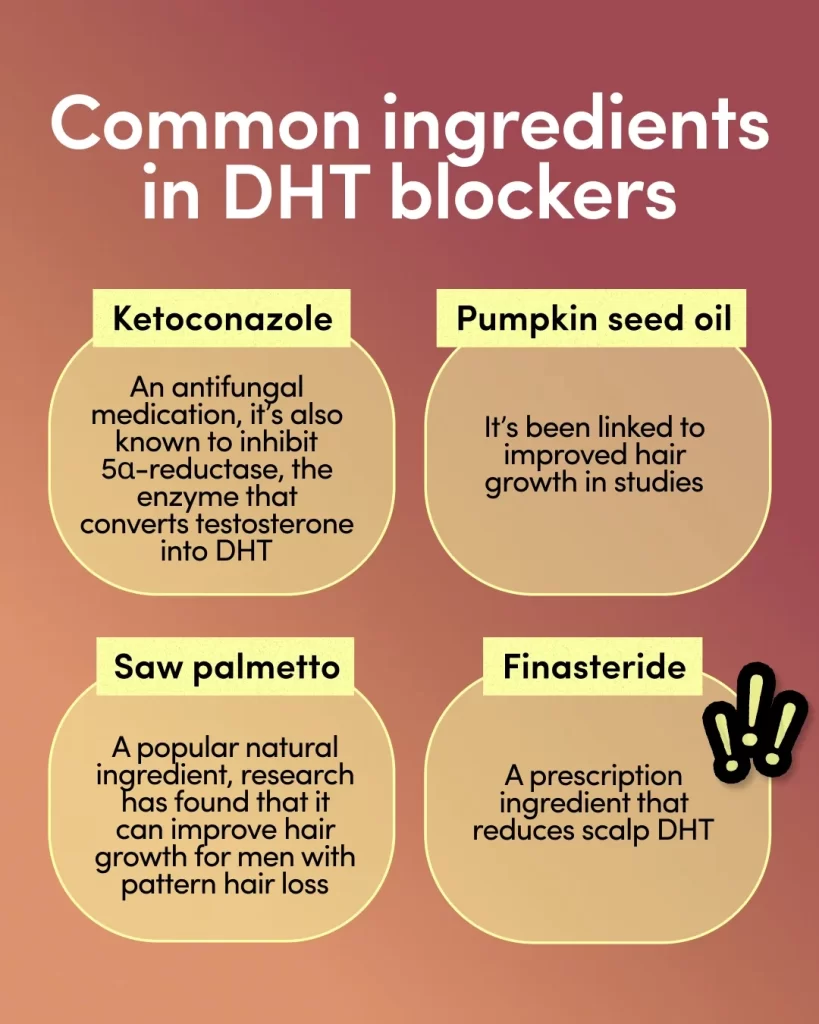
Natural DHT Blockers
If you prefer a gentle approach, look into natural DHT inhibitor. Examples include extracts like green tea, pumpkin seed oil, and saw palmetto. These substances may help ease DHT’s impact on your scalp without the potential for strong medication side effects. For many of us, natural solutions are a comfortable starting point, especially if we’re cautious about chemical or pharmaceutical treatments.
How Long Do DHT Blockers Take to Work?
Most patients need to use a DHT blocker consistently for three to six months before noticing a reduction in shedding or stabilization of their hair loss. Visible improvements in density and thickness typically require six to twelve months of continued use.
This timeline varies depending on the severity of thinning at the time treatment begins, the specific medication or product used, and individual response.
It is important to stay consistent. Stopping treatment prematurely, before the hair growth cycle has had time to respond, is one of the most common reasons patients believe their DHT blocker is not working.
Hair follicles operate on cycles that last several months, so patience during the initial phase is essential.
When Is It Too Late for a DHT Blocker?
DHT blockers are most effective when hair follicles are still active, even if they have begun to miniaturize and produce thinner strands. They work best for gradual, pattern-based thinning where follicles have not yet gone fully dormant.
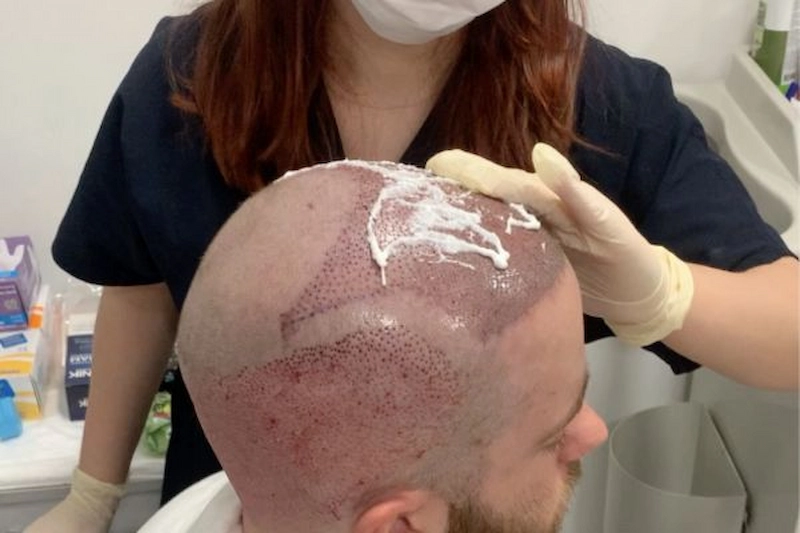
If an area of the scalp has been completely bald for several years, the follicles in that region are likely no longer responsive to DHT-blocking treatment. In those cases, a hair transplant becomes the most effective option for restoring coverage.
Many patients benefit from combining a transplant with ongoing DHT blocker use, which helps protect transplanted hair and surrounding native follicles from future thinning.
The earlier you begin treatment, the more hair you can preserve. If you are noticing the first signs of thinning, that is the ideal time to start.
What Are DHT Blocker Side Effects?
When you alter hormone activity, you might experience some side effects. For instance, people on prescription DHT inhibitors sometimes report sexual dysfunction, decreased libido, or erectile dysfunction. That’s because hormones can affect various bodily processes. However, not everyone experiences these issues.
Most people tolerate DHT blockers well, especially if they follow medical advice and monitor how they feel. If you notice persistent changes in mood or sexual health, talk with a doctor about adjusting your dosage or exploring alternative treatments.
Other Key Points to Consider
- Hair Transplant: For advanced male pattern baldness, a hair transplant can be a powerful solution. While DHT inhibitor help preserve hair, a transplant can restore areas where follicles no longer grow.
- Clinical Trials: Many DHT-blocking medications have gone through extensive clinical trials to evaluate safety and effectiveness. Always check reputable sources or talk to professionals when exploring new options.
- Sexual Dysfunction: If you’re concerned about sexual dysfunction or erectile dysfunction while taking a DHT blocker, have an open conversation with a healthcare provider. They can guide you toward the best strategy for your hair and overall health.
- Lifestyle Habits: Sometimes, making changes in diet or managing stress can improve results. Eating protein-rich foods and getting enough vitamins can support hair follicle function.
- When to Seek Help: If you see rapid hair thinning or have questions about your treatment plan, consult a specialist. Early interventions can lead to better outcomes.
Putting it All Together
At this point, you know the basics of DHT and how it affects your hair. You also understand that a DHT inhibitor—whether prescription or natural—can play a key role in preserving and encouraging hair regrowth. We encourage you to keep an eye on side effects, and if you’re considering a hair transplant or other advanced treatment, consult a qualified professional.
Remember, each journey is unique. What works for someone else may not be the perfect fit for you. Take time to research, check out clinical trials where available, and always keep your personal health profile in mind. By understanding how dihydrotestosterone (DHT) impacts your body and exploring the variety of DHT inhibitors on the market, you can make more informed decisions.
We hope this guide helps you feel confident about finding the best hair fall treatment plan, whether that includes natural dht blockers, medical prescriptions, or even combining them with lifestyle changes. With the right approach, you can stay proactive and maintain the healthiest hair possible.
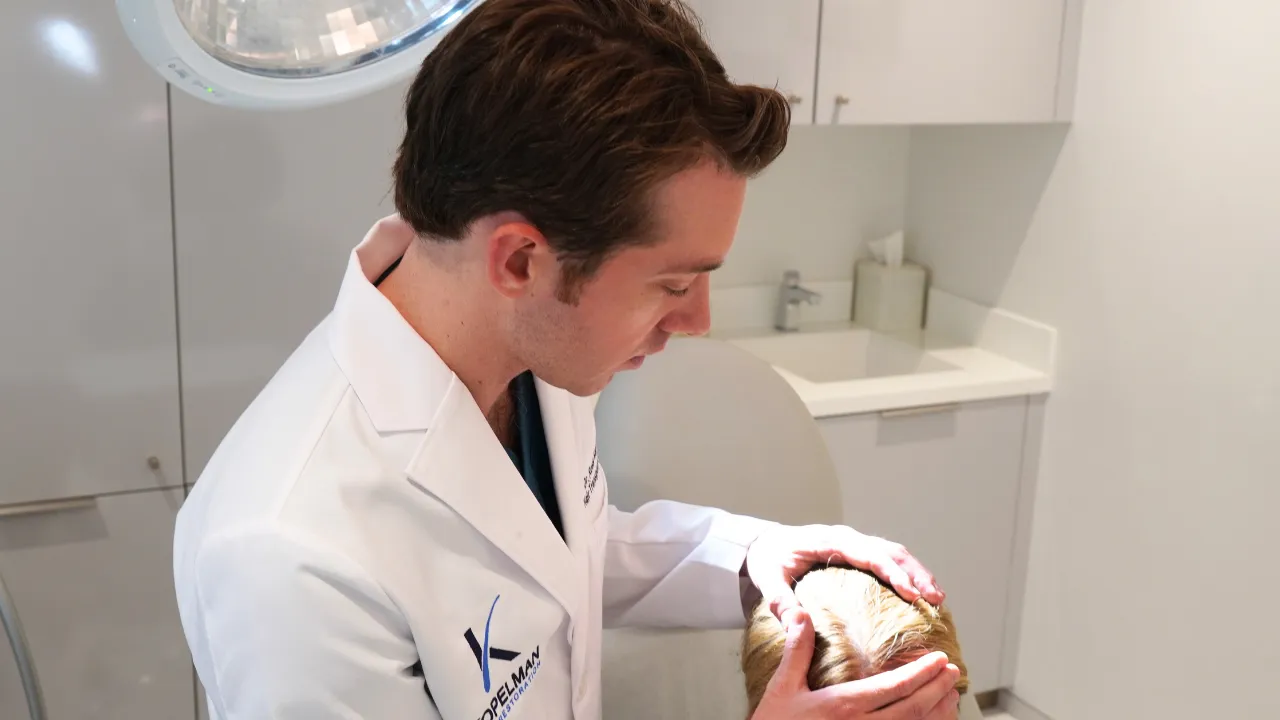
For those dealing with hair thinning or similar concerns. Consider speaking with Dr. Kopelman. This father-son team has more than 35 years of experience in hair restoration.
They focus on personalized treatments for every client. Dr. Kopelman’s expertise can help you find the right solution tailored to your unique needs. Schedule a consultation today to explore your options and take the first step towards achieving your hair goals.