
At Kopelman Hair, eyebrow restoration in scarred areas is evaluated as a surgical procedure that depends on scar type, tissue quality, and healing history rather than appearance alone.
This article explains when an eyebrow hair transplant on scarred skin is medically possible, how it differs from treatment on healthy skin, and what realistic results patients should expect.
Key Takeaways
- An eyebrow transplant for scar tissue may be possible in select cases, but success depends on scar maturity, blood flow, and tissue health rather than the cosmetic procedure itself.
- Scar tissue lacks normal hair follicles, which explains why eyebrow loss from injury or surgery often leads to permanent hair loss.
- An eyebrow hair transplant on scarred skin requires careful planning, precise recipient sites, and lower graft density to protect fragile tissue.
- The healing process is slower in scar tissue, and final results are often reviewed around 12 months.
Do Eyebrow Transplants Work on Scar Tissue?
An eyebrow transplant for scar tissue can work in some cases. Because scars replace normal skin with fibrous tissue, transplanted hair follicles may face challenges in anchoring and survival. Surgeons carefully evaluate each scar’s thickness, location, and vascularity to optimize graft survival and hair growth.
Flat, mature scars generally allow better perfusion than thick or raised scars, while burn or inflammatory scars may be more difficult to treat. Even with adequate blood supply, scar tissue’s reduced elasticity can make healing slower and outcomes less predictable than in healthy skin.
Can Eyebrow Hair Grow Through Scar Tissue?
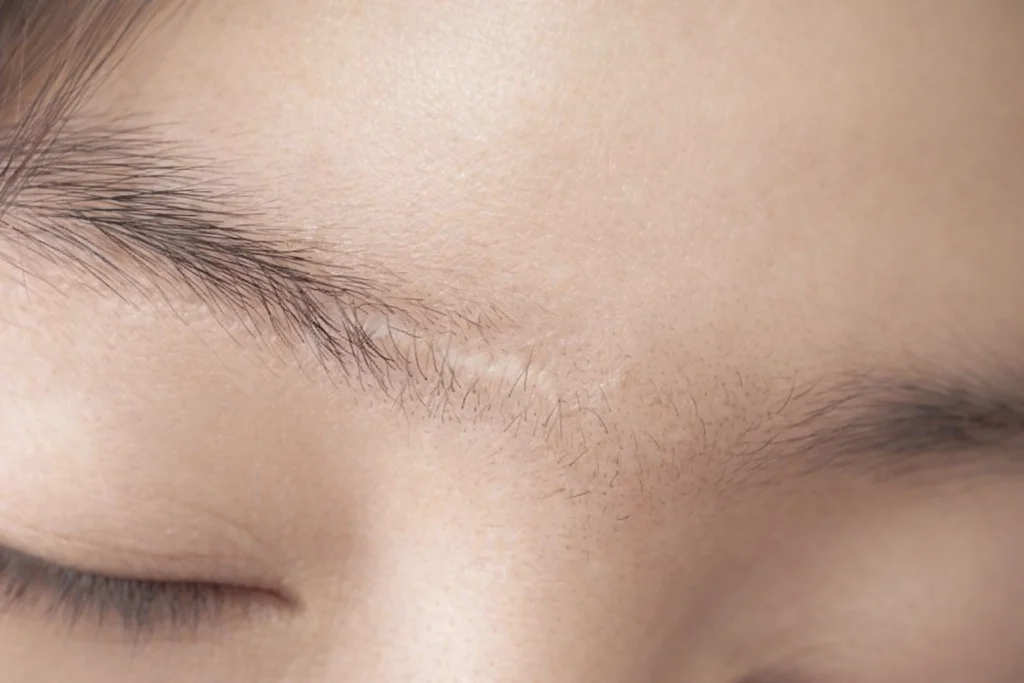
Eyebrow hair usually does not grow through scar tissue, especially when an eyebrow scar has damaged normal follicle structures. Scars replace normal skin with fibrous tissue, which does not support hair growth. This is why eyebrow loss in scarred areas often does not improve on its own over time.
Some fine hairs may grow near the edges of a scar. These hairs are usually thin and uneven. Surgical eyebrow restoration may be considered when eyebrow loss affects facial features, as natural growth is often insufficient.
Why Hair Growth Varies by Scar
Scars heal in different ways. Their depth, age, and location all affect hair growth after treatment. Older scars that have fully healed often respond better than newer scars.
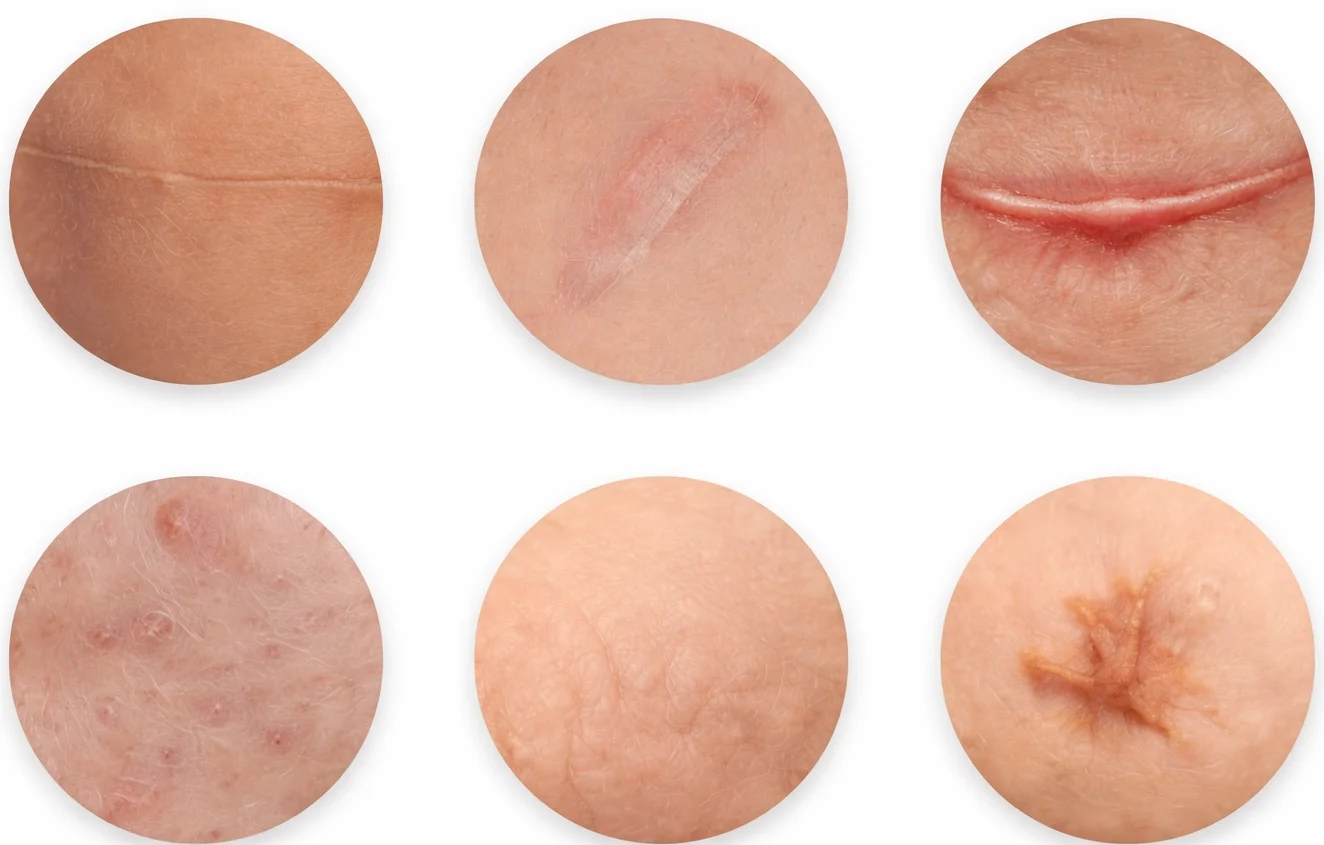
Some scars stay stiff, while others soften over time. These differences explain why results vary between patients.
Why Hair Follicles Struggle to Survive in Scar Tissue
Scar tissue is firm and dense. This makes it harder for hair follicles to anchor in the skin. Even when blood flow looks acceptable, early graft stability at the recipient sites may still be limited.
Scar tissue also heals differently after surgery. Swelling or delayed healing can disrupt early hair growth. This is why results from an eyebrow hair transplant on scarred skin are less predictable.
Eyebrow Hair Transplant on Scarred Skin
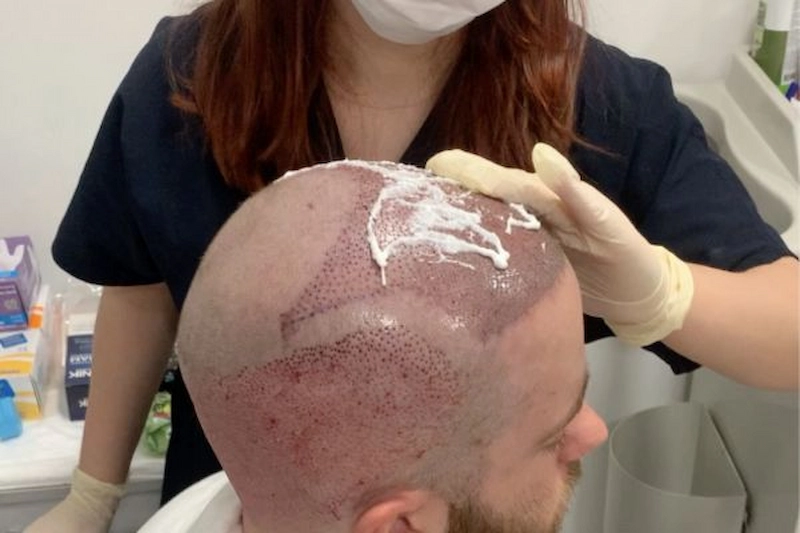
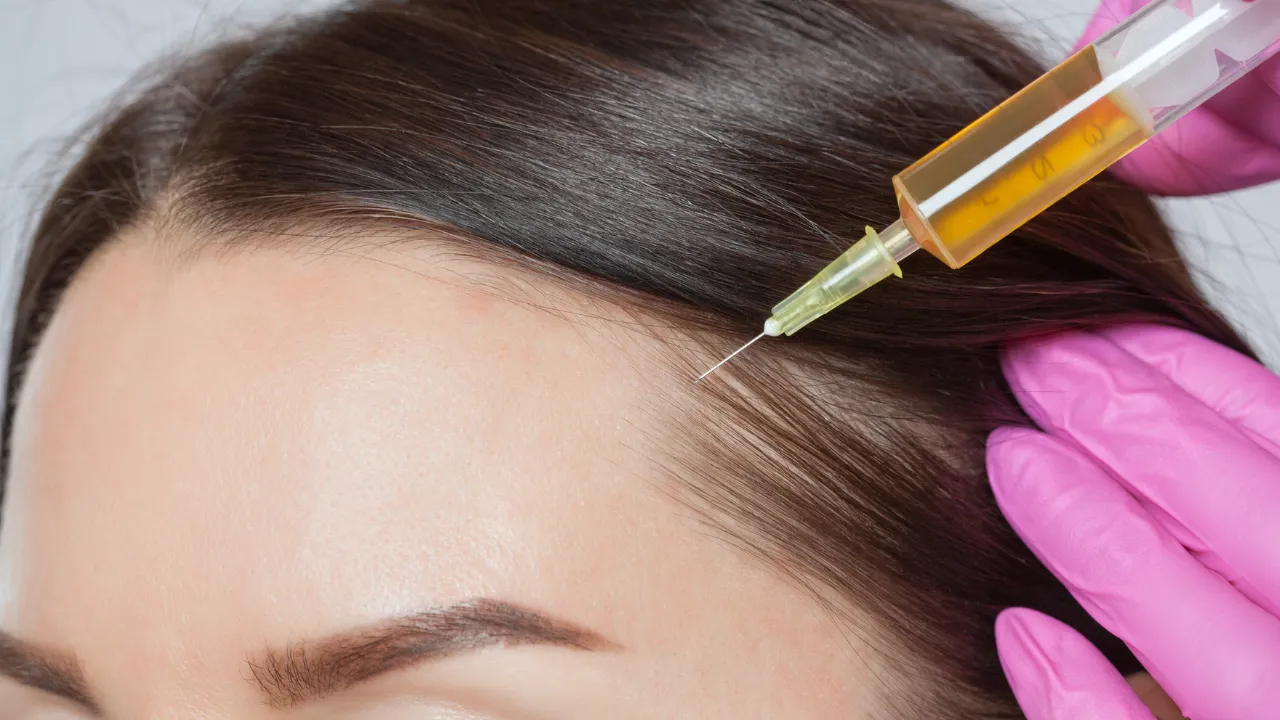
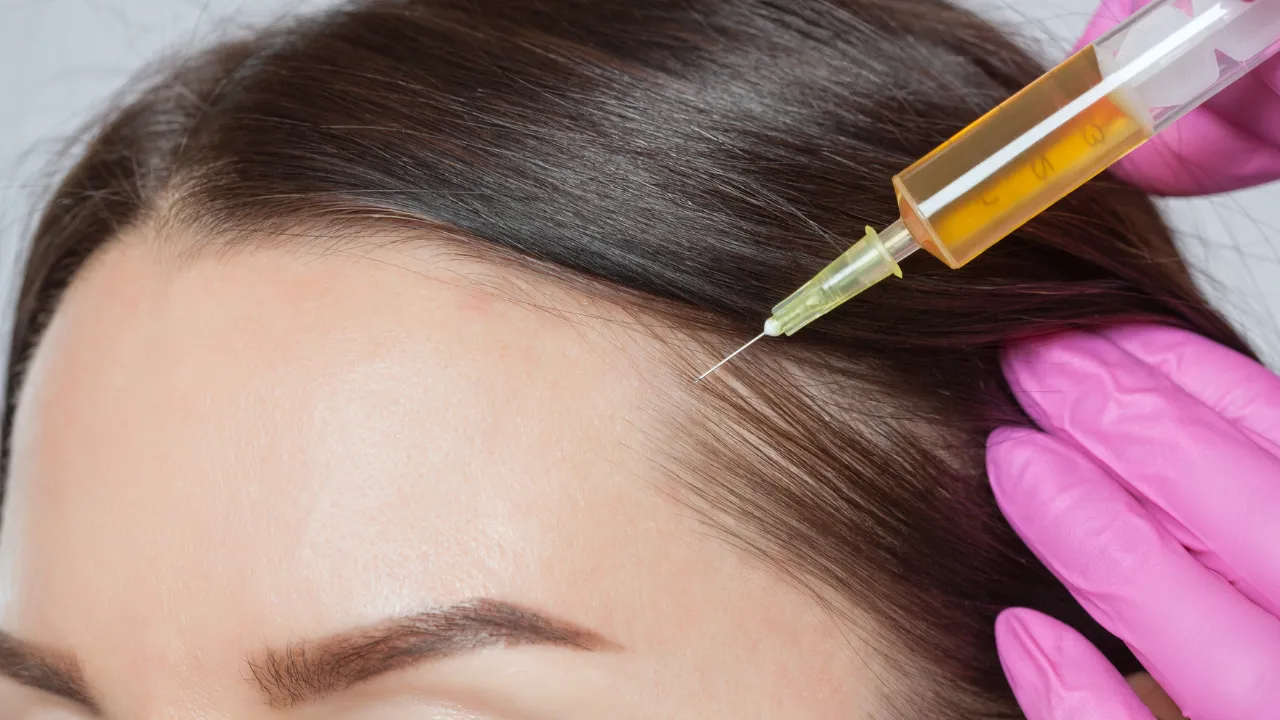
This procedure involves moving hair from a donor site, typically the scalp, to the brow. The surgical procedure often employs Follicular Unit Extraction (FUE) to remove single hair follicles with less damage. This method helps protect both the donor site and the scarred skin.
Graft density is usually lower than in healthy skin. Careful spacing of recipient sites helps maintain blood flow and support healing.
Who Is a Good Candidate
Good candidates typically have stable scars at least 1 year old. The skin should be flat and free from active inflammation. Ongoing skin conditions may increase risk.
Medical evaluation helps determine whether the donor area and donor site are suitable for the procedure. According to Dr. Kopelman, scar stability and blood supply are key factors in this decision.
Surgical Perspective on Technique Selection
Surgeons adjust their technique during the cosmetic procedure based on the skin’s response. They watch for resistance, bleeding, and tissue reaction while creating recipient sites. These signs guide the depth and proximity of graft placement.
Dr. Kopelman notes that protecting the skin is more important than placing many grafts. This approach supports healing and helps maintain natural facial features.
Medical Evaluation and Treatment Planning
A medical evaluation is required before any eyebrow transplant in scar tissue. This includes reviewing medical history and examining the scar. Goals are discussed clearly before treatment begins.
In some cases, surgeons may advise against a surgical procedure. Lower graft density or no treatment may be safer options. These choices protect long-term skin health and the healing process.
Healing and Recovery Expectations
Healing after an eyebrow transplant in scar tissue takes longer than in healthy skin, and understanding the full eyebrow hair transplant recovery process helps set realistic expectations.
Swelling, redness, and crusts are common in the brow area early on. These usually improve within a few weeks.
Hair growth happens slowly. Transplanted hairs often shed first, then regrow months later. Final results are usually reviewed about 12 months after the procedure.
Does an Eyebrow Transplant Leave Scars?
Eyebrow transplants do not usually leave visible scars in the brow area. The donor site may have tiny marks from follicular unit extraction. These marks are often hidden by surrounding hair.
Careful technique helps avoid worsening existing scars. The procedure operates within the scar rather than causing additional damage.
Expected Results and Limitations
Results in scar tissue are usually more limited than in healthy skin. Coverage may improve appearance but may not match natural eyebrow density. Knowing these limits helps set realistic expectations.
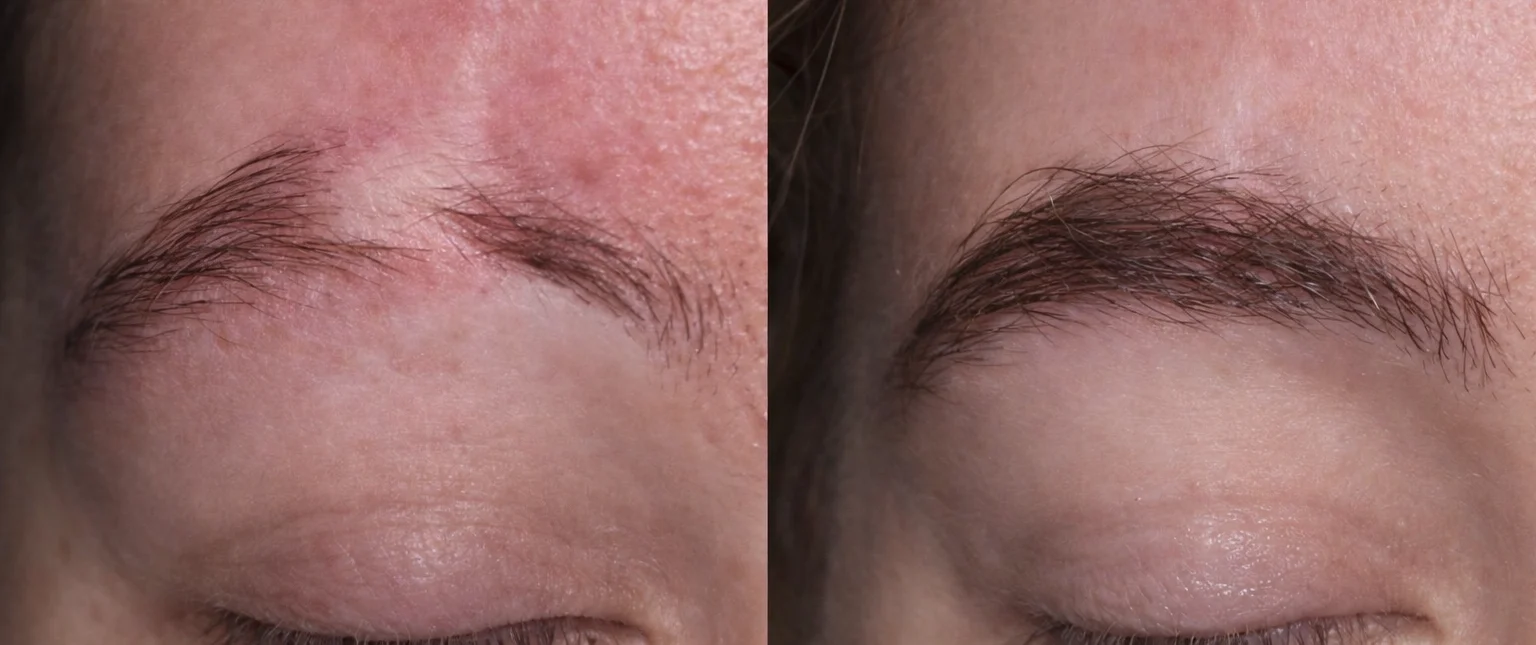
Results depend on scar quality, donor site health, and the body’s healing. Eyebrow restoration in scar tissue focuses on improvement, not full reconstruction.
When to See a Hair Restoration Specialist
Persistent eyebrow loss from scarring should be evaluated by a hair restoration specialist with experience in eyebrow transplant procedures in NYC. An early review helps determine whether a cosmetic or surgical procedure is appropriate. Medical guidance ensures decisions are based on facts, not assumptions.
If you have eyebrow loss related to scarring and want to understand whether treatment is medically appropriate, a professional evaluation can help clarify your options.
Scheduling a consultation allows for a personalized review of scar type, skin health, and realistic outcomes based on your specific case.