
This guide walks through both temporary and permanent paths so you can weigh the trade-offs with clear information. It also explains how a specialist evaluates whether restoration will actually work on your specific scar.
Understanding Eyebrow Scarring
Common Causes of Scars on the Eyebrow
Scarring in the brow region can develop for several reasons:
- Injuries and accidents: Cuts or abrasions in the brow area often leave a visible mark once the skin heals.
- Surgical scars: Reconstructive or plastic surgery near the upper eyelids can leave a fine line through the brow.
- An eyebrow piercing scar: A healed or rejected piercing can leave a small indented mark or a smooth patch where strands no longer grow.
- Burns or skin conditions: Severe burns and some chronic skin disorders may cause permanent scarring.
A mark can also form higher up as a scar between eyebrows, in the glabellar area, usually from a fall, a childhood injury, or a piercing. The location matters, since it changes which restoration methods will blend in most naturally.
Why Hair Struggles to Grow on Scar Tissue

Scar tissue is structurally different from healthy skin. During deep wound healing, the follicles in that patch are often destroyed and replaced with dense collagen, so the area loses much of its ability to regrow strands on its own. Full-thickness wounds in adult skin typically heal into scar tissue without functioning hair follicles. nih
That is why a brow scar tends to stay smooth and bare. Restoration works by adding pigment or living follicles back into the site, rather than waiting for natural regrowth, which usually does not occur.
Can Eyebrow Restoration Help With a Brow Scar?
Yes, in most cases. The realistic goal is usually camouflage or reconstruction rather than complete removal of the eyebrow scar, since the underlying mark cannot always be fully erased. A good result makes the scar blend in so well that it is hard to spot.
How a Specialist Evaluates Your Scar First
Before recommending anything, a qualified provider examines the scar to judge how it will respond. A few factors matter most:
- Pliability: Soft, flexible tissue accepts pigment and grafts better than thick, raised, or fibrous scars.
- Blood supply: Healthy circulation feeds transplanted follicles. Scars often have reduced vascularity, which can lower graft survival. FUE performed on scarred tissue is often less successful because scars tend to have reduced blood supply and altered tissue structure.
- Depth and age: Older, settled scars behave differently from fresh ones, and depth affects which method blends best.
This evaluation is why two people with similar-looking scars can receive different recommendations. Matching the method to the tissue is what produces a natural outcome.
Eyebrow Scar Treatment Options at a Glance
There are three main ways to address a brow scar:
- Cosmetic makeup: Temporary powders, pencils, and concealers that cover the area day to day.
- Microblading or cosmetic tattooing: Semi-permanent pigment that mimics individual strokes to camouflage the mark.
- Eyebrow transplantation: A permanent option that moves living follicles into the scarred patch so real strands grow through it.
If You Decide to Keep Your Scar
Not everyone wants treatment, and that is a legitimate choice. Many people come to see a brow scar as a distinctive feature and prefer to leave it as is. If you are only bothered by it some days, a light cosmetic fill is an easy, no-commitment middle ground before considering anything permanent.
Related Topics About Eyebrow Restoration and Care
-> Eyebrow Transplant Regret: What to Know and How to Avoid It
Microblading for Eyebrow Scars
Benefits of Microblading for a Scarred Eyebrow
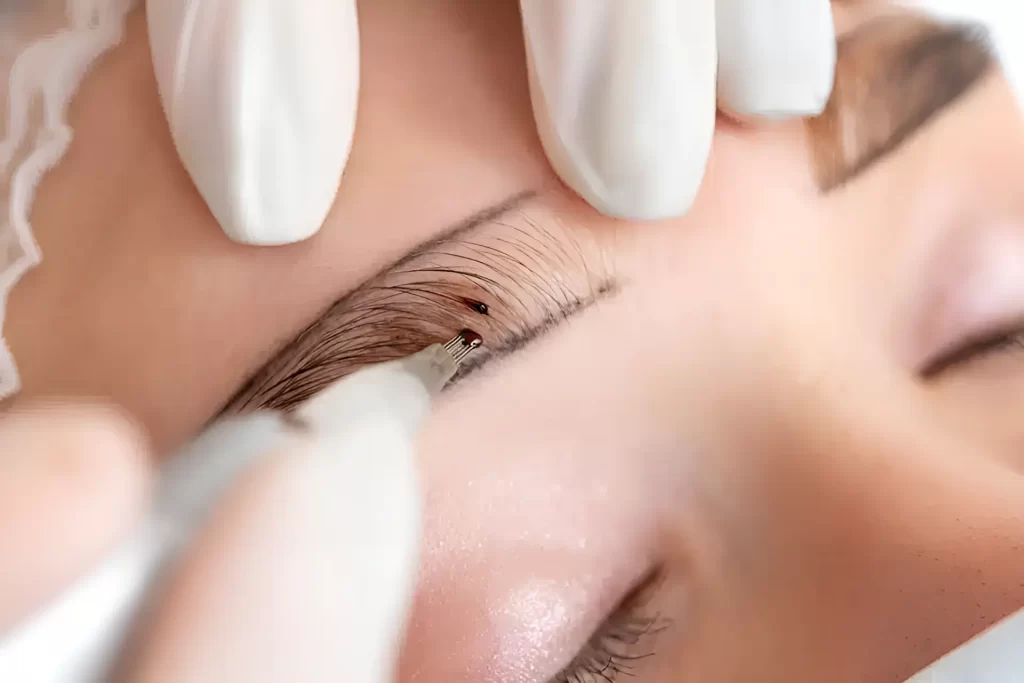
Microblading is a quick, non-surgical way to improve the appearance of a brow scar. A technician draws fine, hair-like strokes of pigment that blend with your existing strands, softening the gap without any downtime.
Does Microblading Cause Scarring on the Eyebrow?
A common worry is whether the technique itself can cause new marks. It rarely does, but improper depth or the use of tools by an untrained practitioner can irritate the skin and lead to further scarring. Choosing an experienced, licensed provider is the main safeguard.
Risks and Limitations
Microblading is not right for everyone:
- Some skin types, especially oily skin, hold the strokes poorly and blur over time.
- Results tend to be weaker on older, thicker, or raised scar tissue.
- Pigment fades and shifts in tone, so periodic touch-ups are needed.
For a fuller discussion of why some people regret semi-permanent brow work, see the eyebrow transplant regret guide linked above.
Eyebrow Transplants for a Brow Scar
How Eyebrow Transplants Work for Scarred Areas
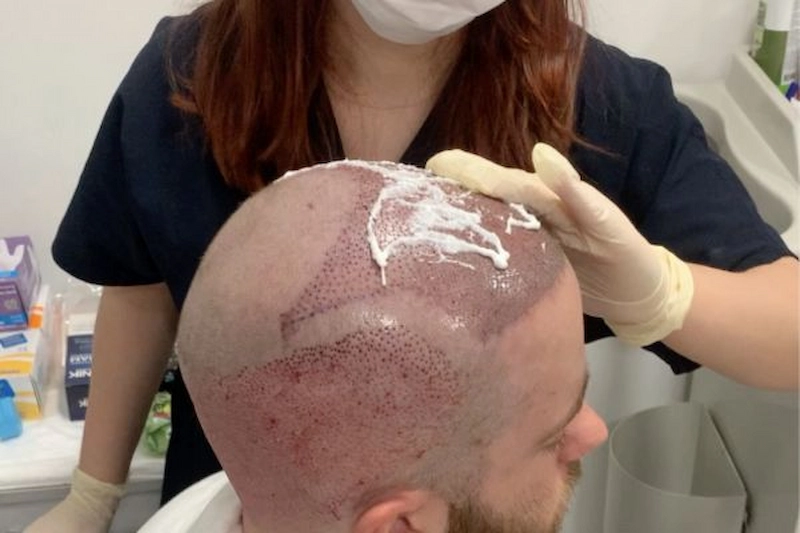
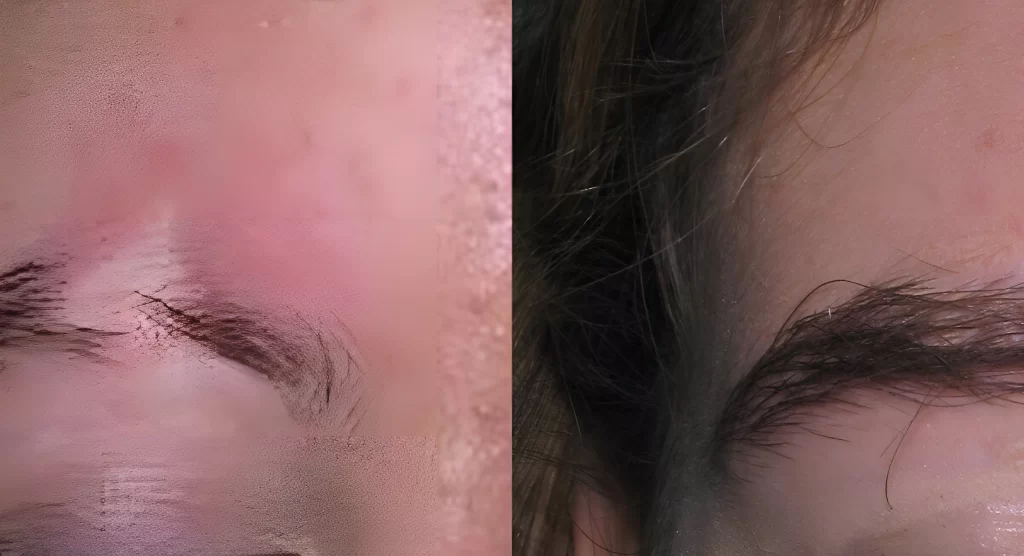
In an FUE eyebrow transplant, individual follicles are harvested from a donor site, usually the back of the scalp, and placed one by one into the scar at a natural angle and direction. Over the following months, those grafts establish a blood supply and begin growing real strands through the previously bare patch.
Beyond adding coverage, transplanted follicles can gradually improve the tissue itself. A pilot clinical study found that hair follicles transplanted into mature scars helped remodel fibrotic tissue, increasing dermal and blood vessel densities while softening the collagen structure. biorxiv
Success Rates of Hair Transplants on a Scar Over the Eyebrow
Outcomes depend heavily on the scar’s condition and the surgeon’s skill. Because scarred skin has less blood flow, careful graft placement and realistic case selection matter more here than in standard brow work.
A board-certified specialist improves the odds of dense, natural-looking regrowth.
Costs and Maintenance of Eyebrow Transplants for Brow Scars
A transplant is the most involved, typically the most expensive, and the most durable option. Full results take several months as the grafts settle and the healing process completes, but once established, the strands are permanent and can be trimmed and groomed like natural brows.
What a Transplant Typically Costs
In the US, an eyebrow transplant generally costs between $3,000 and $8,000, with recent patient reviews averaging close to $7,900. Detailed or scar-related cases often sit at a higher range, roughly $10,000 to $16,000, because scarred tissue requires more surgical time and precise placement.
Pricing is usually quoted as a range rather than a flat figure, since it depends on the graft count, the surgeon’s experience, and the complexity of the scar. An in-person or virtual consultation is the only way to get an accurate number for your case.
Cost is driven mainly by surgical time, not a fixed per-graft rate. Placing each follicle at the correct angle and depth in a scarred patch is slow, careful work, and a quote reflects that effort.
Example Scenarios and Graft Counts
The number of grafts needed shapes both the result and the price. Smaller repairs, like filling an eyebrow piercing scar or a thin line, use fewer follicles, while rebuilding a full brow over a larger scar uses more. Surgeons commonly place 50 to 400 grafts per eyebrow depending on the goal.
Maintenance After a Transplant
Once healed, transplanted follicles behave like normal scalp strands: they keep growing and stay in place for good. Upkeep is simple, mostly occasional trimming and light grooming to hold the shape, with no color refreshes needed.
This is where a transplant differs from semi-permanent options. Microblading and cosmetic tattooing cost less upfront, often $400 to $1,500 per session, but they fade and need touch-ups every 12 to 24 months. Over several years, those repeat visits add up, while a transplant is a one-time investment.
For a full breakdown of pricing factors, see the eyebrow transplant cost guide.
Cosmetic Makeup for Covering a Brow Scar
Best Products for Concealing the Area
From brow powders and pencils to specialized concealers, many products are made to mask a scar effectively. The right one depends on your skin tone, the scar’s texture, and how much coverage you want on a given day.
Tips for Long-Lasting Coverage for a Scar Above the Eyebrow
- Choose waterproof, transfer-resistant formulas for all-day wear.
- Match the product to your skin type so it blends rather than cakes.
- Set the area with a light powder to keep pigment from shifting.
Comparing Options for Eyebrow Scars
Microblading vs. Eyebrow Transplants
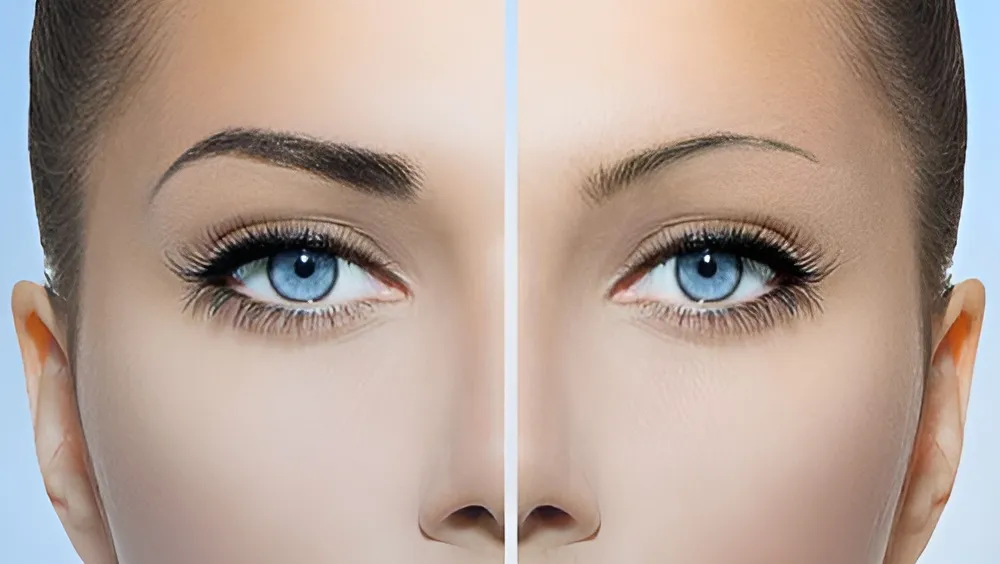
Microblading offers a fast, lower-cost improvement but fades and needs upkeep. A transplant costs more and requires healing time, yet it restores real growing strands and lasts. The table below lays out the trade-offs side by side.