
Eyebrow hair grows in a short growth phase that limits length and slows regrowth. Treatment depends on whether the hair follicle is still active. Mild thinning may improve with better grooming and skin care, while ongoing loss linked to follicle damage may need medical review or procedures.
This article explains how eyebrow hair grows, what causes thinning or loss, and which daily care, cosmetic, and medical treatments are realistic based on follicle health.
Key Takeaways
- Eyebrow hair grows in a short cycle, which explains why eyebrows stay short and why eyebrow regrowth can take months after shedding or removal.
- Mild eyebrow hair loss is often normal, but thin eyebrows or gaps that do not improve may indicate follicle damage or underlying health issues.
- Frequent grooming, such as plucking, waxing, or threading, can reduce eyebrow density over time.
- Cosmetic options like microblading change appearance but do not restore real eyebrow hair or natural hair growth.
- A medical evaluation helps determine whether eyebrow hair loss is temporary or permanent.
What Eyebrow Hair Is
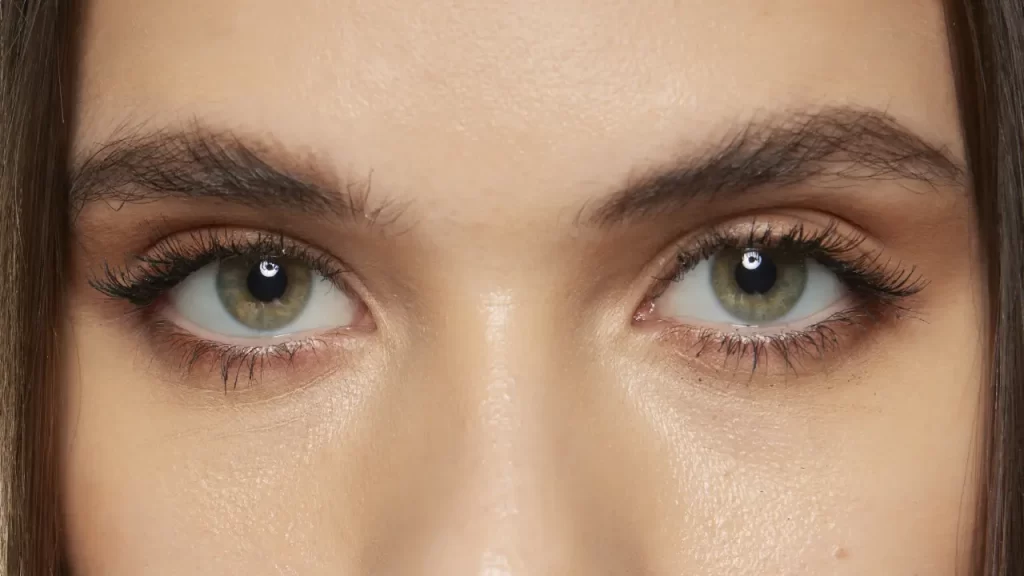
Eyebrow hair includes short, coarse hairs that grow in a precise shape above the eyes. These hairs are terminal hairs, which means they are thicker and darker than fine body hair. Individual brow hairs help protect the eyes and support facial expression. Some people also notice texture differences, such as curly eyebrow hair, which can affect shape and grooming needs.
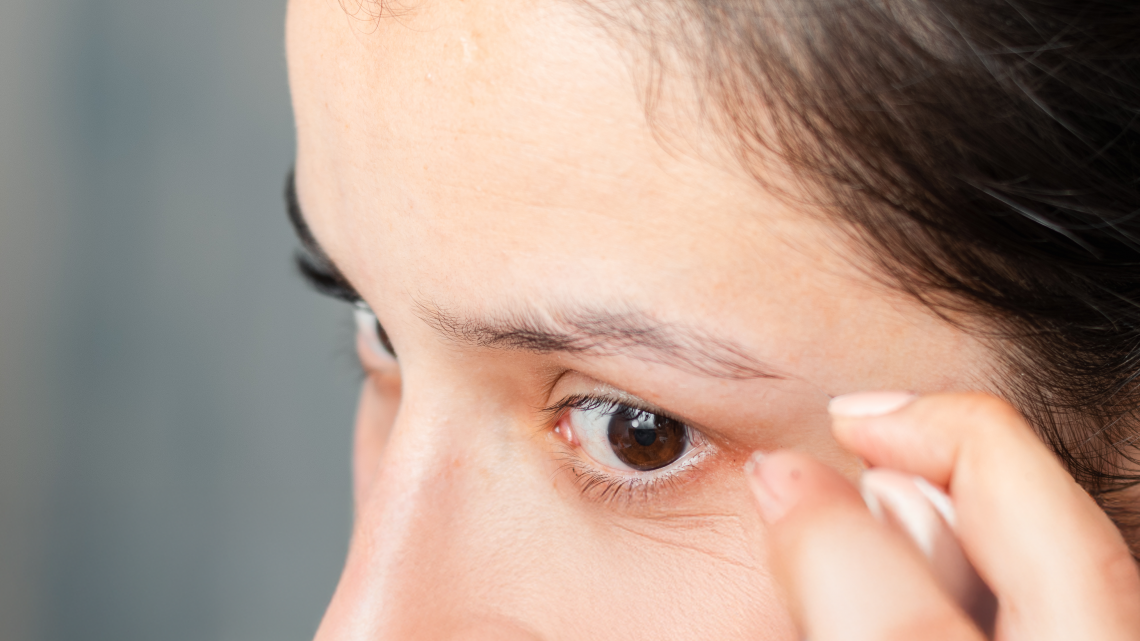
Thin eyebrows may appear when each hair follicle produces finer hair or stops working fully. This change often occurs slowly and may precede apparent hair loss.
How Eyebrow Hair Differs From Scalp Hair
Eyebrow hairs differ from scalp hair in how they grow and behave. They grow at a sharper angle and have a much shorter active phase. This limits both length and fullness.
Because of this, eyebrow hair follows a specific hair growth cycle that topical products or grooming trends cannot extend. This cycle also explains why eyebrows do not grow like other scalp hair.
Anatomy of Eyebrow Hair
Eyebrow hair grows from follicles set at a shallow angle under the skin. Each hair follicle helps control the direction, density, and growth of hair. This angle creates the natural curve of the brows and helps maintain their shape over time.
Eyebrow follicles are shorter and sit closer to the surface than scalp follicles. This structure explains why brow hairs stay short and why damage can limit regrowth.
How Eyebrow Hair Grows
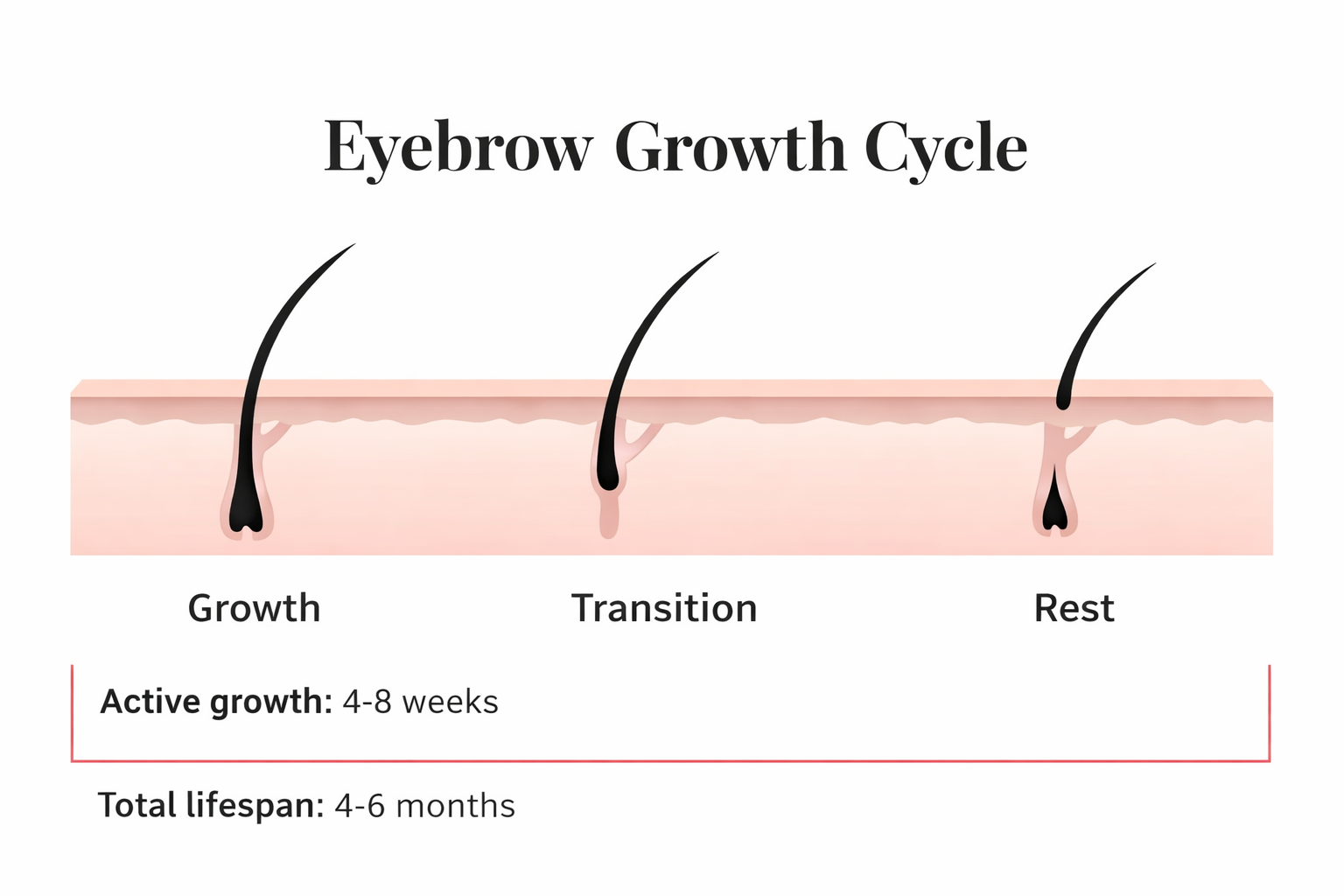
Eyebrow hair grows in three stages: growth, transition, and rest. This hair growth cycle determines how long hair remains visible before shedding. The growth stage lasts only a few weeks.
Because this stage is short, eyebrow regrowth is slow and uneven. This is why helping eyebrows to grow requires time and healthy follicle function.
Eyebrow Growth Timelines
After shedding, eyebrow regrowth often takes several months. The speed depends on age, health, and follicle condition. Many people see hair return close to its original pattern, though ongoing eyebrow thinning may signal follicle stress or damage.
If the hair follicle is stressed or injured, new brow hairs may grow back thinner. This can lead to thin eyebrows even after regrowth.
Eyebrows Hair Loss and Hair Fall
Some eyebrow hair loss is normal. Small amounts fall out each day and often go unnoticed. Concern starts when thinning is clear or when hair does not return.
Eyebrow hair loss may look like gaps, uneven areas, or overall thinning. These patterns help separate normal shedding from lasting loss.
Common Causes of Eyebrow Hair Loss
Eyebrow hair loss affects both men and women. Causes include skin problems, hormone changes, low nutrition, stress, and aging. Clinical observations by Dr. Kopelman often indicate that a lasting loss is usually accompanied by damage to the hair follicle.
Repeated irritation, such as eyebrow hair pulling, can disrupt the hair growth cycle. This makes eyebrow regrowth harder over time.
Why Eyebrow Hair Loss Feels Noticeable
Eyebrow hair loss often stands out more than scalp thinning. Eyebrows frame the eyes, so small changes affect facial balance. Even mild thinning can change expression.
This explains why eyebrow changes are noticed early. Concerns may affect both appearance and confidence.
Daily Care, Removal, and Eyebrow Growth
Daily grooming habits strongly affect eyebrow health. Plucking removes hair from the root and may slow regrowth when done often. Over time, this can weaken the hair follicle.
Gentle grooming supports eyebrow regrowth when follicles are still active and helps preserve natural brows.
Effects of Shaving, Waxing, and Threading
Shaving does not harm follicles but can make hair feel rough as it grows back. Waxing and threading pull out many hairs at once and may irritate the skin. Frequent use increases follicle stress.
Ongoing irritation can slow the hair growth cycle and delay recovery.
Supporting Eyebrow Growth Naturally
Some people use coconut oil to soften skin and brow hairs. Coconut oil does not activate the hair follicle, but it may reduce breakage and help brows look fuller. This supports the appearance of thicker brows and healthier natural hair.
Helpful habits include:
- Limiting grooming
- Keeping skin clean and hydrated
- Eating enough protein
Teenagers often see faster regrowth, while adults may need more time.
Microblading vs Real Eyebrow Hair Growth
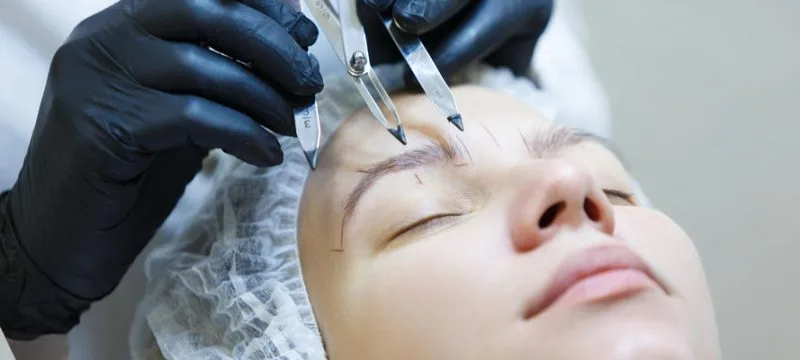
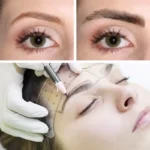
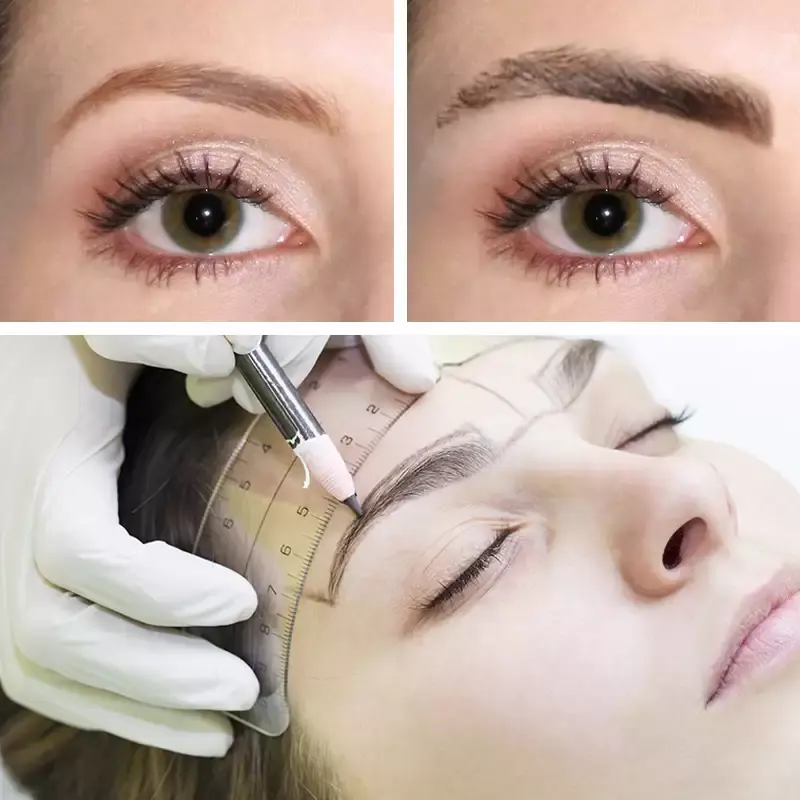
Microblading creates the illusion of fuller eyebrows by depositing pigment into the skin. It does not support real eyebrow regrowth or natural hair growth. The effect is visual only.
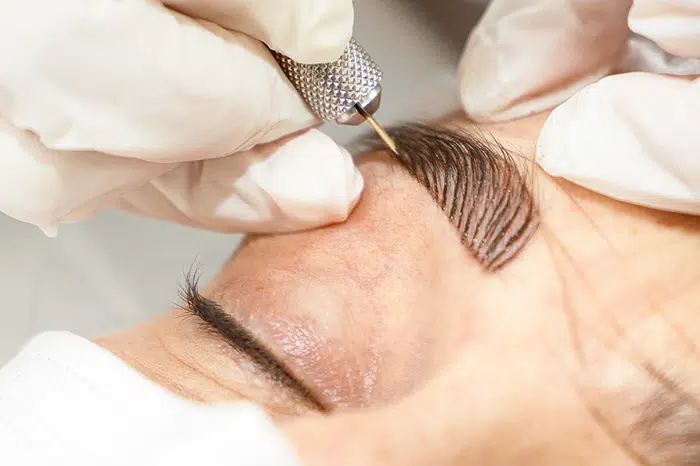
This method can hide thin eyebrows and create thicker brows. A trained brow artist focuses on shape rather than restoring hair follicles.
Eyebrow Hair Transplant Options
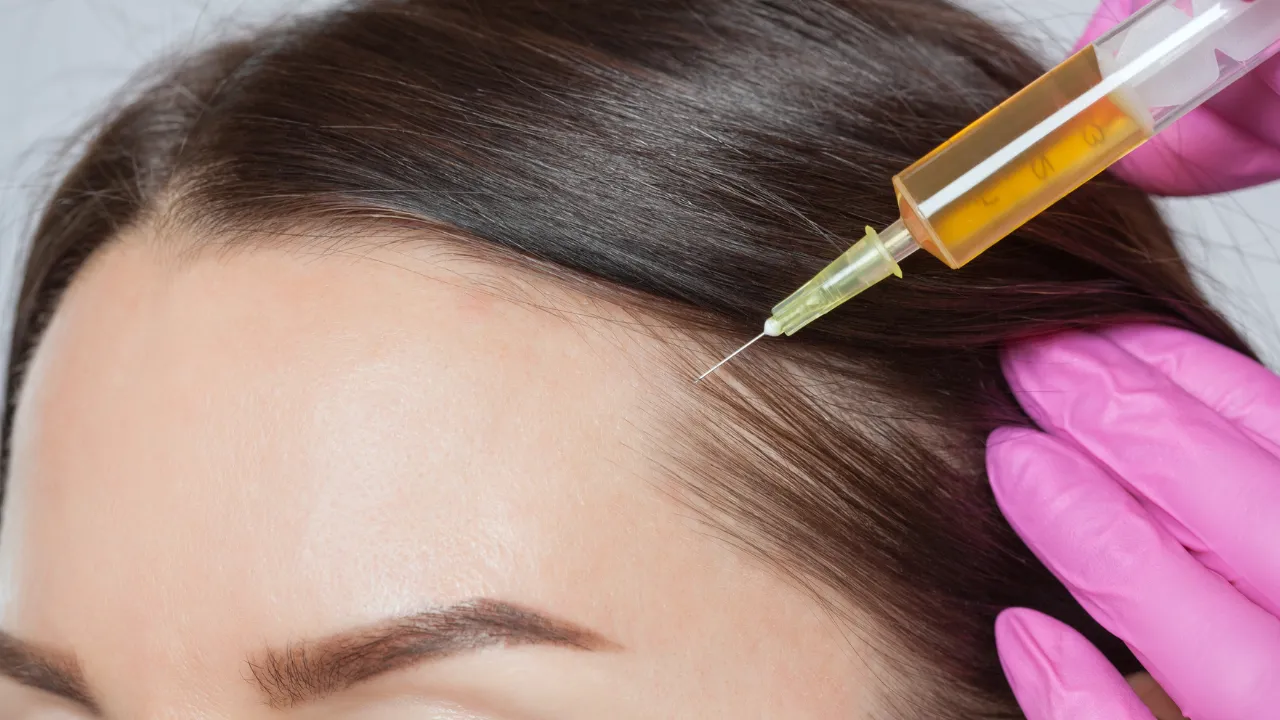
An eyebrow hair transplant moves follicles from another body area to the eyebrows. It may help when follicles no longer work due to scarring or long-term loss. This is why some patients researching an eyebrow transplant in NYC look into this approach for long-term eyebrow loss.
Transplanted follicles follow their original hair growth cycle. Final density depends on survival, placement, and healing.
Candidates and Long-Term Expectations
Candidates usually have stable hair loss and enough donor hair. Results depend on technique and aftercare. This option restores real hair, not just appearance.
If you have concerns about eyebrow hair loss or regrowth, you can schedule a consultation for a personal medical evaluation and guidance.