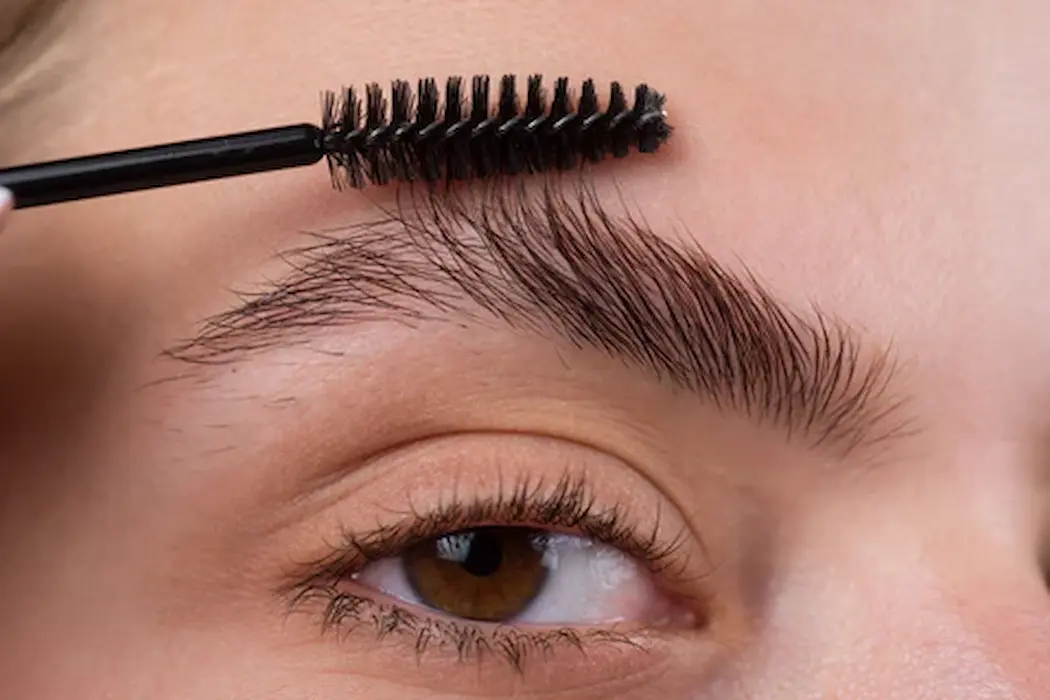

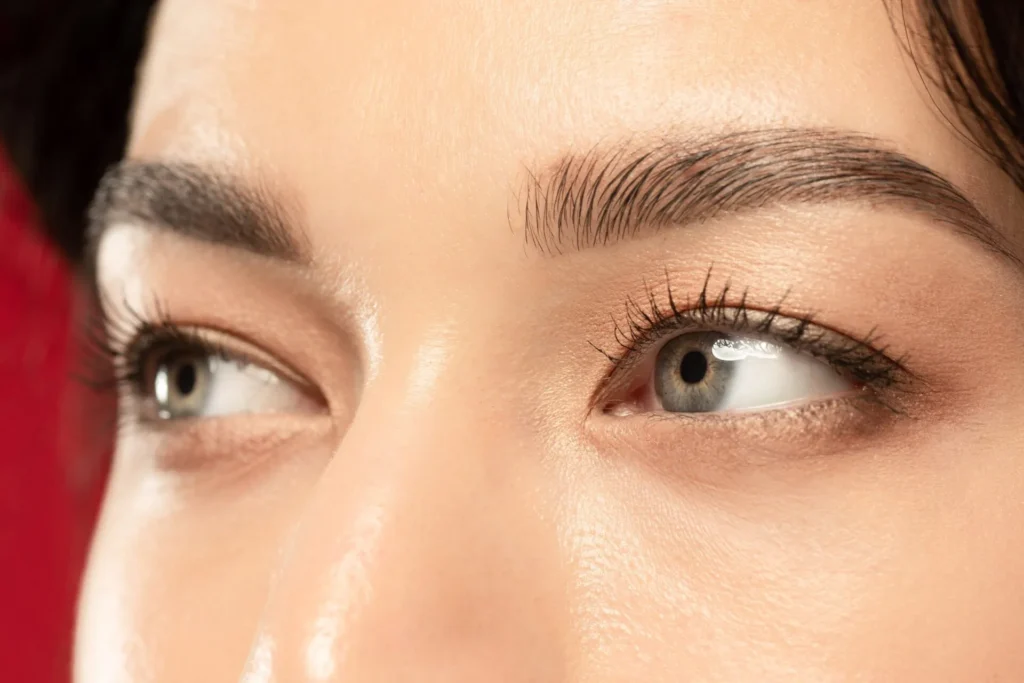
When asking how long it takes for an eyebrow transplant to grow, the answer is typically about 9–12 months for full results, although early changes begin sooner as part of the hair restoration process.
This article explains how long it takes for an eyebrow transplant to grow, what happens during each stage of regrowth, and what patients should realistically expect during eyebrow hair restoration recovery.
Key Takeaways
- Eyebrow transplant growth follows a gradual cycle, with early shedding and visible regrowth beginning months after transplantation surgery, while final results typically appear within 9-12 months.
- Temporary shedding after the eyebrow transplant procedure is normal and does not indicate transplant failure, as hair grafts remain active beneath the skin during healing.
- Transplanted eyebrow hair comes from the scalp donor area and can grow longer than natural eyebrow hair, which makes trimming and grooming part of long-term care.
- Growth speed and final appearance vary between patients, so timelines should be viewed as general guidelines rather than fixed outcomes.
How Long Does an Eyebrow Transplant Take to Grow?
The results are not immediate. After the eyebrow hair transplant, the transplanted hairs follow a biological cycle of healing, shedding, and regrowth, which aligns with the standard eyebrow transplant procedure steps. Visible changes usually begin several months after transplantation surgery.
In most cases, eyebrow restoration develops gradually, with meaningful improvements seen between 9 and 12 months. Density and texture improve as the hair grafts adapt to their new location. Growth timelines represent typical patterns rather than guaranteed outcomes.
Eyebrow Transplant Growth Timeline
Weeks 1 – 4: Healing and Shedding
During the first weeks, the skin begins the healing process, and small scabs form around each graft. These scabs fall off naturally as recovery progresses. Mild redness or swelling may occur but usually resolves without intervention.
Most transplanted hairs shed during this phase, which is known as shock loss. This can cause concern, but it does not mean the eyebrow restoration failed. The hair grafts taken from the donor area remain beneath the skin and are prepared for new growth.
Months 2 – 4: Early Regrowth
Between the second and fourth months, new eyebrow hairs begin to grow from the transplanted follicles. Early hairs may appear thin or uneven. Growth often varies across the eyebrow area. While regrowth starts here, full density has not yet developed.
Months 6 – 12: Final Results
From around six months onward, eyebrow hairs become thicker and more consistent. Density improves, and the brows take on a more stable appearance. By 9-12 months, most patients see their final result.
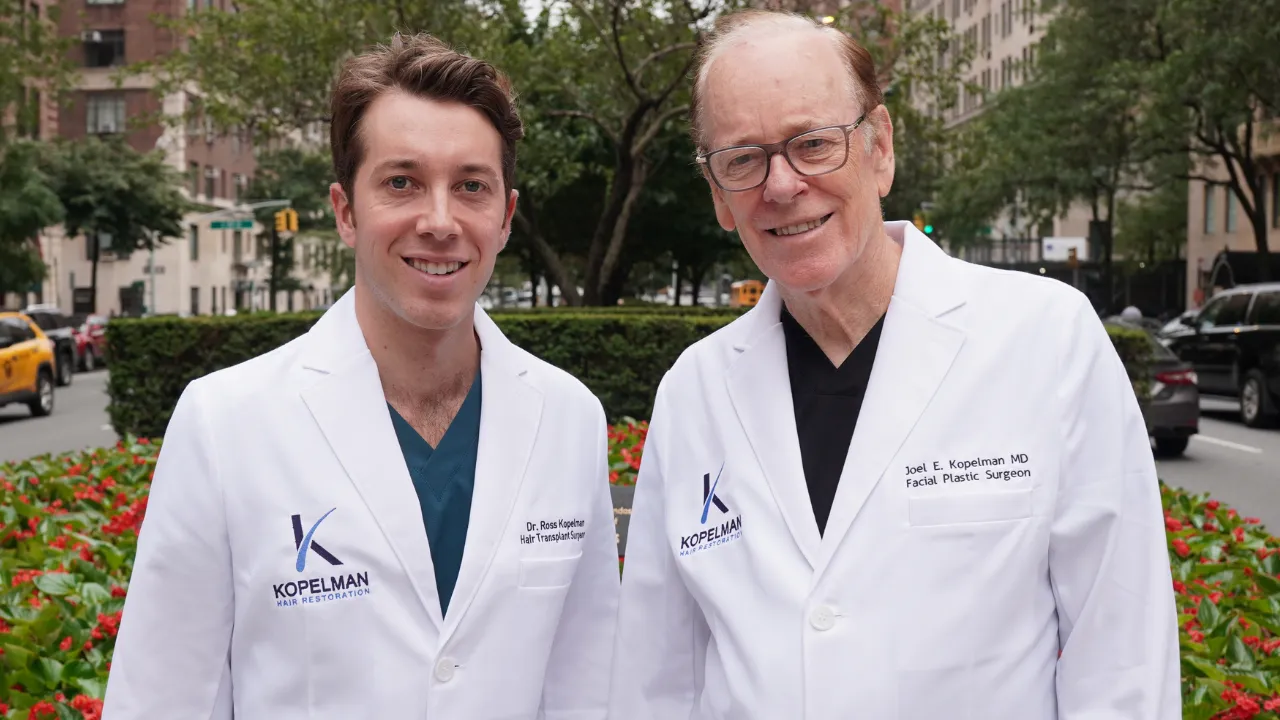
Some individuals continue to notice small refinements beyond this timeframe. Dr. Kopelman explains that this gradual change reflects the normal hair growth cycle rather than the eyebrow transplant procedure itself.
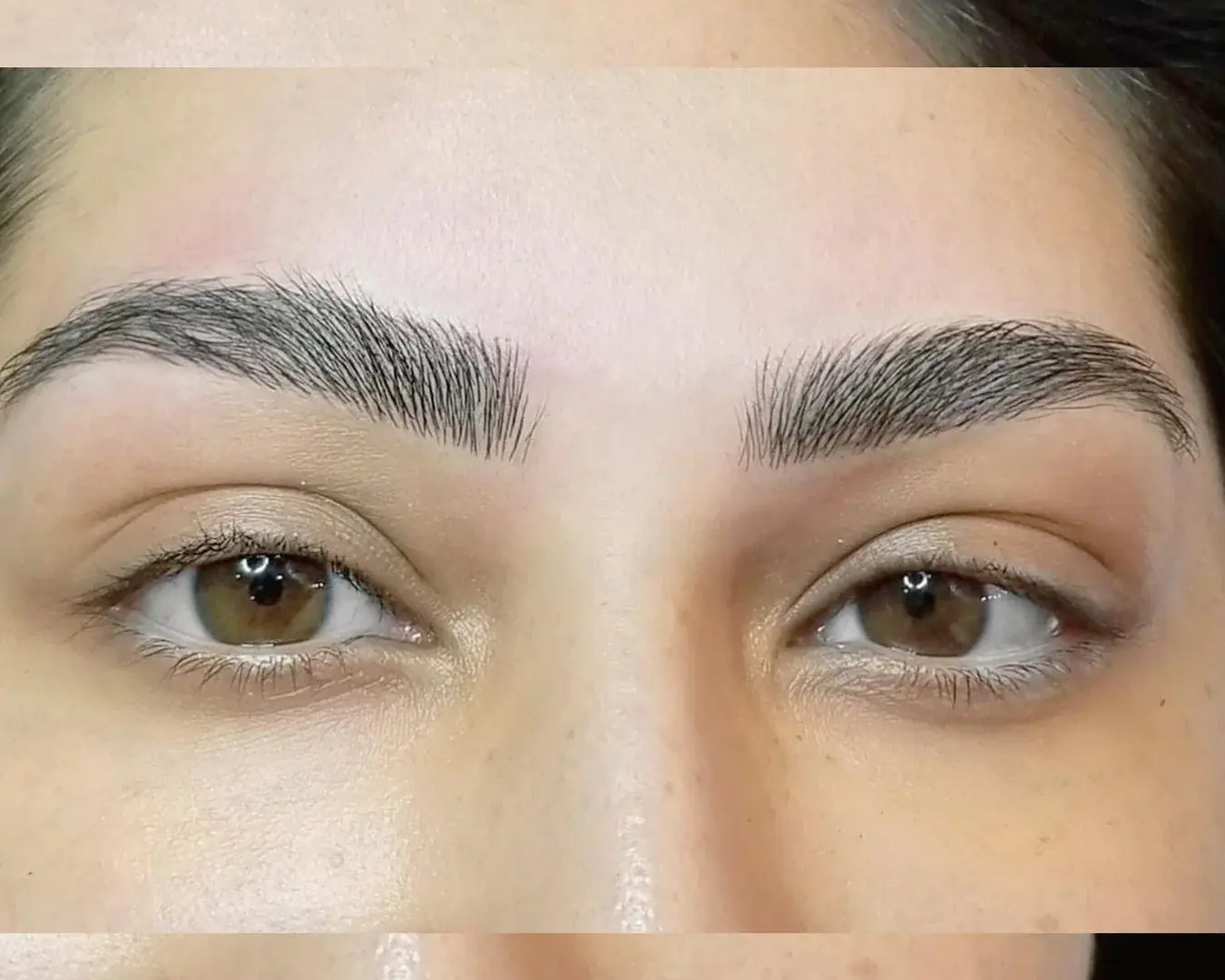
Eyebrow Transplant Before and After Results
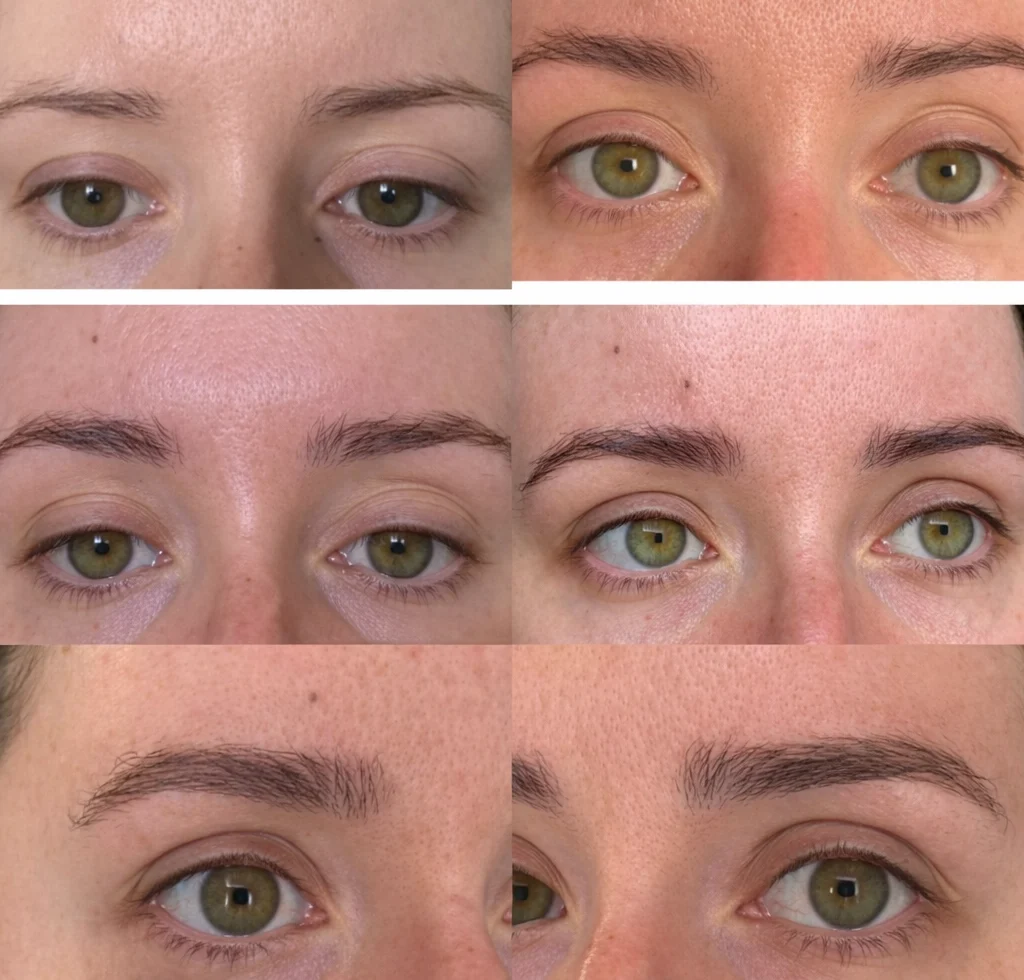
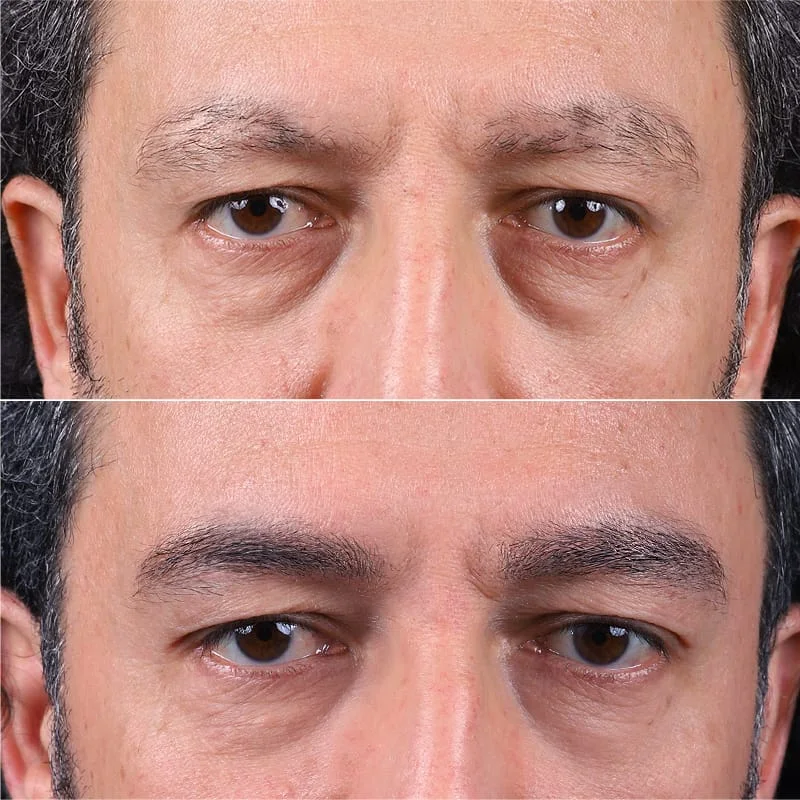
Before-and-after comparisons show how eyebrows change over time rather than immediately. Early images may show little difference due to shedding. Later images reveal increased density and improved shape.
These comparisons are best interpreted alongside the growth timeline. Individual healing and hair characteristics affect how eyebrow restoration results appear.
Do Eyebrow Transplants Grow Long?
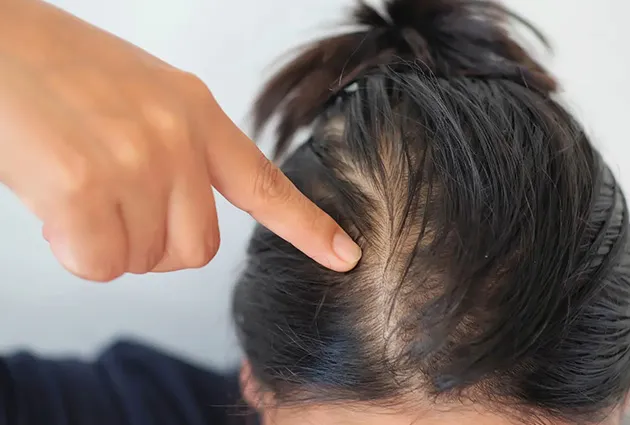
Eyebrow transplants use hair follicles harvested from the scalp donor area, so the transplanted hair keeps scalp growth behavior. As a result, transplanted eyebrow hair can continue to grow longer than natural eyebrow hair, as explained further in the do eyebrow transplants keep growing article.
Regular trimming is needed to maintain the desired length and shape. Most patients adapt easily to this routine once growth stabilizes.
Aftercare During Growth
When You Can Touch Grafts
During the first week after the eyebrow transplant procedure, grafts should not be touched unnecessarily. After about 7 to 10 days, the hair grafts become securely anchored in the skin. Gentle contact is usually safe at this stage.
Patients should still avoid rubbing or pressure for several weeks. Proper aftercare supports healthy healing following minimally invasive transplantation surgery.
Trimming and Grooming Transplanted Hair
Once regrowth begins, trimming becomes part of regular care. Small scissors are often used to keep hair at a natural length. Light grooming helps maintain shape as density improves.
Consistent grooming supports a balanced appearance over time as transplanted hairs continue to grow.
Why Growth Timing Varies
Not all patients experience the same growth speed or density. Several factors influence how long it takes for an eyebrow transplant to grow fully. These differences are biological rather than surgical quality-related.
Eyebrow transplantation surgery often uses Follicular Unit Extraction (FUE), a minimally invasive method that removes individual follicles from the donor area. Blood supply, healing response, and hair growth cycles all affect how quickly follicles begin producing new hair. Because these factors vary, timelines should be seen as general estimates rather than exact predictions.
If you are experiencing eyebrow hair loss and want to understand whether eyebrow transplantation is an appropriate option, a medical consultation can help clarify timing, expectations, and suitability.
Scheduling an evaluation allows a qualified specialist to review your concerns and explain available hair restoration options, including eyebrow transplant in NYC, based on your individual situation.