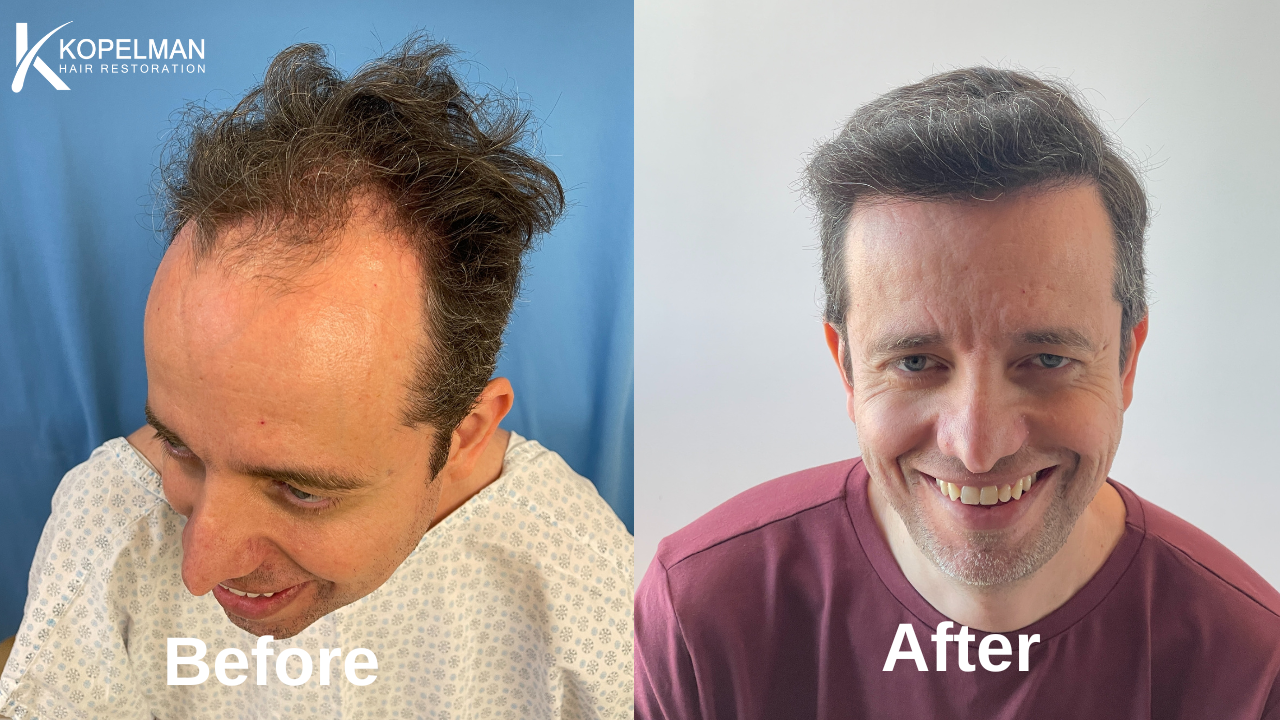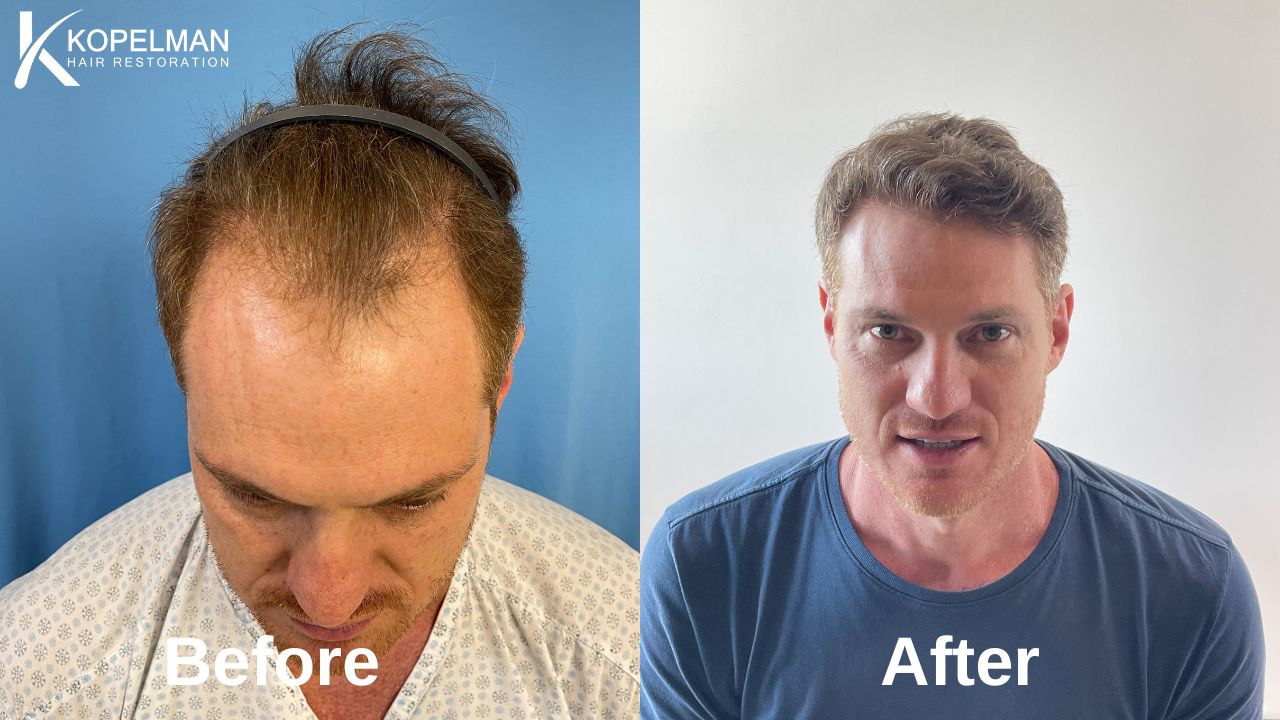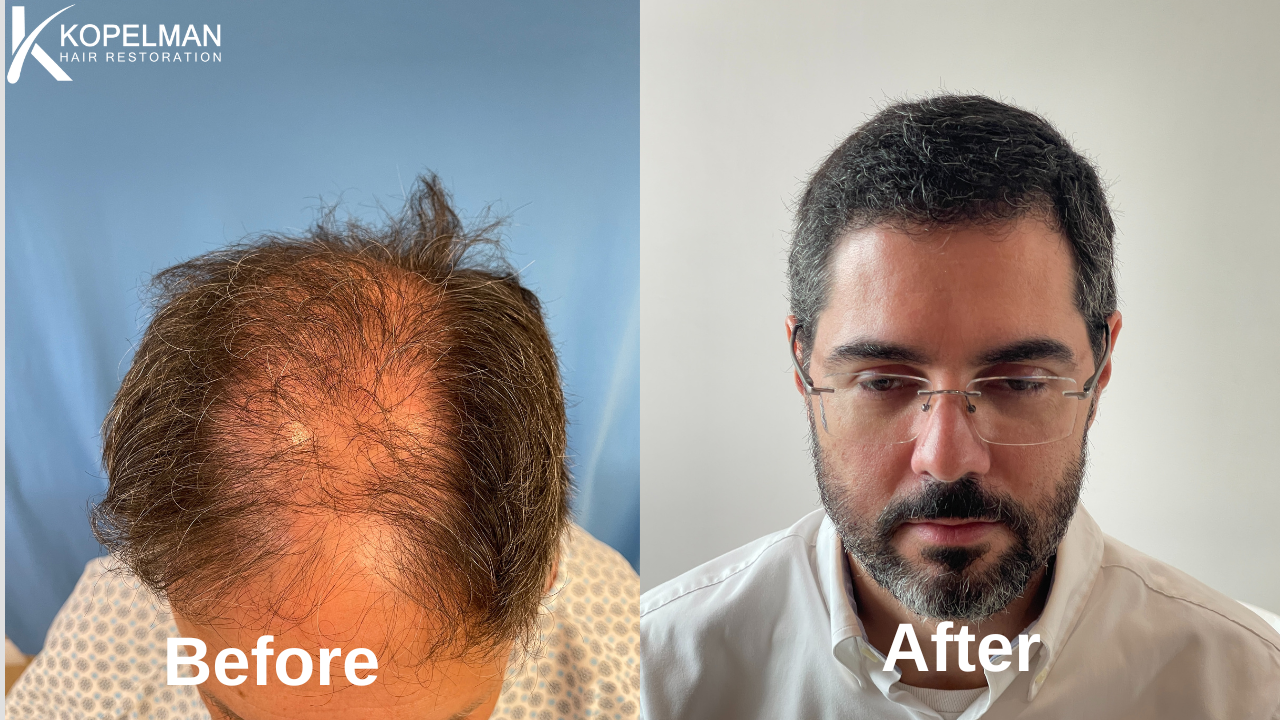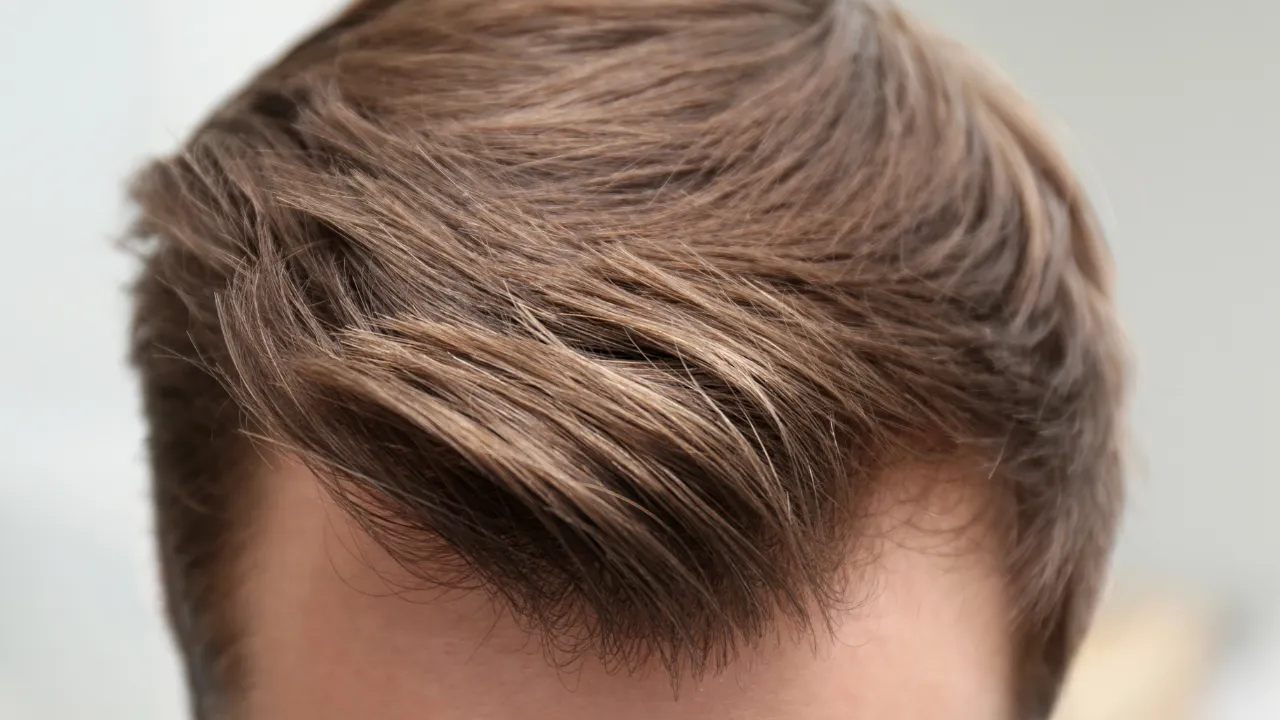

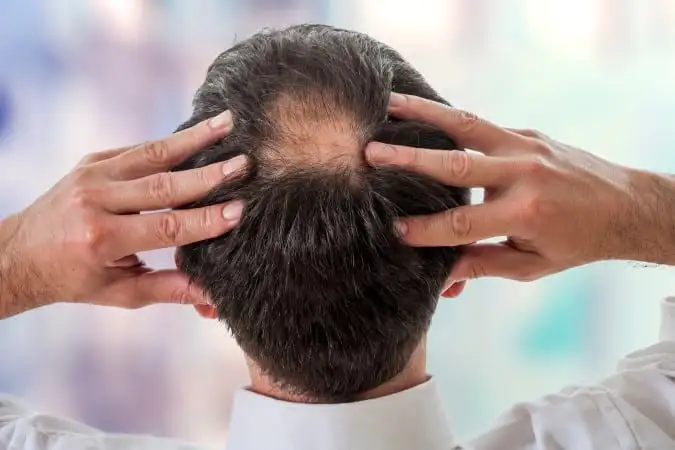
If you are in your 20s or early 30s and noticing this, you are far from alone. Research suggests a meaningful share of men experience some degree of thinning before age 30, so balding at the crown at a young age is more common than most people expect. This stage is also highly treatable when caught early, since the follicles are usually still active.
Common options include Minoxidil, Finasteride, and lifestyle adjustments that support a healthier scalp. Early action improves the odds of slowing progression and rebuilding density over time.
At Kopelman Hair, we treat conditions such as a balding crown using advanced, patient-focused solutions. Our clinic brings decades of experience to help individuals restore confidence and fuller coverage. Knowing what crown baldness is and how to address it can make a lasting difference.
Key Takeaways
- A balding crown refers to thinning at the top back of the scalp and is one of the earliest signs of androgenetic alopecia.
- Early detection with mirrors or photos helps you spot crown thinning before it progresses, keeping more treatment options open.
- Crown thinning often follows predictable stages, and men and women experience it differently due to genetic and hormonal factors.
- Treatments like minoxidil, finasteride, PRP therapy, and transplants can be effective, especially when guided by a specialist like Dr. Kopelman.
- Lifestyle changes, proper scalp care, and timely medical evaluation can slow the process and support long-term scalp health.
What Is a Balding Crown and Why Does It Happen
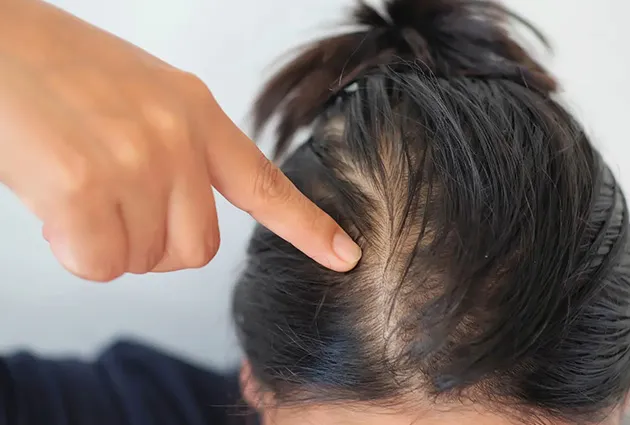
The balding crown refers to thinning or follicle loss that begins at the top, back part of the scalp. This is a common presentation, particularly among those with androgenetic alopecia. Many people first notice it in photos, mirrors, or others’ comments.
In contrast to regular shedding, a balding crown creates a visible, sparse area that may expand gradually. Some confuse it with natural parting or lighting effects, but close observation often reveals a clear pattern.
So why does balding start at the crown rather than elsewhere? Hair in this region is genetically more reactive to hormonal changes, especially DHT, which weakens and shrinks the follicles over time.
Crown balding may start as a small circular spot and slowly widen. In advanced stages, it can merge with a receding hairline and thin the entire top of the head.
How to Check for a Balding Crown at Home
Early detection gives you more treatment options and better outcomes. To check for vertex thinning at home, use a well-lit room and a handheld mirror or smartphone camera. Focus on the top back of your head, where sparse areas may not be visible from the front.
Here are simple ways to self-check:
- Compare old and recent photos taken from above
- Ask a trusted person to inspect your crown area
- Look for widening circles or a visible scalp under strong light
- Check whether strands in that area feel finer or lack density
If you are unsure, consult a specialist like Dr. Kopelman.
Crown Hair Loss Stages Explained
Thinning at the crown often follows a predictable pattern, especially in men. This is commonly described using the Norwood scale, which identifies the different stages of male pattern baldness. Understanding these stages can help patients track their condition and choose the right approach.
Here is how crown thinning typically progresses in men:
- Stage 3 Vertex – A small bald spot appears at the crown
- Stage 4–5 – The spot widens and may connect with frontal hairline recession
- Stage 6–7 – The crown merges with other sparse areas, leaving minimal coverage on top
In women, thinning at the crown is more diffuse and not always captured by the Norwood scale. Female pattern hair loss often begins with widening of the part or thinning across the top.
Who It Affects: Men, Women, and Early Signs
Crown thinning affects both men and women but follows different patterns. Men typically develop a defined bald spot that expands outward, while women may see diffuse thinning that is less immediately visible.
Is Crown Thinning Normal at a Young Age?
One of the most common worries is whether thinning this early is normal. It often is. Androgenetic alopecia can begin in the late teens or 20s, and many men first notice a sparse crown well before they expect to.
Curly or fine-haired individuals may spot it sooner, since the scalp shows through more easily in early stages. Noticing it young does not mean rapid baldness is inevitable; it usually means you have caught it at the most treatable point.
A specialist evaluation can clarify what stage you are in and what to do next.
Balding Crown in Men and Women
Recession at the temples often appears alongside vertex thinning. This combined pattern may signal progressive loss and usually calls for a broader treatment plan.
Premature Balding and Early Signs
Premature thinning, especially before age 30, may have a genetic component or be triggered by stress, hormonal imbalances, or underlying conditions.
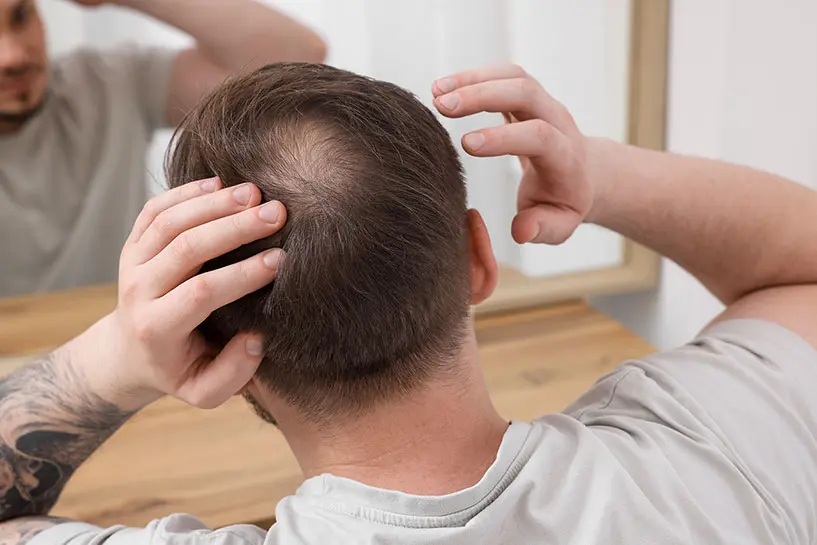
In some cases, telogen effluvium, a temporary type of shedding, can cause sudden hair fall due to illness, medication, or major life changes.
How Can You Tell If You Have Alopecia?
How can you tell if you have alopecia? Look for consistent thinning, patchy shedding, or noticeable changes in texture. Persistent or localized loss should be evaluated by a restoration specialist.
Genetic vs. Lifestyle Causes
Crown baldness is most commonly inherited. A genetic sensitivity to DHT leads to the gradual shrinkage of follicles at the vertex, a predictable, usually progressive pattern.
A clinical review of androgenetic alopecia in the National Library of Medicine outlines how this hormonal mechanism drives most cases.
Other factors may accelerate the process:
- Hormonal changes, such as thyroid disorders or post-pregnancy shifts
- Chronic stress or emotional strain
- Nutrient deficiencies, especially iron, zinc, and vitamin D
- Smoking, poor sleep, or excessive styling damage
- Medical conditions like autoimmune diseases, anemia, or PCOS
These are among the most common triggers of thinning, and understanding them is key to effective treatment. Dr. Kopelman evaluates these elements to design a plan based on your specific cause.
Can a Balding Crown Grow Back?
Regrowth is possible in many cases, especially when addressed early. If the follicles are still active, treatment may stimulate stronger, healthier strands. However, once follicles close entirely, regrowth becomes difficult without surgical intervention.
Factors like age, genetics, and the duration of thinning all affect outcomes. If you have noticed a sparse crown only in recent months, you may still have good potential for regrowth. Dr. Kopelman advises early assessment to identify the best path forward.
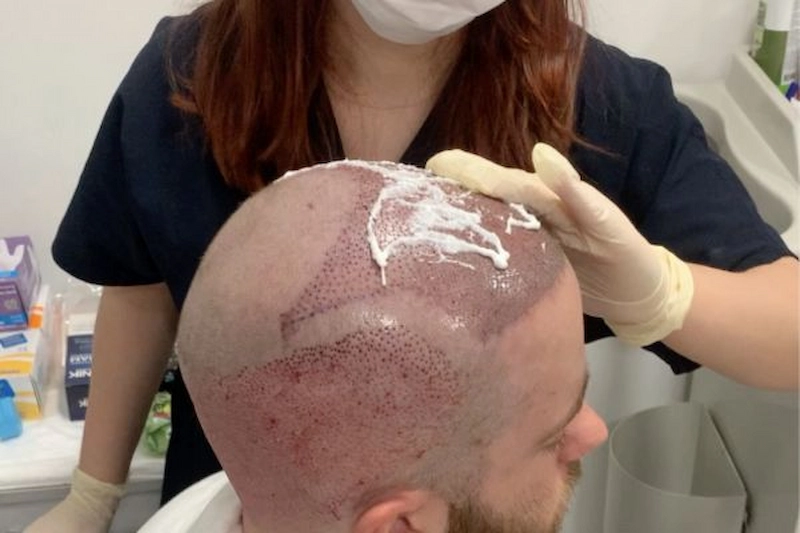
For mild to moderate cases, regrowth is often supported by medication or non-invasive therapies. In severe cases, a transplant may be the most effective way to restore density at the vertex.
Treatment Options for Crown Hair Loss
There are several crown balding treatment paths depending on the extent and cause of the thinning. Because the vertex responds differently from the frontal scalp, matching the method to your stage matters. The most common options include:
- Topical treatments like minoxidil to improve blood flow and extend the growth phase
- Oral medications such as finasteride to block DHT at the hormonal level
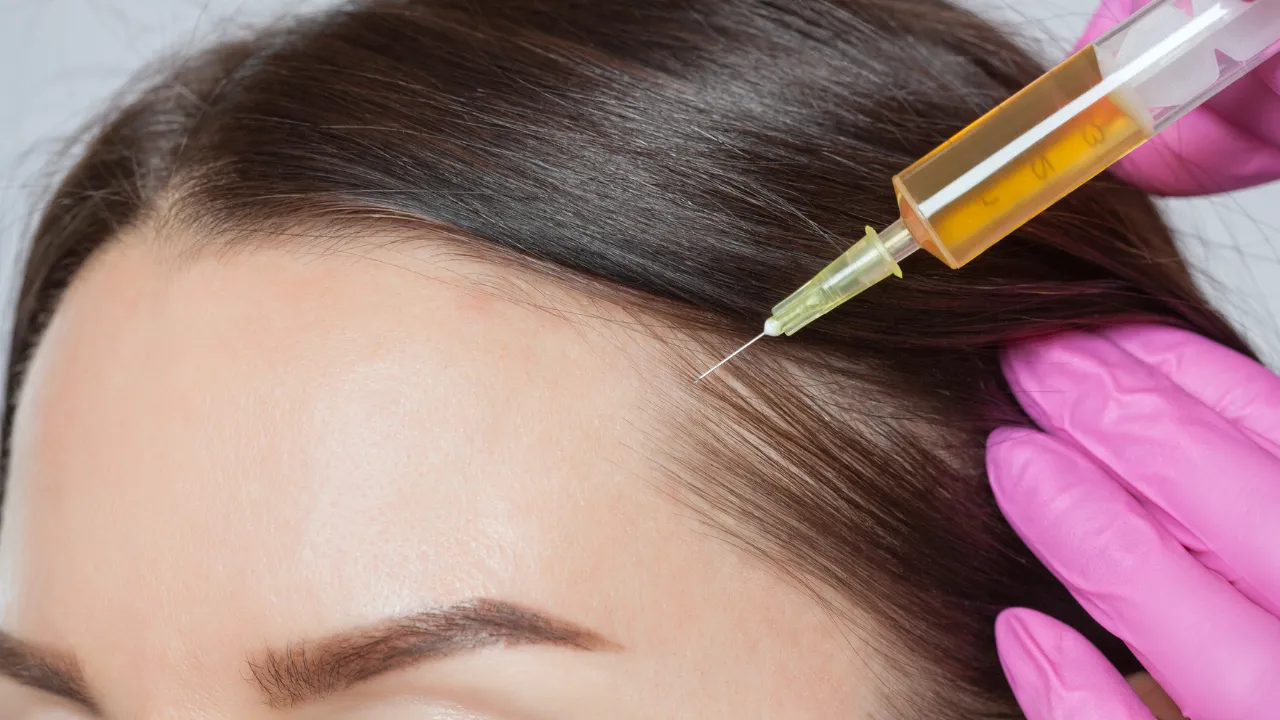
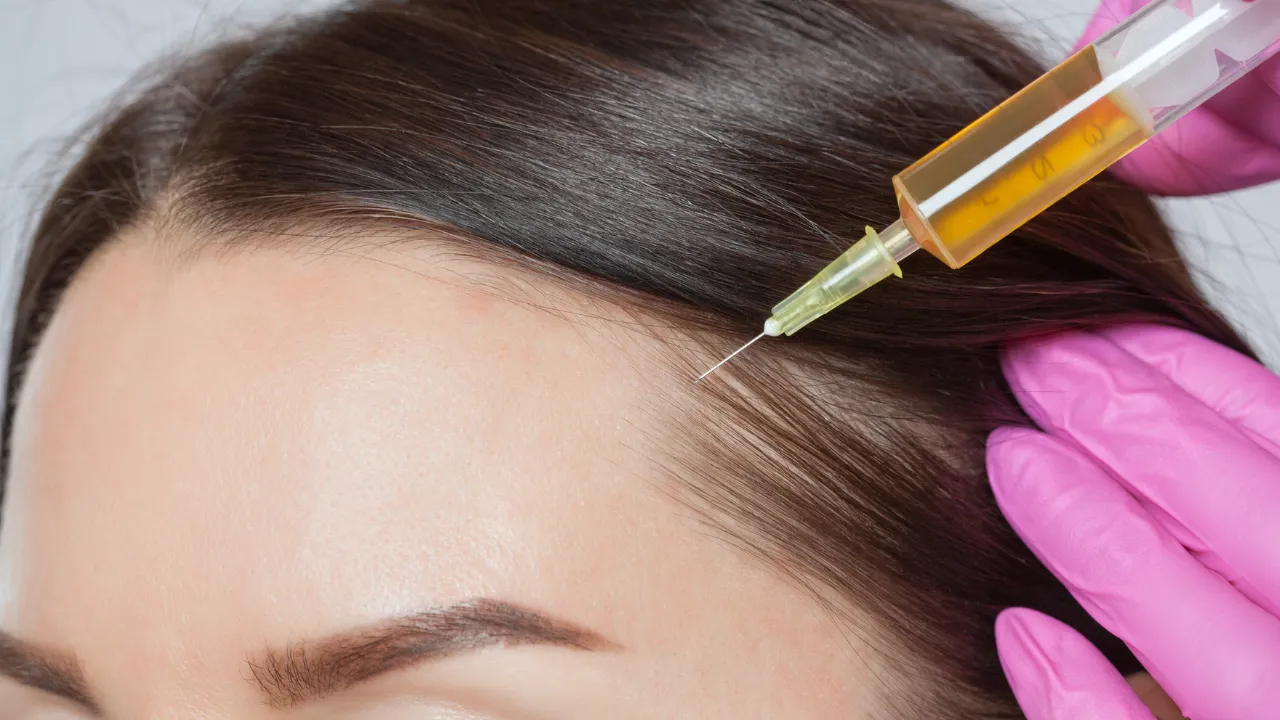
- Platelet-rich plasma (PRP) therapy to rejuvenate dormant follicles
- Low-level laser therapy (LLLT) for consistent at-home use
Here is how the leading non-surgical options compare in practice: