
At Kopelman Hair, we carefully assess whether eyebrow thinning is cosmetic or linked to a medical cause such as a thyroid disorder, including patterns seen in alopecia eyebrows.
Key Takeaways
- Thyroid eyebrows refer to thinning of the outer portion of the brows, often caused by low or unstable thyroid function that disrupts the normal growth cycle.
- Loss of density in the outer third of the eyebrows, called the Queen Anne sign or Hertoghe sign, is a recognized clue linked to hypothyroidism, but it is not a diagnosis on its own.
- Blood tests measuring thyroid function are required to confirm thyroid dysfunction, since appearance alone cannot provide an accurate diagnosis.
- In many cases, eyebrow regrowth is possible once thyroid medication restores hormone balance, though recovery may take several months and depends on early treatment.
Does Thyroid Dysfunction Affect Your Eyebrows?
Yes, thyroid dysfunction can affect your eyebrows. The thyroid gland controls how your body uses energy, and it also supports healthy follicles. When thyroid function drops, growth slows and follicles enter the resting phase too soon. Over time, this shows up as eyebrows falling out at the edges, thinning, and reduced density.
Both an underactive and an overactive thyroid can thin scalp hair, usually when the condition is severe or long-standing. Scalp shedding from either condition tends to be diffuse rather than patchy (British Thyroid Foundation). The outer-brow pattern, however, is classically tied to hypothyroidism.
How the Thyroid Gland Controls Hair Growth
The thyroid makes two main hormones, T4 and T3, that help cells grow and repair, including the cells that build each brow strand. Without enough of them, strands become thin and weak.
Low hormone output can cause:
- Slower growth
- More time in the resting phase
- Finer strands
- Delayed regrowth
These changes can result in thyroid-related eyebrow loss and may overlap with conditions such as diffuse alopecia.
Why Eyebrows in Hypothyroidism Thin
Eyebrows in hypothyroidism often thin at the outer edge, although the reason this area changes first is not fully understood. The outer third may become sparse while the inner brow stays fuller. The thinning is slow and even, and it is known as hypothyroid eyebrows.
Not everyone with an underactive thyroid develops this sign. It also differs from alopecia areata, which causes sudden, round patches because the immune system attacks follicles directly.
Hashimoto’s Eyebrows and Autoimmune Causes
Hashimoto’s thyroiditis is the most common cause of hypothyroidism (NIDDK). The immune system attacks the thyroid gland, which then cannot make enough hormone. Eyebrow changes in Hashimoto’s follow the same outer-third pattern as other causes of an underactive thyroid, because the effect on follicles comes from low hormone output.
Graves’ disease, the most common cause of an overactive thyroid, is also autoimmune (NIDDK).
Most people with an underactive or overactive thyroid have an autoimmune form, and alopecia areata occurs more often in these patients than expected (British Thyroid Foundation). This is why proper testing is necessary, especially to separate thyroid-related thinning from autoimmune hair loss such as alopecia areata, including its widespread form, alopecia areata universalis.
What Do Thyroid Eyebrows Look Like?
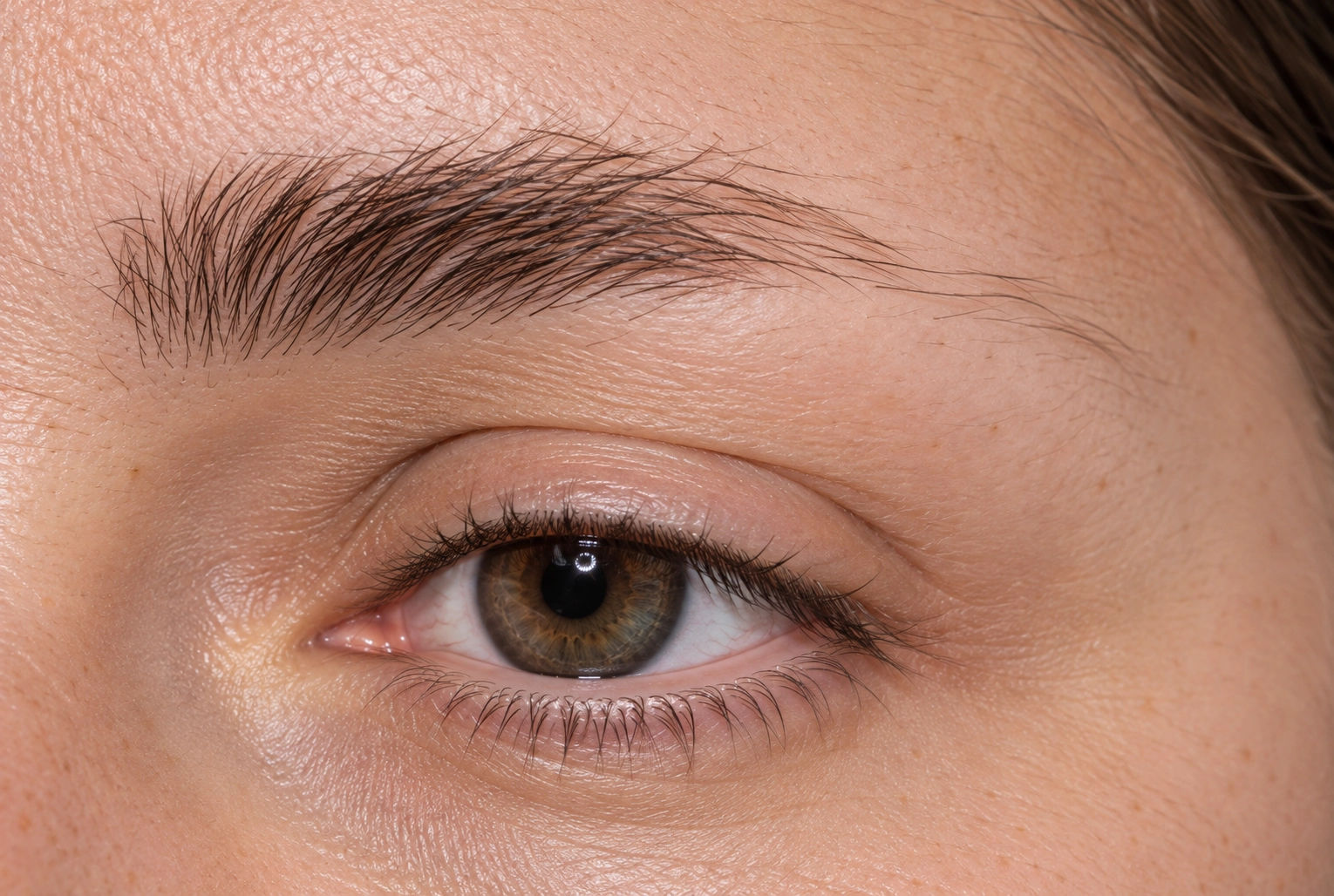
Thyroid hair loss in the brows looks like gradual thinning, not bald spots. The outer brow tail becomes lighter and sparser, while the inner brow often stays fuller.
Common features include:
- Loss of density at the brow tail
- Even thinning on both sides
- A flatter brow shape
- Dry or coarse texture
When this pattern appears alongside other symptoms, including diffuse scalp shedding, the link between eyebrows and hypothyroidism becomes more likely. Scalp shedding has many causes, and our guide to inflammation and hair loss covers one of them.
Hypothyroid Eyebrows and the Queen Anne Sign
The Queen Anne sign is another name for the Hertoghe sign, the thinning of the outer brow seen in thyroid disorders. It can be one of the early clues.
Some patients also notice thinner eyelashes and dry or brittle scalp strands. These changes reflect the same slowed growth cycle.
Early Signs of Hypothyroidism
Eyebrow thinning rarely occurs alone. Hypothyroid symptoms usually develop slowly, sometimes over months or years (NIDDK).
Common symptoms include:
- Fatigue
- Weight gain
- Cold sensitivity
- Dry skin
- Constipation
- Slow heart rate
If eyebrow loss appears with these signs, ask your doctor about thyroid blood tests.
Itchy Eyebrows and Thyroid Disease
Dry skin can extend to the brow area and cause itchy eyebrows. Itchy eyebrows have many common causes, including dryness, seborrheic dermatitis, and eczema. Dry skin is a common symptom of hypothyroidism (NIDDK), so itching points toward the thyroid only when it appears with outer-brow thinning and the symptoms above.
Diagnosis and Thyroid Testing
Doctors cannot confirm thyroid dysfunction by appearance alone, and symptoms overlap with many other conditions. Blood tests are required to measure thyroid hormone levels (NIDDK).
Doctors often check:
- Thyroid-stimulating hormone (TSH)
- Free T4
- Free T3
- Thyroid antibodies
These tests confirm whether a thyroid disorder is present. If you take biotin for hair or nails, tell your doctor first. Biotin can distort thyroid test results, and an American Thyroid Association patient summary advises stopping it at least three to five days before testing (American Thyroid Association). Your doctor can confirm the timing for your lab.
Differentiating From Other Causes of Loss of Eyebrow
Outer-brow thinning has several possible causes, so doctors rule out other explanations before attributing it to the thyroid.
| Possible cause | Typical pattern |
|---|---|
| Hypothyroidism | Gradual, even thinning of the outer third |
| Hypopituitarism | Pituitary disorders can lower thyroid output, so the thyroid-related pattern can appear for this reason (NIDDK) |
| Atopic dermatitis (eczema) | Outer-brow thinning with itchy, inflamed skin (Journal of Pediatrics) |
| Alopecia areata | Sudden, round patches |
| Over-plucking | Patchy loss where brows were tweezed |
| Nutritional problems | Diffuse thinning, such as with low iron |
| Aging | Slow loss of density over time |
At Kopelman Hair, Dr. Kopelman advises medical testing before cosmetic treatment.
Treatment and Regrowth: Will Eyebrows Grow Back?
Many patients ask if hypothyroidism eyebrows grow back. In many cases, they do. Most thyroid-related eyebrow loss is temporary, although regrowth takes several months and may be incomplete (British Thyroid Foundation).
Thyroid Medication and Hormone Balance
Levothyroxine is the standard treatment for hypothyroidism. It replaces the hormone the gland can no longer make, and doctors usually recheck blood work about 6 to 8 weeks after starting to adjust the dose (NIDDK). Once levels are stable, follicles can return to the growth phase.
Hormone balance usually takes several weeks to reach. The timeline below starts once levels are stable.
Consistency with thyroid medication is important, and a dose should never be stopped or changed without a doctor.
Some supplements contain iodine or interfere with levothyroxine absorption, so ask your doctor before adding any (British Thyroid Foundation). If your doctor finds a vitamin D deficiency, our guide to the best vitamin D for hair loss covers vitamin D options.
Before and After Hypothyroidism Eyebrows
Before and after hypothyroidism eyebrow changes appear gradually, and the outer third fills in slowly. A typical pattern, which varies from person to person, looks like this:
| Time after thyroid levels stabilize | What may happen |
|---|---|
| 1 to 2 months | Shedding may ease, with little visible regrowth |
| 3 to 6 months | Early regrowth often becomes noticeable if follicles are still viable |
| 6 to 12 months | Fuller recovery may continue, though some people stay thinner than before |
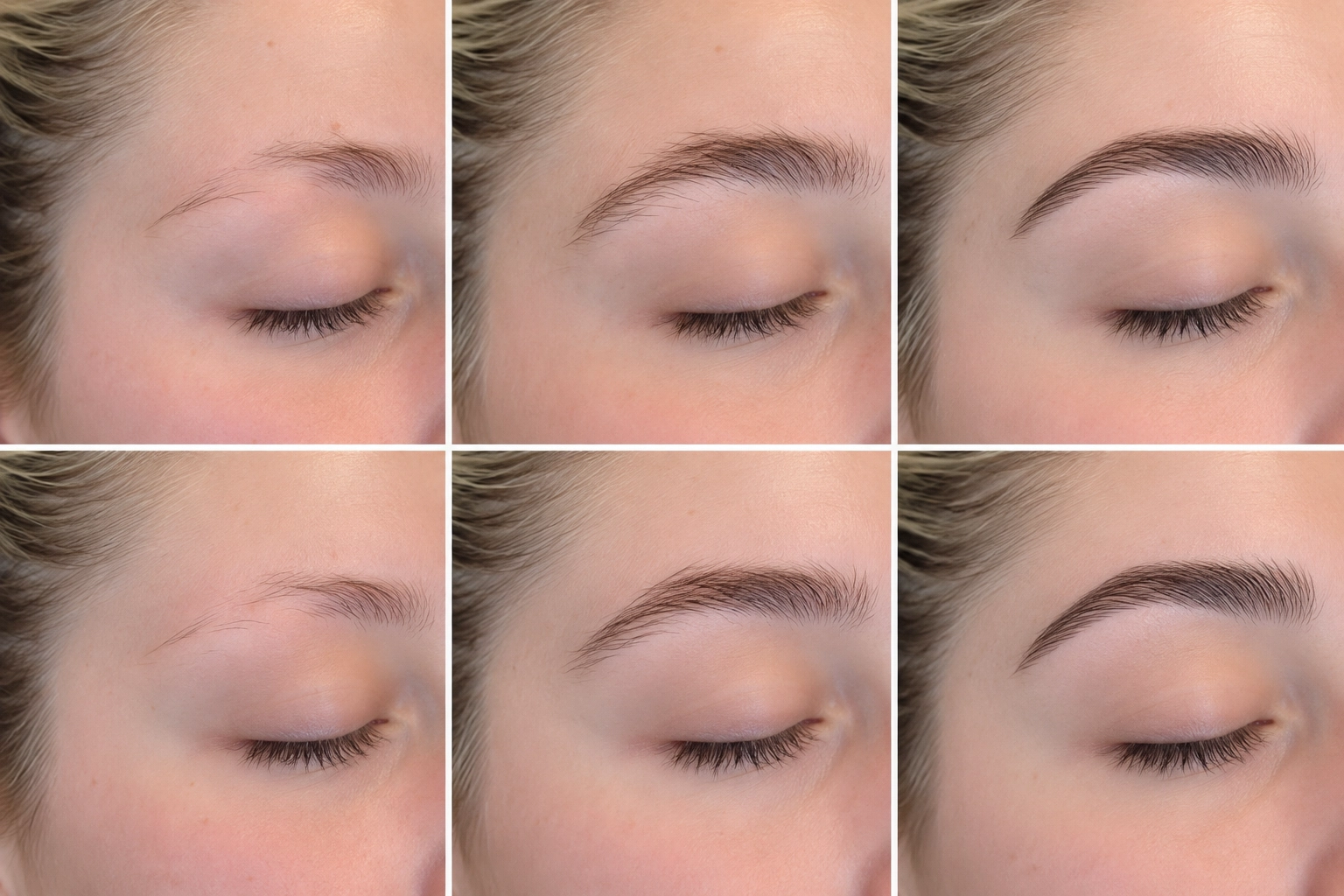
If thyroid dysfunction remains untreated for a long time, regrowth may be slower or incomplete.
If Eyebrows Do Not Fully Return
If brows stay thin after thyroid levels have been stable for several months, a dermatologist can discuss topical options such as minoxidil or bimatoprost, which were compared in a randomized trial for eyebrow enhancement (PubMed). These products are used close to the eyes, so use them only under medical guidance. Brow makeup or semi-permanent pigment can help in the meantime.
For areas where follicles no longer produce strands, an eyebrow transplant moves donor follicles, usually from the scalp, into the brow. Dr. Kopelman recommends correcting the medical cause first, because ongoing shedding can affect results.
Candidacy and recovery are covered in our guide to eyebrow transplant pros and cons, and patient examples appear in the eyebrow transplant before and after gallery.