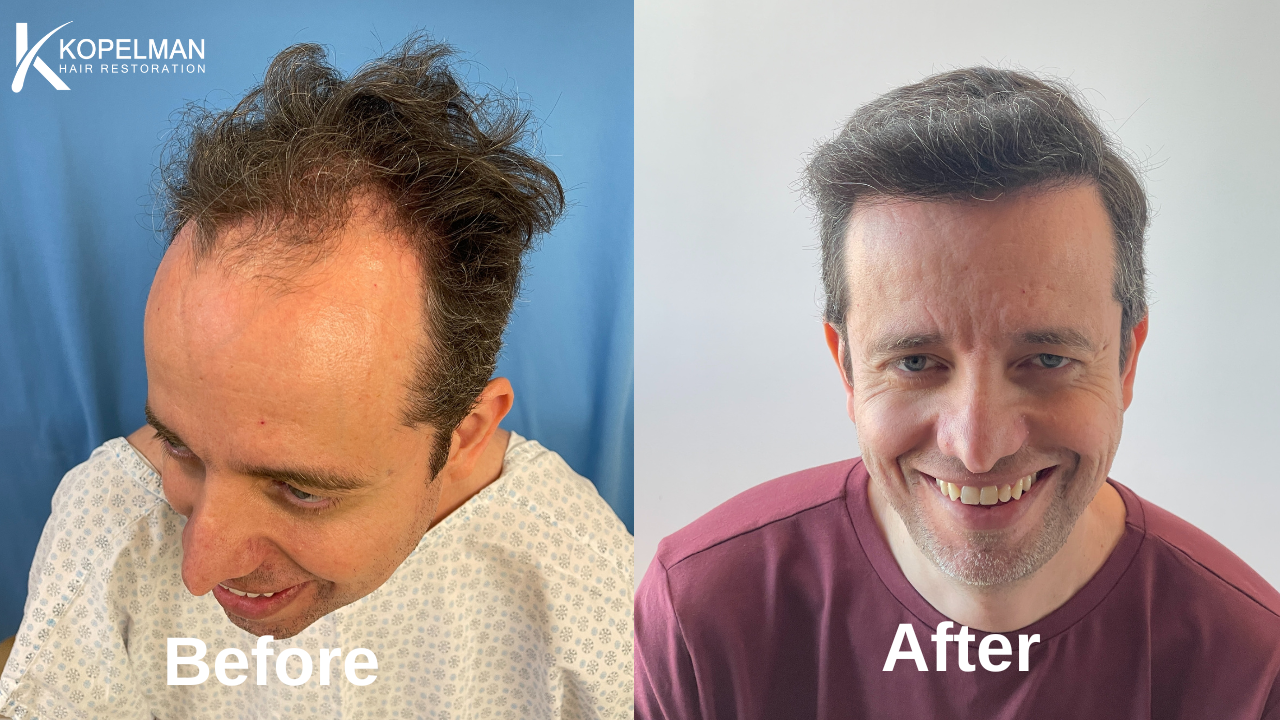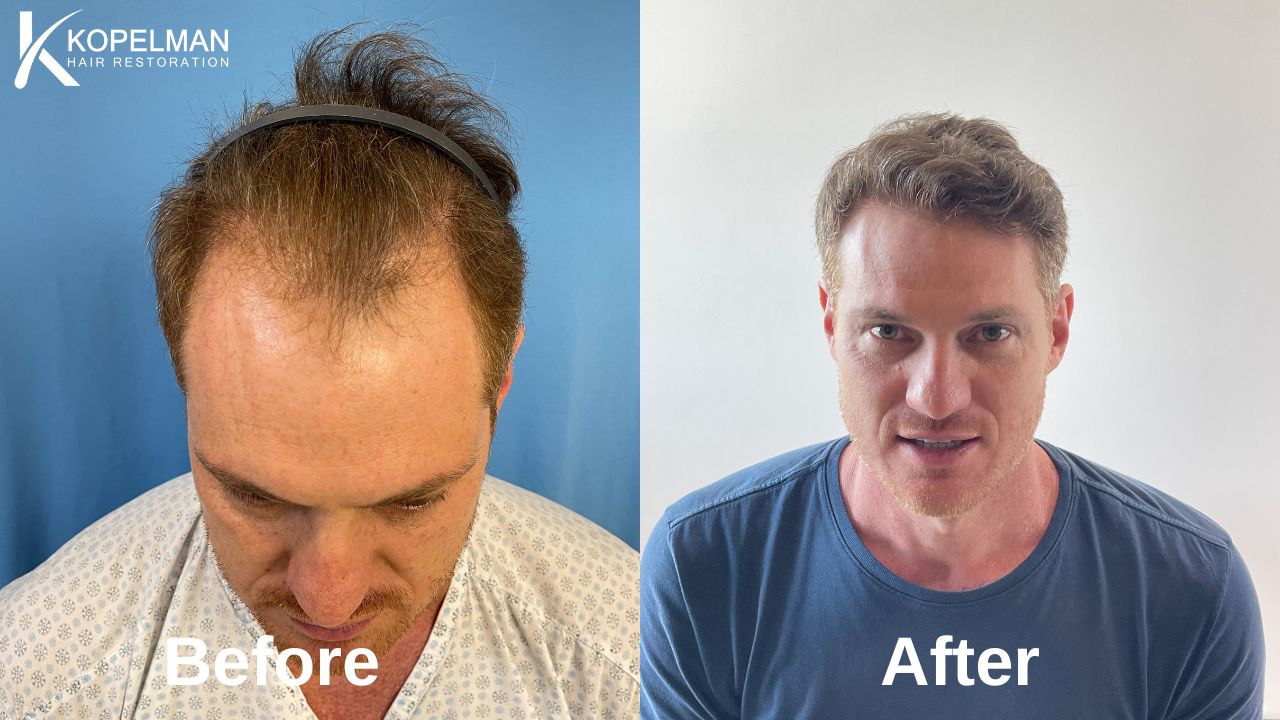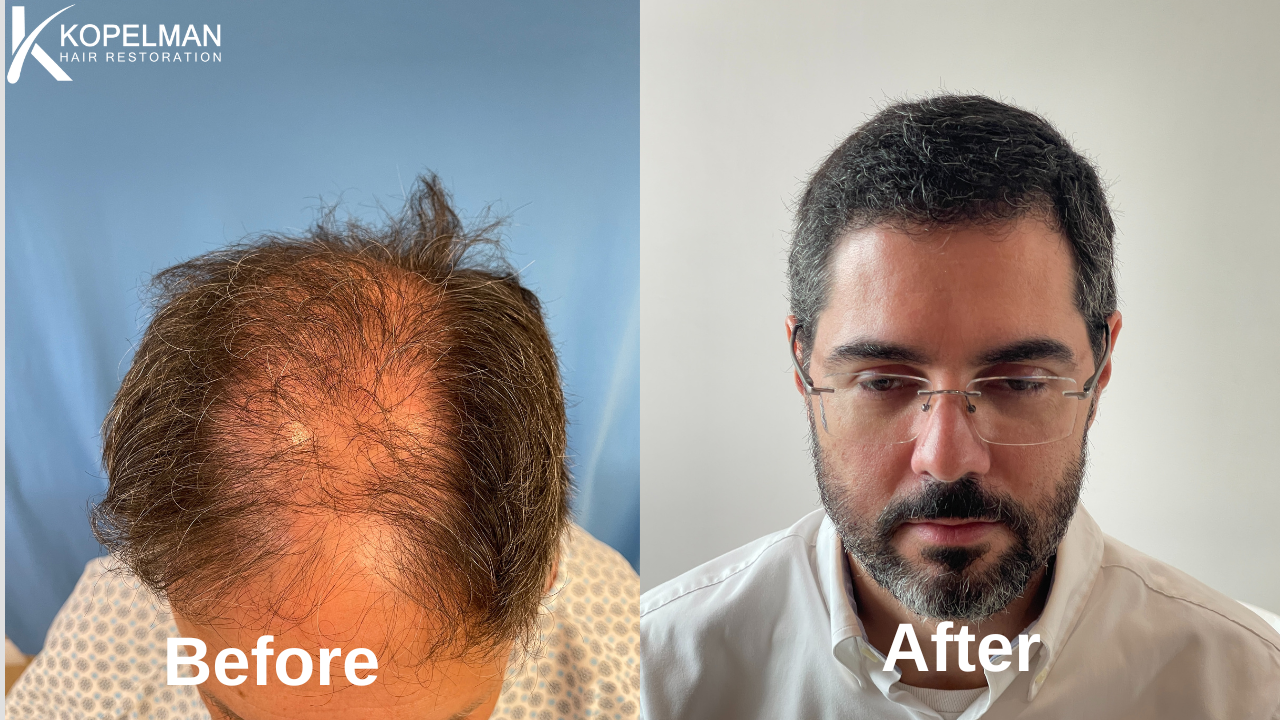

At Kopelman Hair, restoration goes beyond procedures; nutrition is part of the plan. Many patients ask which supplement to choose once they notice thinning or sluggish regrowth. This guide explains how the nutrient supports healthy strands and which form works best, based on current science and clinical experience.
“In my practice, addressing a low reading has meaningfully helped patients with unexplained thinning,” says Dr. Kopelman. “It is one of the first lab values I check when evaluating hair loss causes.”
Key Takeaways
- Vitamin D3 supports follicle activity and can reduce shedding when a deficiency is present.
- A 25(OH)D blood test confirms whether you are low before you start any supplement.
- D3 outperforms D2 and is best taken daily with a meal that contains some fat.
- Staying under 4,000 IU per day is generally considered a safe limit without medical supervision.
- Regrowth usually begins within about 8 to 12 weeks once a deficiency is corrected.
How Vitamin D Supports the Growth Cycle
Follicles carry vitamin D receptors, and those receptors help trigger the move into the anagen, or active growth, phase. When the receptor signal is weak, follicles can stall, which shows up as extra shedding or slow regrowth. This pattern is most common in telogen effluvium and alopecia areata.
The strongest evidence comes from genetics. People and animals with nonfunctional receptors develop patchy baldness, suggesting that the receptor itself matters for the cycle. Restoring a healthy serum level removes one obstacle and builds a steadier foundation for other treatments to work.
A shortfall is not always the trigger behind thinning. Because of that, supplementation works best alongside expert care rather than as a stand-alone fix.
How to Tell If You’re Running Low
A 25-hydroxyvitamin D, or 25(OH)D, blood test is the only reliable way to know your status. Ask your provider for it rather than guessing from symptoms, since fatigue and shedding overlap with many conditions.
Use your number as a guide. Ranges vary slightly by lab and guideline, so review your result with your doctor.
Test before you supplement. If something else is driving your shedding, adding pills will not help and may cost you months of guesswork.
D2 vs. D3: Which Form to Choose
Supplements come in two forms: D2 (ergocalciferol) and D3 (cholecalciferol). Both raise blood levels, but D3 is more potent and stays active longer, so it is the preferred choice for correcting a shortfall.
Common Supplement Forms
- Softgel capsules
- Liquid drops
- Tablets and chewables
- Gummies
Liquid drops and softgels tend to be well absorbed, since the nutrient is fat-soluble. Pairing D3 with zinc or biotin may add scalp support, and some formulas include vitamin K2 to help direct calcium toward bone.
How to Choose the Best Vitamin D Supplement for Growth

Once you know you are low, a few practical factors separate a strong product from a weak one. Match the strength to your lab result, not to marketing claims; higher is not automatically better.
Common daily strengths include:
- 1,000 IU: maintenance for people with adequate levels or a mild shortfall.
- 2,000 IU: a common target for adults correcting a modest deficiency.
- 5,000 IU: used for larger shortfalls, usually short-term and under medical guidance.
Beyond dose, weigh these criteria:
- Form: choose D3 (cholecalciferol) over D2 for better absorption and longer staying power.
- D3 plus K2: a useful pairing at higher doses, since K2 supports calcium balance.
- Delivery: softgels and drops absorb efficiently; gummies are easy to take but often lower in dose and higher in sugar.
- Third-party testing: look for USP, NSF, or ConsumerLab verification, since supplements are loosely regulated.
- Clean label: minimal fillers and a clearly stated amount per serving.
D3 is one piece of a wider set of vitamins for hair growth, so a quality multivitamin or a targeted blend can address other nutrient gaps at the same time.
Vitamin D vs. Other Vitamins for Hair Growth
People often compare D3 with biotin. Biotin supports keratin production at the strand level, while D3 acts deeper, at the follicle’s growth signal. They serve different needs, so the right pick depends on your labs and goals.

How to Use It for the Best Results
The general adult RDA is 600 to 800 IU, but people correcting a deficiency often need more, guided by their labs. Take D3 with a meal that contains some fat to improve uptake.
Ways to Raise Your Level
Supplements: D3 with food is the most reliable route.
Sunlight: roughly 10 to 20 minutes several times a week, depending on skin type and season.
Diet: fatty fish like salmon, egg yolks, fortified milk and juice, and mushrooms.
When a shortfall is the trigger, steady supplementation can reverse the hair loss it caused, often within a few months.
Can You Take Too Much?
Yes. Because D3 is fat-soluble, excess builds up rather than flushing out, and very high intake can push blood calcium to dangerous levels. The general safe ceiling without supervision is 4,000 IU per day.
Signs of Excess
Nausea and vomiting
Muscle weakness
High blood calcium, known as hypercalcemia
Avoid megadosing unless a clinician is monitoring your readings.
What to Expect: Timeline and Reversibility
Once a deficiency is corrected, many people notice less shedding within about 8 to 12 weeks. Visible thickness tends to follow over 3 to 6 months as new strands cycle in. Progress is gradual because each follicle grows on its own schedule.
Is it reversible? In many cases, yes, especially when caught early. Monthly photos taken in the same lighting make real change easier to track.
Frequently Asked Questions
Is D3 or D2 better for thinning?
D3 (cholecalciferol) is the better choice for most people, because it raises and maintains blood levels more effectively than D2 (ergocalciferol). It also stays active in the body longer. Clinicians typically recommend D3 when correcting a shortfall.
What dose is best for thinning hair?
There is no single dose; the right amount depends on your 25(OH)D result. Many adults correcting a modest deficiency use around 2,000 IU daily, while larger shortfalls may need more under medical guidance. Staying under 4,000 IU per day without supervision is generally considered safe.
Can it regrow strands if I am not deficient?
If your levels are already normal, adding more is unlikely to improve growth and may cause harm at high doses. Supplements help most when they correct a genuine shortfall. Testing first tells you whether it is worth taking at all.
Can I get enough from food and sun alone?
Some people can, but many fall short, especially in winter or in northern regions with limited sun. Fatty fish, egg yolks, mushrooms, and fortified foods help, though diet alone is often not enough. A blood test shows whether you need a supplement to reach a healthy level.
Your Next Step
At Kopelman Hair, we pair clinical knowledge with personalized care. Whether you are managing female pattern thinning, male pattern shedding, or simply protecting the strands you have, understanding the role of this nutrient is a smart first move.
Schedule a consultation with Dr. Kopelman for science-based guidance and proven results.
References
- National Institutes of Health, Office of Dietary Supplements. Vitamin D: Fact Sheet for Health Professionals.
- Gerkowicz A, et al. The Role of Vitamin D in Non-Scarring Alopecia. International Journal of Molecular Sciences, 2017.