Many men struggle to achieve a full, even beard. Patchy spots, thin coverage, and slow development are common frustrations, and genetics play a major role in how dense facial hair becomes. Among the tools marketed to help, one of the most popular is the microneedling roller, also called a “beard roller.”
So does a derma roller work for beard growth, or is it hype? The short answer: it can help in the right circumstances, but it is not a miracle device, and the honest answer depends heavily on who you are and how you use it.
How Beard Microneedling Stimulates the Follicles
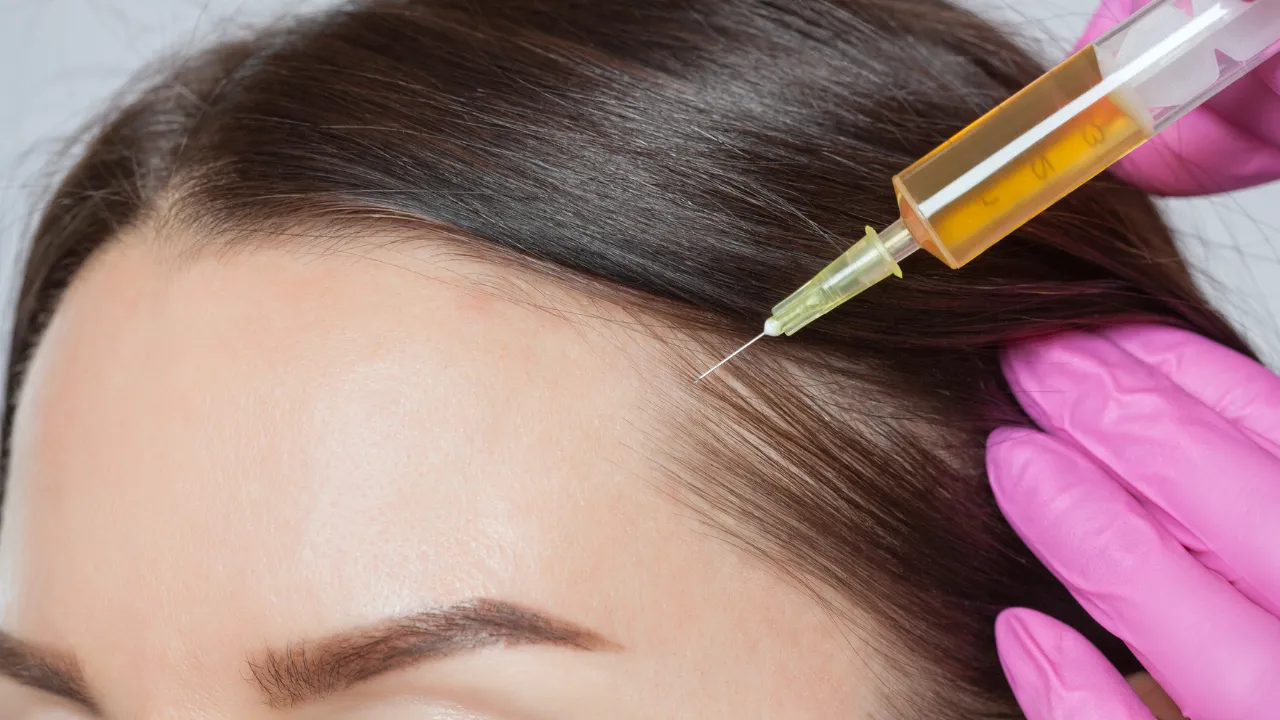
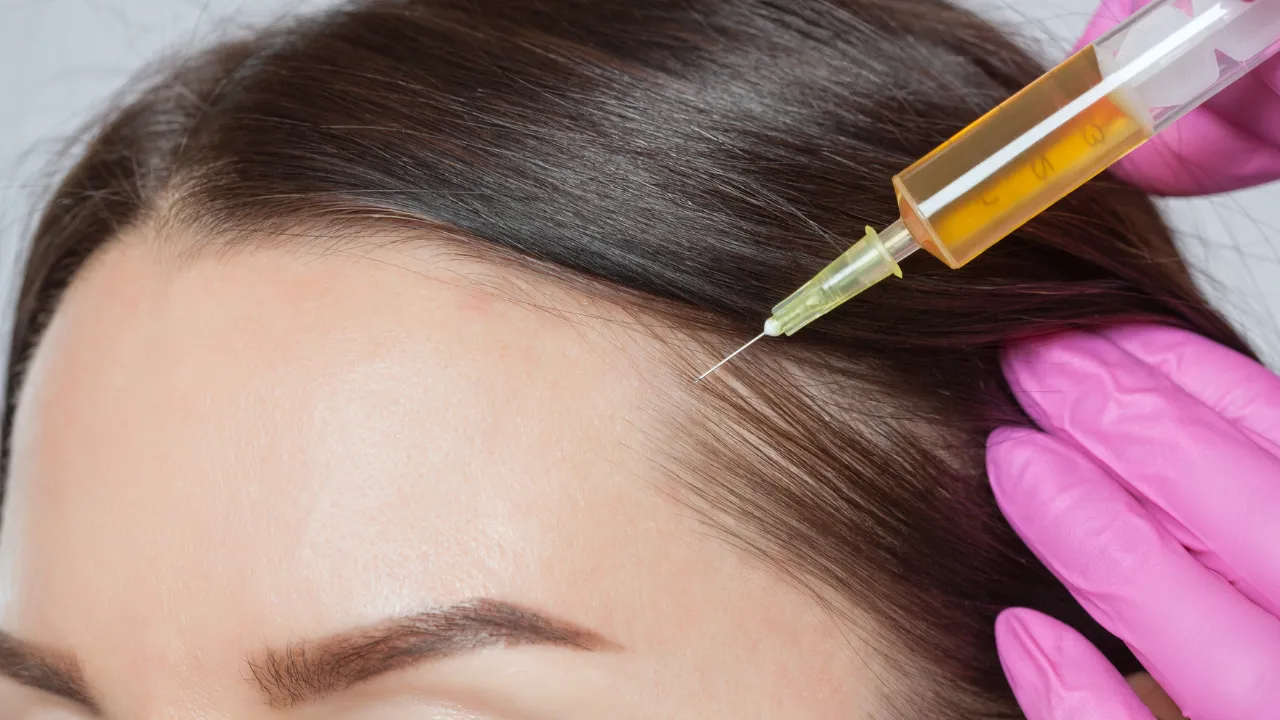
Beard microneedling works by improving blood flow and helping awaken dormant follicles. The roller is a handheld device covered with tiny needles that create micro injuries in the skin. This technique is widely used in skincare to reduce acne scars, support collagen production, and promote growth in thinning areas.
These controlled injuries trigger the body’s natural healing response, which prompts collagen production, increased circulation, and the release of growth factors. While individual results vary, research on the scalp suggests this same process can improve density over time.
The Role of Collagen
Collagen is the main structural protein in skin, and it helps keep follicles strong and healthy. When the needles create tiny punctures, they activate fibroblast cells, which leads to increased collagen and elastin production.
Stronger follicles are more resilient and better able to produce thicker strands.
How Microneedling Increases Blood Flow to Follicles
Follicles depend on healthy circulation to receive the oxygen and nutrients they need. Poor blood flow can leave them weak or dormant, which often shows up as uneven coverage.
When the needles penetrate the surface, they improve circulation to the area, helping keep each follicle properly nourished.
Growth Factors and Beard Stimulation
One lesser-known benefit of this technique is its ability to activate growth factors, biological compounds that drive cell regeneration and follicle repair.
Studies show that microneedling increases platelet-derived growth factor (PDGF) and epidermal growth factor (EGF), both of which contribute to follicle stimulation and renewal.
The Connection Between Microneedling and Minoxidil
Many men pair this method with topical treatments like minoxidil (Rogaine) for stronger results. The tiny channels created by the needles allow topical products to be absorbed more effectively, which can improve their performance compared to applying them to intact skin.
Does a Derma Roller Work for Beard Growth?
The honest answer depends on several factors, including consistency, genetics, and the health of the follicles you already have. Here is what the evidence and the experts actually say.
Scientific Evidence on Microneedling
No clinical studies have directly tested rollers on facial hair, so anyone claiming guaranteed beard results is overstating the science.
What does exist is solid scalp research, and because the underlying follicle-stimulation process is the same, those findings are a reasonable proxy.
In one randomized study of men with androgenetic alopecia, the group that combined microneedling with minoxidil saw significantly higher hair counts than the group using minoxidil alone.
That study looked at scalp hair, not beards, so treat it as supportive evidence rather than direct proof for facial hair.
Expert Opinions on Beard Rollers
Hair restoration experts generally agree that microneedling can promote facial hair growth, but results are not guaranteed. If follicles are present but dormant, the device can help reactivate them.
If no follicles exist in a given patch, no amount of rolling will create them.
Understanding the Limitations
This is not an overnight fix. Visible change requires long-term consistency and patience, and the outcome is shaped by factors outside the tool itself:
- Genetic predisposition to facial hair
- Hormonal balance, including testosterone and DHT levels
- Skin health and your overall skincare routine
Is a Beard Roller Worth the Money?
The most common real-world question is blunt: Is this just a waste of money? It is a fair concern because the market is full of overpromised grooming gadgets. Here is a straight answer.
For the right candidate, a quality roller is inexpensive and low-risk, so the value proposition is reasonable if your expectations are realistic. It tends to be worth it when you already have some follicles in the patchy zones, and you are willing to commit for several months, ideally alongside minoxidil.
It is likely a waste of money if you expect a full, dense beard in a few weeks, or if your patchiness comes from areas with no follicles at all. In those cases, the device cannot deliver, and a more advanced option may suit you better.
One honest caveat from experienced users: cheap rollers with poorly aligned needles can drag the skin and, in rare cases, cause irritation or scarring. If you buy one, invest in a well-built tool and clean it properly, which we cover further down.
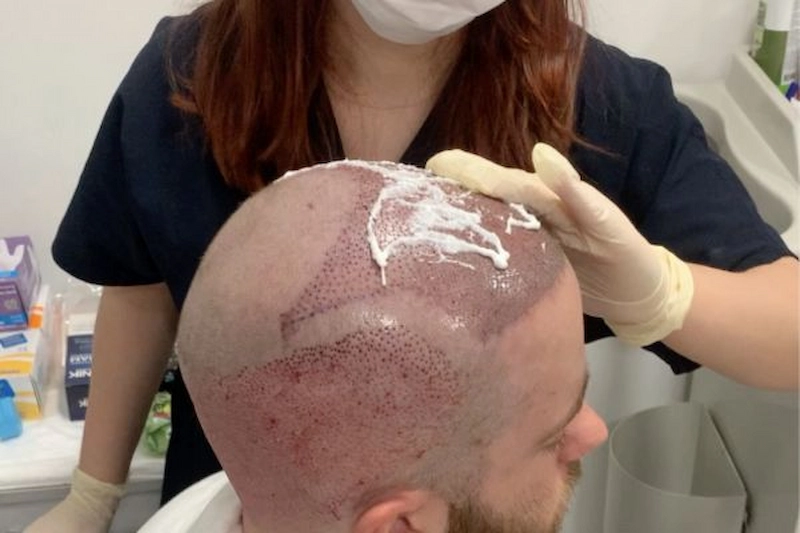
For men whose patchiness will not improve with topical methods, some explore the best beard transplant in USA for faster, more defined coverage.
Before and After: What Results to Expect
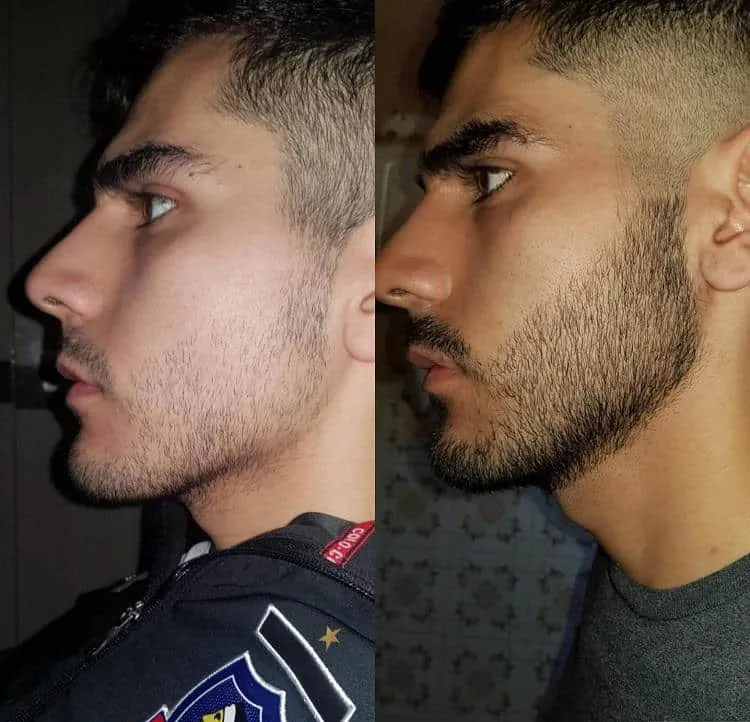
Curious about real outcomes? Searching for beard roller before-and-after photos can give you a sense of what others have achieved, though individual results vary widely.
What to Expect Over Time
Most men see gradual improvements rather than sudden change. A realistic timeline looks like this:
- Weeks 1 to 4: Minimal visible change, though improved circulation can make existing strands look fuller.
- Weeks 4 to 8: Some men notice new vellus hairs, thin and light-colored, appearing in sparse patches.
- Months 3 to 6: Those strands often become thicker and stronger, with increased density.
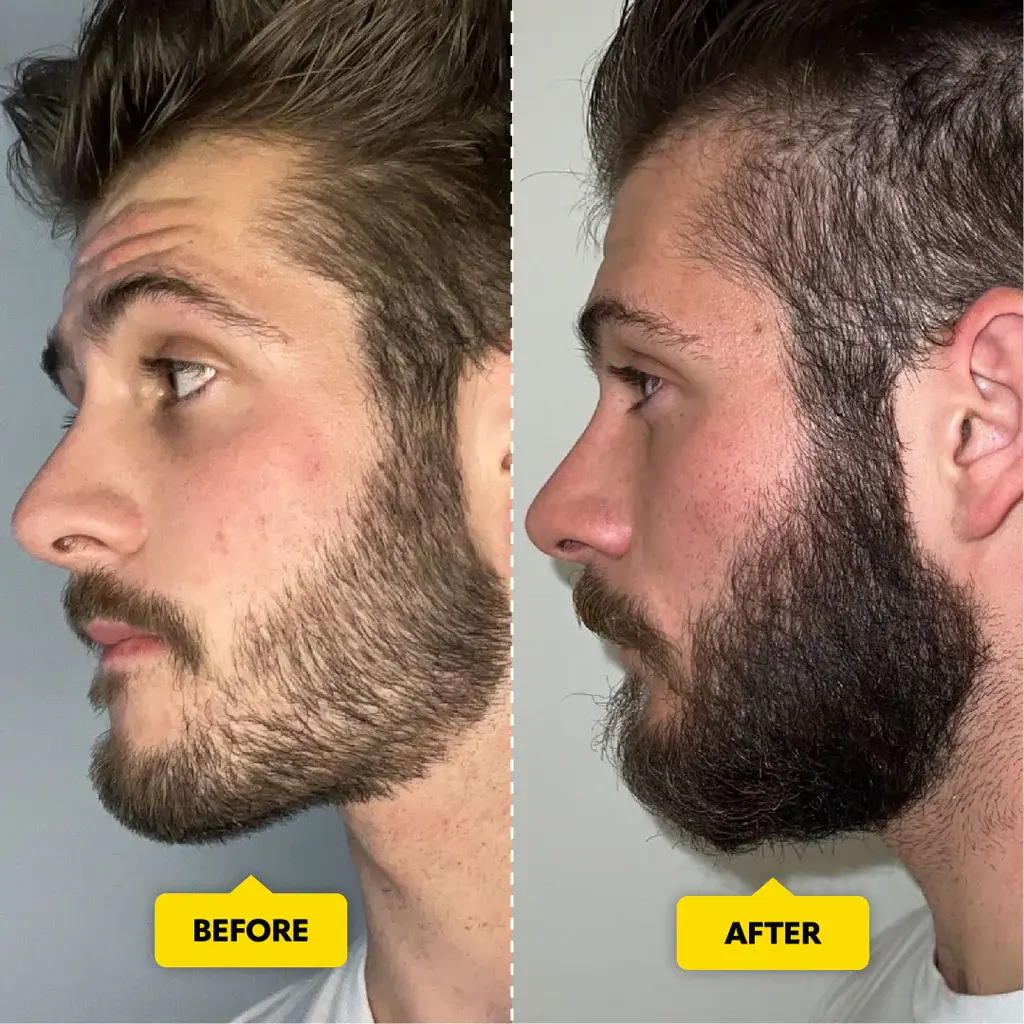
For context on how strong the effect can be, the androgenetic alopecia study mentioned earlier is instructive.
In that randomized scalp study (Dhurat et al., 2013), 82% of the microneedling-plus-minoxidil group reported more than 50% improvement, compared with just 4.5% of those using minoxidil alone. Again, this measured scalp hair, so view it as encouraging context rather than a beard guarantee.
Factors That Influence Results
- A consistent rolling routine
- Proper needle length, 0.25 mm to 1.0 mm
- A healthy diet and good hydration
- Skincare habits that prevent irritation
How Often Should You Roll?
Recommended Frequency by Needle Size
- 0.5 mm: Once or twice a week
- 0.75 mm: Once every 7 to 10 days
- 1.0 mm: Once every 10 to 14 days
Giving your skin enough time to recover between sessions is essential. Rolling too often can cause excess irritation and slow your progress rather than speed it up.
What’s the Best Derma Roller Size for Beard Growth?
Shorter needles can be used more often with less recovery time, while longer needles penetrate deeper and require more time to heal. The chart below shows safe maximum frequencies by size.
Choosing the Right Needle Length
Common Side Effects
- Redness and skin irritation after microneedling
- Risk of infection if not cleaned properly
- Skin sensitivity or dryness
- Possible inflammation in acne-prone skin
How to Prevent Side Effects
- Sanitize your derma roller after every use
- Avoid rolling over active acne scars or inflamed skin
- Moisturize your skin post-treatment to reduce irritation
Can you overuse a beard roller?
Yes, overusing a beard roller can be harmful. Excessive use may lead to pain, discomfort, and even skin damage, potentially causing scar tissue that could hinder hair growth. To avoid these issues, stick to the recommended usage guidelines and never use a derma roller more than every other day.
Does It Work for Everyone?
Who Will Benefit the Most?
- Men with slow beard growth but existing follicles
- Individuals who combine micro-needling with minoxidil
- Users committed to a long-term beard care routine
Who Might Not See Results?
- Men with no hair follicles in specific areas
- Those expecting instant results
- Individuals with highly sensitive skin prone to irritation
Final Thoughts: Should You Try a Derma Roller for Beard Growth?
A derma roller for beard growth is a scientifically-backed tool that can help stimulate beard follicles, boost collagen production, and increase blood flow. However, results require consistency, patience, and proper technique to see noticeable improvements.
If you’re looking for a natural way to improve beard thickness, a derma roller may be a good idea, but it works best when combined with proper skincare, hydration, and topical growth treatments.
However, microneedling alone has limitations—if you’re struggling with severe patchiness, slow beard growth, or a lack of visible improvement, you may need a more advanced solution, such as a hair transplant.
As a hair restoration and transplant procedure leader in NYC, New Jersey, and Florida, Kopelman Hair specializes in cutting-edge techniques designed to restore natural, healthy hair growth. Whether you need expert advice on beard regrowth, micro needling treatments, or a more permanent hair restoration approach, Dr. Kopelman and his team provide tailored solutions to meet your specific needs.
If you’re serious about achieving a fuller, healthier beard, schedule a consultation to explore your best options for long-term beard enhancement.