
At Kopelman Hair, we help patients resolve complex scalp concerns using advanced methods built on decades of clinical experience.
Key Takeaways
- Dermatophyte infections, such as ringworm of the scalp, can trigger patchy shedding, yet early diagnosis and appropriate treatment usually lead to full regrowth.
- Different fungal species call for specific medications, so identifying the exact organism helps doctors select the most effective therapy.
- Scaling, redness, and broken strands separate this condition from look-alikes such as seborrheic dermatitis and alopecia areata.
- Prevention rests on good hygiene, not sharing personal items, and checking pets as a possible source.
- Prompt care from specialists like Dr. Kopelman improves the prognosis and reduces the risk of permanent loss due to scarring.
Understanding Alopecia Fungal Infection
What Causes Fungal Hair Loss?
This condition develops when dermatophytes invade the scalp, damage the strands, and disrupt normal growth. Can a scalp infection cause shedding? Yes. These organisms attack the follicle directly, interrupt the growth cycle, and often leave visible gaps across the scalp.
Left untreated, the overgrowth spreads, and the affected area widens. In many cases, it leads to noticeable hair loss that can become extensive.
Trichophyton tonsurans is the most common cause in the United States, while Microsporum species also contribute and tend to thrive in warm, humid conditions. Untreated cases worsen and pass easily to others. This is one type of scalp infection; bacteria and viruses can cause others.
People with a weakened immune system face a higher risk of severe disease, since their bodies struggle to control the overgrowth. Dr. Kopelman emphasizes fast diagnosis and early intervention to protect scalp health and prevent complications.
Types of Fungal Alopecia
A dermatophyte infection presents in several patterns depending on the organism and the body’s response. The most common form, ringworm of the scalp, creates round bald spots, scaling, and redness. A related variant, alopecia barbae, affects the beard area.
Doctors group the presentations into non-inflammatory and inflammatory types:
- Grey patch: fine scaling with patches of loss that look grey because spores coat the strands.
- Black dot: scaling with patches speckled by dark dots, which are strands broken off at the surface.
- Diffuse scale: resembles widespread dandruff, with subtle or absent balding.
- Kerion: a painful, boggy, inflamed plaque from a strong immune reaction, which can scar.
- Favus: a rare chronic form marked by yellow, crusted lesions around the strands.
Because some of these patterns mimic alopecia areata, an autoimmune disease, diagnosis can be challenging without testing.
Symptoms and Diagnosis
Fungal Infection Hair Loss Symptoms
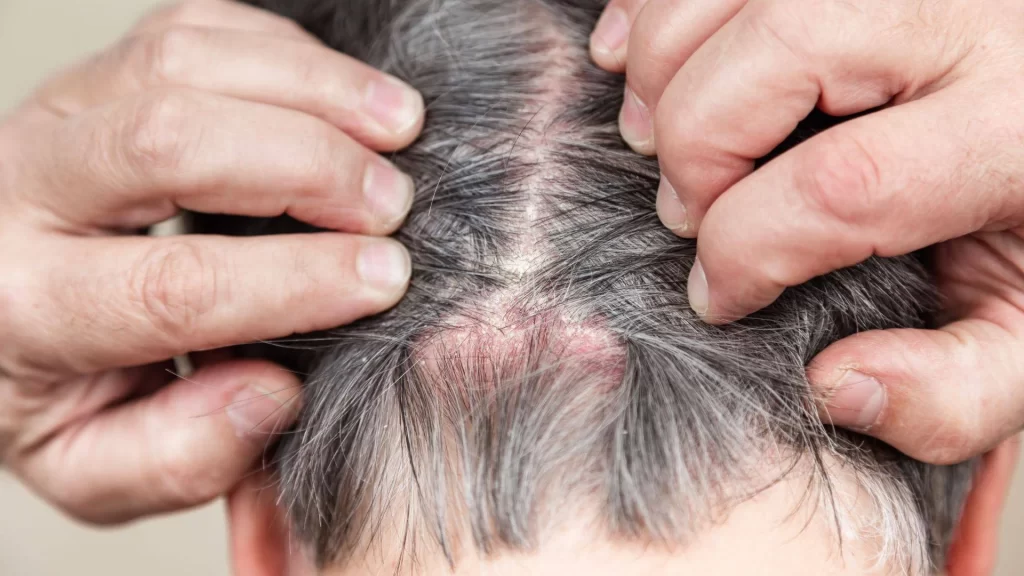
Fungal infection hair loss symptoms usually begin as patches of thinning with scaling, redness, or black dots where strands snap off at the scalp. Unlike genetic causes, a dermatophyte infection brings inflammation and discomfort.
Other scalp conditions, such as seborrheic dermatitis, can look similar but rarely cause meaningful balding. Early recognition prevents scarring and permanent damage.
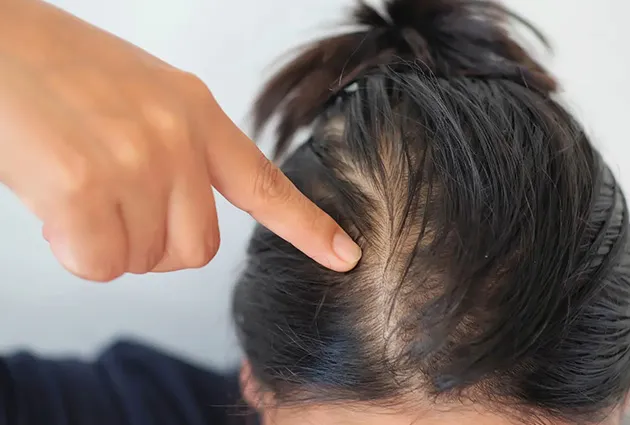
Comparison photos of typical scalp changes help patients seek care rather than dismiss the problem as dandruff. The key point is that shedding happens because the organism attacks the strands directly, so accurate identification leads to faster recovery.
How Doctors Distinguish Fungal Alopecia From Alopecia Areata
Confusion with alopecia areata is one of the most common reasons people research scalp fungus hair loss, so it is worth understanding how specialists tell them apart. Tinea capitis is a fungal infection, while alopecia areata is an autoimmune disease, and the two require very different treatments.
The table below outlines the features doctors weigh during an exam and through testing.
| Feature | Tinea Capitis (Fungal) | Alopecia Areata (Autoimmune) |
|---|---|---|
| Cause | Dermatophyte infection of the scalp | Immune system attacks the follicles |
| Scalp surface | Broken strands, scaling, black dots | Smooth, shiny bald patches |
| Redness and inflammation | Common, sometimes pustules or kerion | Minimal or none |
| Itching | Often present | Usually absent or mild |
| Lymph nodes | May be swollen at the back of the neck | Normal |
| Dermoscopy clues | Comma and corkscrew strands, scaling | Exclamation-mark strands, yellow dots |
| Lab confirmation | Positive KOH prep or culture | No fungal elements; biopsy if unclear |
| Treatment | Oral antifungals plus medicated shampoo | Steroids, immunotherapy, JAK inhibitors |
Getting this distinction right matters because antifungal medication does nothing for an autoimmune condition, and steroids can worsen an untreated infection.
Microscopy and Diagnostic Tests
Doctors confirm a dermatophyte infection with several methods. A KOH preparation places scalp scrapings or plucked strands in potassium hydroxide so fungal elements show clearly under a microscope, often within a day.
Some organisms glow under a Wood’s lamp, while a culture identifies the exact species over a few weeks. Trichoscopy, a magnified view of the scalp, reveals comma and corkscrew strands that suggest infection. Knowing the organism guides treatment and predicts recovery time.
Dr. Kopelman emphasizes precise diagnosis to avoid ineffective treatment and wasted time.
Treatment for Fungal Infection Hair Loss
Fungal Infection Hair Loss Treatment Options
Fungal infection hair loss treatment centers on antifungal medication prescribed by a specialist. Because topical products cannot reach the root of the follicle, the scalp form always requires systemic therapy for at least 4 to 6 weeks.
Oral options like terbinafine and griseofulvin target specific organisms. Trichophyton infections respond well to terbinafine, while Microsporum species often call for griseofulvin. Treating the problem quickly improves the prognosis and prevents scarring.
Medicated shampoos containing ketoconazole or selenium sulfide reduce spore spread and calm inflammation, though they support, rather than replace, oral therapy. At Kopelman Hair, we combine systemic and topical care, and Dr. Kopelman stresses that personalized plans drive full regrowth.
Scalp Fungus Treatment Home Remedies
Some people try natural options like tea tree oil or apple cider vinegar for mild irritation. These may offer minor relief, yet they cannot clear an established infection or replace prescription therapy.
Always check with a doctor before relying on home measures alone. Persistent shedding deserves medical evaluation and professional care.
Recovery Timeline
Most cases begin to improve within four to eight weeks of starting therapy, although regrowth takes longer to become visible. Mild cases often resolve without lasting change, while severe, untreated disease can leave scars and bald spots.
Even after the organism clears, follicles need time to recover their normal cycle. Dr. Kopelman advises patients to follow the full plan closely, since stopping early invites recurrence.
How Contagious Is a Scalp Fungus?
This condition spreads through shared items like combs, hats, towels, and bedding, especially in schools, gyms, and shared living spaces. Pets can pass organisms to people as well.
Avoiding shared tools and checking animals for skin problems lowers the risk. Dr. Kopelman emphasizes good hygiene to protect families and communities from spread.
Prevention and Long-Term Care
Hygiene and Lifestyle Tips
Solid hygiene habits cut the risk of reinfection. Keep the scalp clean and dry, avoid sharing personal items, and wash linens and towels regularly.
Household members should be checked and treated together when one person is affected, since the organism spreads easily from person to person. At Kopelman Hair, we stress that small routine changes greatly reduce risk.
Preventing Scarring and Understanding Loss Types
Severe inflammatory cases can lead to scarring alopecia, leaving smooth bald patches where regrowth may not return. Non-scarring forms usually allow full recovery once treated.
Distinguishing the two matters, because scarring means permanent follicle loss. Dr. Kopelman explains that early treatment sharply reduces the risk of scarring and preserves density.
How to Avoid Recurrence
After treatment, continue medicated shampoos if advised and check pets for signs of infection. Stay alert for new bald patches or changes in your scalp.
Fast action breaks the cycle of recurrence. Following up with your dermatologist supports long-term scalp health.