
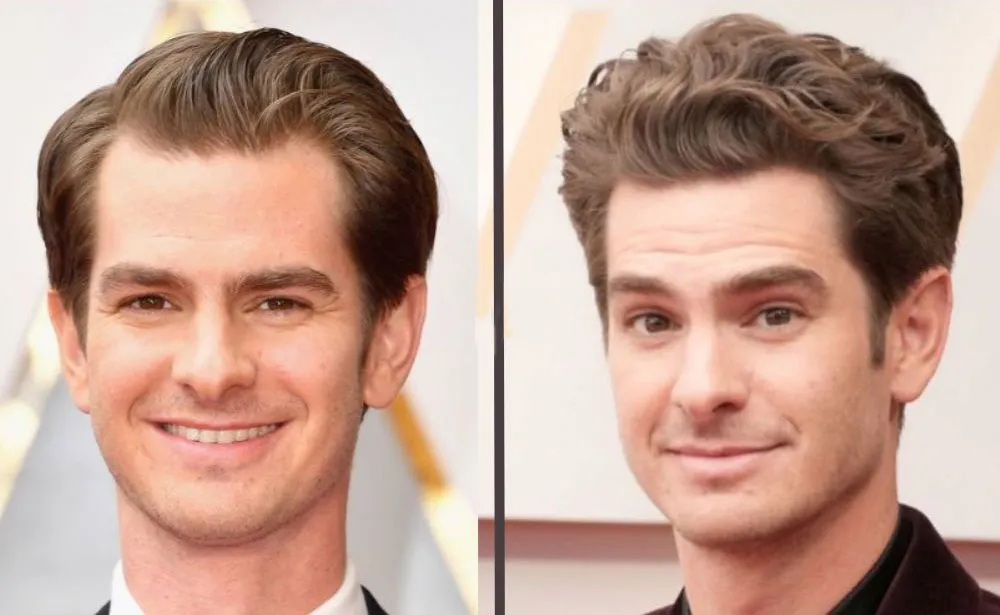
In this deep dive, Dr. Kopelman, an expert in hair restoration, explores how Andrew Garfield’s hairline has transformed over the years, analyzing his progression using the Norwood scale, estimating graft counts, breaking down costs, and explaining what modern restoration techniques can realistically achieve for someone at his stage of loss.
Did Andrew Garfield Get a Hair Transplant?
Based on a careful analysis of photos spanning 2009 to 2024, the evidence suggests something meaningful changed with his hairline between 2018 and 2021. In earlier photos, particularly those from 2018 and 2019, the temple recession is clearly visible even through clever styling. By 2021, the frontal line appears straighter, denser, and more youthful, sitting closer to where it was in his mid-20s.
There is no official confirmation of a procedure. However, the degree of recovery at the temples is difficult to attribute to styling alone. The most plausible explanations are an FUE transplant, consistent use of Finasteride, or a combination of both.
Introduction to Andrew Garfield’s Hair Journey
Over the years, his appearance has subtly evolved, with particular attention drawn to the frontal hairline. As a public figure, these changes have led to widespread speculation about potential hair loss and the possibility of surgical intervention. Fans and media alike have questioned whether the improved density is the result of natural regrowth, medication, or modern restoration techniques.
His father and brother are both substantially bald, placing him at a statistically higher risk of significant male pattern baldness, which makes his sustained hairline into his early 40s a clinically interesting case. The fact that he has managed to maintain, and apparently improve, his frontal line despite this family history makes his situation worth examining in detail.
Andrew Garfield Hair Loss: A Year-by-Year Norwood Analysis
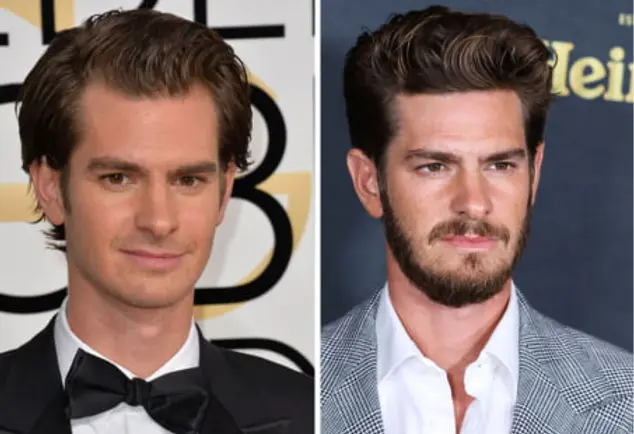
Understanding the full picture requires looking at the complete timeline rather than a single before-and-after snapshot. The Norwood Scale is the standard clinical tool used to classify the extent of male pattern baldness, running from Stage 1 (no visible loss) through Stage 7 (extensive baldness across the scalp).
2009 to 2011: Norwood Stage 1 to 2
In his mid-20s, his scalp appears full, dense, and well-defined. Closer inspection of photos from 2009, particularly those taken with shorter styles, reveals the very early beginnings of a widow’s peak forming at the temples. To the untrained eye, this is barely perceptible given the strong overall density. Clinically, this places him at approximately Norwood Stage 1 to 2, with minimal recession visible only under close scrutiny.
2012 to 2014: Early Temple Recession
By 2012, the temple recession becomes slightly more defined. Photos from this period show a gradual widening of the hairline corners, which is characteristic of early male pattern baldness. He remains at Norwood Stage 2, and overall density through the mid-scalp and crown stays strong. This is the window when a specialist would typically recommend starting preventative medical treatment, such as Finasteride or Minoxidil, to slow further progression.
2015 to 2018: Norwood Stage 2 to 3
Several photos from 2015 onward show him wearing his locks swept back, a styling choice that inadvertently highlights the temple thinning rather than concealing it. By 2018, the recession at both temples has deepened noticeably, with increasingly exposed areas on either side of the frontal line. This places him firmly at Norwood Stage 3, the threshold at which many men begin seriously considering either medical treatment or a surgical solution.
2019: Norwood Stage 3, Most Visible Recession
In 2019, the Andrew Garfield receding hairline is at its most visible. The temple areas appear largely bare in both candid and red carpet photos, and styling is no longer sufficient to mask the loss. This is the most likely point at which the decision to intervene, whether surgically or medically, would have been made.
2021 to 2024: Apparent Recovery
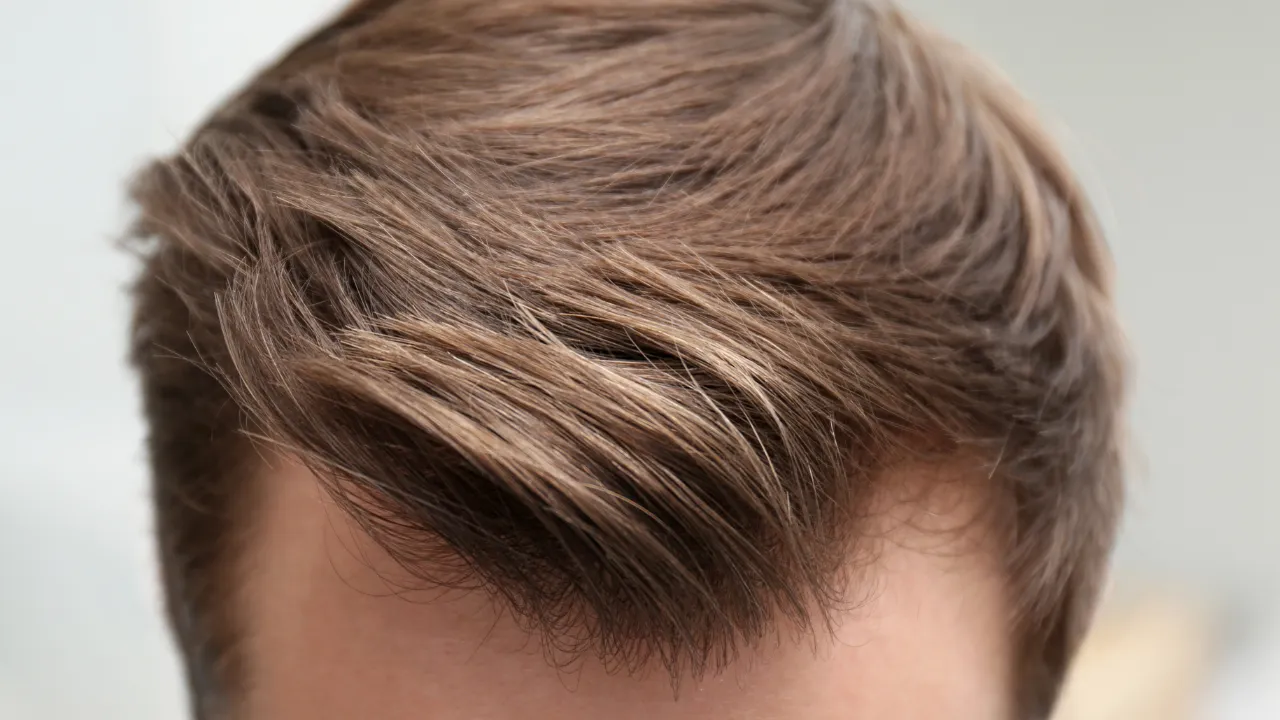
From 2021 onward, something clearly changes. The frontal line appears straighter and more youthful, with noticeably better density at the temples. By 2024, in his early 40s, the hairline has effectively reverted to something close to Norwood Stage 1. By any clinical measure, the change between his 2019 and 2024 hairline represents a significant and sustained improvement.
Does Andrew Garfield Use Finasteride?
The most credible non-surgical explanation for the hairline improvement is the use of Finasteride, the active ingredient in Propecia. This medication works by blocking the conversion of testosterone into dihydrotestosterone (DHT), the hormone primarily responsible for male pattern baldness. According to long-term research published in the Journal of the American Academy of Dermatology (Kaufman et al., 1998), Finasteride can halt progression in the majority of men and stimulate measurable regrowth in a significant proportion of cases when used consistently over several years.
In a 2021 Wired interview, Andrew Garfield appeared to joke about using Propecia when answering rapid-fire questions from the public. He did not confirm it directly, and the context made it ambiguous whether he was being serious or humorous. The comment was notable enough to be widely discussed online, including in communities dedicated to hair loss, where users debated whether the visible improvement was consistent with Finasteride use alone.
Andrew Garfield finasteride use, if real and sustained since around 2015 to 2018, could plausibly account for some temple stabilization. It is less likely, however, to explain the degree of density and line-straightening visible in 2021 and 2022 photos. Finasteride can slow and occasionally partially reverse loss, but regrowth of this consistency at the temples typically points toward surgical intervention as well.
Was Andrew Garfield Balding?
Before the restoration rumors surfaced, there were clear signs of male pattern baldness developing. The Andrew Garfield hair loss progression follows a textbook Norwood pattern, beginning at the temples in his mid-20s and advancing through his 30s. With both his father and brother showing significant baldness, the genetic predisposition is well-established on the paternal side.
That said, genetics are not deterministic. Genetic expression for this condition can vary significantly between family members, and lifestyle factors including diet, stress management, and proactive medical treatment all influence how quickly and extensively baldness progresses. It is entirely possible that he began proactive treatment early enough to significantly slow his progression relative to his father and brother.
Why Do Celebrities Like Andrew Garfield Choose Hair Transplants?
Celebrities often face the same causes of follicle loss as everyone else: genetics, stress, hormonal changes, and aging. What differs is the professional pressure to maintain a particular appearance. In Hollywood, a full, youthful frontal line can directly affect casting decisions and public perception. For actors whose careers depend on playing a wide range of roles, maintaining density is both a personal and professional consideration.
The speculation around this case reflects a broader normalization of restoration procedures in the entertainment industry. As more celebrities are understood to have used these techniques, the stigma has reduced considerably. Modern methods like FUE produce results so natural that they are frequently indistinguishable from unassisted growth, which is precisely why so many public figures are reluctant to confirm or deny having had them.
How Many Grafts Would Andrew Garfield Have Needed?
Based on the extent of his loss at its peak, roughly Norwood Stage 3 with concentrated recession at both temples, a realistic estimate for a surgical solution would be in the range of 1,000 to 1,500 grafts. The loss was never extensive across the crown or mid-scalp, which means the target area was relatively contained.
At 1,000 to 1,500 grafts, this would be classified as a low-to-moderate FUE procedure. The technique, in which individual follicular units are extracted from the donor area at the back of the scalp and reimplanted into the thinning zones, is particularly well suited to this type of temple-focused restoration. The relatively modest graft count also means that the donor area would have remained essentially unaffected in appearance, making detection of the procedure very difficult even to trained eyes.
What Happens in a Hair Transplant Procedure?
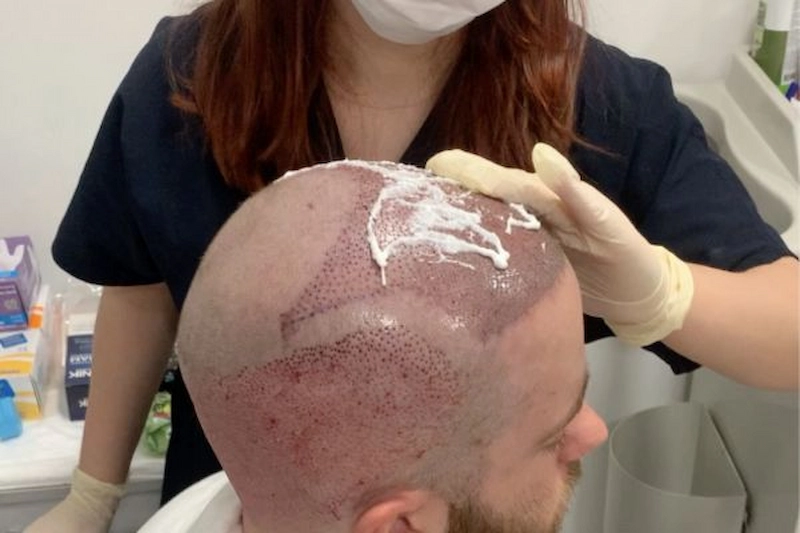
Surgical restoration typically involves two main techniques: FUE (Follicular Unit Extraction) and FUT (Follicular Unit Transplantation). In an FUE procedure, individual follicles are carefully harvested from the donor area, usually the back and sides of the scalp, and transplanted into areas where growth is thinning or absent. FUT involves removing a strip of scalp tissue, from which follicles are dissected and then reimplanted.
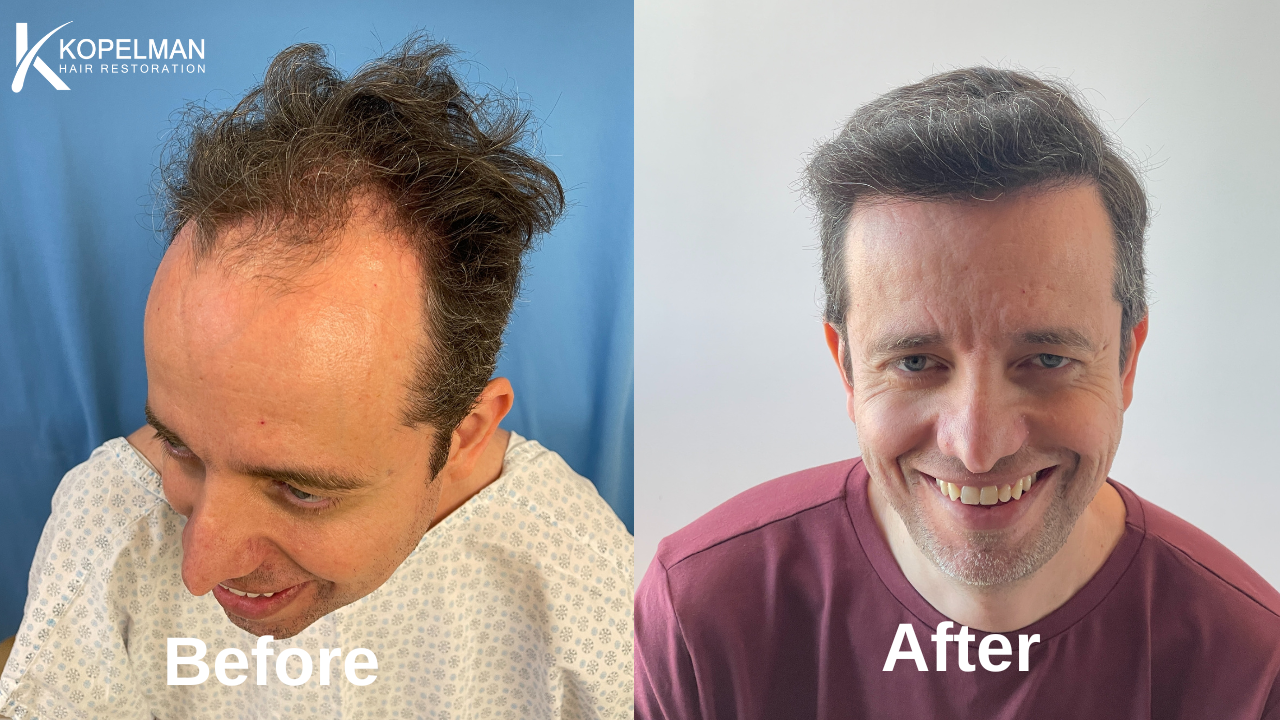
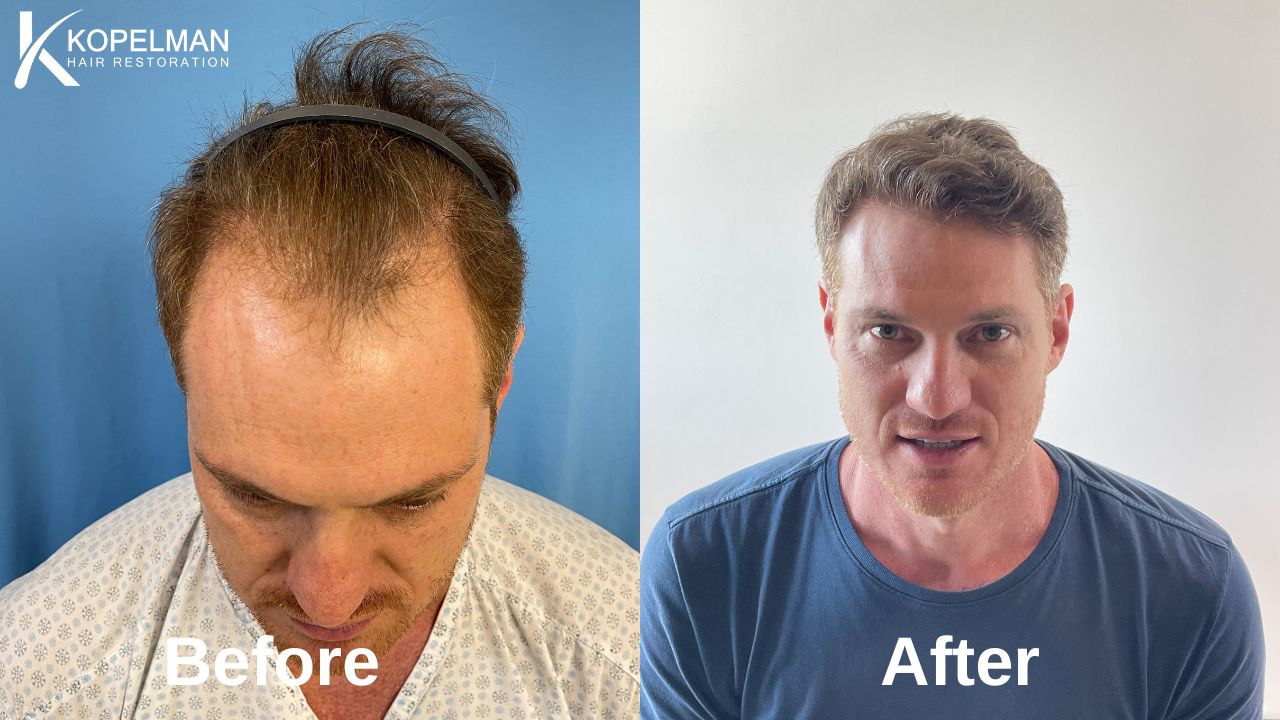
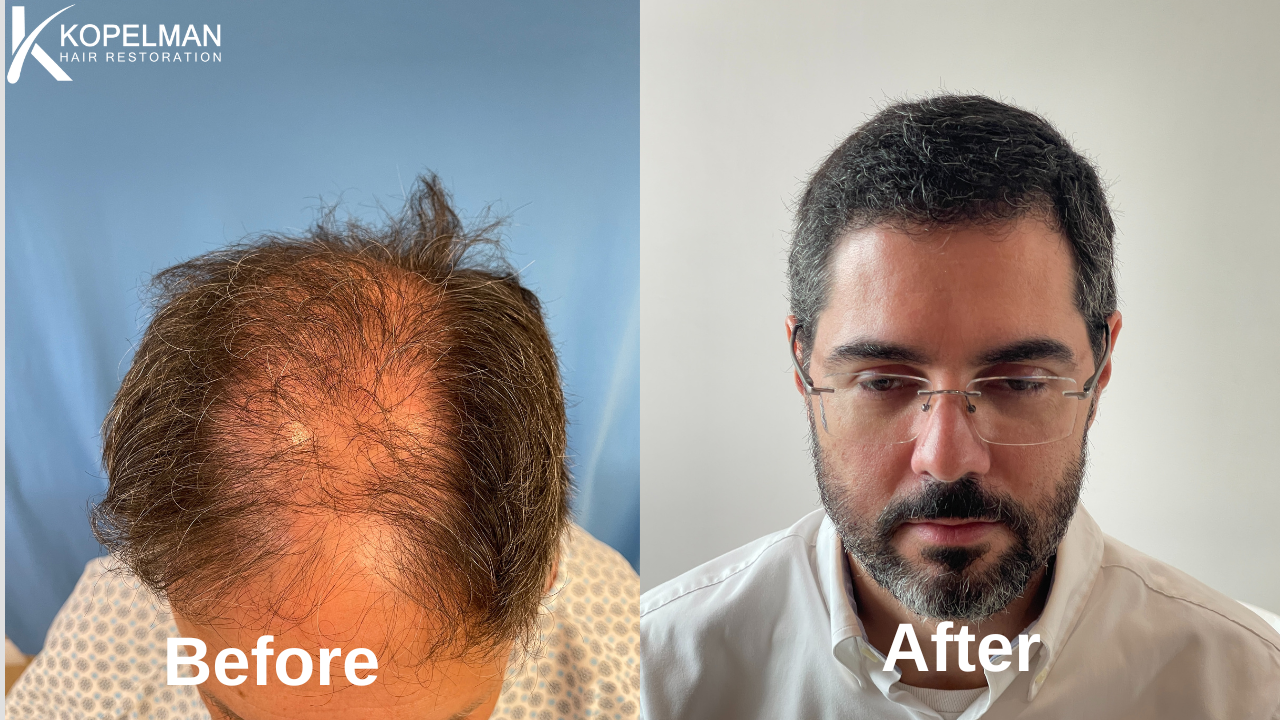
In this particular case, FUE would be the most likely choice if surgery was involved. It creates natural-looking outcomes and is appropriate for the relatively small graft count his pattern of loss would have required. Most patients can expect to see meaningful growth beginning around four to six months post-procedure, with full results typically visible by the twelve-month mark. The procedure would involve careful follicle placement at the temples to recreate a naturally tapered frontal line consistent with his existing characteristics.
For those curious about the Andrew Garfield haircut and how his styling choices have influenced public perception of his frontal line, it is worth noting that swept-back styles between 2015 and 2019 made his recession more visible, while forward-styled cuts post-2021 have worked with his restored density rather than against it.
How Much Would Andrew Garfield’s Hair Transplant Have Cost?
If he underwent an FUE procedure involving approximately 1,000 to 1,500 grafts, the cost would vary considerably depending on location. In the United Kingdom, where Garfield has described feeling at home, a procedure of this scale would typically range from $6,000 to $10,000. In the United States, particularly in cities like New York or Los Angeles where premium clinics operate, the same graft count could cost anywhere from $8,000 to $15,000.
Pricing at specialist practices in major metropolitan markets reflects the individual surgeon’s experience, the single-surgeon model of care, location-specific overhead, and the standard of personalized attention provided at every stage of the process. At Kopelman Hair Restoration, an FUE procedure is priced between $25,000 and $40,000 depending on the extent of the work and the number of grafts required. A consultation with Dr. Kopelman at $350 is the appropriate starting point to determine the exact scope and cost for your individual pattern of loss.
Celebrity Influence on Hair Transplants
Public figures play a significant role in shaping how cosmetic procedures are perceived. When people see well-known actors with full, healthy frontal lines well into their 40s, it normalizes the conversation around restoration and encourages others to explore their options. The speculation in this case has contributed to growing interest in FUE specifically, because the results, if surgical, represent exactly the kind of natural, undetectable outcome patients hope for.
As more celebrities are understood to have pursued these procedures, restoration has become genuinely mainstream. The influence of public figures removes stigma and reassures prospective patients that modern techniques deliver results that are seamless, long-lasting, and indistinguishable from natural growth. For a closer look at how celebrity restoration works in New York, explore the Kopelman Hair guide to celebrity hair transplant in NYC.
Achieving Natural-Looking Results Like Andrew Garfield
A key factor in achieving natural-looking results, comparable to what Garfield’s transformation appears to show, is selecting a surgeon with the technical skill and aesthetic sensibility to replicate the growth patterns unique to each patient. Successful temple restoration requires precise angle control, appropriate follicle density per square centimeter, and careful attention to frontal line design so that the outcome looks completely organic rather than surgically placed.
His apparent transformation illustrates that when this work is performed well, the results integrate seamlessly with existing strands and are virtually impossible to detect. The case also demonstrates that earlier intervention, before loss becomes advanced, produces more natural and comprehensive outcomes because the contrast between restored and untreated areas is minimized.
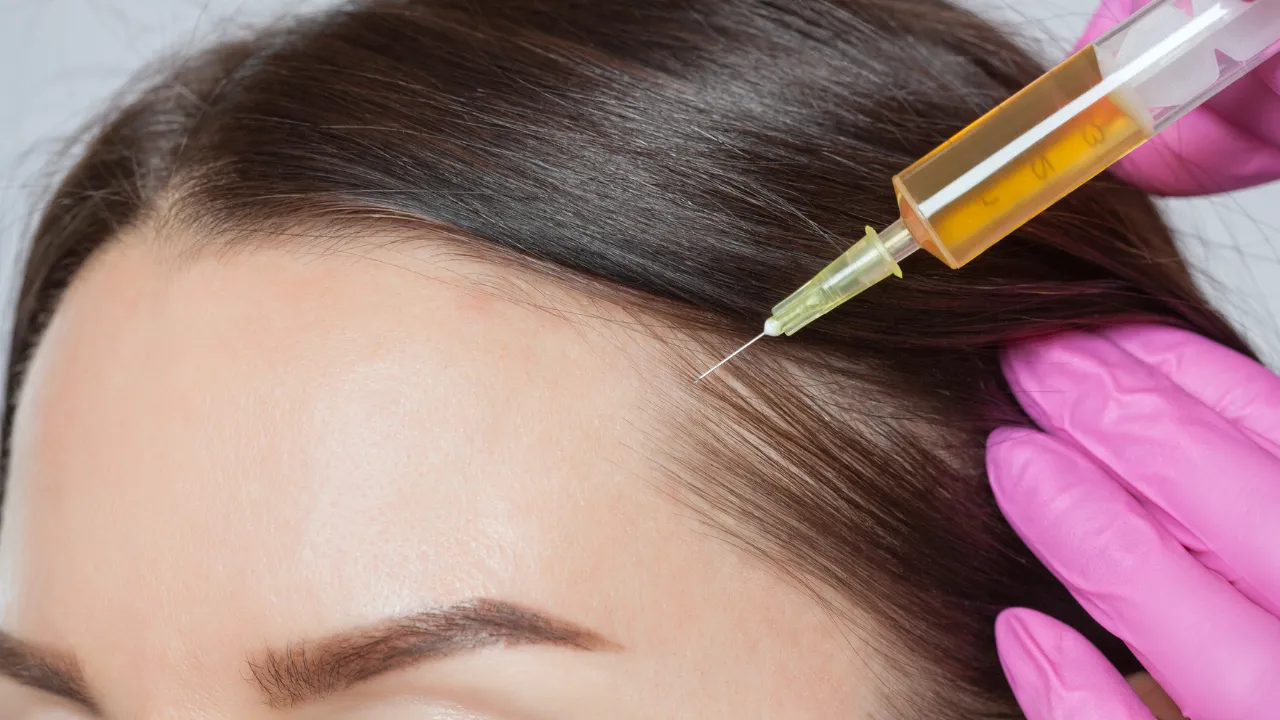
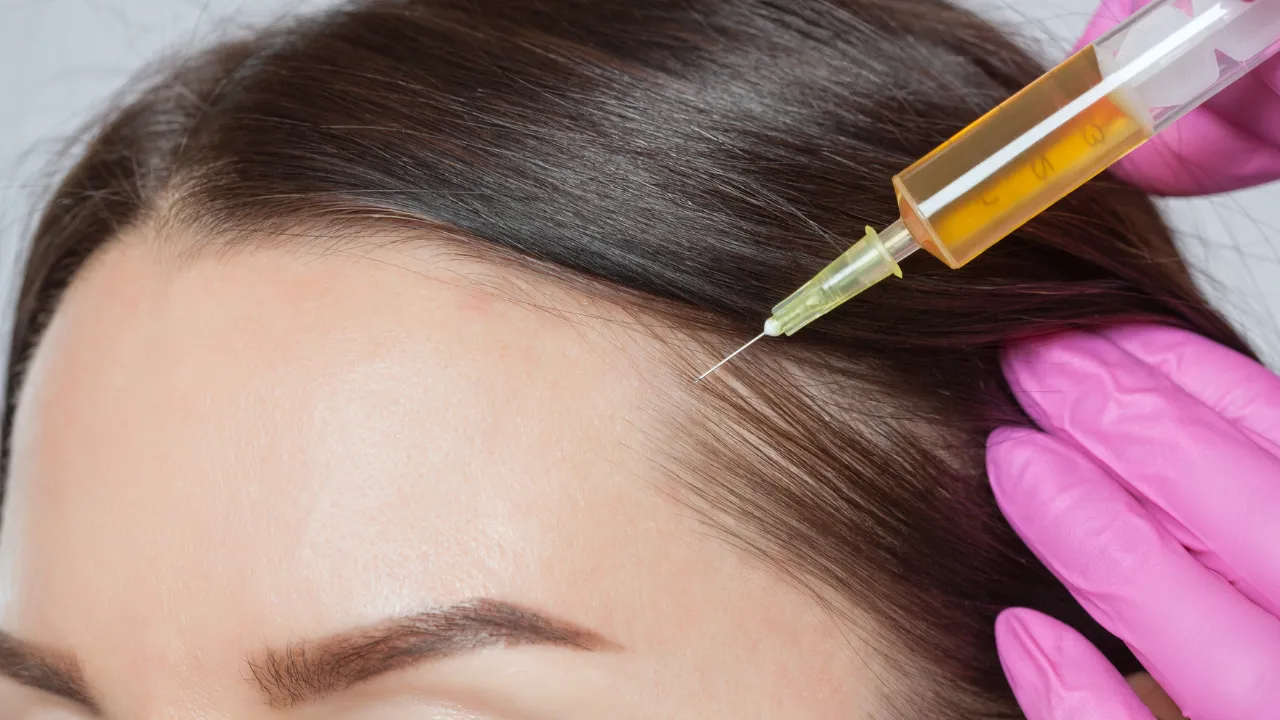
Non-surgical options also deserve consideration for patients who may not yet require or want surgery. Treatments including Finasteride, Minoxidil, and PRP (Platelet-Rich Plasma) therapy can stabilize loss and, in some cases, stimulate meaningful regrowth when started early enough. For many patients, a combination approach using medical management alongside or following a surgical procedure delivers the most durable long-term outcome.
Achieve a Hair Transformation Like Andrew Garfield’s with Dr. Kopelman
If you are noticing signs of thinning or recession similar to what Garfield experienced, Dr. Kopelman, an expert in hair restoration, can help you achieve natural-looking results. Using advanced techniques like FUE, Dr. Kopelman specializes in creating seamless frontal lines that restore both confidence and appearance at his practices in New York City and Palm Beach County.
Andrew Garfield’s apparent transformation, whether surgical or medical or a combination of both, shows how modern restoration can deliver results that are impressive without being detectable. If you are considering improving your hairline, we encourage you to schedule a consultation with Dr. Kopelman to explore your options and begin your own journey.
Curious about other celebrities who have pursued restoration procedures? Be sure to check out our page on Celebrity Hair Transplants: Before and After for more inspiring transformations, or discover how stars like Steve Carell, Bradley Cooper, Akon and David Beckham have tackled loss and restored their youthful looks.