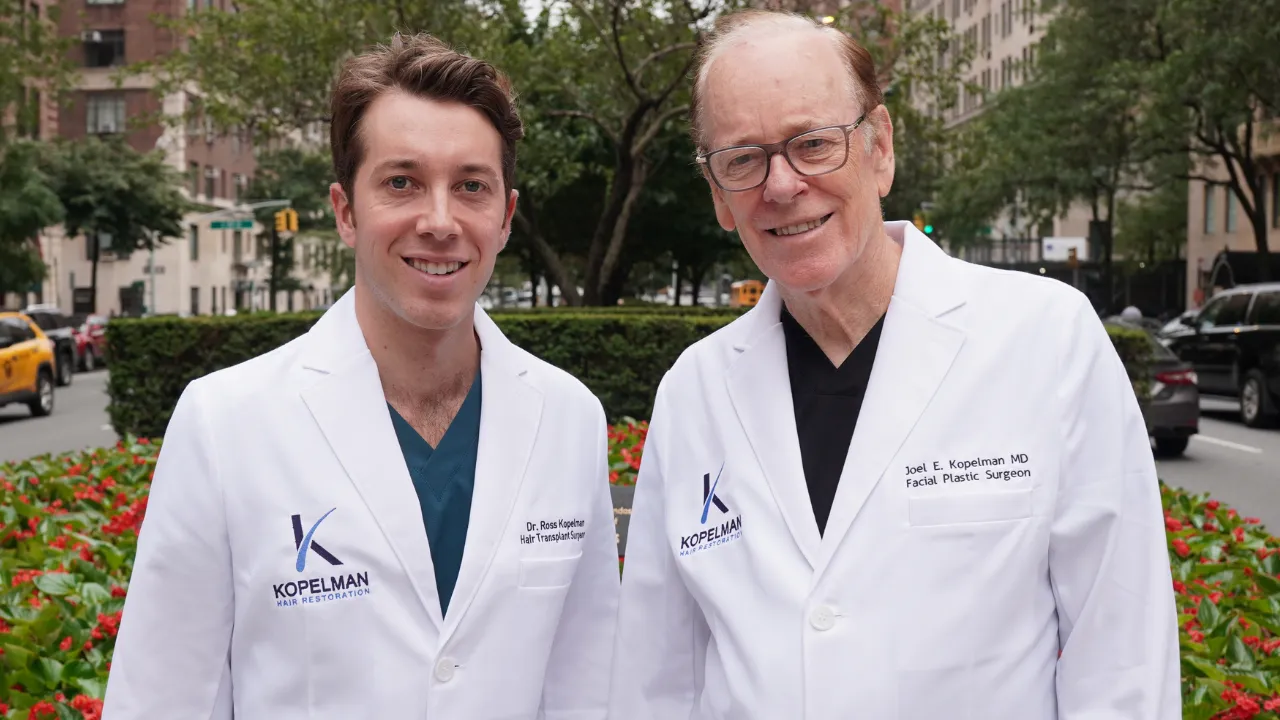

By the third season, the comedian’s coverage looked noticeably thicker and healthier. That led to a persistent question among fans: did he undergo surgery, or was something else going on?
Did Steve Carell Have Hair Implants?
One thing viewers frequently ask is whether Steve Carell got hair implants. He has never addressed the rumors directly. Still, the pronounced change around 2006 points many observers toward a restoration procedure during that window.
In his early days on The Daily Show and Season 1 of The Office, his forehead was clearly receding. That is a common sign of male pattern baldness. By late 2006, his coverage looked much denser, fueling speculation that he had chosen either older plugs or a modern grafting procedure.
A related question is this: Did Steve Carell get hair plugs? Plugs, popular in the early 2000s, were widely criticized for an artificial, clustered look. Advancements such as Follicular Unit Extraction (FUE) have since transformed the field, so a refined result like his is far more consistent with current methods than with the dated plug technique.
The Science Behind Hair Transplants: FUE vs FUT
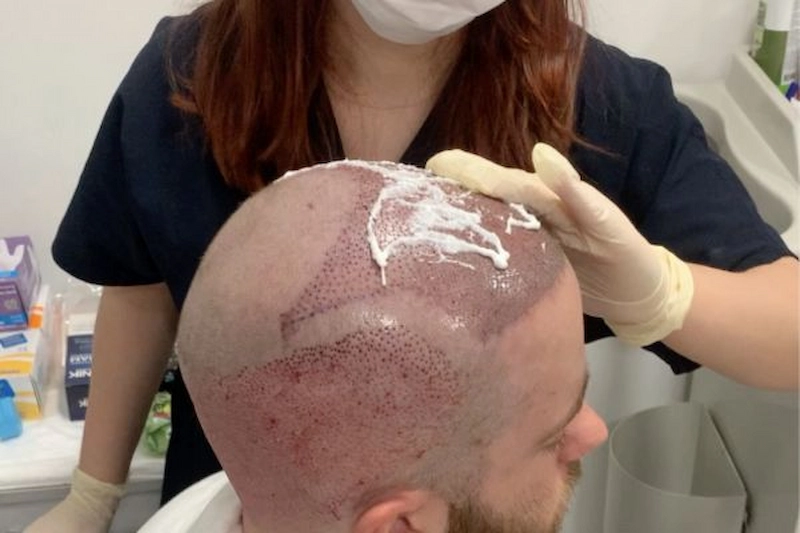
Today’s restoration options, led by FUE, are far less invasive than older procedures like FUT. FUE harvests individual follicles from a donor zone, usually the sides or back of the scalp, and places them into thinning or balding areas. The approach leaves minimal scarring and offers a quicker recovery, which makes it appealing for public figures.
The absence of visible scars, combined with a seamless result, suggests the actor likely chose FUE over the older plug method he might have encountered earlier in his career. FUE tends to deliver better density and a more natural blend with existing strands. Although he has not confirmed his procedure, most observers lean toward this technique because of how smoothly his appearance improved.
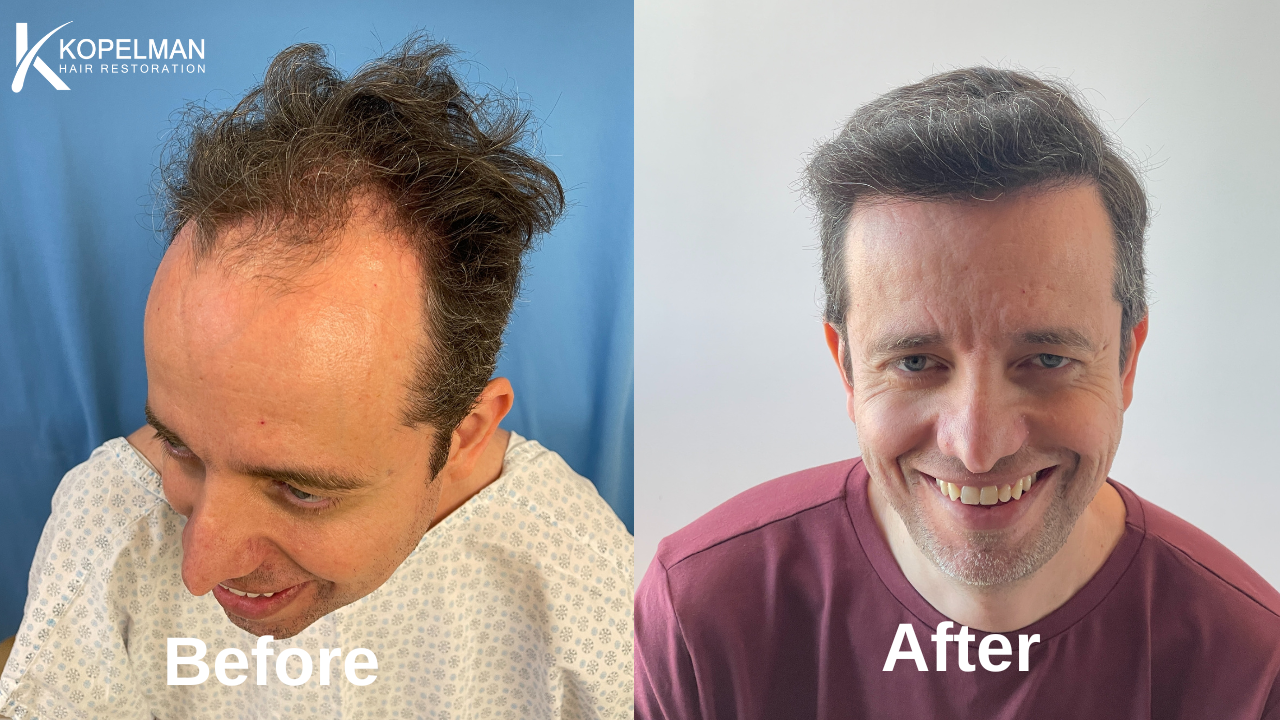
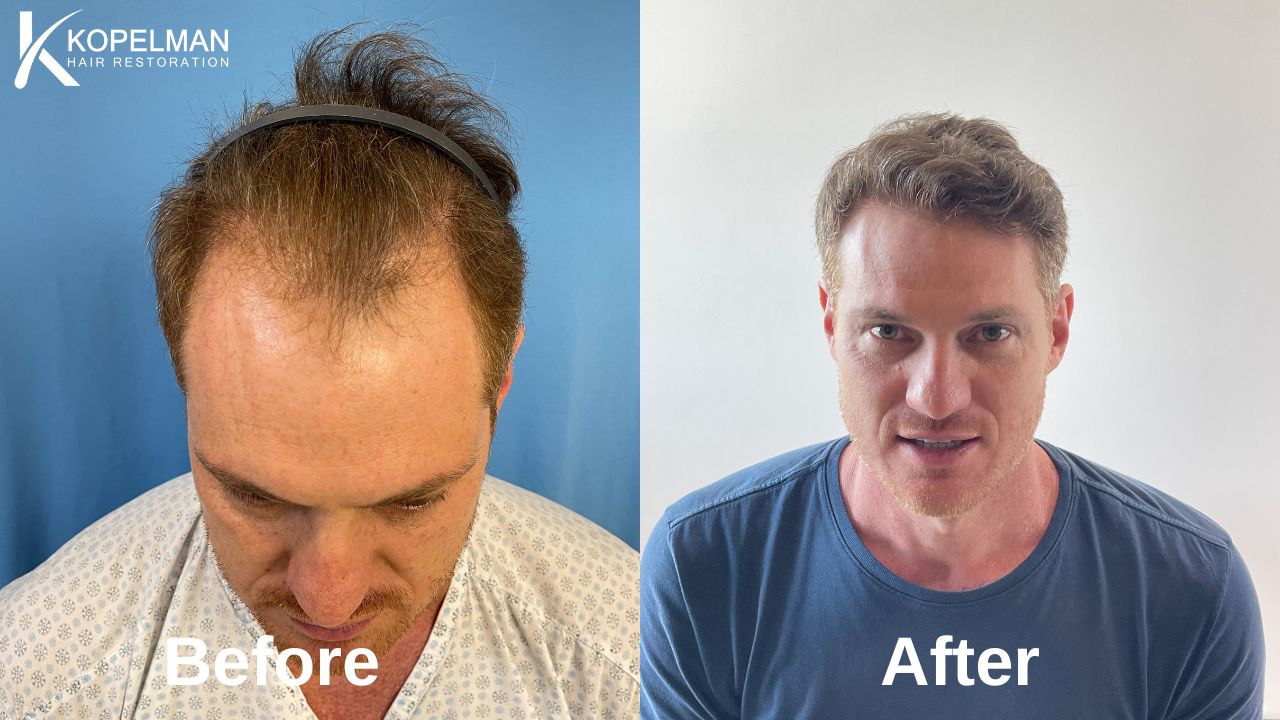
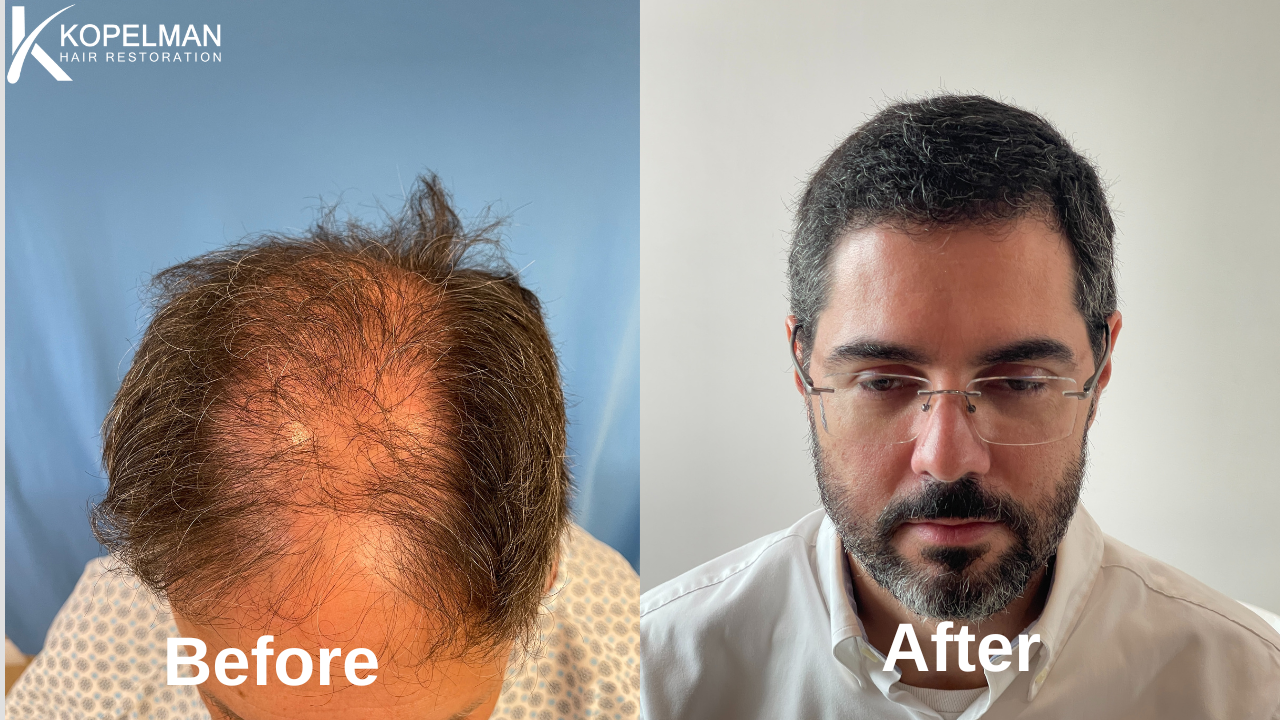
As you may have guessed, the most commonly performed procedure at Kopelman Hair is FUE surgery, which minimizes scarring while integrating new growth with the existing strands. For a closer look at the outcomes of this technique, you can explore some FUE hair transplant before-and-after case studies to picture the transformation.
Steve Carell’s Hair Surgery: From Receding Hairline to Fuller Hair
Before his suspected procedure, the comedian’s pattern of loss was clear: a receding front, most visible around the temples. On the Norwood Scale, which charts male pattern baldness, he sat at roughly stage 2 or 3, where thinning concentrates along the hairline.
During his run on The Office from 2005 to 2013, his coverage looked progressively more youthful and full, especially in the areas previously affected.
As a working actor, he likely wanted to return to the set quickly without obvious signs of a procedure. One effective route is an unshaven approach, which involves minimal trimming of the scalp so patients keep most of their length.
By doing so, existing strands can conceal the newly placed grafts. That helps people resume social and professional activity sooner, without a noticeable short haircut.
Steve Carell’s Hair: 2005-2006
During the first season of The Office, his coverage looked visibly thinner on top, with a clearly receding front. It is possible the makeup team enhanced that look on purpose to fit the character, yet his strands still read as sparser than in the later seasons.
Many believe the actor underwent a procedure around this time, with most assuming he had enough recovery between the first and second seasons. That would explain the fuller, thicker appearance he carries from the next seasons onward.
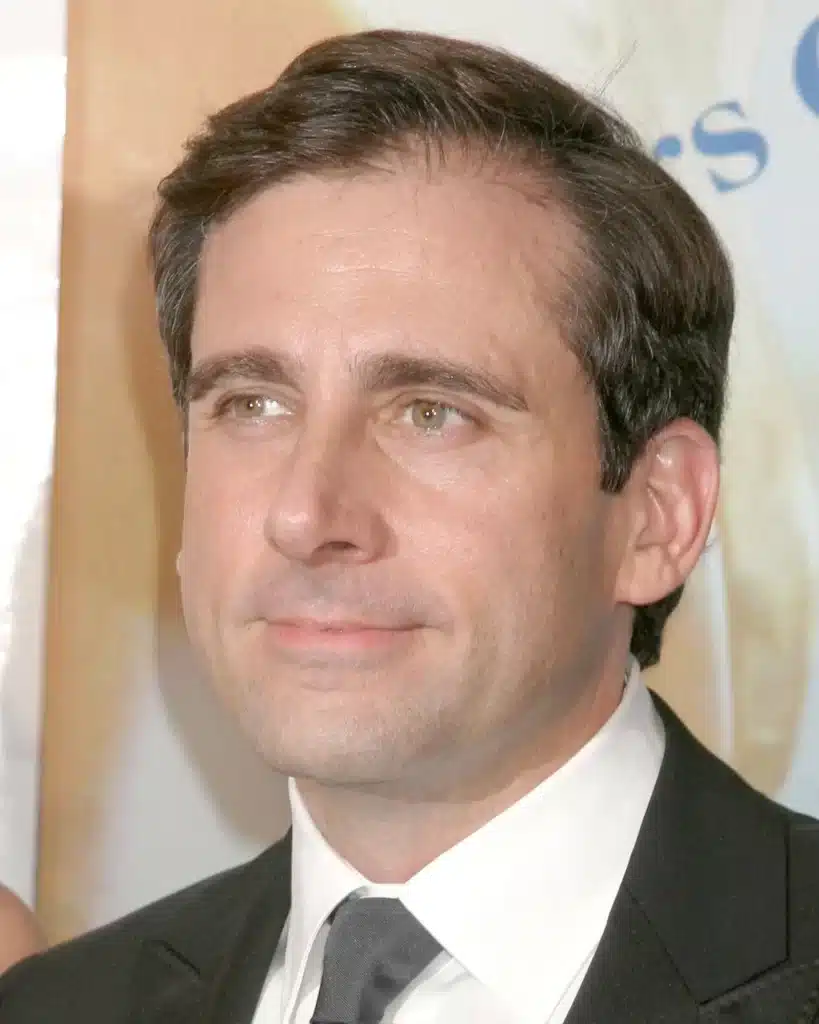
Steve Carell’s Hair: 2007
By the end of the show’s third season in 2007, his coverage looked markedly fuller than the thin Season 1 version. This is likely the point at which a restoration procedure had fully matured, since the outcome looked far more natural than that of implants.
Implanted plugs tend to read as less seamless, whereas his result looks convincingly real, which leads many to favor a true graft procedure over implants. The gradual increase in thickness further supports the theory that the work was done between the earlier seasons.
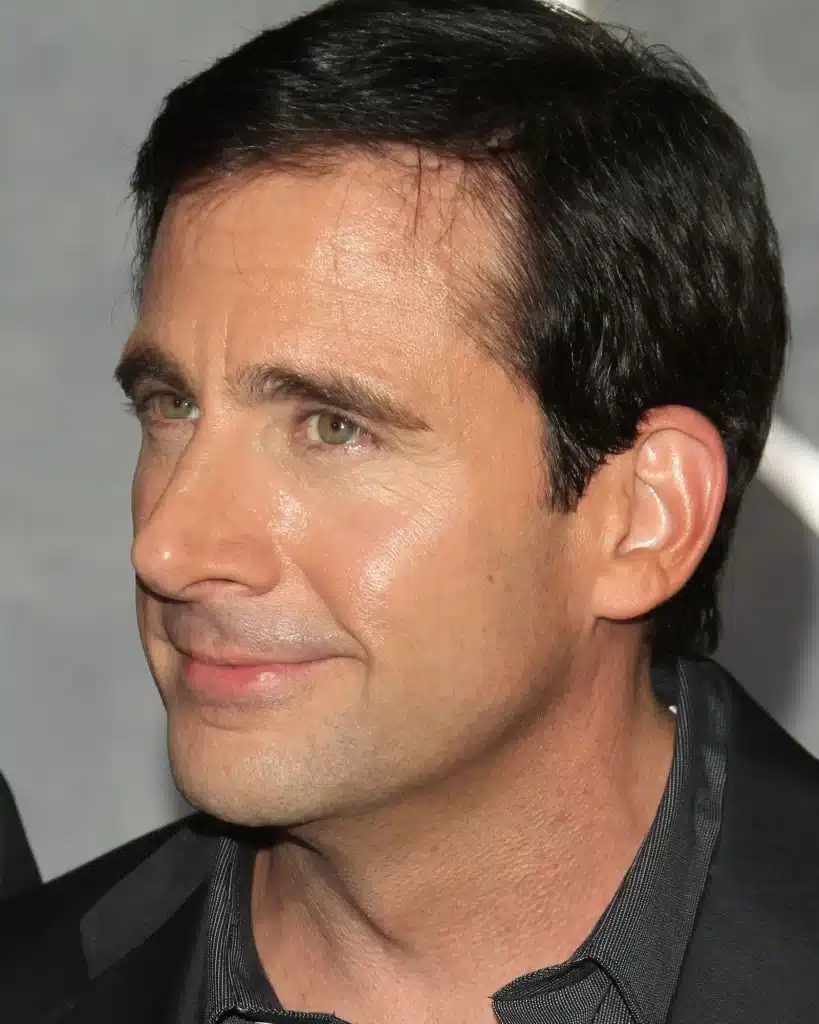
Steve Carell’s Hair: 2015
By 2015, the actor had moved on from his signature role as Michael Scott, but he kept appearing regularly on screen. Throughout this stretch, his coverage remained full and dark, maintaining a healthy, youthful look.
That consistency suggests his procedure delivered durable, successful results, letting him maintain his appearance as he took on high-profile film and television roles.
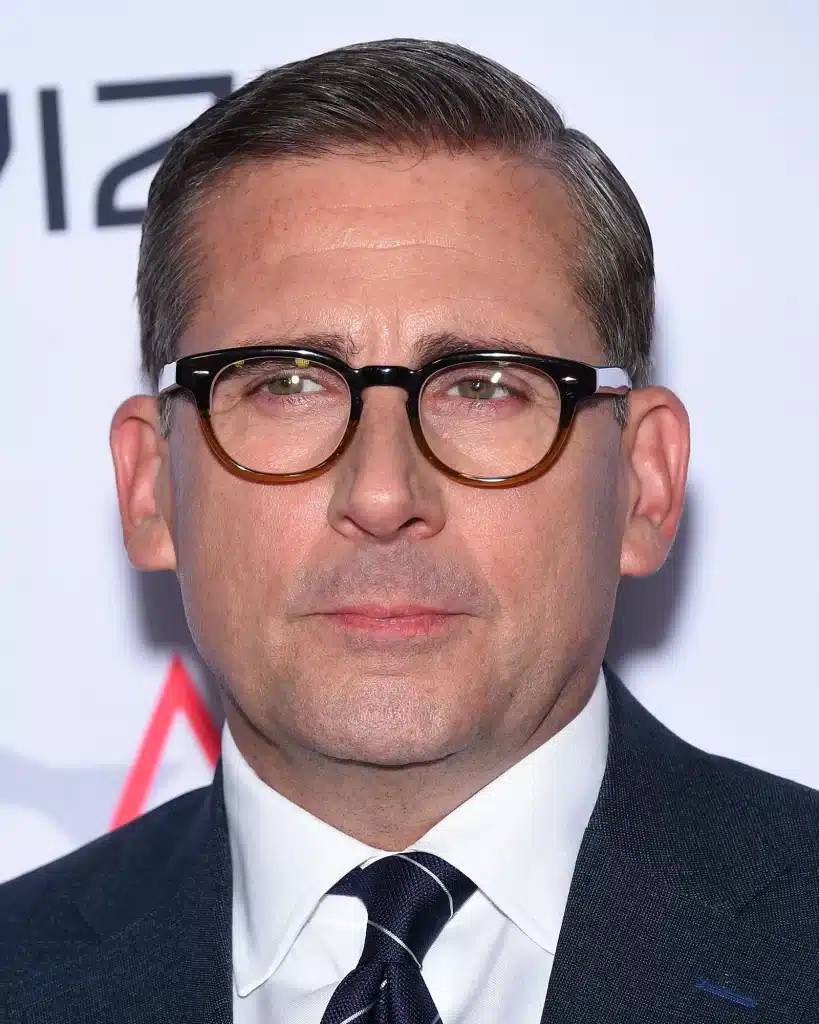
Steve Carell’s Hair Today
His coverage may have greyed over the years, but there are no signs of renewed loss. In fact, the grey lends a distinguished air, adding a sense of wisdom and worldliness. If he did have a procedure years ago, the long-term outcome clearly held up.
Although the speculation has continued, no one outside the actor and his team knows for certain. What is plain is that his coverage looks fuller and thicker now than it did in 2005, which keeps the debate alive. Either way, the change is striking.
Was It Surgery, or Just Clever Styling?
Not everyone is convinced a procedure explains the change, and it is worth addressing that skepticism honestly.
Some fans point out that the show reportedly styled Michael Scott’s hair to look thinner and slicked back in Season 1 to make the character feel less likable, then eased off in later seasons. Slicking and greasing strands can absolutely exaggerate the look of thinning on camera.
There is also a timing argument. Around the same time, the comedian appeared in The 40-Year-Old Virgin (2005) with a noticeably fuller look, which some cite as evidence that styling, not surgery, accounted for the on-screen difference.
That leaves the question many viewers still ask: how did Steve Carell get his hair back so convincingly? The strongest counterpoint is durability.
Styling tricks explain a single season, but they do not explain a denser, even front that has held steady across roles for nearly two decades. A lasting change of that kind lines up far more closely with a well-executed graft procedure than with lighting, product, or camera angles alone.
Why Celebrities Choose FUE Hair Surgery
For many public figures, FUE is the preferred route. It offers discreet, natural results without the pluggy look tied to older techniques. Minimal downtime and the absence of a visible linear scar make it a practical choice for people who are constantly photographed, including actors and athletes.
Many stars opt for modern procedures to achieve natural-looking results, as seen in Lewis Hamilton’s hair transplant.
Given the actor’s prominent role on a hit series, the subtle improvement likely boosted his confidence while preserving his public persona. The change let him keep working without drawing attention to a procedure, though fans certainly noticed the outcome.
How Did Steve Carell Get His Hair Back? Estimating the Grafts
Estimating the number of grafts involves weighing both the affected region and the desired density. Based on his level of loss, the actor likely needed somewhere between 1,000 and 1,500 grafts.
Those would have been taken from the donor zone, most likely the back or sides of the scalp, and placed into the thinning areas along the front. The goal of any restoration is to rebuild natural growth while improving density where loss has occurred.
His durable result indicates a well-executed procedure that addressed the loss and has aged gracefully over time.
What Recovery Might Have Looked Like
If the actor did undergo FUE, his healing likely followed the standard arc for the technique. Recovery is gradual, and the most natural results take roughly a year or more to settle. The phases below outline what a patient in his position would typically experience.