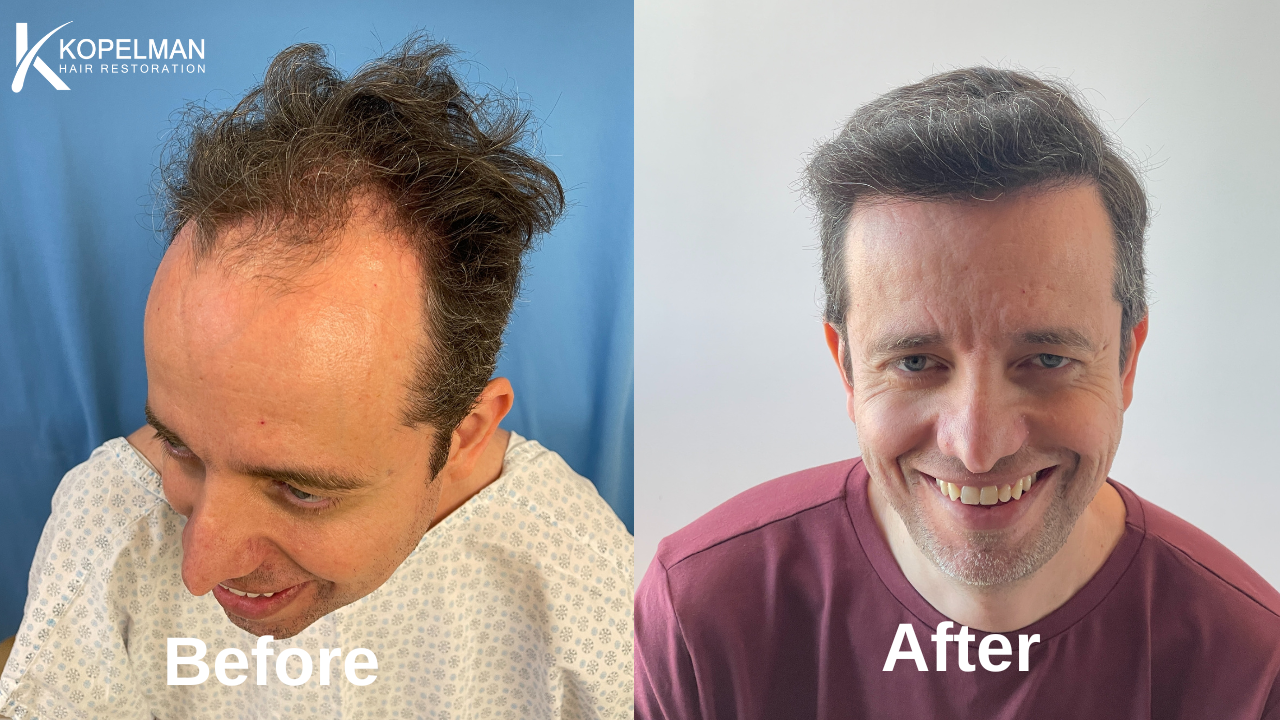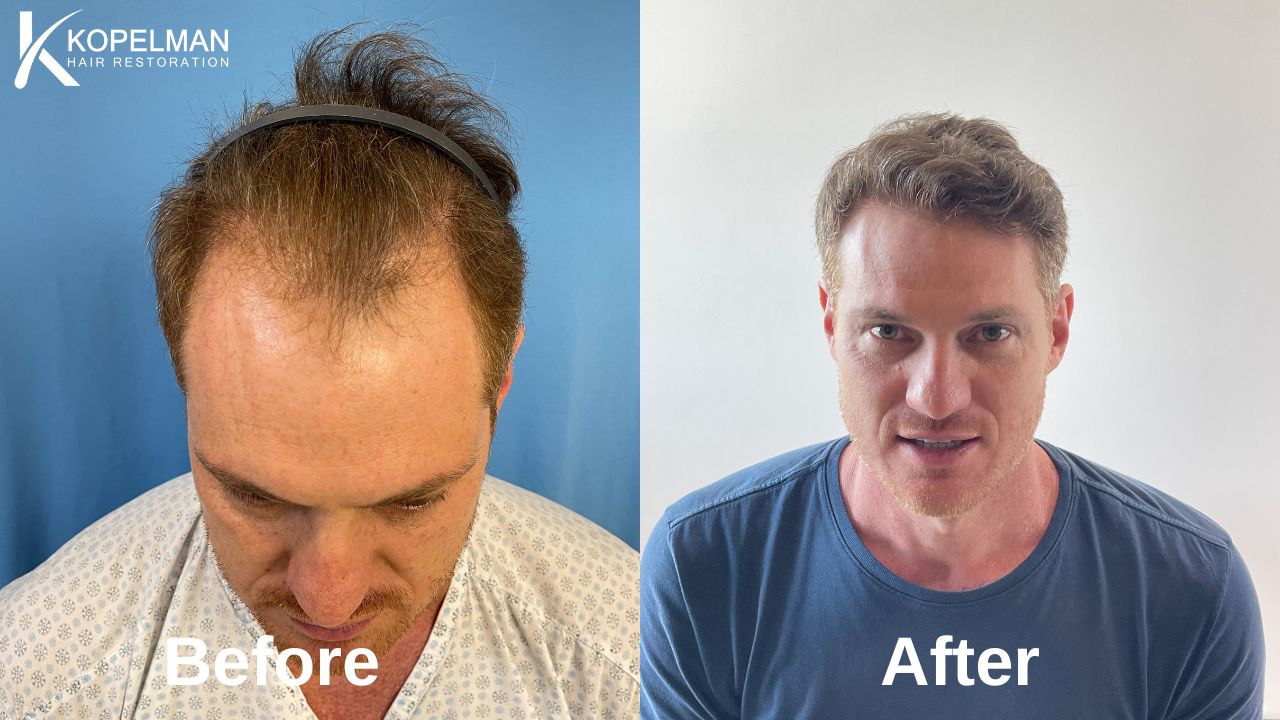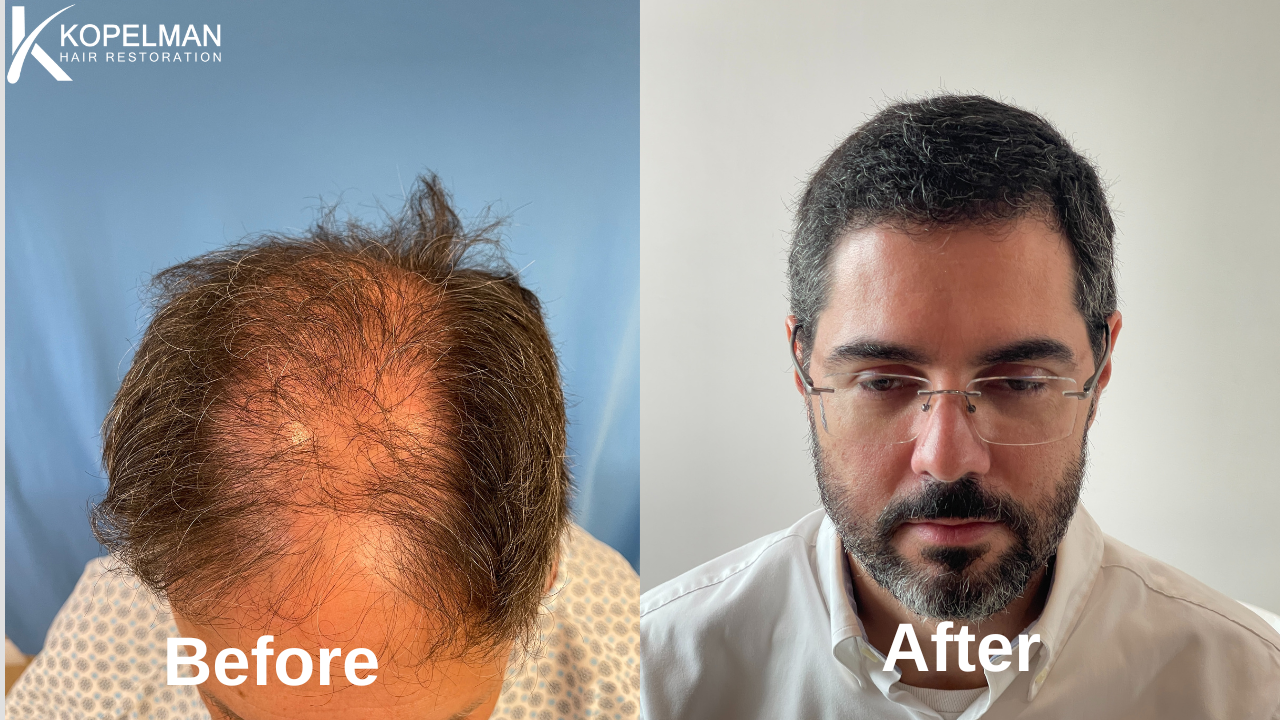

At Kopelman Hair, specialists identify the precise cause and design custom treatment plans to rebuild density and balance.
With over 40 years of combined experience, our team blends advanced medical techniques with surgical artistry to help patients regain strong, healthy hair and lasting confidence.
Key Takeaways
- Thinning near ears may stem from genetics, traction, or scalp inflammation.
- Retrograde alopecia is a common pattern that begins at the sides or nape instead of the temples.
- Inflammation, friction, and hormonal imbalance can weaken follicles and slow growth.
- Early diagnosis through scalp imaging and medical evaluation improves treatment outcomes.
- Targeted therapies such as PRP, medication, and FUE restore balance and long-term density.
Why Hair Loss Behind the Ears Happens
Thinning or patchy shedding in the outer ear area is less common than crown or frontal loss, but it can still spread if left untreated. The follicles in this zone are delicate and react quickly to hormonal shifts, tension, or irritation.
A common pattern is retrograde alopecia, in which the hairline recedes upward from the neckline or sides. Because it advances slowly, many people notice it only once the scalp becomes visible. Early medical care prevents progression and supports healthy regrowth.
Main Reasons for Balding Behind the Ears
| Cause | What Triggers It | Common Signs | Often Reversible? |
|---|---|---|---|
| Retrograde Alopecia | Genetic DHT sensitivity along the sides and nape | Slow, symmetrical thinning upward from the neckline | Partly, if treated early |
| Traction & Friction | Tight hairstyles, headbands, mask or glasses straps | Thinning where tension or rubbing is greatest | Yes, if caught before scarring |
| Scalp Conditions | Seborrheic dermatitis, psoriasis, fungal infection | Redness, flaking, itching with shedding | Usually, once inflammation is controlled |
| Autoimmune / Hormonal | Alopecia areata, lupus, thyroid imbalance | Smooth, round bald patches near the ears | Varies; depends on the condition |
| Nutrient Deficiency | Low iron, zinc, or vitamin D; poor circulation | Diffuse weakening and slow regrowth | Yes, once levels are corrected |
Several underlying conditions can weaken follicles and trigger loss near the ears. Identifying the cause is what makes proper recovery possible. The table further down compares these triggers side by side.
1. Retrograde Alopecia
A variation of genetic hair loss that starts along the lower scalp and sides. Sensitivity to DHT (dihydrotestosterone) causes follicles to shrink, producing thinner strands until growth eventually stops.
2. Traction and Friction
Repeated pulling from tight ponytails, braids, headbands, or mask straps irritates follicles and leads to thinning. Sustained tension can eventually cause permanent damage, a well-documented feature of traction alopecia.
3. Scalp Conditions
Seborrheic dermatitis, psoriasis, or fungal infections inflame the scalp and disrupt circulation. Chronic inflammation shortens the growth phase and damages hair follicles, so irritation around the ears should not be ignored.
4. Autoimmune or Hormonal Disorders
Alopecia areata, lupus, or thyroid imbalance can cause smooth, circular bald patches near ears. In alopecia areata specifically, the immune system mistakenly attacks healthy follicles, and hair may fall out in small, round patches. Medical evaluation is essential to prevent recurrence.
5. Nutrient Deficiencies and Poor Circulation
Low levels of iron, zinc, or vitamin D weaken follicles. Reduced blood flow also limits the nutrients that new growth depends on, slowing recovery even further.
Recognizing Early Signs
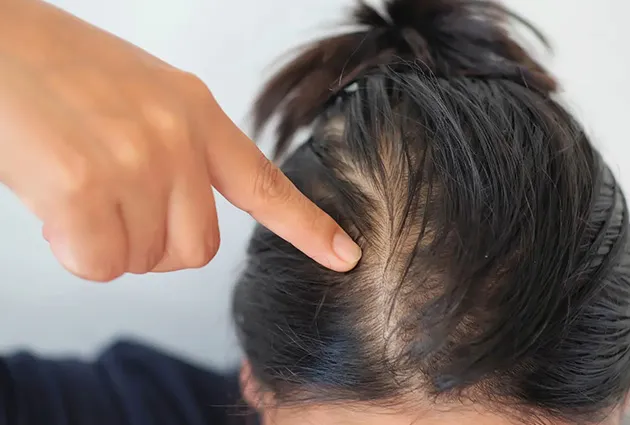
Early symptoms include thinning strands, visible scalp patches, or extra shedding when brushing. Some people notice redness or itching before any hair is lost.
At Kopelman Hair, high-resolution scalp imaging helps detect these changes early, enabling targeted, minimally invasive treatment before follicles are permanently affected.
Understanding the Pattern of Loss Around the Ears
Hair loss near the ears usually follows a distinct pattern. In retrograde alopecia, thinning progresses symmetrically along the sides or nape rather than at the crown.
It can occur alongside androgenetic alopecia but tends to advance more slowly. Without treatment, affected follicles shrink and stop producing strong strands, so a precise diagnosis is what ensures effective intervention.
When to Seek Medical Advice
You should see a specialist if:
- Patches or thinning appear near or above the ears
- Shedding continues for several months
- Itching, redness, or flaking develops
- Family history points to hereditary or autoimmune hair loss
Prompt diagnosis prevents irreversible damage and improves your recovery potential.
Diagnosis at Kopelman Hair
A detailed consultation and scalp evaluation determine the exact cause of the shedding.
Scalp Analysis and Imaging
Advanced magnification lets our specialists study follicle health, density, and inflammation in fine detail.
Medical History Review
Lifestyle factors, stress, medications, and hormonal fluctuations are examined for any contributing patterns.
Scalp Biopsy
In more complex cases, a biopsy clarifies whether the loss is autoimmune, hormonal, or scarring in nature. Those findings guide safe, personalized treatment planning.
Treatment Options for Hair Loss Near Ears Areas
Once the cause is known, treatment focuses on strengthening hair, repairing follicles, and preventing recurrence.
1. Medical Therapies
- Topical Medications: Minoxidil helps reactivate dormant follicles.
- Oral Treatments: Finasteride lowers DHT and slows follicle shrinkage in men.
- Anti-Inflammatory Formulas: Medicated shampoos and topical steroids calm irritation and support healing.
2. Regenerative Treatments
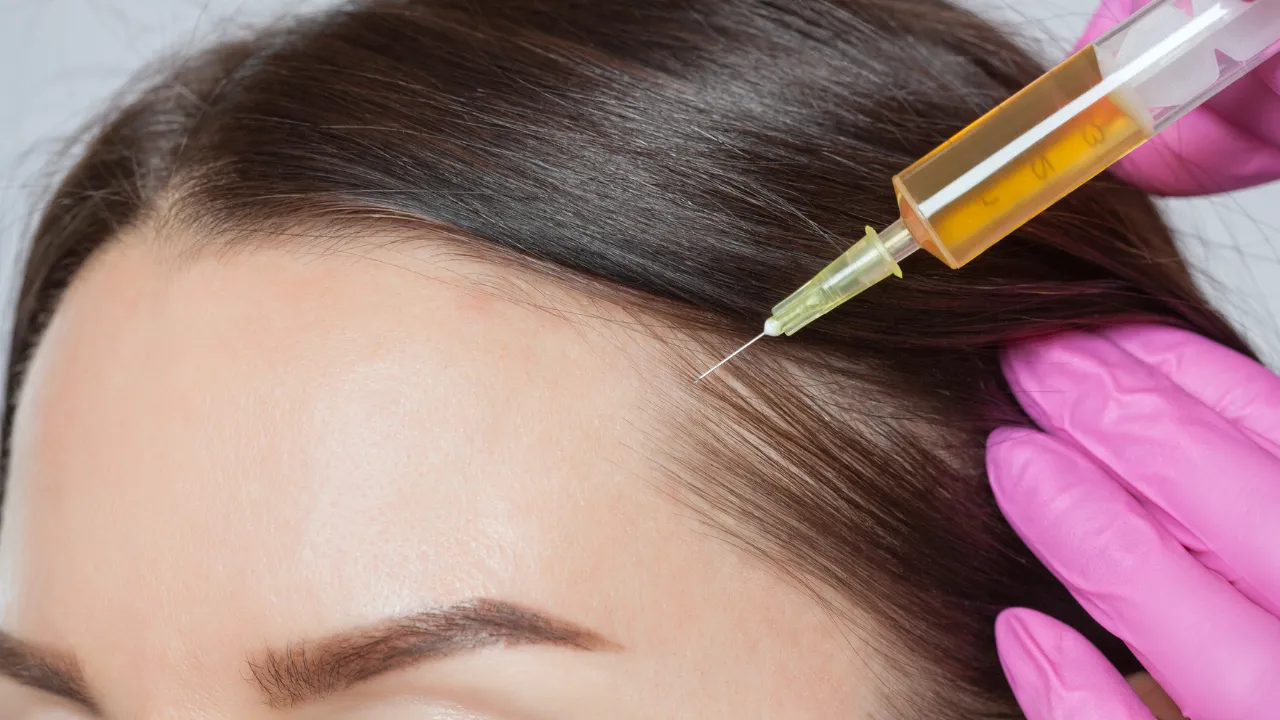
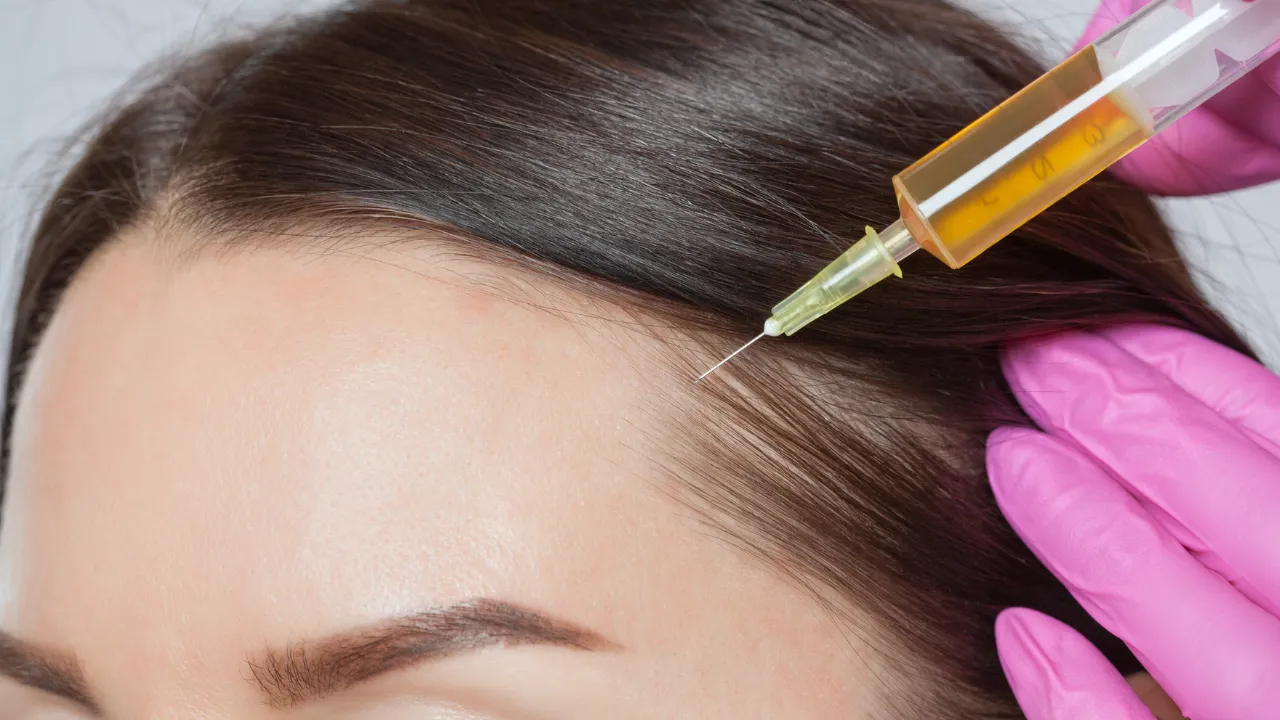
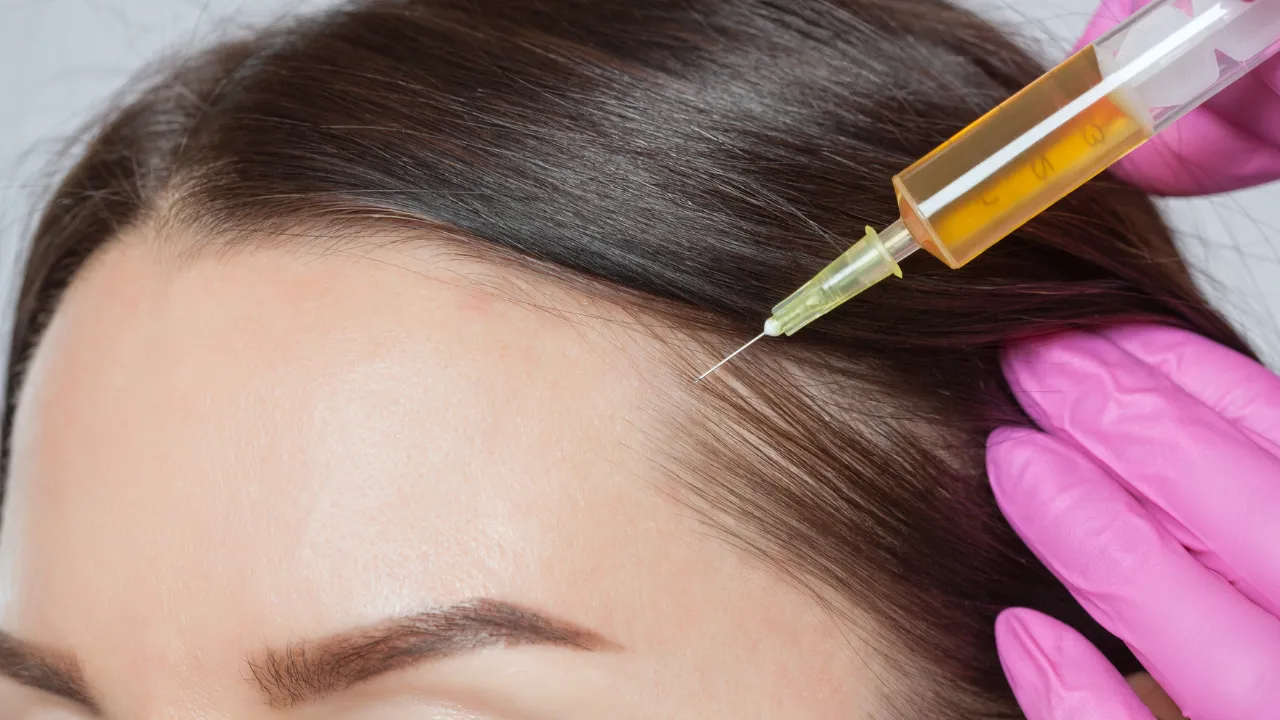
- Platelet-Rich Plasma (PRP): Growth factors from the patient’s own blood stimulate repair and renewal.
- Low-Level Laser Therapy (LLLT): Red-light devices improve circulation and cellular activity.
3. FUE Hair Transplant Surgery
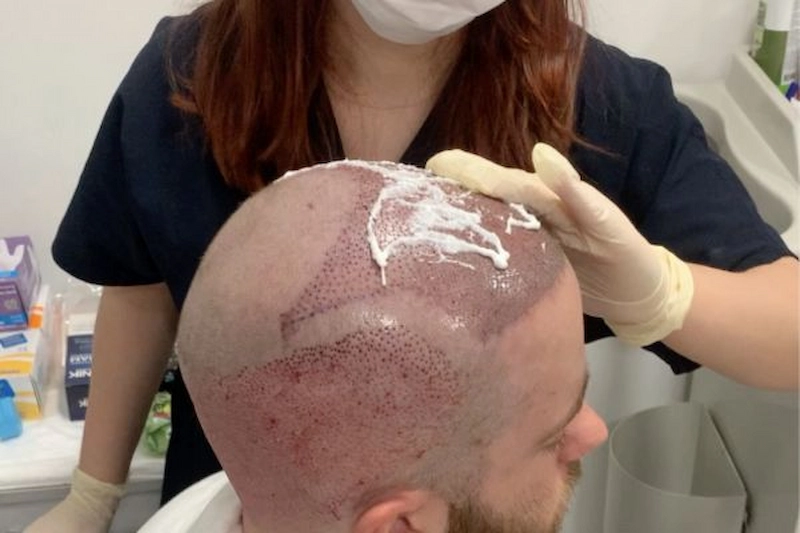
When follicles are permanently damaged, Follicular Unit Extraction (FUE) offers lasting results. Our surgical team stabilizes the scalp before surgery, thereby protecting the grafts and promoting natural regrowth.
Autoimmune Causes of Patchy Loss
Autoimmune conditions such as lupus or alopecia areata can cause sudden, recurring shedding near the ears. The immune system mistakenly targets healthy follicles, leading to patchy baldness.
At Kopelman Hair, treatment may include corticosteroid injections, topical immunotherapy, or regenerative approaches that help restore immune balance and encourage natural regrowth.
Maintaining Healthy Hair Through Lifestyle
Daily care supports medical treatment and protects follicles from new damage.
Practical steps include:
- Use gentle, sulfate-free shampoos.
- Eat foods rich in protein, omega-3s, and vitamins.
- Stay hydrated and manage stress.
- Avoid tight hairstyles or accessories that press near the ears.
- Massage the scalp to boost circulation.
Consistent care keeps follicles healthy and helps prevent recurring shedding.
Hair Loss Above and Behind the Ears in Women
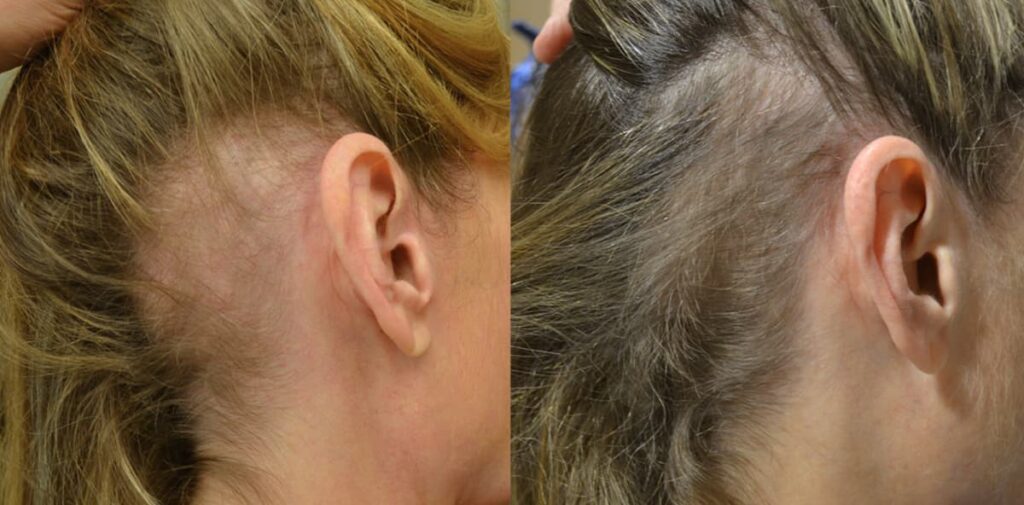
Women often experience thinning above and behind the ears from traction, hormonal changes, or scalp irritation rather than a defined bald spot. Where men tend to see sharp circular gaps, women usually notice diffuse thinning that makes the scalp show through, sometimes described as having little to no hair in the outer ear area.
Common female-specific triggers include tight ponytails and braids, hormonal shifts around pregnancy, postpartum, or menopause, thyroid imbalance, and iron deficiency. Because these causes differ from typical male-pattern loss, an accurate diagnosis matters even more before starting any treatment.
For female patients, our specialists favor non-invasive options first, such as PRP, nutritional optimization, and topical therapy. Since female follicles often remain active longer than in male-pattern hair loss, early care often restores full growth and density.
When thinning around ears is caught early, most women avoid the need for surgery altogether. If you notice widening areas, more scalp showing near the ears, or steady shedding, an evaluation can help confirm the cause and protect the follicles that are still active.
The Importance of Early Treatment
Treating the first signs of thinning leads to better outcomes. Ignoring irritation or shedding gives follicle shrinkage time to worsen.
At Kopelman Hair, early diagnosis helps protect active follicles and speed recovery. Using dermoscopy and biopsy data, our specialists tailor every plan for precise, lasting improvement.
Recent Research and Innovations
Current studies point to chronic inflammation, DHT sensitivity, and poor blood flow as key drivers of localized shedding. Regenerative medicine is an active area of research, and several approaches are still emerging.
Emerging treatments include:
- Exosome Therapy: Early research explores its potential to signal and rejuvenate follicles at the cellular level.
- Stem Cell Growth Factors: Studied for their ability to stimulate dormant follicles and encourage regeneration.
- Enhanced FUE Technology: Continues to improve graft survival and density for more natural coverage.
As the evidence base grows, these options may allow safer, faster restoration with minimal downtime. Our specialists rely on established, evidence-based care first and introduce newer methods only where the research supports them.
Expert Oversight and Lasting Results
With decades of combined expertise, Kopelman Hair continues to lead in medical and surgical hair restoration. Our doctors combine precision, artistry, and compassionate care to achieve natural, lasting outcomes for each patient.
Final Thoughts
If you have noticed patchy thinning or shedding near your ears, act early. Kopelman Hair offers comprehensive diagnostic testing and tailored treatment designed to restore scalp health and density. With expert evaluation, evidence-based care, and consistent follow-up, patients can regain strong, natural-looking hair and lasting confidence.
Frequently Asked Questions
Why do I have no hair behind my ears?
Missing or sparse hair behind the ears is most often caused by traction from tight hairstyles, friction from glasses or masks, or a slow-moving pattern called retrograde alopecia. A scalp exam can confirm which one applies to you.
What causes hair loss above the ears in females?
In women, thinning above the ears usually traces back to traction, hormonal shifts, thyroid issues, or iron deficiency rather than classic male-pattern balding. Because the causes differ, an accurate diagnosis guides the right treatment.
Is balding behind the ears permanent?
Not always. When the cause is friction, inflammation, or a nutrient gap, regrowth is common once the trigger is removed. Permanent loss is more likely only after long-term tension causes scarring.
Can hair loss around the ears grow back?
Yes, in many cases. Female follicles in this area often stay active, so early care with PRP, topical therapy, or nutritional support frequently restores density.
How is alopecia in the outer ear area treated?
Treatment depends on the cause and may include topical or oral medication, anti-inflammatory care, PRP, or corticosteroid injections for autoimmune types. FUE surgery is reserved for follicles that are permanently damaged.
When should a woman see a specialist about thinning near ears?
Book an evaluation if patches appear, shedding lasts more than a few months, the scalp becomes visible, or there is redness and itching. Early diagnosis protects the follicles that are still active.