Day After Hair Transplant Surgery: Healing and Care

I hope you’re enjoying reading this blog post if you want a consultation with Dr. Kopelman, click here.

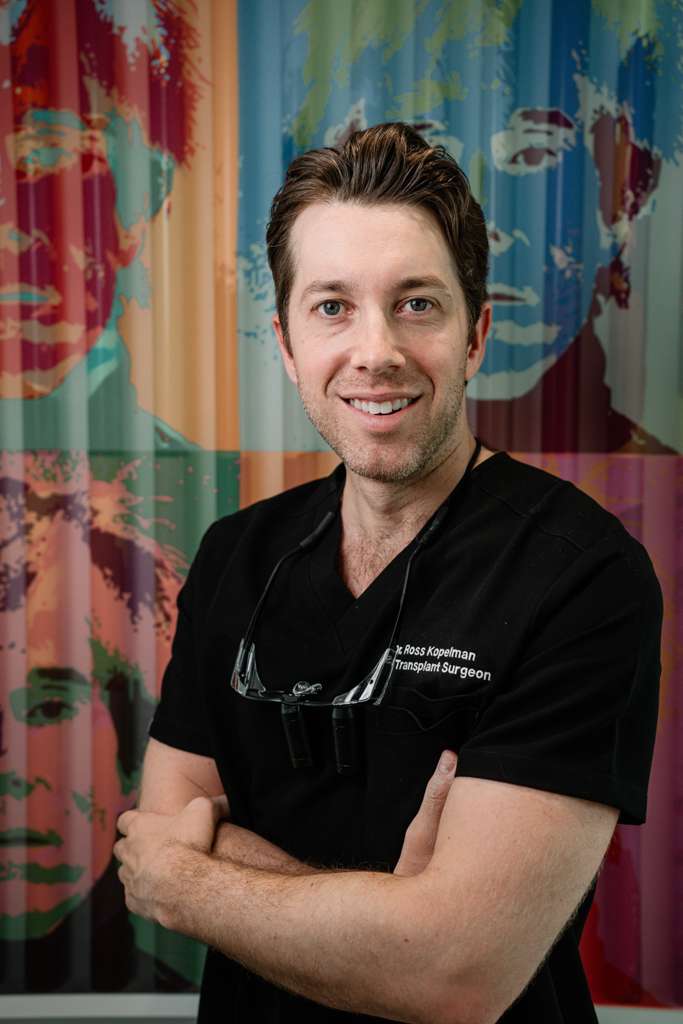
Dr. Ross Kopelman

July 10, 2025  ⁃  10 Min read

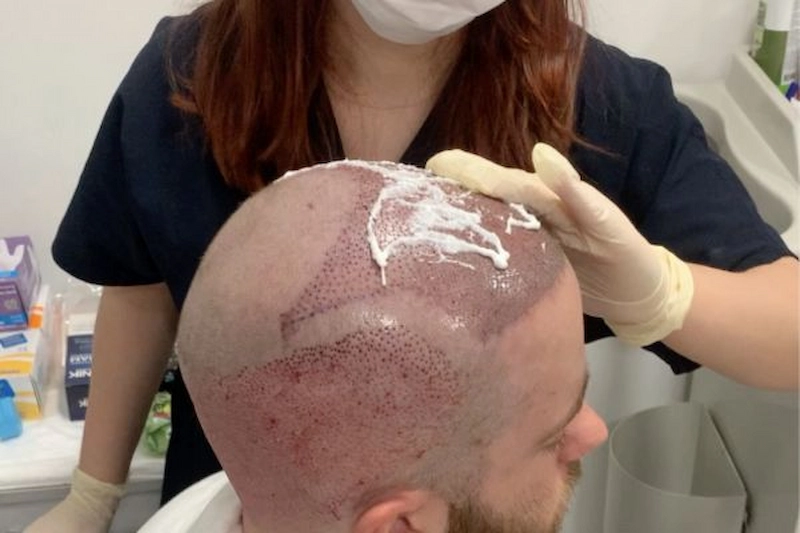
One day after your procedure, the scalp is usually tender, with redness, mild swelling, and a little oozing in both the donor and recipient areas. This early stage is all about protection, since the grafts are still delicate and can shift if touched. Most patients are advised to rest, remove any dressings exactly as directed, and begin gentle saline sprays to keep the area hydrated.

Careful handling during this window is what protects graft survival and prevents complications. Avoid direct contact, scratching, or excessive washing. Following your post-op instructions closely supports proper healing and sets the foundation for strong, natural growth.

At Kopelman Hair, we guide patients through every stage of hair transplant surgery. Knowing what the first day looks like makes the whole recovery feel far more manageable.

Your surgical team provides safe, personalized care so your results hold up for the long term.

Key Takeaways

  • Redness, swelling, and small scabs are normal in the first days and call for gentle care.
  • Avoid scratching, follow your washing instructions, and keep your head elevated to protect the treated area.
  • Mild shedding in the first month is expected, with new growth usually starting around month three.
  • Full results typically appear within 12 months with consistent care and patience.

Day After Surgery: What to Expect

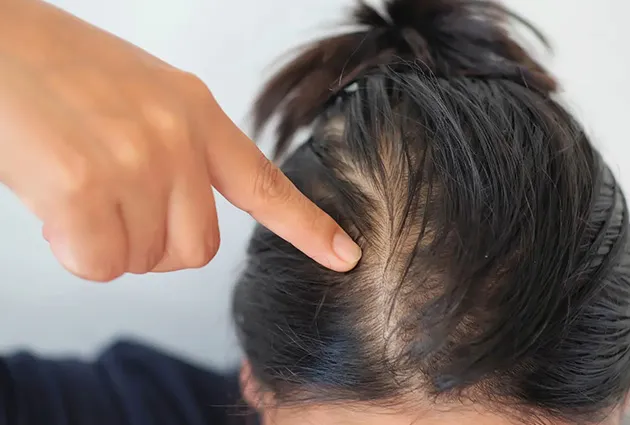
The day after surgery can feel overwhelming. It is common to see redness, mild swelling, and a sense of tightness across the scalp, all of which are normal parts of early healing.

Small scabs may begin to form around the recipient sites, while the donor area may feel sore. The treated zone often looks red and slightly puffy as your body starts to repair itself. Gentle handling now is what keeps everything on track.

This early pattern is similar to what patients experience after other delicate grafting procedures, such as eyebrow hair restoration in New York City, where facial work follows a comparable healing curve.

Photos One Day After Surgery

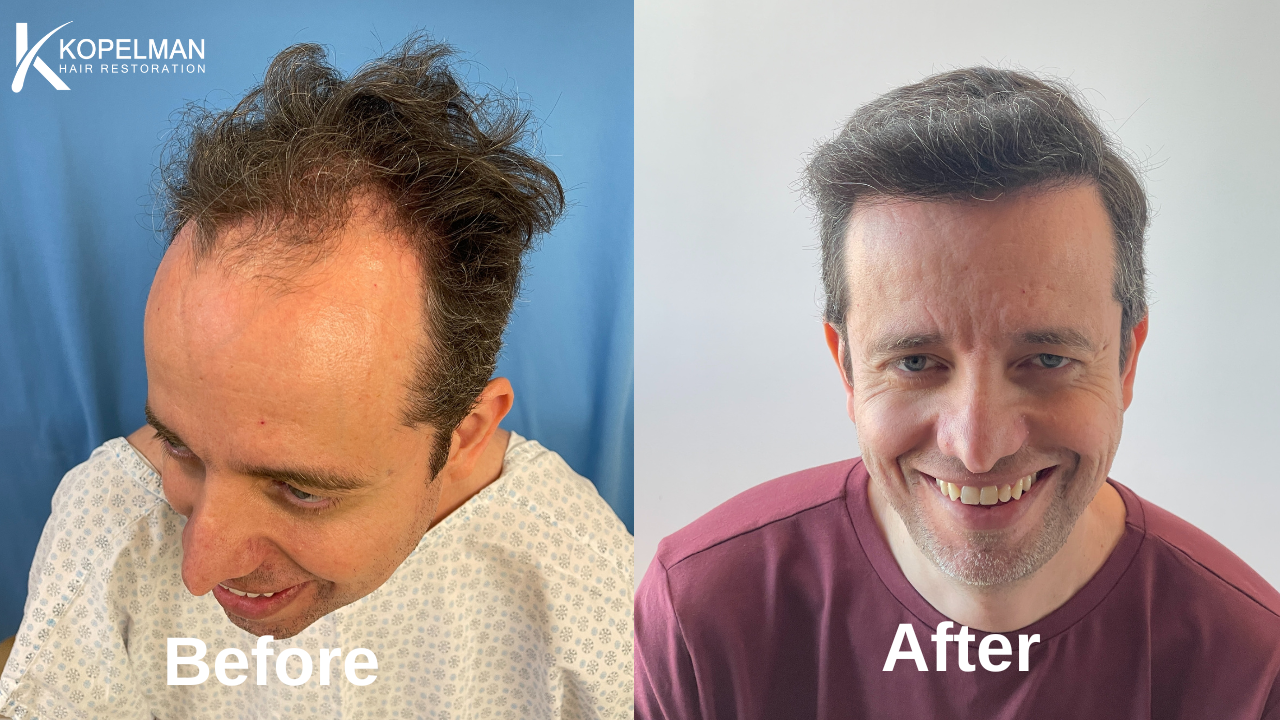
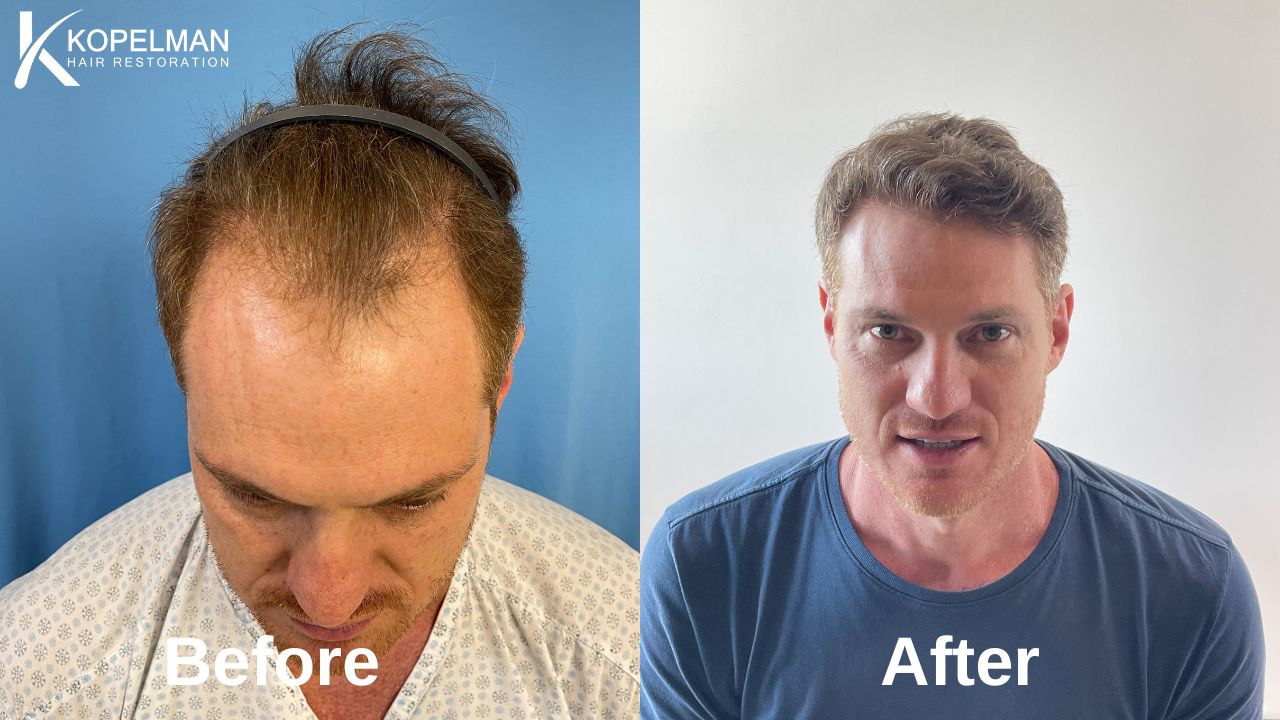
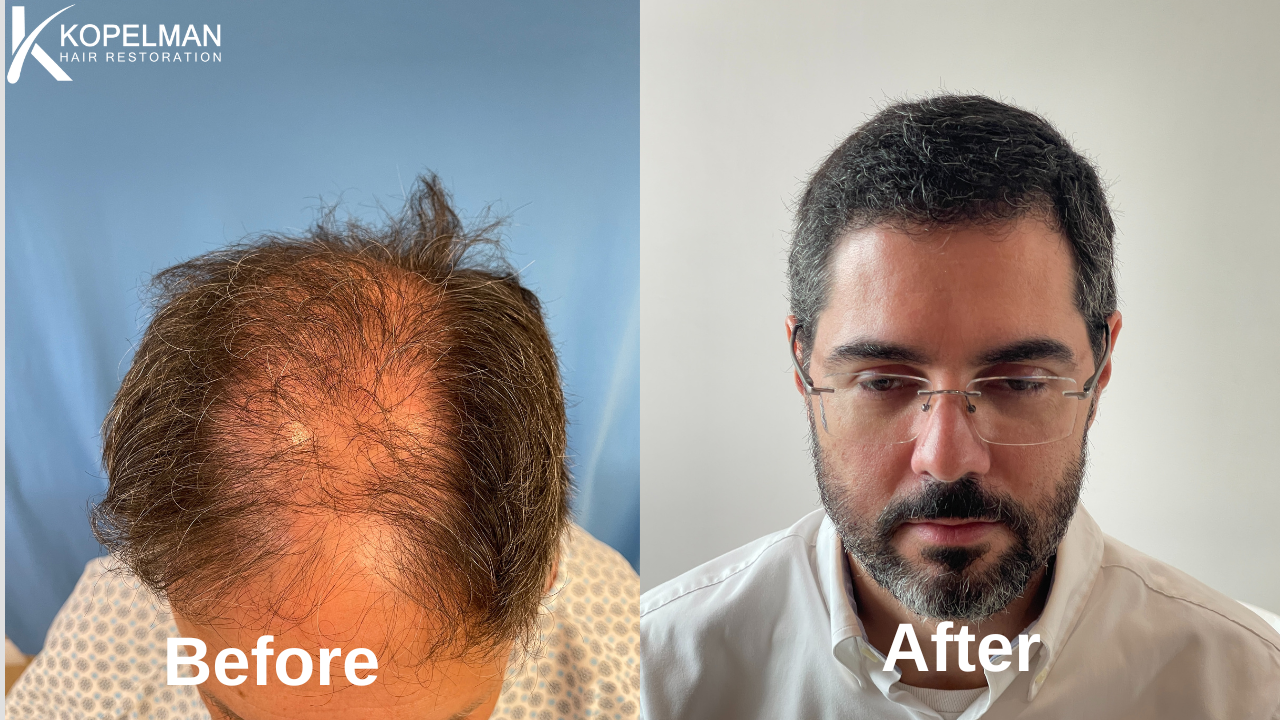
Pictures taken the next day usually show redness and tiny crusts. This can look alarming, but it is a routine part of the process. Everyone heals at a slightly different pace.
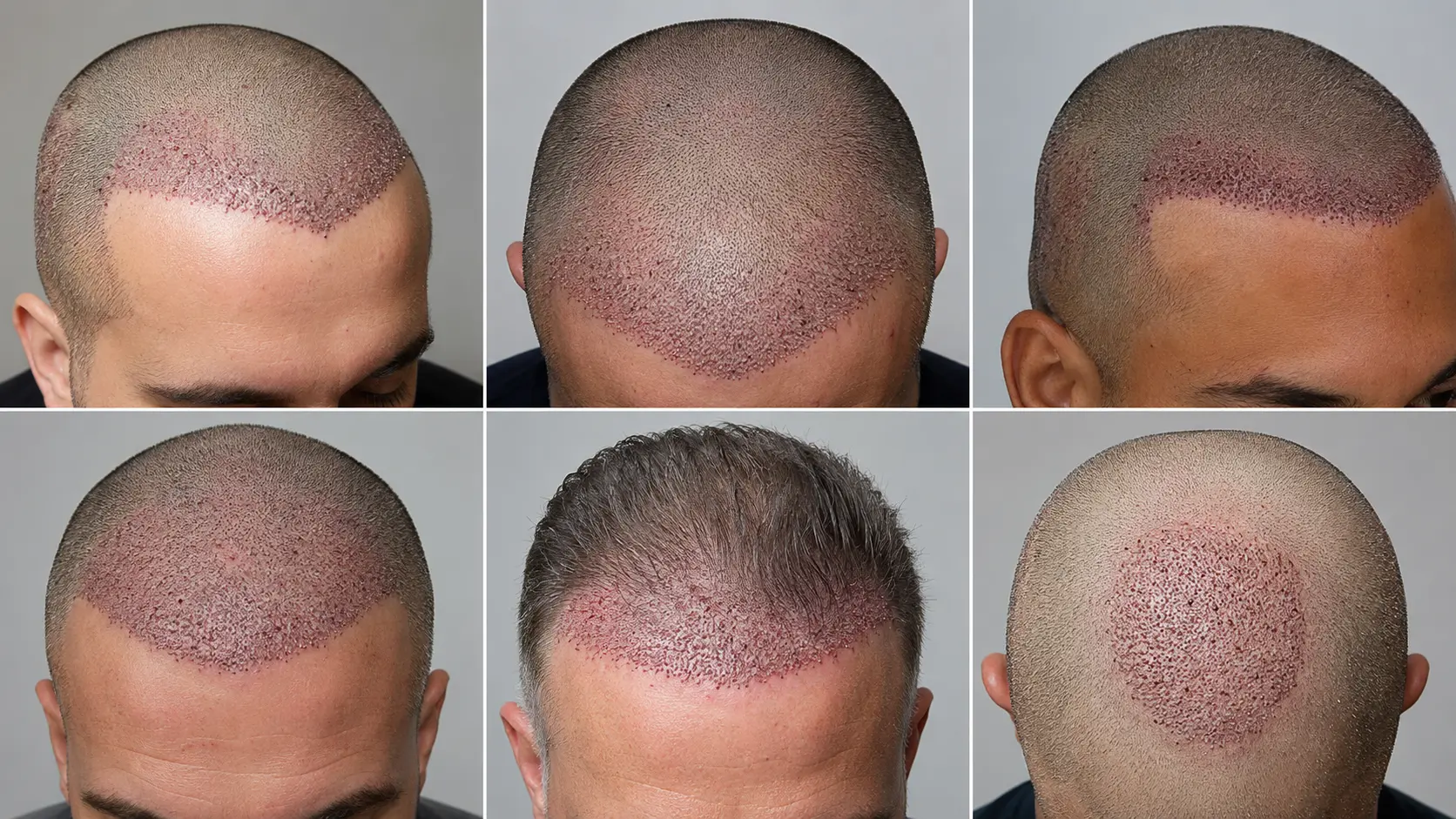
Sharing photos with your clinic during the first week is a smart way to get reassurance and catch anything unusual early.

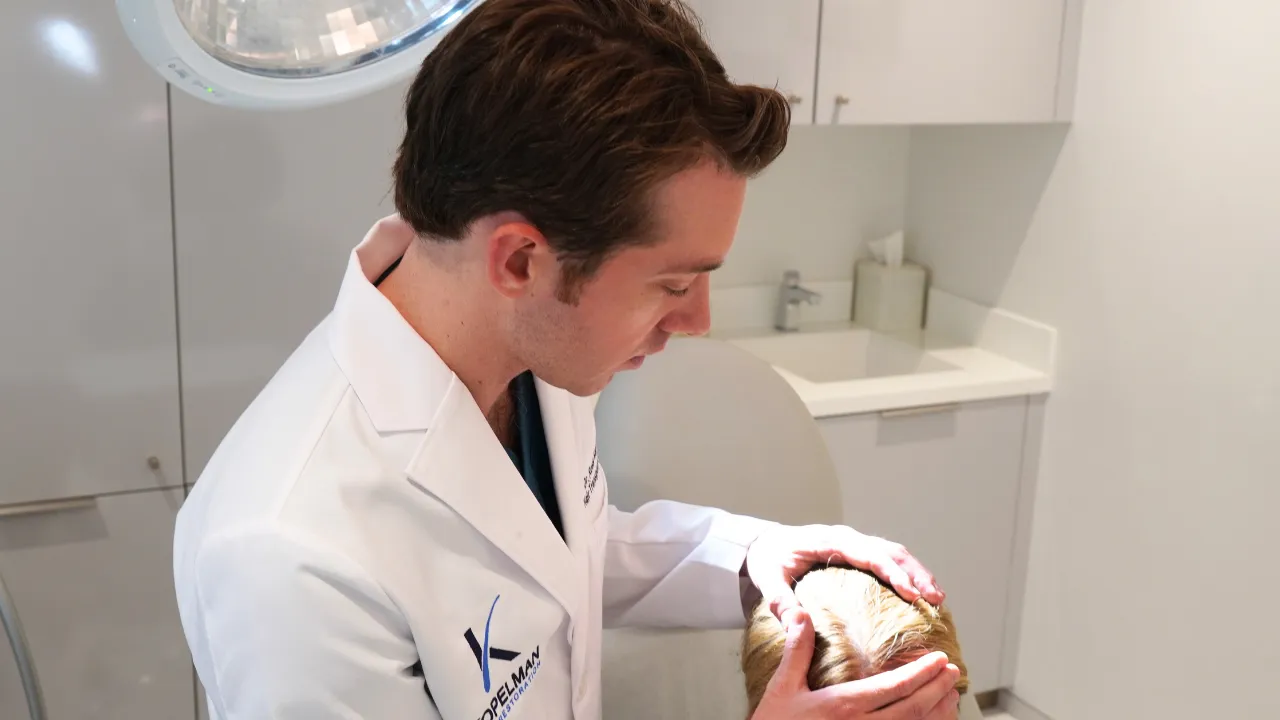
“At Kopelman Hair, I personally review each patient’s photos during the first week to ensure proper healing.” – Dr. Kopelman.

Hair Shedding in the First Days

Some patients lose a few hair shafts on day one. This is normal and temporary; it does not indicate a failed result.

Known as shock loss, this shedding does not harm the follicle beneath the skin. Early recovery focuses on those follicles, not the visible shafts that fall.

Pain and Swelling

Discomfort varies but is often mild, closer to a sunburn than a sharp pain. Swelling may show up on the forehead or around the eyes and usually settles quickly.

Elevating your head and taking any prescribed medication both help. According to the American Academy of Dermatology, mild redness and swelling in the first days are a normal part of healing.

“I always advise my patients that swelling peaks around Day 2 or 3, and this is completely normal.” – Dr. Kopelman.

Sleeping Position Tips

Sleeping upright helps limit swelling during the first week. A travel pillow keeps your head stable through the night.

Avoid rubbing your scalp against the pillow to avoid disturbing the new grafts.

Coping With Emotions Early in Recovery

It is normal to feel anxious about how you look in these first days. Redness and swelling fade quickly and do not reflect your final outcome.

Staying positive genuinely supports a smoother recovery. Keeping busy with daily life is one of the easiest ways to ease the worry.

Hair Transplant Day by Day: Healing Timeline

The table below is your single, at-a-glance reference for what happens at each stage and what to do about it. (Yes, the day of surgery counts as Day 1, which makes tracking your progress simpler.)

Hair Transplant Day by Day: What Happens and What to Do
Day What's Happening What to Do
Day 1Redness, mild swelling, and tenderness; light oozing possible.Rest, keep your head elevated, avoid touching the scalp, and begin saline sprays as directed.
Day 2Swelling may increase and can spread to the forehead or around the eyes.Avoid bending forward, keep elevating, and do not wash unless instructed.
Day 3Swelling starts to ease; small scabs begin to form.Gentle washing usually begins if cleared; a loose hat is typically fine.
Day 4Redness fades slightly; mild itching may start.Do not scratch; continue your gentle cleansing routine.
Day 5Scabs soften; itching may persist.Avoid picking at scabs; keep following your washing instructions.
Day 7Most crusts loosen and start flaking; swelling much improved.Wash as directed; many patients feel comfortable in public around now.
Day 14Surface healing is largely complete and grafts are well anchored.Resume most light routines; protect the scalp from strong sun.
Day 21Scabs are gone, though mild pinkness may remain.Maintain gentle care; some early shedding is normal.
Day 30+Shedding may continue as follicles enter a resting phase.Be patient and avoid harsh styling; new growth comes later.


This snapshot gives you a clear, day-by-day view of how the scalp settles and when each milestone arrives.
How Long Does a Hair Transplant Take to Heal?

Surface healing is faster than most people expect. In general, the visible scabs and redness clear within about 7 to 14 days, while the grafts themselves become secure in roughly the first 5 to 10 days. After that, the timeline shifts from “healing” to “growing,” and full, mature results take about 12 months.

Final results can take up to a year to fully appear.

The key point is that looking healed and being fully grown in are two different milestones. Your scalp can look normal within two weeks, even though the new hair is still months away from showing density.

When Can I Return to Work or Be Seen in Public?

This is the question most patients ask first, so here is the direct answer. If your job is not physically demanding, many people return to desk work within 2 to 5 days, accepting mild redness or scabbing during that period.

If you would rather wait until the procedure is not noticeable, plan for about 7 to 10 days. That is roughly how long it takes for the small crusts to flake off and the scalp to look settled.

The milestone table below shows when common activities are typically safe again. Always defer to your surgeon’s instructions, since healing rates vary from person to person.
When Can I Resume Common Activities?
Activity or Milestone Typical Timing
Gentle hair washingAround day 3, as directed
Wearing a loose hatAfter about 3 days
Return to desk or non-physical work2 to 5 days
Being seen in public without obvious signsAbout 7 to 10 days
Light activity such as walkingWithin a few days
Sun exposure or swimming without protectionAbout 2 weeks
Strenuous exercise and the gymAbout 3 to 4 weeks
Full, mature resultsAbout 12 months

What Day Is Most Painful?

Any soreness tends to peak on day two or three, then fades fast. Cooling packs and prescribed medication keep most patients comfortable. Steady, gentle care does the rest.

Shock Loss After Surgery

Shock loss is the temporary shedding of hair around the grafts, usually occurring between weeks 2 and 4. The follicles stay secure beneath the surface, so this is a normal step, not a setback. The American Academy of Dermatology confirms that this shedding is expected and temporary.

Understanding Shedding vs. Permanent Loss

Seeing hair fall can be stressful, but it is not a permanent loss. The shafts release while the follicles remain intact and prepare for a new growth phase.

New growth in the months that follow confirms that everything is working as intended. Patience through this stretch pays off.

Caring for Your Scalp as It Heals

Good care after hair transplant surgery comes down to a gentle, consistent routine. Light, careful washing keeps scabs from forming and promotes cleaner healing.

Resist the urge to scrub during the early recovery period. A soft touch protects the grafts while the scalp settles.

Clothing and Daily Habits After Surgery

Wear button-up shirts during the first week so you do not pull clothing over your head and disturb the grafts.

Other helpful habits:

  • Use soft pillowcases.
  • Skip tight hats until you are cleared.
  • Keep water lukewarm.
  • Avoid styling products early on.

Small choices like these go a long way toward protecting your results.

Activity and Exercise Guidelines

Keep physical activity light at first. Heavy exertion raises blood flow to the scalp and increases the risk of swelling.

Ease back into workouts only once the scalp has healed, generally around the three- to four-week mark, and follow your surgeon’s specific clearance instructions.

Traveling After Your Procedure

Short car rides are usually fine within a few days. If you are flying, waiting about a week is the safer choice, since dry cabin air can irritate the healing scalp.

Whatever your plans, confirm the timing with your clinic before booking travel.

Quick Do’s and Don’ts

A simple checklist for a smoother recovery:

Do:

  • Sleep elevated.
  • Wash gently.
  • Keep the scalp clean and dry.
  • Attend your check-ups.
  • Eat balanced meals.

Don’t:

  • Scratch your scalp.
  • Wear tight hats too early.
  • Use styling products too soon.
  • Exercise hard right away.
  • Worry if hair sheds, since that is normal.

These habits help protect a lasting outcome.

Can I wear a hat the day after surgery?

No. Wait at least three days unless your surgeon says otherwise, and start with something loose.


Usually around day three, but always follow your own clinic’s instructions.


Yes. Shock loss is expected and does not affect your final result.

Many patients return to non-physical work within 2 to 5 days, or wait about 7 to 10 days if they prefer the scalp to look fully settled.


The surface heals in roughly two weeks, while full, mature growth takes about 12 months.

Hair Growth Timeline and Results

Complete results typically take around 12 months, and some patients notice redness lingering a little longer than others.

New hair usually begins to appear by the third month and gradually fills in over the natural growth cycle. One month after a hair transplant, the early hairs often look fine before they thicken over time. Patience and steady follow-up give you the best possible outcome.

If you are considering restoration or have questions about your recovery, schedule a consultation with Dr. Kopelman today. He is committed to helping you achieve natural, lasting results with personalized care at every step.

About the doctor

Dr. Ross Kopelman

Hair Restoration Surgeon

Dr. Ross Kopelman is a hair restoration surgeon focused on the medical and surgical treatment of hair loss, with expertise in advanced FUE hair transplantation, natural hairline design, and regenerative therapies that support healthier hair growth. He is known for combining surgical precision with an artistic approach to deliver natural, undetectable results tailored to each patient. Dr. Kopelman sees patients in New York City and Palm Beach, Florida, and also offers virtual consultations for patients across the United States and internationally.
Follow the specialist:

Ready to Restore Your Hair?

Dr. Ross Kopelman offers personalized consultations for hair transplants and hair restoration in New York, New Jersey, and Palm Beach.

In this Article

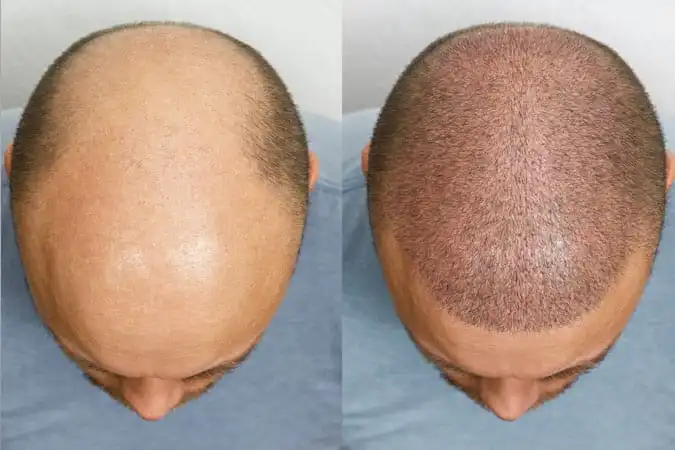
Before & After results

Kopelman Hair Restoration

Dr. Ross Kopelman and Dr. Joel Kopelman treat patients for hair loss and focus on delivering natural hair transplants at their New York City, New Jersey, and Palm Beach Florida offices. With over 40 years of combined experience, they are leaders in advanced FUE hair transplantation and hair restoration.
40+

Years Combined Experience

1K+

Procedures Performed

5.0★

Patient Rating

3

Locations

Stay in the loop

Get the latest on hair restoration and hair transplant tips from Dr. Kopelman

Dr. Ross Kopelman

Dr. Ross Kopelman is a hair restoration surgeon specializing in advanced FUE hair transplantation, natural hairline design, and regenerative therapies. He sees patients in New York City, New Jersey, and Palm Beach, and offers virtual consultations nationwide.