
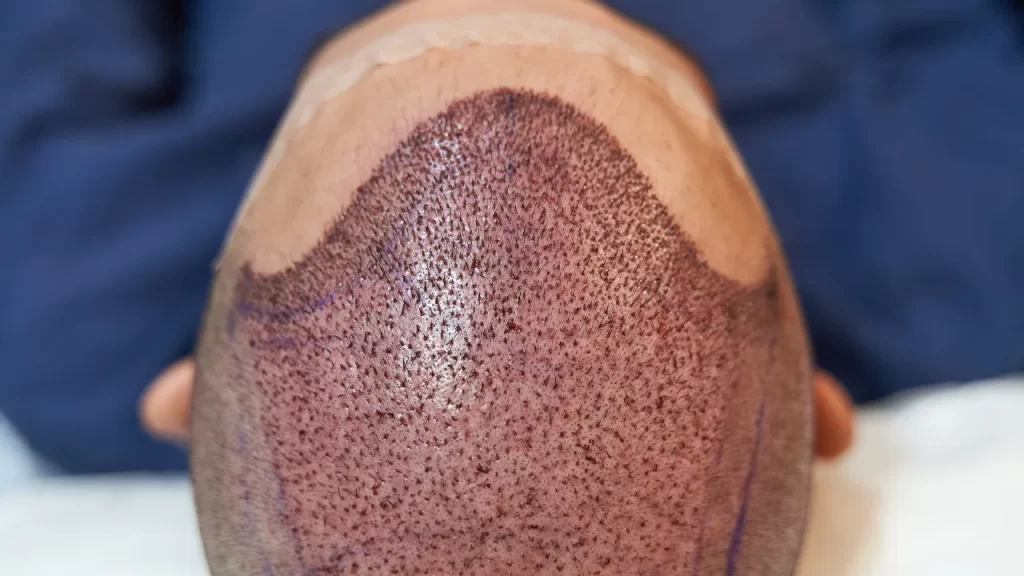
Why does the scalp turn red during recovery?
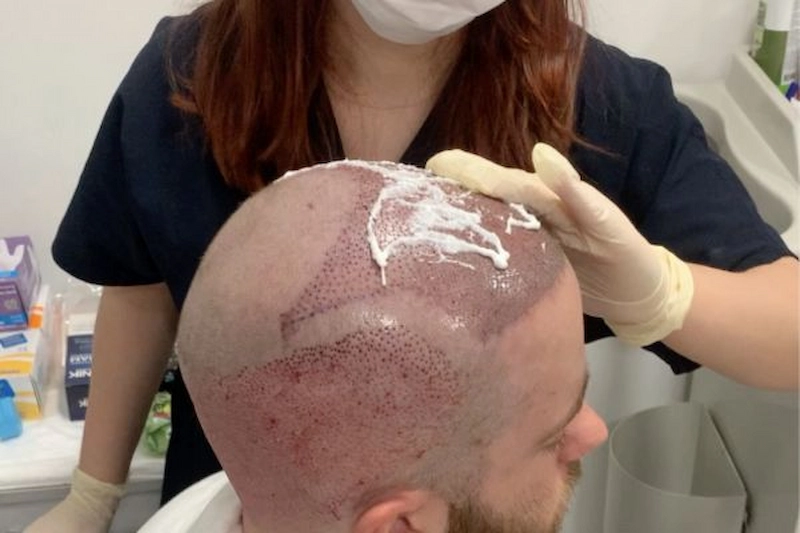
A red scalp after hair transplant work is the body’s natural response to minor trauma. Tiny incisions are made in both the donor and recipient zones to place the grafts, and this prompts a rush of blood to the treated skin. That extra circulation is exactly what the area needs to heal, but it also creates a visible flush.
Skin type plays a clear role here. People with sensitive or fairer complexions tend to notice more obvious coloring that takes longer to settle, while those with deeper skin tones often see it fade sooner. None of these signals is a problem on its own; it simply reflects how each person heals.
How long does red scalp after a hair transplant last?
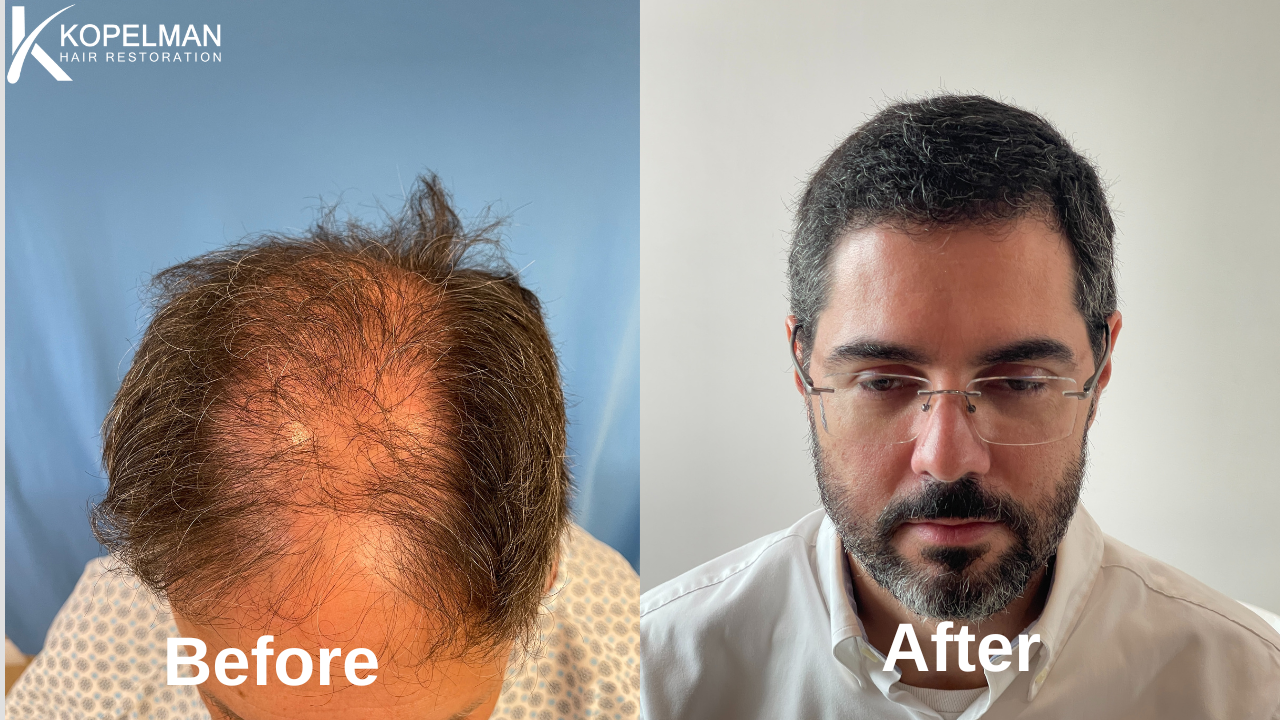
Most patients ask, “When does the discoloration go away?” For most, the scalp returns to its usual tone within about two weeks, once the scabs have shed and the surface has calmed. A faint pink cast can remain a little longer, especially in lighter or more reactive skin.
Two factors stretch the timeline. The first is skin sensitivity, since reactive skin holds color longer. The second is session size, because larger grafting sessions create more treated surface area, which can take a few extra weeks to even out. Both are normal variations, not warning signs.
Hair transplant redness after 1 month
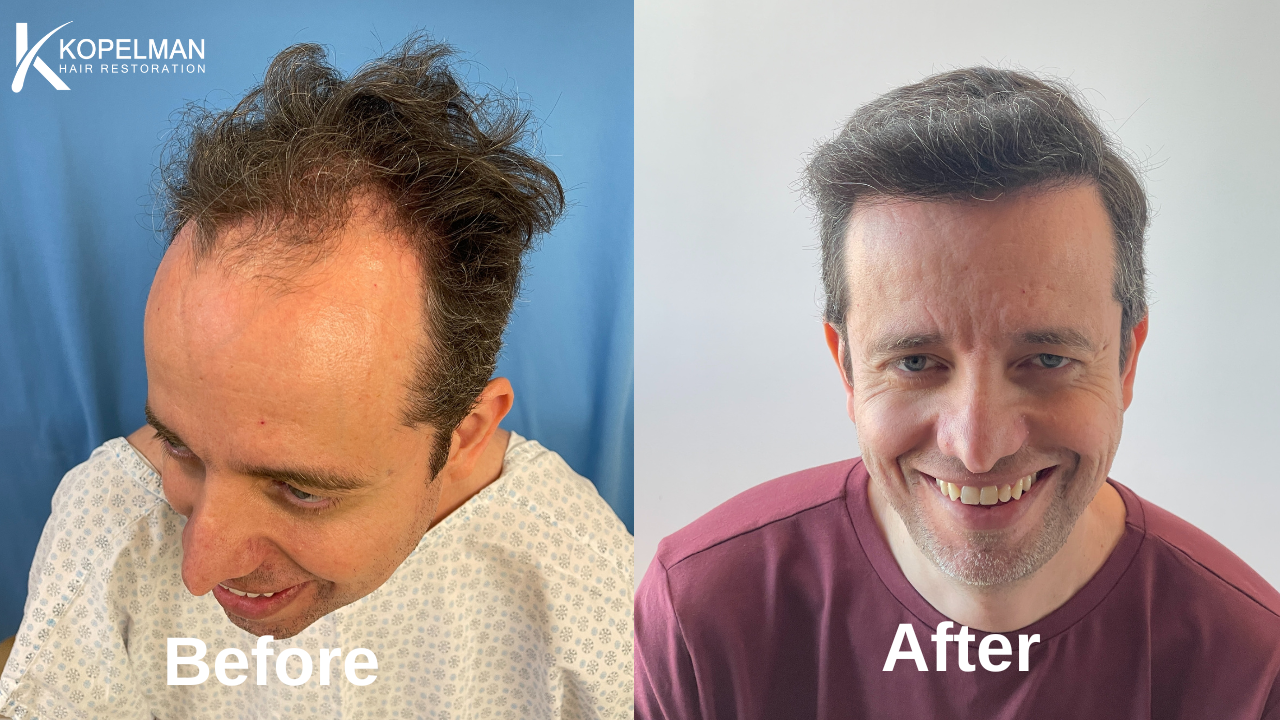
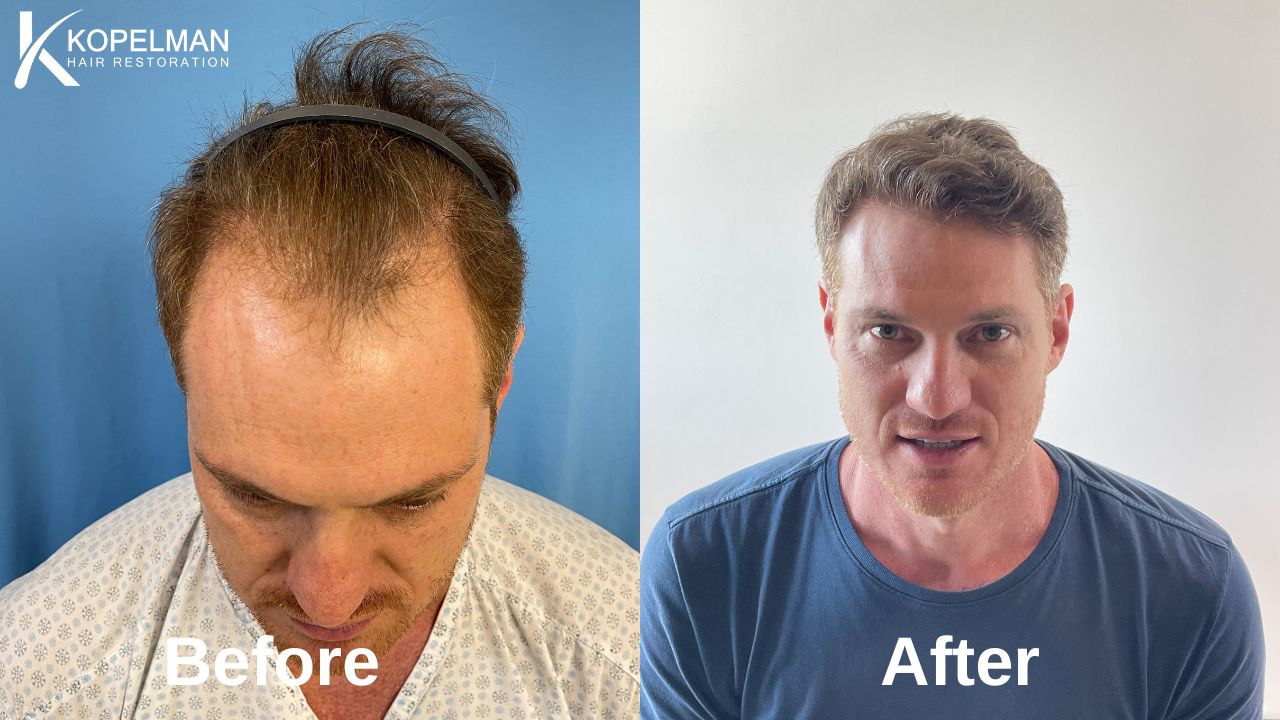
Seeing some lingering pink at the four-week point worries many people, but it is usually fine. By this stage, the color should be clearly lighter than it was in the first week and still trending down. Mild residual tone at one month is most common in fair skin and after extensive sessions.
What matters is the direction of change. Steady fading, even if slow, is reassuring. Color that suddenly intensifies, spreads, or is accompanied by discomfort is a signal to check in with your surgeon, which we cover further below.
How to calm the scalp and reduce irritation
Easing the color and preventing extra irritation comes down to careful aftercare. If you are wondering how to settle things faster, focus on gentle handling, sun protection, hydration, and leaving the area alone. These practical steps help:
- Wash gently: Use a mild, non-irritating shampoo to clean the area without adding inflammation. Avoid scrubbing or pressing on the recipient zone in the first few weeks.
- Avoid sun exposure: Treated skin is especially sensitive, so stay out of direct sunlight. If you go outside, wear a hat or use the sunscreen your surgeon recommends to shield the healing surface.
- Hydrate and eat well: Good hydration and a diet rich in vitamins A, C, and E, as well as omega-3 fatty acids, can support healing and help calm inflammation.
- Use anti-inflammatory care thoughtfully: Over-the-counter soothing products or prescribed creams may help, but always confirm with your surgeon before applying anything to the grafts.
- Do not touch or scratch: Resisting the urge to scratch is one of the most important steps. Scratching can irritate the skin or invite infection, which only prolongs recovery.
If the color persists or is paired with pimples or bumps, folliculitis may be the cause. This is a relatively common reaction during recovery and can usually be managed with topical or oral antibiotics, depending on severity.
When can you trim or cut your hair again?
A frequent question is: when can you groom everything back to one short length? In the first ten to fourteen days, leave the grafts completely alone; the new follicles are fragile, and clippers, blades, or scissors should not touch the recipient area while scabs are still present.
The donor zone tends to heal faster and can usually be tidied with scissors or a guarded trimmer after about two to three weeks, once it feels comfortable. Confirm timing with your surgeon first, since healing varies from person to person.
The transplanted area needs more patience. Most surgeons advise against shaving or running clippers closely over the grafts for the first few months, because that can stress follicles that are still settling. Light scissor trimming over the recipient zone is generally fine once the surface has fully healed.
To safely bring the whole head back to a single short length, it is best to wait until the recipient area is healed and early growth is established, often around the three- to four-month mark. Your surgeon can give you a personalized green light based on how your scalp is recovering.
When lingering redness points to a problem
Most coloring is simply healing. In a smaller number of cases, persistent or worsening tone can reflect irritation or infection that needs attention. Serious infection after these procedures is uncommon, reported in under 1% of cases in published reviews, but it is worth knowing the signs. (source)
Folliculitis
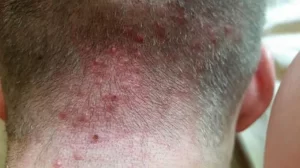
Some people develop inflammation around the new follicles, which can appear for several months during recovery. Folliculitis shows up as small red bumps around each follicle, sometimes with a tiny pus-filled head, and the area may feel warm, itchy, or tender. It is one of the more common reactions.
Treatment is usually simple. Many cases settle on their own, though it is wise to have your surgeon evaluate it. Warm compresses or a short course of antibiotics, oral or topical, can help when bacteria are involved, and good scalp hygiene prevents further trouble.
Cellulitis
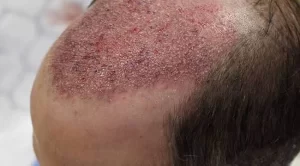
Cellulitis is a skin infection of the scalp. While the surface is still vulnerable, bacteria can enter and take hold. Signs include color that starts to spread, scalp pain, and sometimes fever.
If these appear, see your surgeon promptly. A course of antibiotics with close daily monitoring usually resolves it, and improvement shows as the spreading stops and the tone fades.
Cysts
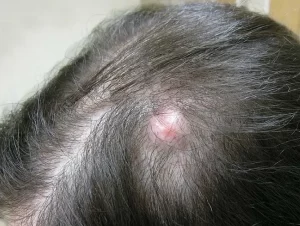
Cysts are small, round sacs that can form beneath the skin in either the donor or recipient zone. They may develop from graft placement issues or an unusual healing pattern, and they are often red, swollen, and tender.
If you suspect a cyst, visit your surgeon. Treatment is straightforward, ranging from warm compresses to removal, with antibiotics added if needed.
Skin necrosis
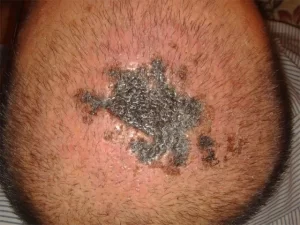
Necrosis, in which skin tissue dies, is a serious but very rare complication related to surgical technique and should not occur with skilled care. It can appear as a deep scab and may begin with a dusky or purplish discoloration before the skin darkens.
Because it is so uncommon, color alone is almost never a sign of it, but any darkening, hardening, or open wound needs urgent assessment.
When to contact your surgeon
While some color is expected after an FUE hair transplant, tone that worsens, spreads, or persists well beyond four weeks should be checked by your doctor.
In rare cases, this can indicate an infection or significant folliculitis that requires treatment. If you also notice swelling, pain, or pus, contact your clinic right away.
Your recovery goals
A pink or red scalp after hair transplant surgery is a normal part of healing, and it responds well to careful aftercare. By washing gently, protecting the area from the sun, staying hydrated, and watching for any signs of complications, most patients see the color fade within a few weeks.
Dr. Kopelman’s after-surgery care is built to keep your recovery on track. If the tone lingers or worsens, schedule a consultation with Dr. Kopelman today.
> Check out our related articles