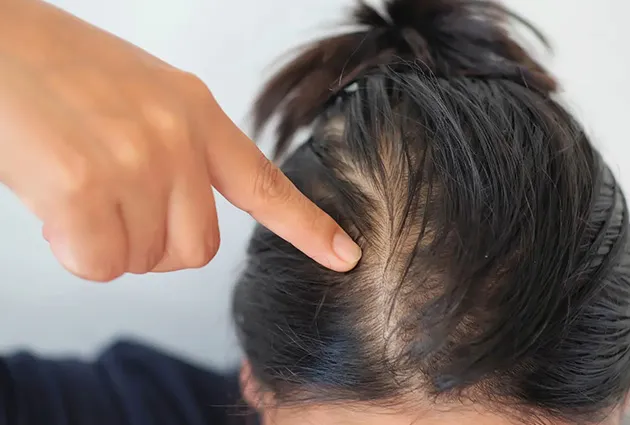
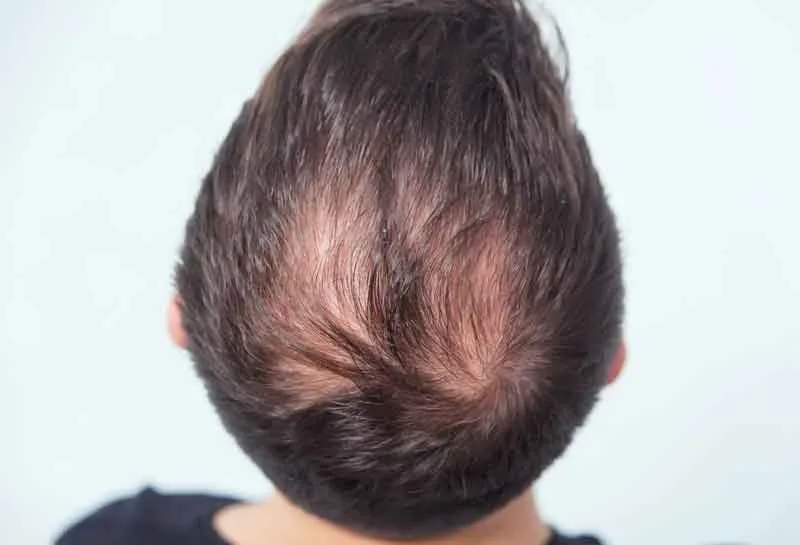
That location matters clinically. Follicles in this zone are unusually sensitive to hormonal signals, so the vertex is one of the first places pattern thinning becomes visible. When loss is concentrated here, it forms a circular or expanding bald spot associated with androgenetic alopecia.
Treatment focuses on slowing progression and improving coverage. Common options include Minoxidil and Finasteride, which help maintain existing density and stimulate regrowth. In more advanced cases, transplant procedures may be used to restore fullness in the crown.
At Kopelman Hair, we help patients understand and treat different types of thinning with precision and care. By recognizing symptoms early and exploring effective treatments, patients can manage vertex hair loss more successfully.
Dr. Kopelman brings over four decades of expertise in restoring natural hairlines and treating complex cases of male pattern baldness.
Key Takeaways
- The vertex is the apex of the skull toward the back, formed where the frontal, parietal, and occipital bones meet along the sagittal and lambdoid sutures.
- Thinning in the vertex area of the head begins with reduced density before progressing to a visible bald spot.
- Early recognition of symptoms, such as scalp visibility in bright light or in photos, improves treatment outcomes.
- Genetics and hormones are primary causes, while lifestyle factors also contribute to follicle miniaturization.
- Medical options, such as minoxidil and finasteride, may stimulate regrowth, while surgical options, like transplant surgery, are often necessary in advanced stages.
- Ongoing care, including prevention and follow-ups, helps maintain long-term results.
Where Is the Vertex of the Head?
The vertex sits at the crown, at the highest point of the skull, positioned along the midline toward the posterior aspect. On a scalp with normal coverage, the growth pattern is characterized by swirling, radiating outward from a central point.
Which Bones and Sutures Form the Vertex?
The calvaria, or roof of the skull, is composed of the frontal bone, the paired parietal bones, and the occipital bone, joined by fibrous cranial sutures. The vertex lies midway along the sagittal suture, between the bregma in front and the lambda behind.
Understanding the underlying structure has practical value in restoration surgery. Surgeons plan graft placement around the natural curvature and whorl direction of this region, which is why crown work is technically distinct from frontal work.
The scalp itself has five layers of soft tissue covering the calvaria, including the skin, connective tissue, and the pericranium that adheres to the bone. Follicles, blood supply, and nerves sit within these layers, and graft survival depends on that vascular network.
Is the Vertex the Same as the Crown?
Yes. The vertex is another term for the crown. Both refer to the highest point at the back of the head, where thinning is often first noticed.
Clinicians favor “vertex” because it is precise, while patients tend to say “crown.” Both terms describe the same landmark, and you will see them used interchangeably in treatment labeling and clinical notes.
Vertex Scalp Zones and Neighboring Regions
The scalp is mapped into distinct zones because pattern loss affects each one differently. Knowing which zone is thinning tells you a great deal about the likely diagnosis and the treatment path.
| Region | Location | Typical Involvement in Pattern Loss |
|---|---|---|
| Frontal region | Hairline and the area above the temples | Often one of the first zones affected; drives hairline recession |
| Mid-scalp | Flat central area between the temples and the crown | Usually preserved until later stages |
| Vertex transition point | Zone where the scalp begins sloping upward toward the crown | Frequently thins alongside the vertex; blends the two areas |
| Vertex (crown) | Highest point of the skull, toward the back, marked by a whorl | Common early site of circular thinning and bald spot formation |
| Occipital region | Lower back and sides of the scalp | Largely resistant to DHT; primary donor zone for transplant surgery |
The occipital region is the key donor zone. Follicles there are largely resistant to hormonal miniaturization, which is why they are harvested and relocated to the crown during restoration surgery.
What Is Vertex Baldness?
Vertex baldness describes thinning or hair loss on the crown. This pattern is strongly associated with male pattern baldness, which follows predictable stages including recession at the temples and loss of density at the crown. In medical terms, vertex alopecia is a hallmark of male pattern loss.
Androgenetic alopecia is the most common non-scarring form of patterned thinning and is characterized by a gradual, predictable loss across androgen-sensitive zones of the scalp, according to a clinical update published in JAAD International. The vertex is one of those zones.
Vertex Baldness vs Frontal Baldness
Vertex balding affects the crown, while frontal loss begins at the temples or front hairline. Some patients develop both, and the two areas can eventually merge as thinning advances.
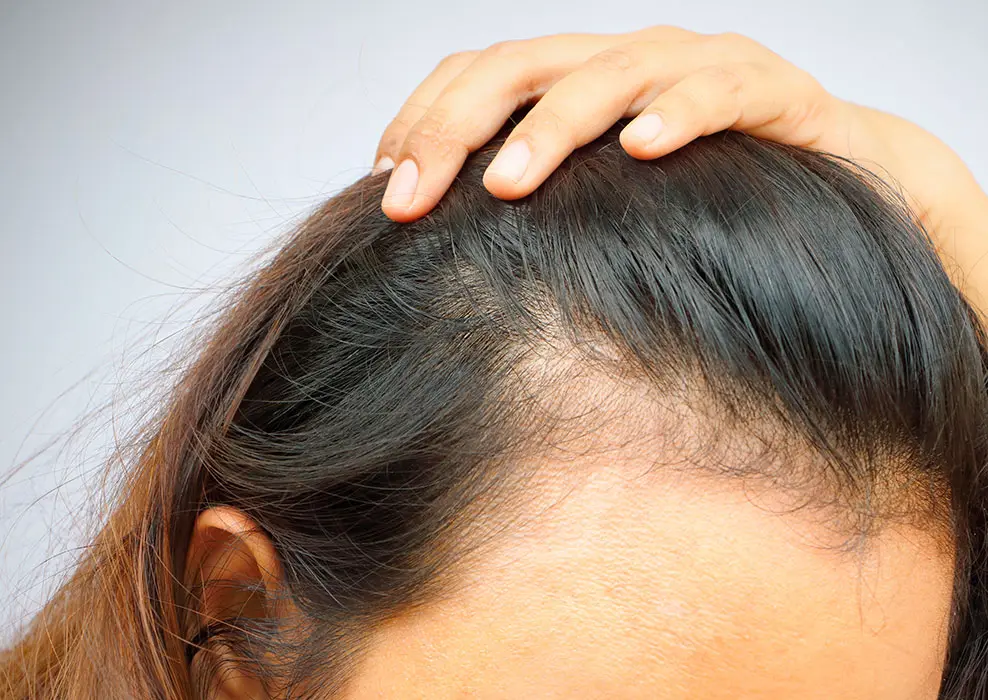
The distinction changes treatment planning. Frontal work prioritizes hairline design and face framing, while crown work prioritizes density and matching the natural whorl direction.
Vertex Baldness vs Receding Hairline
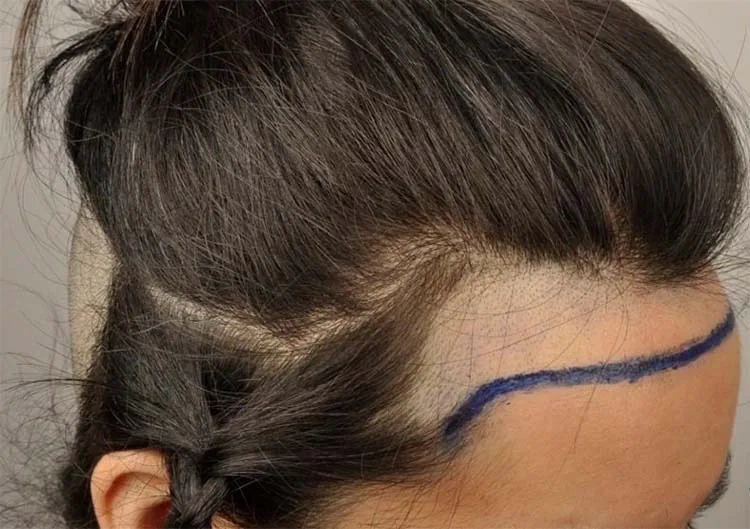
A receding hairline moves backward from the forehead, while thinning at the vertex creates a circular bald spot. Both can occur as part of the stages of male pattern loss.
How to Spot Thinning at the Vertex Early
Many people first notice crown thinning when light reflects off the scalp or in photographs taken from behind. Friends or family may also comment before the patient sees it themselves.
Spotting cues include:
- Scalp visibility under bright lighting.
- Wider gaps when strands are parted.
- Coverage appears flatter or less dense at the crown.
- The central whorl looks wider or more open than it used to.
Recognizing these signs allows patients to act early, when treatments are most effective.
Symptoms and Stages of Vertex Hair Loss
Early Symptoms in the Vertex Area of Head
Thinning is usually noticed before bald spots form. Strands may feel less dense, individual shafts may become finer, and the scalp may become more visible through the remaining coverage.
This early phase reflects follicle miniaturization rather than complete follicle loss, which is why intervention at this point tends to produce the strongest response.

Vertex Baldness Stages
| Stage | What It Looks Like | What Is Happening | Typical Treatment Response |
|---|---|---|---|
| 1. Mild thinning | Slight reduction in density; scalp visible only in bright light | Early follicle miniaturization; shafts becoming finer | Strongest response to medical therapy |
| 2. Visible spot | A small circle forms at the crown | Growth phase shortening across the vertex | Good response; combination therapy often used |
| 3. Expansion | The spot widens and may merge with a receding hairline | Miniaturization spreading outward from the whorl | Partial response; surgical planning often begins |
| 4. Advanced | Most of the crown loses coverage | Follicles largely inactive in the affected zone | Transplant surgery is typically required for coverage |
Diagnostic and Clinical Evaluation
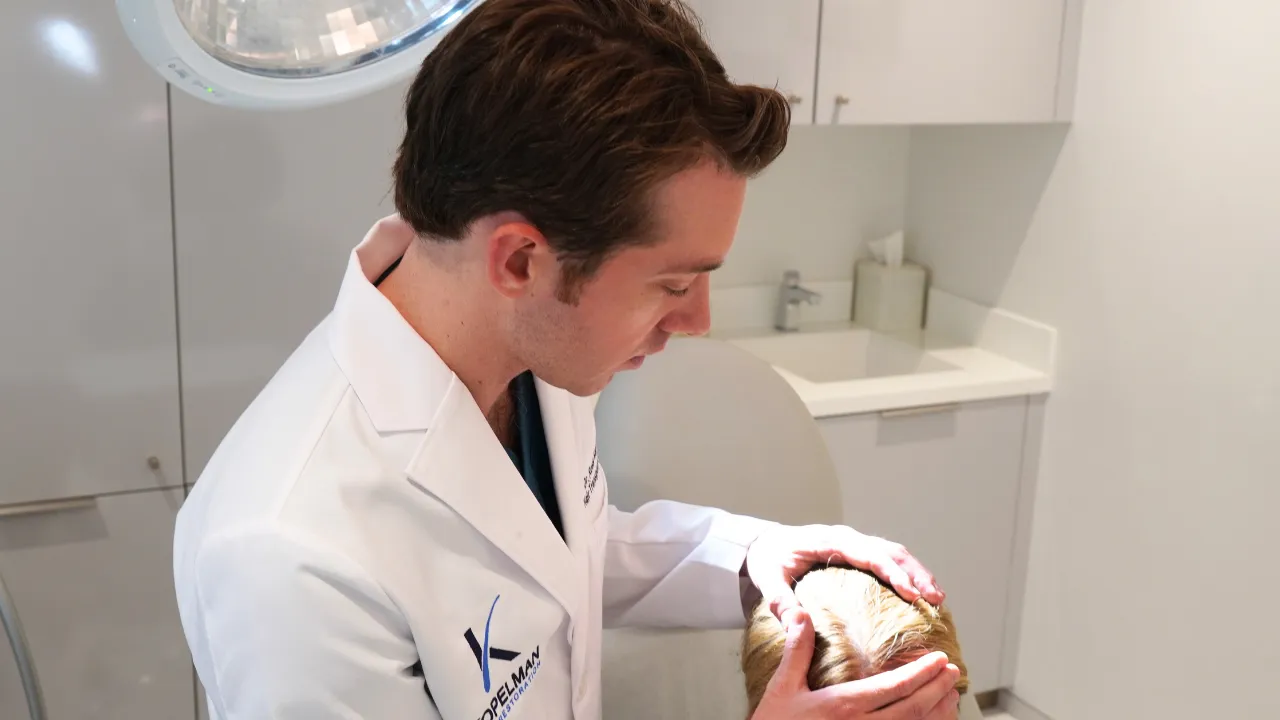
Diagnosis begins with a scalp exam to check density and follicle health. Family history helps confirm male pattern baldness as the underlying cause.
Blood tests can help rule out hormonal or nutritional contributors, and dermoscopy allows direct assessment of follicle diameter and miniaturization. These steps guide treatment planning and set a measurable baseline.
Density mapping of the vertex scalp at the first visit also enables objective tracking of change over time, rather than relying on month-to-month impressions.
Causes of Vertex Alopecia
Genetic and Hormonal Causes
The most common cause is androgenetic alopecia, also known as male pattern baldness. Sensitivity to dihydrotestosterone (DHT) shortens the growth cycle of follicles in the crown, driving progressive thinning. Family history increases risk.
Each growth cycle produces a shorter, finer shaft than the last. Over years, terminal strands are replaced by fine vellus strands, and eventually the follicle stops producing visible coverage altogether.
Lifestyle and Environmental Triggers
Stress, poor nutrition, smoking, and certain medications contribute to faster progression. These factors can worsen shedding in those already genetically predisposed, though they rarely cause patterned loss on their own.
Evidence-Based Prevention Strategies
Early use of finasteride or minoxidil can preserve density in the vertex area of the scalp. Starting treatment before bald spots appear considerably increases effectiveness.
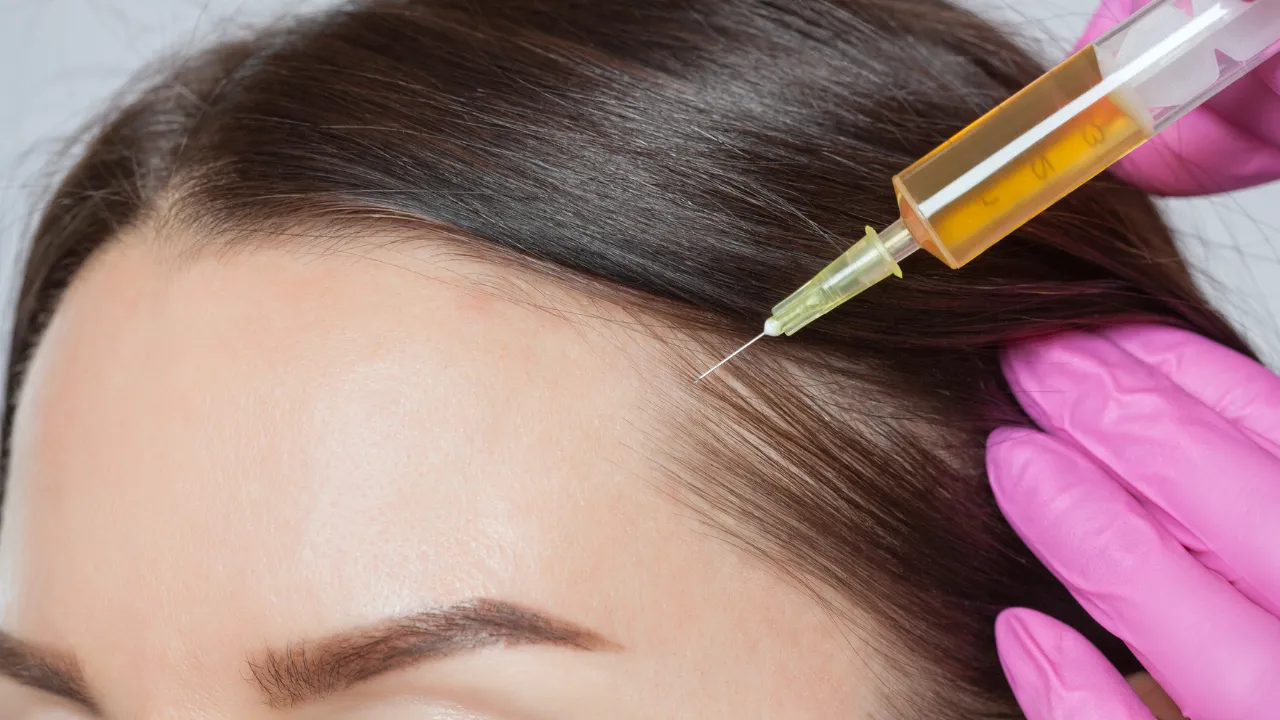
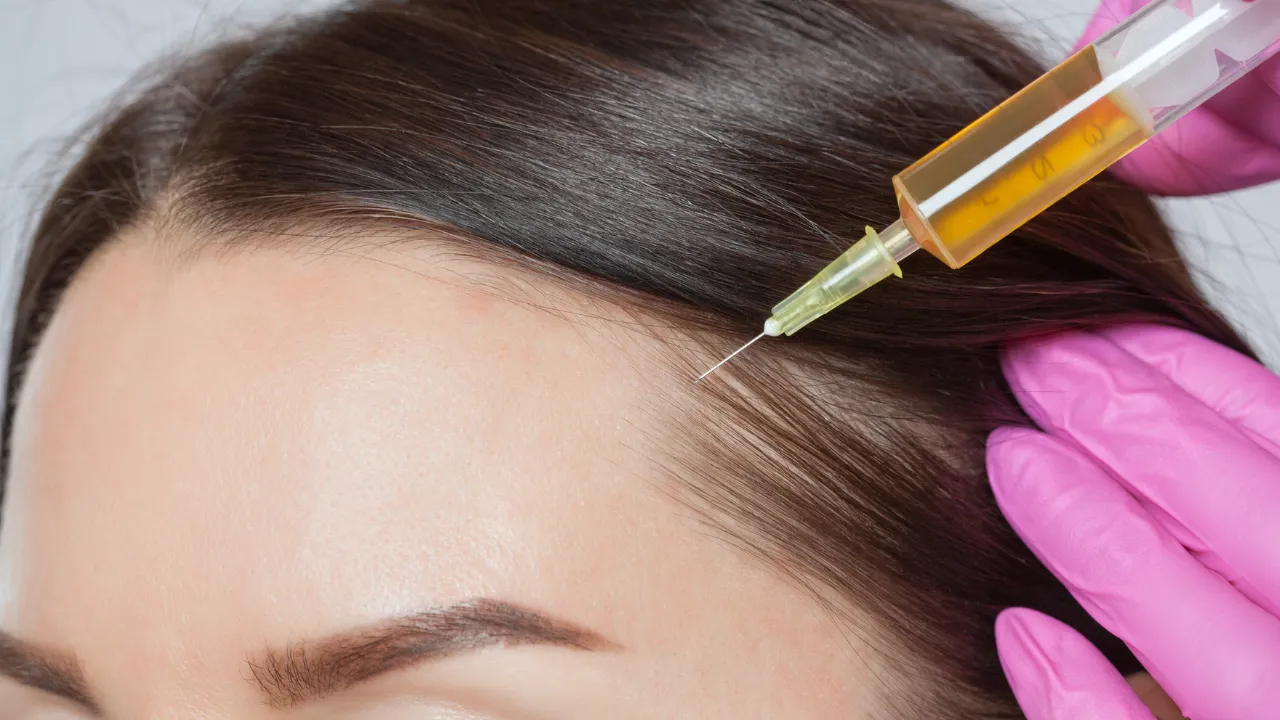
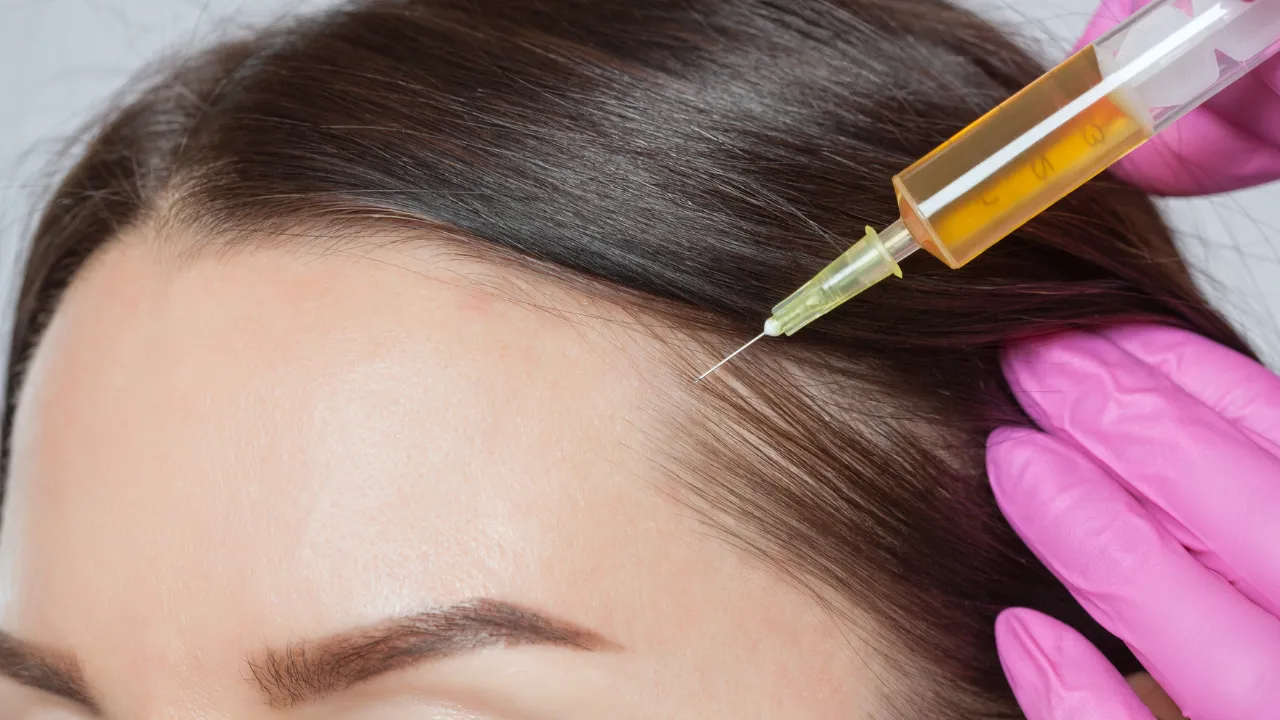
Emerging options such as microneedling or platelet-rich plasma (PRP) therapy may stimulate growth and support long-term results when combined with medical therapy.
Vertex Baldness in Men and Women
Vertex Hair Loss in Men
Men often develop a circular bald spot at the crown that expands with age. When combined with a receding hairline, this can progress to the advanced stages of pattern loss.
Vertex Hair Loss in Women
In women, vertex alopecia usually appears as diffuse thinning rather than a defined round spot. Patients may notice a widening part line at the top of the head, often associated with hormonal changes such as menopause.
The frontal hairline typically stays intact in female pattern loss, which is one of the clearest distinctions from the male presentation.
Treatments and Regrowth Options
How to Fix Thinning at the Crown
Mild cases respond to medication, while advanced stages often require surgery. The right choice depends on how much viable follicle activity remains in the affected zone.
| Option | Best Suited For | How It Works | Cost Range |
|---|---|---|---|
| Consultation and medical management | Any stage; establishes diagnosis and baseline | Scalp exam, density mapping, dermoscopy, and treatment planning | $350 |
| Minoxidil (topical) | Early to moderate thinning | Extends the active growth phase and improves density | Discussed at consultation |
| Finasteride (oral) | Men with androgenetic alopecia | Reduces DHT to slow follicle miniaturization | Discussed at consultation |
| PRP therapy | Early thinning; adjunct to medical therapy | Concentrated platelets injected to support follicle activity | $1,500 per session |
| FUE hair transplant | Defined bald spots with adequate donor supply | Individual follicular units extracted and placed into the crown | $25,000 to $40,000 |
| FUT hair transplant | Larger graft counts in advanced cases | Donor strip harvested, then dissected into grafts for placement | $25,000 to $40,000 |
Costs vary by graft count, donor quality, and treatment plan. Final pricing is confirmed at consultation.
Medical Options (Minoxidil, Finasteride)
- Minoxidil: a topical solution that helps stimulate growth and extends the active growth phase.
- Finasteride: an oral medication for men that reduces DHT levels systemically.
Vertex Hair Loss Regrowth Possibilities
Regrowth is most successful in the early stages. Patients with partial thinning often improve measurably, while advanced cases may stabilize rather than regrow fully.
Response is typically assessed at six to twelve months, since the growth cycle needs that long to reflect a change in treatment.
Hair Transplant for Vertex Balding
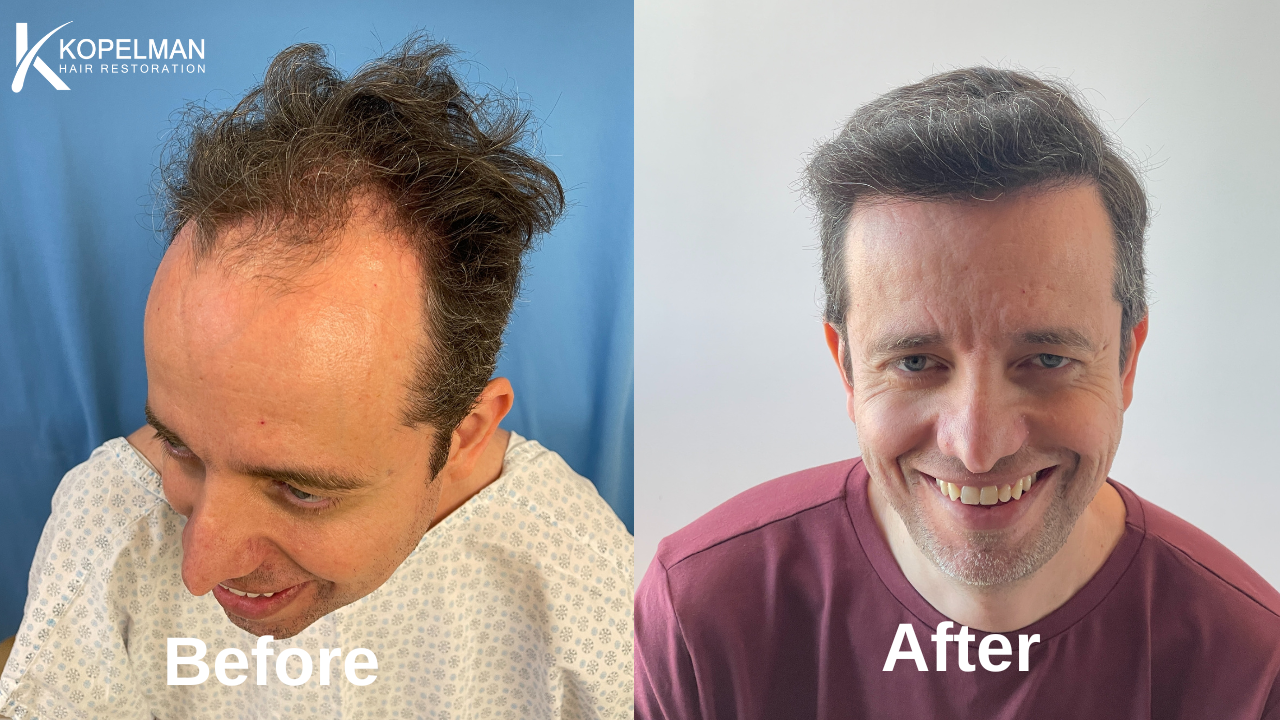
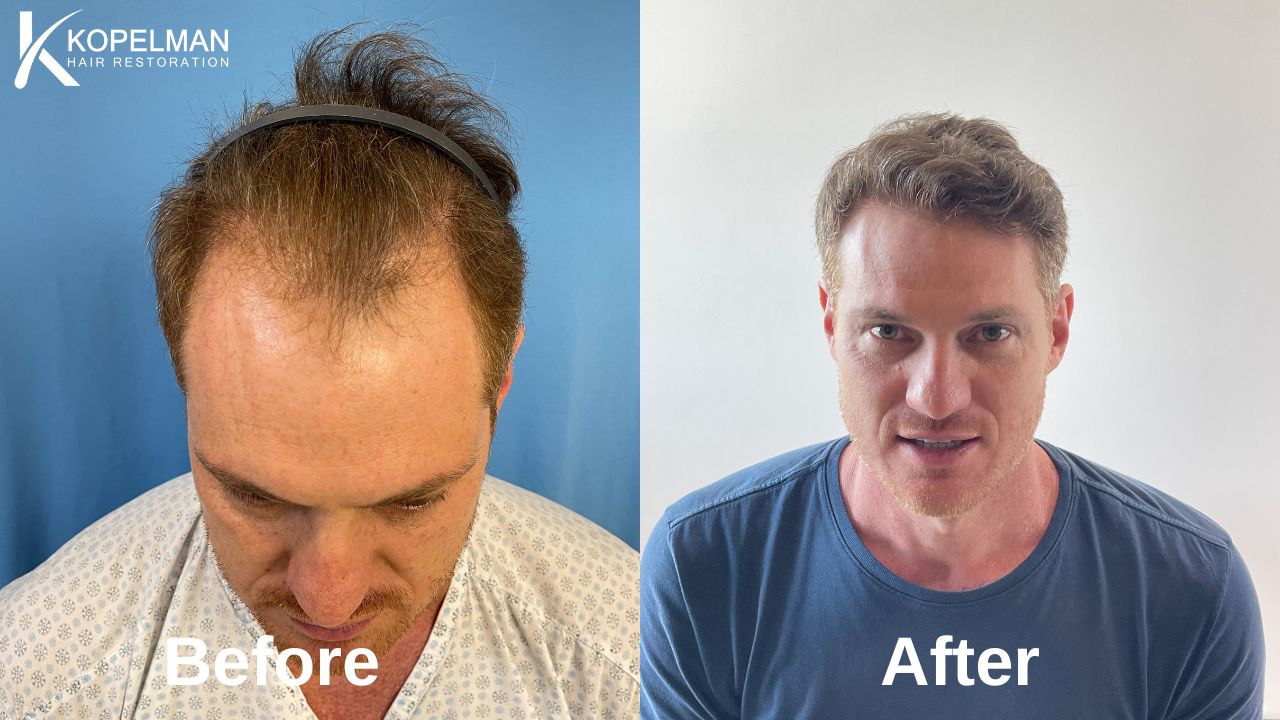
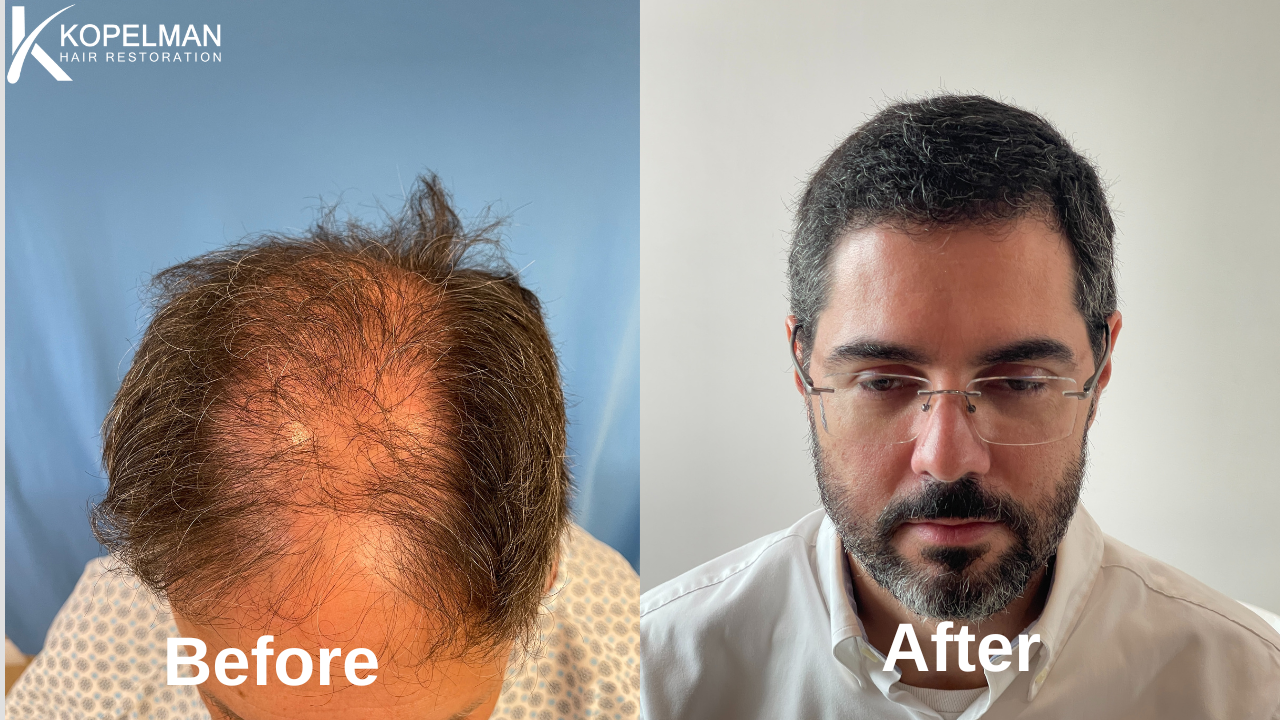
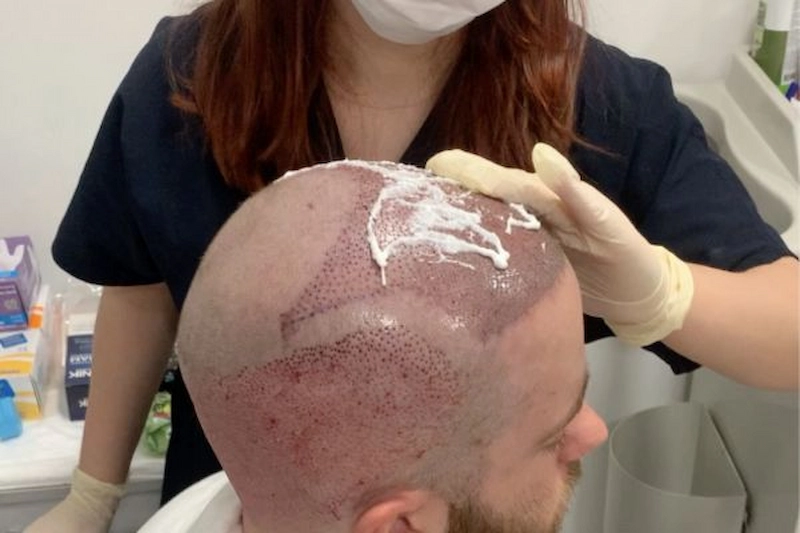
Transplant surgery provides permanent results for suitable candidates. Follicles are taken from the occipital donor zone and placed into the crown, following the natural whorl direction of that region.
Dr. Kopelman applies advanced techniques to match the existing growth pattern, since angle and direction determine whether crown results look natural from every viewing angle.
Dr. Kopelman’s Approach to Vertex Hair Loss
Dr. Kopelman combines medical precision with personalized care. Each patient undergoes scalp analysis, density mapping, and planning to ensure realistic results.
Surgical techniques are tailored to growth direction in the crown. Long-term follow-up visits track progress and maintain outcomes.
Prevention of Vertex Baldness
Preventive strategies include early therapy, scalp monitoring, and maintaining healthy routines such as a balanced diet and stress management. Avoiding harsh chemical treatments also helps preserve shaft strength.
Long-Term Management of Vertex Baldness
Managing crown thinning requires ongoing care. Patients are advised to continue medications like minoxidil or finasteride to maintain results and avoid renewed shedding after initial success.
Follow-up visits allow for adjustments to treatment plans and monitoring of scalp health. Supportive habits that contribute to prevention also improve results.
When to See a Hair Specialist
Patients should seek professional guidance if thinning persists or bald spots expand. Early consultation improves outcomes and increases available options.
At Kopelman Hair, each patient receives a plan tailored to their stage of vertex alopecia and their donor supply.
FAQs on Vertex Baldness
Where exactly is the vertex of the head?
The vertex is the highest point of the skull, located along the midline toward the back, where the parietal bones meet along the sagittal suture. It is the same region commonly called the crown.
Tip: look for the swirl pattern, which marks the center of the vertex on most people.
What is vertex baldness?
It is thinning or loss of coverage concentrated at the crown, most often caused by androgenetic alopecia. It typically starts as a small circular patch that widens over time.
Can vertex baldness be reversed?
Mild thinning may improve with medication, but advanced bald spots often require surgery. Early intervention offers the best outcomes.
Tip: start treatment when thinning first appears for higher regrowth potential.
Does vertex thinning only affect men?
No. Women may also develop vertex hair loss, though it appears as diffuse thinning rather than a circular spot.
Note: pattern and pace can differ by sex and age.
At what age does vertex balding start?
It can begin as early as the 20s, especially with a strong family history. Many notice progression through the stages of male pattern loss in their 30s and 40s.
Monitor the crown in photos under bright light to catch early change.
Is minoxidil only for the vertex?
Studies show that minoxidil works especially well on the crown, but it may also benefit other areas of the scalp.
Follow usage directions consistently to assess response over several months.
If you are noticing signs of thinning at the crown or other patterns of loss, the right time to act is now. At Kopelman Hair, Dr. Kopelman provides personalized evaluations and advanced solutions tailored to each patient’s needs. Schedule your appointment today to explore effective treatments and take the first step toward restoring your confidence.