The Early Signs of Bradley Cooper’s Hair Loss
Like many men in their thirties and forties, Bradley Cooper’s hair loss appeared gradually. Male pattern baldness is a genetic condition and, according to the American Academy of Dermatology, is the most common cause of thinning in men. It usually starts at the temples and crown and worsens over time unless it is treated.
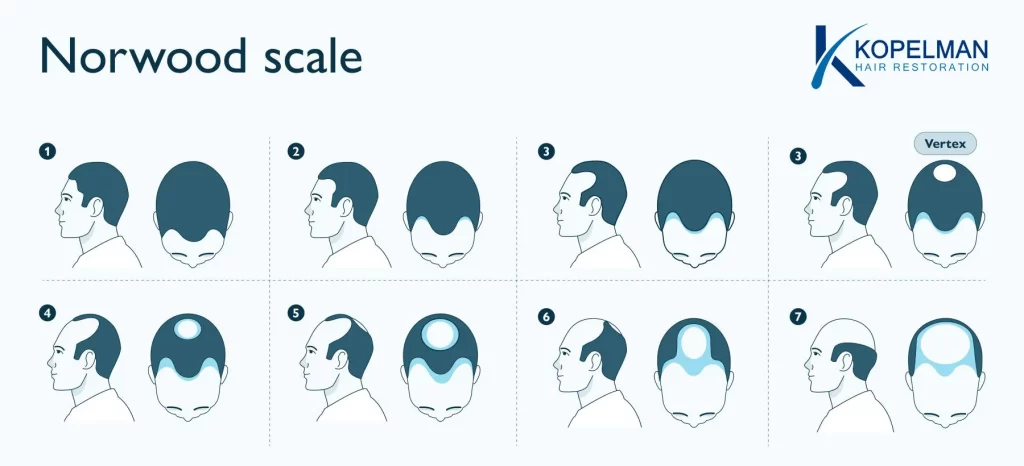
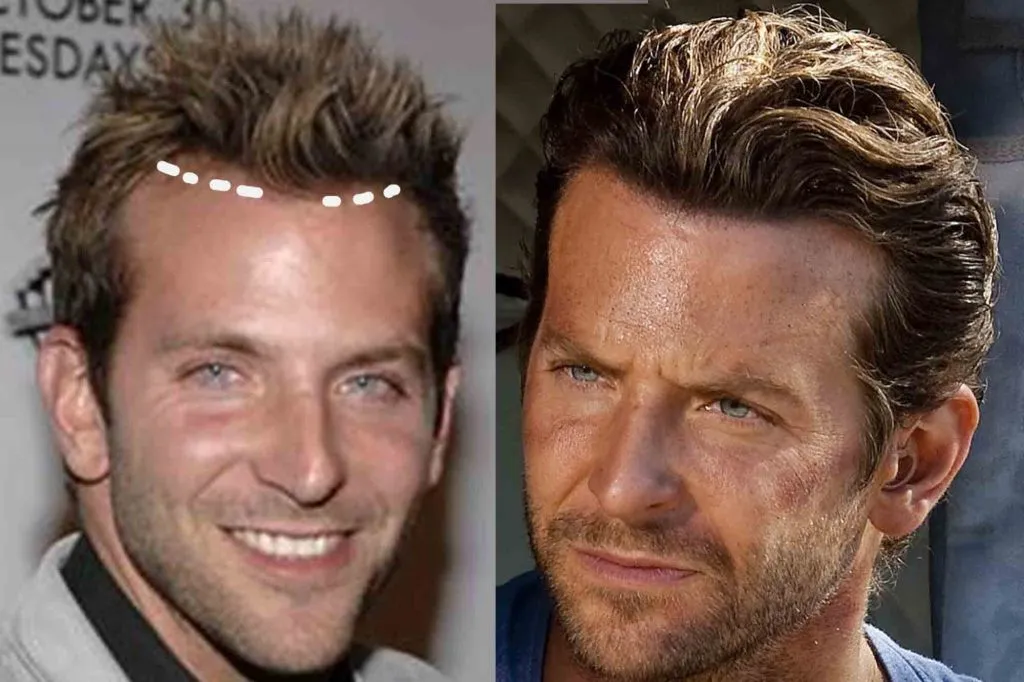
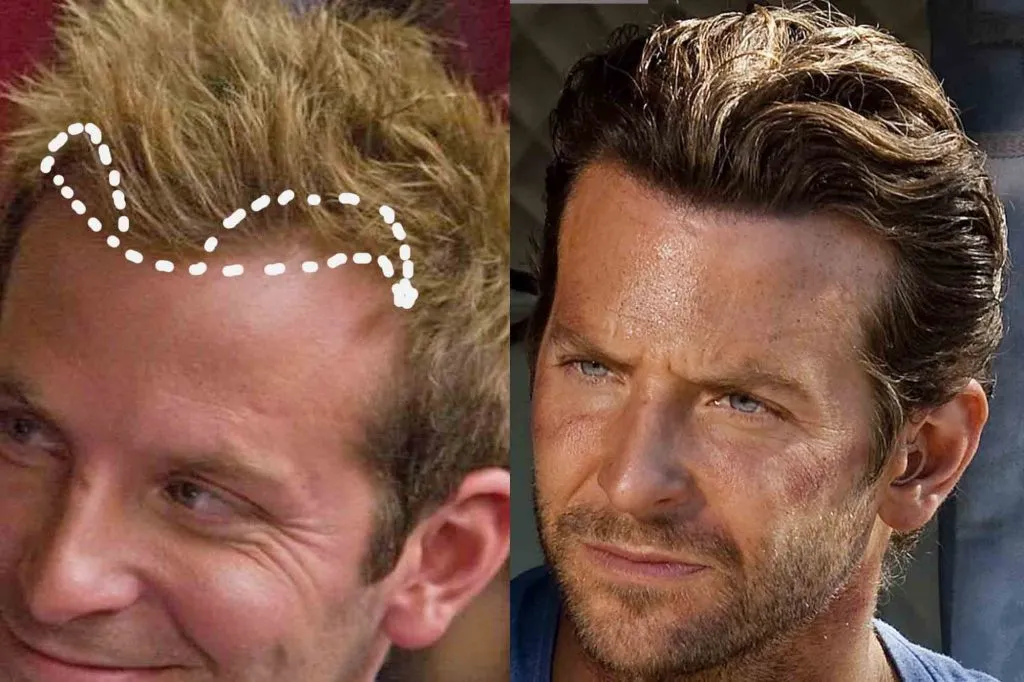
In Cooper’s case, the recession sat mainly at the temples, giving him a faint M shape at the front. Discussion of Bradley Cooper’s balding generally centers on these early changes, which are at roughly Norwood stages 2-3. That is an early, very treatable point on the scale, and photos from the period show only mild temple thinning and a slightly uneven frontal line.
Bradley Cooper’s Hairline Timeline
To see why people still ask whether Bradley Cooper has had a hair transplant, it helps to track the shape of his hairline across his career. The pattern below is drawn from widely circulated film stills and red carpet photos, so it reflects observation rather than any confirmed medical record.
| Period | On-screen context | What observers noted |
|---|---|---|
| Mid-2000s | Wedding Crashers (2005) | First clear temple thinning and a faint M-shaped front. |
| 2007 to 2008 | Between film projects | The frontal line appears to change quickly; the M shape softens. |
| 2009 | The Hangover era | Fuller, more even frontal density; signs of recession largely gone. |
| 2010s to today | American Sniper, A Star Is Born | The restored hairline holds steady with natural styling. |
Surgery, Medication, or a Hair System?
A fuller frontal line does not always point to grafting, and Cooper may well have used more than one approach.
Medication. Many believe Cooper has taken Finasteride, an oral drug that lowers DHT, the hormone that shrinks follicles in pattern baldness.MedlinePlus notes it is FDA-approved for male pattern thinning. It cannot rebuild a hairline on its own, but it protects existing growth and is often used alongside surgery.
Surgery. The rebuilt temple corners are the strongest argument for grafting, since medication rarely recreates a defined frontal edge on its own.
A hair system. Some viewers have floated a partial hairpiece. Modern systems can look convincing, yet Cooper’s coverage has stayed consistent through years of high-resolution close-ups and changing styles, which fits transplanted growth more than a removable piece.
How the Procedure Likely Restored His Hairline
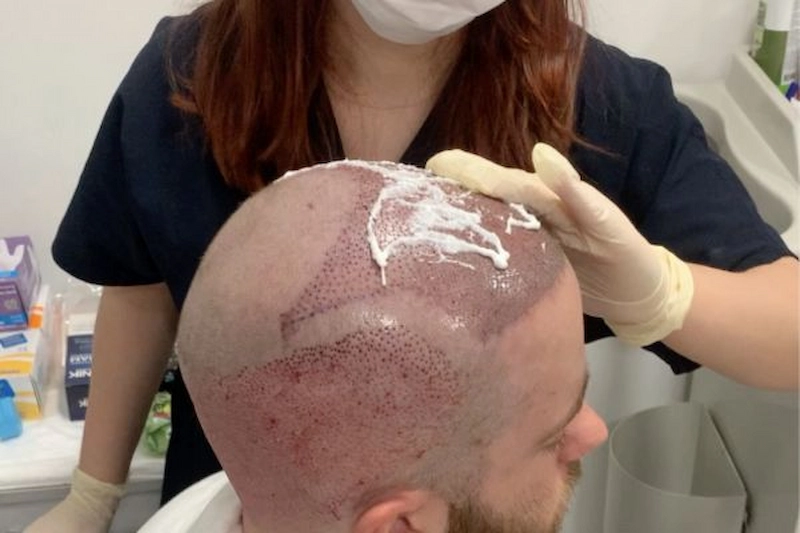
The kind of change seen in Cooper’s frontal zone is consistent with a Follicular Unit Extraction (FUE) session. FUE removes individual follicles from a donor zone at the back and sides, where hair growth is resistant to DHT, and then places them into thinning areas, one graft at a time. The ISHRS describes this single-follicle harvesting as a defining feature of the technique.
For temple and frontal work, that graft-by-graft control is what lets a surgeon angle each follicle to match the original growth direction. Done well, the regrowth blends with the surrounding strands and builds density without an obvious line. The slow, even fill-in is also why the change drew so little attention at the time.
Why Celebrities Often Choose FUE Over FUT
FUE is popular among public figures because it leaves tiny dot scars rather than a single line, and recovery is quick enough to fit around filming schedules. The main alternative, Follicular Unit Transplantation (FUT), lifts a strip of scalp and can move more grafts in one sitting, but it leaves a thin linear mark at the donor site that short styles may reveal.
For an actor whose appearance is part of the job, the lower scarring risk of FUE usually wins. The table below compares the two side by side.
| Feature | FUE | FUT |
|---|---|---|
| Extraction | Individual follicles removed with a micro-punch. | A strip of scalp is removed, then divided into grafts. |
| Scarring | Tiny dot scars that are hard to see. | A thin linear scar at the donor site. |
| Recovery | Shorter, since the extraction is less invasive. | Longer, due to the donor strip closure. |
| Session time | Longer, as follicles are taken one at a time. | Shorter, with more grafts moved per sitting. |
| Best suited for | Those who wear short styles or want minimal scarring. | Larger areas needing a high graft count at once. |
What the Change Meant for His Career
A receding hairline can shape how a leading man is cast, so a discreet refresh carries real professional value. From American Sniper to A Star Is Born, Cooper has kept a youthful, natural frontal line through the prime of his career.
Whether the credit belongs to surgery, medication, or both, the outcome has aged well and still reads as his own growth. That balance is the benchmark a strong result aims for: visible enough to help, subtle enough that no one can be certain.
Is a Hair Transplant Right for You?
If your own thinning looks like Cooper’s early pattern, an FUE procedure offers a natural way to address male pattern baldness. The best first step is a consultation with a specialist who can assess your donor supply and map a realistic plan.
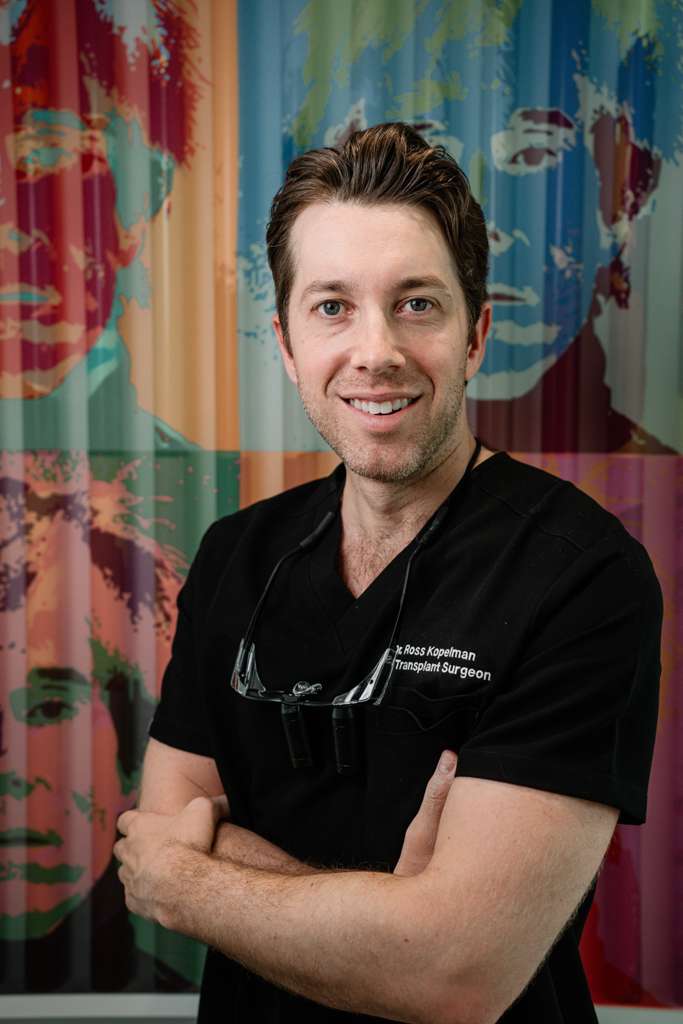
Dr. Joel and Ross Kopelman, a father-son team of surgeons with more than 40 years of combined experience, focus on outcomes tailored to each patient. Whether you are dealing with a receding hairline, general thinning, or want a full beard, they can help you weigh your options.
If you found Bradley Cooper’s story interesting, explore our other Celebrity Hair Transplants, where stars like Steve Carell, Elon Musk, and David Beckham have addressed thinning of their own. You can also browse our Celebrity Hair Transplant Before & After gallery.
Frequently Asked Questions
Did Bradley Cooper get a hair transplant?
He has never confirmed it. Based on the visible change in his hairline between about 2007 and 2010, many surgeons believe he likely had FUE grafting, probably alongside medication.
When did the change happen?
Observers point to a clear shift between 2007 and 2008, with noticeably fuller frontal hair by the time of the 2009 release of The Hangover. That look has held since.
How many grafts would it have taken?
Because his loss was limited to the temples and front, estimates land around 1,500 to 2,000 grafts, a modest session by transplant standards.
Did Bradley Cooper use finasteride?
It is widely speculated but unconfirmed. Finasteride lowers DHT and is often combined with surgery to protect the hair a patient still has.
Could it be a hair system instead of surgery?
Possible, but unlikely. His coverage has stayed consistent across years of close-up photos and varied styling, which fits transplanted growth more than a removable piece.
What Norwood stage was Bradley Cooper?
His pattern appeared to reach roughly Norwood stage 2-3 before any change, an early and highly treatable point on the scale.