
At Kopelman Hair, this question is evaluated carefully as part of a medical assessment, not simply as one of many cosmetic procedures. This article explains how the eyebrow transplant procedure works, who may qualify, the risks, the cost, and what to expect over time.
Key Takeaways
- An eyebrow transplant is possible when a patient has stable health and enough donor hair in the donor area and donor site for safe grafting in the eyebrow area.
- Modern eyebrow hair grafting supports natural hair growth, and older methods like eyebrow hair plugs are no longer used in eyebrow restoration.
- Transplanted individual hairs are usually permanent but grow like scalp hair and need regular trimming to maintain shape.
- A medical consultation helps confirm whether someone is a candidate for an eyebrow transplant and sets clear expectations for costs, risks, and long-term results.
What Is an Eyebrow Hair Transplant?
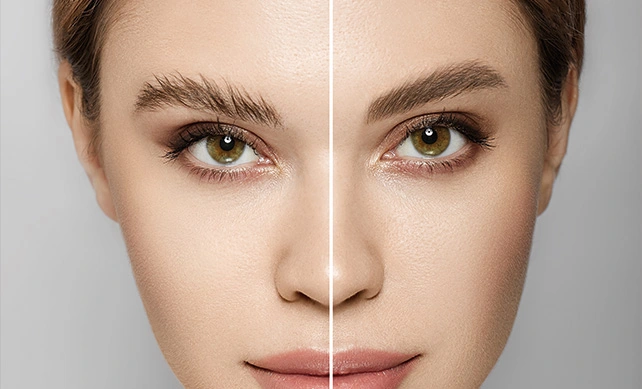
An eyebrow hair transplant is a surgical procedure that moves hair follicles from the scalp to the eyebrow area. The goal is to restore shape and fullness using the patient’s own natural hair. This form of eyebrow restoration relies on living follicles that continue to support hair growth.
Many patients seek treatment due to eyebrow hair loss caused by overplucking, injury, genetics, or certain medical conditions. Others have naturally sparse eyebrows and want improved density. Unlike many cosmetic procedures, this treatment uses real, growing hair rather than synthetic material.
The procedure is performed under local anesthesia to keep the patient comfortable. Local anesthesia allows the surgeon to work with precision while the patient remains awake. This method supports both safety and control during the eyebrow transplant procedure.
How Eyebrow Hair Grafting Works
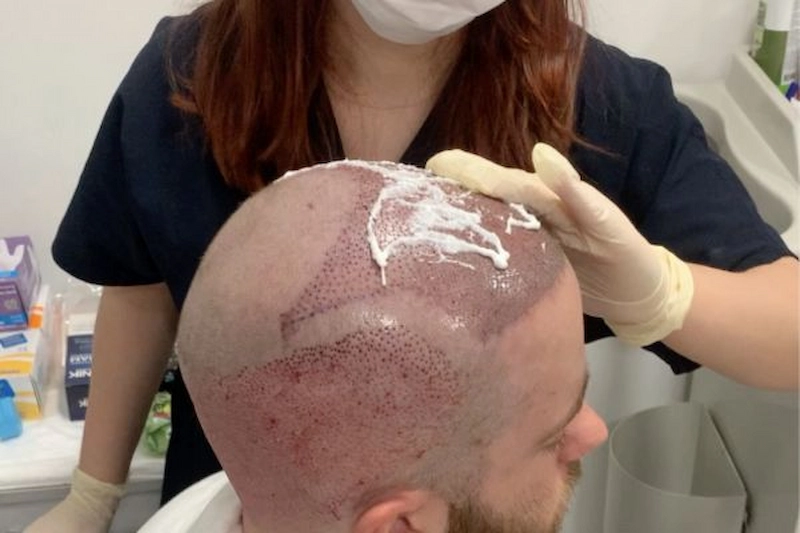
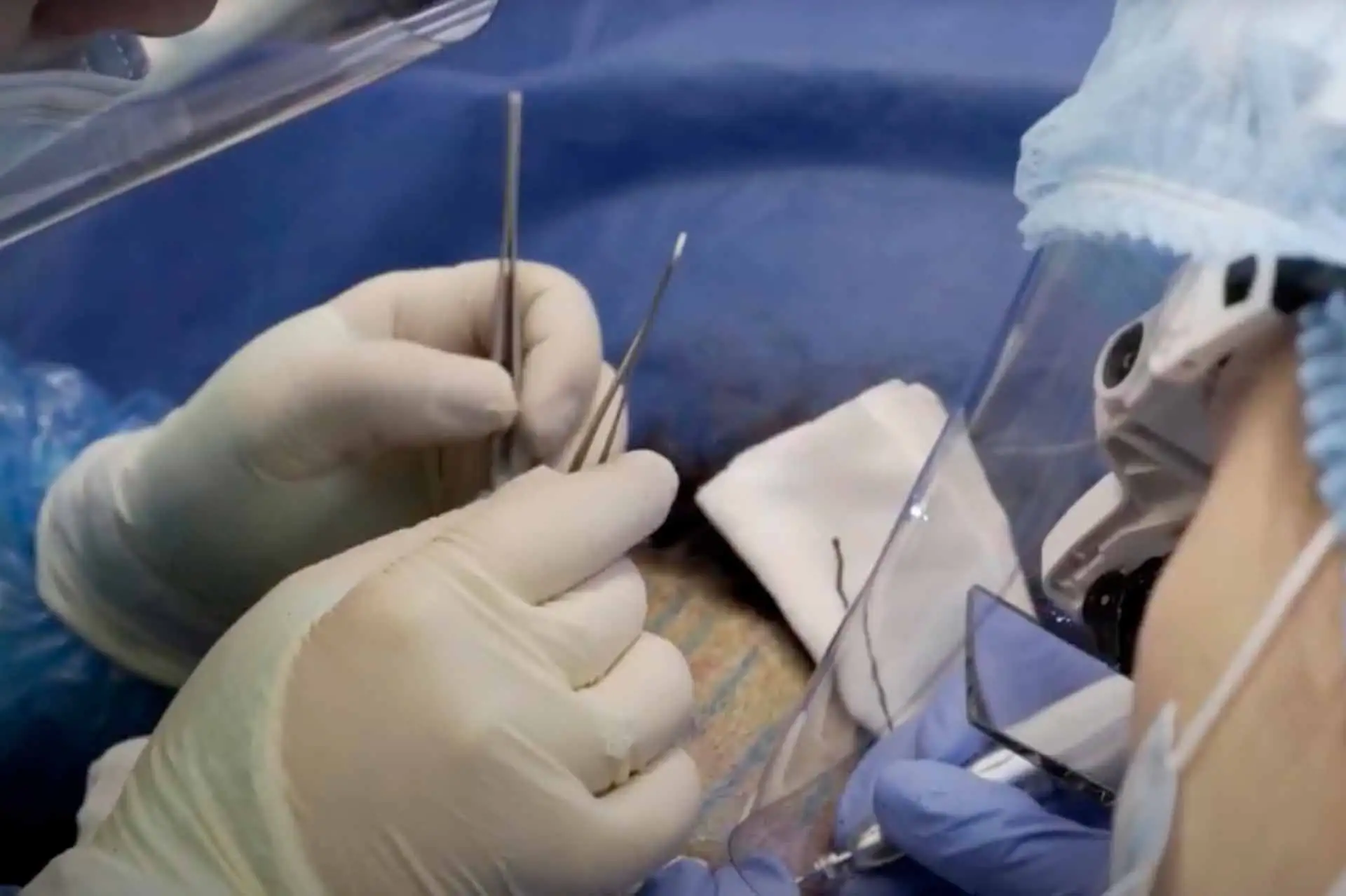
Eyebrow hair grafting begins by removing individual follicles from the donor area, usually the back of the scalp. This donor site is selected because the hair there is often stable and resistant to thinning. The surgeon then creates small openings in the eyebrow area that follow the natural brow direction.
Each graft contains individual hairs, placed one by one. Careful placement of individual hairs allows better control over angle and spacing. This technique helps create a more natural look.
The eyebrow transplant procedure usually follows these steps:
- Brow design and symmetry planning
- Donor hair removal from the donor site
- Creation of small recipient sites
- Placement of individual hairs
This step-by-step process supports even hair growth and natural contour.
FUE Technique and Donor Hair Selection
Most surgeons use Follicular Unit Extraction (FUE) to harvest donor hair. This method removes individual grafts without leaving a long linear scar at the donor site. This technique allows for careful placement in the eyebrow area.
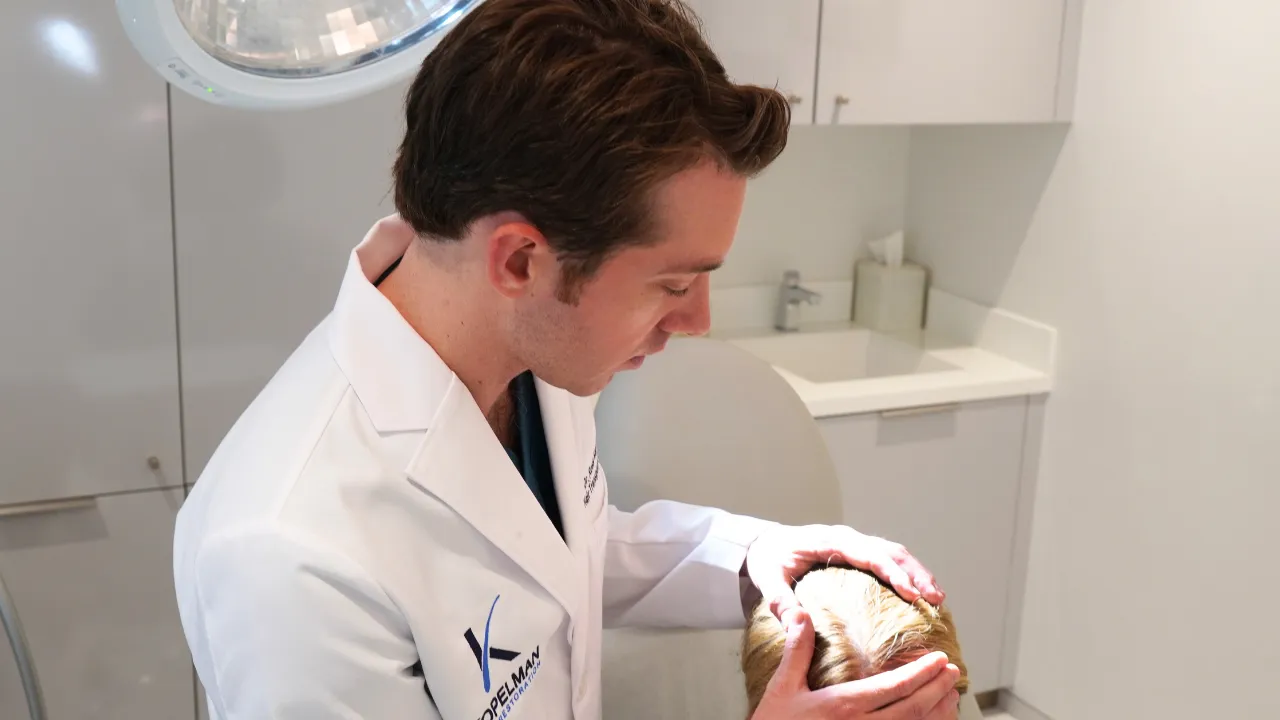
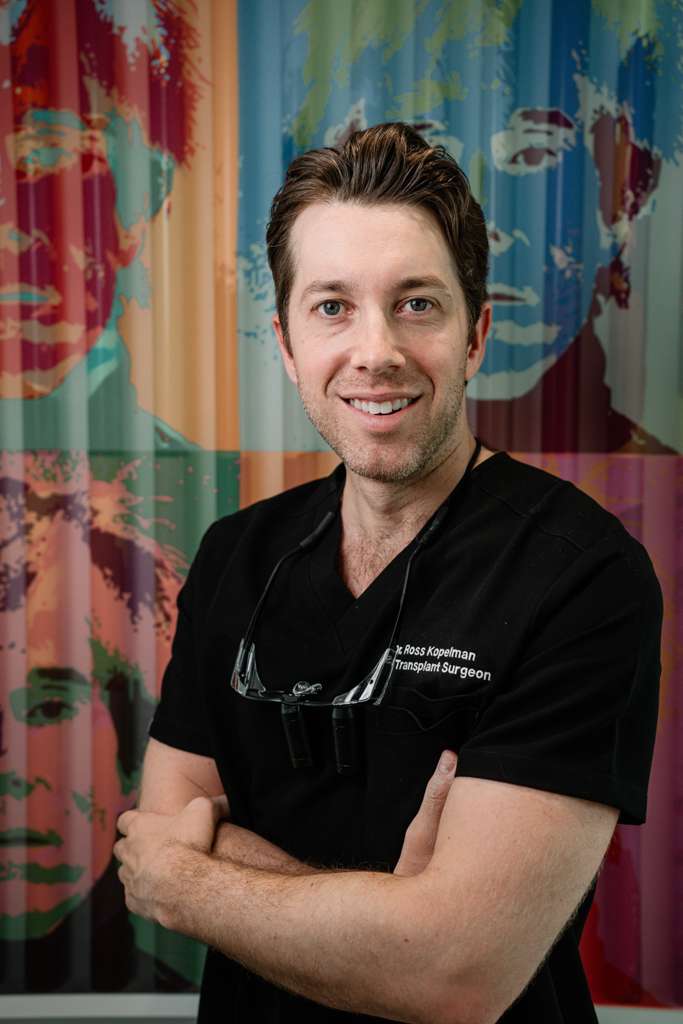
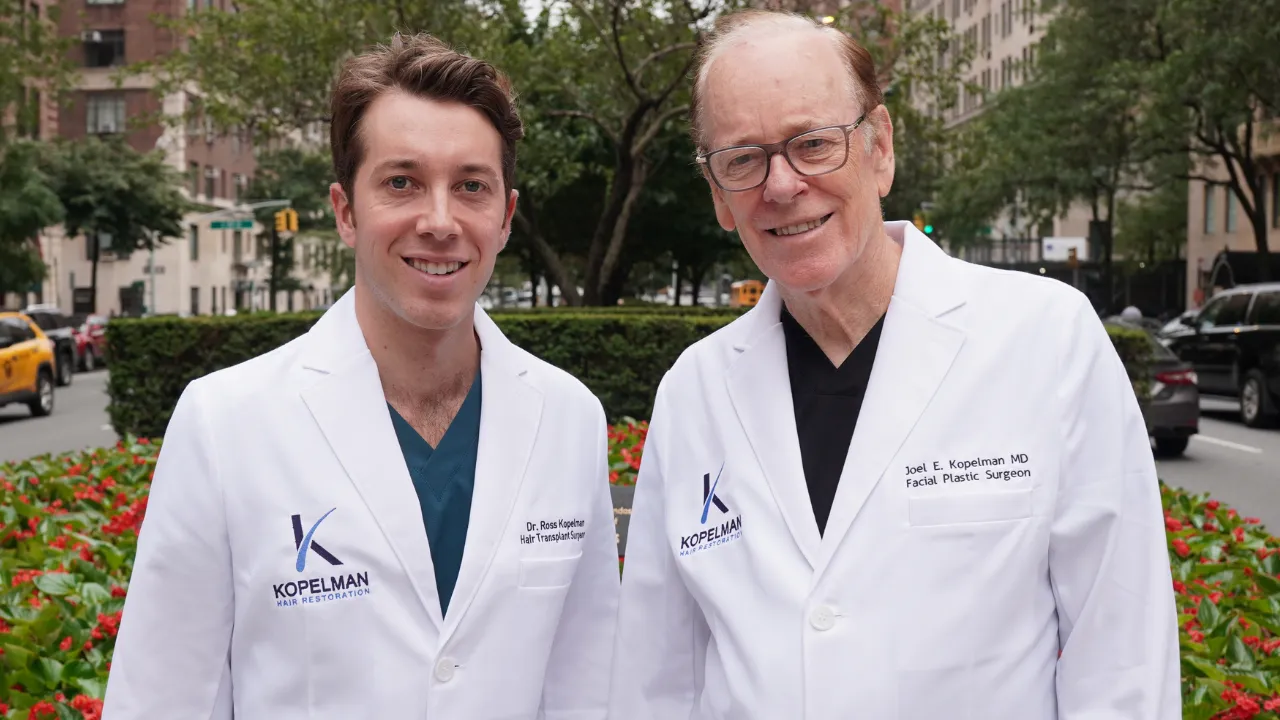
Dr. Kopelman evaluates the donor area to ensure the hair matches the brow thickness and texture. Matching donor hair to existing natural hair improves the outcome of eyebrow restoration. Proper selection supports steady and long-term hair growth.
Eyebrow Hair Replacement vs Brow Implants
Eyebrow hair replacement through transplantation uses the patient’s own follicles. Brow implants use synthetic fibers placed under the skin. Transplanted follicles grow natural hair that can be trimmed and shaped.
Older methods sometimes used larger grafts called eyebrow hair plugs. These often created dense clusters that appeared unnatural. Modern eyebrow restoration avoids this method and focuses on single follicular units.
Is an Eyebrow Transplant Permanent?
It is generally permanent because the transplanted follicles keep their original growth traits. Patients researching an eyebrow transplant in NYC often ask about long-term permanence and ongoing hair growth expectations.
Once healed, they continue producing hair growth over time. However, the transplanted hair grows like scalp hair and requires regular trimming.
Temporary shedding may occur during the first month. New growth usually begins within several months. Final density often develops within one year.
Typical recovery progression includes:
- Week 1 – mild swelling and small scabs
- Month 1 – temporary shedding
- Months 3 to 4 – new hair growth begins
- Months 9 to 12 – fuller growth and maturation
Healing timelines vary based on individual response and underlying medical conditions.
Can You Get a Natural Looking Eyebrow Transplant?
A natural-looking eyebrow transplant depends on careful design and placement. The surgeon must control the angle, direction, and spacing within the eyebrow area. Small placement errors can affect appearance.
An eyebrow transplant can improve density after eyebrow hair loss, but it has limits. Donor supply from the donor area determines the amount of fullness possible. Perfect symmetry is not always achievable because natural brows are rarely identical.
Who Is a Good Candidate?
A good candidate for an eyebrow transplant usually has stable health and sufficient donor hair in the donor area. People with eyebrow hair loss from overplucking, trauma, genetics, or certain medical conditions may qualify. Those with sparse eyebrows may also benefit from evaluation.
Some individuals should delay or avoid surgery. Active autoimmune disorders, uncontrolled thyroid disease, or scarring conditions in the eyebrow area may increase risk. Limited donor site density may restrict the amount of eyebrow restoration that can be achieved.
How Much Does It Cost to Get an Eyebrow Transplant?
The cost of an eyebrow transplant depends on the number of grafts, the surgeon’s expertise, and the facility standards. In most cases, eyebrow transplant costs range from $20,000 to $25,000. The final price reflects surgical time, technical precision, and the complexity of eyebrow restoration.
Key cost factors include:
- Number of grafts
- Surgical time
- Provider training
- Complexity of eyebrow restoration
A clear discussion of eyebrow transplant costs helps patients make informed decisions.
Risks and Eyebrow Transplant Side Effects
Side effects may include swelling, redness, or mild numbness in the eyebrow area. These effects usually improve within days or weeks. Proper eyebrow transplant aftercare, such as keeping the area clean, avoiding rubbing or scratching the grafts, and following all post-operative instructions provided by the surgeon, helps protect the grafts and support healthy hair growth.
Less common risks include infection, small cyst formation, or uneven growth. Some patients may need a minor revision to improve density or direction. Open discussion of risks supports informed consent before undergoing an eyebrow transplant.
Choosing an Eyebrow Transplant Near Me
Patients should focus on medical training and credentials. Board certification and experience with eyebrow hair grafting are important. Careful handling of donor-site grafts supports safety and long-term success.
If you are considering eyebrow restoration, scheduling a consultation is the first step. Dr. Kopelman performs detailed evaluations to determine whether someone is a candidate for an eyebrow transplant. Clear communication helps reduce regret and supports realistic goals for eyebrow restoration.