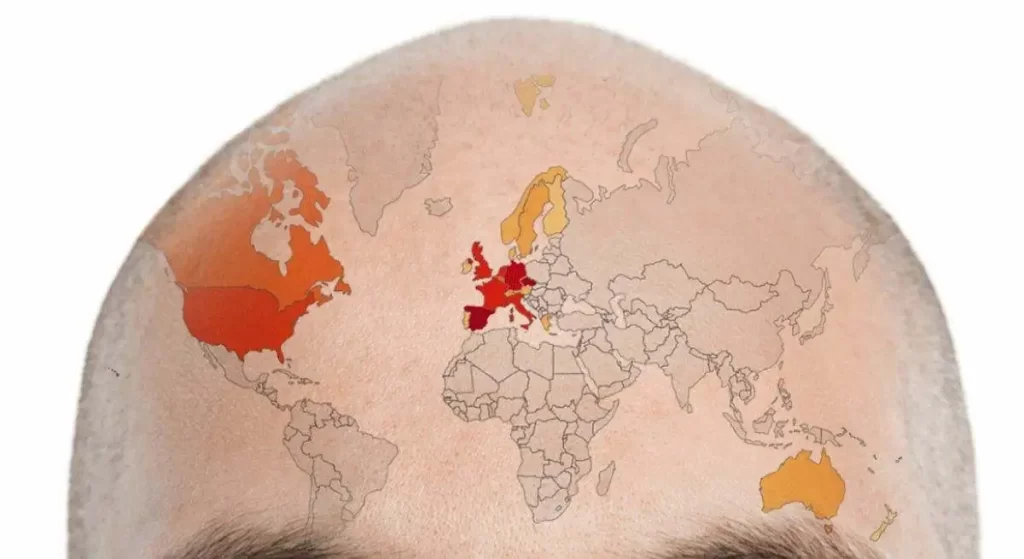
How Many Men Are Bald? Global Facts and Stats

I hope you’re enjoying reading this blog post if you want a consultation with Dr. Kopelman, click here.

Dr. Joel Kopelman

August 10, 2025  ⁃  10 Min read

Male pattern baldness is extremely common, and the likelihood rises sharply with age. If you're wondering what percentage of men are bald, large-scale clinical data show that roughly two-thirds of men notice some degree of thinning by age 35, and up to 85% have significant thinning by age 50. Onset can begin much earlier, with about 25% of men who develop androgenetic alopecia seeing visible signs before age 21.

Not every man becomes completely bald, but visible recession, crown thinning, or reduced density affects most men over time. By age 60, around two-thirds show noticeable thinning, although pattern and severity vary based on genetics, hormones, ethnicity, and overall health. Early treatment can slow progression, which is why recognizing the first stages matters.

Kopelman Hair has helped countless patients address thinning scalps with precision and personalized care. Understanding the numbers and the reasons behind them is key to finding the right solution. 

With over 40 years of combined expertise, Dr. Kopelman and his team provide trusted guidance backed by data, medical insight, and proven treatment options.

Key Takeaways

  • One in four men shows signs by 25, and over 50% by 50, according to long-running prevalence studies published in the International Journal of Trichology and the British Journal of Dermatology.
  • Male pattern baldness accounts for roughly 85% of male thinning cases, driven by genetics and dihydrotestosterone (DHT).
  • Early evaluation and treatment can slow progression or restore density, with options tailored to the degree of hair loss.

Baldness Statistics: Global and US

How Many People Are Bald in the World (Men & Women)

About 42% of men worldwide experience noticeable thinning, according to data summarized by the American Hair Loss Association. When women are included, roughly 25% of the global adult population shows visible thinning or baldness.

Rates differ by genetics, lifestyle, and environment across regions, with diet, smoking prevalence, and average life expectancy all playing measurable roles.

Percentage of Bald Males by Country

The Czech Republic, Spain, and Germany each report over 40% of adult men with significant baldness, based on a widely cited epidemiological survey conducted by International Communications and Marketing (2010). Several East Asian countries report under 20%, reflecting genetic and dietary patterns.

These contrasts help explain regional demand for restoration treatments and the geographic spread of clinical research.

Percentage of Bald Males by Race

Men of European descent show a 30% to 50% lifetime prevalence of noticeable thinning, the highest among groups studied. African and Middle Eastern men typically range from 20% to 30%.

East Asian men are usually 10% to 20%, reflecting documented differences in follicle density and androgen receptor sensitivity to DHT (Setty, Archives of Dermatology, 1970; later replicated in 2011 follow-up studies).

Top Countries with the Highest Male Baldness Rates

RankCountry% of Men with Significant Baldness
1Czech Republic43%
2Spain42%
3Germany41%
4France39%
5United Kingdom39%
6United States39%
7Italy38%
8Poland37%
9Netherlands37%
10Canada36%


These figures cluster in Europe and North America, where surveys show higher hereditary risk and earlier help-seeking behavior.

How Many Men Are Bald in the US

About 35 million American men have measurable thinning or baldness, according to estimates from the American Hair Loss Association. By age 50, 50% to 60% show visible recession or scalp thinning.

Early detection improves response to medications and procedures, which is why dermatologists recommend evaluation at the first signs of consistent shedding or recession.

Male Pattern Baldness Prevalence by Age: Summary Overview

Age Prevalence of Noticeable Thinning
By 25 ~25% of men
By 30 ~33% of men
By 40 ~40% of men
By 50 50% to 60% of men
By 60 ~66% of men

These figures help answer how many men go bald across a lifetime – most men experience some degree of hair loss.

Prevalence of Male Pattern Baldness by Age

By 25

One in four men with a hereditary predisposition notices a change before 25, based on AHLA prevalence summaries. Early action can preserve density and slow progression. Timely evaluation, often supported by a densitometer scalp exam, guides the right plan from the start.

By 30

By age 30, roughly one-third of men have a receding hairline or visible thinning. Stress, diet, and scalp hygiene can worsen shedding. Tracking change with monthly photos supports timely decision-making and provides clinicians with a baseline for measuring treatment response.

By 40

Around 40% have visible baldness by age 40 in population studies. At this stage, combination approaches often work best. Medical therapy with finasteride or minoxidil, paired with procedural options such as PRP, can help stabilize density and rebuild in thinning zones.

By 50

Half to three-fifths of men show significant loss by age 50. Many consider surgical restoration when medical gains plateau. Planning is tailored to the degree of miniaturization, donor supply, and the patient’s long-term pattern, which a surgeon assesses using the Norwood Scale.

Types and Trends of Baldness

Partial vs. Complete Baldness

Partial loss affects temples or the crown; complete loss involves the top of the scalp. About 12% of men progress to complete baldness in survey cohorts. The degree of hair loss varies widely and guides treatment choice.

The Norwood Scale Explained

The Norwood-Hamilton Scale is the standard classification system used by dermatologists and restoration surgeons to grade male pattern baldness.

First developed by Dr. James Hamilton in the 1950s and refined by Dr. O’Tar Norwood in the 1970s, it grades baldness on a seven-stage scale, from minimal recession (Stage I) to extensive loss with only a band of donor hair remaining (Stage VII).

Stages I to III typically respond well to medical therapy. Stages IV to VII may benefit from a combination of medication and surgical restoration, depending on donor density. Understanding your Norwood stage helps set realistic expectations and informs graft counts during transplant planning.

Baldness Trends Over Time

Global prevalence appears steady across decades in meta-analyses published in the Journal of the American Academy of Dermatology. Earlier treatment adoption has improved long-term outcomes. Men now seek help closer to the onset.

Why Men Go Bald

The most common causes include:

  • Genetic predisposition to DHT sensitivity
  • Hormonal changes affecting hair follicles
  • Lifestyle and medical conditions

Genetic Factors

Global prevalence appears to be steady across decades, according to meta-analyses published in the Journal of the American Academy of Dermatology

Androgenetic alopecia, also called male pattern baldness, is the primary driver, accounting for over 95% of cases according to AHLA data.

Dr. Kopelman notes that family history and early signs predict trajectory. Identifying risk early allows targeted therapy to preserve density longer.

Hormonal Changes

Elevated DHT levels shrink follicles and shorten the anagen (growth) phase. Age-related hormonal shifts or endocrine conditions, including thyroid disorders, can raise risk. Dr. Kopelman reviews labs and history to tailor care.

Lifestyle and Health

Poor diet, chronic stress, smoking, and serious illness can accelerate shedding. Telogen effluvium, a temporary shedding triggered by physiological stress, surgery, or rapid weight loss, can push up to 70% of scalp follicles into the resting phase.

Alopecia areata, an autoimmune condition, may cause sudden patchy loss separate from genetic baldness.

Impact of Baldness on Life

Self-Confidence and Social Perception

Thinning scalps can affect self-image and everyday interactions. A 2019 International Journal of Trichology survey found that more than 60% of men with visible loss reported reduced confidence in professional settings.

Links to Overall Health

Rapid or unusual shedding can signal hormonal, nutritional, or cardiovascular issues. Research published in Cardiology in Review (2013) found that vertex baldness, loss at the crown, is associated with a modestly increased risk of coronary heart disease.

Common Myths About Male Baldness

  • Wearing hats does not cause baldness.
  • Genetic predisposition can come from either parent, not only the mother’s side.
  • Cutting hair short does not make it grow back thicker.

Baldness Prevention and Treatment

Medical Treatments

Minoxidil and finasteride are the only two FDA-approved medications for male pattern baldness, with measurable benefits documented in randomized trials.

Minoxidil is a topical vasodilator that increases follicular blood flow. Finasteride is an oral 5-alpha-reductase inhibitor that blocks the conversion of testosterone to DHT.

Both can slow progression and partially reverse miniaturization in many patients. Reported finasteride side effects can include decreased libido, reduced semen volume, and, rarely, mood changes; minoxidil can cause scalp irritation or shedding during the initial adjustment phase.

A consultation helps determine which option or combination best fits your case.

Lifestyle Adjustments

Balanced nutrition with adequate protein, iron, and vitamin D supports follicle health. Stress management, regular sleep, and avoiding tobacco protect follicles from premature miniaturization.

Consistency matters more than intensity; modest, sustained changes outperform short bursts of aggressive supplementation.

Hair Transplant Surgery

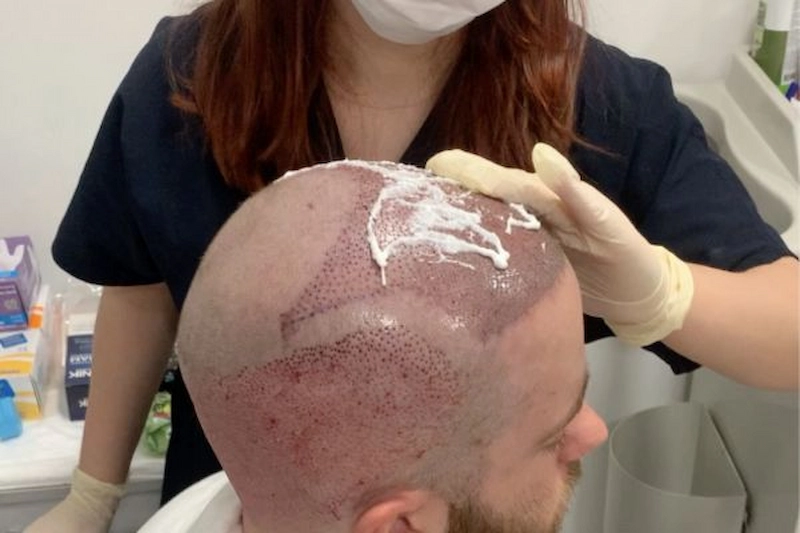
For advanced cases, transplants restore coverage with natural design. Dr. Kopelman plans grafting to match each patient’s pattern, density needs, and donor limits, often using the Norwood Scale as the baseline reference.

Most patients consider surgical restoration an effective treatment once medications no longer hold the line, particularly at Norwood IV and above.


FAQs About How Many Men Are Bald

Can Baldness Be Prevented?

Genetic baldness cannot be fully prevented, but early intervention can delay onset and reduce severity. Medical evaluation helps select appropriate options and track response. Nutrition, stress control, and consistent scalp care also support outcomes.

Yes. Most men experience some degree of thinning as they get older, with prevalence rising from the 20s through the 60s. Tracking changes early supports timely treatment and better long-term results.

Most men reach their final pattern between 50 and 60, although shedding can continue at a slower rate. Genetic predisposition determines whether progression stabilizes at Norwood III, IV, or further along the scale.

Surgical planning is usually deferred until the pattern is reasonably stable.

Early-stage miniaturization can often be partially reversed with finasteride, minoxidil, or PRP therapy. Once follicles have been dormant for an extended period, regrowth is unlikely, and a transplant is the most effective option for restoring density. 

The best treatment depends on your Norwood stage, age, donor density, and goals. Norwood I-III often respond well to medication alone. Norwood IV and above typically benefit from a combination of medication, PRP, and FUE or FUT transplantation.

Genetic baldness follows a predictable pattern (recession at the temples, thinning at the crown) and progresses slowly.

Stress-related shedding (telogen effluvium) is diffuse, sudden, and typically resolves within six months once the trigger is addressed. A clinical exam can distinguish between the two.

No. None of these causes genetic baldness. Very tight headwear worn constantly may contribute to traction-related thinning over the years, but this is reversible and distinct from male pattern baldness.

You can take control of your situation with early action and the right plan. 

Schedule a consultation with Dr. Kopelman at Kopelman Hair to discuss your options and find the most effective treatment for your needs.

About the doctor

Dr. Ross Kopelman

Hair Restoration Surgeon

Dr. Ross Kopelman is a hair restoration surgeon focused on the medical and surgical treatment of hair loss, with expertise in advanced FUE hair transplantation, natural hairline design, and regenerative therapies that support healthier hair growth. He is known for combining surgical precision with an artistic approach to deliver natural, undetectable results tailored to each patient. Dr. Kopelman sees patients in New York City and Palm Beach, Florida, and also offers virtual consultations for patients across the United States and internationally.
Follow the specialist:

Ready to Restore Your Hair?

Dr. Ross Kopelman offers personalized consultations for hair transplants and hair restoration in New York, New Jersey, and Palm Beach.

In this Article

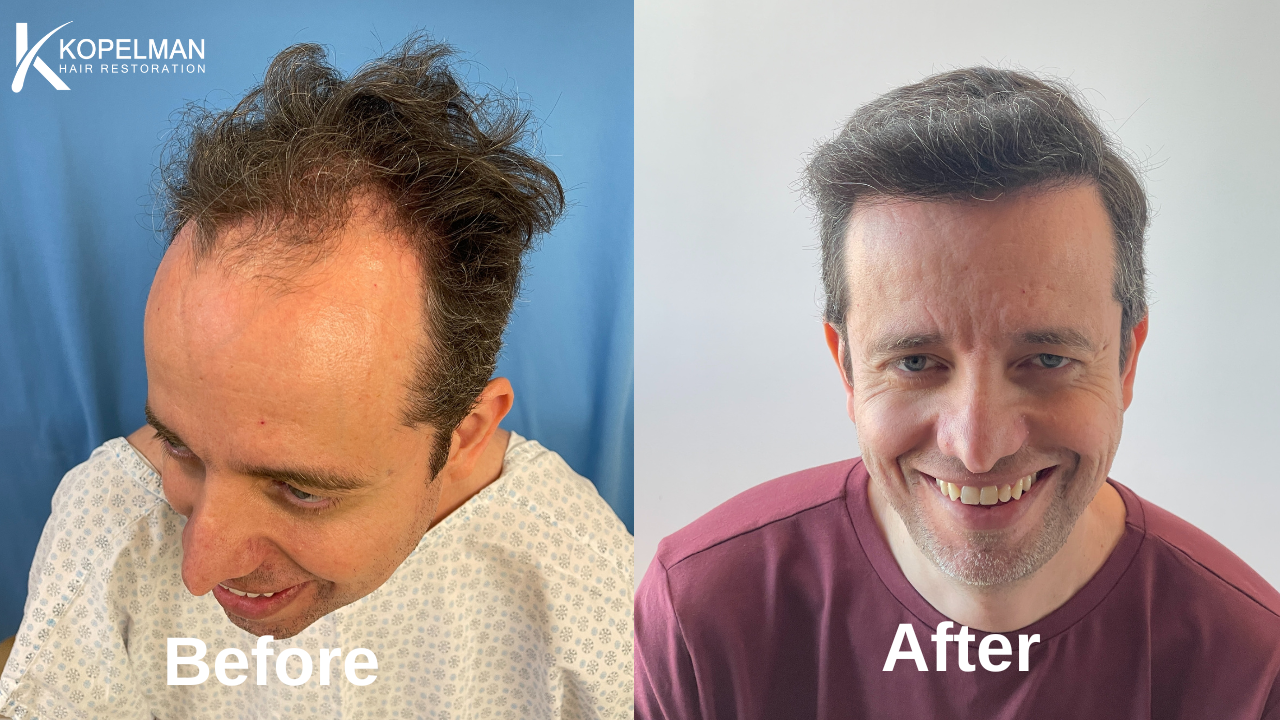
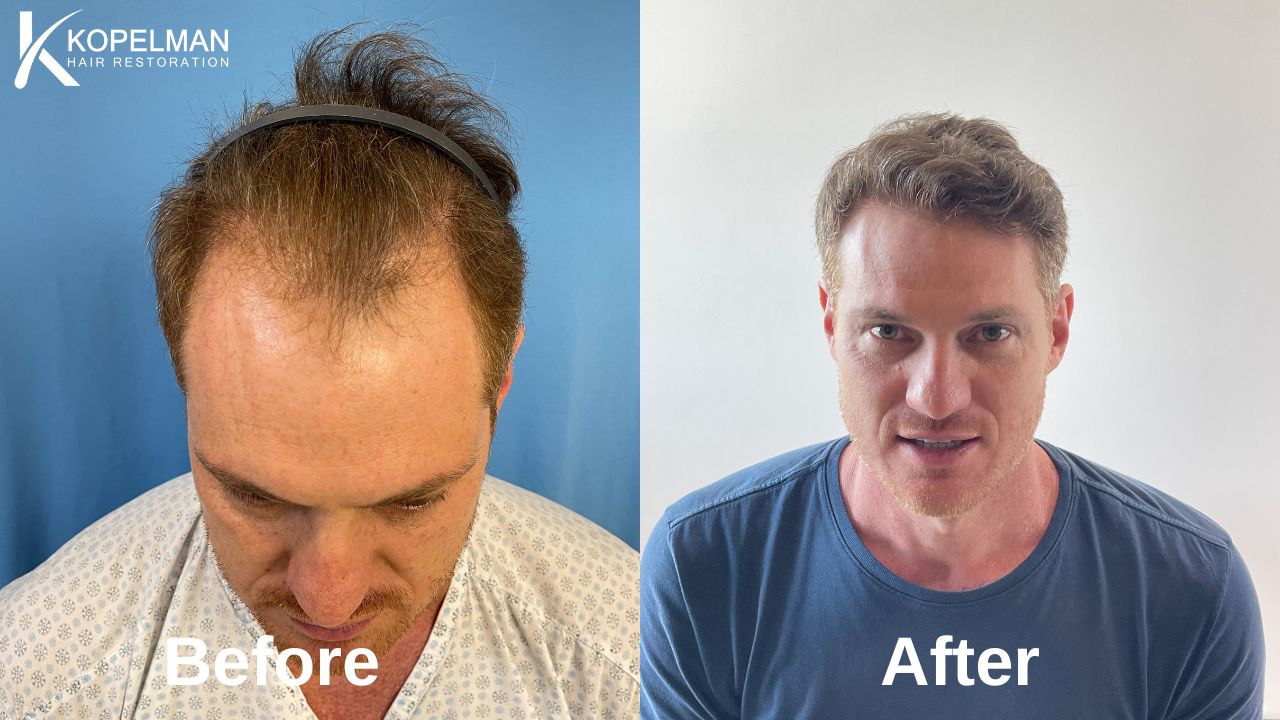
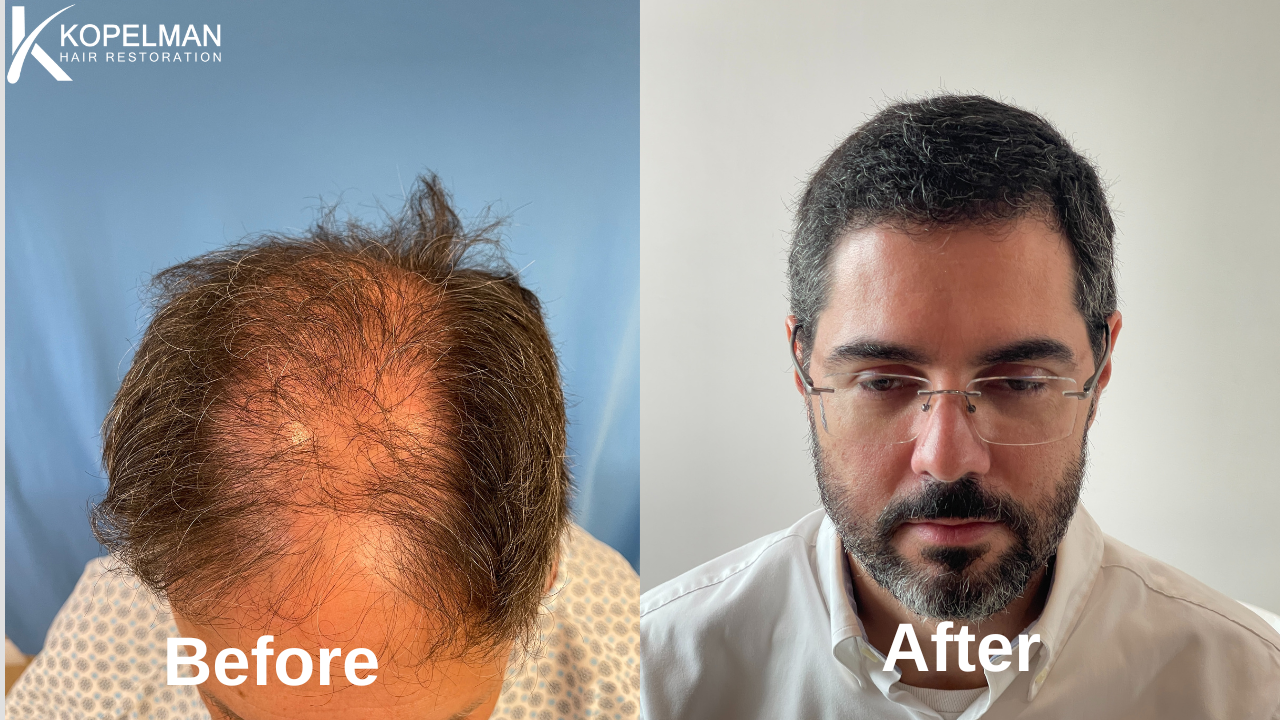
Before & After results

Kopelman Hair Restoration

Dr. Ross Kopelman and Dr. Joel Kopelman treat patients for hair loss and focus on delivering natural hair transplants at their New York City, New Jersey, and Palm Beach Florida offices. With over 40 years of combined experience, they are leaders in advanced FUE hair transplantation and hair restoration.
40+

Years Combined Experience

1K+

Procedures Performed

5.0★

Patient Rating

3

Locations

Stay in the loop

Get the latest on hair restoration and hair transplant tips from Dr. Kopelman

Dr. Ross Kopelman

Dr. Ross Kopelman is a hair restoration surgeon specializing in advanced FUE hair transplantation, natural hairline design, and regenerative therapies. He sees patients in New York City, New Jersey, and Palm Beach, and offers virtual consultations nationwide.