
Losing Hair on Arms
Losing hair on arms usually has the same causes as on the legs, plus tight clothing and skin conditions such as eczema (Healthline). Thinning tends to be gradual, so many people notice it late.
Hair Loss on Legs in Men: Why the Lower Legs Thin First
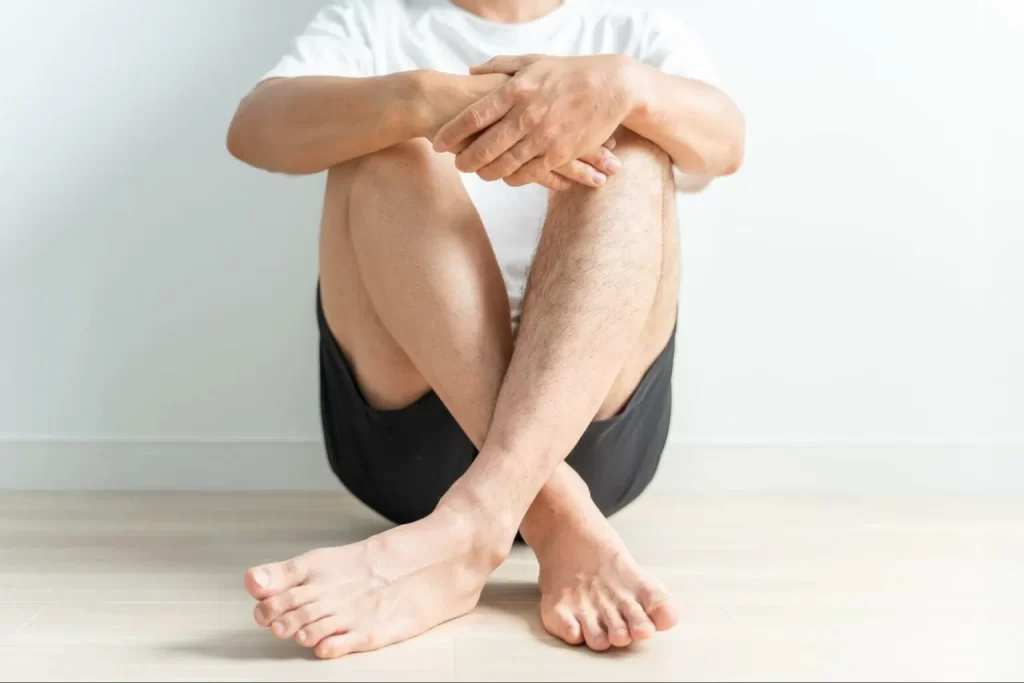
In men, thinning usually starts on the shins and calves. The most likely explanation is anterolateral leg alopecia, also called peroneal alopecia: symmetrical, sharply defined thinning on the front and outer sides of both lower legs, most often in middle-aged and older men (International Journal of Trichology).
If you are wondering why you are losing hair on your lower legs as a man, this pattern is usually the answer, and it is generally benign. Its cause is unknown; friction from trousers and leg crossing has been suggested but not confirmed. A 1939 study estimated that up to 35% of men are affected (International Journal of Trichology).
Hair Loss on Arms and Legs in Women
In women, limb thinning often tracks hormonal change. Pregnancy, menopause, and thyroid disorders can thin the arms and legs, and low iron, zinc, or vitamin D can add to it (Healthline).
What causes loss of body hair in females when it appears suddenly? A recent illness, surgery, major stress, or a new medication can trigger it, as can alopecia areata (Healthline). Sudden loss of hair on legs and arms in women deserves a medical check, and blood tests are usually the first step.
Poor Circulation and PAD: The Cause to Rule Out
Poor circulation is the most serious cause to rule out, even though many cases of leg thinning are benign (International Journal of Trichology). PAD is caused by plaque buildup that reduces blood flow in the arteries, most often those serving the legs and feet (NHLBI).
Symmetrical thinning with no other symptoms is more often benign. Thinning that comes with the circulation warning signs listed below points toward PAD.
Lifestyle Factors
Stress, smoking, or certain medications can affect follicle health across the body.
Diagnosis and Symptom Awareness
How Doctors Identify the Cause
Doctors review medical history, run tests, and examine affected areas. Evaluation may include:
- Physical examination of the skin and thinning pattern
- Checking pulses in the legs
- Blood tests (glucose, thyroid, iron, vitamins, inflammation)
- An ankle-brachial index (ABI) test, which compares blood pressure at the ankle and arm, plus ultrasound if PAD is suspected (NHLBI)
Self-Assessment Tips Before You See a Doctor
- Is the change gradual or sudden?
- Does it affect one side or both?
- Any skin changes?
- Signs of poor circulation?
- Any recent illness, new medication, or major stress?
How to Support Healthy Follicles on the Legs and Arms
Support follicles and steady growth with:
Treatment and Care Options
Medical Treatments
Topical products, oral medications, or hormone therapy may be used, depending on the cause:
- Nutritional deficiency: supplements or diet changes guided by blood tests
- Thyroid disease: hormone replacement such as levothyroxine (Healthline)
- Inflammation or skin conditions: topical or injected corticosteroids (Healthline)
- Alopecia areata: dermatologist-directed therapy
- PAD: lifestyle changes, exercise programs, and medicine, with angioplasty or bypass surgery in severe cases (NHLBI)
- Friction or anterolateral leg alopecia: less rubbing; no treatment is proven to stimulate regrowth
Can Leg and Arm Hair Grow Back?
Often, when the trigger is treatable. Strands often return after you remove friction, correct deficiencies, stabilize thyroid levels, or reduce inflammation.
Some people with alopecia areata regrow fully, while others have repeated episodes (Healthline). In anterolateral leg alopecia, spontaneous resolution can occur, but no treatment has been shown to stimulate regrowth (International Journal of Trichology).
When to See a Specialist
Consult a specialist if changes appear suddenly, continue over time, or affect several areas of the body, especially both arms and legs. Early evaluation ensures accurate diagnosis and safe treatment.
- Cold or numb legs
- Shiny or tight skin
- Pain when walking
- Slow-healing wounds
- Fast or uneven changes in density
- Painful rashes, redness, or signs of infection