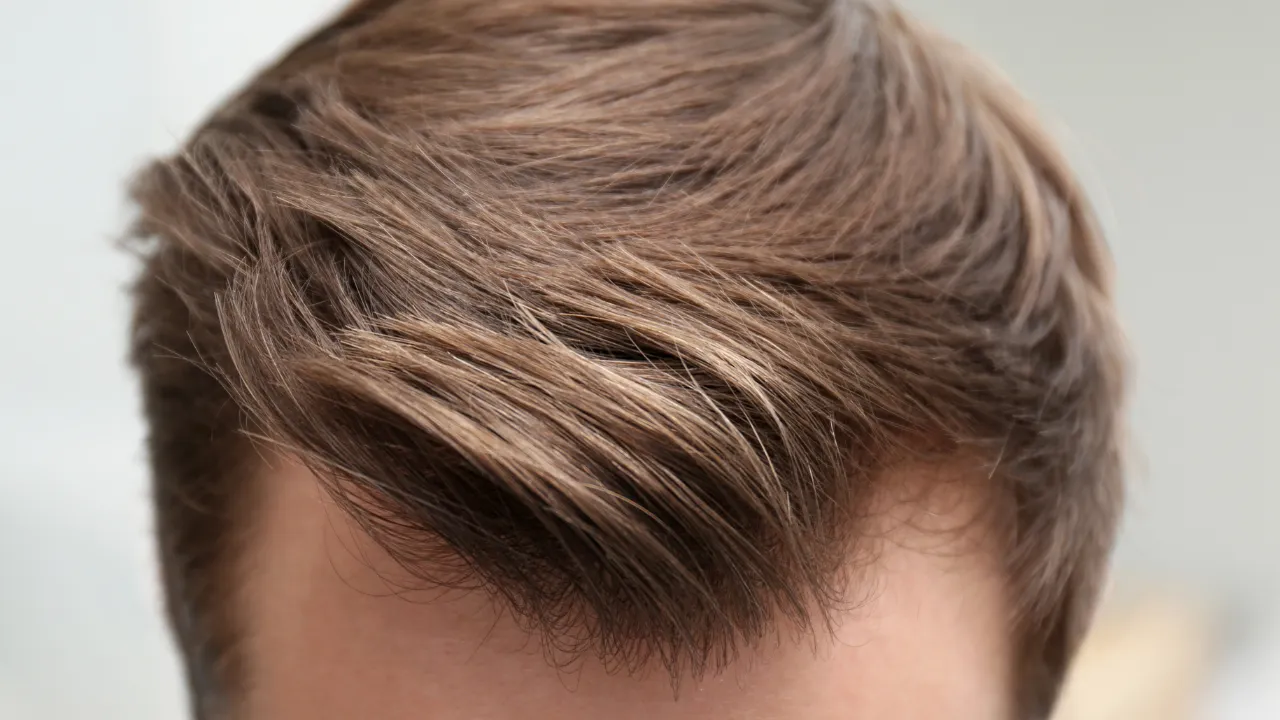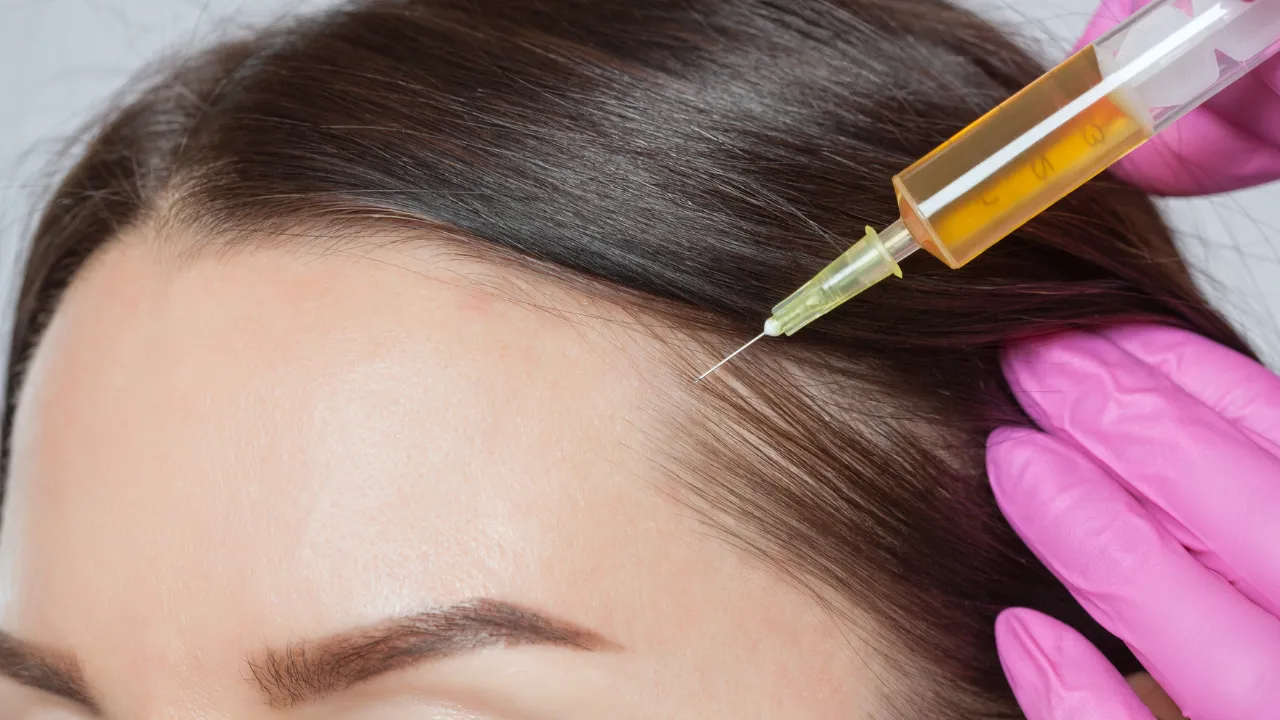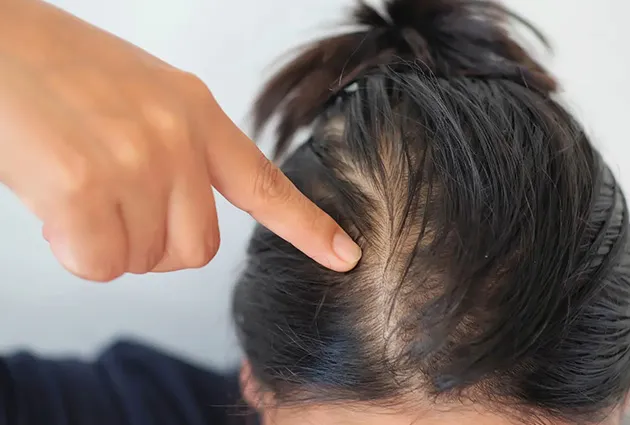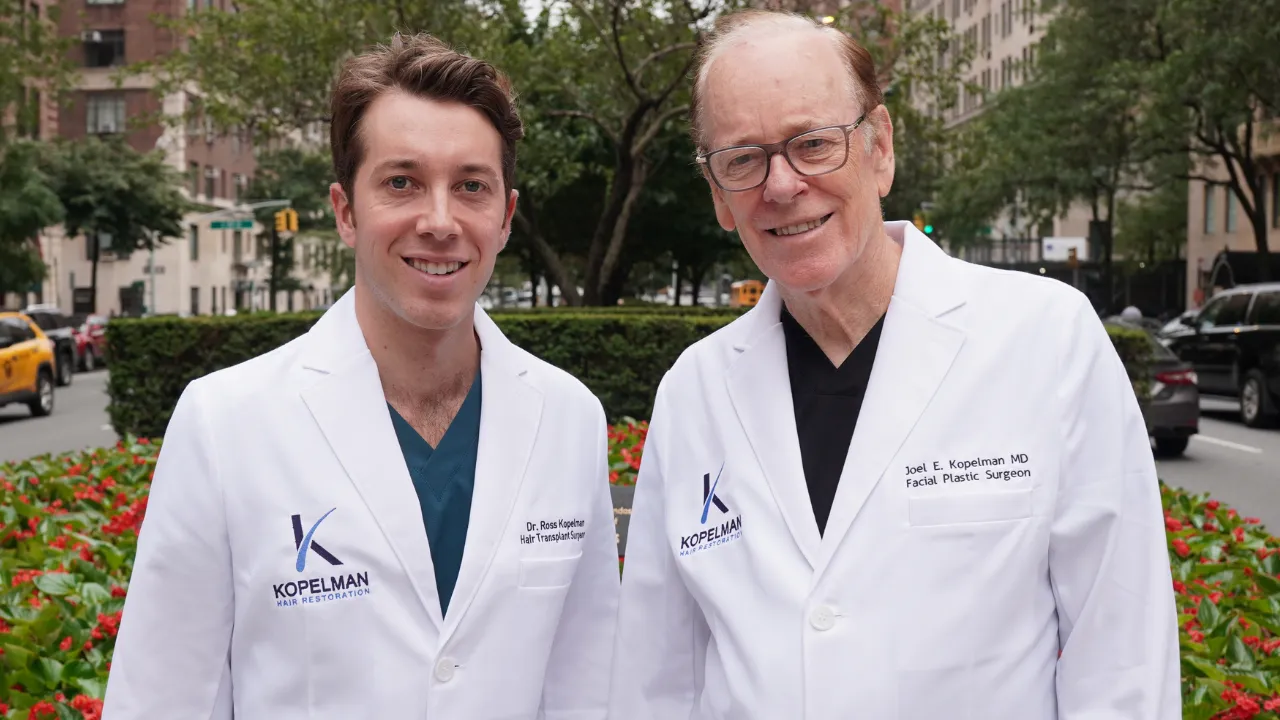


For patients with early thinning who want to avoid surgery, regenerative treatment may be worth discussing. For patients with established baldness and adequate donor hair, FUE or FUT will usually offer a more defined restoration option.
The sections below compare stem cells and hair transplantation by results, permanence, recovery, cost, donor requirements, hair-loss stage, and treatment goals.
Key Takeaways
- Stem cell therapy is better suited to thinning areas where viable follicles still remain.
- Hair transplantation can restore coverage in bald or severely depleted areas by moving healthy donor follicles.
- Hair transplants generally offer more predictable coverage, while stem-cell-based results can vary more between patients.
- Stem cell treatments may involve less downtime but can require multiple treatment sessions.
- Donor supply, hair-loss stage, treatment goals, and willingness to undergo surgery should guide the choice.
| Factor | Stem Cell Therapy | Hair Transplant |
|---|---|---|
| Main purpose | Support existing follicles in thinning areas | Move healthy donor follicles into thinning or bald areas |
| Best suited for | Earlier thinning with viable follicles | Established thinning or bald areas |
| Surgery required | Usually no | Yes |
| Donor hair required | No graft donor supply is required | Yes, adequate donor follicles are essential |
| Can restore a bald area? | Limited when follicles are no longer viable | Yes, if enough suitable donor hair is available |
| Result predictability | More variable | Generally more predictable for creating coverage |
| Number of treatments | Repeat sessions may be recommended | Often planned as one main procedure, though future sessions may be needed |
| Recovery | Usually shorter | Requires a defined healing period and graft aftercare |
| Long-term permanence | Less established and may require maintenance | Transplanted donor follicles can provide long-term growth |
| Main limitation | Cannot reliably replace follicles that are no longer present | Coverage is limited by donor supply |
How Stem Cell Therapy and Hair Transplants Differ
The main difference is what happens to the follicles. Stem cell therapy is intended to support follicles that already exist in the scalp. A hair transplant takes healthy follicles from a donor area and places them into areas where greater coverage is needed.
This distinction largely determines which treatment makes sense for a patient.
Stem Cell Therapy Works With Existing Follicles
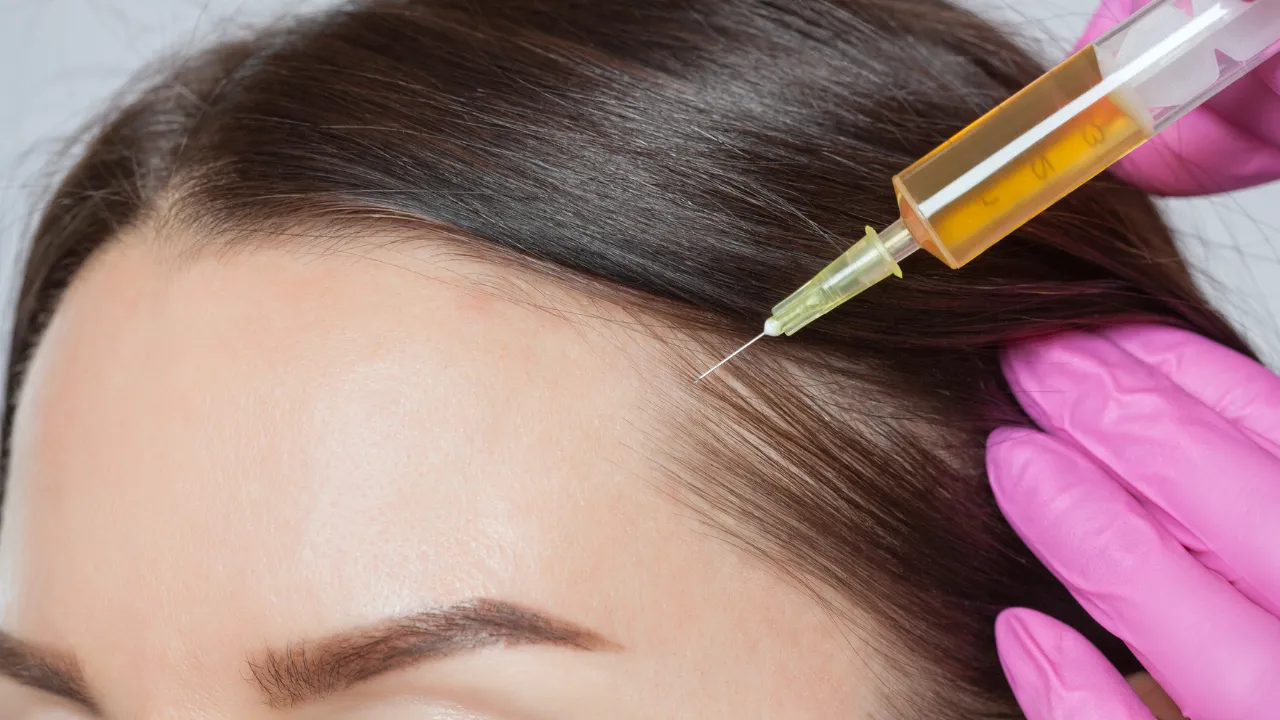
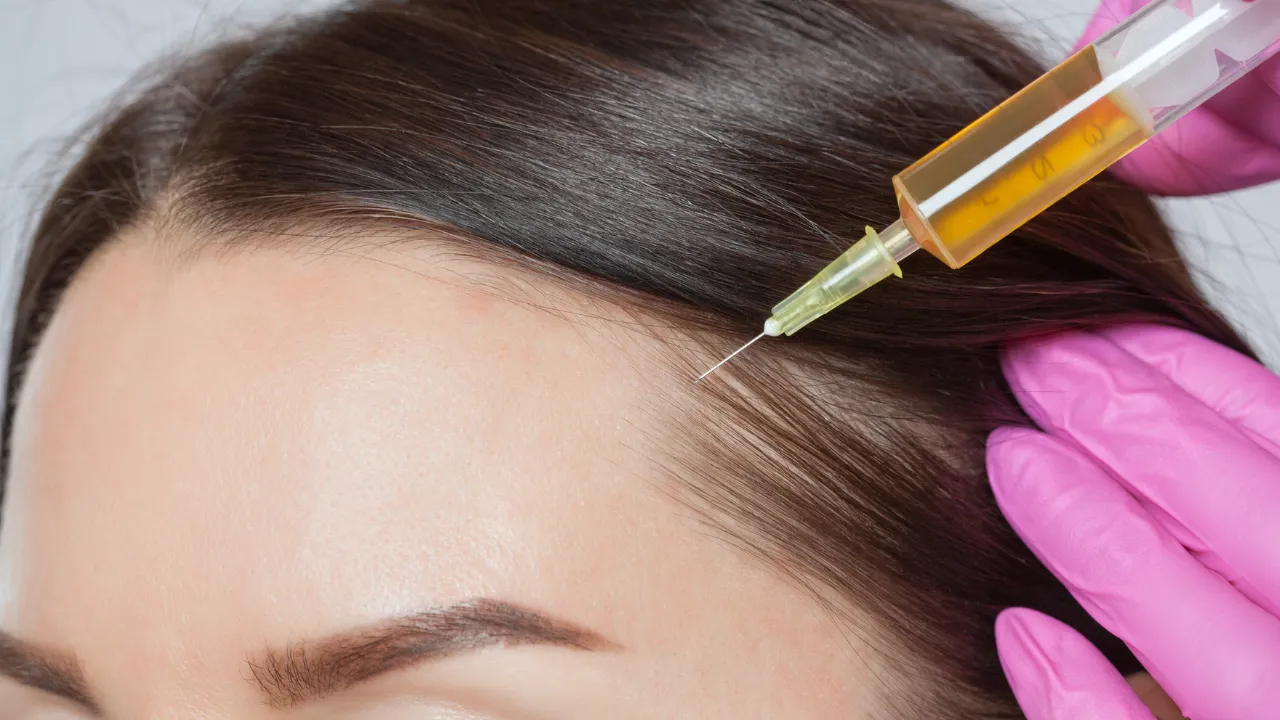
Stem-cell-based hair treatments do not replace missing follicles in the same way a transplant does. They are generally considered when hair is thinning but follicles are still present.
Patients looking for a detailed explanation of the treatment itself can read our guide to stem cell hair restoration.
Hair Transplants Relocate Donor Follicles
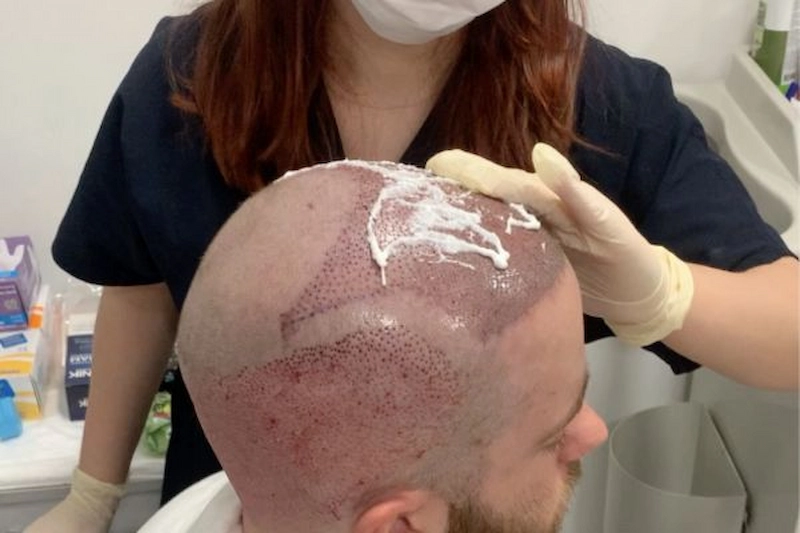
Hair transplantation uses follicles from a stable donor area, usually at the back or sides of the scalp. FUE removes follicular units individually, while FUT obtains follicles from a narrow donor strip.
Those follicles are then placed into the areas being restored. This makes transplantation a more direct option when thinning has progressed to significant loss or baldness.
Donor Hair Changes the Decision
Stem cell treatment does not depend on having enough donor grafts for transplantation. Hair transplant surgery does.
A patient with strong donor density may have enough follicles to rebuild a hairline or add coverage to another depleted area. A patient with limited donor supply may have fewer surgical options.
Donor supply does not automatically make stem cell therapy effective, though. The condition of the follicles in the thinning area still matters.
How Stem Cell Therapy and Hair Transplants Work
Stem cell therapy supports existing hair follicles. Hair transplants move follicles to areas that cannot grow hair. Both options can improve thickness.
Both options can improve thickness, and you can learn how each method differs in application and results in this breakdown of stem cell hair transplant vs. FUE.
Donor area requirements
Hair transplants need a strong donor zone. Patients with weak donor supply may try stem cell support. A medical check helps pick the best plan, and tools like a hair graft estimator can offer an early idea of how many grafts you may need.
Stem Cells vs Hair Transplant Results
Hair transplantation generally provides more predictable coverage because the procedure physically relocates follicles into a planned area. The surgeon can calculate graft requirements, design the distribution, and place individual follicles according to the desired hairline and density.
Stem-cell-based treatment does not offer the same ability to determine exactly where new coverage will appear. Any improvement depends on how existing follicles respond.
For this reason, a patient with diffuse thinning may have different goals from someone trying to rebuild a receded hairline or restore a bald frontal area.
Which Results Last Longer?
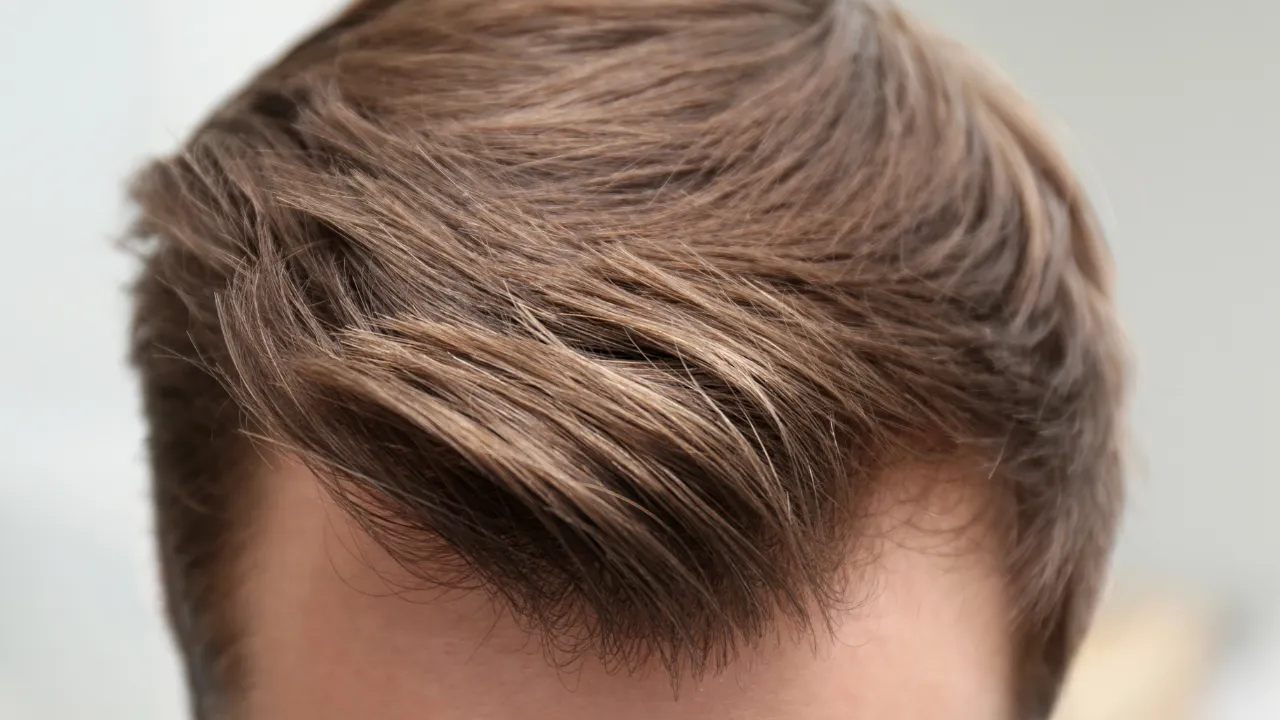
Transplanted follicles are selected from donor areas that are more resistant to pattern hair loss, so their growth can remain long-term. Existing non-transplanted hair can still thin over time.
Stem-cell-based treatments have a less established long-term durability profile, and repeat treatment may be considered depending on the approach used and patient response.
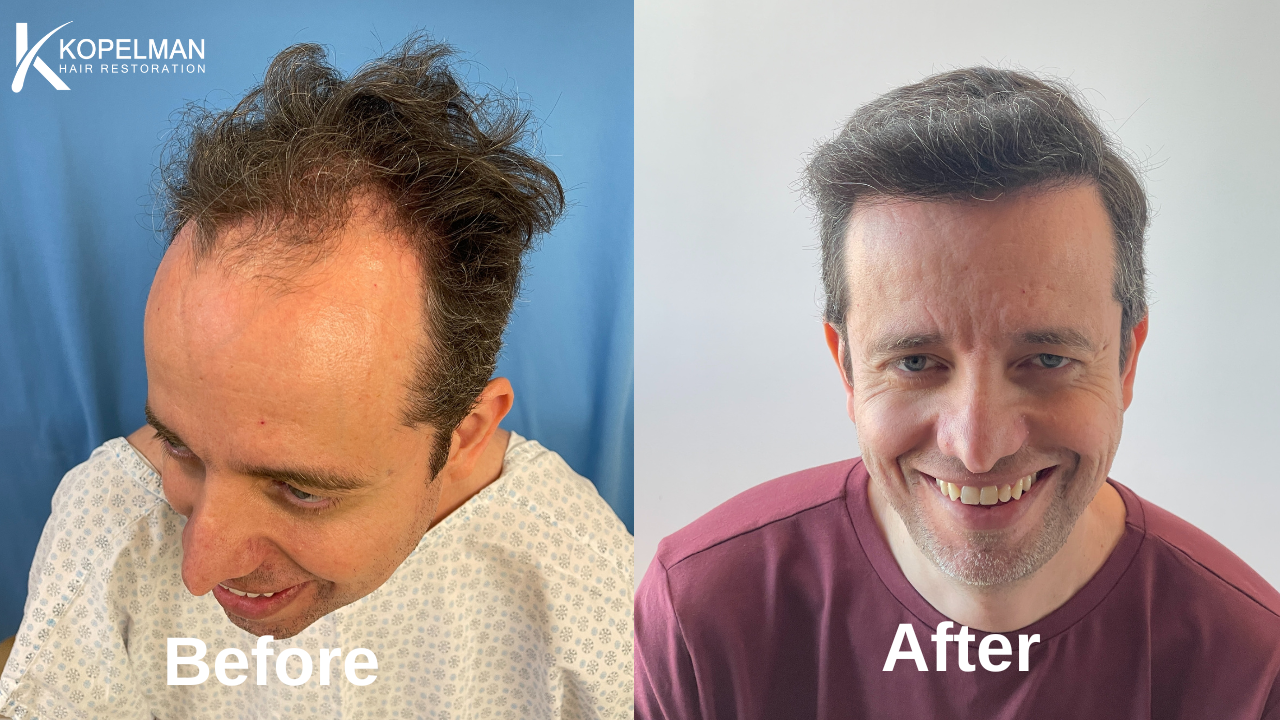
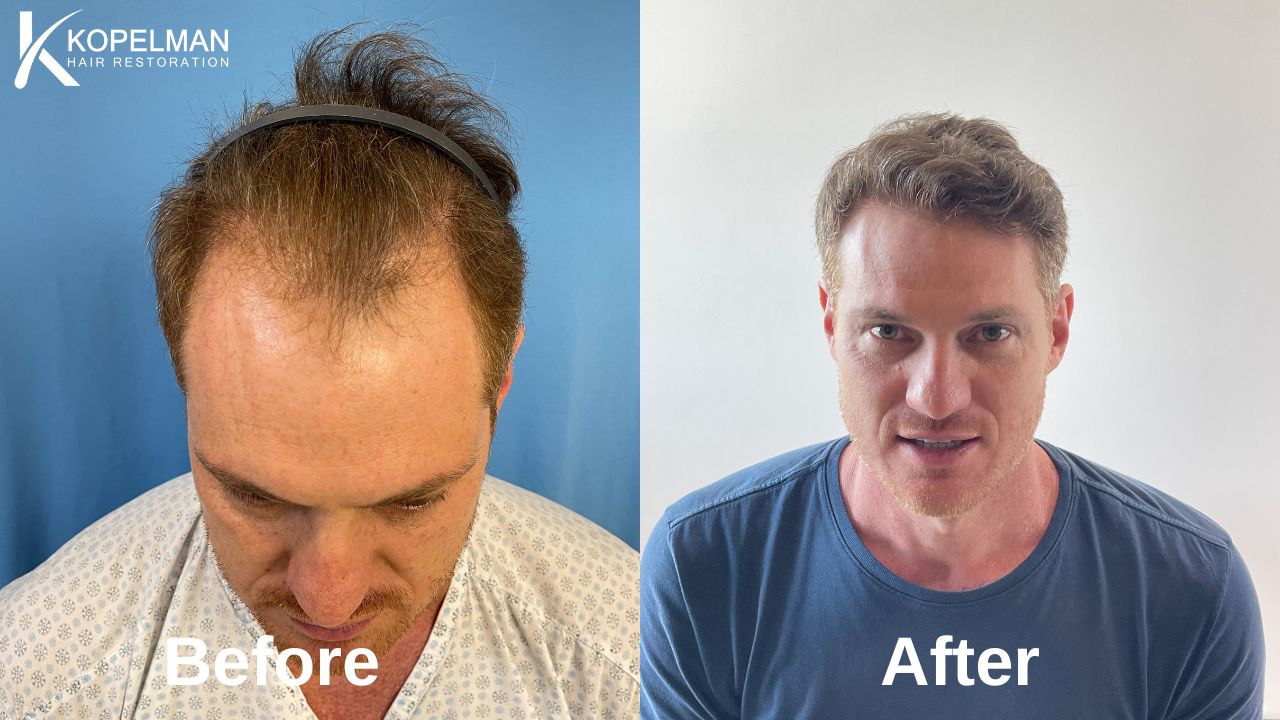
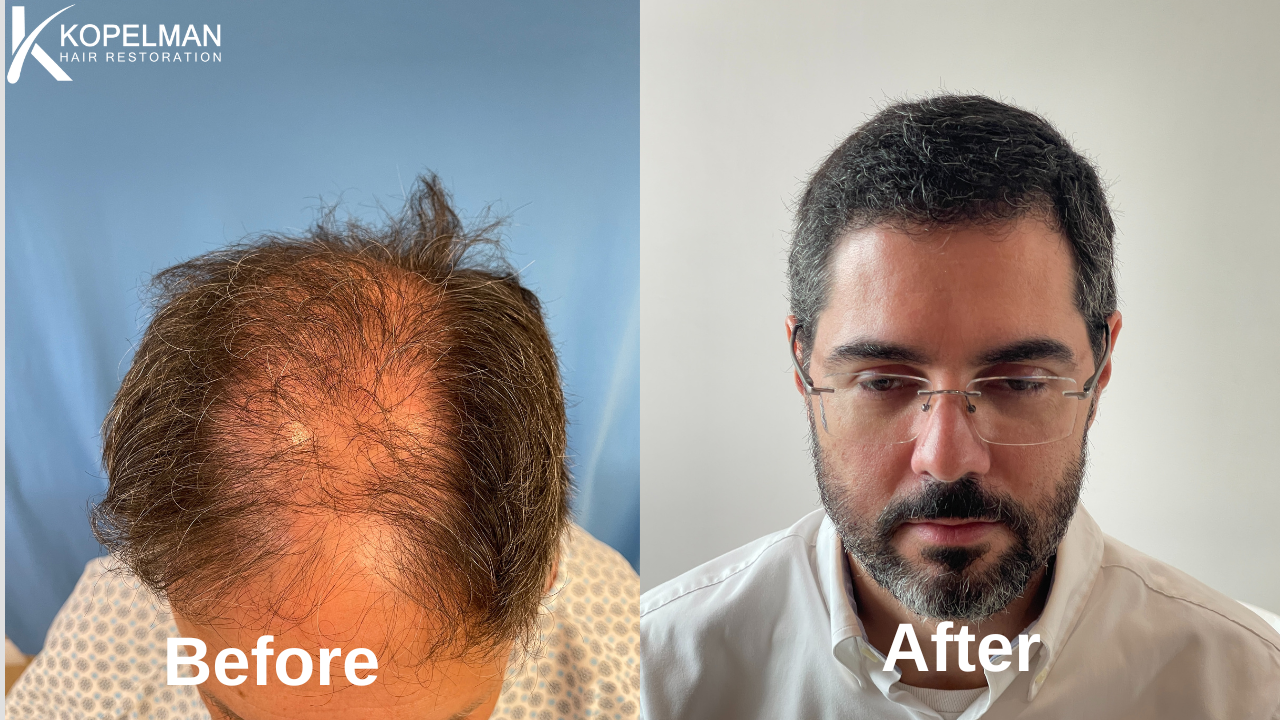
Hair transplant vs. stem cells results
Hair transplants create clear coverage. Stem cells help with thinning. Early action gives the best chance at success.
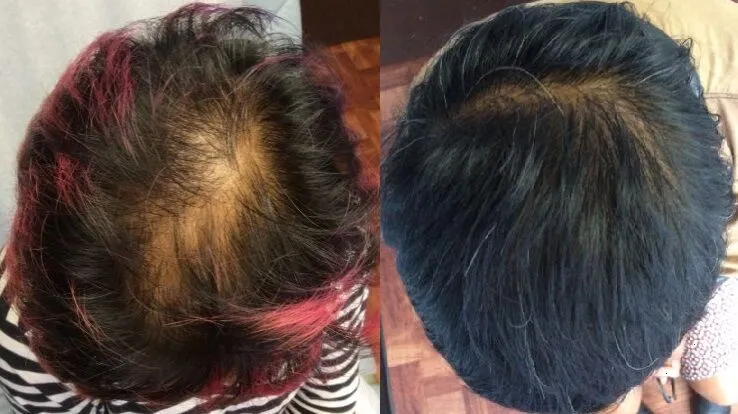
Stem cell before and after
Results build slowly and may need more sessions. Many patients see a thicker texture. Ongoing care matters.
Stem Cell vs Hair Transplant Treatment Time
Hair transplantation usually involves one primary surgical session followed by a recovery and growth period. Larger cases or future progression may require another transplant later.
Stem-cell-based treatment is generally delivered in shorter sessions, but multiple visits may be recommended depending on the treatment protocol.
This creates an important tradeoff. A hair transplant requires more time and recovery upfront, while regenerative treatment may involve less disruption per visit but more repeated treatment.
Which Option Is More Permanent?
Hair transplant results last for many years. Stem cell therapy may need refresh sessions. Genetics influence changes.
Stem Cell vs Hair Transplant Cost
A hair transplant generally has a higher upfront cost because it is a surgical procedure based partly on the number of grafts and complexity of the case. Stem-cell-based treatment may have a lower cost per treatment, but repeat sessions can change the long-term total.
This means the lowest initial price is not always the lowest overall cost. Patients should compare the number of treatments, expected longevity, maintenance needs, and likely result rather than looking only at the first procedure fee.
See our complete guide to stem cell hair transplant cost for a detailed pricing breakdown.
Stem Cells vs Hair Transplant: Pros and Cons
Stem Cell Therapy Advantages
- Less invasive than surgery
- Shorter initial recovery
- Does not require harvesting transplant grafts
- May be considered for earlier thinning
Stem Cell Therapy Limitations
- Depends on viable existing follicles
- Cannot reliably recreate coverage where follicles are absent
- Results are more variable
- Repeat treatment may be needed
Hair Transplant Advantages
- Can restore coverage in significantly depleted areas
- Allows planned placement of follicles
- Can rebuild a receded hairline
- Offers more predictable structural coverage
Hair Transplant Limitations
- Requires surgery
- Requires adequate donor follicles
- Has a longer recovery period
- Available density is limited by donor supply
Pain Level and Anesthesia Expectations
Local anesthesia reduces discomfort. Mild soreness may follow stem cell injections. Share any concerns with your provider.
Safety considerations
Check clinic training and records. Certified care lowers risk. Clear communication matters.
Unregulated Clinic Caution
Avoid clinics without medical oversight. Poor methods raise infection risk. Research keeps you safe.
Recovery Timeline
Swelling fades in days. Growth starts in weeks and improves for months, and you can review a detailed hair transplant timeline to see how results progress month by month. Stem cell changes also build slowly.
Who Should Choose Each Option
Stem cells help with early thinning, and recognizing signs of hair thinning early can improve outcomes. Transplants help when follicles are missing. Doctors match treatment to severity.
Ideal candidates
Healthy patients with fair goals respond best. Early action helps preserve hair. An exam prevents bad outcomes.
Contraindications and Eligibility Conflicts
Some health issues lower success. Autoimmune or scarring issues may affect the results. Doctors check overall health.
Suitability by Hair Loss Stage
Early-stage thinning responds to stem cells. Blended plans may help mid-stage loss. Late loss often needs surgery.
Expert Recommendations From Hair Specialists
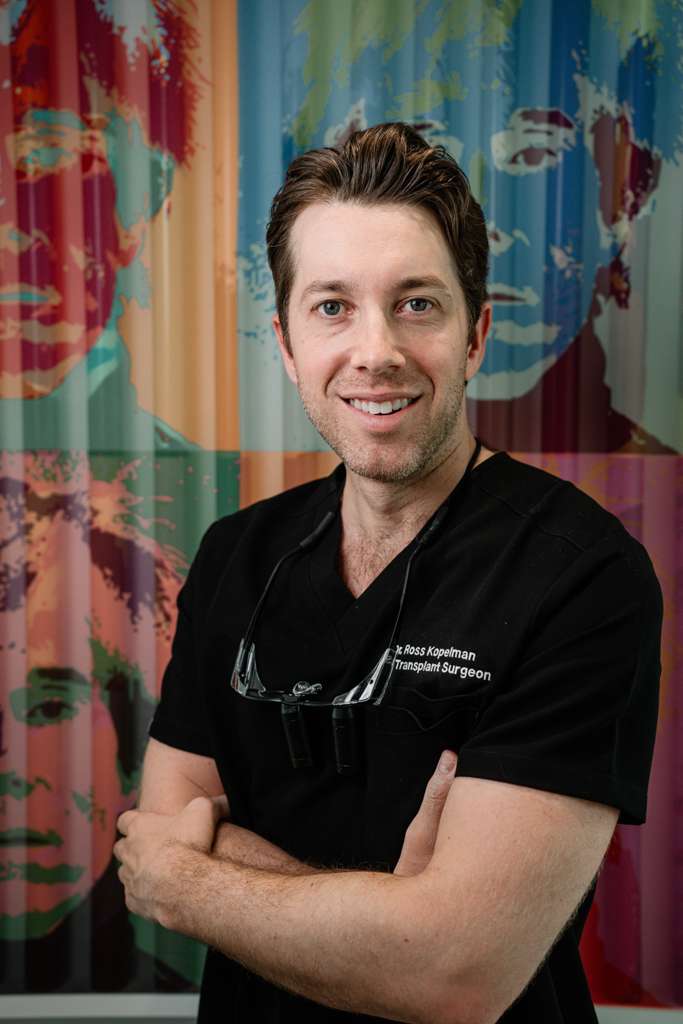
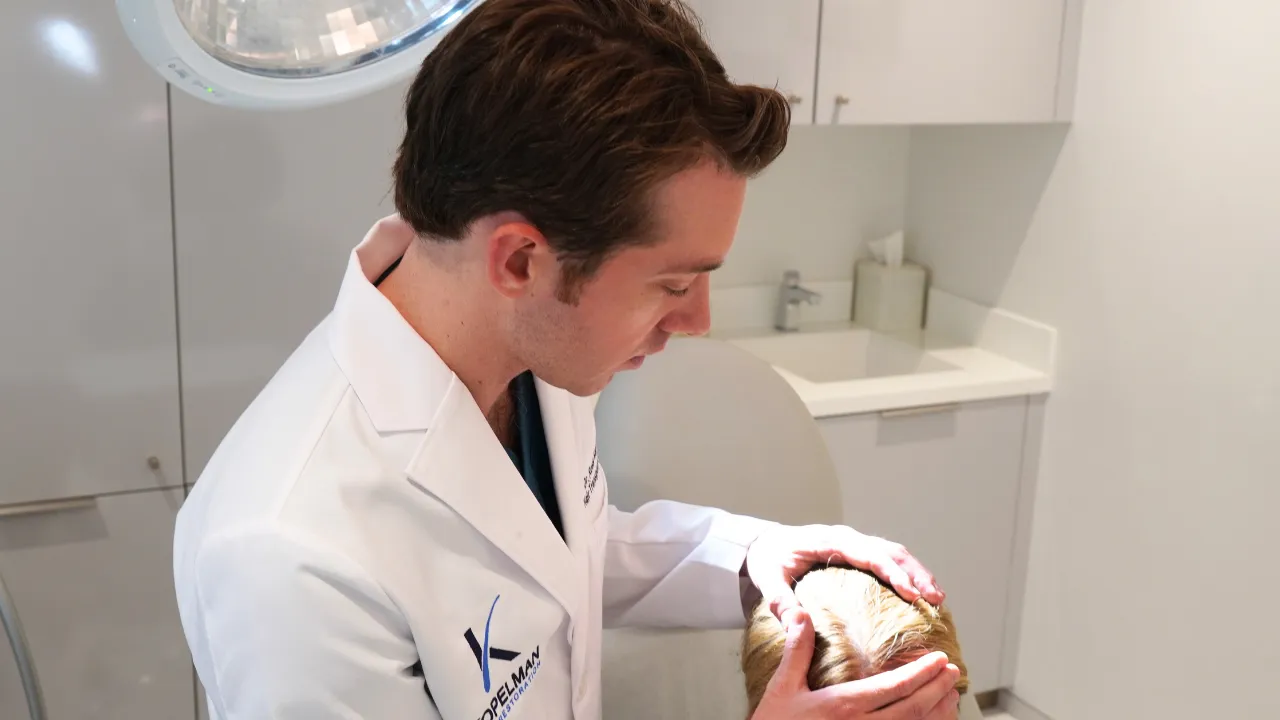
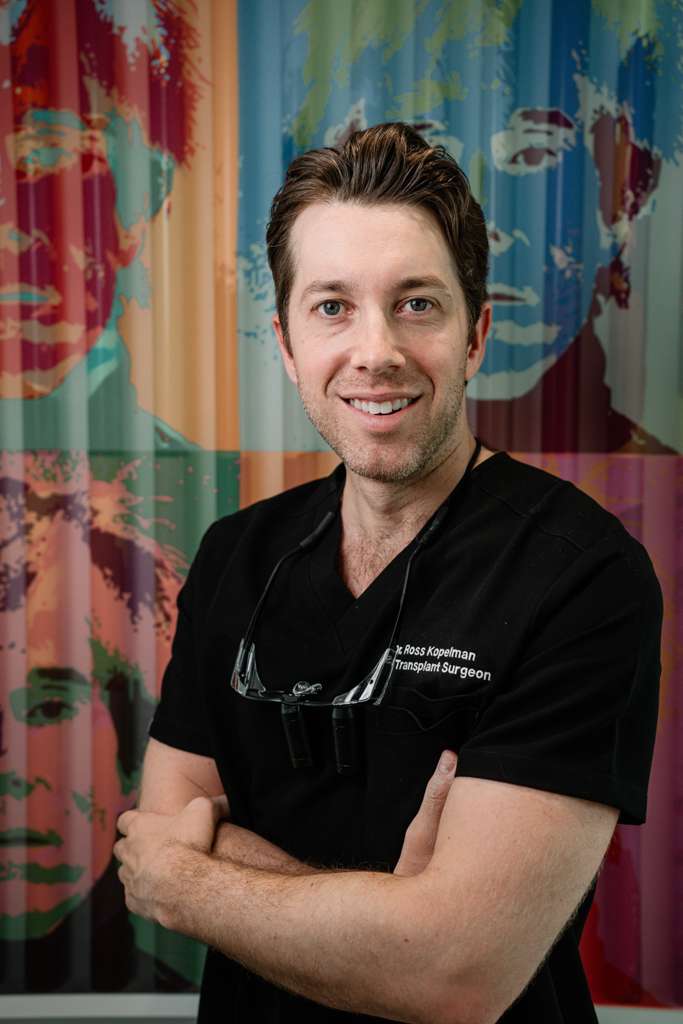
Experts suggest reviewing both choices with a trained provider. Kopelman Hair offers custom plans. Dr. Kopelman checks the hair pattern and donor supply. Follow-up protects long-term success. Schedule your personalized consultation today.