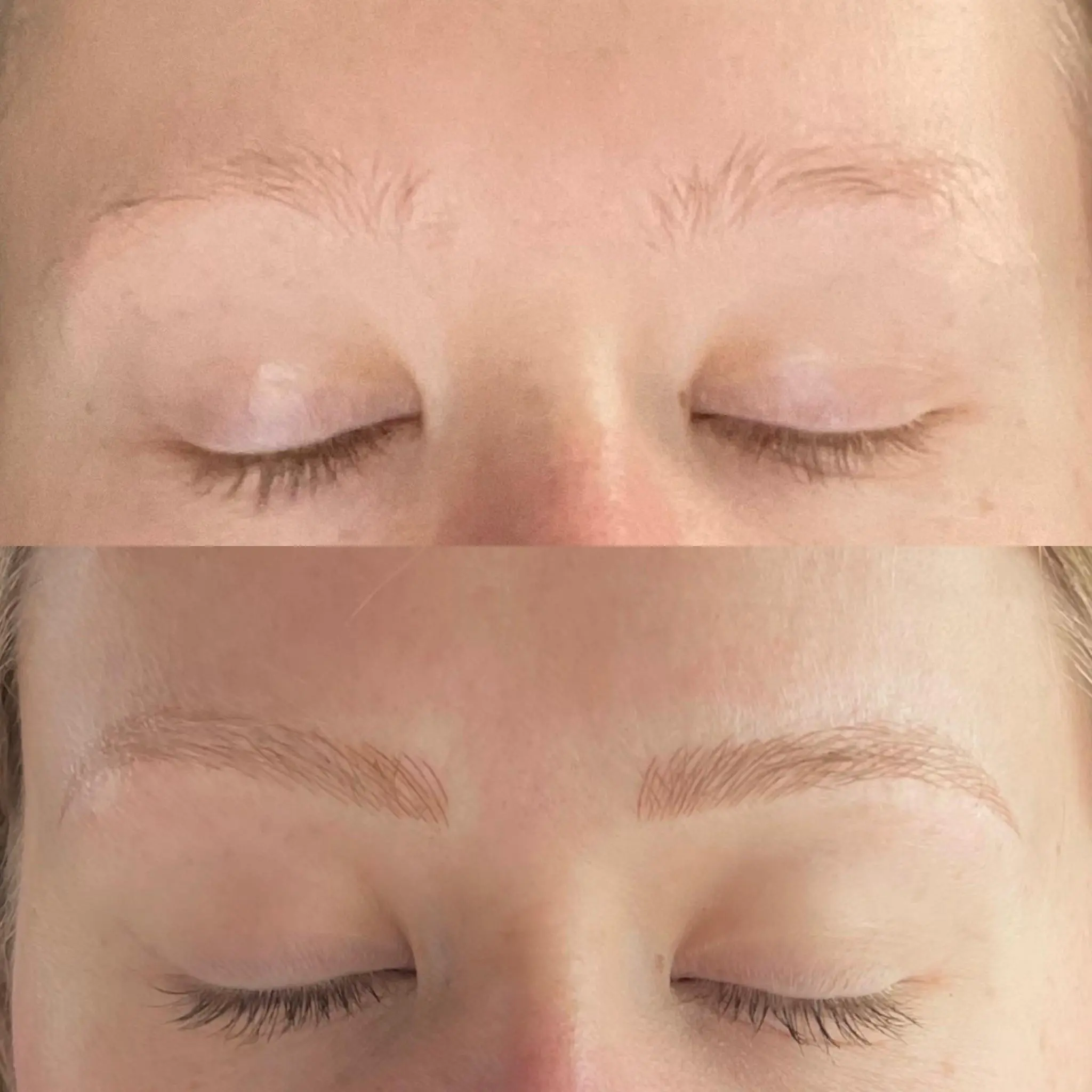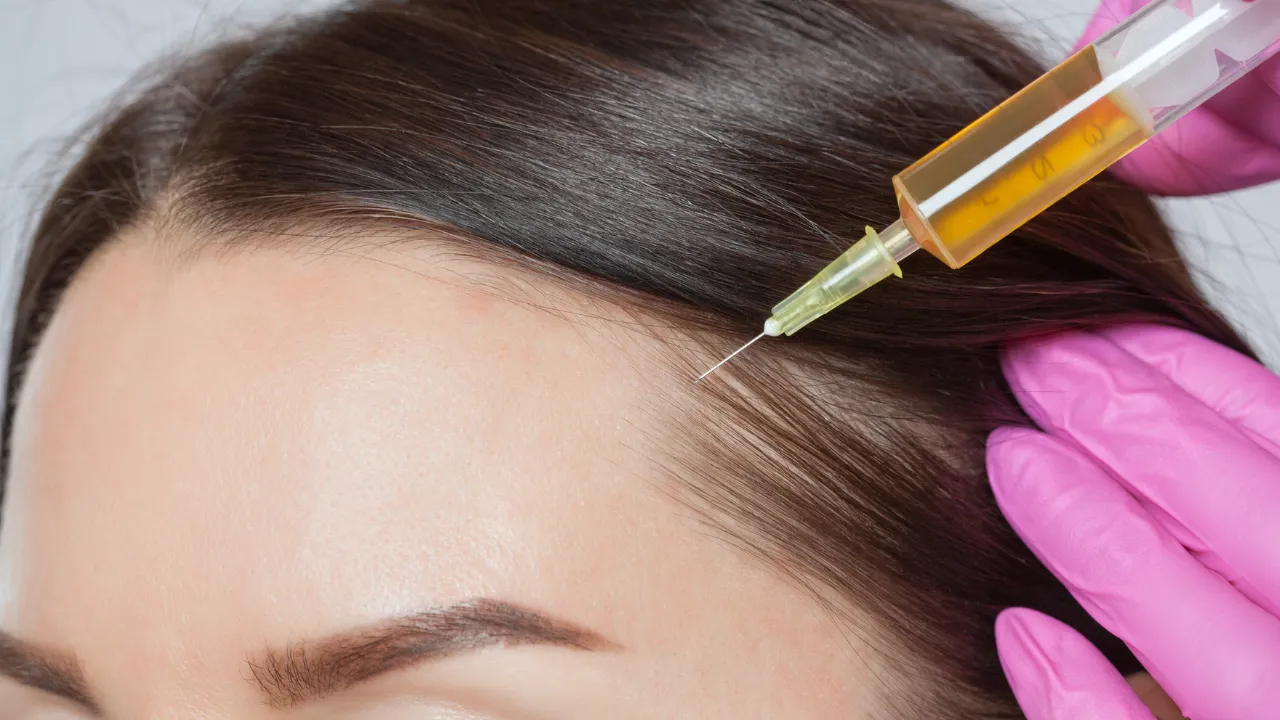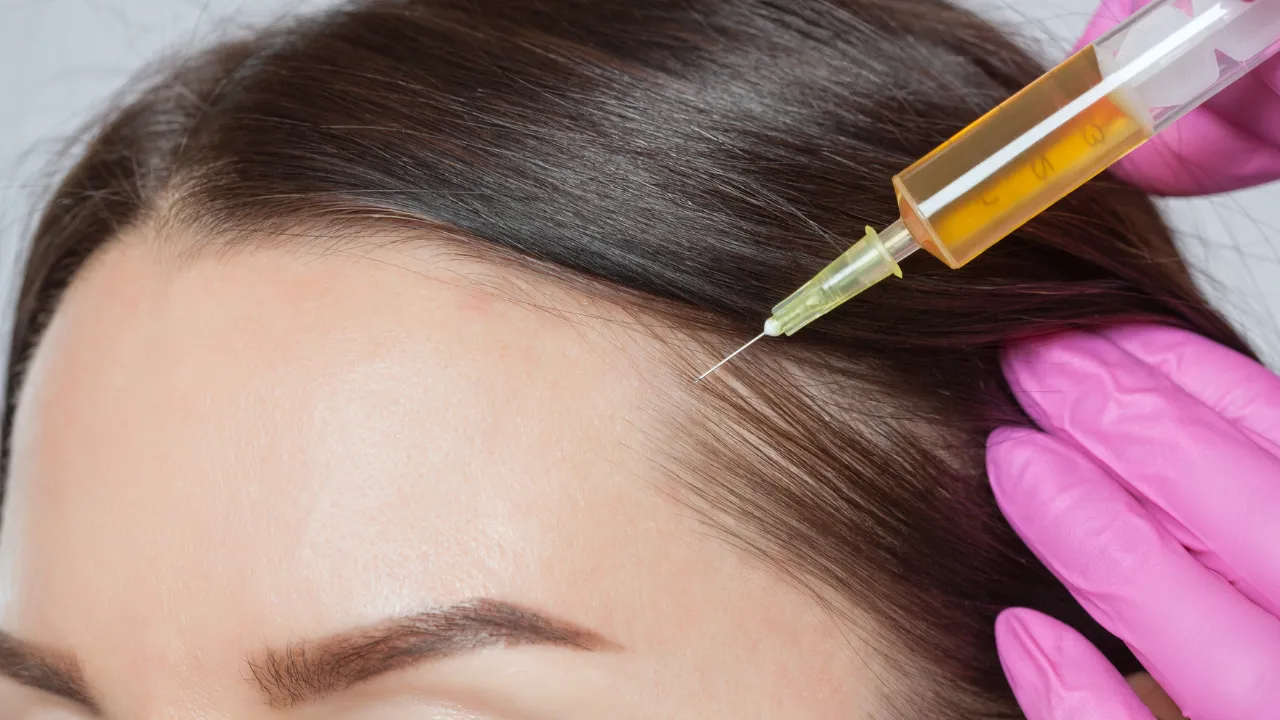

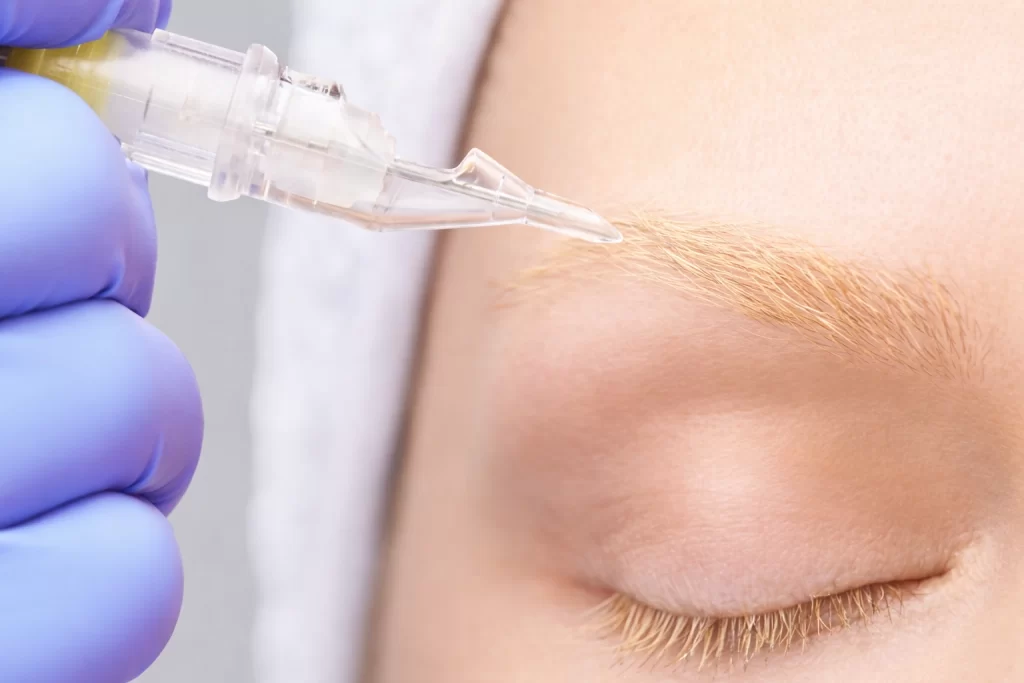
A blonde hair eyebrow tattoo is possible, but it requires careful pigment selection and conservative technique to achieve natural-looking results on light hair and fair skin.
This article explains how eyebrow tattooing works for blondes, how color choice affects healing and fading, and what limitations to expect.


Key Takeaways
- Blonde eyebrow tattoos and microblading are possible, but results depend heavily on pigment choice, undertone balance, and a conservative technique, given the lower natural contrast.
- Early healing often includes darker brows that soften over several weeks, so the initial appearance does not reflect the final healed color.
- Neutral, light brown, or ash-based pigments usually heal more naturally on blonde hair and fair skin than accurate blonde or warm tones.
- Lighter pigments fade faster, so long-term maintenance and periodic touch-ups are expected.
Can Blondes Get Eyebrow Tattoos or Microblading?
Yes, people with blonde hair can undergo eyebrow tattooing or microblading, but outcomes depend heavily on pigment selection and technique. An eyebrow tattoo on blondes requires more careful planning because small contrast errors are easier to notice. Tattooing is often considered by blondes experiencing gradual eyebrow thinning, where makeup no longer provides consistent definition. The goal is to create balance with skin tone and facial features rather than matching hair color exactly. Professional assessment helps reduce common risks. Microblading uses fine strokes to simulate hair, while other tattoo methods rely on shading. Both approaches can work for blondes if pigment depth and saturation are controlled. Pigments that are too dark may look harsh, while very light pigments may fade quickly. Technique selection plays a major role in long-term appearance.What Blonde Brows Look Like During Early Healing
Immediately after treatment, tattooed eyebrows on blondes often appear darker and more defined than expected. This early appearance can feel concerning, especially for people with fair skin. In most cases, this darkness softens as the skin heals and sheds excess pigment. The early phase does not reflect the final result. Many blondes worry their brows will look gray, dark, or unnatural. These concerns are common because lighter features show contrast changes more clearly. Healing is gradual and varies by skin type. Understanding this process helps manage expectations.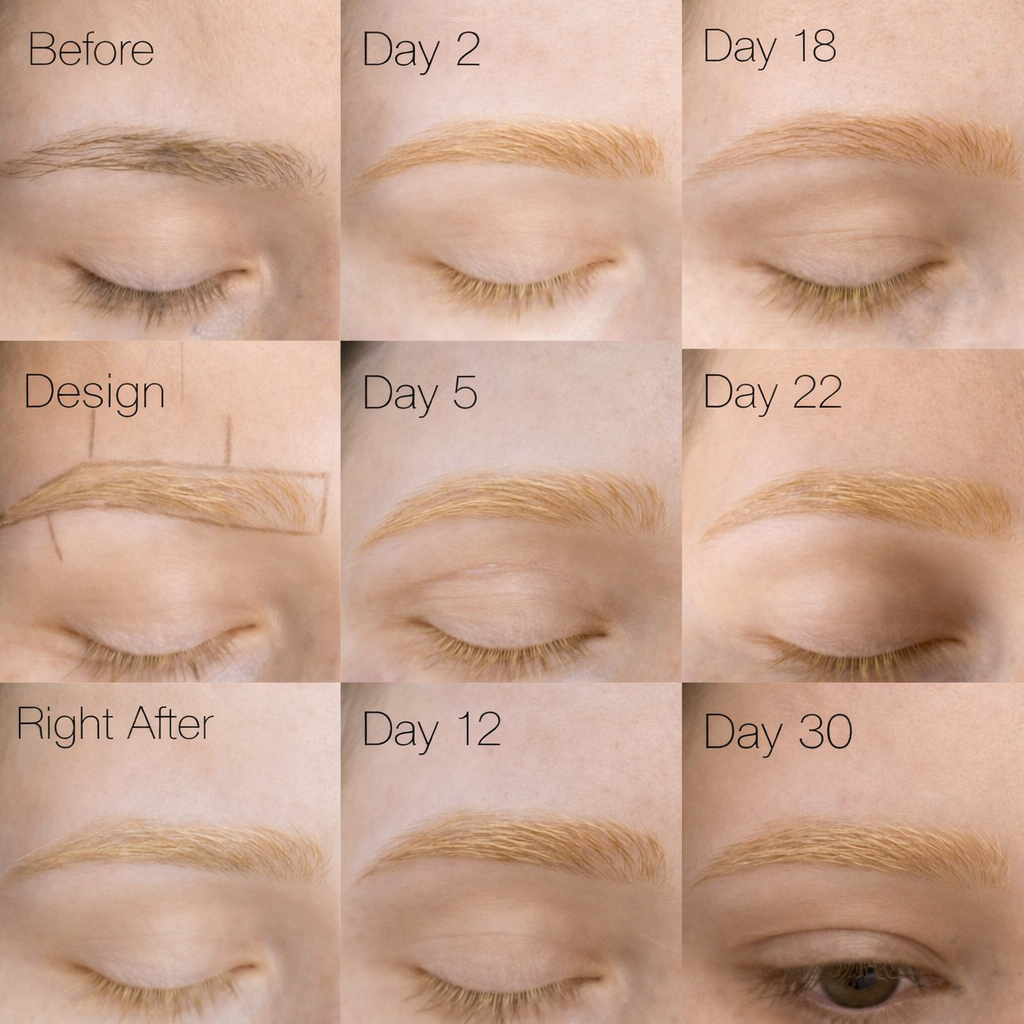
What Color Eyebrows for Blonde Hair?
Choosing eyebrow color for blonde hair involves more than selecting a light shade. Skin undertone, natural brow density, and lifestyle influence how pigment heals. True blonde pigments are usually avoided because they fade unpredictably. Neutral light brown or ash-based tones are more stable. In lighter-haired patients, pigment behavior is less predictable than in darker brows. Small shifts in tone become more noticeable due to lower contrast. For this reason, a conservative approach is often preferred. Gradual color building usually produces better results.Best Eyebrow Color for Blonde Hair
The most reliable colors for blondes include light brown, taupe, and soft ash shades. These tones are defined without a strong contrast. Warm pigments may turn orange over time on fair skin. Cooler pigments often heal more evenly. Dr. Kopelman has noted in clinical discussions that undertone control is one of the main challenges when working with lighter hair and skin. Pigments interact with skin differently from surface makeup. Conservative shade selection helps reduce unwanted color shifts. Subtle definition often looks more natural long term.Best Eyebrow Tattoo Options for Blonde Hair
There are three main eyebrow tattoo options commonly used for blonde hair, each suited to different skin types and expectations. The best choice depends on how much definition is desired, how the skin holds pigment, and how subtle the final result should be. For blondes, conservative techniques are usually preferred to avoid harsh contrast. Understanding these options helps set realistic expectations. The most common options include microblading, powder brows, and combination brows. Each option uses pigment differently and heals in a distinct way. None of these techniques is universally better than the others. The goal is to match the method to the individual rather than forcing a single approach.Natural Blonde Microblading
Microblading creates fine, hair-like strokes that mimic natural eyebrow hairs. This option works best for blondes with normal to dry skin and some existing brow hair. It provides the most subtle enhancement when strokes are placed lightly and sparingly. Results tend to look natural but may fade faster than other methods. Because microblading uses superficial strokes, pigment retention can be limited on certain skin types. Touch-ups are usually required to maintain definition. This option is often chosen by blondes seeking minimal change rather than strong structure. Careful stroke placement is essential for a natural outcome.Powder Brows
Powder brows use soft shading to create a filled-in appearance across the brow. This option works well for blondes with oily or mature skin, where microblading may not retain evenly. The shading is typically kept light to avoid a solid or block-like look. When done conservatively, powder brows can appear soft and balanced. Powder brows generally last longer than microblading alone. They offer more control over overall shape and density. For blondes, low-saturation, cool-toned pigments are often used. This helps maintain a natural appearance as the pigment heals.Combo Brows
Combo brows combine hair strokes at the front of the brow with shading through the body and tail. This option provides both structure and softness when balanced correctly. It is often chosen by blondes who want more definition without a fully shaded look. The technique allows flexibility based on skin behavior. This option works across a broader range of skin types than microblading alone. Pigment depth and density must be carefully controlled to avoid contrast issues. When performed conservatively, combo brows can offer long-term balance. This makes them a practical option for some blondes.Healing, Fading, and Long-Term Results for Blondes
Healing after a blonde eyebrow tattoo happens in stages and directly affects how the color appears. Right after treatment, mild swelling and skin response make the pigment look darker and sharper than it will later. As the skin heals, excess pigment is shed, and color softens. This change is expected and part of normal recovery.Healing Timeline for Blonde Brows
During the first 7 to 10 days, light flaking or scabbing may occur as the skin repairs itself. Brows usually remain darker during this stage. Aftercare is essential to protect pigment retention. Picking or rubbing the area can affect results. By weeks two to four, the skin surface heals, and the final color becomes more visible. Some areas may appear lighter as pigment settles. This phase is normal and often reviewed during follow-up. Complete usually takes 4 to 6 weeks.How Color Changes Over Time
Over the following months, the pigment gradually lightens as the body processes the ink. For blondes, this softening is more noticeable due to lower contrast. When undertones are balanced, color fades evenly without major shifts. Touch-ups help maintain definition over time.