
That distinction matters because it sets realistic expectations before you consider any treatment. Testosterone is necessary for facial hair to appear, yet more of it past a healthy baseline rarely translates into more coverage.
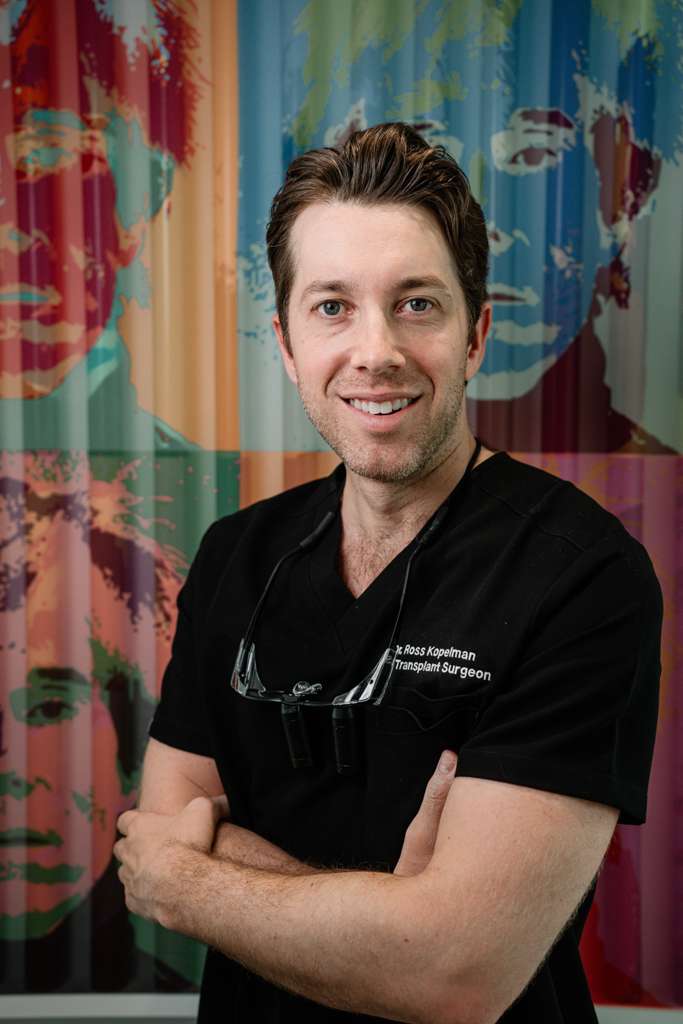
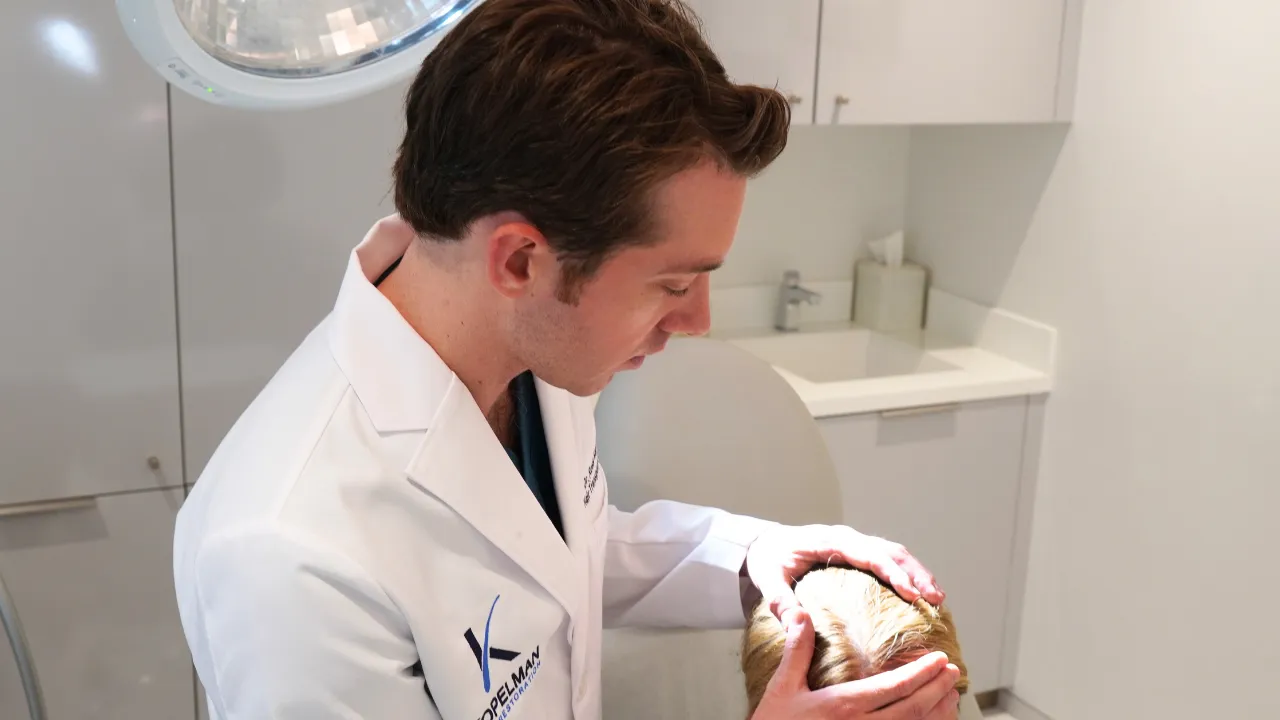
At Kopelman Hair, specialists evaluate how hormones such as testosterone and DHT affect each patient individually. Dr. Kopelman focuses on determining whether limited growth stems from genetics, hormonal sensitivity, or another underlying factor.
This approach helps define the most effective path, from medical support to advanced restoration options.
How Testosterone Influences Facial Hair
Does testosterone make you grow facial hair? During puberty, rising testosterone signals the body to develop secondary sexual characteristics, including a deeper voice and the first whiskers on the chin and upper lip.
Without that hormonal trigger, those follicles never activate.
But the link is more about activation than ongoing maintenance. Testosterone switches the facial follicles on; once they are established, they largely keep producing strands on their own, with less dependence on your day-to-day hormone level.
This is why the connection between testosterone and facial hair is easiest to see in hormone therapy.
Transgender men typically start developing whiskers a year or more after beginning testosterone, while transgender women who begin anti-androgens as adults keep the facial hair they already have, since those follicles are already switched on.
What matters more than your total level is how efficiently your body converts testosterone into DHT (dihydrotestosterone), the hormone that more directly stimulates the follicle. Some men have high testosterone yet thin coverage due to genetic sensitivity to DHT.
DHT binds to androgen receptors in the follicle and signals it to produce thicker, coarser strands. If your receptors are highly responsive, you are more likely to fill in fully. That sensitivity is inherited, which explains why two men with identical hormone levels can have very different beards.
Does no facial hair mean low testosterone? Not necessarily. Many men with patchy coverage have completely normal levels. Age, genetics, and receptor sensitivity all play a role, so testing hormones is just one part of a broader assessment.
Common Challenges with Beard Growth
If you have ever wondered why my facial hair grows so slowly, you are not alone. Slow development can be linked to age, hormone levels, or nutritional gaps. For many men, it simply comes down to genetics shaping the rate and density of coverage.
In some cases, conditions like alopecia areata, an autoimmune disorder that causes patchy loss, can also interfere. If shedding appears suddenly or in circular patches, it is worth seeking a proper diagnosis.
Sparse patches, uneven coverage, and limited thickness can also signal a genetic ceiling on how full your whiskers will get. That does not mean improvement is impossible, but expectations should stay realistic. Knowing your baseline helps guide both your styling and your grooming routine.
Does shaving make whiskers grow back thicker? This is a myth. Shaving does not change the speed or thickness of regrowth; it only leaves a blunt tip that looks coarser. You stimulate healthier growth through proper care, not repeated shaving.
If you are managing uneven coverage or small bald spots, our article on alopecia barbae explains why this condition develops and how to treat it effectively.
Natural Ways to Stimulate Beard Growth
Healthy facial hair starts with supporting your body. A balanced diet rich in vitamins and minerals is essential, and nutrients like biotin, zinc, and vitamin D all support follicle function. Regular exercise and quality sleep help maintain hormonal balance and overall health.
If you are wondering how to naturally raise testosterone, start with the basics. Strength training, consistent sleep, and stress reduction support healthy levels. A diet rich in healthy fats, vitamin D, and zinc may also support natural production.
For men with confirmed low levels, medical treatment such as testosterone replacement therapy (TRT) may be appropriate under expert care. While there is no overnight fix, you can support faster results by optimizing your routine over time.
Use a quality beard oil to moisturize the skin and follicles, reduce breakage, and create a healthier environment for new strands. Keeping your face clean and exfoliated also supports development.
Supplements That May Support Beard Growth
Certain supplements can help, especially when paired with a balanced diet and a healthy lifestyle. Common options include biotin, vitamin D, zinc, and B-complex vitamins, all of which support follicle function and hormone balance.
These nutrients help maintain strength and can promote more consistent coverage over time. They are not a cure for genetic limits, but they help your existing follicles perform at their best.
To learn which supplements are backed by research and how to use them effectively, read our article on the best vitamins for beard growth.
It is important to use only clinically safe doses and to avoid unregulated or high-dose testosterone boosters, which can cause side effects. Always consult a healthcare provider before starting any new regimen.
Using Testosterone Therapy for Beard Growth
When to Consider TRT
If you have clinically low testosterone, replacement therapy may help. Dr. Kopelman recommends testing your levels first, since TRT is most likely to benefit men whose sparse coverage is clearly tied to a hormone deficiency rather than genetics.
The evidence here is genuinely mixed, and it is worth being honest about that. Some research finds little association between testosterone and beard growth in men with normal levels, which is why supplementation rarely helps this group.
In men with a deficiency, the picture is more encouraging. Studies of testosterone therapy used for masculinization show clear increases in facial hair development over time, though results still vary with genetics and follicle sensitivity.
A randomized, controlled trial of topical testosterone gel in young hypogonadal men found significantly more terminal facial hair after six months compared with a control group, supporting the notion that the hormone drives coverage when a true deficit exists.
A useful way to check whether low testosterone is even part of your situation is to look for other symptoms. A deficiency severe enough to limit whiskers rarely shows up on its own. See the next article.
Signs of Low Testosterone
Expected Results and Timelines
Results from TRT vary, but men who do respond often notice changes within several months. Strands grow in cycles, so coverage builds gradually rather than all at once, and ongoing monitoring keeps hormone levels safe.
Most clinical observations suggest early changes around the three- to six-month mark, with fuller development over roughly one to two years of continued, supervised treatment.
The rate of linear growth itself appears tied to how much DHT your follicles produce, which is one reason responses differ so widely between individuals. See the study here.
For some men, topical treatments like minoxidil may also help stimulate facial follicles, either on their own or alongside hormone therapy.
As coverage fills in, grooming becomes more important. Check out our guide on beard styles for men to keep a clean, defined look.
Will Beard Growth Stop After Stopping TRT?
In many cases, stopping TRT gradually reverses the gains if the underlying deficiency is not resolved, since the body returns to its previous baseline. That is why long-term planning with a medical expert matters before you start.
Because the follicles still depend on adequate hormone signaling to maintain fullness, sustained results usually require ongoing, supervised treatment. Your provider can help you weigh that commitment against the expected benefit.
Risks and Side Effects of Hormone Therapy
TRT is not without risks. Possible side effects include acne, mood changes, and shifts in cholesterol levels, and it should only be pursued under medical supervision. At Kopelman Hair, every therapy is tailored to the patient’s health profile for both safety and results.
It is also worth noting that DHT, the same hormone that fills in your whiskers, can thin scalp hair in men genetically predisposed to male pattern baldness. This is why some men with thick beards also go bald early, and it is a tradeoff to discuss with your doctor.
Age plays a role, too. Coverage typically becomes denser in the late 20s to early 30s as levels stabilize and follicles mature. Early patchiness does not always signal a permanent limit, so patience is key.
Your Next Steps
At Kopelman Hair, our goal is to help every client understand their beard growth potential and explore safe, effective solutions.
Whether you’re looking to grow facial hair for the first time or enhance your current look, Dr. Kopelman and his team are here to guide you with expert care and proven strategies. Schedule a personalized consultation today to discover the best approach for your unique beard growth goals.
FAQs About Testosterone and Beard Growth
Does Low Testosterone Cause Patchy Coverage?
Low testosterone can contribute to patchiness, but it is rarely the only cause. Genetics and follicle sensitivity usually play a larger role, so a proper diagnosis helps clarify what is actually behind uneven coverage.
Can a Fuller Beard Develop Without TRT?
Yes. Many men improve density through lifestyle changes, proper grooming, and targeted supplements. Focusing on overall health and consistent care supports natural development without hormone therapy.
Can Face Shape and Age Affect Beard Growth?
Your face shape does not directly change how your whiskers grow, but it influences which style suits you best. A rounder face often benefits from longer, structured looks, while a sharper jawline carries fuller coverage well. You can explore the most flattering options in our guide to beard styles for men.