

Does Finasteride Affect Beard Growth?
The short, evidence-based answer is no, finasteride does not meaningfully reduce beard growth in most men. While the medication lowers serum DHT levels by roughly 70 percent, beard follicles do not rely on DHT in the same way scalp follicles rely on it for miniaturization. A 2024 retrospective study examining men on both finasteride and dutasteride found no statistically significant impact on beard density or growth speed.
That said, individual responses can vary. Higher doses, longer treatment durations, and personal genetic sensitivity to androgen modulation may produce mild effects in a small subset of patients. If you are taking the medication and notice a change, it is worth speaking with a qualified clinician rather than discontinuing on your own.
At Kopelman Hair, we specialize in solutions tailored to your growth goals, from medications to advanced beard transplant procedures in NYC. Let’s explore how finasteride works, why DHT matters, and proven alternatives to help you grow a beard confidently.
Understanding Beard Growth and DHT
What Is DHT and Why Is It Important?
Dihydrotestosterone (DHT) is a hormone derived from testosterone through an enzyme called 5-alpha reductase. It plays a critical role in masculine traits, including facial hair growth and body hair development.
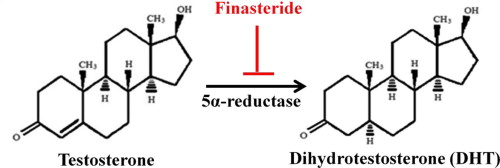
Think of DHT as the fuel that initiates beard development during puberty. Higher DHT levels generally correlate with fuller, faster-growing whiskers in younger men. However, while DHT helps establish beard patterns, it also contributes to male pattern baldness on the scalp, creating a biological trade-off.
How Does DHT Influence Facial Hair Growth?
DHT binds to receptors in beard follicles and signals them to produce thick, dark terminal whiskers during puberty. Men with naturally low DHT levels often struggle to grow a full beard, particularly during their late teens and early twenties.
Research published in academic dermatology journals shows that DHT also stimulates the production of insulin-like growth factor-1 (IGF-1), which has a positive effect on beard follicle cells. Importantly, testosterone and DHT play distinct roles: DHT promotes linear beard density and length, while testosterone primes the follicles, contributing to overall density. This division of labor is why blocking DHT does not necessarily collapse beard development.
This is where finasteride comes in. It blocks DHT to protect scalp follicles, but research suggests it does not meaningfully suppress beard development in established adult patterns.
Finasteride’s Impact on Beard Development
Does Finasteride Help Beard Growth?
No, finasteride is not designed for beard enhancement. It is used to treat androgenetic alopecia by reducing DHT levels. Many users ask, “does finasteride prevent facial hair growth?” and the clinical evidence consistently shows that for adult men with already-established beards, the answer is no.
If you’re researching the finasteride effect on beard growth, the literature is reassuring. A 2024 retrospective trial reviewing men on 5-alpha reductase inhibitors found no meaningful impact on beard thickness or coverage, even after extended use.
Oral vs. Topical Finasteride: A Key Distinction
There is an important difference between oral and topical formulations that often gets overlooked. Oral finasteride lowers DHT throughout the body but rarely produces noticeable changes in beard density in adult men. Topical finasteride, however, behaves differently depending on where it is applied.
When topical finasteride is applied to the scalp, beard effects are minimal because systemic absorption is significantly lower than with oral dosing. When applied directly to the face, however, studies have shown it can reduce unwanted facial hair growth, which is why it is being explored as a treatment for women with hirsutism. For men taking finasteride for scalp loss, this distinction matters: applying it where you want growth (scalp) does not undermine where you already have it (face).
How Does Finasteride Work?
Finasteride blocks the enzyme 5-alpha reductase, preventing testosterone from converting into DHT. This reduction in DHT effectively slows scalp loss and, in many men, promotes regrowth. Because adult beard follicles are less dependent on circulating DHT than they were during puberty, the medication’s systemic effect on beard coverage is generally minor.
What About Dutasteride?
Dutasteride is a more potent DHT blocker than finasteride, suppressing roughly 90 percent of serum DHT compared to finasteride’s 70 percent. Despite this stronger effect, the same 2024 retrospective trial mentioned earlier found dutasteride also did not significantly impact beard density. This further supports the idea that adult beard follicles are largely independent of fluctuations in circulating DHT.
If you’re considering switching between these two medications, beard concerns alone are unlikely to be a deciding factor. Discuss the broader risk-benefit profile with your prescribing clinician.
Does Finasteride Affect Beard Growth in Women?
Women experiencing hormonal imbalances, such as excess androgens, may notice increased facial growth, often around the chin, upper lip, or jawline. This condition, known as hirsutism, is commonly associated with hormonal disorders like polycystic ovary syndrome (PCOS).
Oral finasteride works by reducing DHT levels, which may theoretically decrease unwanted facial growth in women. Topical finasteride applied directly to affected areas has shown more consistent results in dermatology studies for treating idiopathic hirsutism, though responses vary based on the underlying hormonal cause.
Finasteride is not approved by the FDA for women in most cases. It is only allowed in certain situations, such as post-menopausal hair loss under specialist supervision.
Important Considerations for Women
- Safety Concerns: Finasteride is not recommended for pregnant or breastfeeding women due to the risk of birth defects, especially in male fetuses.
- Varied Results: Women may experience mixed outcomes when using Finasteride to target facial hair, as the drug primarily impacts scalp hair loss rather than hormonal imbalances.
- Alternative Treatments: For women concerned about unwanted facial hair, treatments like laser hair removal, topical creams, or anti-androgen medications such as spironolactone may offer safer and more effective results.
Because of these factors, women must approach Finasteride with caution and only under the supervision of a qualified medical professional who can evaluate its risks and benefits.
Alternatives to Finasteride for Facial Hair
If you’re hoping for finasteride to enhance your beard, science doesn’t support that outcome. The good news is that the medication is also unlikely to harm your facial growth. For men actively trying to thicken their beard, other options work considerably better.
Is Minoxidil Better Than Finasteride for Beards?
Yes. Minoxidil is far more effective for beard growth than finasteride. Unlike finasteride, minoxidil doesn’t affect DHT; it works by improving blood flow to dormant follicles and extending the anagen (growth) phase, stimulating new growth.
A 2016 randomized, double-blind, placebo-controlled trial published in The Journal of Dermatology found that men applying a 3 percent minoxidil solution to their beards showed measurably thicker growth after 16 weeks compared to those using a placebo.
A 2024 case report involving identical twins reinforced these findings: the twin who applied 5 percent topical minoxidil daily for over a year had a visibly thicker beard than his brother who did not.
If you’re seeking evidence-backed support for facial growth, minoxidil continues to outperform other options in both clinical trials and real-world reports.
Best Alternatives to Boost Beard Growth
If Finasteride isn’t helping, here’s what works:
- Minoxidil: Proven to stimulate beard hair follicles.
- Beard Growth Tablets: Supplements like biotin, zinc, and vitamin D support healthy facial hair.
- Lifestyle Fixes: Sleep, diet, and exercise naturally boost DHT levels and promote denser beard.
How to Naturally Increase DHT for Denser Beard
Wondering how to support your DHT levels naturally? While circulating DHT plays a smaller role in adult beard maintenance than puberty-stage development, optimizing your hormonal environment can still support overall growth.
Easy Lifestyle Changes That Work
Boosting your DHT levels naturally can improve facial hair development. Try these strategies:
- Eat Zinc-Rich Foods: Eggs, nuts, and shellfish help increase testosterone and DHT.
- Strength Training: Resistance workouts naturally elevate hormone levels.
- Prioritize Sleep: DHT production peaks during deep sleep; aim for 7-9 hours each night.
Can Supplements Support Facial Hair Density?
Yes. While supplements can’t replace DHT, they optimize your facial hair growth environment:
- Biotin: Enhances hair thickness and strength.
- Omega-3 Fatty Acids: Nourishes the skin and hair follicles.
- Vitamin D: Promotes hormonal balance for overall hair health.