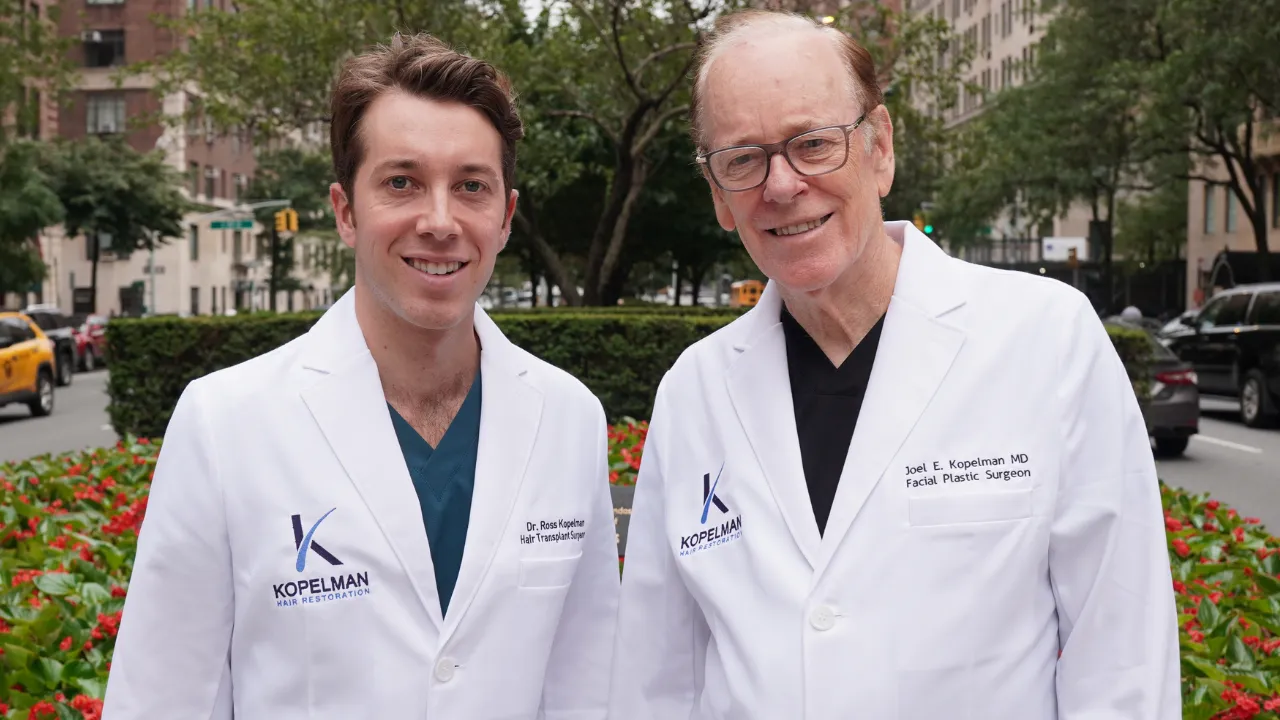

As a top restoration expert, Dr. Kopelman offers insights into Rogan’s experience and what can be learned for those considering grafting procedures today.
When Did Joe Rogan Lose His Hair?
Rogan began noticing recession in his early 20s. At first the change was subtle enough to disguise with styling, which is typical for men in the earliest stage of androgenetic alopecia.
By his mid-20s, the recession at the temples had opened further, and the frontal area had lost visible density. That is the point at which he pursued surgery.
The timing matters more than most people realize. Male pattern balding is progressive, so operating during an active phase means the pattern will keep advancing around whatever is placed.
Joe Rogan With Hair: The Before and After Timeline
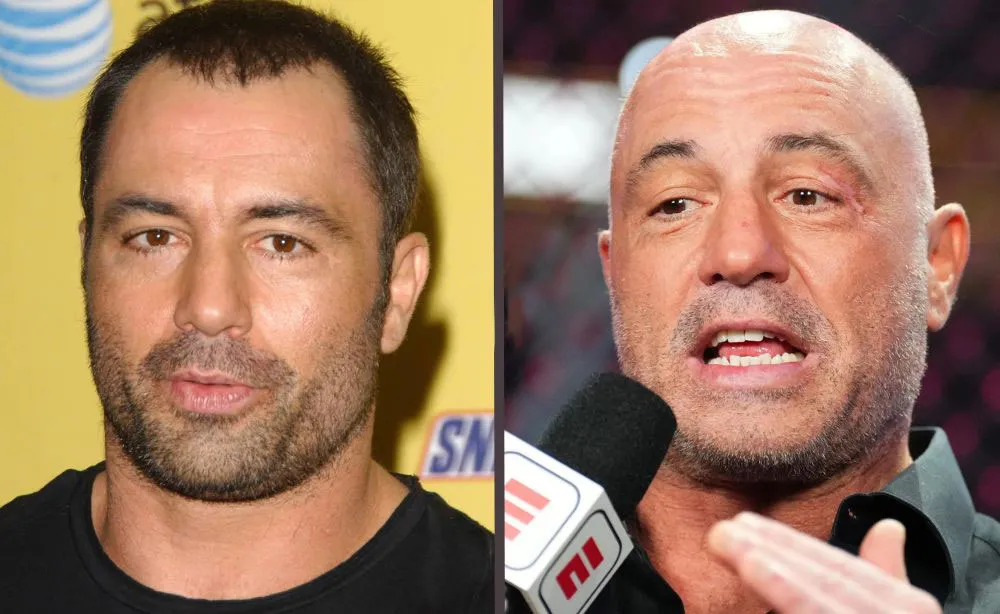
Looking at Joe Rogan before-and-after images across his career makes the progression easy to follow and explains why the outcome disappointed him.
Early 1990s. During his stand-up and early television years, Rogan had a natural frontal line with moderate density and only slight recession at the corners.
Late 1990s to early 2000s. The temples opened further and the frontal zone thinned. This is the stage when he chose surgical correction.
Post-procedure. Coverage in the front improved, and the line looked more defined. Early results from strip surgery often do look fuller in the frontal third.
Mid-2000s onward. Native follicles behind the grafted area continued to shed. The density difference became obvious, and the donor mark grew harder to conceal.
Early 40s. He shaved down completely, which is the look most people recognize today.
Three things define the visual arc: the frontal zone improved briefly, the surrounding density did not hold, and the donor scarring limited how short he could wear the rest.
Why Did Joe Rogan Turn to Hair Surgery and Hair Plugs?
Many wonder, did Joe Rogan get a hair transplant? The answer is yes, he underwent three FUT procedures before accepting baldness.
Rogan’s journey through restoration included several attempts at surgery, specifically utilizing Joe Rogan hair plugs in his efforts to combat thinning. Early in his career, Rogan sought solutions to address his shedding and receding hairline, which led him to explore various surgical options.
While plugs were a popular choice in the past, Rogan’s experience highlights the mixed results that can occur with this method. The Joe Rogan scar on the back of his head is often pointed out in photos and discussions about FUT surgery.
Initially, the results may have provided some improvement, but over time, he continued to face challenges related to ongoing shedding.
This prompted him to seek alternative solutions and ultimately led to his acceptance of a bald look, showcasing a shift in how he approached his self-image.
Rogan’s story emphasizes the importance of finding the right method and the potential for varying outcomes in the journey toward achieving fuller coverage.
Modern FUE techniques can create subtle, natural outcomes, similar to what many believe happened in the Lewis Hamilton hair transplant case.
Joe Rogan’s Procedures and Implants
Rogan’s experience with grafting attempts and the use of implants reveals a complex journey in his pursuit of a fuller frontal line.
Initially, Rogan explored various methods, including plugs and later implants. At first, the Rogan regrowth after surgery looked promising, but the results didn’t last long.
While these early methods aimed to address his thinning and receding hairline, the results were not consistently satisfactory. The oversized strip left a visible Joe Rogan hair transplant scar, which became more obvious as the surrounding density dropped.
Many fans observed that although the initial procedures seemed to provide some improvement, they did not deliver the lasting effects Rogan may have hoped for.
Over time, his coverage continued to thin, leading to ongoing public speculation. This experience underscores the challenges associated with traditional techniques and highlights the importance of selecting advanced methods that offer more natural and enduring results.
Ultimately, Rogan’s journey reflects the broader realities of surgical correction, where not all methods yield the desired outcome, prompting individuals to reassess their options.
How Many Grafts Did Joe Rogan Likely Have?
Rogan has never disclosed a graft count, and no clinic has confirmed one publicly. Any specific figure circulating online is an estimate, not a documented number.
What can be discussed responsibly is the general planning standard for his presentation. Based on the recession visible in photos from that period, his pattern appeared consistent with roughly Norwood 3 to Norwood 4.
For frontal reconstruction at that stage, surgeons today typically plan in the low thousands of grafts per session, with density concentrated at the leading edge and tapering behind it. Strip harvesting allowed larger single-session yields than early extraction methods, which is part of why it dominated that era.
Placement matters more than volume. The frontal third frames the face and carries the most visual weight, which is why Rogan’s early results looked improved in front even as the crown and midscalp kept receding.
Donor supply is also finite. Every session draws from a limited reserve, and overharvesting weakens the region permanently, which restricts what can be done in later years.
Joe Rogan’s Transplant Scar and Head Scars
The visible Joe Rogan scar on the back of his head has been a topic of interest among fans and observers of his changing appearance. After undergoing early procedures that often left noticeable marks, Rogan faced the reality of living with them on his scalp.
The scarring, especially at the back of the head, became part of the conversation surrounding his case.
As time went on and coverage became harder to maintain, the Joe Rogan bald look became his signature, which he fully embraced.
This decision likely stemmed not only from the visibility of the scarring but also from the practicality of shaving down. By opting for this clean appearance, he could avoid further scrutiny.
Rogan’s acceptance of a bald head demonstrates a shift in his approach to self-image, focusing on confidence rather than the challenges of trying to restore coverage.
This choice has resonated with many fans, showcasing that embracing baldness can be a powerful statement about self-acceptance.
Linear scarring from strip surgery is not always permanent in appearance. Scar repair through follicular grafting into the scar tissue, or through scalp micropigmentation, can soften the contrast significantly for patients who want to wear shorter styles.
FUT vs. FUE vs. No-Shave FUE: What Changed Since Rogan’s Surgery
The single biggest difference between Rogan’s era and now is how donor tissue is harvested. That one change drives most of the difference in scarring, recovery, and styling flexibility.
| Method | How donor grafts are taken | Donor area result | Best suited for |
|---|---|---|---|
| FUT (strip) | A strip of scalp is removed and dissected into individual units | Permanent linear mark that can widen over time | Patients needing high single-session yield who wear longer styles |
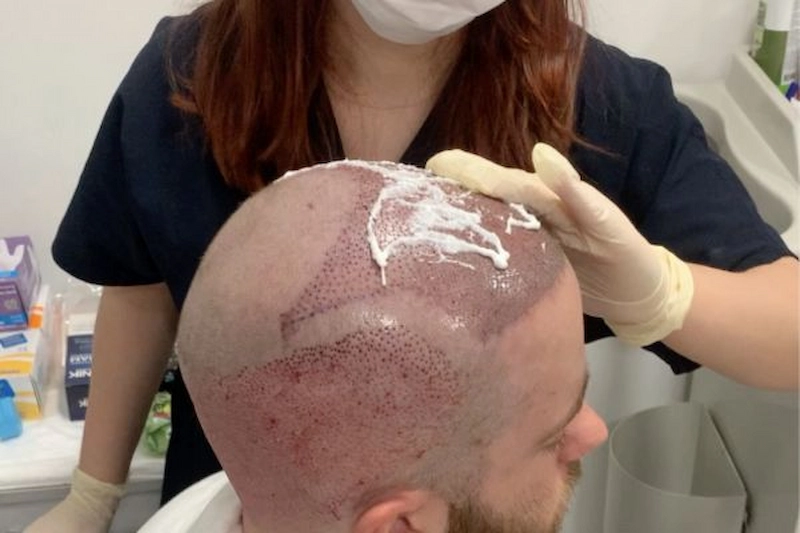
| FUE | Units are extracted individually with a small punch | Tiny dot healing, no linear mark | Patients who want the option of short or shaved styles |
| No-shave FUE | Individual extraction without shaving the donor region | Tiny dot healing, concealed during recovery | Patients who cannot take visible downtime |
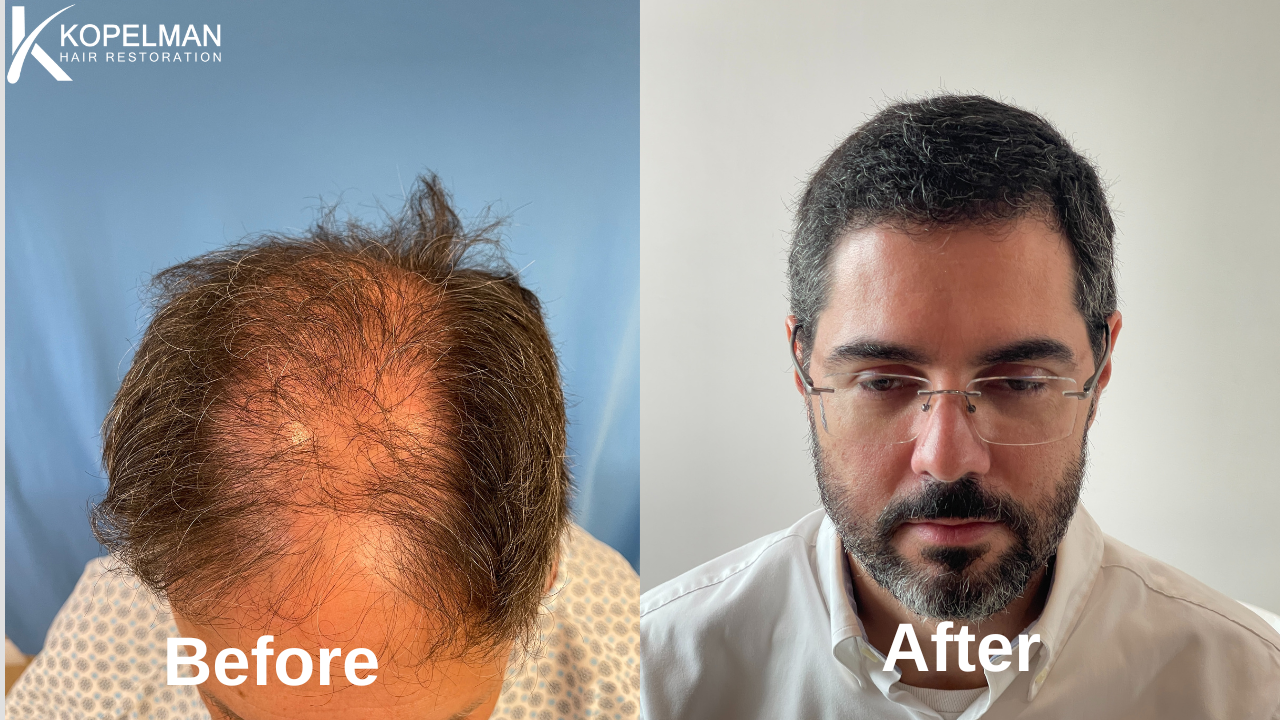
Rogan’s frustration was not that the grafts failed. Transplanted follicles come from a region genetically resistant to DHT, so they usually survive. The problem was that everything around them kept receding while the donor mark stayed put.
Dr. Kopelman notes that the design decision matters as much as the technique. A frontal line placed for a patient in his 20s has to be drawn for the face that patient will have in his 50s, not the one in the mirror that day.
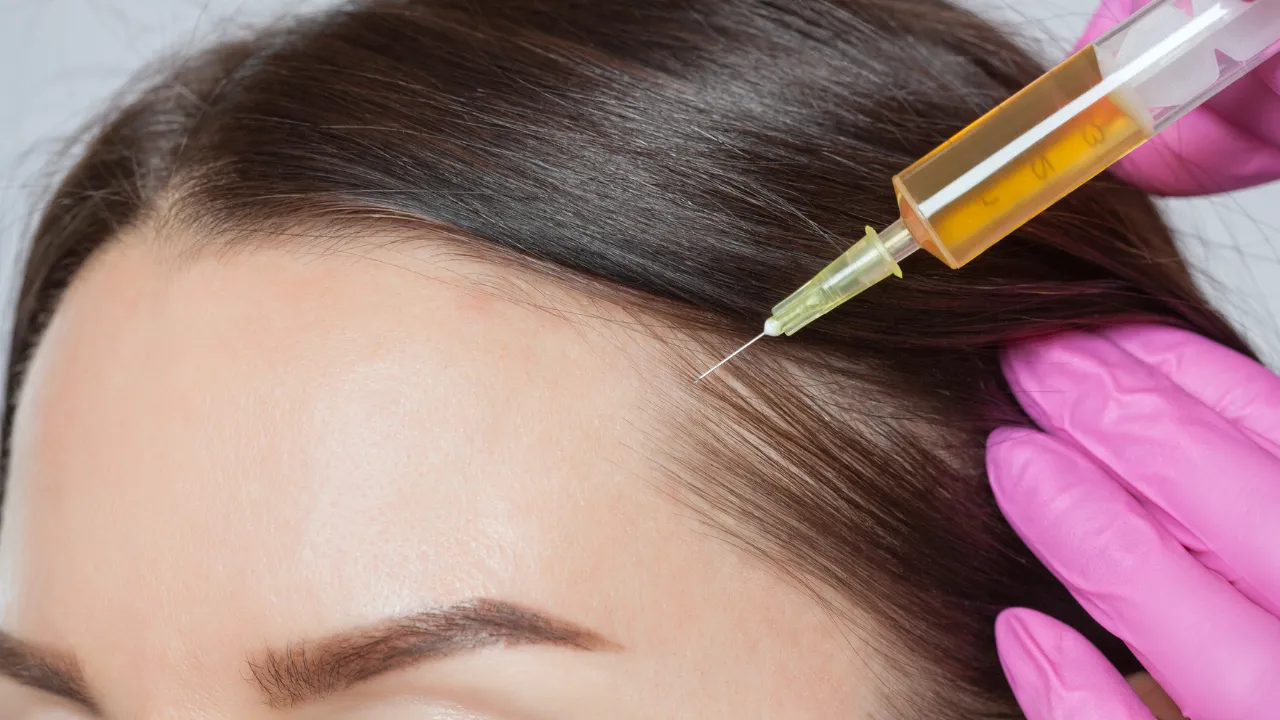
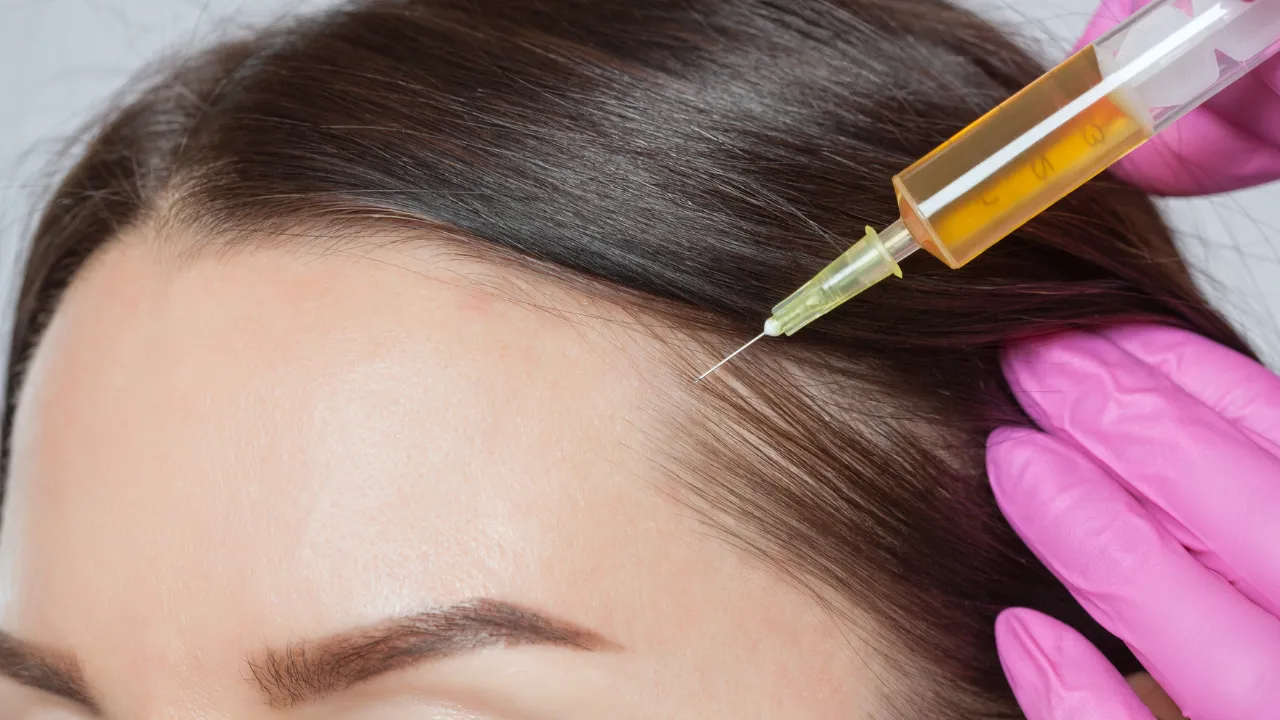
Modern planning also pairs surgery with medical maintenance, so native follicles are stabilized rather than left to recede around new grafts. Options include PRP for hair loss and DHT-blocking therapy. You can read more about how those work in our guide on what a DHT blocker is.
Why Joe Rogan Embraced Baldness After Surgery
Fans often ask, when did Joe Rogan shave his head? He made the shift in his early 40s, once the grafts no longer provided coverage.
After facing the challenges of multiple procedures, Rogan decided to shave down. This transition was a response to the visible scarring and his ongoing recession.
By embracing a clean-shaven look, Rogan simplified his grooming routine and confidently presented himself without the distractions of surgical correction.
His comments on acceptance reflect a significant shift in perspective. The decision to embrace baldness demonstrates that self-confidence can thrive despite societal standards.
Rogan’s journey inspires many, showcasing that accepting one’s appearance can lead to greater authenticity and self-assurance.
Lessons from Joe Rogan’s Restoration Experience
Choosing the right procedure is crucial for achieving natural-looking results and minimizing complications, such as visible scarring.
Selecting an experienced surgeon like Dr. Kopelman ensures that the method used, whether it be FUE, FUT, or implants, is tailored to the individual’s pattern and desired outcome.
By opting for advanced techniques, patients can reduce the likelihood of visible marks, which can be a concern for many considering surgery.
Five takeaways from his case apply to almost every candidate:
Timing. Operating during rapid, unstabilized shedding invites a mismatch later.
Progression. Surgery relocates follicles; it does not halt genetic recession elsewhere.
Donor management. Reserves are finite, and aggressive early harvesting limits later options.
Technique. Extraction-based methods removed the single most permanent drawback of his procedures.
Expectations. Well-designed coverage that ages naturally beats maximum density that does not.
Proper planning and consultation with a skilled professional like Dr. Kopelman can help patients avoid the pitfalls associated with traditional methods. If you’re ready to take the next step, we invite you to schedule a consultation with Dr. Kopelman to discuss your options. Ultimately, making informed decisions not only enhances aesthetic results but also boosts confidence and self-esteem.
Curious about other celebrities who have undergone hair transplants? Be sure to check out our page on Celebrity Hair Transplants: Before and After for more inspiring transformations or discover how stars like Steve Carell, Bradley Cooper, and David Beckham have tackled hair loss and restored their youthful looks.
What Would a Case Like His Cost Today?
Pricing depends on the number of grafts, the technique, and whether scar correction is part of the plan. The figures below reflect Kopelman Hair Restoration’s published rates and are provided so readers can plan realistically rather than guess from overseas advertising.
| Procedure | Cost range | Relevance to a case like Rogan's |
|---|---|---|
| FUE transplant | $25,000 to $40,000 | Current standard for frontal reconstruction without a linear donor mark |
| FUT transplant | $25,000 to $40,000 | The strip approach used in his original procedures |
| No-shave FUE | $30,000 to $40,000 | For patients who cannot take visible recovery time |
| Scar repair | $15,000 to $18,000 | Addresses linear donor scarring from prior strip surgery |
| PRP | $1,500 per session | Supports native follicles alongside or instead of surgery |
| Consultation or medical management | $350 | Evaluation, pattern staging, and candidacy assessment |
Full pricing across every procedure is listed on our hair loss clinic prices page. For a breakdown of what drives graft-count pricing specifically, see our guide to hair transplant cost.
Frequently Asked Questions
Did Joe Rogan really have a hair transplant?
Yes. He has spoken about it publicly on multiple occasions and has been candid that he was unhappy with the outcome. This is confirmed by his own comments, not speculation.
What method was used?
FUT, also called strip surgery. A section of scalp is removed from the donor region, dissected into follicular units, and placed into thinning areas. It was the dominant approach at the time.
Why is there a Joe Rogan scar on the back of his head?
Strip harvesting closes with sutures and leaves a linear mark where the tissue was removed. It becomes more visible as surrounding density decreases or when the hair is worn very short.
How many grafts did he have?
No verified number has ever been released. His visible pattern at the time was consistent with roughly Norwood 3 to 4, which today would typically be planned in the low thousands of grafts for frontal work.
When did Joe Rogan lose his hair?
Recession started in his early 20s, became difficult to disguise by his mid-20s, and progressed steadily afterward. He shaved down in his early 40s.
Would modern techniques have produced a different result?
Likely yes, in two respects. Extraction-based harvesting avoids the linear donor mark entirely, and pairing surgery with medical maintenance helps hold native density so the grafted zone does not end up isolated.
Can someone with a pattern like his still be a candidate?
It depends on donor density, scalp laxity, and how advanced the pattern is. Advanced cases sometimes achieve better satisfaction with scar correction, micropigmentation, or medical therapy than with additional grafting. An in-person evaluation is the only way to know.