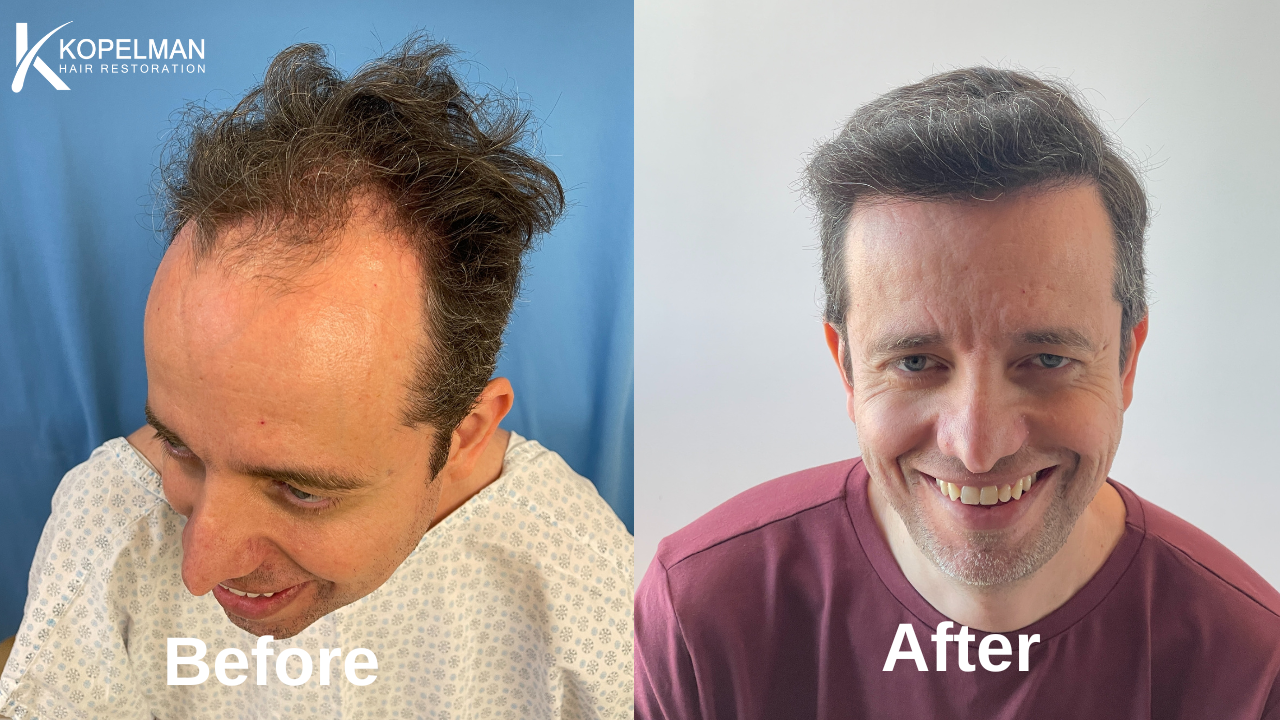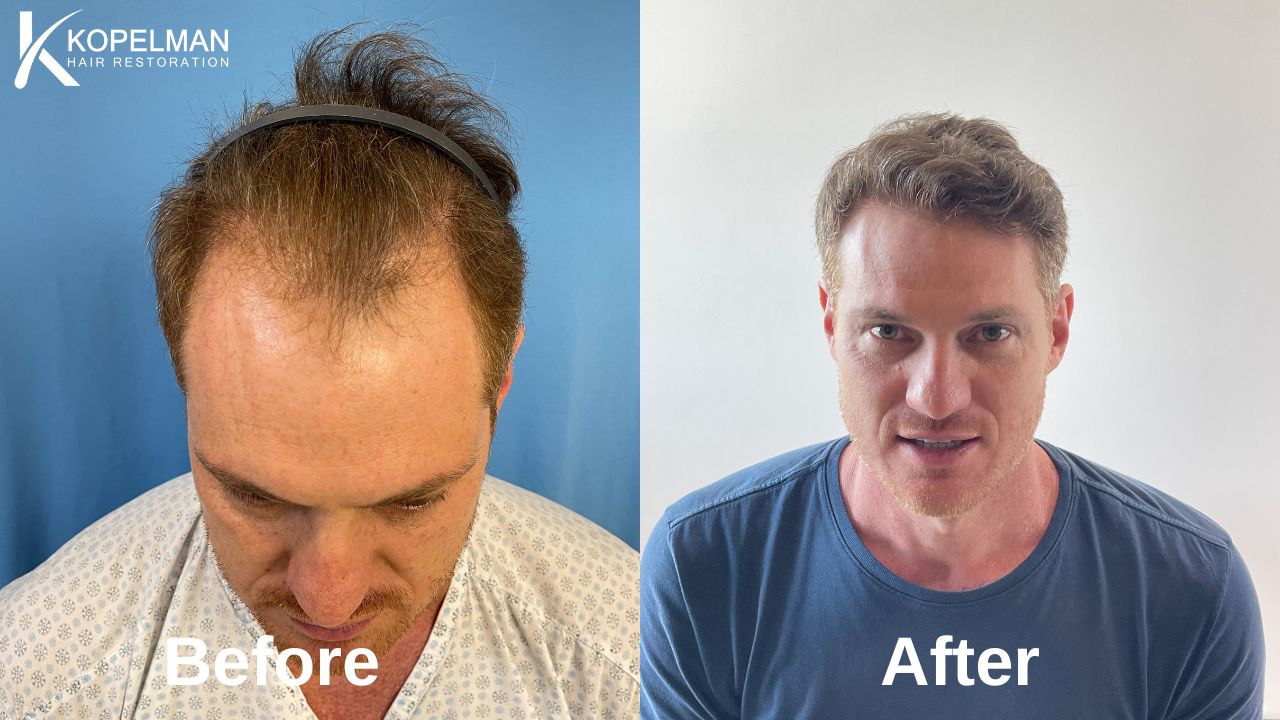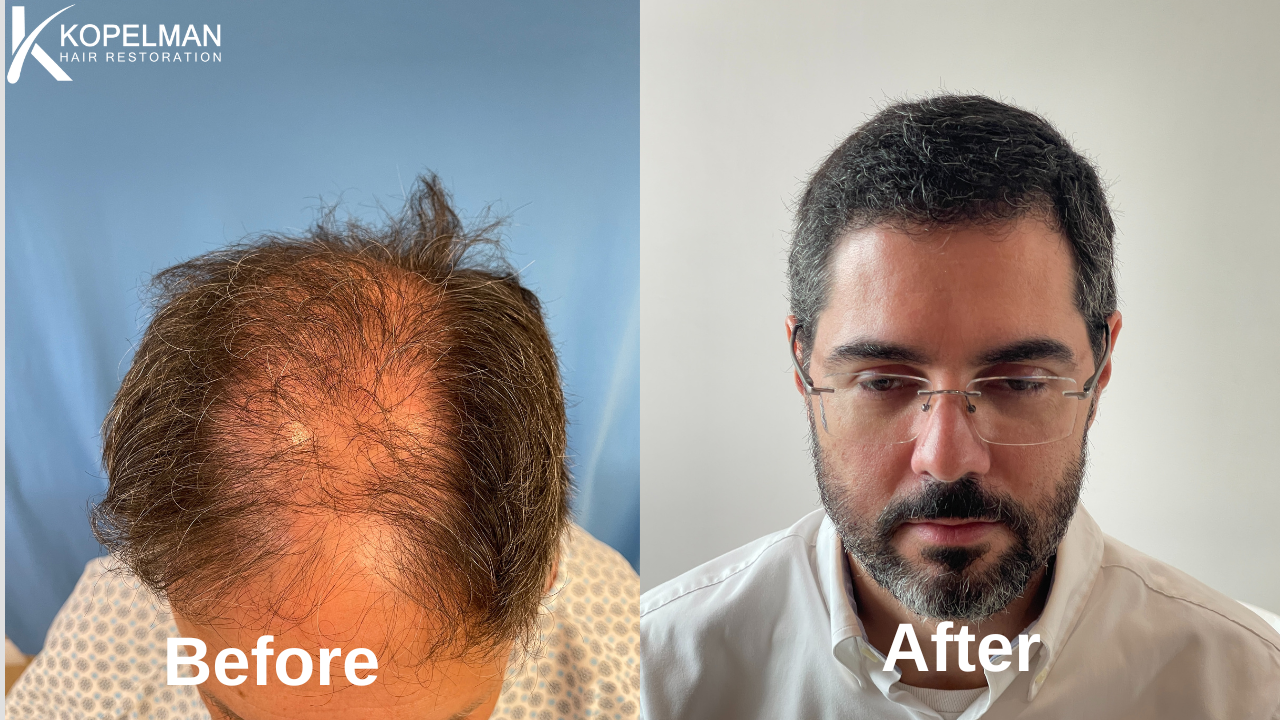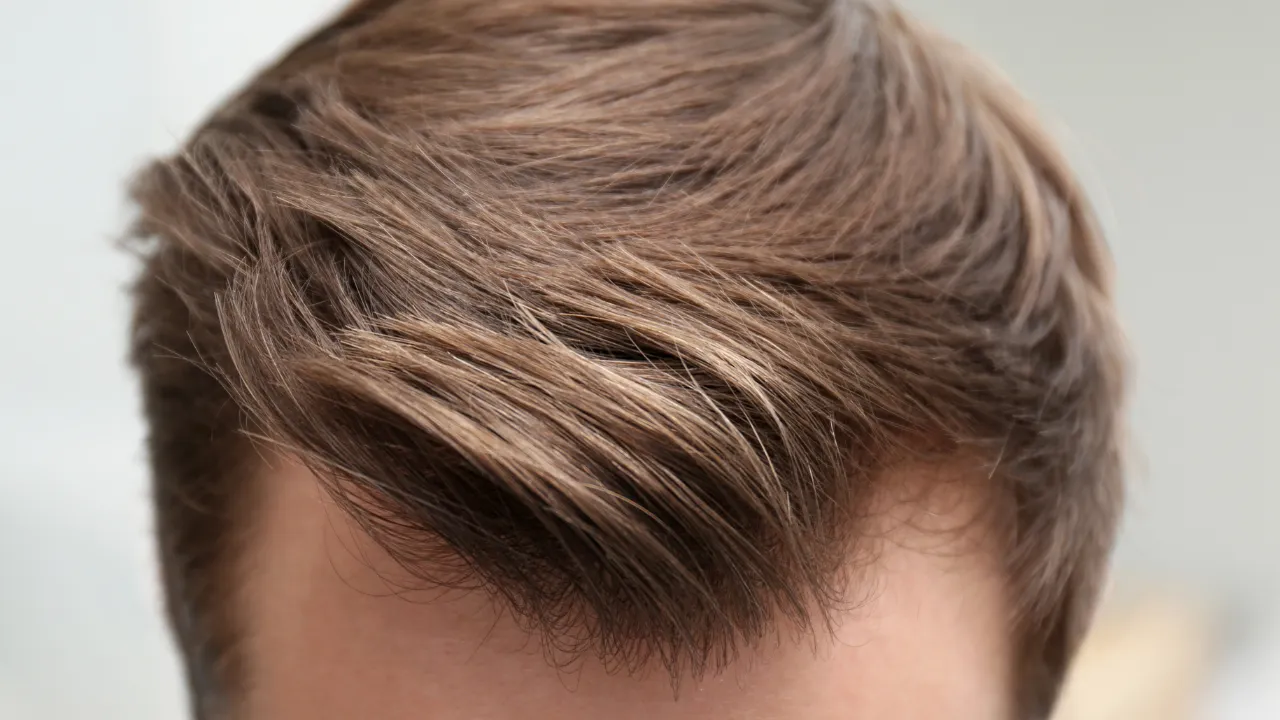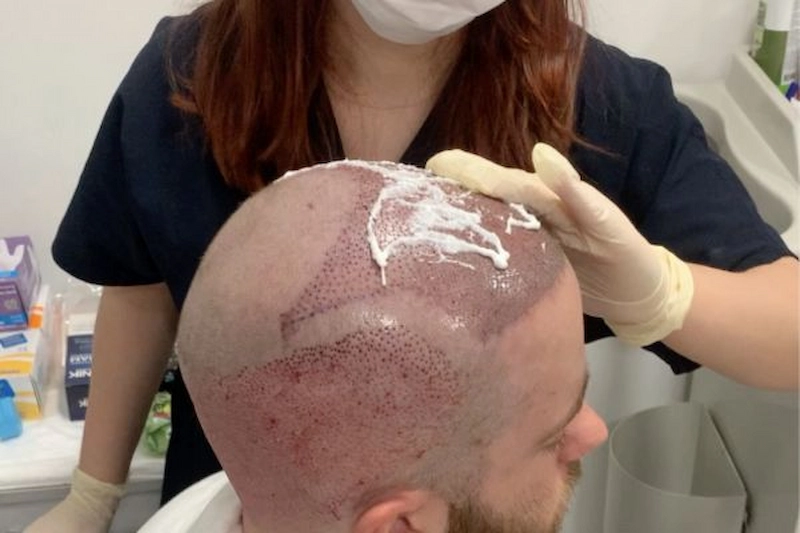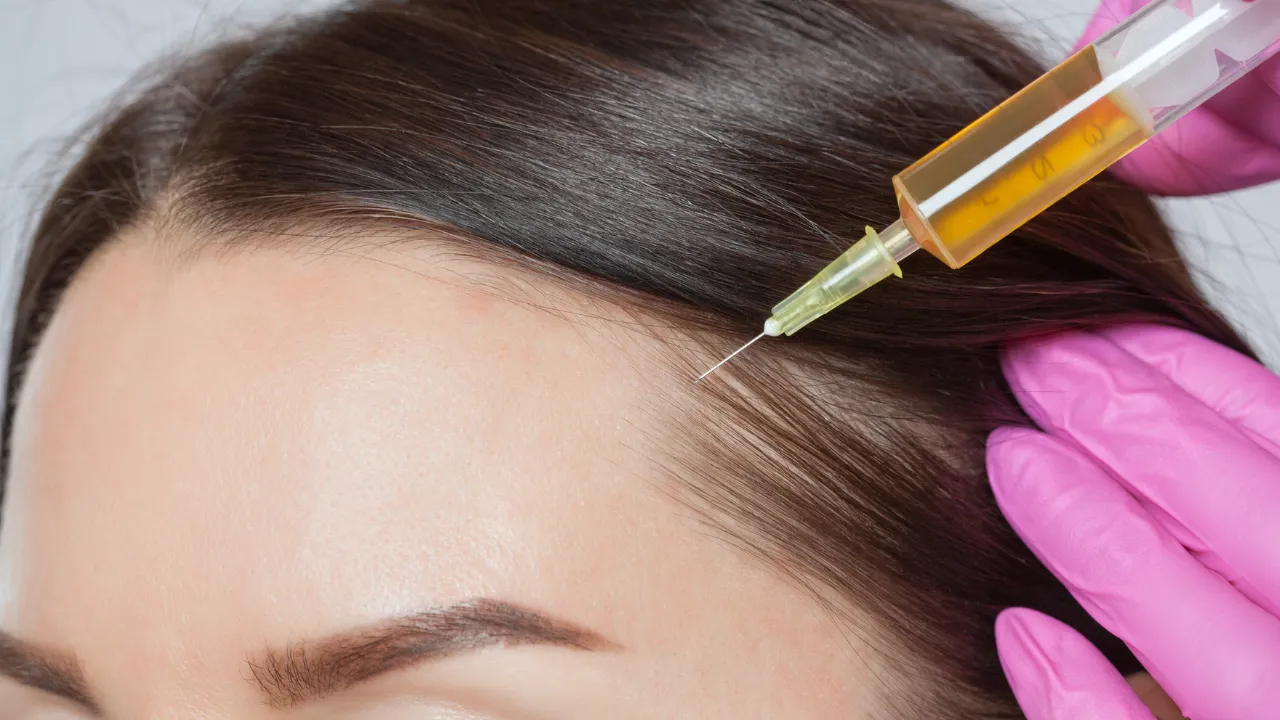

Treatment depends on the cause and may involve topical minoxidil (5% foam), prescription therapies, in-office procedures, or surgical restoration. Acting early improves your odds of slowing the change and supporting new growth. A focused plan helps rebuild density and keep a natural frame around the face over time.
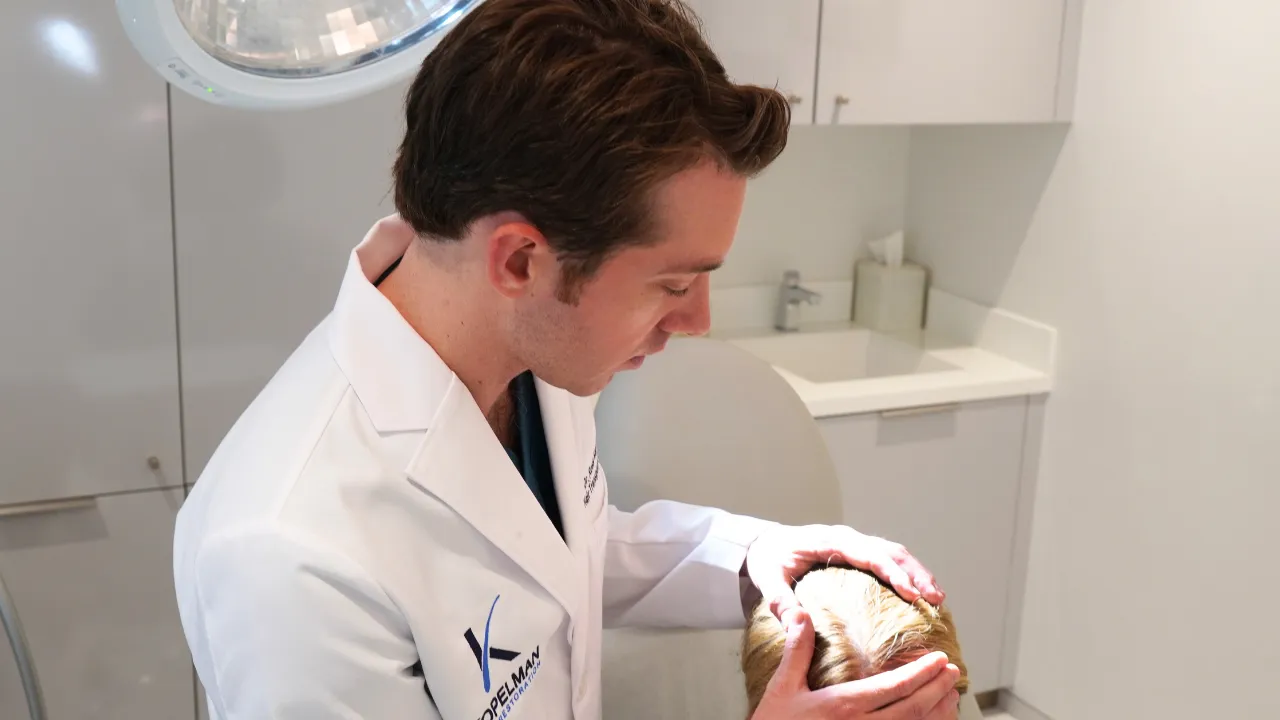
At Kopelman Hair, we understand the unique challenges women face with thinning along the front. Our team, led by Dr. Kopelman, offers tailored solutions backed by decades of experience to help restore confidence and encourage regrowth.
What Causes a Female Receding Hairline?
Hormones, Genetics, and Health Conditions
Many women notice the front edge weakens due to hormonal shifts. Swings in estrogen and progesterone can thin the strands nearest the face, especially during menopause or after pregnancy.
Genetics matters too; if close female relatives had similar hair recession, your likelihood increases. Autoimmune and thyroid conditions can also drive changes at the front line.
PCOS, Menopause, and Age-Related Changes
Polycystic ovary syndrome (PCOS) can disrupt hormone levels and trigger thinning in women, particularly along the front. Menopause often brings a drop in estrogen, which can make recession more visible.
Even women in their 20s and 30s may notice early signs from stress, birth control, or inherited tendencies.
Styling Habits and External Stressors
Tight hairstyles, chemical treatments, and frequent heat styling can strain the follicles. Over time, this thins the strands closest to the face.
Traction alopecia, caused by constant tension on the scalp, is a common styling-related reason for weakened edges. These stressors accelerate change, especially in fragile or overprocessed strands.
Could a Receding Hairline Signal an Underlying Health Problem?
Sometimes thinning at the front is a symptom, not the root problem. Conditions to rule out:
- Thyroid dysfunction, which often causes diffuse or frontal thinning
- PCOS, which can trigger hormonal imbalances and male-pattern recession
- Autoimmune issues, like alopecia areata or lupus
- Nutrient deficiencies, especially iron, protein, or vitamin D
Doctors may order blood tests to pinpoint contributing factors. If you also notice fatigue, weight changes, or irregular periods, a full medical checkup is wise.
At Kopelman Hair, we coordinate with your healthcare team as needed to ensure safe, effective care.
Types of Hair Loss in Women
Loss of density takes different forms, and knowing the pattern helps guide treatment. The most common types include:
- Female pattern hair loss, gradual thinning at the crown and along the front
- Telogen effluvium, sudden shedding from stress, illness, or hormonal change
- Traction alopecia, caused by tension from styles that pull on the scalp
- Alopecia areata, an autoimmune disorder that causes patchy loss
Identifying the correct type helps shape an effective treatment strategy.
Signs and Patterns of Hairline Hair Loss in Women
Thinning at the Temples
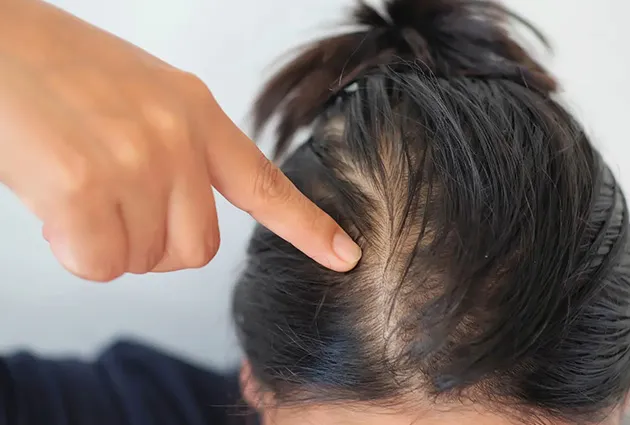
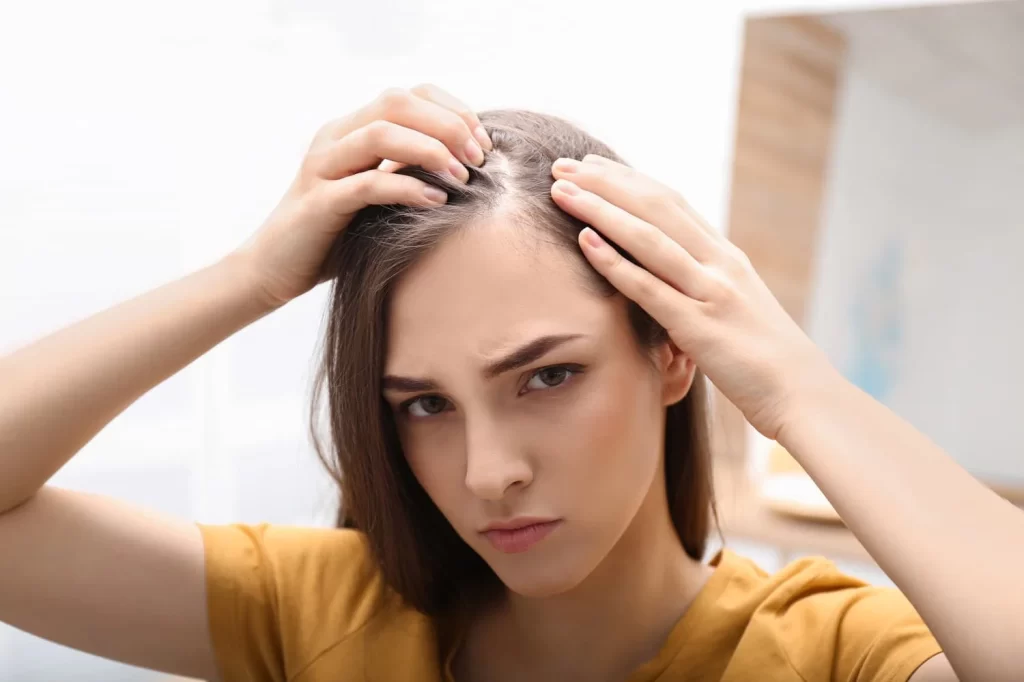
One early sign is sparser growth near the temples, forming an M-shape or uneven edge. Catching it early is key to preventing further change.
Differences from Male Hair Loss
Unlike male pattern baldness, which usually starts at the crown, thinning in women is more diffuse. The front edge stays intact for some, while for others it slowly retreats, especially at the sides.
Women rarely go completely bald but may see a broader part or a more visible scalp. Some also develop female pattern baldness, which looks different from the male version.
Does Hairline Loss Vary by Hair Type or Ethnicity?
Yes, texture and ethnicity can influence how thinning shows up.
- Women with fine or straight strands may notice changes sooner.
- Women with curly or textured strands may experience breakage near the hairline that mimics recession.
- African, Latinx, or South Asian women may face increased risk from styling practices such as tight braids, relaxers, or straightening.
Understanding your texture helps your provider recommend the right treatments and styling approach.
Receding Hairline in Your 20s and 30s
Younger women can face frontal thinning, too. Hormonal imbalances and lifestyle factors such as smoking, poor sleep, and an unbalanced diet can all play a part.
For example, smoking weed may contribute to hair loss through its effect on hormones, stress, and nutrient absorption, which can trigger early shedding.
Awareness and early action can slow or reverse the process. In some cases, a naturally high woman’s hairline is mistaken for thinning, though both can be addressed with a personalized plan.
How Doctors Stage Female Hairline Loss
Specialists use simple scales to describe how advanced the thinning has become, which guides treatment and tracks progress over time.
| Scale | Stage / Grade | What you may notice |
|---|---|---|
| Ludwig | Type I | Mild thinning across the top; density still looks fairly even. |
| Ludwig | Type II | Moderate widening of the part with clearer scalp showing through. |
| Ludwig | Type III | Extensive thinning over the crown. |
| Sinclair | Stage 1 | Barely noticeable change; part line still looks normal. |
| Sinclair | Stage 2 | Part line begins to widen. |
| Sinclair | Stage 3 | Wider part with visible loss on either side of it. |
| Sinclair | Stage 4 | Diffuse thinning over the top; scalp more visible. |
| Sinclair | Stage 5 | Pronounced loss of density across the crown. |
For frontal fibrosing alopecia, clinicians instead measure how far the front edge has moved back, often in centimeters, since this form pulls the entire frontal line backward rather than thinning the part.
How Is a Female Hairline Evaluated?
A clear diagnosis comes before any treatment, because the right plan depends on the cause. A typical evaluation includes a few steps.
- Health history: questions about family patterns, recent stress or illness, pregnancy, medications, and menstrual changes.
- Scalp exam: a close look at the part, temples, and front edge, sometimes with a handheld magnifier (trichoscopy) to study the follicles.
- Pull test: gently tugging a small section to gauge how readily strands release.
- Blood work: checks for iron and ferritin, thyroid function, vitamin D, and androgens when PCOS is suspected.
If a scarring condition, such as frontal fibrosing alopecia, is possible, a small scalp biopsy may confirm it. Pinning down the cause early leads to better outcomes.
How to Treat a Receding Hairline in Women
Medical and Professional Options
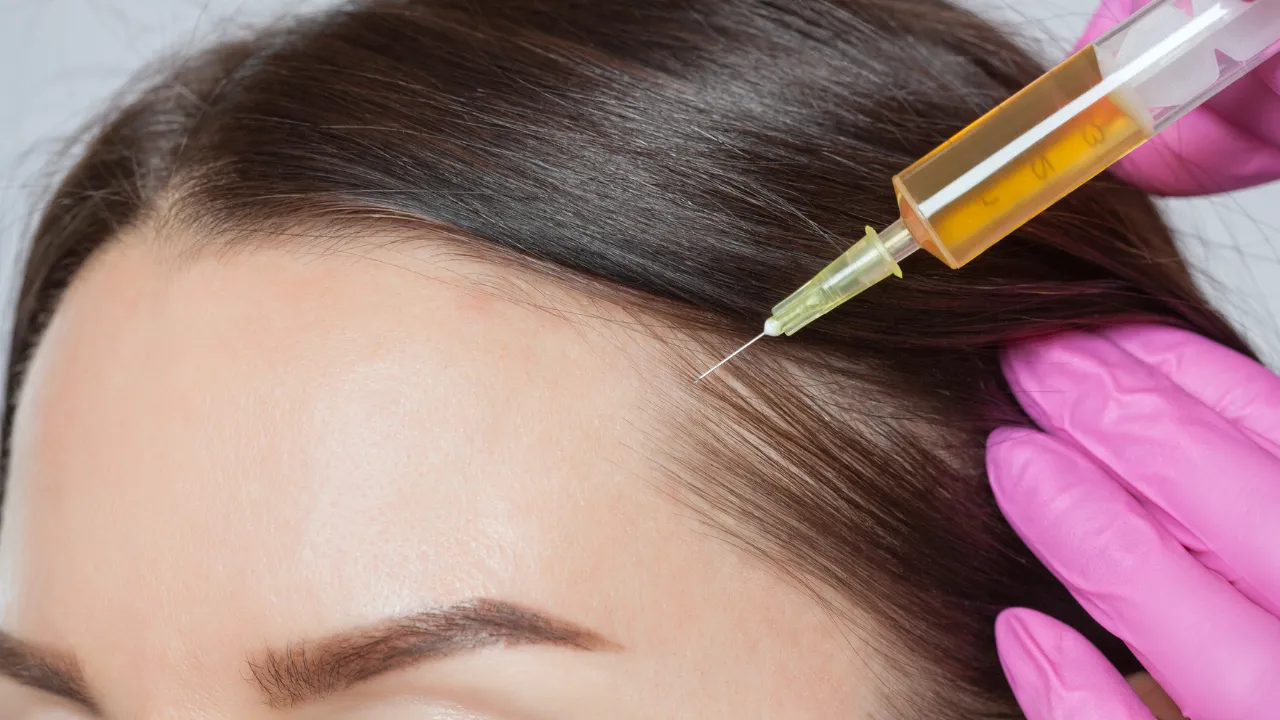
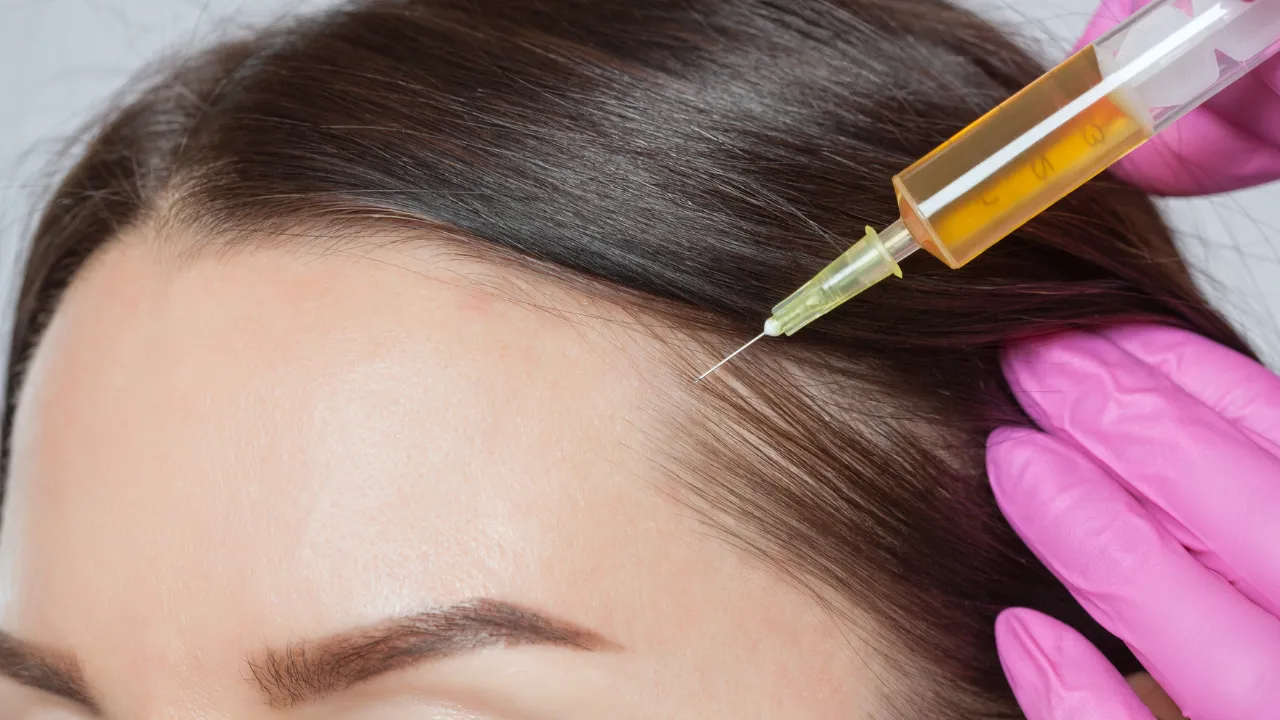
At Kopelman Hair, we offer proven therapies including minoxidil, finasteride (off-label for women), and platelet-rich plasma (PRP) treatment. PRP stimulates the scalp and supports natural regrowth along the front. In advanced cases, transplant surgery may be an option.
For many patients, a transplant offers the most lasting correction of a thinning or retreating edge. If you are curious about pricing and what affects it, see our detailed guide on female hair transplant cost.
Every plan is tailored to the individual. While results vary, most treatments aim to stimulate growth and strengthen follicles over time. Some medications carry side effects, so professional guidance matters.
Natural Remedies and At-Home Care
Some women prefer gentler, non-invasive options. Scalp massage, essential oils such as rosemary or peppermint, and over-the-counter serums can support blood flow and ease inflammation.
Reducing stress, improving sleep, and avoiding tight styles also help. Balanced nutrition rounds out the routine, and consistency is what makes the difference.
One caution is worth noting: essential oils should always be diluted in a carrier oil before they contact the scalp, as applying them undiluted can irritate the skin and worsen shedding. Patch testing first is a smart habit.
Supplements That Support Hairline Recovery
A healthy diet feeds growth, though some women benefit from added support. The right nutrients help strengthen strands from the root.
Key supplements that may help:
- Biotin, which supports keratin production and is often suggested for thinning
- Vitamin D, since a deficiency is common and can slow growth
- Iron, especially for women with low ferritin or heavy periods
- Zinc and selenium, which help calm scalp inflammation
Always check with your doctor before starting supplements, particularly if you manage PCOS or a thyroid disorder.
How Long Does Regrowth Take?
Regrowth is not instant. Timing depends on the cause, the method, and how early you begin.
| Treatment | Time to first visible change | Notes |
|---|---|---|
| Topical minoxidil | 3 to 6 months | Daily use; consistency drives results. |
| PRP therapy | Within 2 to 3 sessions for some patients | Stimulates the scalp to support natural growth. |
| Transplant surgery | Around 4 to 6 months | Full density typically settles in at 9 to 12 months. |
| Natural remedies and supplements | Varies, often longer | Results differ widely from person to person. |
Consistency is key. The earlier you act, the better your odds of a healthy recovery.
Can a Female Hairline Be Reversed?
In many cases, yes, especially when you address the problem early. Starting treatment promptly, protecting the front edge, and using targeted therapies all improve the outlook.
Stress management, gentle care, and steady nutrient support each contribute to gradual regrowth, and tracking your progress over time helps you see what is working.
Holding the line against further recession blends prevention with active care. Avoid styles that stress the scalp, nourish your body with the right nutrients, and seek professional help early.
A tailored plan from an experienced provider like Dr. Kopelman gives many women the best chance to regain density and confidence.
How to Stop a Receding Hairline in Women
Stopping a receding hairline involves a mix of prevention and active care. Avoid styles that stress the scalp, nourish your body with the proper nutrients, and seek medical support early. Consistency and customized care plans are key.
Haircuts and Hairstyles for Thinning Edges
Haircut Ideas for Better Coverage
The right cut can soften the look of sparse areas. Consider these:
- Pixie cut with side fringe
- Bob with volume layers
- Curtain bangs
- Layered styles and side parts, which frame the face and help conceal a retreating edge
A skilled stylist can personalize the look for your needs.
Styling Tips for Confidence
Avoid styles that pull tightly at the front. Opt instead for gentle updos or loose waves, and reach for lightweight volumizing products to add fullness. When in doubt, consult a stylist familiar with thinning hairlines.
When to Seek Professional Help
Early Warning Signs
If you notice more shedding than usual, a widening part, or a higher forehead, consult a specialist. These can be early signs worth checking. Early diagnosis leads to better treatment outcomes.
What to Expect from a Consultation
At Kopelman Hair, your consultation includes a scalp evaluation, health history review, and a customized plan. Dr. Kopelman combines medical insight with cosmetic precision to deliver results tailored to each woman’s needs.
This article is written to support women seeking clarity and solutions. If you or someone you know is dealing with thinning along the hairline, trust Kopelman Hair for personalized, expert care.