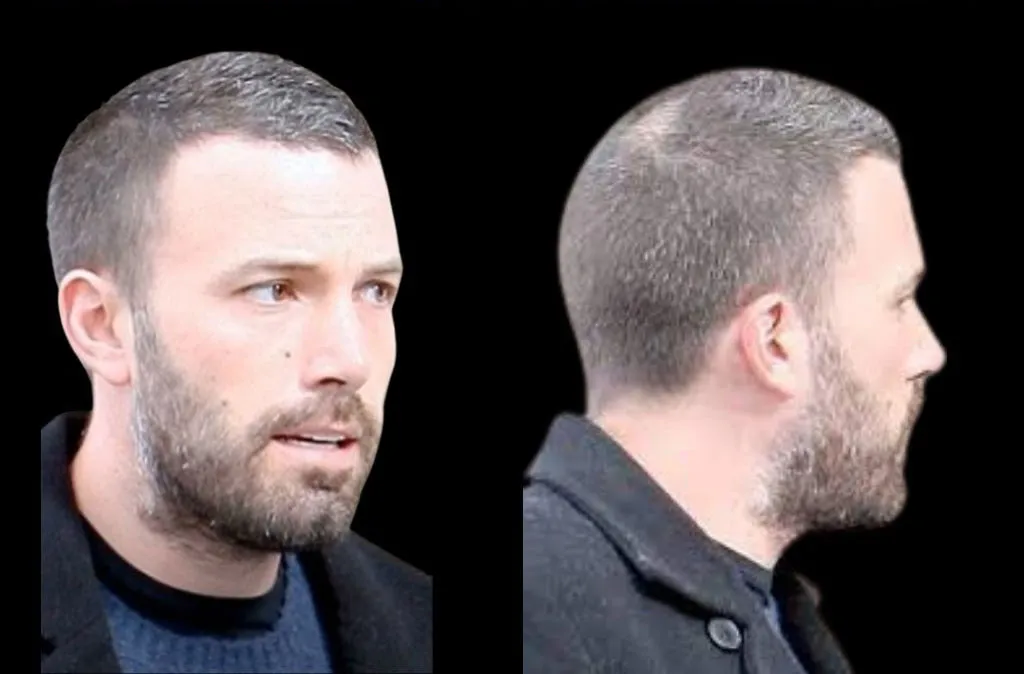
Complicating matters, photos taken after his 2024 divorce filing showed a noticeably receded frontal edge, which reopened a competing theory: that a partial system, not surgery, explains much of what audiences saw during the previous decade. Both possibilities are covered below.
The Speculation Around Ben Affleck’s Hairline
Over the years, Ben Affleck’s density has changed a lot. This has led to questions about whether he had a hair transplant or used other solutions like hair replacement systems. Photographs from the early 2000s show early thinning, particularly around his temples and crown.
Those observations fueled rumors about Ben Affleck balding and whether he opted for procedures like the FUE technique to restore coverage. The pattern was gradual rather than sudden, which is typical of androgenetic loss rather than a single triggering event.
Ben Affleck Hair Implants: Did he get them?
Affleck has not confirmed any procedure. Still, surgeons and longtime observers have pointed to a period when his frontal edge appeared measurably stronger than it had a few years earlier.
That kind of change is consistent with follicular unit extraction, though it is not the only explanation. Medication, camouflage products, and styling can all produce a similar visual effect in photographs.
How Many Grafts Would a Case Like His Require?
This is where most coverage stops short. If the change were surgical, the pattern visible in comparison photos would be consistent with a Norwood 3, with recession concentrated at the temples and modest thinning at the crown.
A case presenting that way typically calls for 2,000 to 3,000 grafts, split between rebuilding the temporal corners and adding density behind the frontal edge. Cases that push into crown coverage tend to move toward the upper end of that range or require a second session.
The figures below reflect general planning ranges used in US practice, not a confirmed account of anything Affleck did.
| Pattern stage | Areas addressed | Typical graft range | Sessions |
|---|---|---|---|
| Norwood 2 | Temporal corners only | 800 to 1,500 | One |
| Norwood 3 | Temples plus frontal edge | 2,000 to 3,000 | One |
| Norwood 3 vertex | Frontal edge plus early crown | 2,500 to 3,500 | One to two |
| Norwood 4 | Front, midscalp, crown | 3,000 to 4,500 | Usually two |
Graft counts are planning estimates. Actual numbers depend on donor supply, caliber, and coverage goals assessed in consultation.
What Is the FUE Technique?
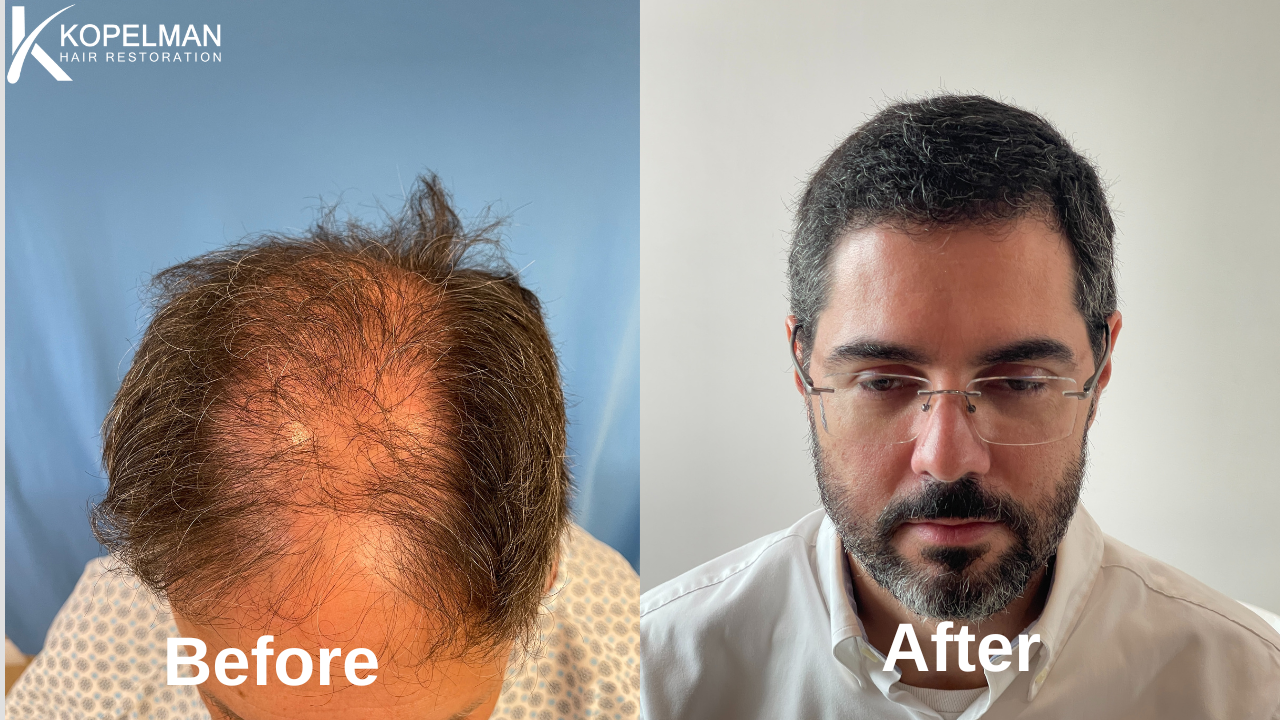
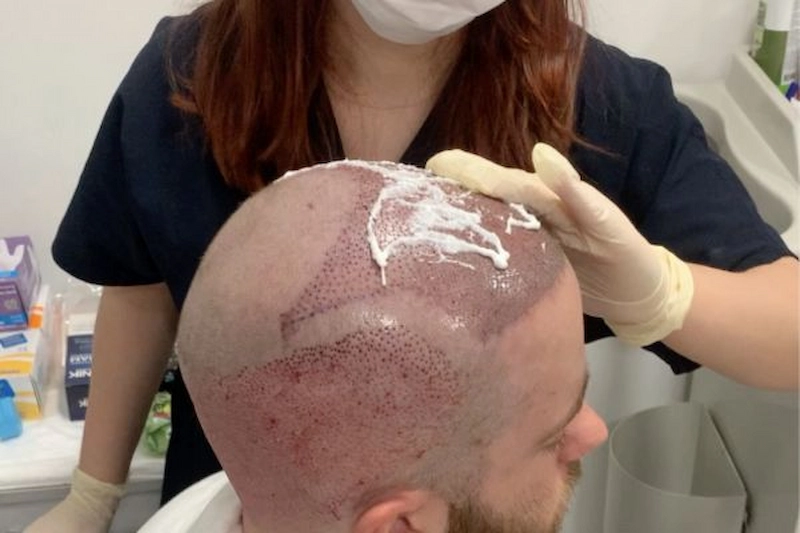
The FUE technique involves taking individual follicles from the back or sides of the head. This area is called the donor region. Doctors then implant those units in areas that are thinning or bare.
This minimally invasive method is known for its natural-looking results, minimal scarring, and quick recovery time. Many celebrities, including Elon Musk, are believed to have used this technique to rebuild their hairlines.
Why the FUE Technique Is Ideal for Celebrities
- Provides a natural frontal edge that blends seamlessly with existing growth.
- Minimal downtime, allowing celebrities to return to the spotlight quickly.
- Results in healthy hair that grows naturally over time.
Celebrity Hair Transplants and Ben Affleck’s Transformation
Celebrity hair transplants have become increasingly common as stars aim to maintain their appearance and public image. Like other A-listers, a procedure would have fit a broader strategy to stay camera-ready.
Restoration appeals to public figures because the results are permanent and require no daily maintenance. If Affleck did undergo surgery, the outcome would reflect how refined modern grafting has become.
Ben Affleck Hair Piece Rumors
A competing theory has circulated for just as long: that a partial system, not surgery, accounts for the fuller look. These pieces are made from human strands and can be matched to an individual’s texture, color, and growth direction.
The Ben Affleck hairpiece theory gained traction again in August 2024, when photographs taken during his divorce proceedings showed a substantially more-receded frontal hairline than audiences were used to seeing. For some observers, that was the tell.
The Partial System Theory Explained
A partial, or frontal, system covers only the receded zone at the front while blending into existing growth at the sides and top. It differs from a full unit, which sits across the entire scalp.
Their counterargument was that his frontal edge shows no detectable graft placement irregularities, and that the visible change could reflect stopping finasteride or minoxidil rather than removing a hairpiece. Others suggested a combination of surgery and cosmetic fibers, which would explain why his coverage looked inconsistent from one appearance to the next.
Does Ben Affleck Wear a Toupee?
The distinction matters. A toupee blends into the sides and back of the head; a full system covers the entire scalp; a partial piece addresses only the front.
Does Ben Affleck wear a toupee in daily life? There is no confirmation, and the visual evidence cuts both ways. The fact that he has worn pieces for film roles does not establish that he wears one off-camera.
| Theory | What supports it | What argues against it |
|---|---|---|
| Surgical restoration | Gradual density gain across the 2010s; temple corners appear rebuilt | No visible graft irregularities under close inspection; 2024 photos show recession |
| Partial front system | Sharp visual difference in 2024 candid photos; coverage varies between appearances | No confirmed unattached photograph; center thinning is common without a piece |
| Medication only | Finasteride and minoxidil can maintain a frontal edge for years | Does not fully explain apparent temple rebuilding |
| Fibers and styling | Explains good days and bad days in the same month | Cannot produce durable long-term density on its own |
No theory has been confirmed by the actor or any treating clinic. Each entry reflects publicly available photographic analysis and commentary.
Is Ben Affleck Bald?
No. Even in the most receded photographs, coverage across the midscalp and crown remains intact. The Ben Affleck bald framing that circulates online overstates what the images actually show.
What the photos do show is a Norwood 3 pattern that has been managed, concealed, or treated to varying degrees over two decades. That is a different situation from advanced loss.
Why Restoration Is Gaining Popularity Among Celebrities
For actors like Affleck, appearance carries professional weight. Surgical restoration offers several benefits that make it appealing for public figures:
- Natural Results: Advanced techniques such as FUE ensure that grafted units blend seamlessly with existing hair strands.
- Long-Lasting Effects: Once the procedure is complete, the relocated follicles continue to grow naturally, eliminating the need for frequent replacements.
- Confidence Boost: Addressing thinning hair can improve self-esteem, helping celebrities feel their best on and off the screen.
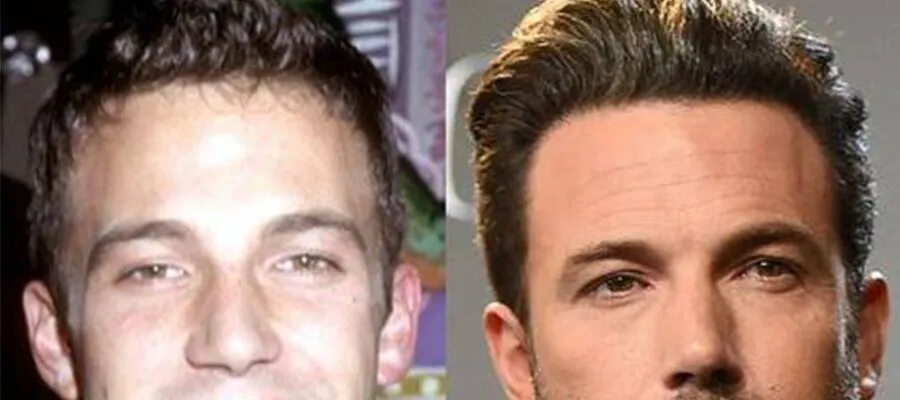
Ben Affleck’s Hair Transformation Over the Years
Looking back at Affleck’s career, his coverage has gone through noticeable changes:
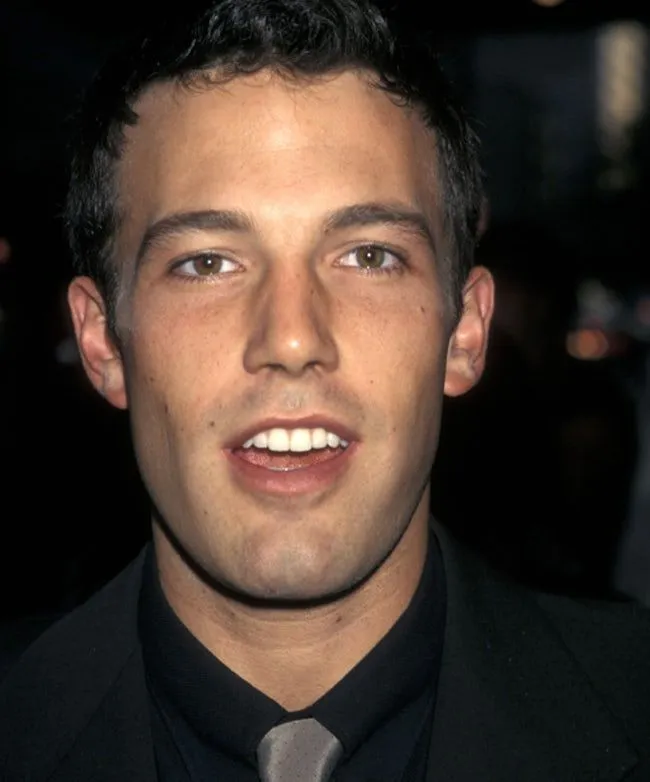
Early Career: Affleck had a thick, low frontal edge during the late 1990s and early 2000s.
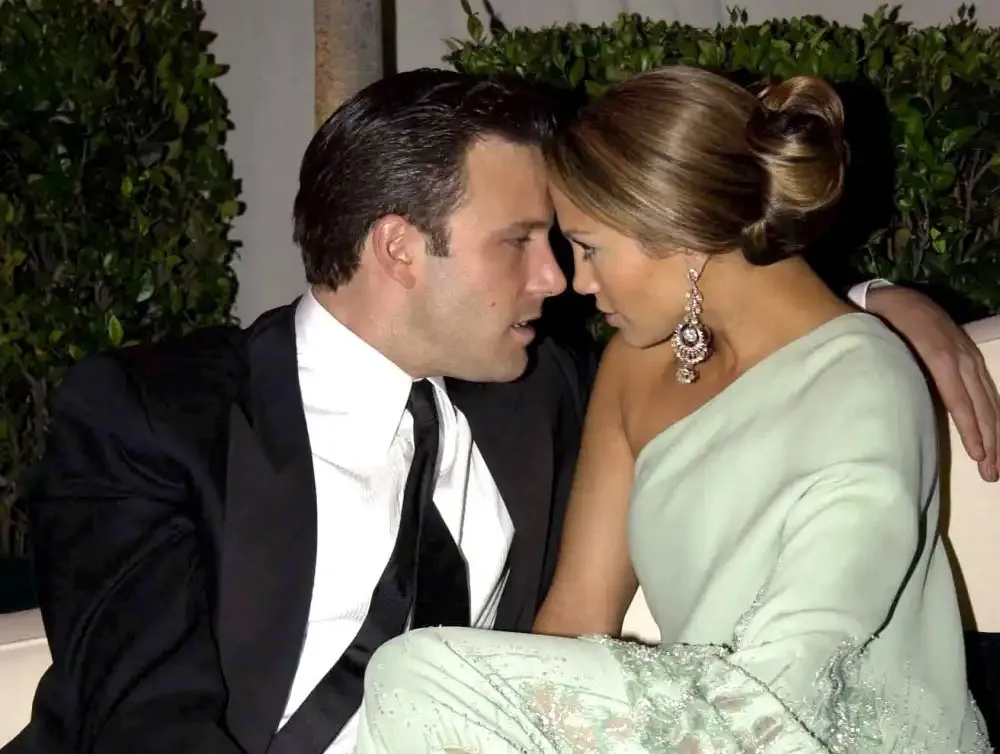
Mid-2000s: Signs of thinning and temple recession began to appear, sparking the first round of speculation.
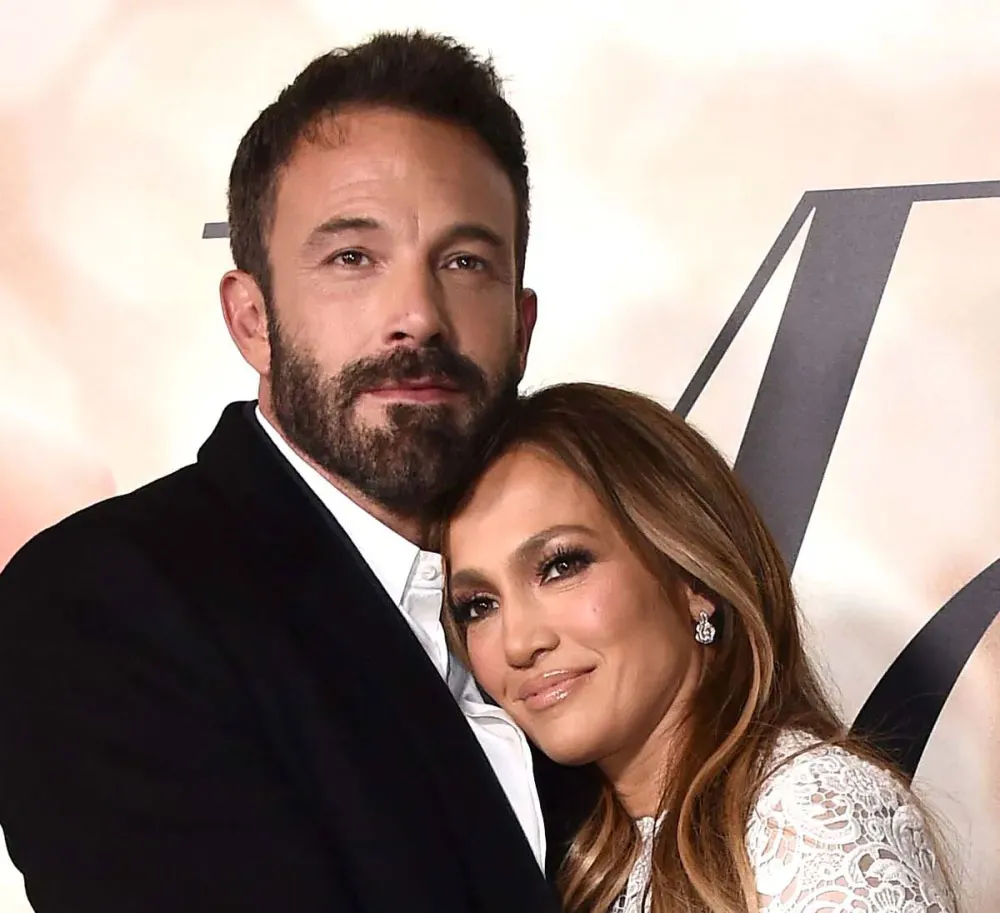
2010s: Coverage appeared denser and better defined, particularly during his Batman era, which is the period most often cited as a possible procedure window.
2024 onward: Candid photographs showed a markedly more receded frontal edge, reopening every previous theory at once.
The Science Behind Hair Transplants
Modern grafting procedures relocate individual follicular units to produce natural-looking coverage. These procedures address thinning, receding fronts, or more advanced patterns.
Success depends on the surgeon’s skill, donor quality, and aftercare. Angle, depth, and direction of placement determine whether a result reads as natural or detectable, which is precisely why some celebrity outcomes are obvious, and others go unnoticed for years.
Check out these other celebrity hair loss stories
- Andrew Garfield Hair Transplant
- Bradley Cooper Hair Transplant
- Brendan Fraser
- Joe Rogan Hair Transplant
- Kirk Cousins Hair Loss
- Floyd Mayweather Beard Transplant & Hair Transplant
- Conor McGregor Hair Transplant
- Steve Carell Hair transplant
- Justin Beiber Hair Transplant
- Matthew McConaughey Hair Restoration
- Donald Trump
- Gordon Ramsey Hair Transplant
Ben Affleck’s Hair Loss Journey
Affleck has never addressed the question directly. What the public record shows is a Norwood 3 pattern, a decade of stronger coverage, and a recent return to visible recession.
Whether that reflects grafting, a partial unit, medication, or some combination, Ben Affleck’s hair-loss story illustrates how many paths exist between early thinning and a camera-ready appearance.
For those dealing with thinning or similar concerns, his case highlights how much the outcome depends on accurate diagnosis before treatment. Consider speaking with Dr. Kopelman. This father-son team has more than 35 years of experience in hair restoration.
They focus on personalized treatments for every client. Dr. Kopelman’s expertise can help you find the right solution tailored to your unique needs. Schedule a consultation today to explore your options and take the first step towards achieving your hair goals.