
The Evolution of the Duke’s Appearance Over Time
In his youth, Harry was recognized for his thick, copper-toned mane, a trait widely attributed to his maternal Spencer lineage. It set him apart visually from his older brother, William, who began showing temple recession noticeably earlier.
As Harry moved through his late twenties and into his thirties, photographs began documenting what many recognized as the gradual onset of androgenetic alopecia.
The changes became more pronounced during the press tours for his memoir Spare in early 2023, when several specialists commenting to media outlets noted a fuller appearance than expected.
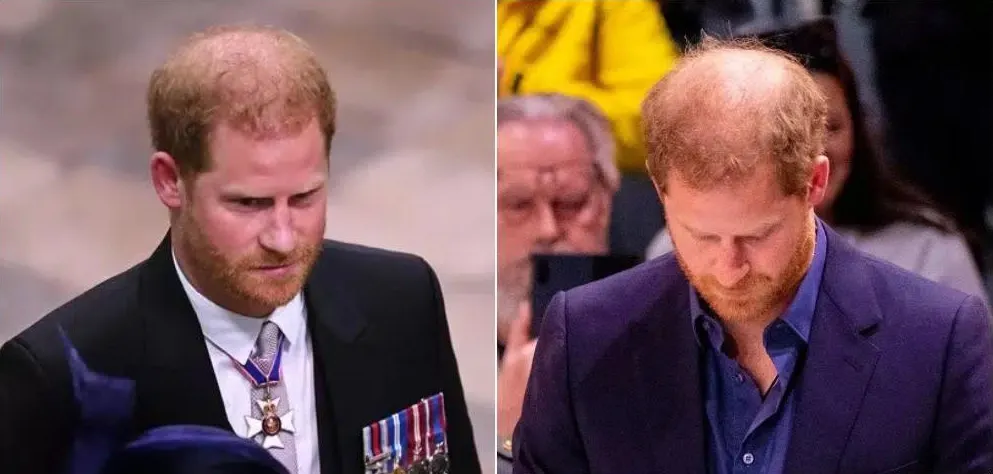
By early 2025, a new official BetterUp portrait showed noticeably thicker, darker locks, which stood in contrast to candid images from around the same period showing a thinning vertex and visible recession.
In January 2026, two appearances within days of each other reignited the conversation entirely. At his trial against Associated Newspapers in London on January 21, cameras captured a clearly thinning crown at close range.
Just days later, at the Sundance Film Festival in Utah alongside Meghan Markle, his scalp appeared visibly fuller, prompting widespread commentary about scalp dye, keratin fibers, and possible cosmetic procedures.
What the Norwood Scale Tells Us
For anyone asking is Prince Harry losing his hair, the answer based on observable photographs is yes, and the progression appears to place him somewhere between a Norwood Stage 3 Vertex and a Norwood Stage 4, depending on which period is being evaluated.
At the earlier Norwood 3 Vertex stage, the defining feature is thinning at the crown, or vertex, while the frontal hairline remains relatively intact. This is consistent with what was visible in photographs from 2020 to 2022. By the time of his more recent appearances, the crown zone appeared wider and the mid-scalp density more reduced.
This suggests movement toward a Norwood 4 classification. At Norwood 4, both temporal recession and vertex thinning are present and clearly defined, though a band of denser growth often still separates the two areas. This distinction is clinically meaningful because it affects how many grafts a surgeon would recommend.
It also explains why cosmetic concealers may look convincing in some images and inadequate in others. The areas being covered are genuinely larger now than they were five years ago, which is the essence of the Prince Harry balding progression seen in recent press cycles.
Hereditary Patterns Within His Family
Androgenetic alopecia is a polygenic condition, drawing from multiple genes rather than a single inherited trait. In this lineage, the hereditary link is hard to miss.
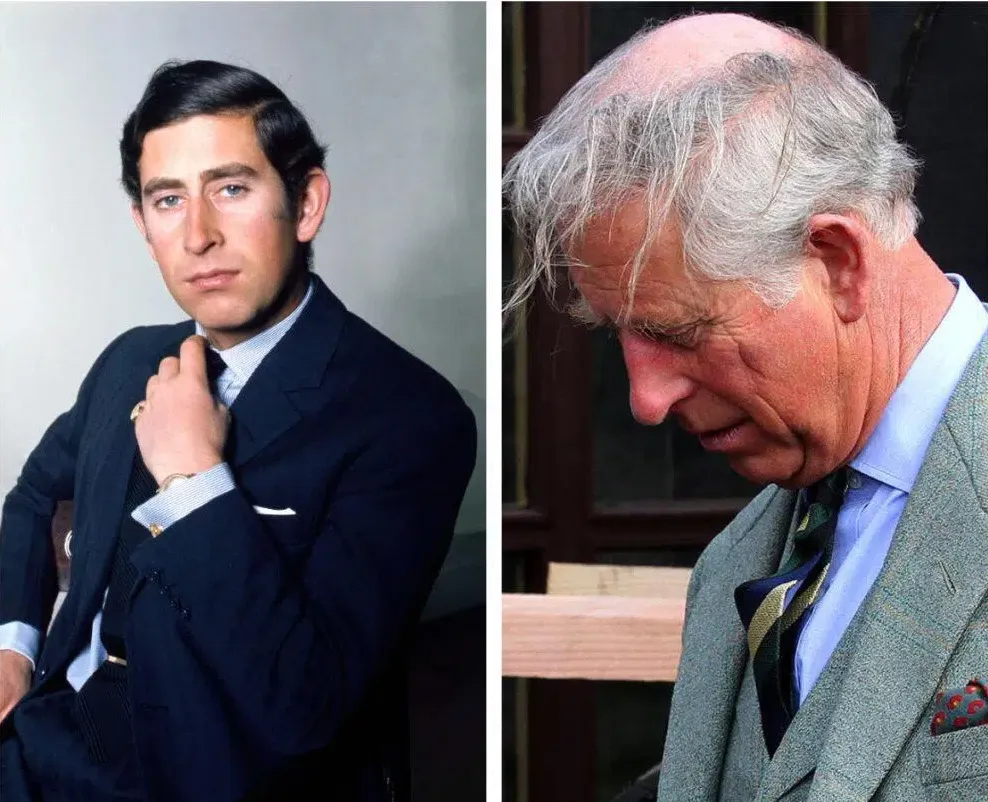
King Charles has carried a receding frontal line for decades, and William has experienced significant crown and frontal thinning, with his vertex becoming widely discussed over the past ten years.
Harry’s trajectory, while slower than his brother’s, follows the same general pattern. What accounts for the difference in pace between the two brothers? Even with shared genetics, each individual carries unique DNA combinations that govern timing, rate, and extent of follicular miniaturization.
Receptor sensitivity to dihydrotestosterone (DHT), the miniaturization rate of individual follicles, and the density of the donor zone can all differ meaningfully between siblings.
This is why William has embraced a fully shaved look at a relatively young age while his younger brother is still managing thinner but present coverage in his early forties.
The Hair Dye and Fiber Spray Conversation
The contrast in photographs from January 2026 is worth addressing directly because it reflects a genuine clinical phenomenon. Scalp dyeing, whether applied to the skin directly or via a tinted dry shampoo, darkens the visible contrast between the scalp and surrounding strands, making thinning appear less severe.
Keratin fiber products, often referred to by brand names like Toppik or Caboki, electrostatically bind to existing shafts and can convincingly fill in sparse areas at conversational distances. Neither approach addresses the underlying follicular miniaturization caused by DHT; they are cosmetic camouflage, not treatment.
Under certain lighting, particularly the bright flash photography common in courtroom and red carpet settings, fibers and scalp tints tend to look less convincing. This is consistent with the contrast observers noted between the London courthouse photos and the Utah event images.
A surgeon examining the underlying scalp would likely find a thinning pattern consistent with the Norwood 3 Vertex to 4 range regardless of what products had been applied. Cosmetic concealers and a true Prince Harry hair transplant would produce visibly different results under close inspection.
Could a Surgical Restoration Be the Answer?
It is unlikely that the Duke has undergone a surgical procedure to date, based on the absence of any documented density restoration that would be consistent with a large-scale graft session. His progression appears to follow natural androgenetic alopecia rather than showing the kind of step-change in density that typically follows a successful restoration.
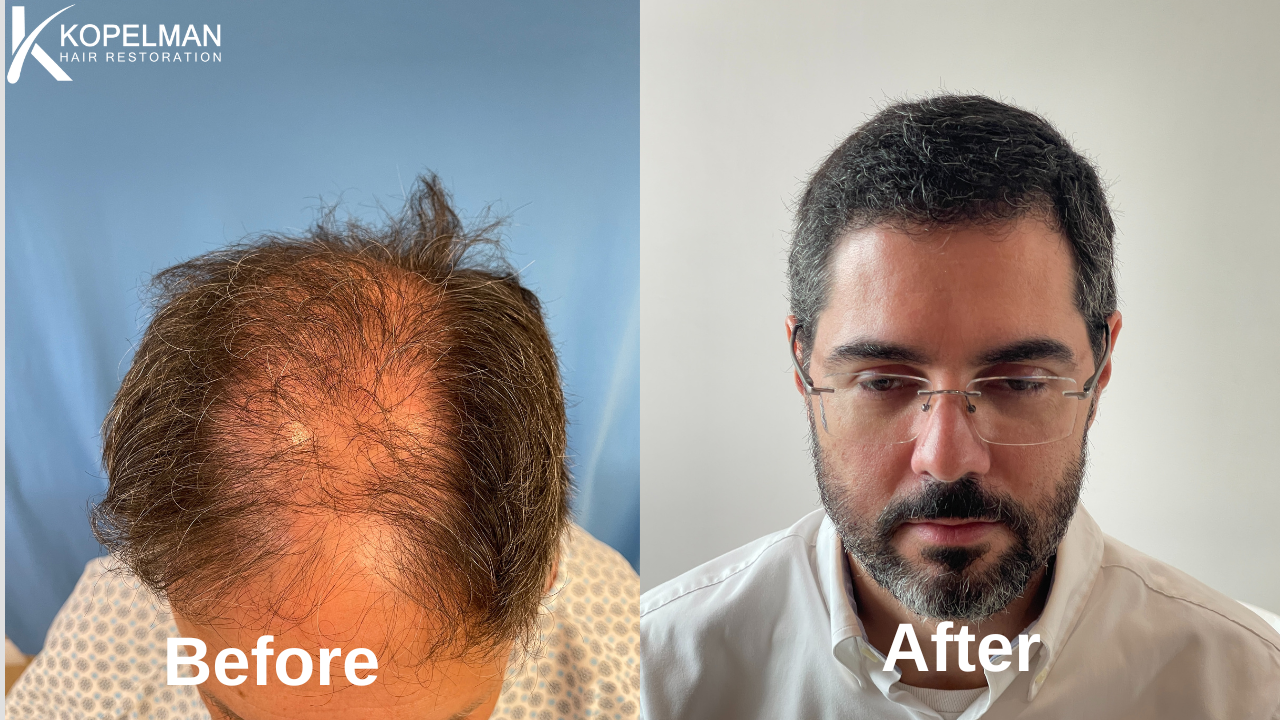
That said, his current stage would make him a reasonable candidate. Modern restoration involves relocating follicular units from a donor zone, typically the back and sides of the scalp where DHT sensitivity is lower, to recipient areas that have experienced miniaturization.
Advances in technique over the past decade have made results considerably more natural than what was possible with older plug-based methods. This explains why the phrase “hair plugs” that occasionally surfaces in tabloid coverage is clinically outdated and not representative of contemporary practice.
For someone presenting at a Norwood 3 Vertex to 4 pattern, a surgical plan would typically require between 2,000 and 3,500 grafts. Hairline and temporal restoration might account for 1,200 to 1,800 grafts, with the vertex requiring an additional 800 to 1,500, depending on donor supply and desired density.
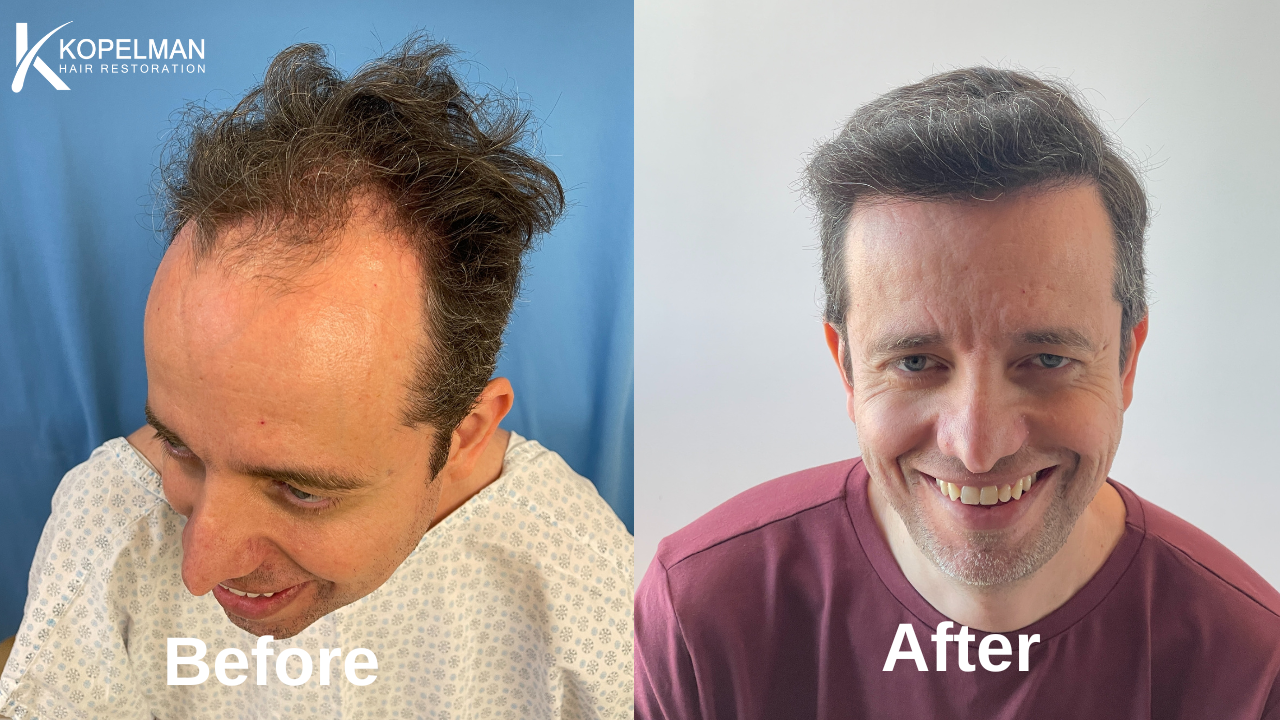
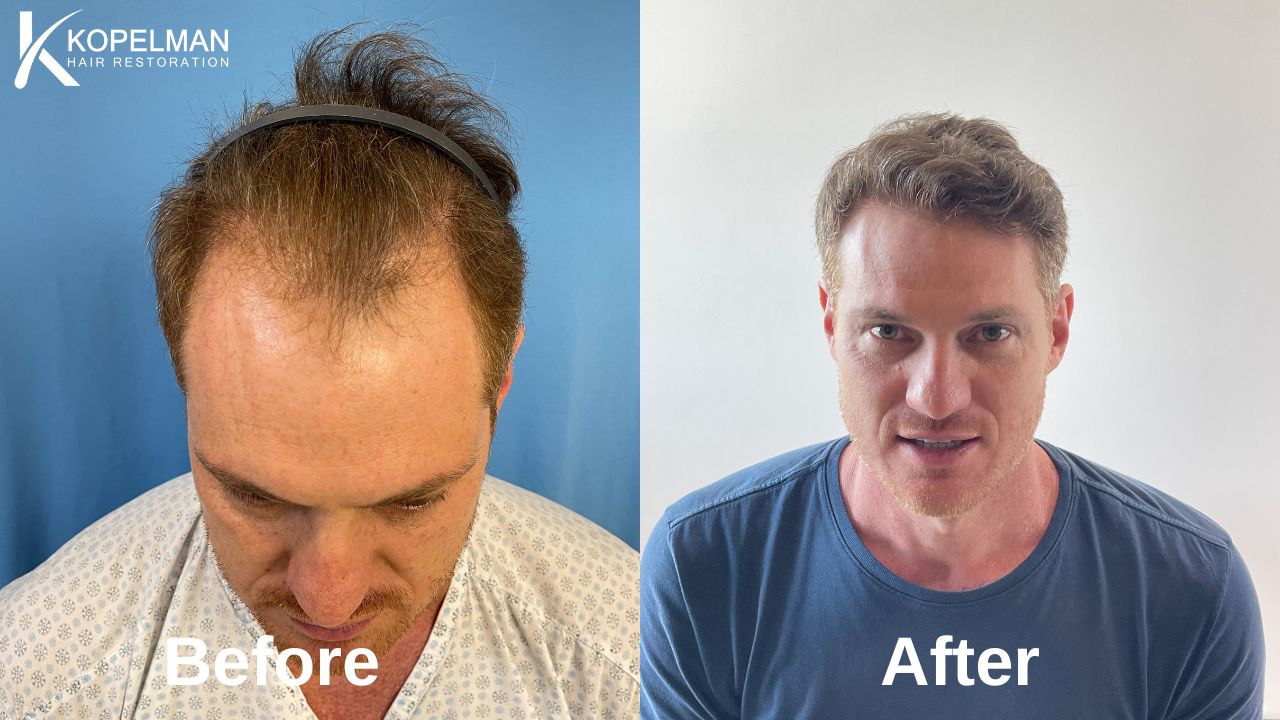
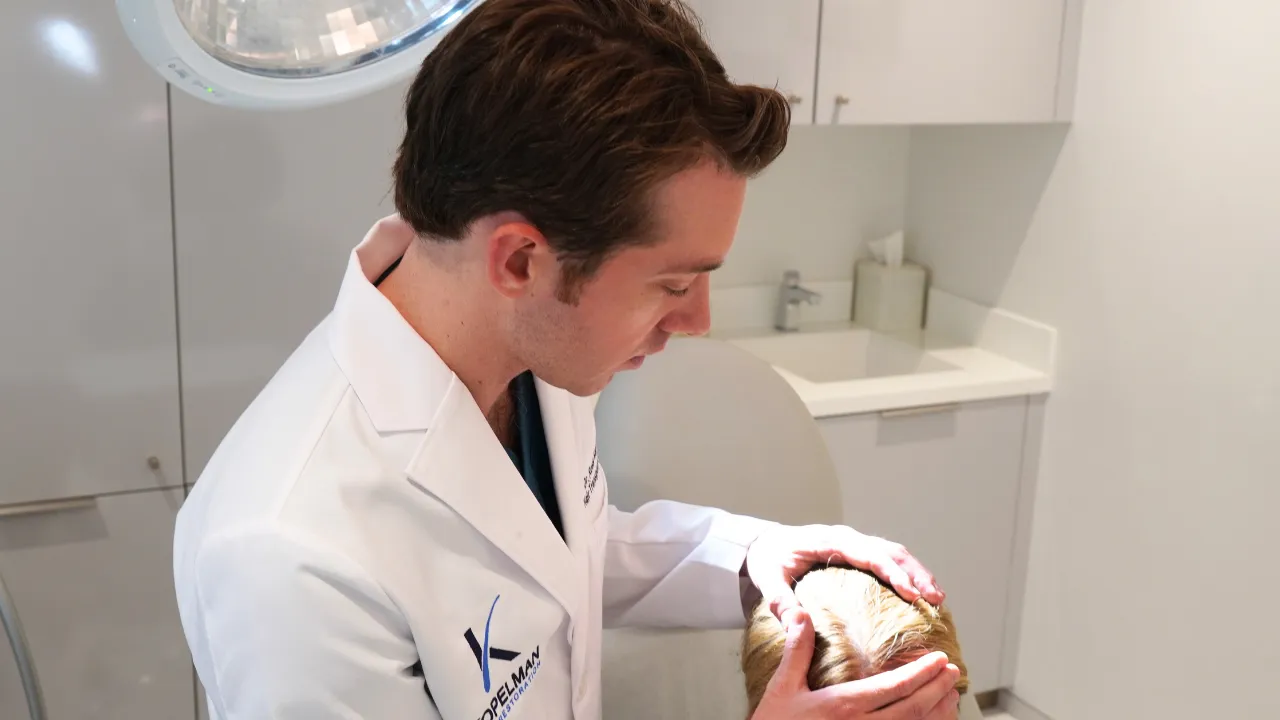
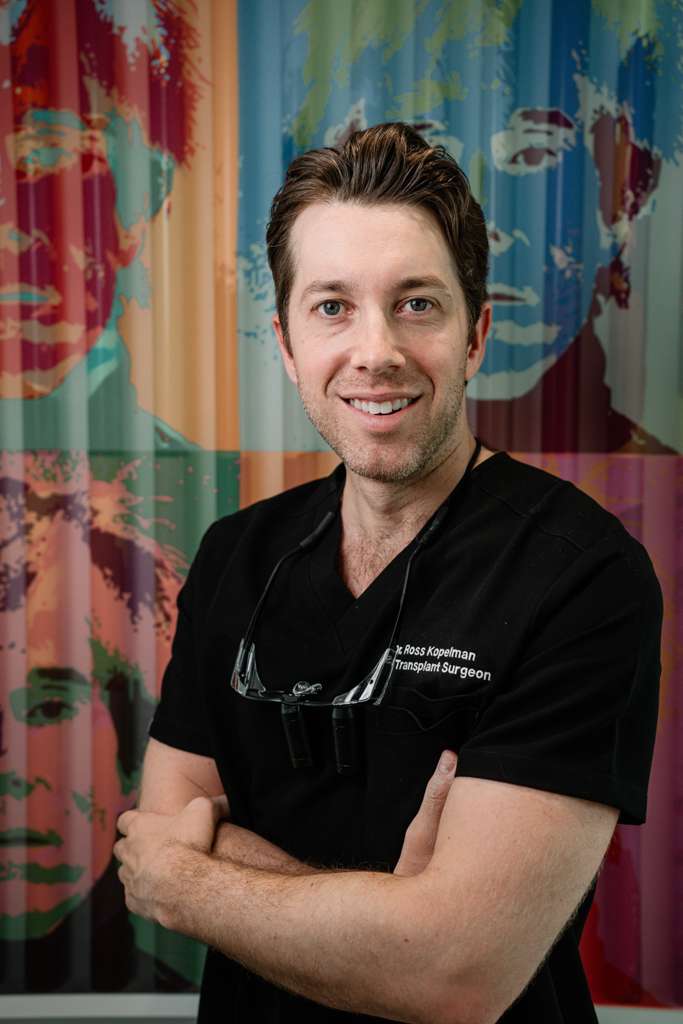
At Kopelman Hair Restoration in New York City and Palm Beach County, Dr. Ross Kopelman and the team evaluate each case individually. They assess current thinning extent, probable future progression, and donor capacity to ensure transplanted coverage remains proportionate as native strands continue to change over time.
This long-term planning perspective is particularly relevant for patients in their thirties and early forties, which is exactly the demographic window the Duke currently occupies in Prince Harry hair 2026 coverage.
Why FUE Would Likely Be the Method of Choice
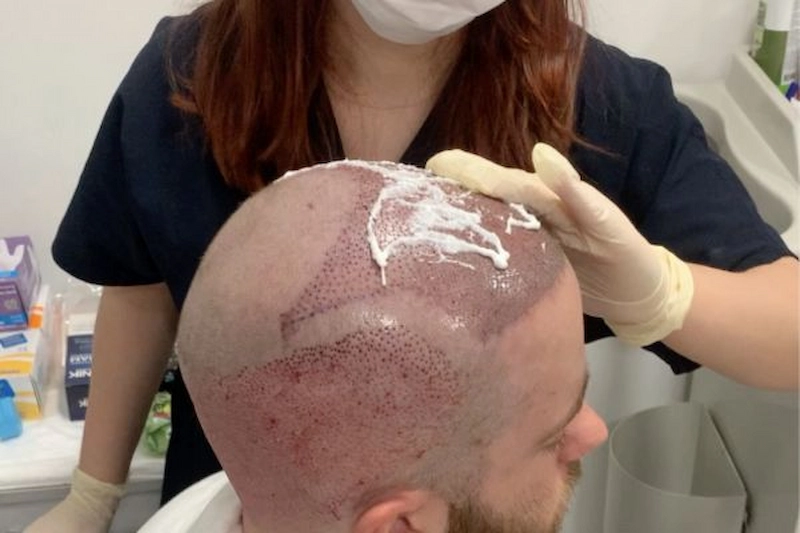
Among the available techniques, Follicular Unit Excision (FUE) would be the most probable method for someone at this stage seeking minimal visible evidence of having had a procedure. FUE extracts individual follicular units using a small circular punch rather than removing a linear strip of scalp.
This means there is no linear scar at the donor site, which matters particularly for someone who wears their remaining coverage short. Any strip scar would be visible when the head is cropped close, which is incompatible with the styling preferences of many men who maintain a public profile.
FUE also allows for natural-looking distribution in the crown, where the pattern of growth tends to radiate outward from a central whorl and demands precise angulation during implantation.
Surgeons experienced with crown reconstruction understand that the vertex requires a different design approach than a receding frontal line.
A no-shave FUE variant is also available for patients who prefer to maintain their existing length throughout the process. This is a common preference among public-facing individuals who cannot easily explain a shaved head between appearances.
Non-Surgical Options Currently Available
Given the public speculation that the Duke has not had surgery, the more likely scenario is that he is using one or more of the three principal non-surgical treatments. These options will not restore density to areas where follicles have already miniaturized significantly.
However, they can slow the progression and in some cases encourage modest regrowth in follicles that have not yet been permanently compromised. The three most commonly used options besides transplants are minoxidil, finasteride, and PRP therapy.
Finasteride, a prescription oral medication, works by blocking the conversion of testosterone into dihydrotestosterone (DHT), which is linked to follicular miniaturization. This can often slow shedding progression and even encourage regrowth, particularly in the early stages of thinning.
A common question around finasteride is whether it affects facial growth, since DHT also plays a role in beard development. In clinical practice, the drug does not appear to meaningfully impact facial coverage even though it reduces systemic DHT levels, which is reassuring for men who value their beard.
Minoxidil, available over the counter, is a topical treatment that extends the growth phase of follicles by increasing blood flow to the scalp. This improved circulation may result in healthier, thicker shafts over time, though discontinuation leads to the return of the underlying pattern.
Both treatments can be effective, but neither provides a permanent solution, as they require continuous use to maintain results. They are most effective when started early in the progression rather than after significant miniaturization has already occurred.
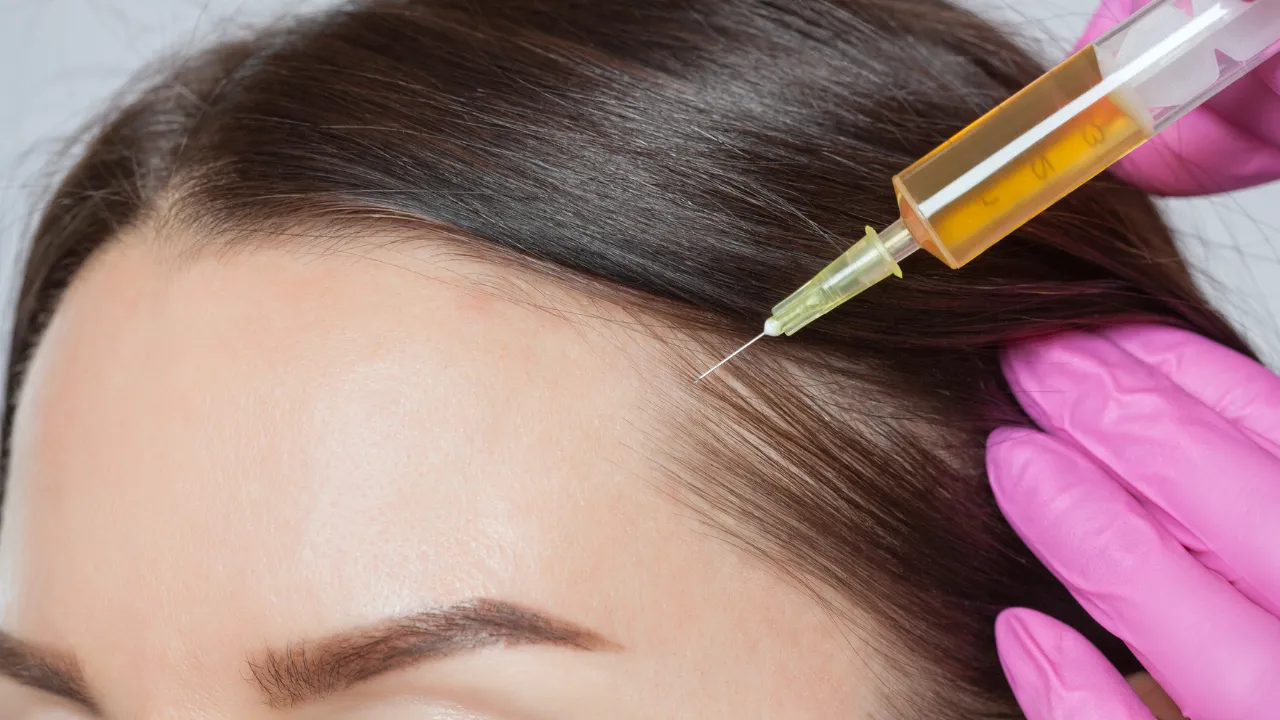
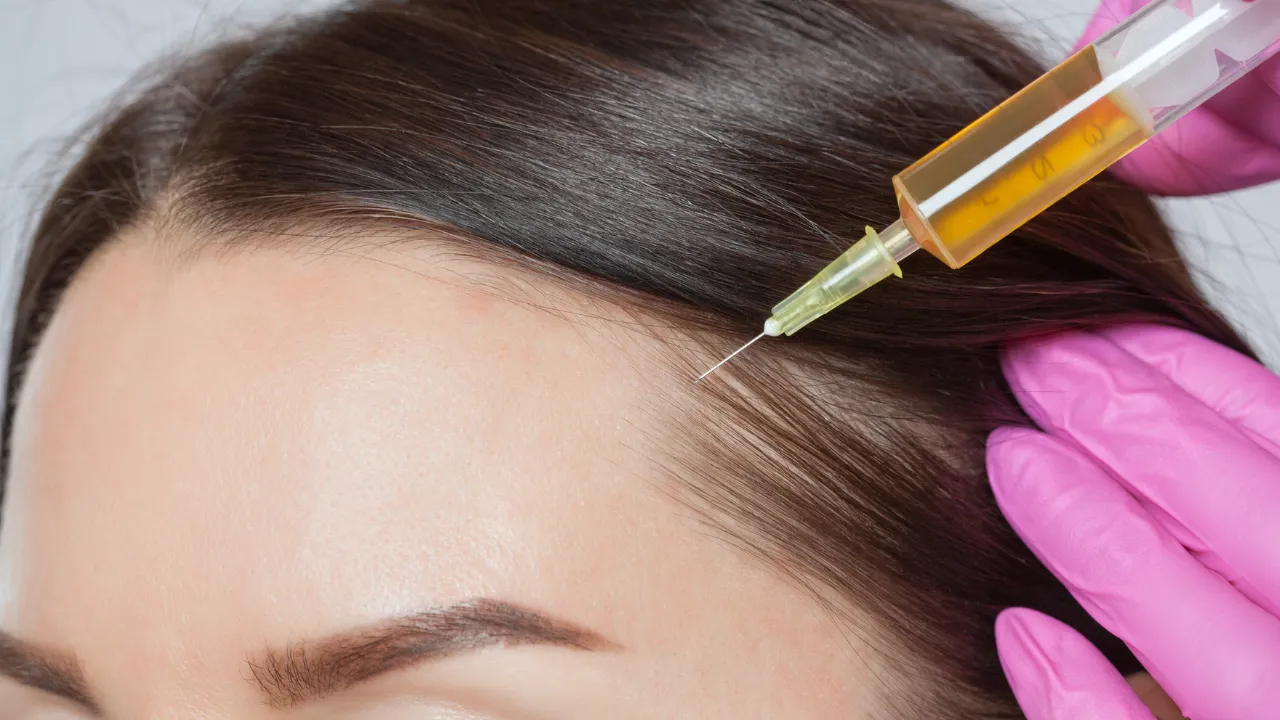
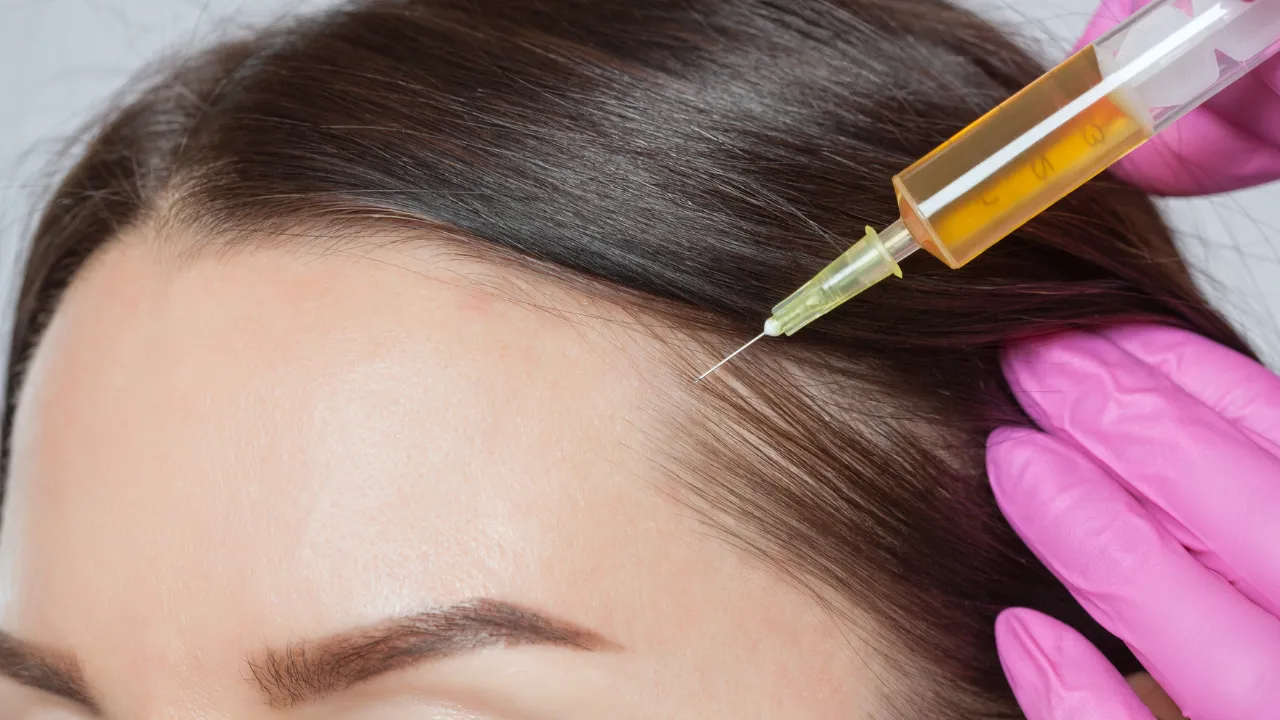
PRP (Platelet-Rich Plasma) therapy, on the other hand, involves drawing the patient’s blood, concentrating the platelets, and injecting them into the scalp. Growth factors in the plasma are believed to stimulate follicles and encourage regrowth.
PRP requires ongoing maintenance treatments to sustain its effects, typically scheduled three to four times per year. The treatment generally produces the best results when combined with other modalities rather than used in isolation.
How His Situation Compares to His Older Brother
The comparisons between Harry and William are inevitable, partly because they represent different points on the same genetic spectrum. William began showing significant frontal recession in his mid-twenties and has since progressed to what most observers would classify as a Norwood 6 or 7.
This stage is characterized by extensive crown and frontal confluence, with only a horseshoe band of coverage remaining on the sides and back. He has chosen to embrace the look with a closely cropped style rather than pursue concealment or restoration, a choice generally well-received in terms of public perception.
Harry’s progression has moved more slowly, consistent with the understanding that siblings with similar genetic risk can experience different timelines.
At his current stage, he still has meaningful coverage across much of his scalp, which is precisely the window during which non-surgical treatments and surgical intervention tend to produce the most satisfying results.
Waiting until thinning has advanced to the degree visible on his older brother would significantly reduce the effectiveness of both approaches. Earlier intervention preserves more options and tends to produce more natural outcomes when surgical restoration is eventually pursued.
The Role of Red Hair Genetics
No discussion of this topic is complete without addressing the genetics behind the signature coloring that has defined the Duke’s appearance since childhood. The copper-red shade traces to his maternal Spencer lineage and is governed primarily by variants in the MC1R gene.
Red coloring is a recessive trait, meaning both parents must carry the relevant variant for it to express, and it can skip generations before reappearing. The MC1R variants associated with red pigmentation have no direct causal relationship to androgenetic alopecia.
The two traits are inherited independently. What the family history does provide is a strong androgenetic signal through the paternal line, and it is this genetic component, rather than the MC1R variants, that drives the thinning pattern visible in both brothers and their father.
Red coloring and lighter skin tones do present one relevant consideration in restoration planning. The contrast ratio between the scalp surface and the strand itself is lower than in patients with darker tones, which generally means even moderate thinning becomes noticeable at lower absolute densities.
The Pressure of Appearance in Public Life
Living under the lens of constant media coverage creates a dimension of physical change that most men do not experience. For the Duke, every public appearance generates a new cycle of comparison photography, expert commentary, and social media analysis that very few people outside the public eye can fully relate to.
The scrutiny following his January 2026 court appearance, where sketched courtroom illustrations showed a fuller profile than the exit photographs suggested, exemplifies how even court artists are not immune to the narrative.
Hair, in this context, becomes a kind of public canvas onto which observers project their interpretations.
What is clinically consistent across all of these snapshots is a natural progression that millions of men experience, regardless of title or income. Androgenetic alopecia affects roughly half of all men by the age of fifty, and the experience of watching coverage thin gradually is one of the most universally shared aspects of male aging.
His visibility on this topic has, perhaps inadvertently, normalized the conversation in ways that benefit anyone navigating the same journey with less public support.
Self-acceptance is a genuinely valid path, as his brother has demonstrated, and so is intervention, whether cosmetic, pharmaceutical, or surgical.
Other celebrity hair loss stories
- Andrew Garfield Hair Transplant
- Joe Rogan Hair Transplant
- Kirk Cousins Hair Loss
- Floyd Mayweather Beard Transplant & Hair Transplant
- Matthew McConaughey Hair Loss
- Conor McGregor Hair Transplant
- Steve Carell Hair transplant
- Justin Beiber Hair Transplant
A Royal Comparison: Harry and William
The brothers share a genetic predisposition but have arrived at very different points along the androgenetic spectrum. William made his peace with significant thinning early and has been notably candid about it in public settings, including a well-known 2022 exchange with a film stylist in which he acknowledged having very little left to work with.
That self-deprecating comfort has become something of a trademark for him. Harry’s approach has been more ambiguous; he acknowledged his own awareness of the thinning process in Spare, where he noted that his brother’s coverage loss was advancing more quickly than his own.
This suggests a degree of self-comparison and monitoring that many men will recognize. Whether he chooses to address the progression through medication, a cosmetic procedure, or simply accepts the change over time, the choice reflects a personal journey that resonates far beyond the walls of any palace.
Androgenetic alopecia is not a condition unique to royals. The scrutiny applied to their scalps in high-resolution photography and viral social media posts is simply a magnified version of the awareness that millions of men carry privately every day, and the range of solutions now available means no one facing that progression has to feel without options.