
What Causes Hair Loss?
Understanding what causes hair loss begins with recognizing that the scalp constantly cycles through phases of growth, rest, and shedding.
Many people first ask why their hair is falling out when they notice extra strands in the brush or in the shower, and the answer depends on the underlying cause.
Hair loss statistics show that hereditary pattern baldness is the most common cause of hair changes, though hormonal shifts, medical conditions, medications, and nutritional gaps can all contribute to hair loss.
Some readers also search for “hair thinning alopecia” when symptoms appear, a phrase that reflects the overlap between everyday thinning and the medical term for hair loss.
Identifying the specific driver is the first step, because different causes respond to different interventions.
A temporary trigger, such as stress, may resolve on its own, while a genetic process tends to progress without treatment. The sections below outline the major categories so readers can identify which pattern best matches their experience.
Genetic and Hormonal Causes
Genetics is the leading factor in long-term hair loss, producing what is medically known as androgenetic alopecia, or pattern baldness. In genetically susceptible people, the hormone dihydrotestosterone (DHT) gradually shrinks hair follicles, shortening the growth phase until strands become finer and shorter.
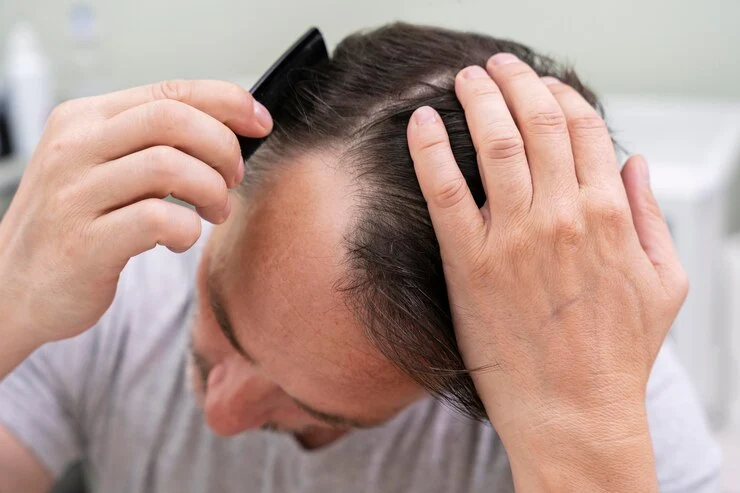
This helps explain why men go bald in a predictable sequence and why thinning hair from male pattern baldness often begins at the temples or crown. The same hormonal pathway affects women, though the presentation usually differs.
Hormonal imbalances, independent of genetics, can also lead to hair loss. When considering what causes hair loss in women, hormonal shifts during pregnancy, after childbirth, and around menopause are especially relevant, and conditions such as thyroid disease or polycystic ovary syndrome help answer which hormone causes hair loss in females.
Androgens, thyroid hormones, and estrogen all influence the hair cycle, so a hormonal imbalance can disrupt normal growth. Readers exploring hormone-related shedding can review our overview of menopause-related hair loss and postpartum hair changes.
Medications and Medical Conditions
A range of medical conditions can cause hair to fall out, sometimes temporarily and sometimes permanently. Thyroid disorders, iron-deficiency anemia, lupus, and other autoimmune conditions are well-documented triggers, and certain infections raise the question of what disease causes hair loss.
Some prescription drugs also list shedding as a side effect, including specific blood pressure medicines, antidepressants, and chemotherapy agents. Our guide to medications that cause hair loss outlines the categories most often involved.
Scalp-specific problems are relevant as well. Inflammatory or fungal conditions may cause sudden hair loss and an itchy scalp, with irritation and shedding occurring together. Persistent scalp inflammation contributes to hair loss over time, which is why inflammation and hair loss are closely linked. When a bald spot appears alongside redness, scaling, or pain, a medical evaluation is warranted.
Stress, Diet, and Nutritional Deficiencies
Physical or emotional stress can push large numbers of follicles into the resting phase at once, leading to a temporary form of hair loss called telogen effluvium. Major surgery, illness, rapid weight loss, and significant life stress are common precipitants, and the shedding typically appears two to three months after the event. Because this type is usually reversible, understanding the trigger helps set realistic expectations for recovery. Readers can learn more in our article on stress-related shedding.
@drkopelman Replying to @Toni Toni Shedding More Hair Than Usual? Here’s What’s Really Going On If you’re noticing excessive hair shedding, it’s often due to telogen effluvium, a very common and usually temporary condition I see daily in my practice. It happens when the body goes through a stressor such as illness, weight loss, hormonal shifts, new medications, emotional stress, or nutrient deficiencies, causing more hairs than normal to enter the shedding phase at once. The key is identifying and correcting the trigger. Once that’s addressed, the follicles are still alive and regrowth is expected. Supportive treatments like minoxidil, nutritional optimization, and stress reduction can help shorten the shedding phase and support recovery. If shedding feels sudden or overwhelming, getting the right diagnosis matters. Office Information Kopelman Hair Restoration NYC: 1112 Park Ave #1A, New York, NY 10128 | (212) 470-4076 Palm Beach County, FL | (561) 803-0140 Virtual consultations available KopelmanHair.com #HairShedding #TelogenEffluvium #HairLossRecovery #HairRestoration ♬ original sound – Dr Kopelman 212 470 4076
Diet plays a measurable role, and several nutritional deficiencies are linked to thinning. Low levels of iron, vitamin D, zinc, and protein can all affect hair quality, which is why patients often ask which deficiency causes hair loss. Correcting a documented shortfall may help, but supplementing without a confirmed deficiency rarely provides benefit and can occasionally be harmful. For specifics, see our articles on iron and hair loss, vitamin D, and magnesium.
Common Types of Hair Loss
Identifying the type of hair loss is essential because each has a distinct cause, pattern, and outlook. Broadly, hair loss is grouped into non-scarring forms, where the follicle remains intact, and scarring alopecia, where inflammation permanently destroys the follicle.
Alopecia causes range from genetic to autoimmune, so the category guides both diagnosis and treatment. Pattern baldness, alopecia areata, and telogen effluvium are non-scarring and often treatable, whereas scarring types require prompt attention to limit permanent loss.
Male and Female Pattern Baldness
Male pattern hair loss is the most common form, affecting a majority of men to some degree over their lifetime. It usually follows a recognizable sequence: a receding hairline, thinning at the vertex, and eventual crown hair loss that may merge with frontal thinning.
Many men first notice hair loss in the shower or on the pillow before visible thinning develops. The Norwood scale tracks these patterns. We discuss related changes in our articles on temple thinning and M-shaped hairlines.
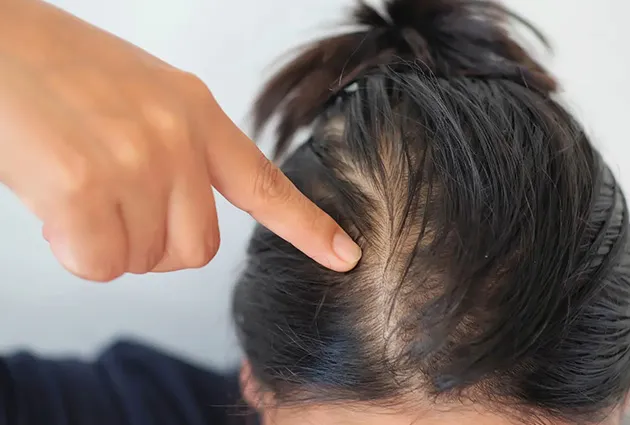
Female pattern hair loss tends to present differently, with diffuse thinning across the top of the scalp rather than a receding hairline.
Also called female pattern baldness, it is often measured using the Ludwig scale and can become more noticeable after menopause.
Hair loss in women is frequently underdiagnosed, so a proper evaluation matters when the thinning hair women experience does not resolve on its own. The Ludwig scale guide explains how severity is classified.
Alopecia Areata and Autoimmune Hair Loss
Alopecia areata is an autoimmune condition in which the immune system mistakenly attacks hair follicles, producing patchy hair loss. The classic alopecia areata symptoms include smooth, round bald spots that appear suddenly, most often on the scalp but sometimes in the beard or eyebrows.
In some people, the condition progresses to more extensive loss, while in others, hair regrows on its own. Clinical evaluation frameworks for alopecia, such as those published by the AAFP, help clinicians distinguish this from other causes.
To clarify terms, alopecia broadly refers to hair loss of any kind, while specific subtypes have their own names. So, in everyday language, alopecia is simply the medical term for hair loss, whether patchy, diffuse, or patterned. Autoimmune-driven thinning can also overlap with other conditions, as discussed in our piece on autoimmune hair loss in women.
Telogen Effluvium and Hair Shedding
Telogen effluvium is one of the most common causes of sudden, diffuse hair shedding, and it differs from pattern baldness in both its mechanism and its outlook. Rather than follicle miniaturization, it involves a temporary shift of many follicles into the shedding phase at the same time.
People experiencing hair loss of this kind often see noticeably more strands during washing or brushing for several months. Because it is self-limiting in most cases, reassurance and patience are frequently appropriate once the trigger is addressed.
This category answers a question many readers have: why am I losing so much hair after a stressful event, an illness, or childbirth? The hair shedding usually peaks and then resolves as follicles re-enter their growth phase. Distinguishing temporary shedding from progressive thinning is a key part of the evaluation, as covered in the next section.
Signs and Symptoms of Hair Loss
Recognizing the signs of balding early gives patients more options, since several treatments work best before extensive loss occurs. Symptoms vary by type and may include a widening part, a receding hairline, increased shedding, or visible patches. Some people first notice hair loss as a change in ponytail thickness or more scalp showing under bright light. Paying attention to the pattern and speed of change helps clinicians narrow down the cause.
Early Signs of Thinning and Balding
Early thinning can be subtle, which is one reason many people delay seeking advice. Common early indicators include more hair than usual on the pillow, in the drain, or in a brush, and a part that widens over time. In men, a maturing hairline at the temples is often the first sign, while women more often see diffuse thinning at the crown. Tracking photos over several months can help distinguish normal variation from genuine, progressive thinning.
Some patients also report scalp sensations before any visible change, including itching or tenderness. When thinning is accompanied by irritation, a condition affecting the scalp itself may be present, as explored in our article on tingling scalp and female hair loss. Thinning hair in men and women alike benefits from early documentation because it improves diagnostic accuracy.
Hair Loss vs. Normal Shedding
Distinguishing true hair loss from ordinary shedding is one of the most useful skills for anyone worried about their hair. Shedding 50 to 100 hairs daily is part of the normal hair cycle and does not lead to baldness, whereas excessive hair shedding beyond this range may indicate telogen effluvium or another underlying condition.
Shedding refers to a short-term increase in hair volume, while hair loss describes follicles that gradually stop producing new strands. If shedding continues beyond six months or thinning becomes visible, evaluation is advisable.
The distinction also matters for setting expectations. Temporary shedding usually reverses, but pattern baldness and scarring types are progressive without treatment. Understanding this difference helps explain why some people recover fully while others need ongoing management.
Hair Loss Treatments and Solutions
@drkopelman The 5 Best Hair Loss Treatments You Need to Know About Drop “Hair Loss” in the comments, and I’ll send you my free guide on the best hair loss treatments! Dealing with hair loss? You’re not alone, and the good news is that there are proven treatments that can help you restore and maintain your hair. But with so many options out there, how do you know which one is right for you? 📍 Offices in New York City & Palm Beach 📞 NYC: (212) 470-4076 📞 Palm Beach: (561) 803-0140 🌍 Visit: kopelmanhair.com 💻 Virtual Consultations Available Drop “Hair Loss” in the comments, and I’ll send you my free guide on the best hair loss treatments—or visit kopelmanhair.com to book your consultation today! #HairLossSolutions #HairRestoration #HairTransplantNYC #HairTransplantPalmBeach #HairRegrowth #HairLossTreatment #HairSurgeon #finasteride #mesotherapy #hairloss #hairrestoration #minoxidil ♬ Explainer Video – BoDleasons
A range of medical treatments can slow, stabilize, or partially reverse hair loss, though no single option works for everyone. The right approach depends on the diagnosis, the type and stage of loss, and individual health factors. Some treatments aim to stimulate hair growth or prolong the growth phase, while others address underlying causes such as deficiencies or hormonal issues. Setting realistic goals is essential, since most therapies manage hair loss rather than cure it.
Minoxidil, Finasteride, and Dutasteride
Topical minoxidil is a widely used option that can stimulate hair growth by extending the growth phase and improving blood supply to the follicle. It is available over the counter and is used for both male and female pattern hair loss, though results require consistent, ongoing use.
Oral finasteride and dutasteride work differently by reducing DHT levels and are primarily prescribed for men. These medications can help treat hair loss when started early, but the benefits typically fade if the medication is stopped.
For women, certain prescription options are used under medical supervision, including spironolactone and, in some cases, dutasteride. These are discussed in our articles on spironolactone for women and dutasteride for women. Any medication for hair loss should be chosen with professional guidance, since each carries potential side effects.
PRP and Nonsurgical Treatments
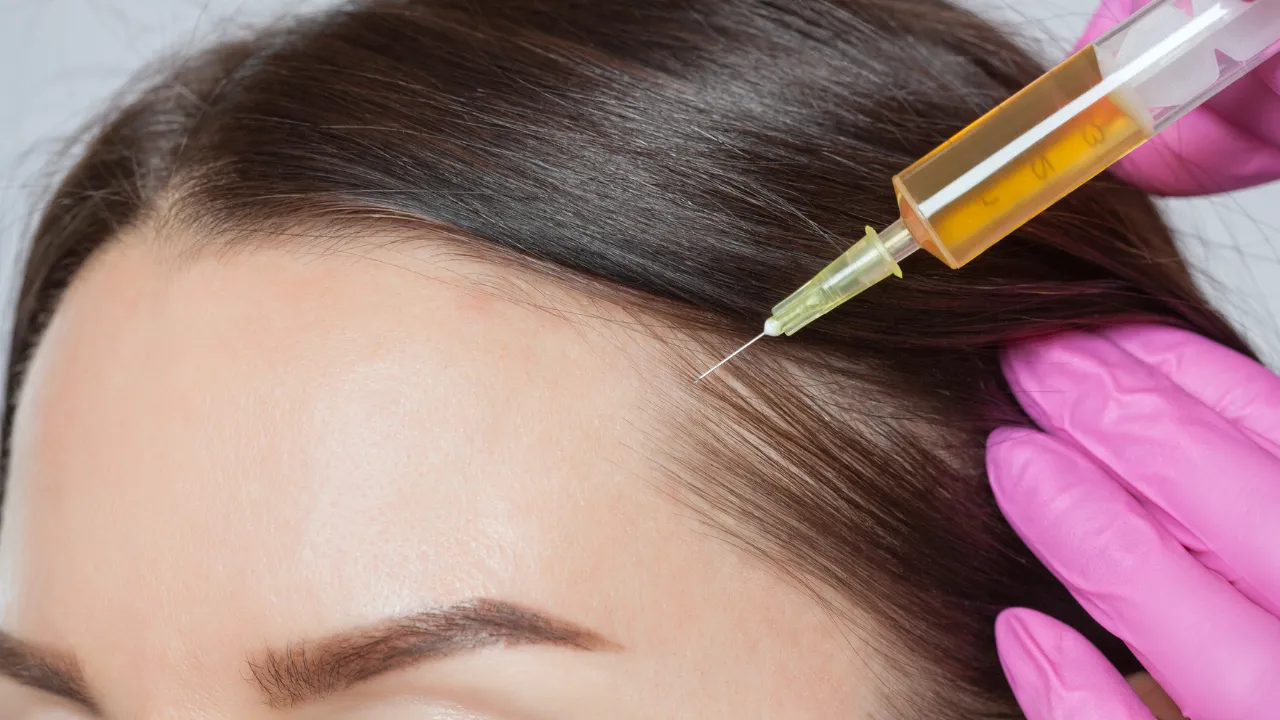
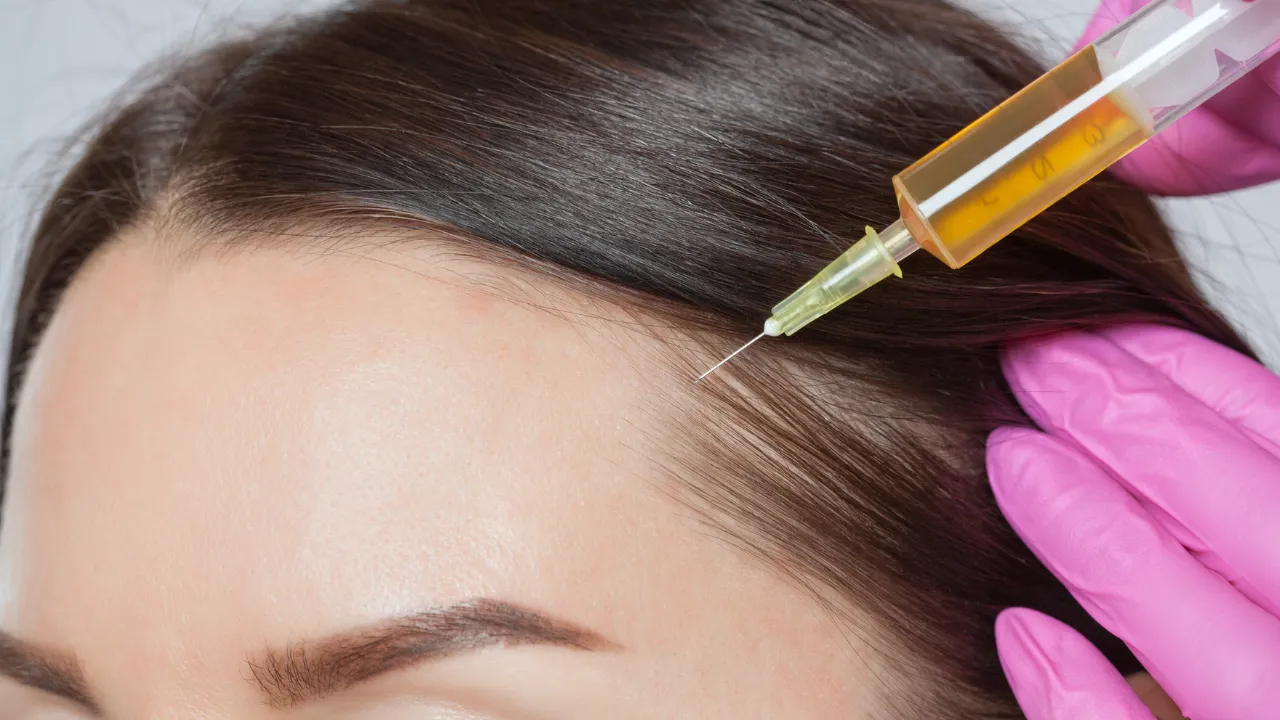
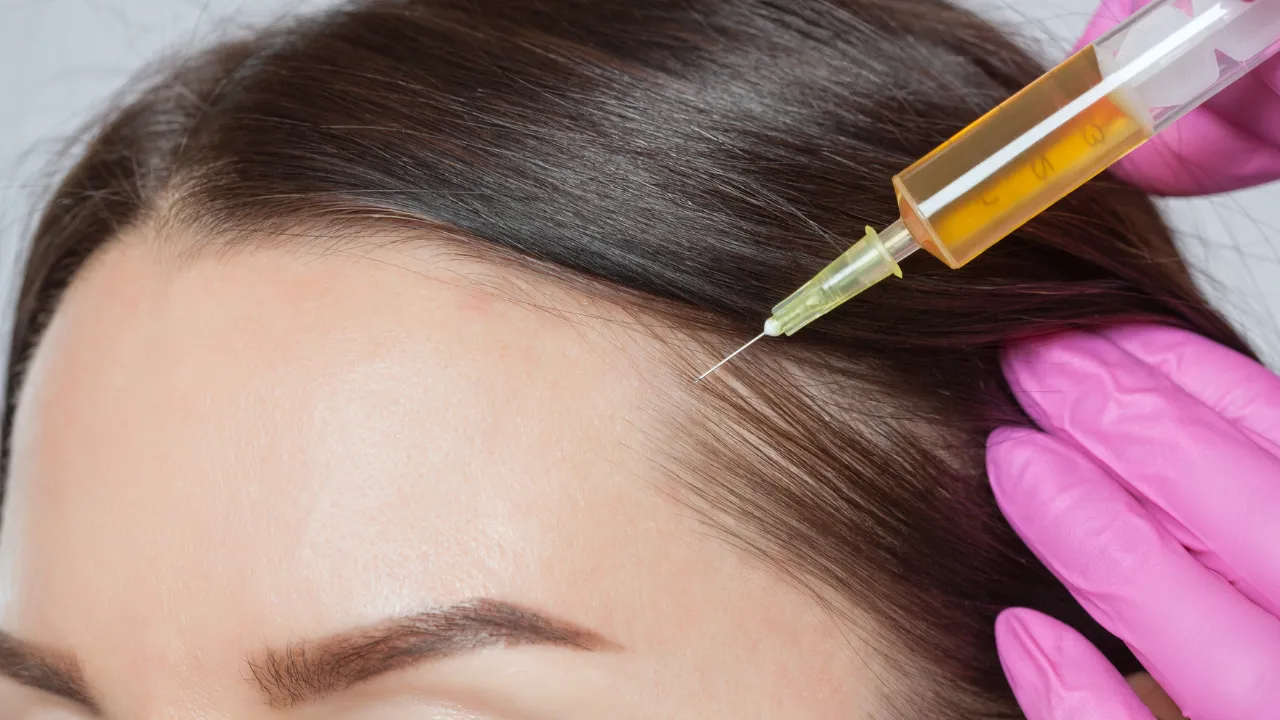
Platelet-rich plasma (PRP) is a nonsurgical option in which a concentrate from the patient’s own blood is injected into the scalp to support follicle function. Evidence suggests it may help in some cases of pattern thinning, though results vary, and maintenance sessions are usually required. PRP is often combined with other therapies rather than used alone, and more details are available on our PRP for hair loss page.
Other nonsurgical measures include low-level laser therapy and corticosteroid treatments for inflammatory or autoimmune types. For alopecia areata, injected corticosteroids are a common approach to reduce immune activity around the follicle.
These options are not a treatment for bald areas where follicles have already been permanently lost, which is an important limitation to keep in mind.
Hair Transplant Surgery
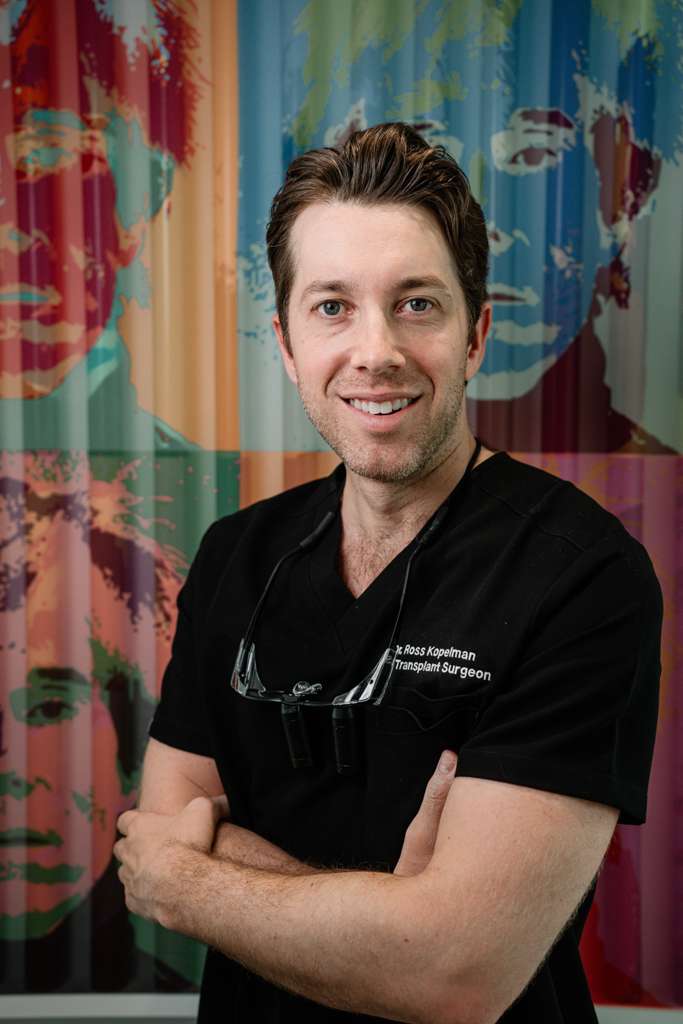
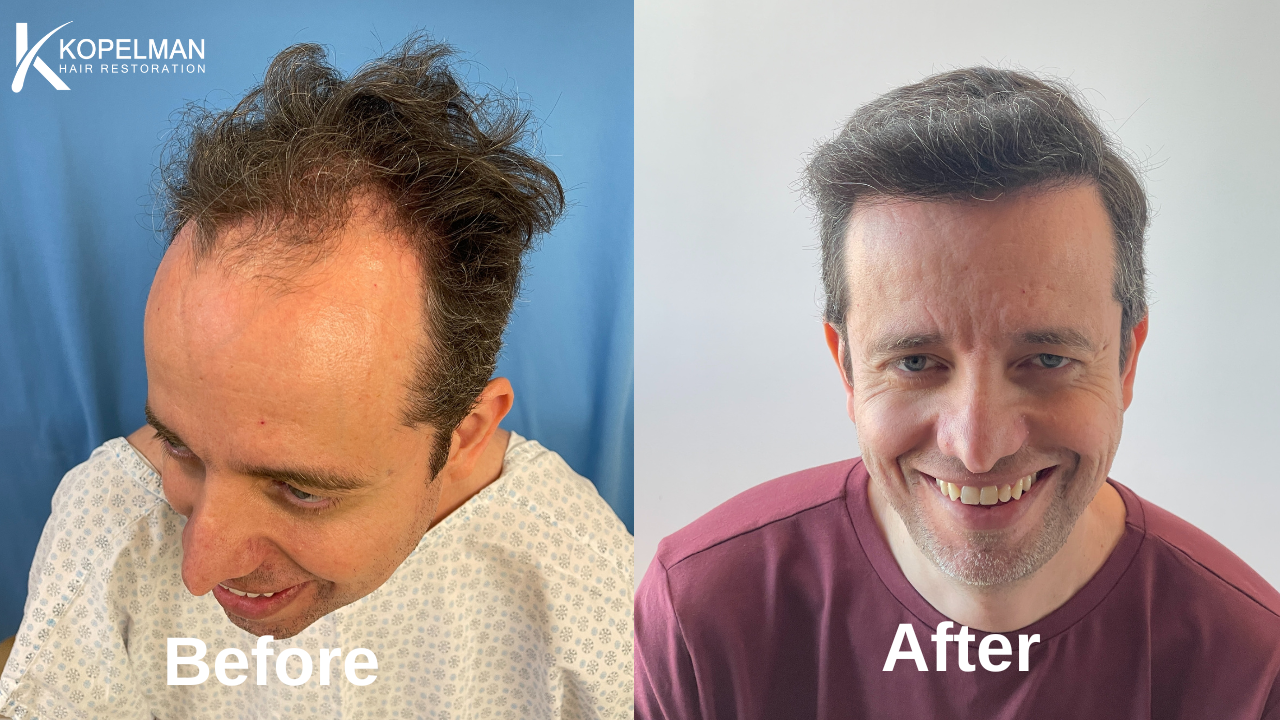
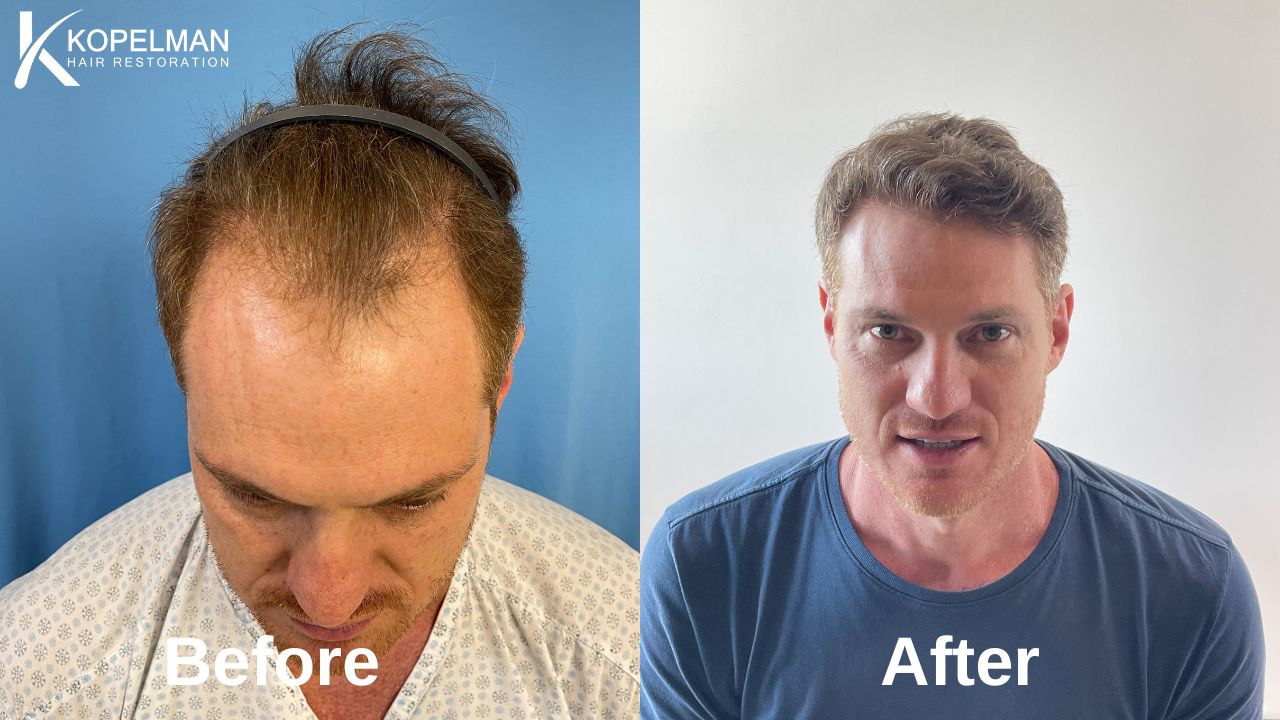
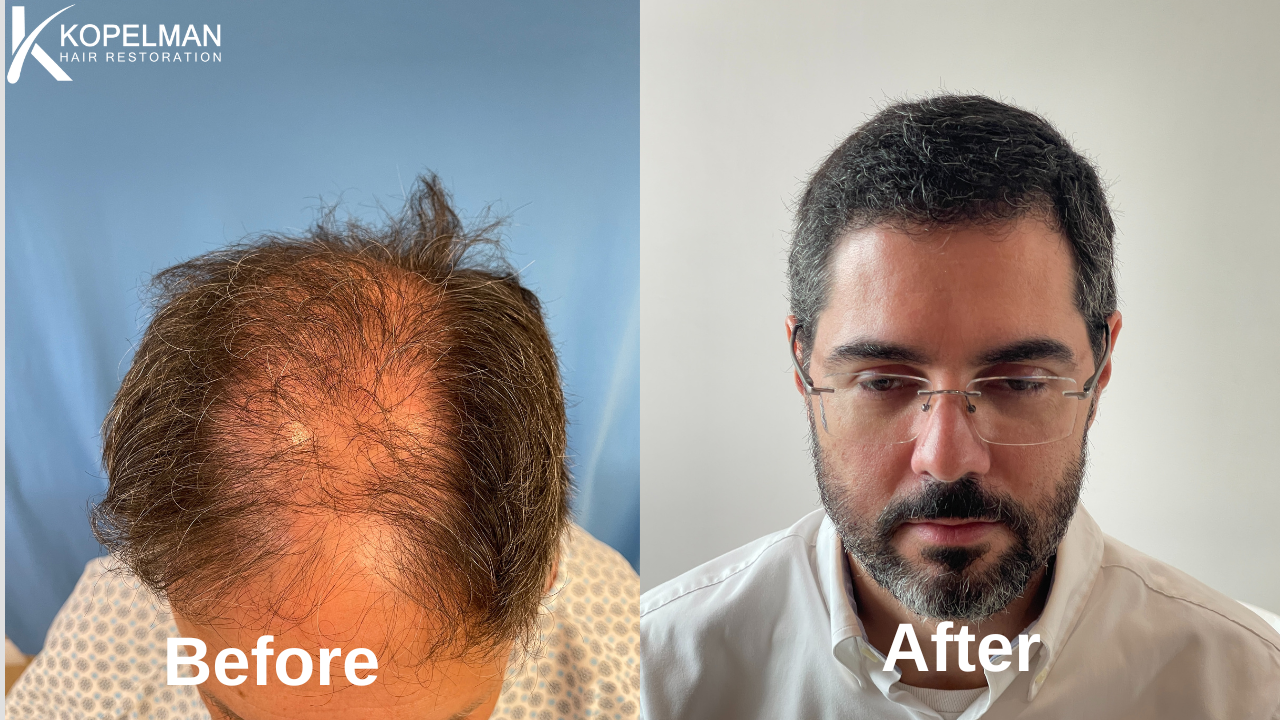
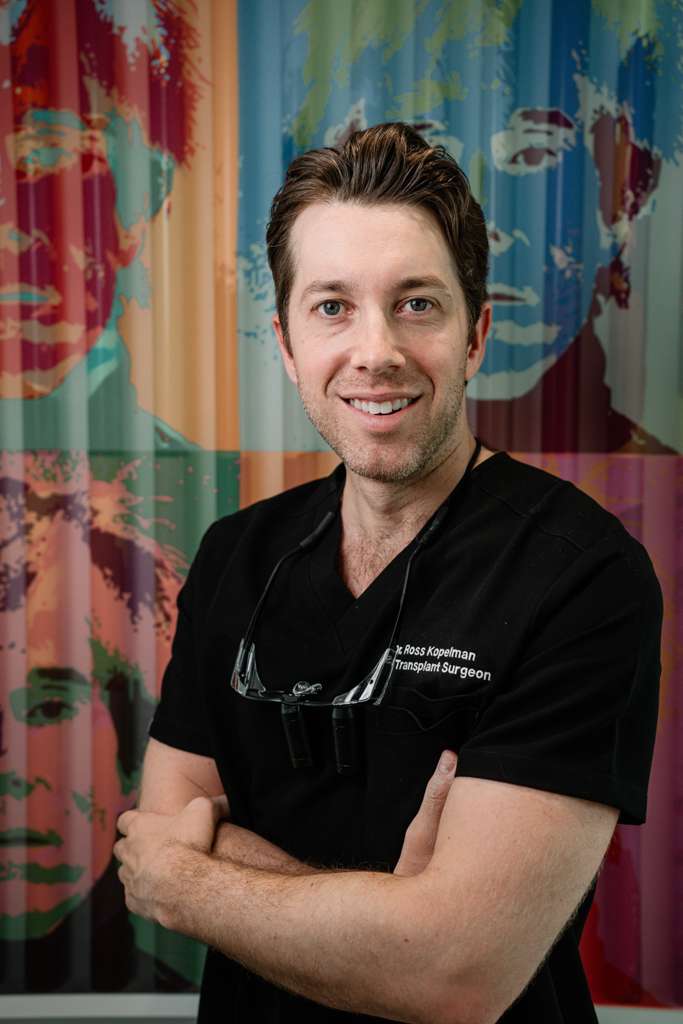
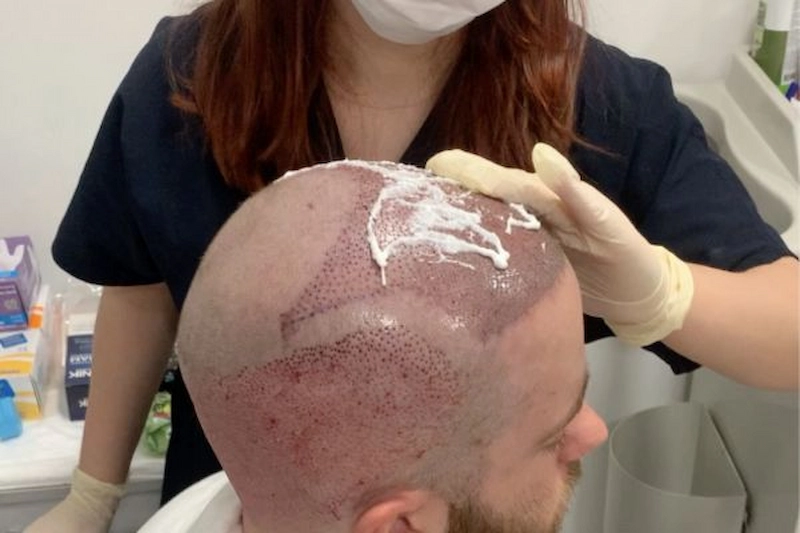
Hair transplant surgery relocates healthy, DHT-resistant follicles from the back and sides of the scalp to thinning or bald areas. It is most appropriate for stable pattern baldness and for restoring defined regions such as the hairline or crown. Because transplanted follicles retain their original resistance to DHT, the relocated hair tends to persist, although surrounding native hair may continue to thin without additional treatment. The procedure is performed by physicians, and Dr. Kopelman is among the surgeons who specialize in this area of hair restoration.
A transplant does not stop the underlying process driving hair loss, so it is often combined with medical therapy to protect existing hair. Candidacy depends on the cause and stage of loss, donor hair availability, and overall health, which is why a thorough consultation precedes any surgical plan. Scarring alopecia and active autoimmune disease may require stabilization before surgery is considered.
How to Prevent Hair Loss
While not all hair loss is preventable, certain habits can reduce avoidable damage and support scalp health. Knowing how to prevent hair fall and baldness involves protecting follicles from mechanical and chemical stress, addressing medical contributors early, and maintaining balanced nutrition.
Prevention is most effective for damage-related and reversible types and has limited impact on strongly genetic pattern baldness. Even so, early and consistent care can slow progression and help preserve existing hair.
Healthy Hair and Scalp Care
Gentle hair care reduces breakage and protects the scalp environment that follicles depend on. Avoiding tight hairstyles, excessive heat, and harsh chemical treatments helps prevent traction-related damage, while a clean, balanced scalp supports normal growth. Product choices matter as well, and some formulas can irritate the scalp or weigh hair down. Our guide to shampoos that may cause hair loss reviews the ingredients to approach with caution.
A balanced diet with adequate protein, iron, and vitamins supports healthy hair and complements good external care. Managing stress and treating scalp conditions promptly also contributes to hair resilience over time. These measures will not reverse genetic loss, but they help create the best possible conditions for the hair a person already has.
When to See a Dermatologist
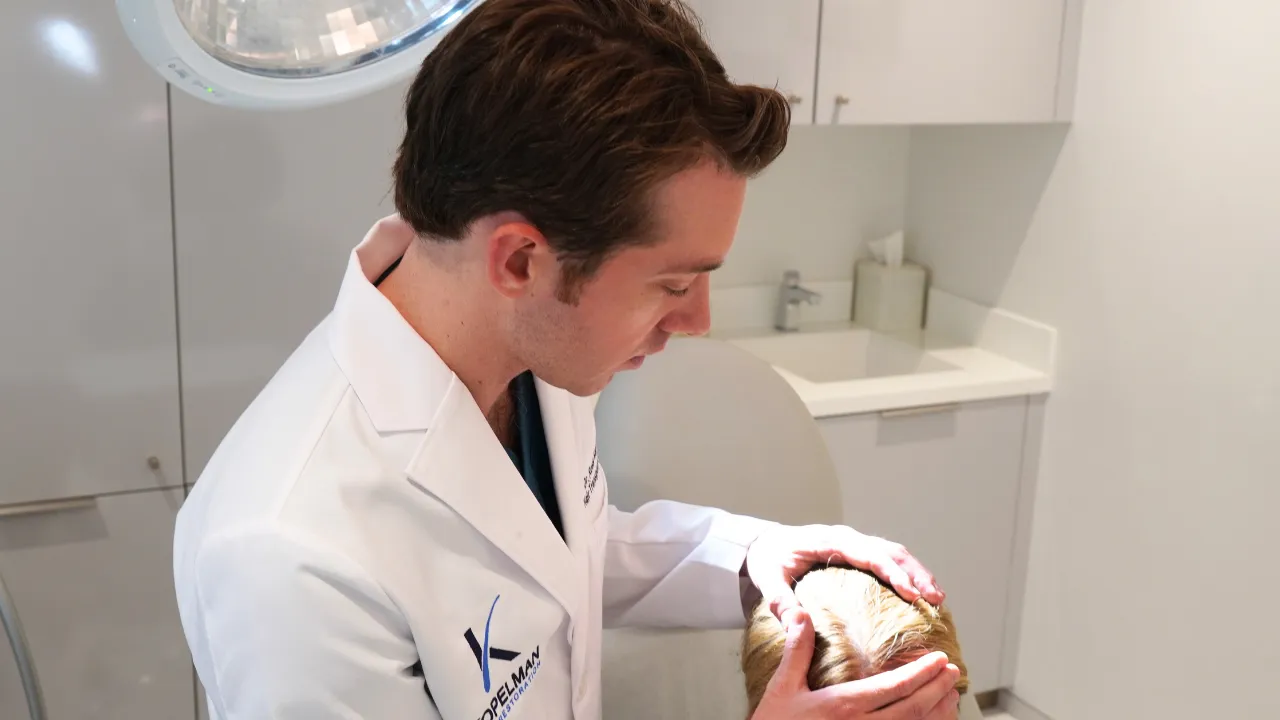
Seeing a dermatologist for hair loss is advisable when shedding is sudden, patchy, rapid, or accompanied by scalp symptoms such as pain, scaling, or redness. A specialist evaluating dermatologist hair loss concerns can determine the type and underlying cause through examination and history.
Hair loss diagnosis often begins with a scalp exam and a gentle pull test, and it may include blood tests to check for thyroid problems, iron deficiency, or hormonal factors. In some cases, a scalp biopsy is used to identify scarring or inflammatory conditions.
Early professional input improves outcomes because many treatments work best before extensive loss occurs. Dr. Kopelman and other qualified physicians assess each case individually, since the appropriate course of treatment depends on an accurate diagnosis. For context on evaluation and clinical services, readers can review the hair loss clinic information page.This helps explain why men go bald in a predictable sequence and why thinning hair, male pattern baldness, often begins at the temples or crown.